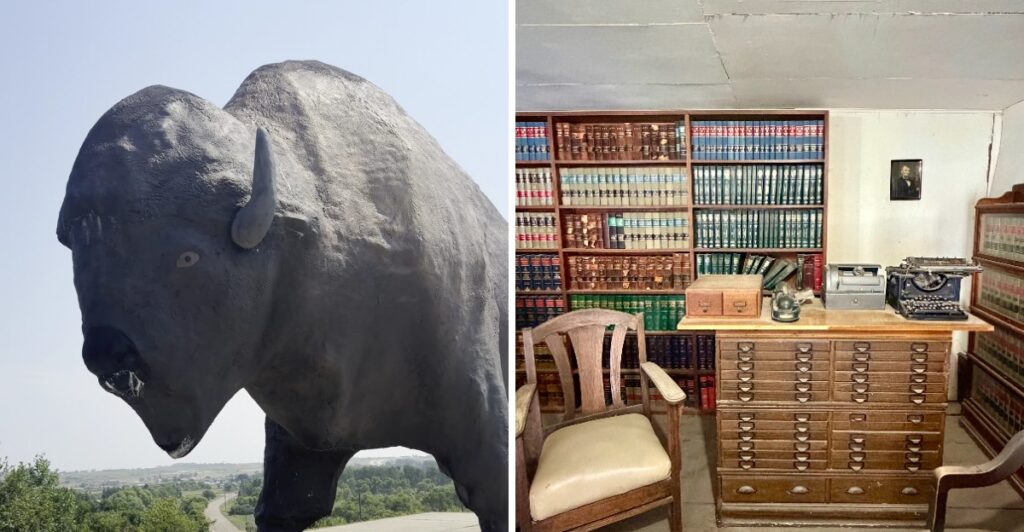
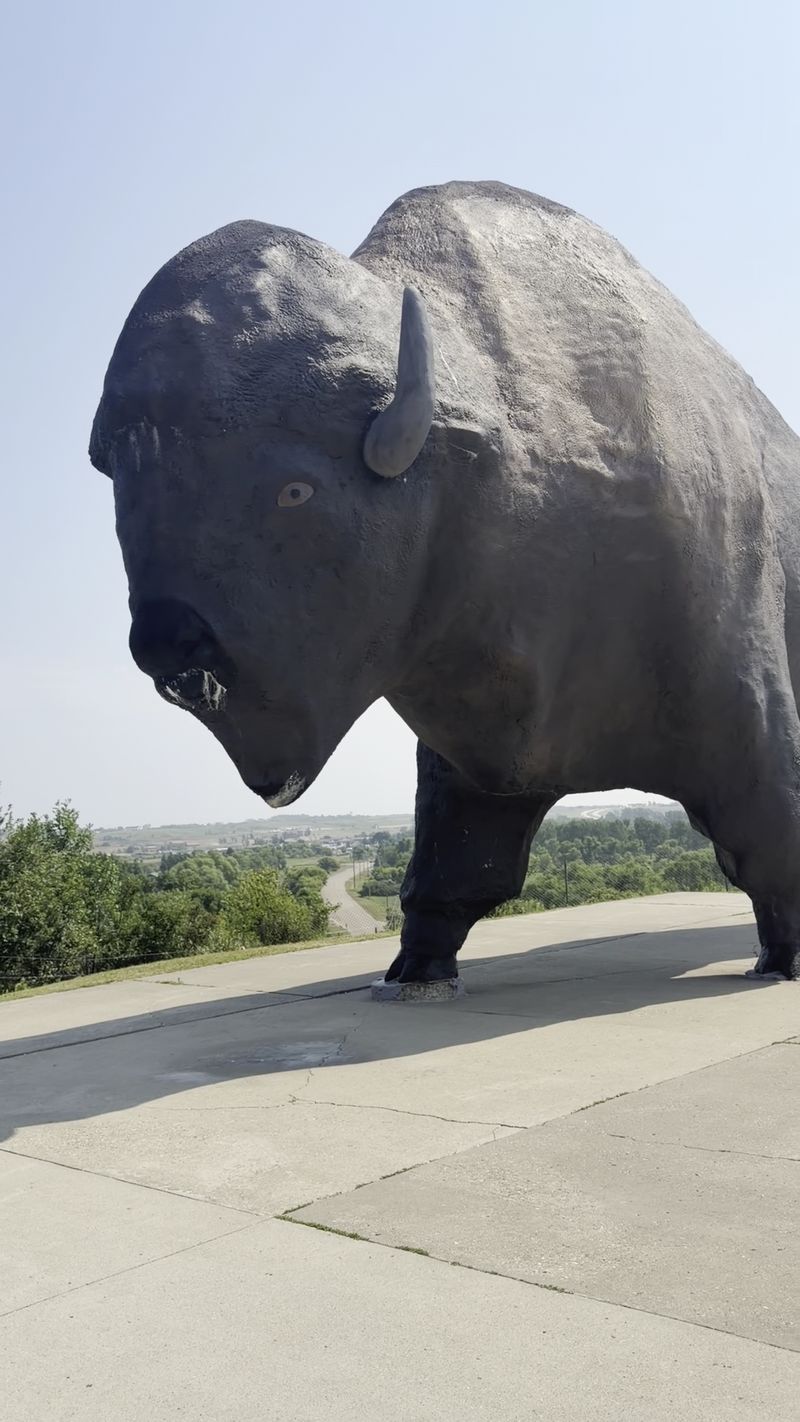
Somebody in North Dakota built a 60-ton concrete bison, then named it Dakota Thunder. It sounds like a wrestler about to enter the ring, and the bison has the attitude to match.
The beast stands 26 feet tall and 46 feet long, frozen mid-stride since 1959. It looks like it’s running late for a very important meeting.
An art professor built it from steel, wire mesh, and sprayed cement. Over time, a whole frontier village popped up around its hooves because big stars always draw a crowd.
Real bison graze on the hill nearby. Their concrete cousin gets the selfies, and they get the snacks. Seems fair.
Say Hello To A 60-Ton Celebrity Named Dakota Thunder
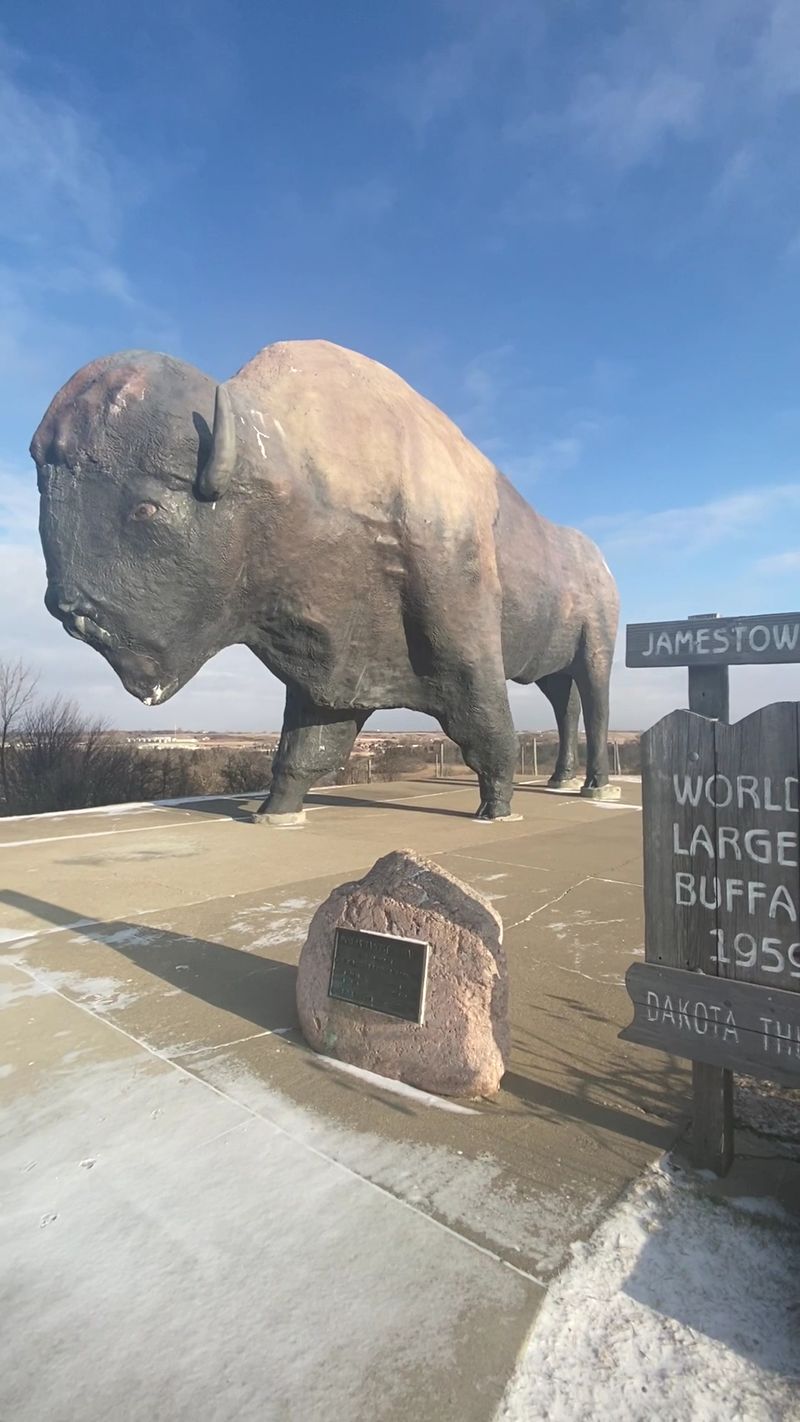
Scale is the whole point here. The World’s Largest Buffalo Monument stands 26 feet tall, runs 46 feet long, and weighs about 60 tons.
That’s roughly the height of a two-story house. Standing next to it, you’ll feel like a garden gnome at a cattle show.
The sculpture shows a male bison caught in mid-stride. It’s also anatomically correct, which tends to spark giggles from kids and a few grown-ups.
Back in 2007, the statue got a makeover. Crews repainted it to look more lifelike and gave it bigger horns.
Better yet, the original sculptor oversaw that update himself. Few artists get to touch up their own work nearly fifty years later.
The name came later. In 2010, a community contest drew more than 3,500 entries, and Dakota Thunder won.
Quite the upgrade from just calling it the big buffalo. It finally had a name to match its size.
Bring a camera with a wide angle setting if you have one. Fitting all 46 feet into one frame takes a few steps backward.
A paved path leads right to it. That makes the walk easy for strollers and mobility aids alike.
An Art Professor Built It With Steel, Mesh, And Sprayed Cement
Elmer Petersen taught art at Jamestown College when the city asked for something big. Very big, it turned out.
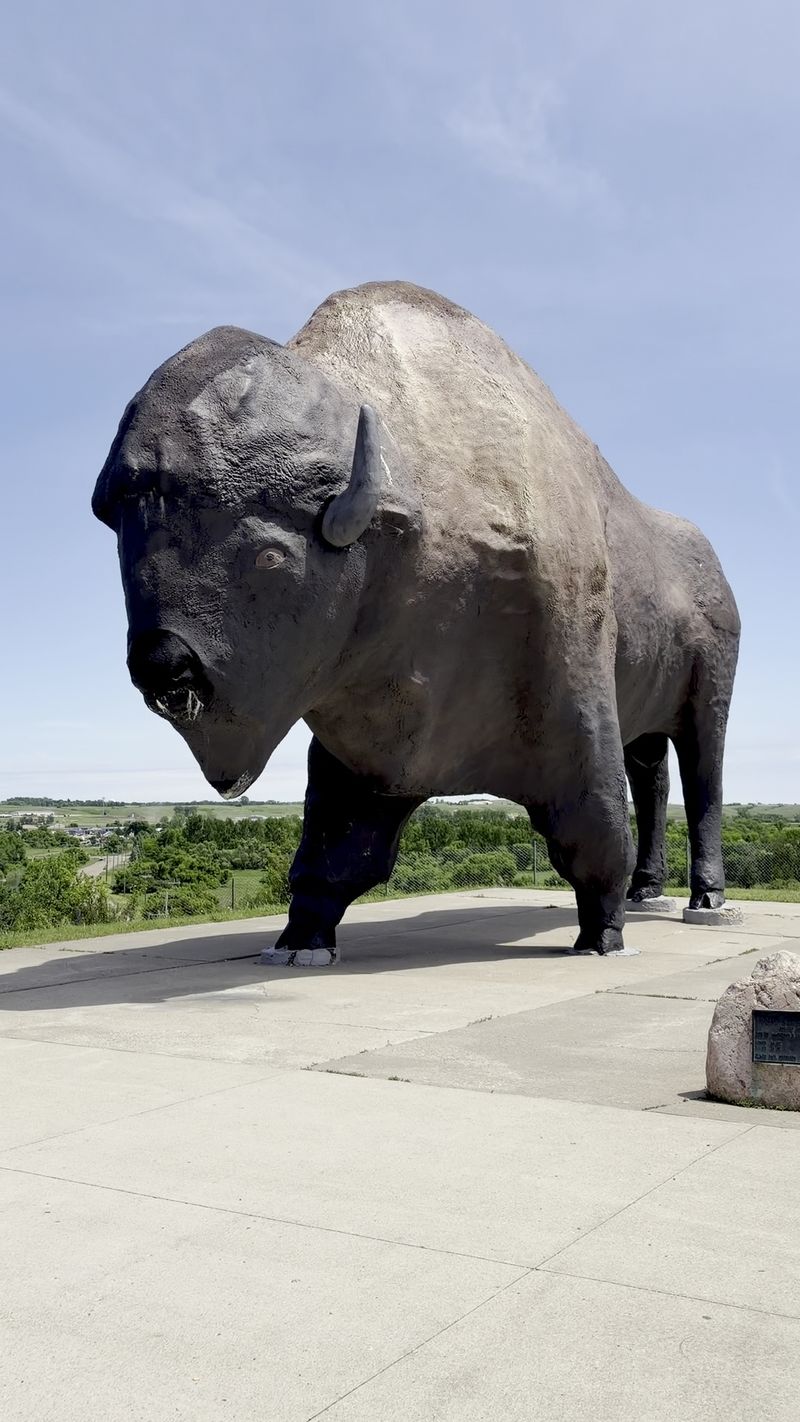
The project was commissioned in 1958. Petersen built a frame of steel beams, wrapped it in wire mesh, and covered it with concrete and gunnite.
Gunnite is basically sprayed cement. The surface was then hand-tooled to give it shape and texture.
The statue was unveiled on October 26, 1959. Interstate 94 was new across North Dakota, and the city wanted travelers to pull over.
Spoiler alert, the plan worked. More than six decades later, cars still exit the highway for a photo with this concrete giant.
Take a minute to read the signs near the statue. They explain how it was built and add depth to your snapshot stop.
Look closely at the hide while you’re there. Those ridges and grooves came from human hands, not a factory mold.
That detail makes the whole thing feel more personal. A teacher with a big idea and a lot of cement shaped a symbol for an entire town.
Not bad for an after-school project.
You Can Spot The Big Guy From Interstate 94
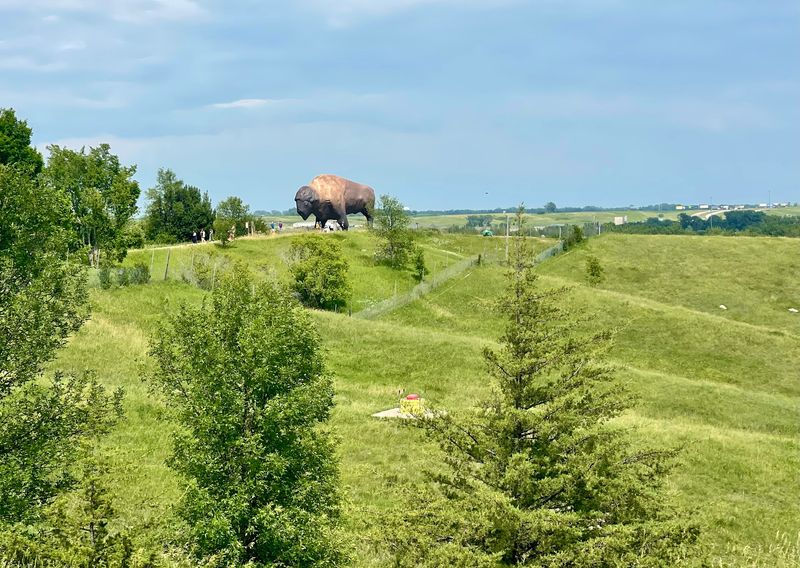
Location was everything for this bison. Perched on a hill above the James River valley, it keeps watch over the city below.
Drivers on Interstate 94 can see it from the road. That’s a handy built-in billboard that never needs new paint, well, almost never.
Finding it is simple. The site sits at 404 Louis L’Amour Ln, Jamestown, ND 58401, right off the interstate.
Road trippers love a stop that’s quick to reach. You won’t burn half a day on back roads to get here.
The hilltop spot also gives you a sweeping look at the prairie. On a clear day, the sky seems to go on forever in every direction.
North Dakota is famous for that big-sky feeling. Up here, the giant buffalo gets front-row seats.
Parking is available near the village and museum. There’s even space big enough for RVs up by the museum.
Need a leg stretch after hours behind the wheel? This is a perfect excuse to unfold yourself from the driver’s seat and breathe some prairie air.
Stroll Through A Tiny Town Built From Real Prairie History
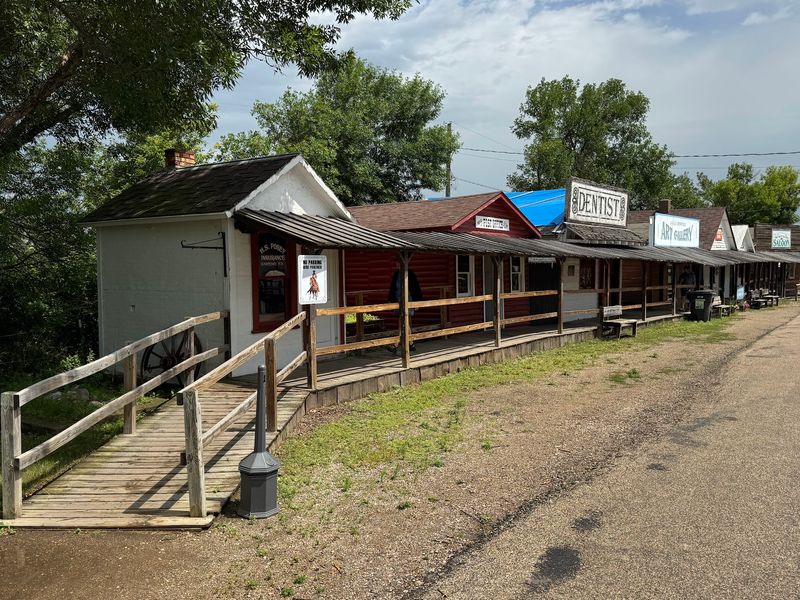
Before you reach the buffalo, you’ll pass through Frontier Village. It looks like a small 1800s Midwestern town that time forgot to update.
Here’s the fun part. Many of the buildings are original structures moved from different parts of North Dakota.
The village started growing around the statue in the mid-1960s. Building by building, it turned into a full frontier main street.
You’ll find a general store, schoolhouse, church, post office, and printing shop. There’s also a barber shop, art salon, and log cabin.
Kids usually make a beeline for the jailhouse. Something about pretending to be locked up never gets old.
The fire department holds vintage fire trucks too. They’re a treat for anyone who still waves at firefighters.
Don’t miss the Northern Pacific Railroad Depot, which dates back to 1880. It’s one of the oldest pieces of the village.
Entry to the village grounds is typically free, with donations welcome. Historic buildings open mostly from Memorial Day through Labor Day.
Visit in summer if you want doors open. Off-season, you’ll still get the buffalo but fewer peeks inside.
A Famous Western Writer Has A Shack Here
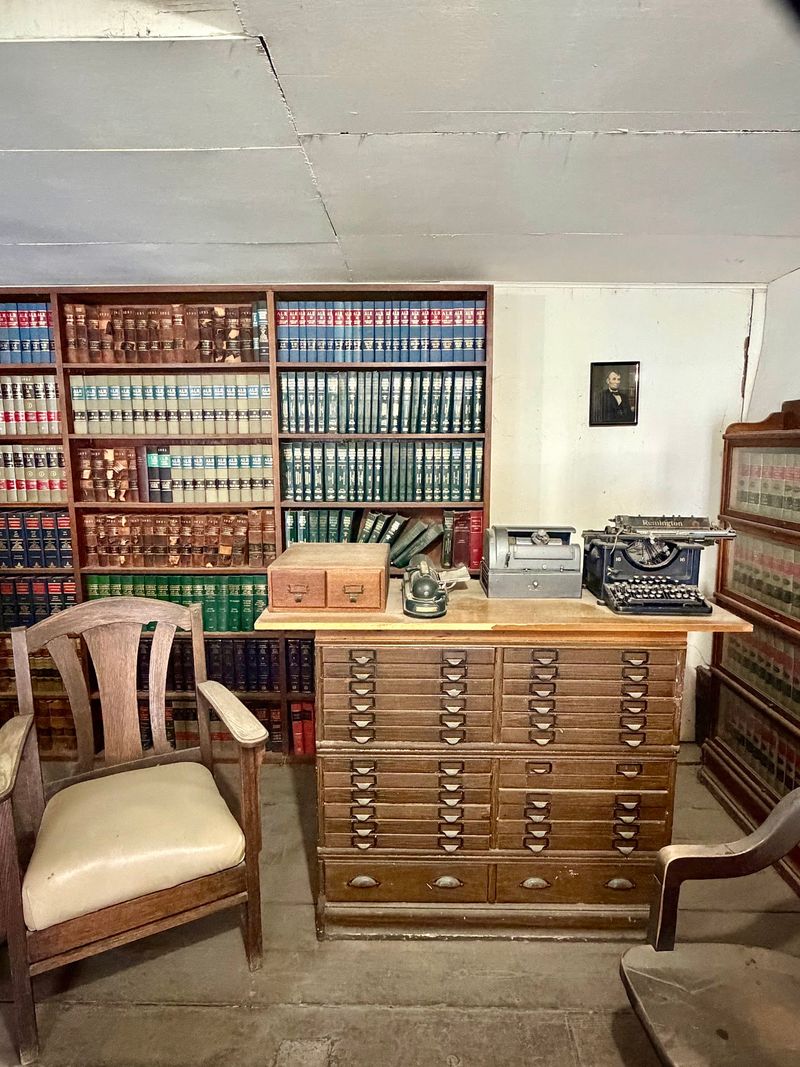
Louis L’Amour wrote dozens of cowboy novels that sold all over the world. His story began right here in Jamestown.
He was born in the city in 1908. He left at age fifteen, but his hometown never forgot him.
Frontier Village honors him with a preserved writer’s shack. Even the road out front carries his name.
That’s a fitting tribute. A man who wrote about the Old West now has a spot in a recreated western town.
Fans of classic westerns will enjoy the connection. If you grew up with tattered paperbacks on Grandpa’s shelf, this one might tug at you.
Not a reader? It still makes a neat stop.
The shack gives kids a chance to learn that writers come from small towns too. Big stories can start on quiet prairie streets.
Pair it with a peek into the nearby printing shop. Together, they show how words and stories mattered in frontier life.
Maybe grab a western from the gift shop afterward. Reading one on the drive home feels like the right souvenir for this corner of the village.
Real Bison Graze Just Up The Hill
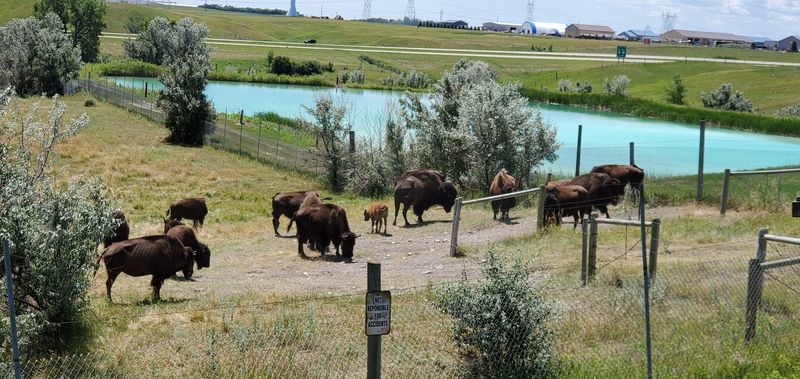
Concrete is cool, but fur is better.
Right next door, the North American Bison Discovery Center overlooks a 200-acre bison pasture.
Live bison roam those pastures.
The herd was once home to rare white bison, including White Cloud and Dakota Miracle, whose stories are part of the museum’s history.
The museum has a viewing deck facing the refuge. It’s a great place to look out over the land these animals once ruled.
Bring binoculars if you have them. The herd decides where to hang out, and sometimes they prefer the far side.
Inside, exhibits cover the history of buffalo on the Great Plains. You’ll also learn about the culture of Plains Indians.
Artifacts fill the displays. Look for 19th-century firearms used by buffalo hunters and even prehistoric bison remains.
Unlike the village, the museum charges admission. Plan a little extra time, since the exhibits give real context to the giant outside.
Seeing the living animals changes how you see the statue. Suddenly, Dakota Thunder feels less like a goofy roadside joke.
It becomes a tribute to a creature that shaped North Dakota and the whole prairie.
Saddle Up For Stagecoach And Pony Rides
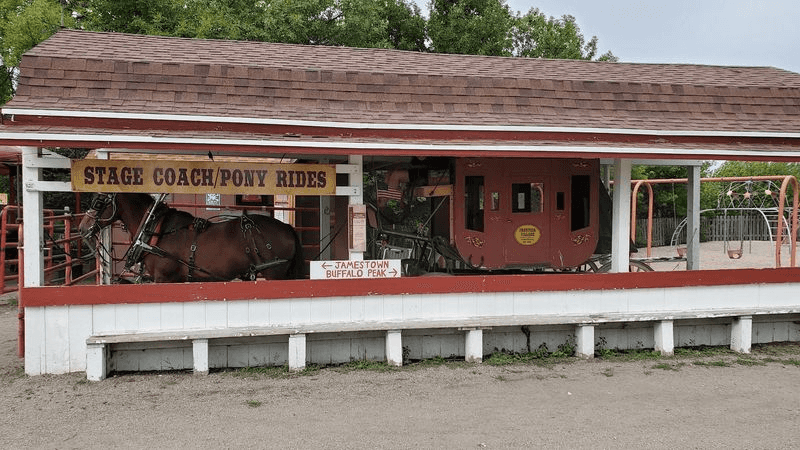
Summer turns the village into a little more of a frontier adventure. Stagecoach and pony rides run from Memorial Day through Labor Day, weather permitting.
These rides carry a separate fee. Still, they’re a fun way to feel how folks got around before minivans and drive-thru snacks.
Little cowpokes usually love the ponies. It’s a gentle first taste of riding without needing a ranch.
The stagecoach works for the whole family. Grown-ups can play outlaw or sheriff, depending on their mood that day.
A play area gives kids space to burn energy after long hours in the car. Parents will appreciate that as much as anyone.
Timing matters if rides are your goal. Check hours before you go, since weather and season can shift the schedule.
Village buildings often close in the early evening during summer. Arriving earlier gives you the best chance to enjoy everything.
Pack sunscreen and water for warm days. The prairie sun doesn’t hold back, and shade can be limited between buildings.
Then let the kids pick their ride. Odds are they’ll talk about it all the way to the next state line.
Plan Your Stop Around The Seasons
Good news for night owls and early birds. The monument itself is outdoors and accessible every day of the year.
Seeing it costs nothing. Daylight is best for photos, though the giant still makes a bold silhouette against the evening sky.
The village follows a different rhythm. Historic buildings mostly open from Memorial Day through Labor Day.
Hours stretch a bit into September. Frontier Village’s regular visitor season ends in mid-September, although occasional special events may take place afterward.
Winter visits can still work. Just bundle up, because prairie wind doesn’t care about your vacation plans.
Accessibility is built in. The site offers accessible entrances, parking, and restrooms, plus a mix of paved and gravel paths.
Wear comfy shoes for the gravel sections. Your ankles will thank you after a long day of driving.
Hours for the museum and village buildings can change. A quick check before you leave saves disappointment at the gate.
Whenever you come, the main attraction never takes a day off. Dakota Thunder has stood guard since 1959, and it isn’t planning a vacation anytime soon.