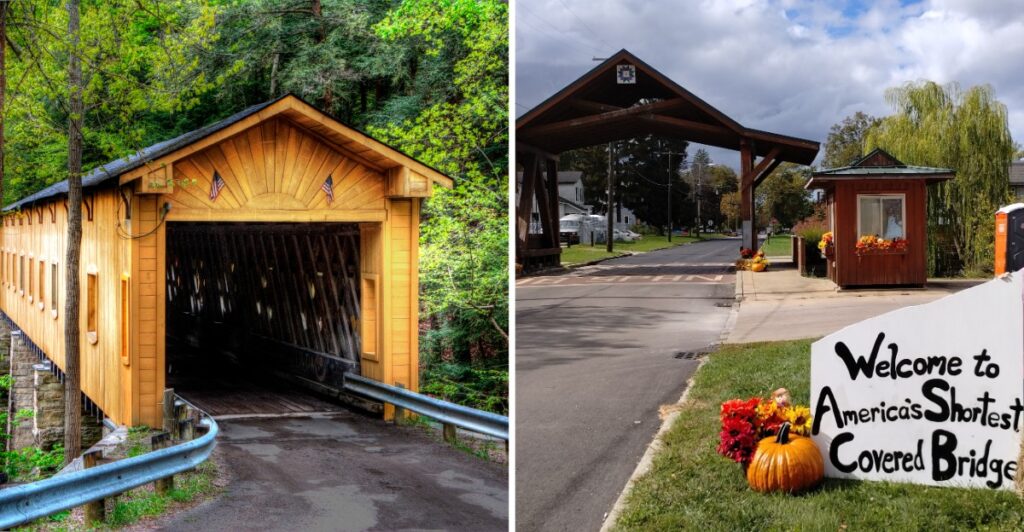
Most festivals ask you to find one parking lot. This Ohio one sends you back to the car.
For two October days, the celebration spreads across covered bridges instead of staying put in one fairground.
That changes the whole mood.
One stop might mean crafts or food. The next could be a bridge from the 1800s. Keep driving and the designs start changing too.
There are 19 covered bridges in the county, including record-holders at both ends of the size spectrum.
You do not need to chase every one.
Pick a few, follow the backroads, and let the wooden crossings break up the drive.
Honestly, when was the last time a festival made the road itself part of the fun?
The 2026 Festival Moves The Celebration Out To The Bridges
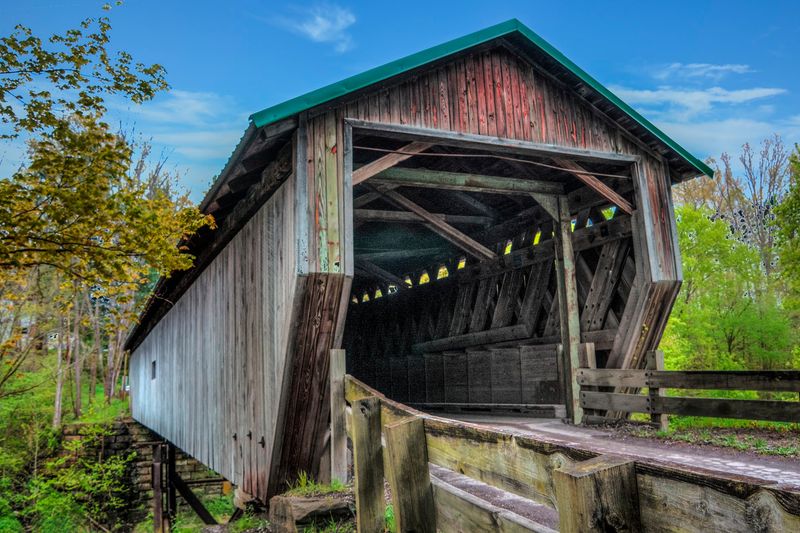
This year calls for a different plan from the old show-up-in-one-place version of the festival.
Activities are spread among bridge sites across Ashtabula County, with larger concentrations planned around Harpersfield and Smolen-Gulf. The lower area near Riverview is also part of the weekend, with crafters lining the walking route toward the pedestrian bridge.
That means the car becomes part of the festival experience. Instead of parking once and spending the day inside central grounds, you can choose a handful of bridges and build a route around them.
Food, crafts, bridge history, children’s activities, and festival souvenirs are scheduled at different stops. Smaller bridge sites also have community groups hosting their own activities, so the weekend is not limited to the biggest landmarks.
The official 2026 dates are Saturday, October 10, and Sunday, October 11. Craft vendor hours are scheduled from 10 a.m. to 5 p.m. both days, though individual bridge activities can follow their own timing.
Start by deciding whether you want a busy hub or a quieter bridge first. That one choice can shape the rest of the day without locking you into a rigid itinerary.
Nineteen Covered Bridges Turn The Weekend Into A Countywide Drive
Ashtabula County has 19 covered bridges, enough to make the festival feel more like a road trip than a single event.
Seventeen of those bridges remain operational for vehicle traffic year-round. Riverview is pedestrian only, while other crossings have their own height limits, road approaches, and practical quirks.
That variety is part of why trying to visit every bridge in one hurried loop can become more work than fun.
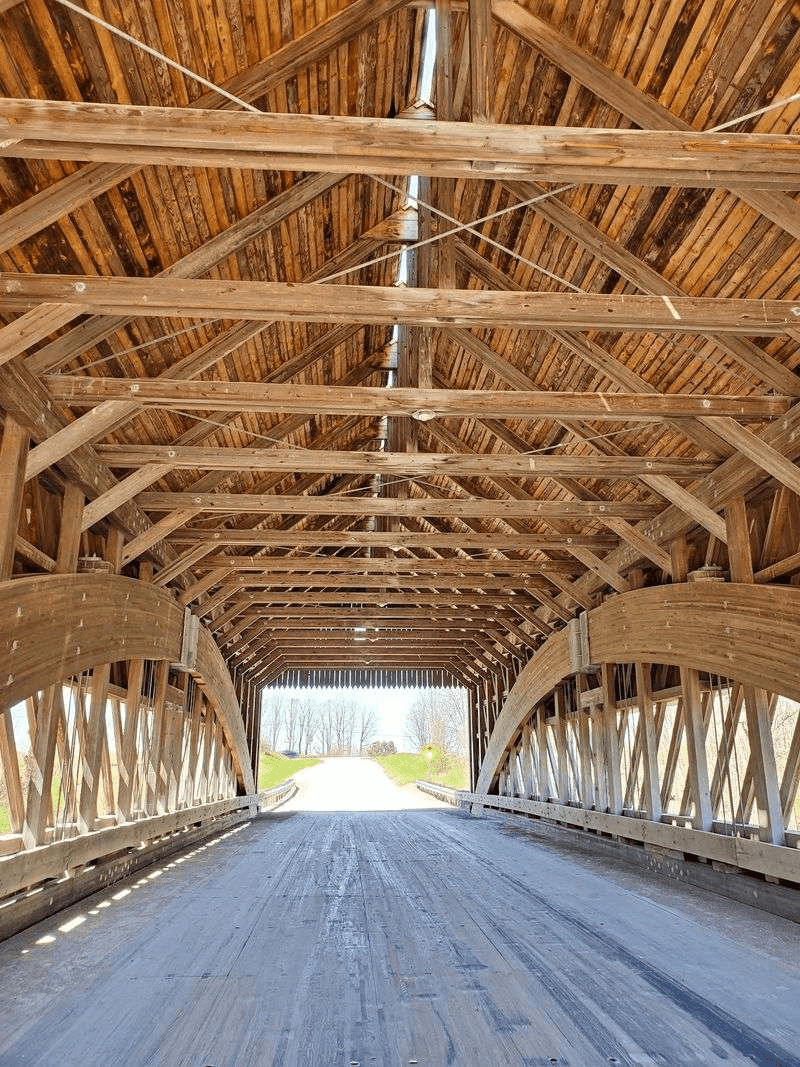
The collection also represents five structural styles: Howe truss, Pratt truss, Town lattice truss, Burr Arch, and Inverted Haupt truss. You do not need an engineering background to notice the differences.
Look up at the beams, arches, lattice work, and supports as you cross or walk through.
Some bridges sit over broad rivers. Others cross smaller creeks or appear along quieter roads where the approach is half the experience.
The driving portion is self-guided, so you can set the pace. Choose one side of the county, build around a few bridges that interest you, or make the two national record holders your anchors.
A full 19-bridge sweep can wait. A slower route gives you time to get out of the car and actually look at what you came to see.
Smolen-Gulf And Riverview Give You Two Bridges At One Stop
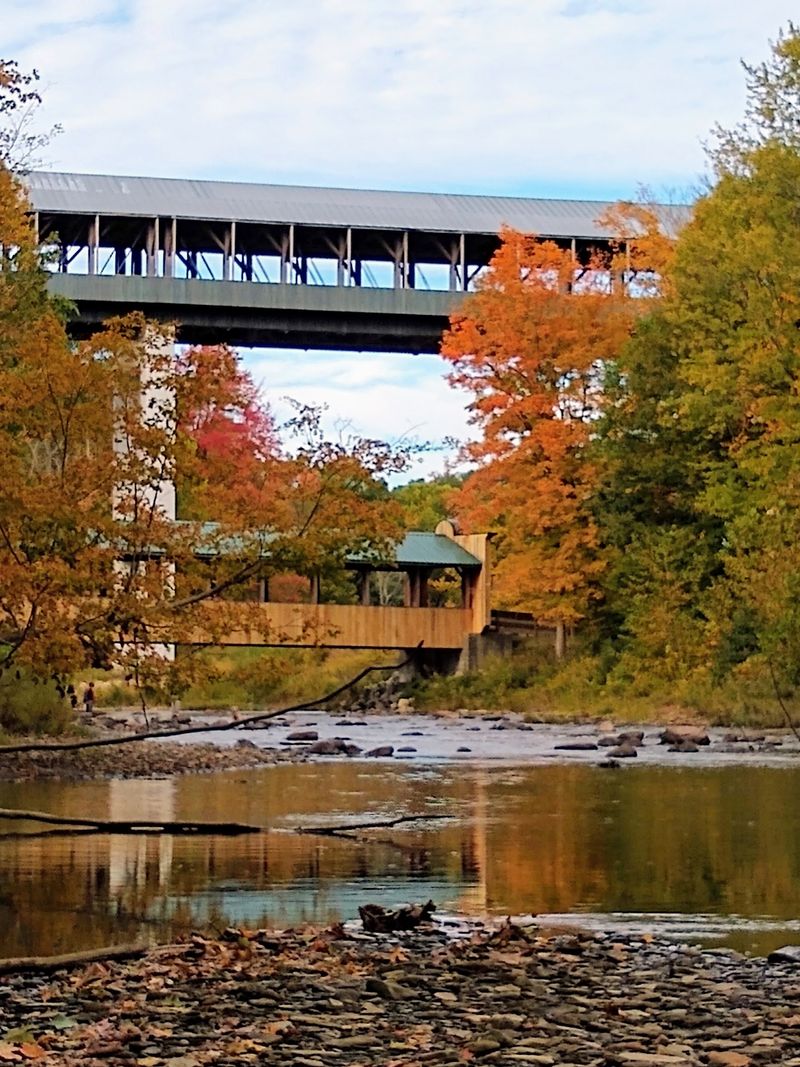
Smolen-Gulf makes scale impossible to ignore.
The bridge stretches 613 feet across the Ashtabula River and stands 93 feet above the water. Built in 2008, the Pratt truss crossing is the longest covered bridge in the United States and carries regular road traffic.
You can drive across, but stopping nearby gives you a better sense of just how large it is. The long wooden enclosure, elevated roadway, and river valley below create a very different experience from the county’s shorter nineteenth-century crossings.
Then look lower.
Riverview Covered Bridge sits beneath Smolen-Gulf in Indian Trails Park. Dedicated in 2016, the pedestrian bridge measures 150 feet long and follows a Pratt truss design.
It gives walkers a second covered crossing at the same general stop without another drive across the county.
For the 2026 festival, the Smolen-Gulf area is one of the main activity locations.
Food vendors, additional vendors, children’s activities, festival items, and heritage programming are planned around the site, while crafters are also scheduled near the walking trail toward Riverview.
If you want one stop that mixes a record-setting bridge, a walk, and festival activity, this pairing can take a healthy piece of the day.
Harpersfield Brings Nineteenth Century History Into The Weekend
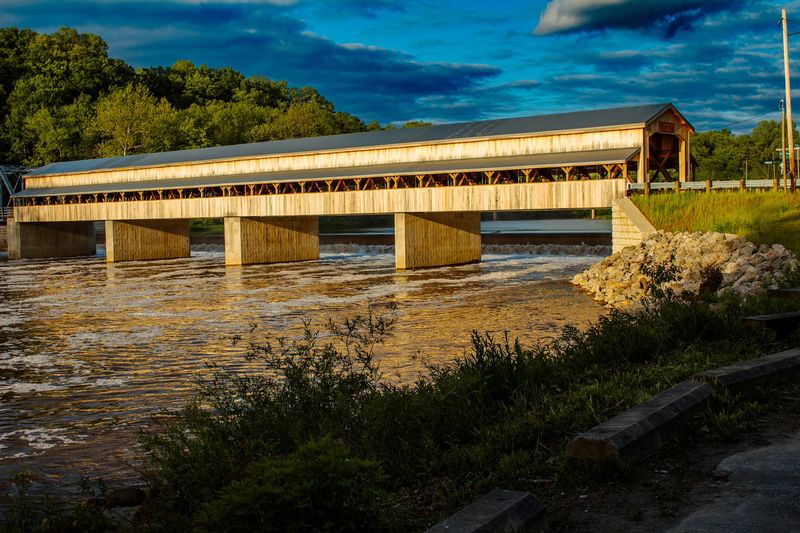
Harpersfield changes the mood from modern engineering to a much older crossing.
The covered bridge dates to 1868 and spans 228 feet across the Grand River. Its wooden section uses a two-span Howe truss, and the bridge is listed on the National Register of Historic Places.
A 1913 flood changed the river channel and led to the addition of a steel extension. A pedestrian walkway came later, adding another way to experience the crossing without treating it only as a road.
The bridge sits within Harpersfield Covered Bridge Metropark, which gives the stop more breathing room than a quick roadside pull-off.
For 2026, Harpersfield is planned as another major festival location, with vendors, official festival souvenirs, activities, and programming around the bridge.
This is a good place to slow down after a stretch of driving. Look at the timber structure, notice how the later steel section changes the profile, then give the park a little time before moving on.
Harpersfield also makes a useful contrast with Smolen-Gulf. One carries nineteenth-century bridge history; the other shows how covered-bridge design continued into the twenty-first century.
Seeing them on the same weekend makes the county’s collection easier to understand than any list of construction dates.
The Longest And Shortest Record Holders Sit In The Same County
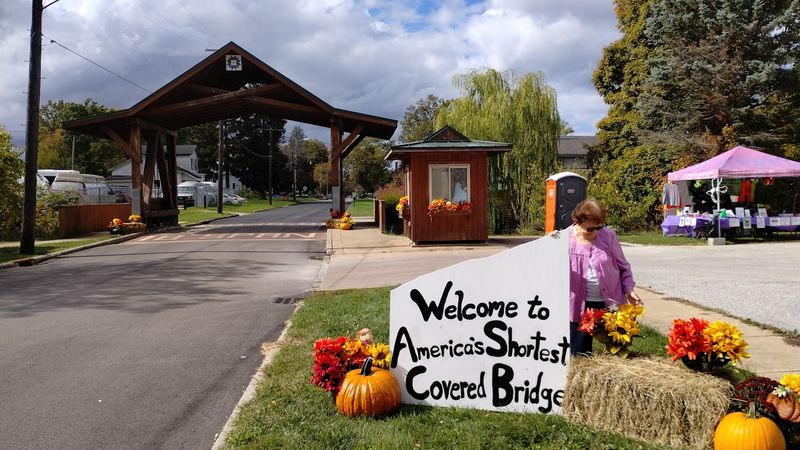
After Smolen-Gulf, the Liberty Street Covered Bridge almost looks like a joke someone told in lumber.
It is only 18 feet long.
The bridge crosses Cowles Creek in Geneva and was completed in 2011. Its claim is wonderfully specific: Liberty Street is the shortest covered bridge open to traffic in the United States.
That creates one of the easiest festival challenges to remember. See the 613-foot Smolen-Gulf Bridge, then find the 18-foot Liberty Street crossing and compare the two ends of the scale.
Liberty Street takes almost no time to cross, which is exactly why it is worth slowing down before you reach it. A quick drive-through can be over before everyone in the car has properly registered the bridge.
The county’s records are not the only reason to explore, but they make useful anchors when 19 choices start to blur together.
If your schedule allows only a few stops, pairing the longest and shortest gives the day a playful theme without pretending you have to complete the entire route.
Add one older bridge afterward and you already have three very different versions of the same basic idea: cover the crossing, protect the structure, and let the road continue on the other side.
Some Bridges Have Been Part Of The Landscape Since The 1860s
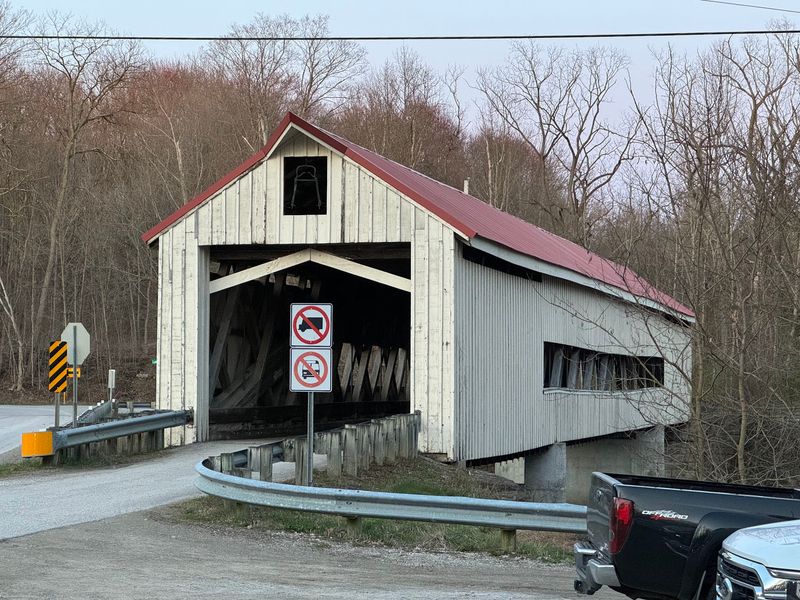
The festival route is not a collection of buildings from one period.
Mechanicsville Road Covered Bridge dates to 1867 and is believed to be the oldest covered bridge in Ashtabula County. The 156-foot crossing uses a Howe truss with an arch and spans the Grand River.
Root Road followed in 1868. Its 114-foot Town lattice structure crosses the Ashtabula River and has undergone rehabilitation work to keep the historic crossing useful.
Middle Road also dates to 1868. The 136-foot Howe truss spans Conneaut Creek, adding another nineteenth-century bridge to the eastern side of the county.
Harpersfield belongs to that same 1868 group, but each bridge has a different setting, structure, and later history. That is why bridge hunting works better when you actually stop instead of checking names off a list.
The festival office is at 25 West Jefferson Street, Jefferson, OH 44047, but that is not a single entrance to the 2026 celebration. The weekend is distributed among bridge sites, so use the office as an information point rather than assuming the festival happens at that address.
History is scattered across the county here. Your route should be too.
A Little Planning Keeps The Weekend From Turning Into A Race
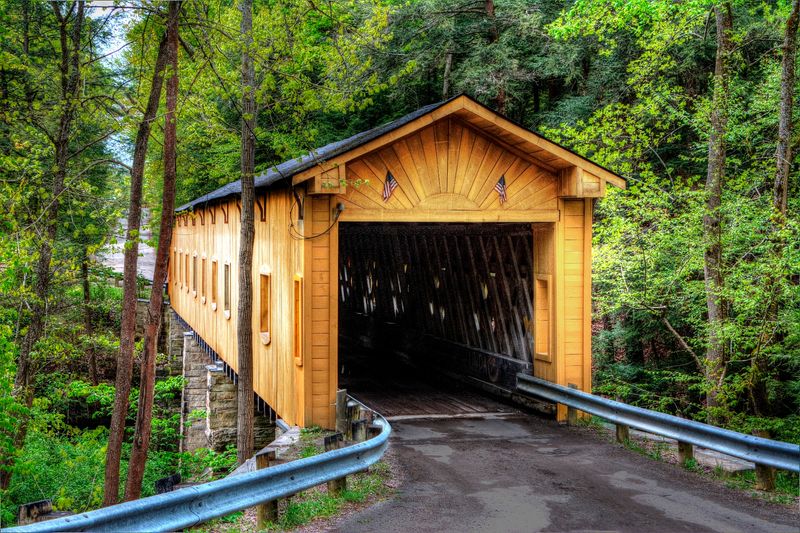
Nineteen bridges sound manageable until you start adding photo stops, food, crafts, walks, traffic, and conversations at individual sites.
Give the weekend some structure without scheduling every minute. Choose two or three bridge priorities first. Smolen-Gulf works when you want the national length record and access to Riverview.
Harpersfield brings an older bridge and a larger festival activity area. Liberty Street adds the shortest drive-through record in a stop that can fit easily between longer visits.
Then let the smaller crossings fill the spaces.
The full collection can be tackled in smaller route groups rather than one giant loop. Some roads are rural, and bridge clearances vary, so larger vehicles need more planning than an ordinary car.
For 2026, vendor spaces are scheduled to operate from 10 a.m. to 5 p.m. Saturday and Sunday. The festival 5K begins Sunday morning at Harpersfield, another reason to expect activity around that area early in the day.
October weather can change the pace too. Comfortable shoes help when a bridge stop turns into a walk, and an extra layer makes sense when the morning starts cool.
A useful plan is not the one with the most bridge numbers crossed off. It is the one that leaves enough time to remember which crossing was which.