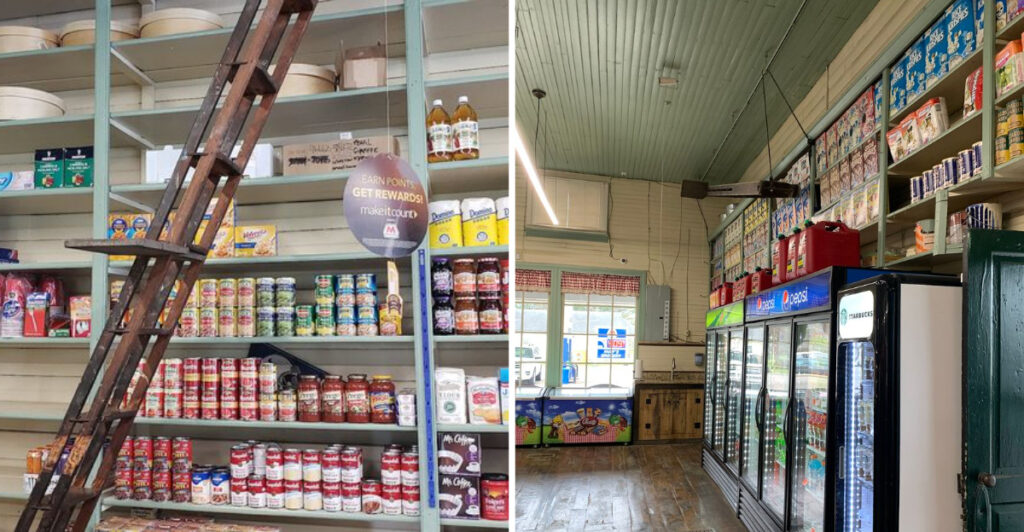
Walk in for a sandwich, and suddenly 1911 is staring back at you.
This Tennessee country store has been serving its rural crossroads for more than a century, and much of the original building still remains in everyday use.
Old shelves line the room. Ladders still ride their metal tracks. The staircase and balcony are still part of the scene.
That history does not sit behind glass, either. The place still operates as a grocery and deli, which keeps the visit feeling lived-in rather than staged.
You can grab something to eat, look around, and realize how much of the early twentieth-century store is still right there in front of you.
I like places where the past is not performing for attention. It is simply still on the clock.
The Building Has Stood Here Since 1911
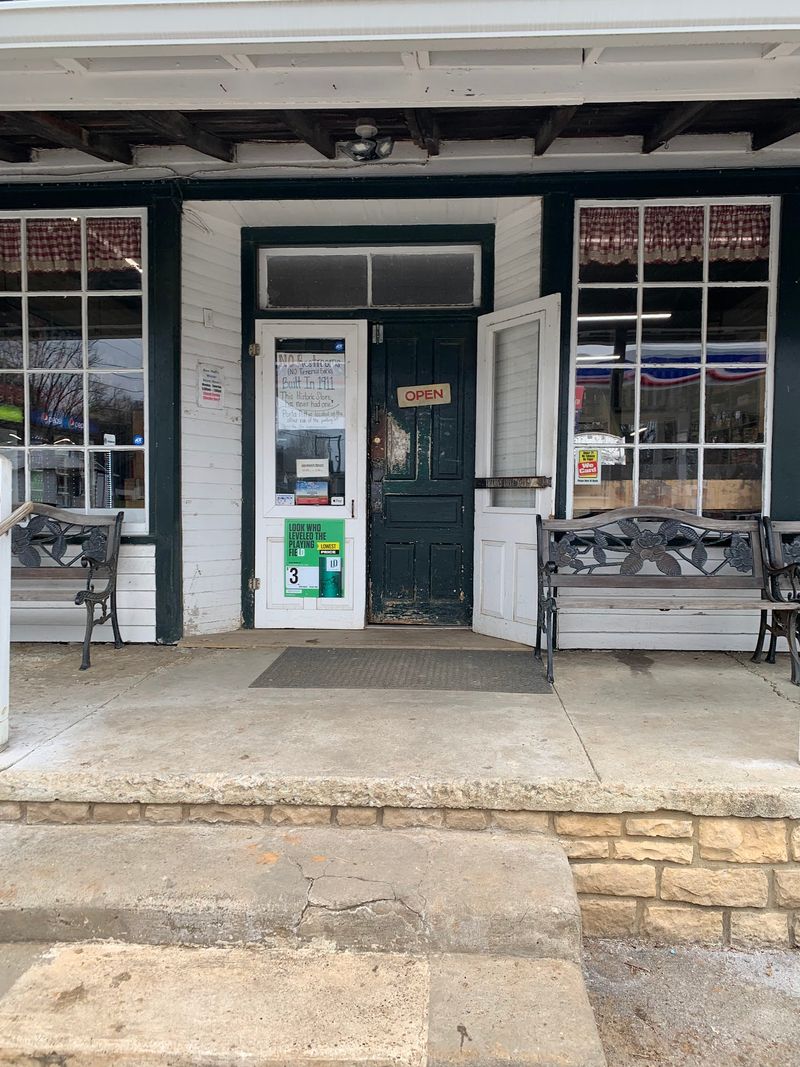
Millard and Vance Akin built the store in 1911 at the Burwood crossroads.
The one-and-a-half-story frame building was designed as a practical country store. Its main facade featured double frame doors, paired display windows, weatherboard siding, and a broad porch.
Decorative brackets sit beneath the hipped roof, while additional original doors remain on other sides of the building.
The porch itself also tells part of the building’s history. Its concrete floor replaced an earlier surface around 1930, while the simple square posts and overall arrangement remained part of the storefront.
That exterior is only the beginning.
Country stores once handled many everyday needs for rural families, especially in places where a trip into a larger town took more time and effort. Groceries, clothing, hardware, farm supplies, and other necessities could all pass across the same counter.
Burwood served that kind of role for surrounding farmers during the middle decades of the twentieth century.
Approach the building slowly and the proportions are easy to read. The broad porch, compact storefront, upper windows, and doors belong to a commercial design created for a rural crossroads rather than a modern shopping center.
The Huff Family Became Part Of The Store In 1937
R.G. Huff purchased the business in 1937 after the Akin brothers had operated it for more than two decades.
The store remained tied to the Huff family for generations. Ken Huff later ran the business, and current local accounts identify Charlie Huff as continuing the family operation.
That long connection is woven into the way the store has been used.
Family members have described growing up around the business, ringing up purchases, making sandwiches, and carrying groceries or farm supplies to customers’ vehicles. The work covered both food service and the practical tasks expected from a small rural store.
The family history also reaches beyond a single generation behind the counter.
By the time Ken Huff operated the store, the building had already served Burwood for decades. Later family involvement kept the business connected to the same crossroads where the original store had opened in 1911.
Today, a visit still centers on ordinary errands and food rather than on a formal historical presentation.
That continuity is easy to appreciate without turning the stop into a history lesson. Order from the deli, browse what is available, and then look around the room that has supported generations of daily business.
Original Shelves And Track Ladders Still Line The Interior
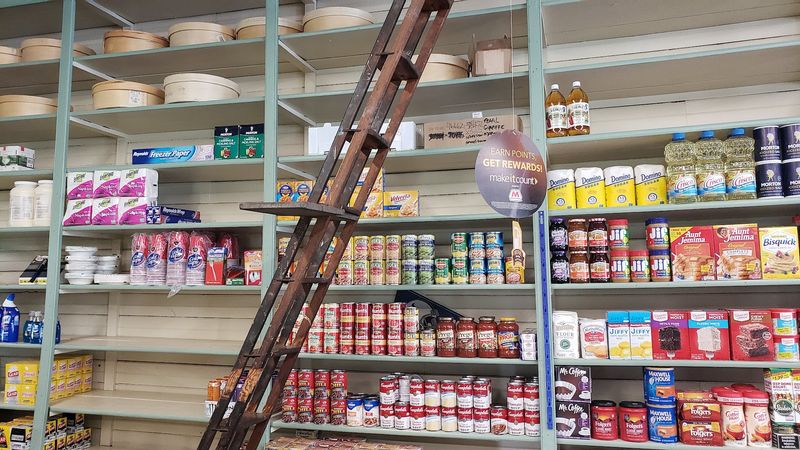
The interior preserves some of the store’s most distinctive features.
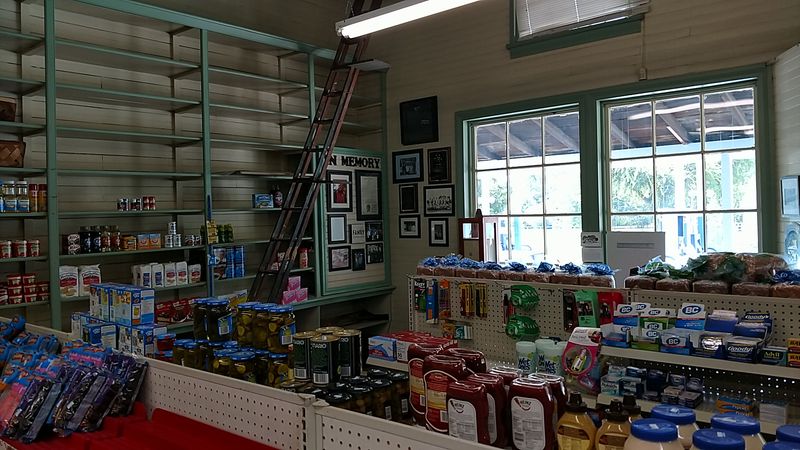
Original shelving remains along the walls, with ladders mounted on metal tracks to reach the upper rows. The arrangement allowed a small country store to use vertical space efficiently without filling the sales floor with freestanding fixtures.
Original display cases remain as well.
Tongue-and-groove framing covers the walls and ceiling, keeping the room visually tied to its early twentieth-century construction.
The old setup is functional rather than ornamental.
Tall shelves made sense when one store needed to stock many different categories for nearby households and farms. A sliding ladder turned the highest rows into usable storage, while display cases organized smaller goods closer to the counter.
Look upward before leaving.
The metal-track ladders are easy to miss when attention stays on food or merchandise at eye level. The same is true of the ceiling and the upper shelving.
Taken together, those details give the room its strongest old-school character.
Nothing needs to be staged to suggest a general store from another era. The shelves, cases, framing, and ladders already belong to the building’s own working history.
The Small Balcony Once Served As A Shoe Department
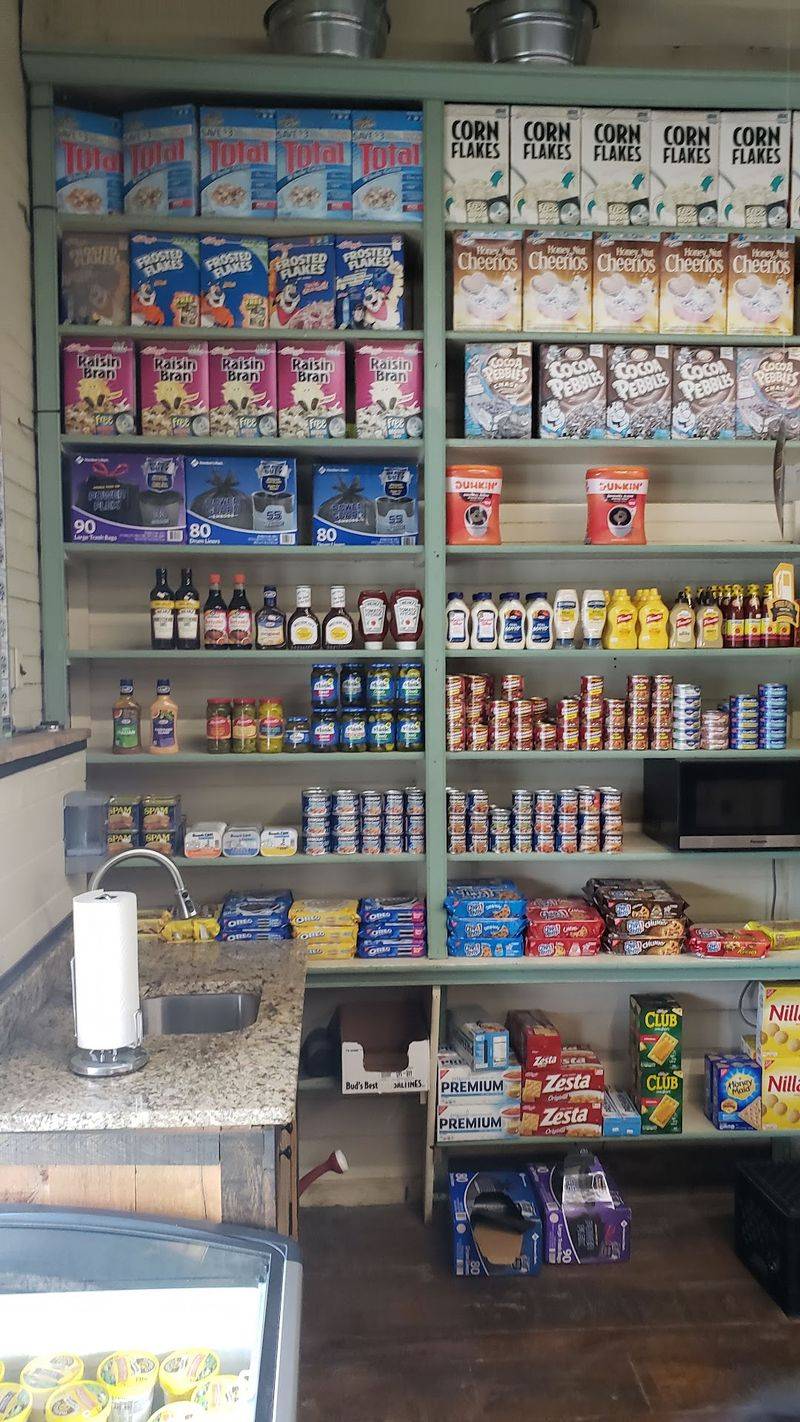
A small balcony occupies the northern section of the store.
During the Akin brothers’ years, that raised area was used for selling shoes.
The original staircase leading to it survives, including its newel post and square balusters. The arrangement shows how the store used every available part of the building to handle different types of merchandise.
That second level is easy to overlook from the main floor.
Pause near the center of the room and look upward. The balcony turns what first appears to be a compact grocery interior into a space with another layer of retail history above the counter and shelves.
Shoes were only one part of what a traditional general store might carry.
A rural business had to serve customers who needed food, clothing, household items, and farm-related goods without driving elsewhere for every purchase. Using a balcony for footwear allowed more of those categories to fit under one roof.
The feature also gives the interior a layout rarely seen in modern grocery stores.
You may visit for lunch rather than footwear, but the balcony still shows how the building once worked when a country store had to stretch its space much further.
National Register Status Recognizes The Store’s Historic Character
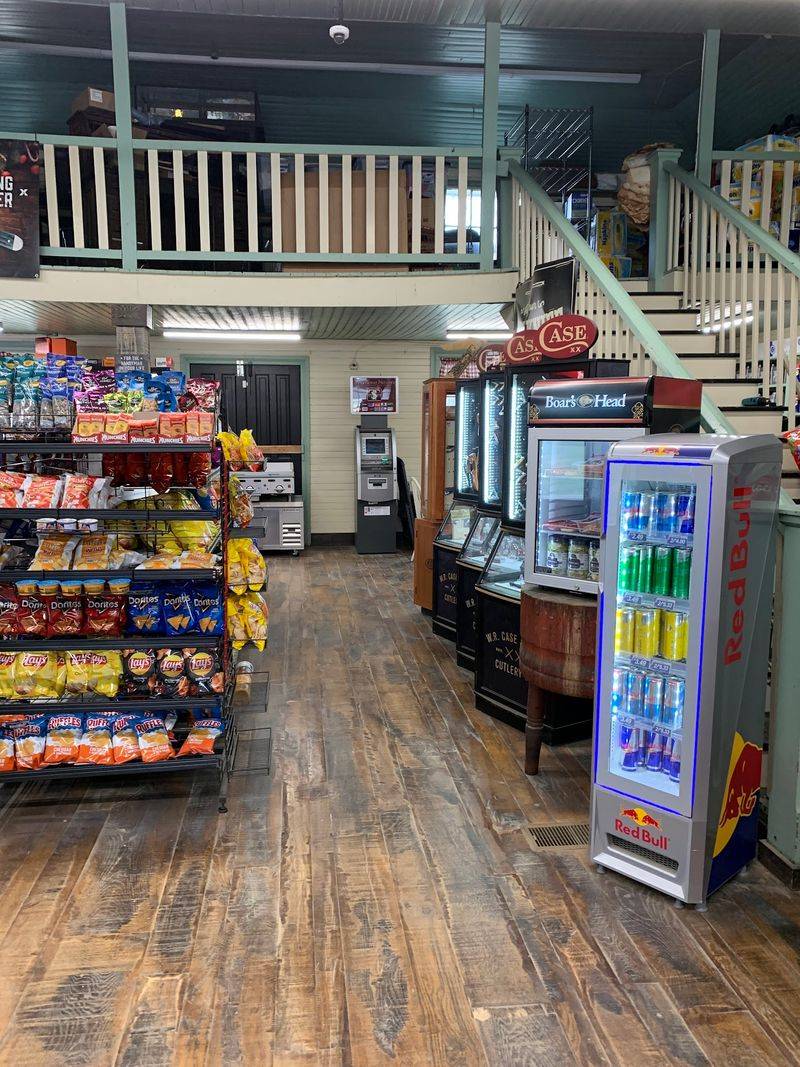
Huff Store was added to the National Register of Historic Places on April 13, 1988.
At that time, the building retained an unusually large collection of original interior and exterior features.
Original shelves, track ladders, display cases, tongue-and-groove framing, doors, windows, stairs, light fixtures, and early twentieth-century stoves were all still part of the store.
The porch, storefront, balcony, and interior arrangement remain genuine parts of the historic building rather than later attempts to create an old-fashioned look.
The property stands at 5452 Carters Creek Pike, Thompson’s Station, TN 37179, within the Burwood community.
The grocery remains an active business. A Williamson County retail-food inspection dated January 9, 2026, lists R G Huff Grocery at this address, confirming that the store continues to operate.
That makes the National Register status especially interesting for a casual stop.
You are not walking through a building preserved only for tours. The same place recognized for its early twentieth-century architecture continues to function as a grocery.
Give yourself a few extra minutes after ordering or shopping to notice the features that earned the building that recognition.
Burwood Was Once A Rural Trading Center For Farmers
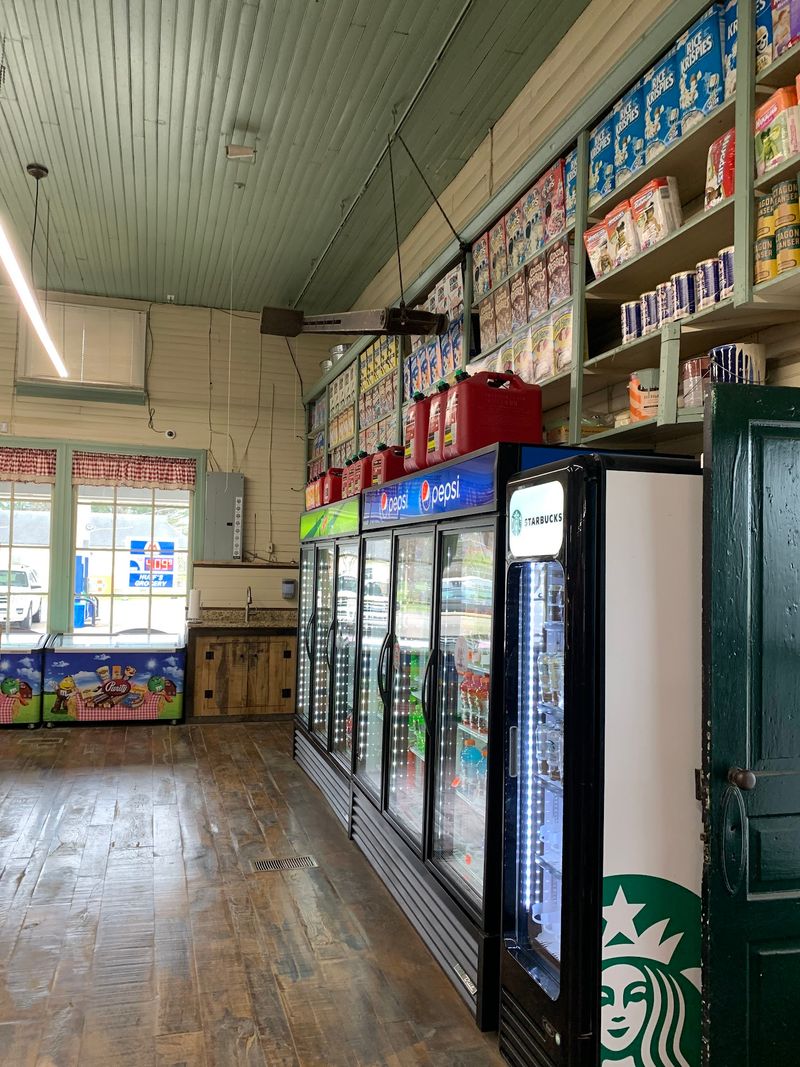
Burwood is an unincorporated community in southwestern Williamson County.
During the middle decades of the twentieth century, it served as a rural trading center for farmers in the surrounding area. As transportation improved and more business shifted toward Franklin, many small commercial centers changed or disappeared.
Huff Store remained.
The building still sits at the junction that formed the center of the Burwood community.
Another nearby property, the John Pope House, is also listed on the National Register of Historic Places, giving the area more than one surviving link to its earlier development.
A drive through Burwood makes the scale of the community clear.
This is not a dense commercial district where an old building has been surrounded by blocks of newer storefronts. The store still belongs to a rural setting shaped by roads, open land, and scattered development.
That makes it easy to understand why a general store once mattered so much here.
For nearby farmers and families, a country store could combine several errands in one stop. Food, supplies, clothing, and conversation all fit naturally into the same place.
The building remains a physical reminder of that older daily rhythm.
Sandwiches Keep The Stop Grounded In Everyday Use
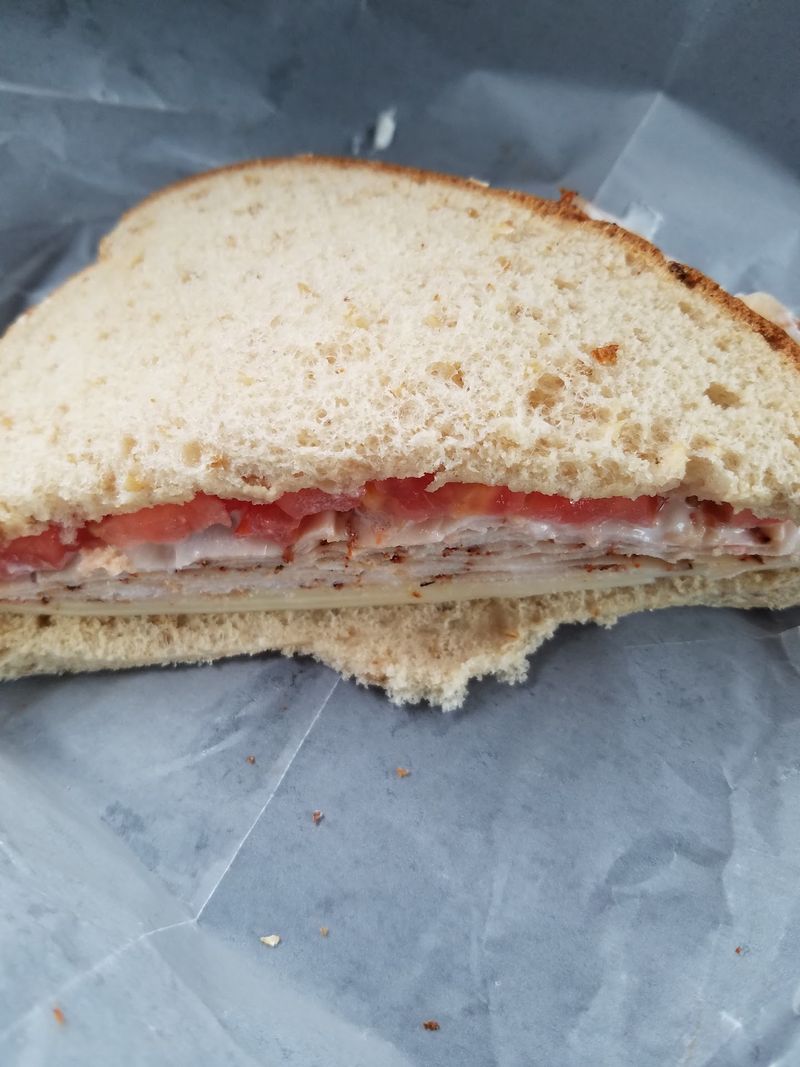
Huff Store still operates as a grocery and deli, and sandwiches remain connected to the business.
Family recollections describe sandwich-making as part of the work behind the counter, alongside ringing up groceries and helping customers with supplies. More recent local coverage also continues to identify the store with its deli and sandwiches.
That gives visitors a practical reason to stop beyond the building’s history.
Order something to eat, then use the wait as an excuse to look around. The tall shelving, track ladders, balcony, wood framing, and old storefront become easier to notice when the visit is not rushed.
The grocery setting also keeps the building from feeling frozen in time.
Modern purchases still happen inside a room shaped by the needs of a country store built in 1911. That overlap is the most interesting part of the experience.
There is no need for a complicated itinerary.
Make Huff Store one stop on a drive through Williamson County, pick up lunch or browse the grocery selection, and spend a little time with the building itself.
More than a century after the Akin brothers opened their store at the Burwood crossroads, the same structure is still doing what it was built to do: serving people who come through the door.