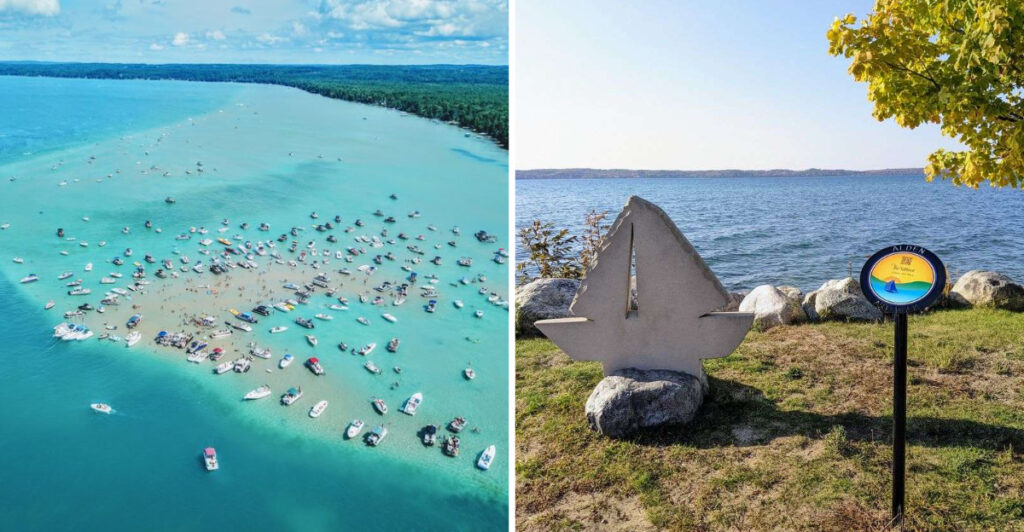
This northern Michigan lake looks like someone turned the color settings all the way up.
It has become one of the region’s most recognizable summer stops, and the blue-green water does most of the convincing.
At roughly nineteen miles long, the lake has plenty of room to spread out. The famous sandbar draws a big share of the attention, while boating and swimming keep the shoreline active through the warmer months.
That popularity has changed the conversation around the lake too. Access, recreation rules, and conservation all matter more now than they once did.
The scenery pulls you in, but the bigger story is how much attention this lake now manages.
Torch Lake Is Big Enough To Feel Like Its Own World
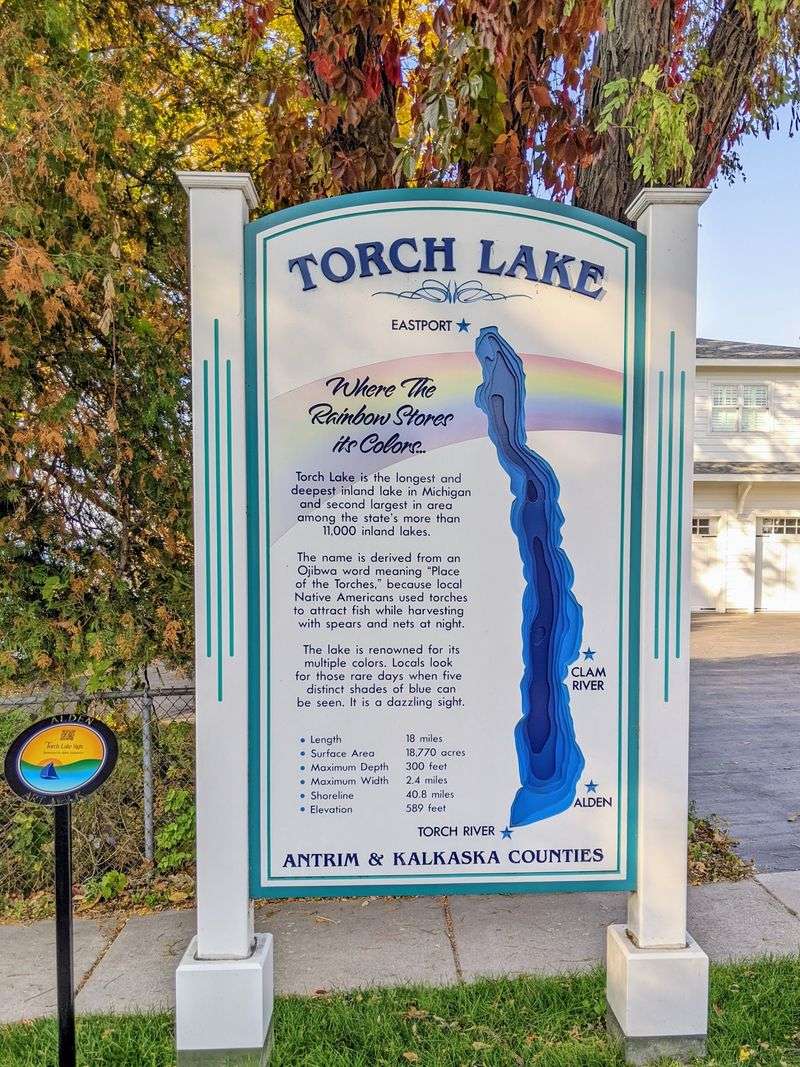
Torch Lake is long, deep, and unusually clear. At roughly 19 miles from end to end and up to about two miles wide, it gives boaters and paddlers a large stretch of water to explore.
Its surface covers about 18,800 acres. By surface area, only Houghton Lake is larger among Michigan’s inland lakes. Torch Lake’s volume is even more remarkable.
It holds more than 858 billion gallons of water, more than any other inland lake in the state.
The average depth is about 142 feet, and different sources give different figures for the deepest point. The lake is still among the deepest inland lakes in Michigan.
Clarity is one of its defining features. Visibility can extend more than 30 feet down under the right conditions, especially when the water is calm and the lake has not been stirred by heavy wind.
That clear water helps create the blue-green color associated with Torch Lake. In sandy shallows, sunlight reaches the bottom easily, while deeper sections take on darker shades farther from shore.
Summer surface temperatures can reach the low seventies in the upper layer later in the season, while deeper water stays much colder.
The Sandbar And Clear Water Put Torch Lake On More Summer Maps
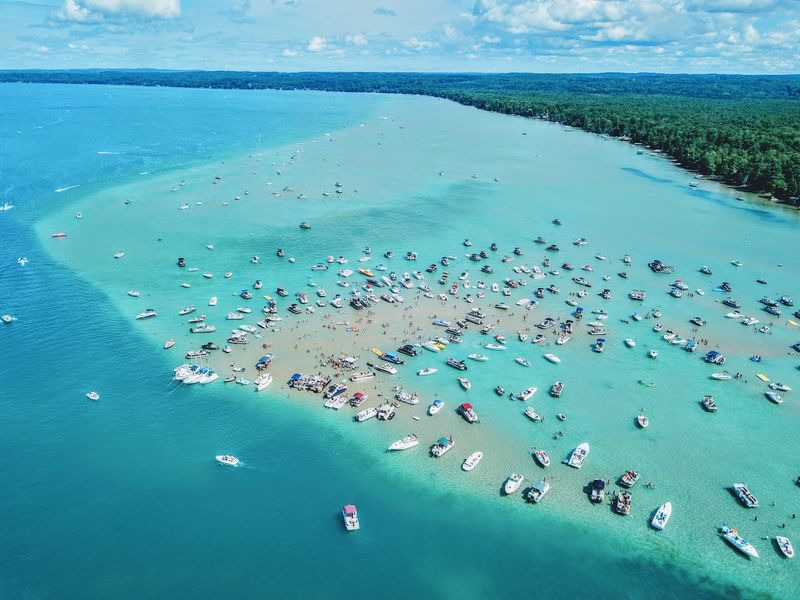
It’s south-end sandbar is one of its best-known summer gathering places. Shallow water over a sandy bottom creates a broad area where boats can anchor, and people can spend time in the water.
The sandbar has become closely tied to the public image of Torch Lake. Photos and videos of bright water, anchored boats, and sandy shallows have traveled far beyond northern Michigan through travel coverage and social media.
The lake itself offers much more than the sandbar. Paddling routes, public launches, quieter shoreline areas, and long stretches of open water give visitors several ways to spend time on Torch Lake without centering the day on one location.
Torch Lake also belongs to a larger connected water system. Clam River feeds into the lake, while Torch River carries water south toward Lake Skegemog and the rest of the Elk River Chain of Lakes.
That connection gives boaters and paddlers access to a wider network of waterways, with navigation rules and invasive-species precautions applying throughout the connected system.
The sandbar may be the feature most people recognize first, but the scale of Torch Lake becomes clearer once you move beyond the shallow south end.
Public Access Takes A Little Planning
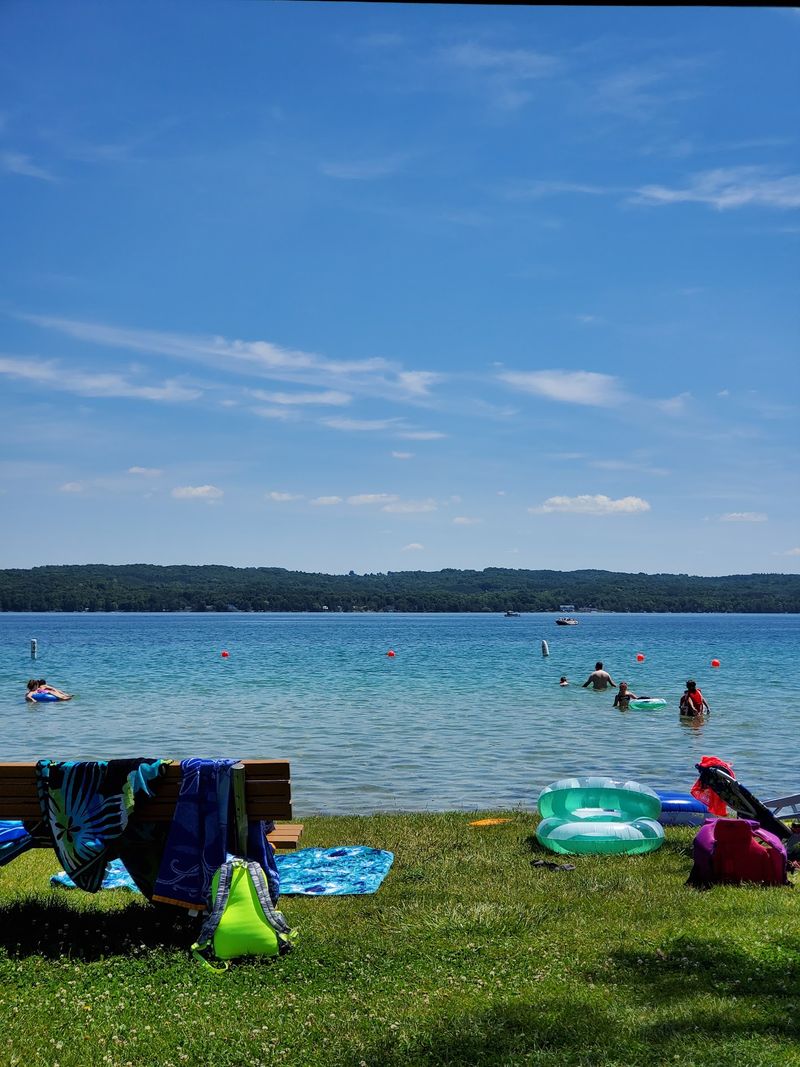
The Lake has public access, but shoreline entry is not the same at every location. Torch Lake Township identifies 18 known road ends.
Some are not regularly maintained, some can become overgrown, and others may be difficult for visitors to identify.
William K. Good Day Park provides a more developed public access point with a beach, restrooms, picnic space, a playground, pavilions, a dock, a single-lane boat ramp, and parking.
The park is at 12201 Public Dock Rd, Kewadin, MI 49648.
Other public launches and access points are maintained around Torch Lake and the connected waterways. Boaters and paddlers can use established launch sites rather than relying on unmarked shoreline openings.
Much of the land around Torch Lake is private property, so designated parks, public road ends, and official launches are the appropriate places to reach the water.
The Torch Conservation Center also encourages visitors to respect private shoreline beside public access sites and to use established access points.
With such a long shoreline, public entry can look different from one part of the lake to another. A township park, marked boat launch, or documented public road end gives a clearer starting point than an unmarked shoreline route.
Short-Term Rentals Are Getting More Direct Township Oversight
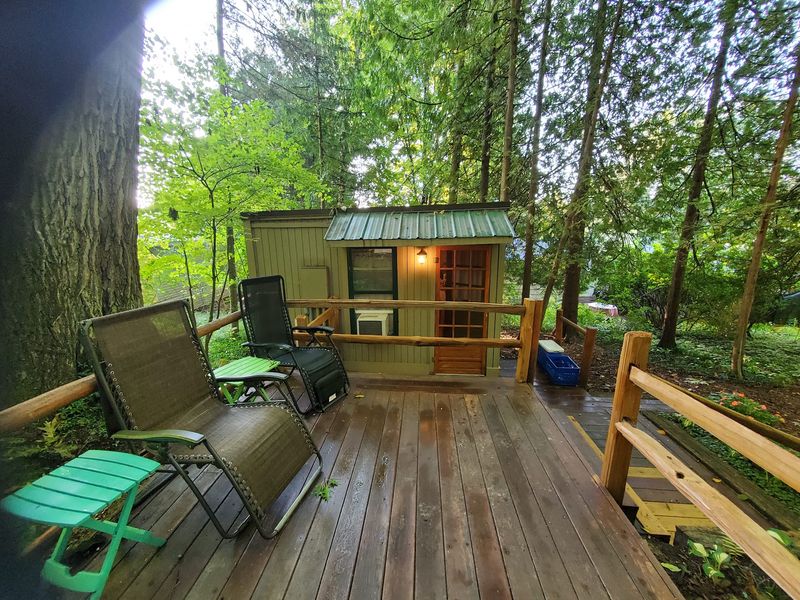
Lakeside cottages have long been part of the landscape, and short-term rentals now sit within a more formal local enforcement system.
Torch Lake Township treats stays of less than 30 days as short-term rentals under its local rules. Restrictions on short-term rentals have existed for years, while enforcement received new attention in 2026.
During a special township meeting in late July, officials approved a new ordinance-enforcement position focused on short-term rentals and hired someone to fill that role.
That position gives Torch Lake Township a dedicated official for handling short-term-rental enforcement under the rules already in place.
Visitors booking a cottage or house around the township can check that the property is operating within current local requirements before completing a stay.
Short-term rentals are also part of the township’s broader land-use environment, which includes zoning, recreation, road access, shoreline use, and residential areas around the lake.
The rules do not apply to every property around the entire shoreline in exactly the same way because Torch Lake spans multiple local jurisdictions. Township boundaries matter when checking requirements for a specific rental.
Much Of The Shoreline Has Been Changed By Development
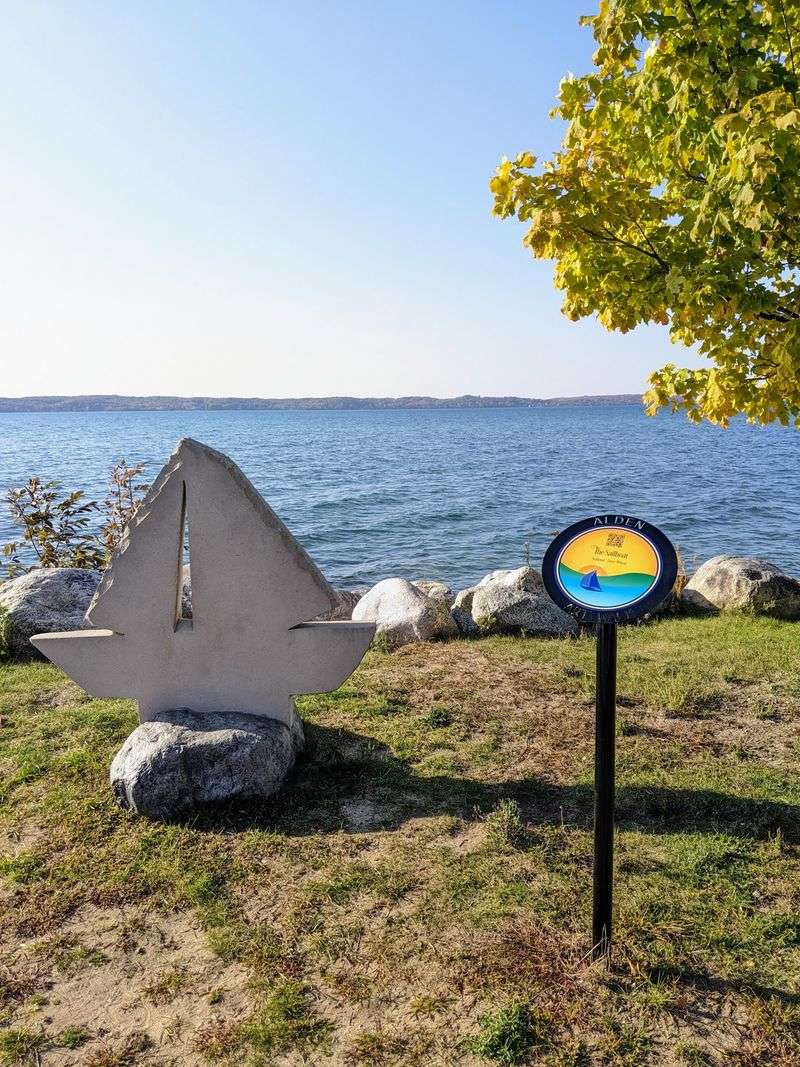
Torch Lake may look open and undeveloped from the middle, but homes, lawns, docks, roads, and other development line many parts of the shoreline.
Much of the original natural shoreline has been altered over time as homes, landscaping, access points, and other structures have spread around the lake.
Natural shoreline vegetation helps hold soil in place, slow runoff, and reduce the movement of sediment and nutrients toward the water. Trees, shrubs, and native plants also provide habitat around the shallows and shoreline edge.
The Torch Conservation Center encourages property owners to keep or restore native vegetation, plant buffer gardens, manage stormwater, and reduce runoff from developed areas.
Extra nutrients and sediment entering a lake can affect water clarity and aquatic growth. Shoreline vegetation and stormwater controls can reduce some of that movement before runoff reaches the water.
Shoreline restoration does not require every developed property to look the same. Native plantings, reduced lawn area near the water, protected shoreline vegetation, and better stormwater handling can all preserve more natural function around homes and cottages.
Torch Lake still has stretches where trees and vegetation remain close to the water, while other sections are more heavily landscaped or built up.
Boating Rules Protect Busy And Sensitive Water
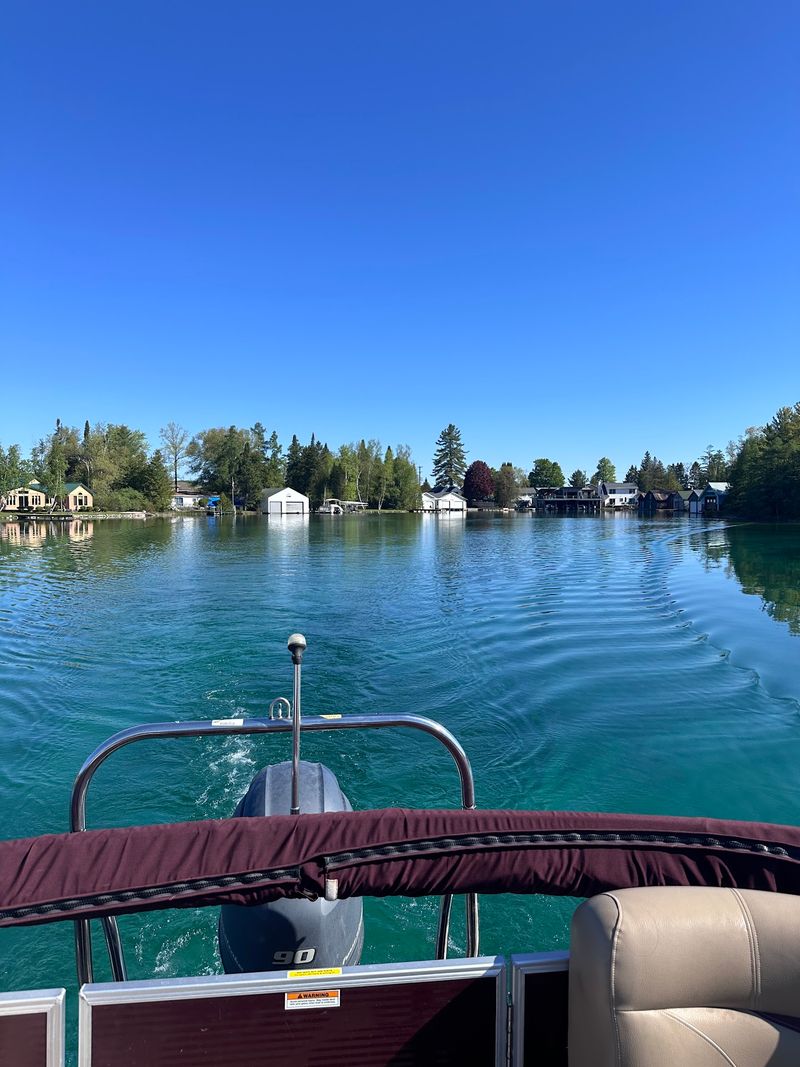
Boating is a major part of this place, but certain sections of the connected waterway come with specific speed restrictions.
Michigan rules require slow-no-wake speed on Torch River and for 300 feet into Torch Lake around the river’s mouth. The rule applies to the regulated portions associated with both Antrim and Kalkaska counties.
Slow-no-wake means operating at a very low speed so the boat creates minimal wake or wash. That is especially important in narrower channels and close to shoreline areas.
Open sections of Torch Lake provide far more room than the river mouth, but boaters still have to follow statewide boating requirements and local controls where they apply.
Michigan also requires watercraft users to take steps to reduce the spread of aquatic invasive species. Boats, trailers, and equipment must be cleared of aquatic organisms and plants before transport, and water must be drained from equipment where required.
Torch Lake and connected waterways already contain invasive species including zebra and quagga mussels, round gobies, rusty crayfish, and Eurasian watermilfoil.
Boater-safety requirements also vary by age and watercraft type. Michigan requires a boating safety certificate for certain operators, including people born on or after July 1, 1996, when operating qualifying motorboats.
The Lake Is Already Planning For Its Next Chapter
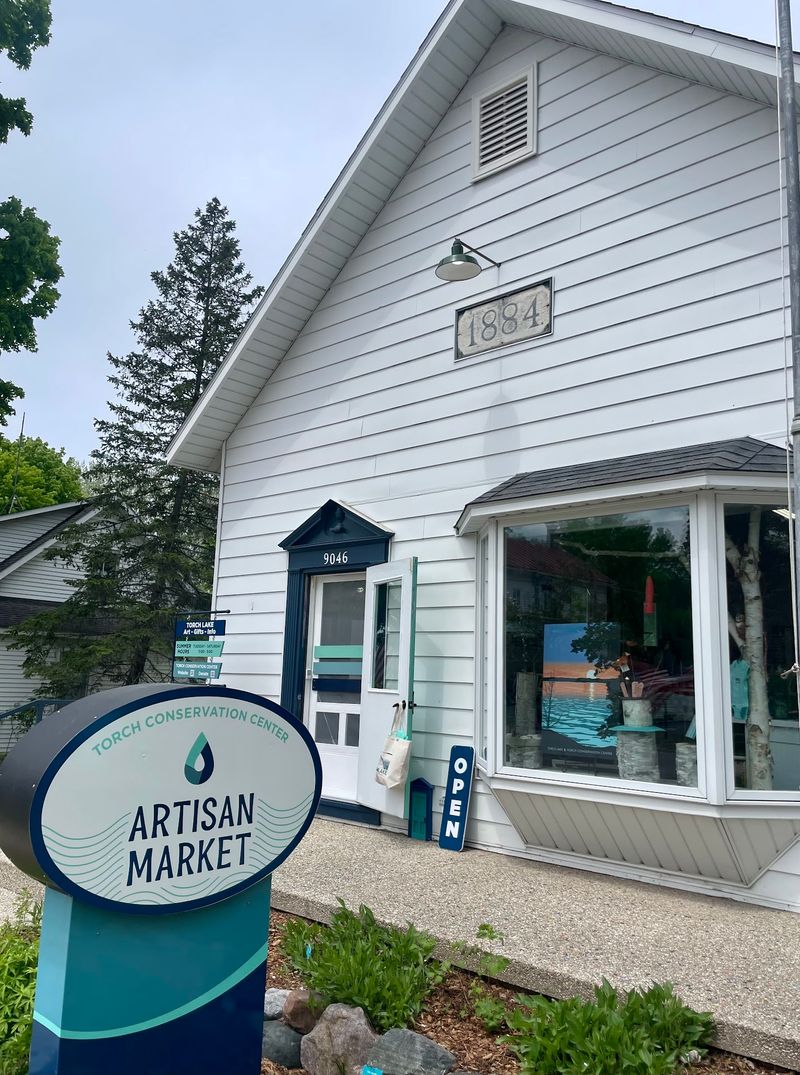
The Township is actively working on its Master Plan and Parks and Recreation Plan, with another Master Plan open house scheduled for September 21, 2026.
The planning process covers public access, recreation facilities, future land use, township priorities, and projects raised through community input.
Environmental monitoring is happening at the same time. The Torch Conservation Center reports that lake water is warming sooner and staying warm longer. Golden-brown bottom algae has been documented in Torch Lake since 2014.
Invasive species are also present in the wider system. Zebra mussels, quagga mussels, round gobies, rusty crayfish, and Eurasian watermilfoil are among the species documented in or around Torch Lake and connected waters.
Township planning in 2026 includes decisions about recreation, access, land use, and facilities around a lake that serves residents, seasonal property owners, and visitors.
Visitors can use established access points, follow slow-no-wake controls, clean and drain watercraft, respect private shoreline, and remove trash after a day on the water.
Torch Lake remains exceptionally clear, exceptionally large by Michigan inland-lake standards, and closely tied to the surrounding communities.
Its shoreline, public access, recreation facilities, and water quality will remain central parts of local planning and conservation work as the lake stays prominent on northern Michigan summer maps.