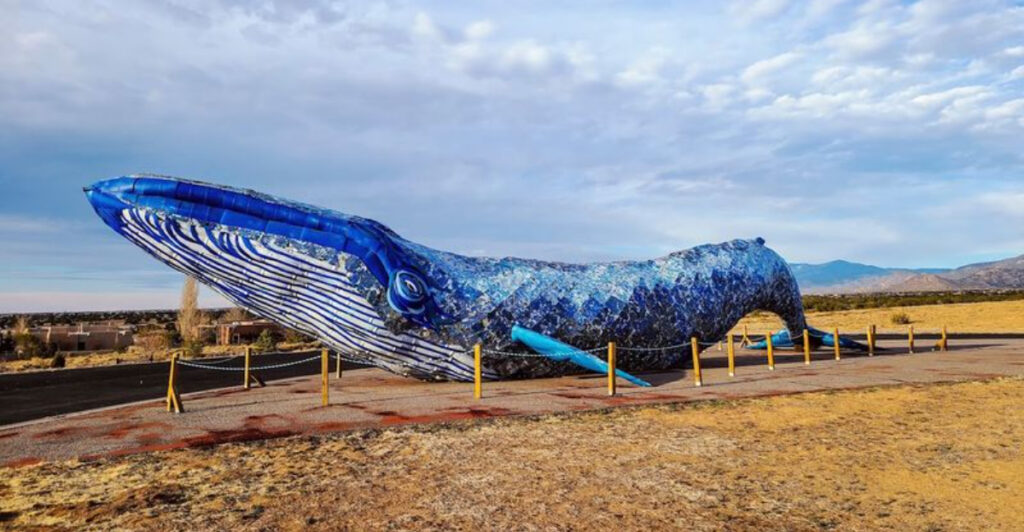
A whale in the desert sounds like a dream someone forgot to explain. Then you reach the community college campus and there she is, massive, blue, and impossible to ignore.
This striking New Mexico stop turns a simple visit into one of those moments where you pull out your phone before you even know the full story. Her size grabs you first.
The recycled plastic does the rest. This is not a sculpture you glance at and move past.
It makes you circle around, study the surface, and think about how much everyday waste can add up over time. This area has plenty of art that gets attention, but this one feels different because the message is built into every curve.
The more you learn about it, the stranger and smarter it becomes. These facts make that first look feel even bigger than the photos ever really suggest.
A Giant Whale Rising From The Desert Campus
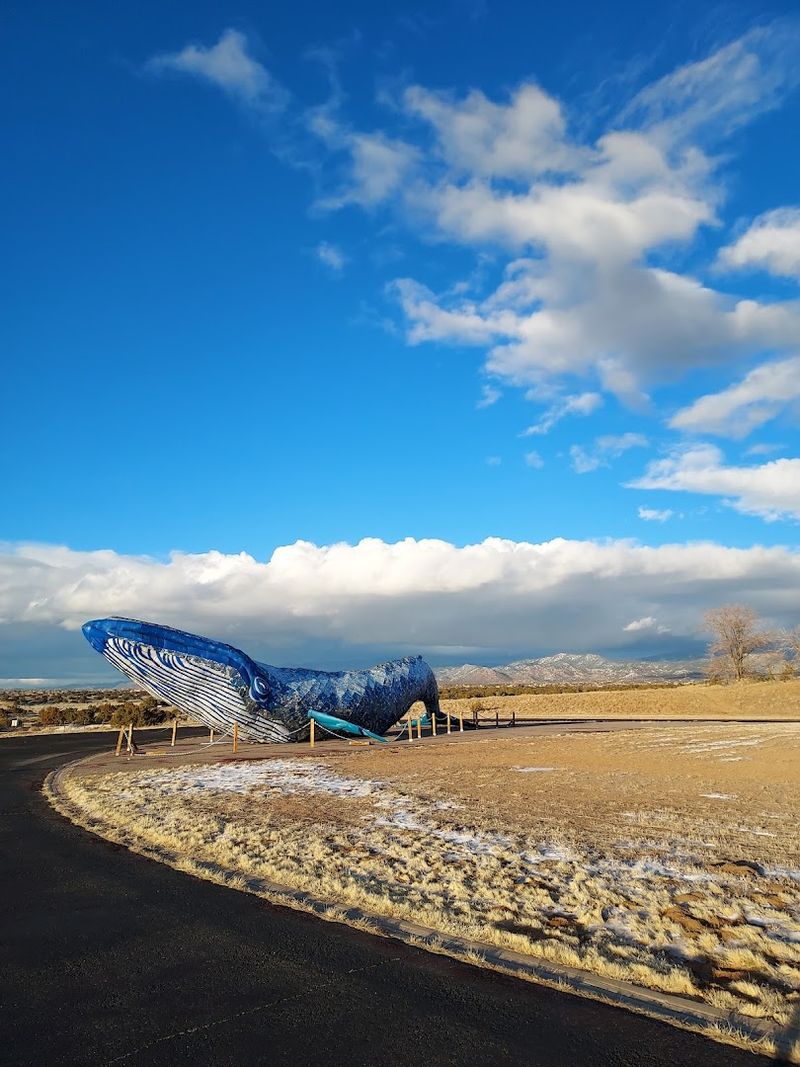
Nothing in the parking lot warns you about what is waiting around the corner of that quiet campus path.
The first time I rounded the bend and saw that enormous blue form stretched across the desert ground, I stopped walking entirely and just stared for a solid ten seconds.
She is 82 feet long, built to the exact scale of a real blue whale, and her presence on this campus feels both wildly out of place and completely intentional at the same time.
The surrounding landscape of dry scrub and adobe buildings only makes her size more dramatic, because there is nothing else nearby that comes close to her scale.
You can walk the full length of her body and still feel like you have not quite taken it all in, which is a strange and wonderful sensation.
Every angle offers a slightly different impression, from the graceful arc of her tail to the wide sweep of her jaw.
She sits outdoors and fully accessible, free to visit any time you wander through the campus grounds.
That magnificent creature is Ethyl the Whale, and you can find her at 86 College Dr, Santa Fe, NM 87508.
Recycled Plastic Turned Into Monumental Art
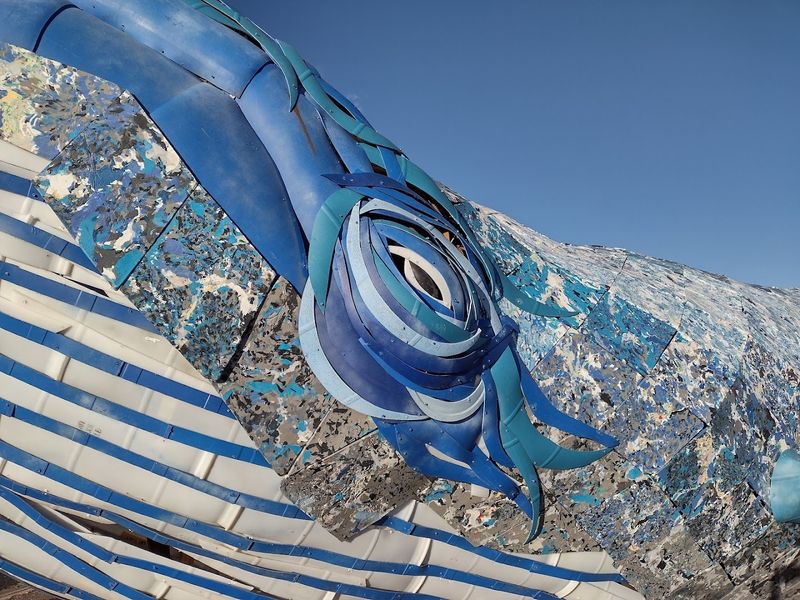
Over 5,000 pounds of number-two HDPE plastic went into building this sculpture, which means milk jugs, laundry detergent bottles, and similar everyday containers make up every inch of her body.
San Francisco artists Joel Dean Stockdill and Yustina Salnikova assembled those pieces by hand over a steel armature, shaping them into smooth, flowing curves that suggest real whale skin.
The idea of transforming such ordinary household waste into something this monumental is what gives the artwork its emotional punch, because you start mentally counting your own recycling bin contents.
Each piece of plastic was sorted, cleaned, and fitted into place with real craftsmanship, and the result holds up beautifully in the outdoor desert environment.
New Mexico gets intense sun and wide temperature swings, yet the sculpture maintains its color and structural integrity through changing seasons.
The name Ethyl is itself a clever nod to polyethylene, the chemical name for the plastic she is made from, so even her name carries the message.
Walking along her side while knowing what she is built from completely transforms the viewing experience into something deeply thought-provoking.
An Otherworldly Shape Under Desert Sky
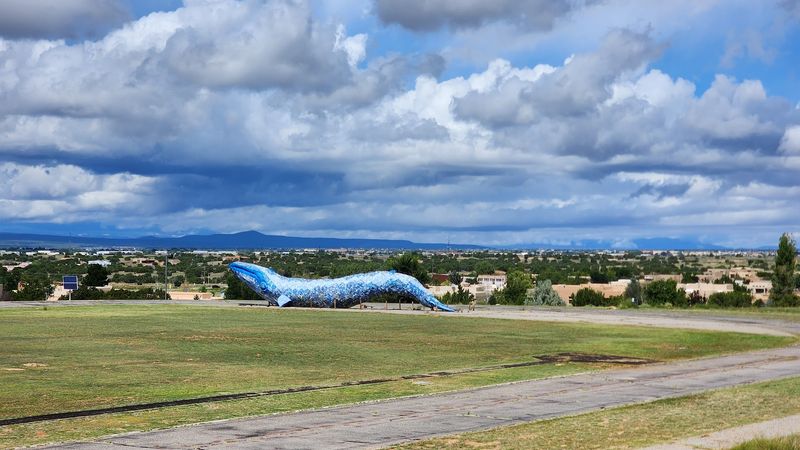
A whale in the desert is already a surreal concept, but the specific quality of light in northern New Mexico pushes the strangeness even further.
At midday, the sun hits her blue surface and creates a glow that feels almost digital, like something rendered by a computer rather than assembled by human hands.
In the late afternoon, long shadows stretch across the campus ground and her curves take on a sculptural depth that is genuinely stunning to photograph.
The contrast between her ocean-creature form and the dry, high-altitude terrain around her is the kind of visual tension that great public art thrives on.
Artists Stockdill and Salnikova understood that placing a sea creature in a landlocked desert would force viewers to think about the distance between ocean health and daily life choices.
That conceptual gap between her natural habitat and her actual location is part of what makes the encounter feel so charged and memorable.
Visitors often describe the experience as slightly dreamlike, and after standing beside her under that enormous sky, I understood exactly what they meant.
The setting makes her feel like a visitor from a different world entirely.
A Giant Landmark With A Message
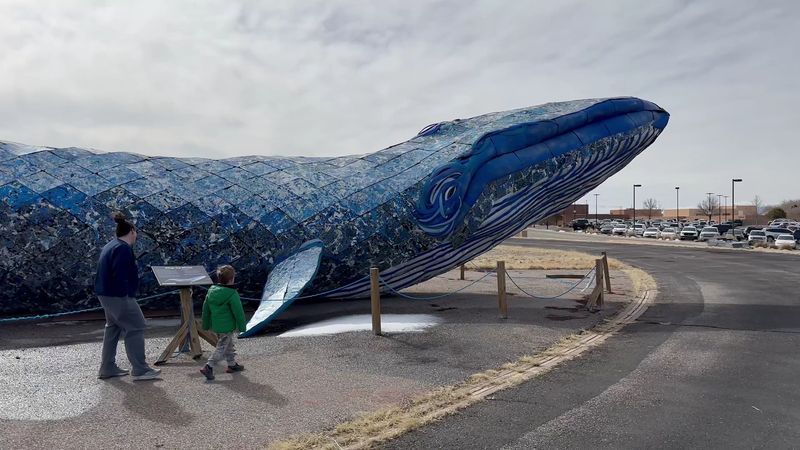
The statistic attached to this sculpture is the one that stays with you long after you leave the campus.
The amount of plastic used to build Ethyl represents the total plastic a single average person accumulates by the time they turn twenty years old.
That number is staggering when you stand beside her and try to picture twenty years of milk jugs, shampoo bottles, and detergent containers piling up around a single human being.
She was originally commissioned by the Monterey Bay Aquarium in California, which gives her conservation credentials a serious institutional weight behind them.
After her early installations near the Golden Gate Bridge in San Francisco, she traveled to New Mexico when the Santa Fe arts collective Meow Wolf acquired her in 2019.
Meow Wolf placed her on loan at Santa Fe Community College, where she was unveiled on Earth Day, a date that perfectly matched her environmental purpose.
She does not just sit there looking impressive; she actively invites visitors to think about consumption habits and the downstream effects of everyday plastic use.
Few landmarks in New Mexico carry this kind of layered environmental and artistic significance all at once.
Outdoor Art That Stops You In Your Tracks
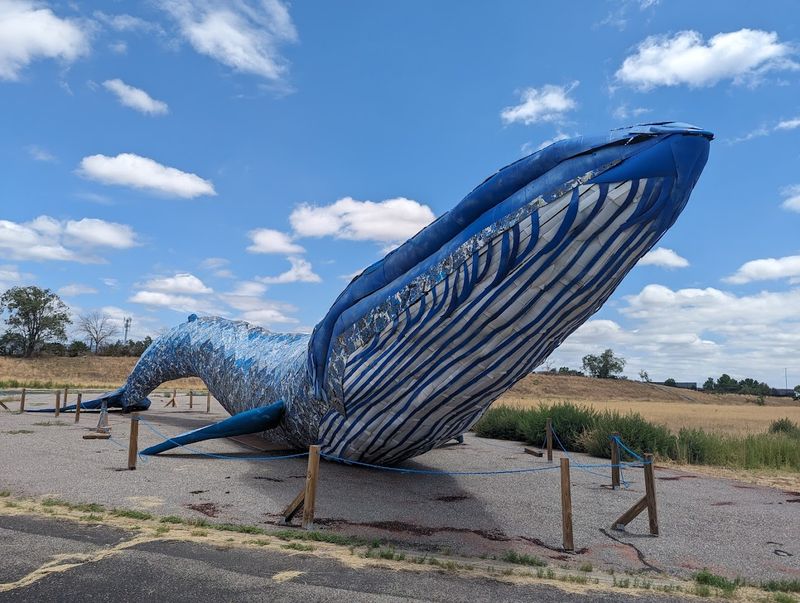
Public art earns its place when it genuinely interrupts your day, and this sculpture does exactly that without any fanfare or ticket booth.
The campus setting means she sits in an open, accessible space where anyone can walk up, circle around, and spend as long as they want taking it all in.
I noticed that every person who arrived while I was there went through the same sequence: they spotted her from a distance, picked up the pace, then slowed way down once they got close enough to register her true scale.
She holds a Guinness World Record as the largest recycled plastic sculpture ever created, which gives her bragging rights that most public artworks can only dream about.
That record is not just a fun fact; it signals the enormous ambition that went into her creation and the level of engineering required to pull it off.
Kids especially seem to lose their minds a little when they realize she is the same size as a real whale, and watching that moment of realization is genuinely joyful.
No ropes or barriers keep you at a distance, so the encounter feels personal and unfiltered in a way that museum art rarely manages.
Sculptural Details Made For Close-Up Photos
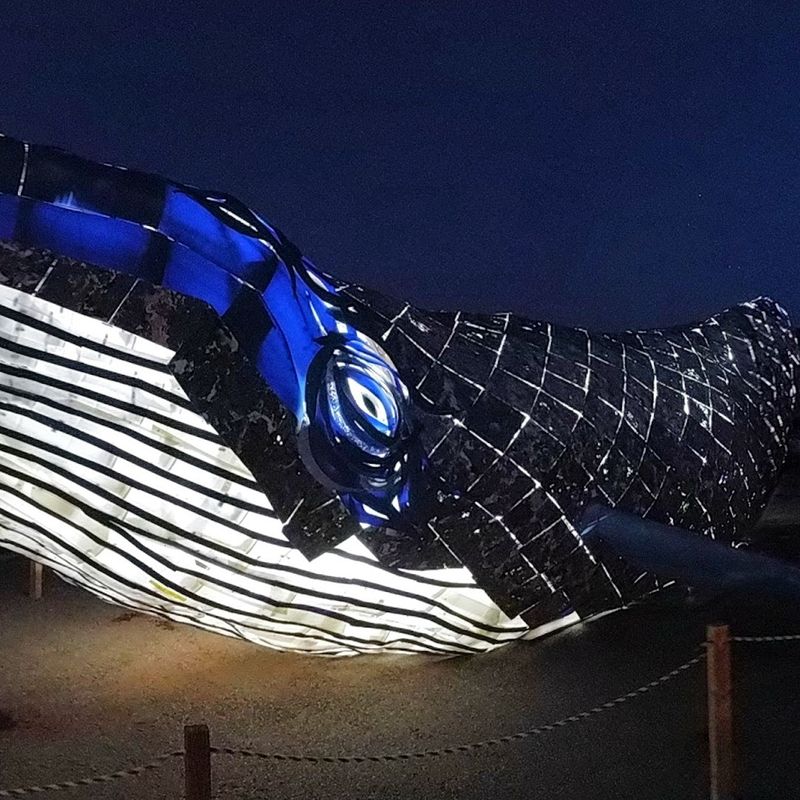
From a distance she reads as smooth and monolithic, but move in close and the surface tells a completely different story.
Individual pieces of recycled plastic are visible across her body, each one fitted and shaped to follow the organic contours of a real whale’s skin.
The texture varies from section to section, with some areas showing a tighter, almost scale-like pattern and others opening up into broader planes that catch the light differently.
Her fins and tail flukes are where the craftsmanship becomes especially impressive, because those thinner structures required careful engineering to hold their shape without a solid mass behind them.
Photographers tend to cluster around her head and tail, but the mid-body sections offer some of the most interesting surface detail if you take the time to look.
The blue coloring shifts subtly depending on the angle and time of day, moving from a deep navy in shadow to a brighter turquoise in direct sun.
Bringing a camera with a good macro setting will reward you with shots that look almost abstract, turning recycled plastic into something that resembles natural texture.
Every close-up reveals another layer of the artists’ meticulous handiwork.
A Surreal Blue Form Against Southwestern Light
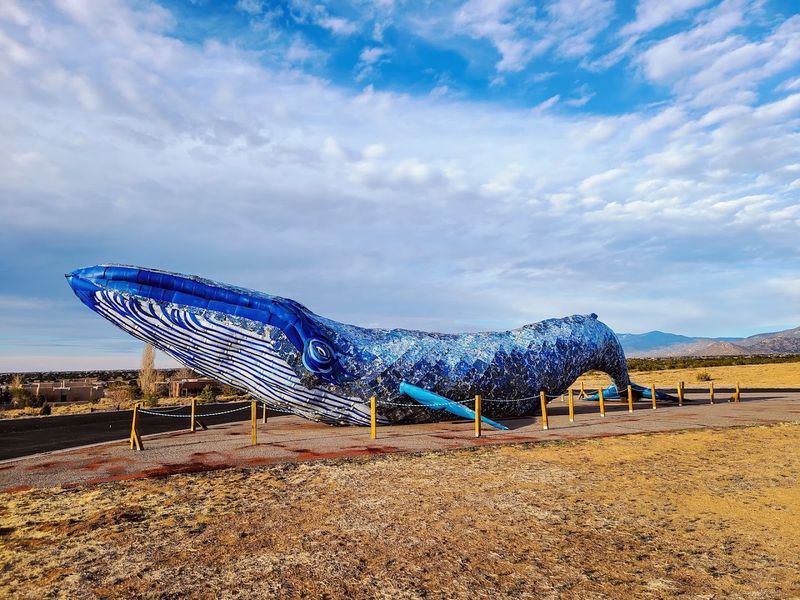
Golden hour at this campus is a genuinely special time to visit, and the sculpture seems almost purpose-built for that particular quality of light.
The warm amber tones of the late afternoon sun play against the cool blue of her surface in a way that feels almost theatrical, like a stage set designed by someone who really understood color.
New Mexico is famous for its light, and artists have been coming here for over a century specifically because of the way the sun behaves at high altitude.
Ethyl benefits from that same phenomenon, absorbing and reflecting the changing sky in ways that make her look slightly different on every visit.
I went back a second time just before sunset and the experience was noticeably distinct from my midday visit, which tells you something about how much the environment shapes the artwork.
The blue of her body against the ochre tones of the surrounding desert creates a color pairing that feels both unexpected and completely right.
Clouds rolling in from the mountains can add even more drama, turning the sky behind her into a backdrop that no studio could replicate.
She wears the Southwestern light like it was made for her.
A Quiet Campus Corner With Big Visual Impact
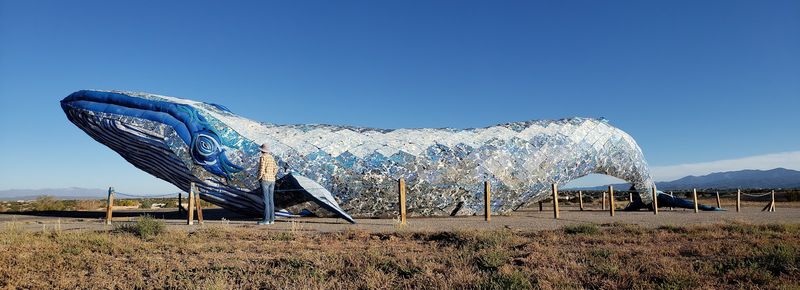
Santa Fe Community College is not the first place most visitors think to add to their itinerary, but that oversight is worth correcting.
The campus itself is a calm, unhurried space where the sculpture sits in an open area that gives you plenty of room to step back and take in the full picture.
Unlike crowded gallery settings or heavily trafficked tourist zones, this spot has a relaxed quality that lets you actually think while you look, which feels increasingly rare.
Smaller companion sculptures are scattered around the campus grounds, so a slow walk through the area rewards curiosity with additional discoveries along the way.
Practical details worth knowing: parking is straightforward, the surface around the sculpture is relatively flat and easy to navigate, and the visit works well as a quick twenty-minute stop or a longer, more leisurely exploration.
The phone number for the college is listed as plus-one 505-428-1000 if you want to call ahead about access or campus hours.
First-time visitors consistently report that the scale surprises them far more than they expected, even after seeing photos online.
A quiet corner of a college campus turns out to be one of the most memorable stops in all of New Mexico.