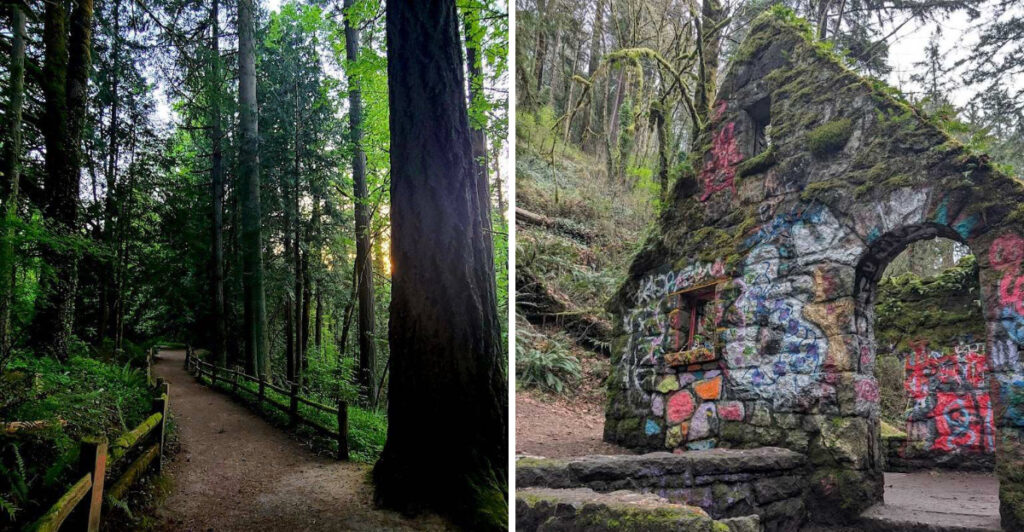
The trail drops into the forest and follows a creek, and within minutes the city disappears entirely. About a mile in, the stone walls appear through the trees, covered in moss and graffiti, open to the sky, and unlike anything else you will find on a Portland hike.
The structure has a name that does it justice.
The Witch’s Castle started as a city-commissioned restroom and hiker shelter in the 1930s, was abandoned after a 1962 storm, and spent the following decades being slowly reclaimed by one of the largest urban forests in the country.
The land beneath it carries its own dark story, stretching back to an 1858 event and the first legal execution in Oregon Territory.
Your round-trip costs nothing. Your afternoon in Oregon will not be quickly forgotten.
The Stone House That Was Never Meant To Be Famous
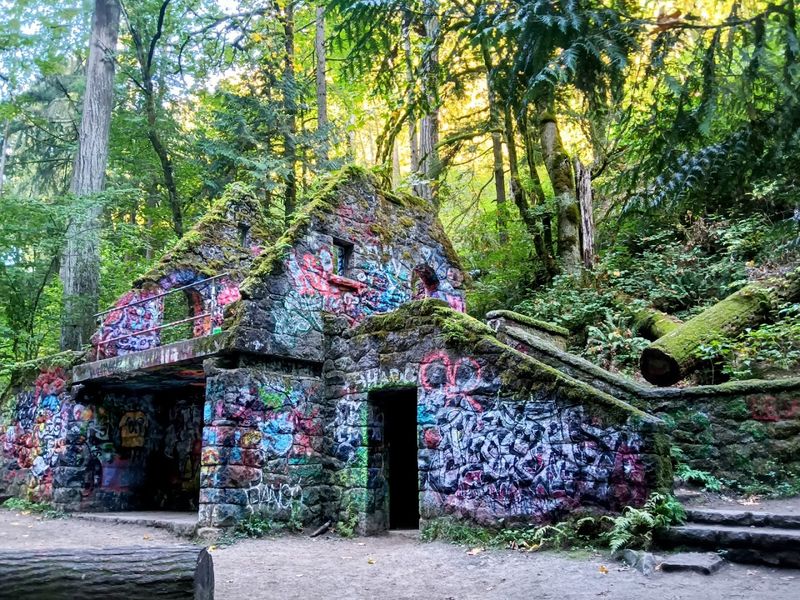
Most famous landmarks were built to impress. This one was built to house a toilet.
The structure now known as the Witch’s Castle was originally commissioned as a public restroom and hiker pavilion for Forest Park in Portland, Oregon.
Construction was completed in 1935–1936, designed by architect Ernest F. Tucker for the Portland Bureau of Parks.
For a few decades, it did its job quietly. Hikers rested there.
Rangers used it as a station. Nobody wrote songs about it.
Then the Columbus Day Storm of 1962 hit Oregon hard. The storm severed the main waterline to the building.
City officials decided repairs were not worth funding, and the structure was left to the forest.
Moss moved in. The roof eventually gave way.
Ferns crept through the window frames. What had once been a practical, unglamorous utility building slowly transformed into something that looked like it belonged in a fantasy novel.
Accidental icons are often the most interesting ones.
The Land, And The Local Lore
Before the stone walls were ever built, the land beneath them already carried a heavy story.
In the mid-1800s, a man named Danford Balch owned the property in what is now northwest Portland, Oregon. He had forbidden his daughter from marrying a man named Mortimer Stump.
When the couple married anyway, Balch responded with violence, and Stump did not survive the encounter.
Balch was arrested, tried, and became the first person legally executed in the Oregon Territory. His wife, Mary Jane, was left behind on the land, and local folklore has since cast her as the “witch” tied to the property’s eerie reputation.
No historical records confirm any supernatural activity, but that has never stopped a good story from spreading. The combination of a 19th-century crime, an abandoned ruin, and a dense forest creates the perfect recipe for ghost stories.
Whether you believe in haunted ground or not, the history here is genuinely unsettling on its own.
How High Schoolers Accidentally Named An Icon
Official names rarely stick the way unofficial ones do.
The building’s formal designation was the Stone House, or the Macleay Park Shelter. Functional.
Forgettable. Then, sometime in the 1980s, local high school students discovered the crumbling ruins and started using the abandoned structure as a hangout spot.
They gave it a name that fit the vibe far better than anything a city planner would have approved. The Witch’s Castle was born, not through any official ceremony, but through the collective imagination of teenagers looking for somewhere interesting to spend a Friday night.
The nickname spread through Portland, Oregon the way good rumors always do. By the time a 2017 local news story referenced teens holding “Witches” gatherings at the site, the name had already taken on a life of its own.
Today, maps, trail guides, and social media posts all use the same name those students invented decades ago. Sometimes the best branding comes from the most unexpected places.
The Lower Macleay Trail Experience
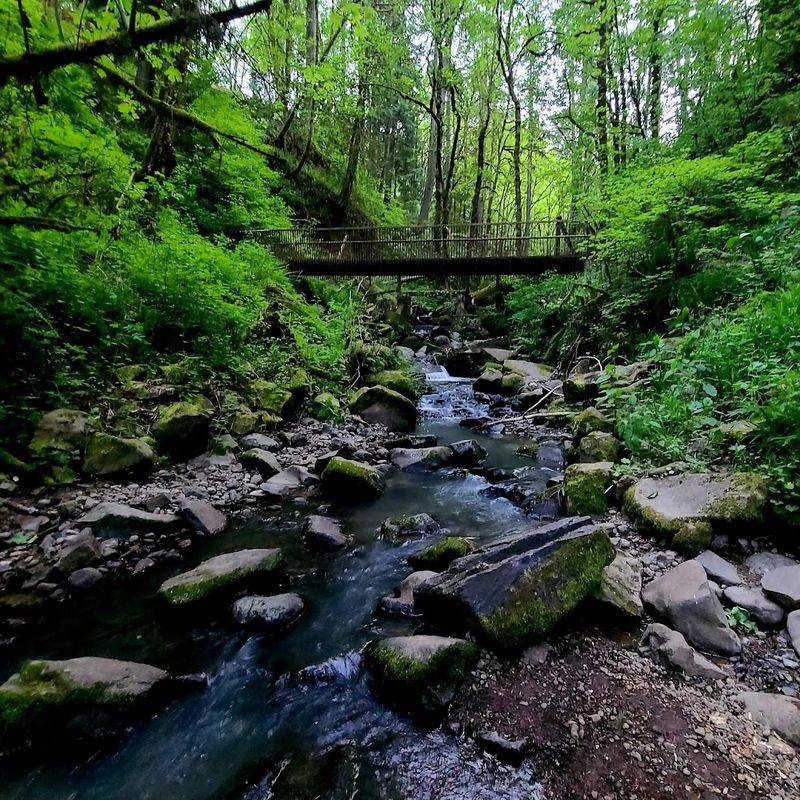
The trail itself deserves more credit than it usually gets.
The Lower Macleay Trail runs through Forest Park, one of the largest urban forests in the United States. The path follows Balch Creek for much of its length, offering the kind of scenery that makes city life feel very far away.
The hike to the Witch’s Castle is relatively short, typically ranging from about half a mile to just under a mile depending on which parking area you start from. The full Lower Macleay Trail experience stretches further, connecting to other trails within the park system.
The terrain is manageable for most hikers, including families with children. That said, tree roots, muddy patches, and slick rocks are common, especially after rain.
Sturdy footwear is genuinely recommended, not just as a polite suggestion.
A small wooden bridge crosses the creek along the way. The sound of running water follows hikers most of the route, which makes the whole walk feel more like an escape than an exercise.
What The Ruins Actually Look Like Up Close
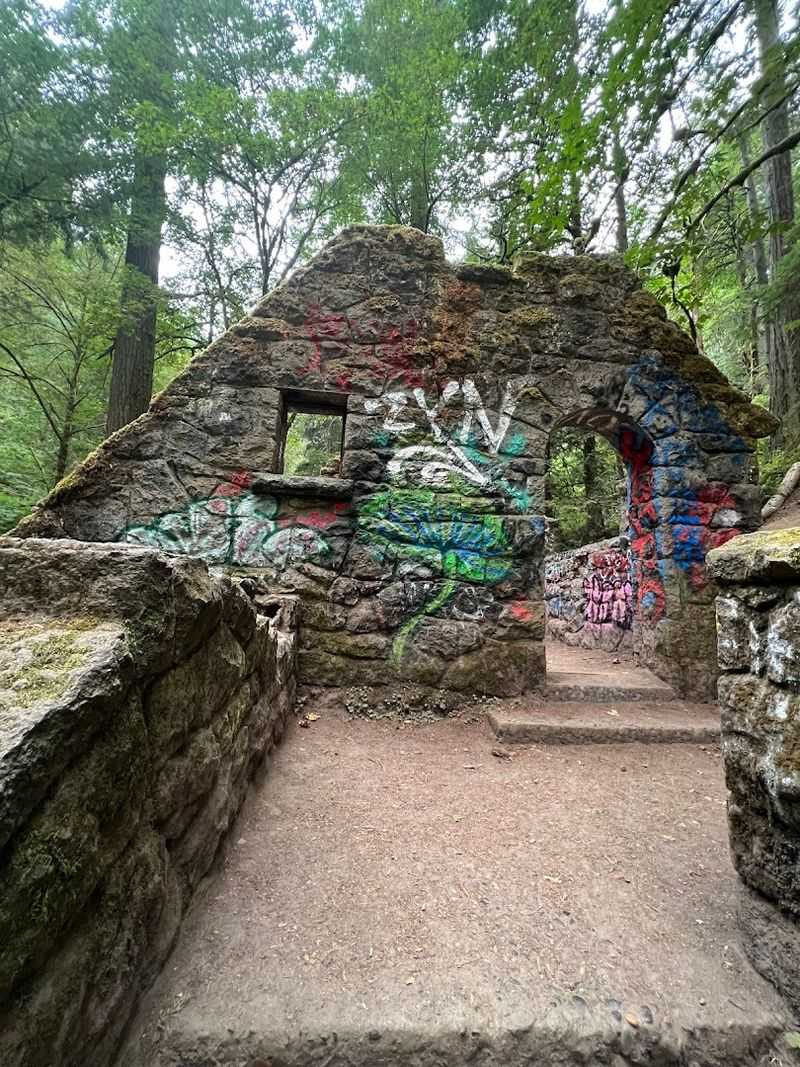
Photos of the Witch’s Castle do a decent job preparing visitors, but they do not fully capture the texture of the place.
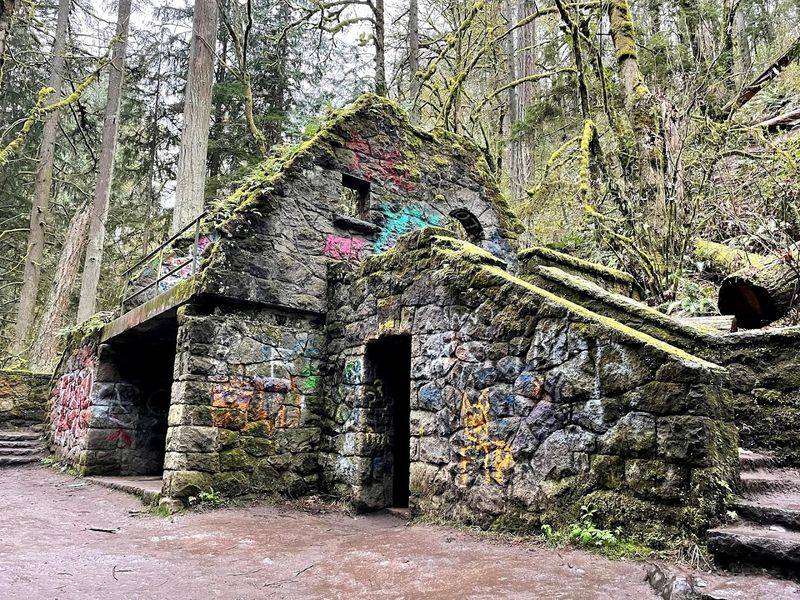
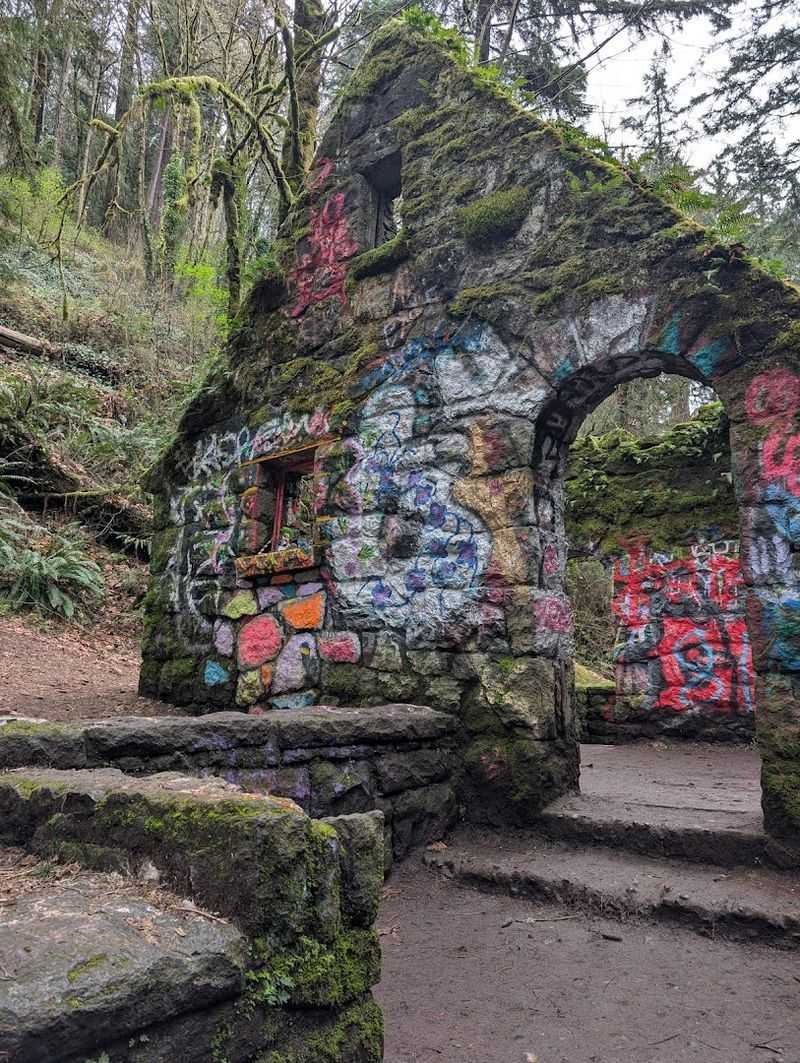
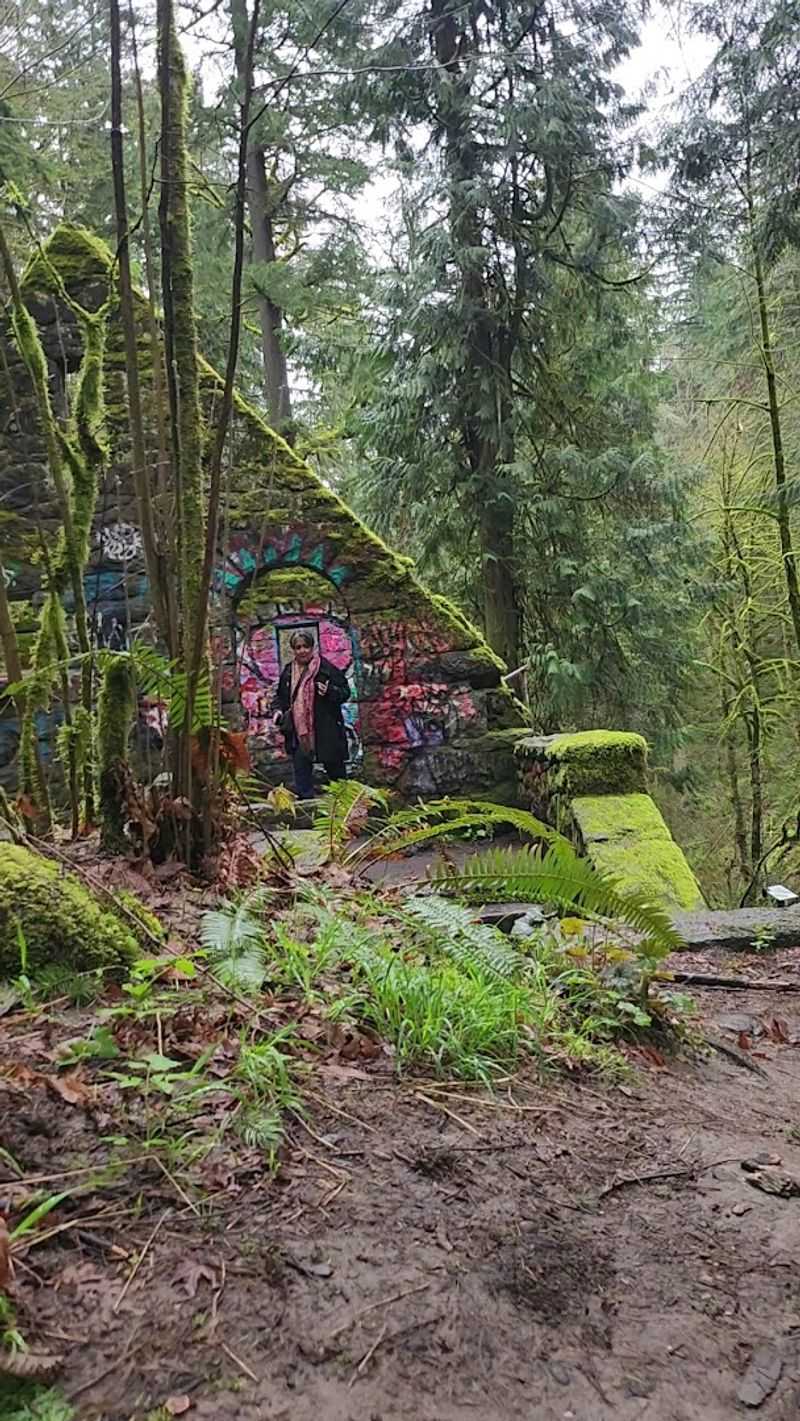
The structure is built from rough-cut stone, and its walls are thick and solid despite decades of neglect. The roof is entirely gone, leaving the interior open to the sky.
Moss covers nearly every surface in varying shades of green, giving the walls a soft, almost velvet-like appearance from a distance.
Up close, the graffiti becomes impossible to ignore. Layers of spray paint cover the interior walls in bright, competing colors.
Opinions on this vary sharply among visitors. Some find the graffiti disrespectful.
Others argue it adds a raw, living quality to a space that time has already claimed.
Small offerings and memorial-style objects are sometimes tucked into the window openings and stone ledges. The combination of natural decay, human expression, and forest stillness creates an atmosphere that is genuinely hard to categorize.
Strange and beautiful are not mutually exclusive.
Forest Park, The Giant Green Backdrop
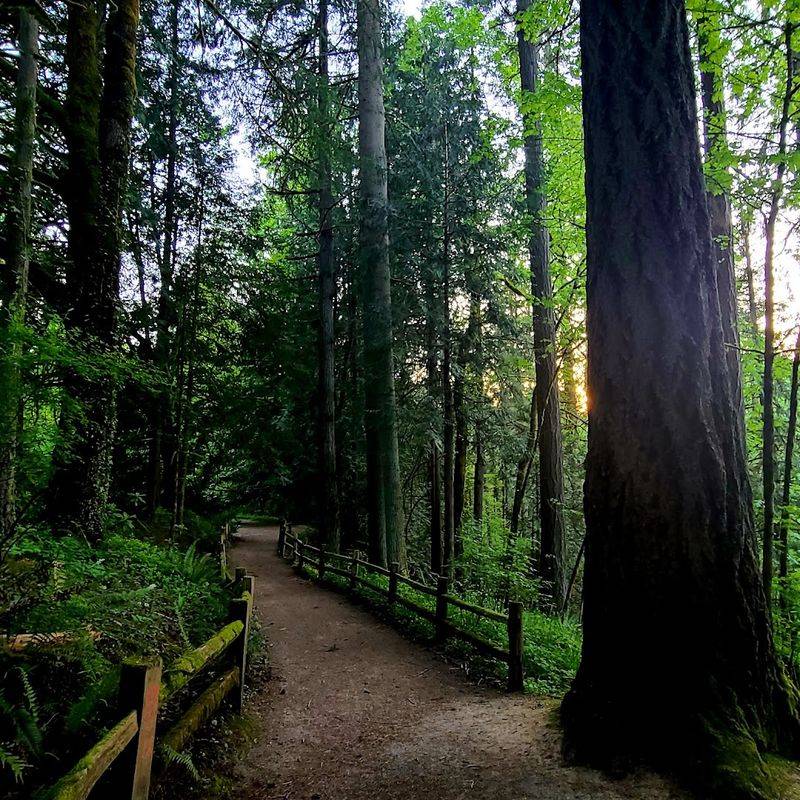
The Witch’s Castle does not exist in isolation. It sits inside one of the most impressive urban forests in the country.
Forest Park in Portland, Oregon covers more than 5,200 acres of forested land on the west side of the city. It contains over 80 miles of trails and serves as a green corridor for wildlife as well as a daily escape for Portland residents.
The park is home to Douglas fir, western red cedar, and big-leaf maple trees. Wildlife including deer, coyotes, and dozens of bird species move through the forest regularly.
The scale of the place is easy to underestimate from the trailhead.
For visitors coming from outside Oregon, the sheer size and density of Forest Park can be surprising. This is not a manicured city park with paved paths and benches.
It is a working forest with real terrain and genuine wilderness character.
The Witch’s Castle is one of the park’s most visited spots, but it is also just one small corner of something much larger.
Getting There Without Getting Lost
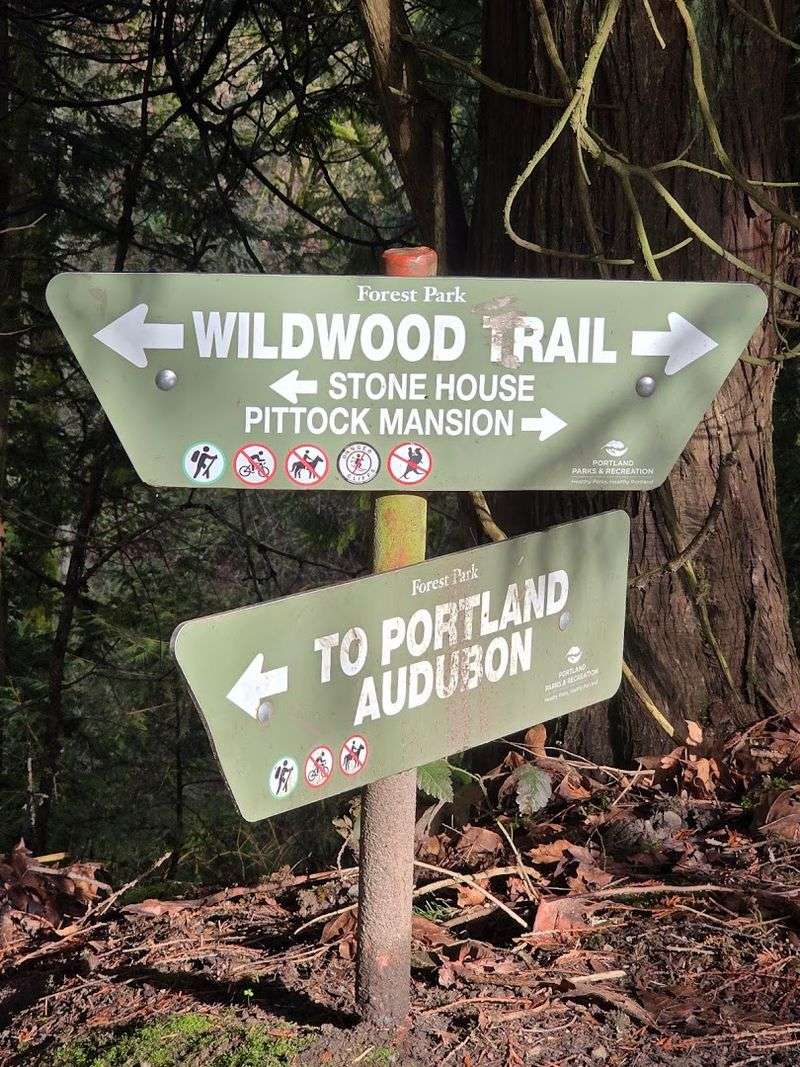
Logistics matter, especially for a spot this popular.
The Witch’s Castle sits along the Lower Macleay Trail, with the address referenced as Lower Macleay Trail, Portland, OR 97210. The most commonly used starting points are the Lower Macleay parking lot near NW Upshur Street and the Upper Macleay Trailhead further up the hill.
Parking is available at multiple lots in the area, and visitors have noted that options are generally adequate. That said, weekends attract significant crowds, and arriving earlier in the day tends to make the whole experience more enjoyable.
The trail is accessible from Portland’s northwest neighborhoods and is reachable by rideshare for those without a car. The drive through the residential streets leading to the trailhead passes through some of the city’s more upscale hillside neighborhoods, which adds an interesting contrast to the wild forest waiting just beyond.
Cell service can be unreliable on the trail, so downloading an offline map before heading out is a practical step worth taking.
The Best Time To Visit And What To Expect
Timing a visit to the Witch’s Castle can shape the entire experience.
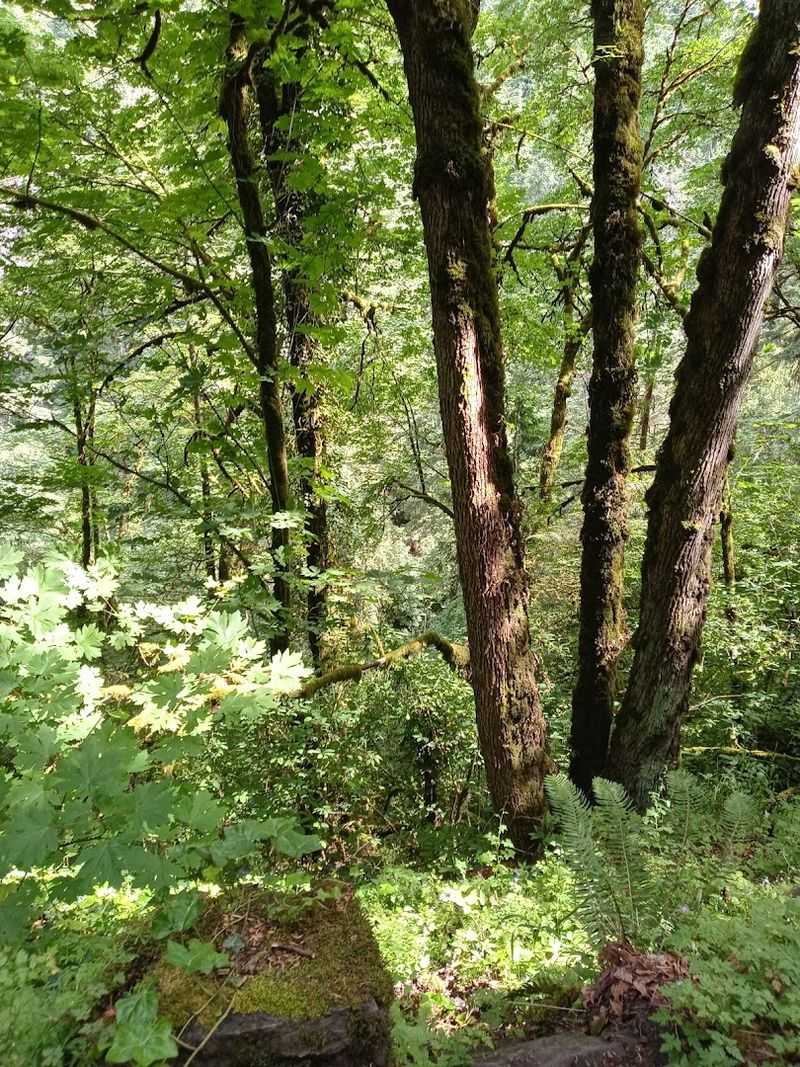
The trail and ruins are open to the public throughout the year. Oregon’s wet season runs roughly from late fall through early spring, which means the moss on the stone walls is at its most vivid green during those months.
Rain gear is a sensible companion during that window.
Summer brings drier conditions and longer daylight hours, but also the highest visitor numbers. The site can feel crowded on sunny weekend afternoons, with families, photographers, and curious tourists all converging at the same time.
Fall is widely considered one of the best seasons to visit. Cooler temperatures, changing foliage, and fewer crowds combine to make the forest feel especially atmospheric.
The ruins surrounded by orange and gold leaves have a particular visual quality that photographs well.
Early morning visits across any season tend to offer the most peaceful experience. The forest is quieter, the light is softer, and the place feels more like a discovery than a destination.
Trail Tips That Actually Make A Difference
A few practical notes can turn a good hike into a great one.
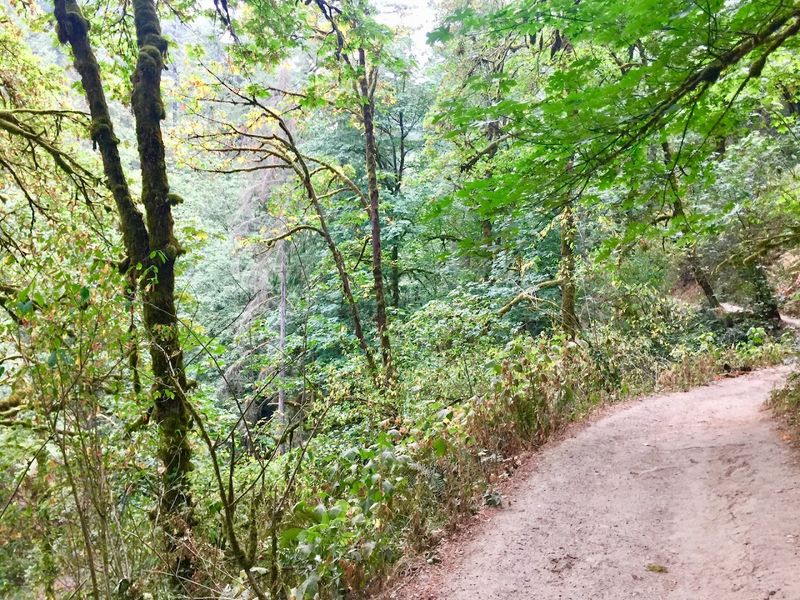
The trail surface is natural and uneven throughout. Tree roots cross the path frequently, and wet conditions make rocks and soil slippery.
Waterproof hiking boots or trail shoes with solid grip are the right call, regardless of the forecast. Portland, Oregon weather has a way of changing quickly.
The hike is generally considered easy to moderate, making it suitable for children and older adults with reasonable mobility. That said, the return trip involves more uphill walking than the approach, so pacing matters.
Dogs are welcome on the trail, and waste bags are available at certain points along the route. Keeping dogs leashed is both a courtesy and a safety measure given the wildlife in the area.
The site itself has no facilities. Plan accordingly before leaving the trailhead.
Carrying water, snacks, and a light layer is always a smart move for any forest outing, even a short one.
Leave no trace principles apply fully here.
Why This Mossy Ruin Keeps Drawing People Back
There are plenty of trails in Oregon. Most do not have a story quite like this one.
The Witch’s Castle pulls visitors in for different reasons. Some come for the history, drawn by the dark 19th-century backstory tied to the land.
Others come for the photography, chasing the contrast between ancient-looking stone and vivid forest green. Families come because the hike is short and the payoff is immediate.
The ruins have a quality that is difficult to manufacture. Decades of abandonment, layers of community expression through graffiti, and the relentless work of the Oregon forest have created something that feels genuinely weathered and authentic.
It is not a polished attraction. There is no entry fee, no interpretive signage, and no gift shop.
The experience is whatever the visitor brings to it.
That openness is part of the appeal. The Witch’s Castle asks nothing of its guests except attention.
In return, it offers a short walk, a strange history, and a view that tends to stay with people long after they leave the forest.