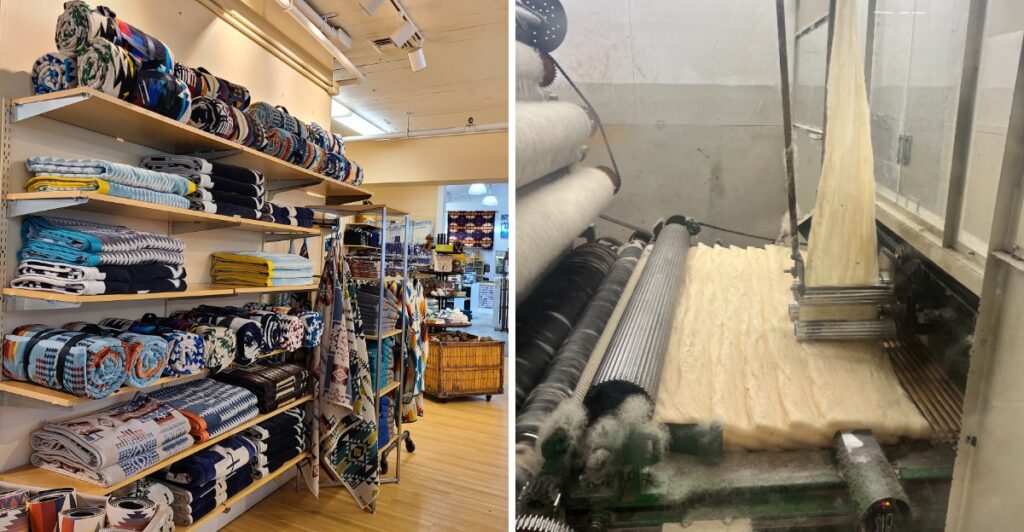
The looms here are so loud that tour guests get headphones just to hear the guide. That alone sold me. A factory tour that needs its own sound system is my kind of field trip.
The building is a three-story concrete mill from 1909. Inside, giant looms weave the jacquard wool blankets that people hand down for generations. The same family has run the company for six generations, which is longer than most of us keep a sofa.
The tour is free and short, roughly 20 to 30 minutes. You watch yarn turn into bold, patterned blankets right in front of you. Then a store out front sells those very blankets, plus slightly flawed seconds at friendlier prices.
Eastern Oregon is a long drive for a blanket, but your next favorite one is already on the loom.
Grab Headphones Because These Looms Do Not Whisper
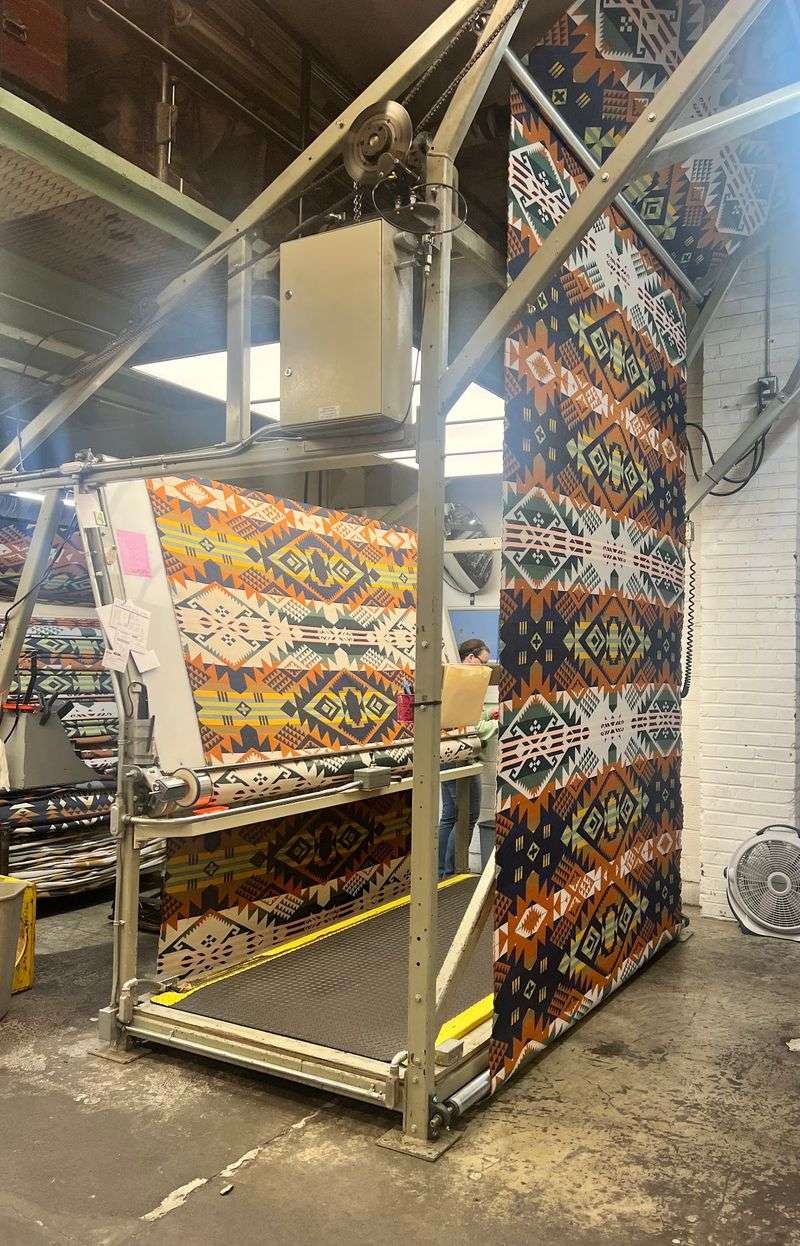
Noise is the first clue that something big is happening at Pendleton Woolen Mill. The looms here make so much racket that tour guests wear headphones to hear their guide.
That’s not a gimmick. It’s the sound of a real, working textile factory doing its job every weekday.
The star of the show is the jacquard blanket. These are the bold, patterned wool blankets the Pendleton name is famous for. On the tour, you see them woven on giant looms, one row of yarn at a time.
Watching a pattern appear out of plain threads feels a bit like magic. Except the magician is a massive machine and a skilled crew keeping it running.
The Pendleton mill in Oregon specializes in these traditional jacquard blankets. So this is the place to see that signature craft up close. It’s not a demo setup built for tourists.
Bring curiosity and maybe a few questions for your guide. Kids are welcome too, though little ones should stay close around the machinery.
One more tip. Look closely at the colors on the looms, then hunt for them in the store later. It turns shopping into a fun matching game.
A Free Tour That Fits Into Any Road Trip Schedule
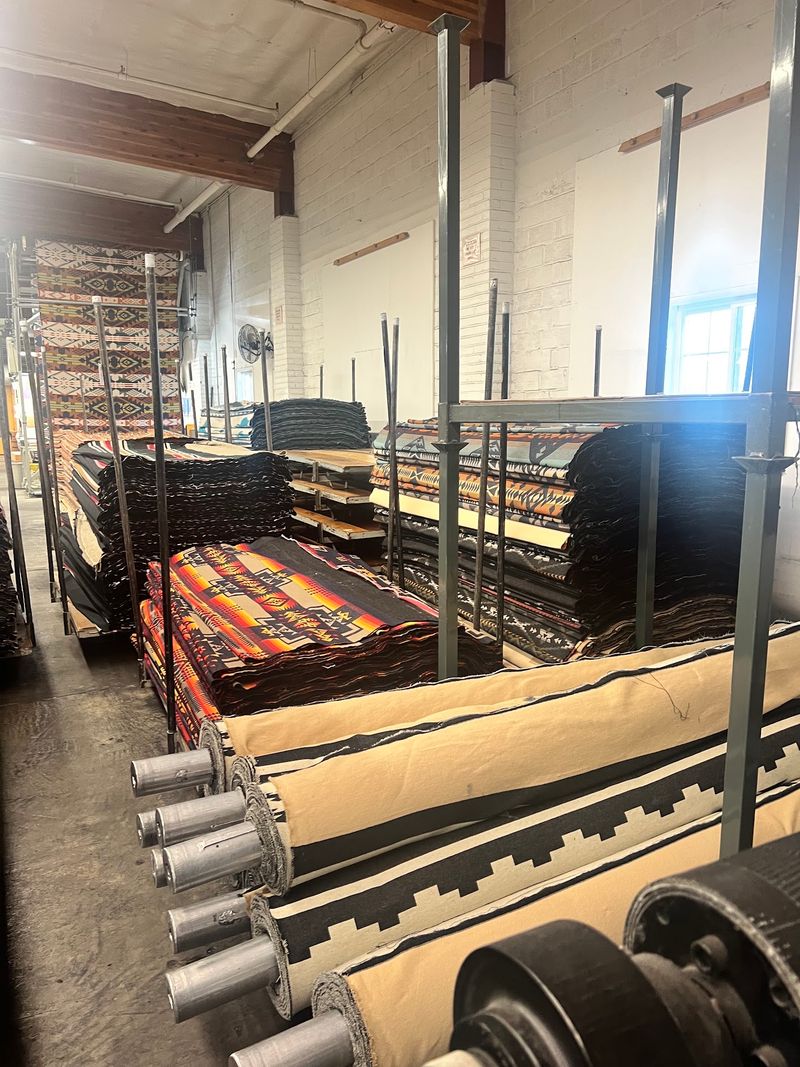
Free is a lovely price for anything these days. The mill tour costs nothing and usually wraps up in about 20 to 30 minutes.
That makes it easy to squeeze in, even on a busy travel day. You can stretch your legs, learn something, and still hit the road before lunch.
Guided mill tours are offered on weekdays, but you should confirm current departure times directly with Pendleton Woolen Mills.
Extra tours are added during the summer months, which helps when more travelers pass through town.
Times can change, so a quick call ahead is smart. The company also offers an online form for checking tour times, which saves you from guessing.
Weekend visitors aren’t totally out of luck, though. The store stays open daily, so you can still shop and browse the history displays.
Here’s a planning trick that works well. Aim to arrive a little early, explore the store first, then join the tour group when it gathers.
That way you won’t feel rushed in either spot. And you’ll have the full picture of how the blankets get made before deciding which one deserves a place on your couch.
Follow The Wool From Fluffy Fiber To Finished Fabric
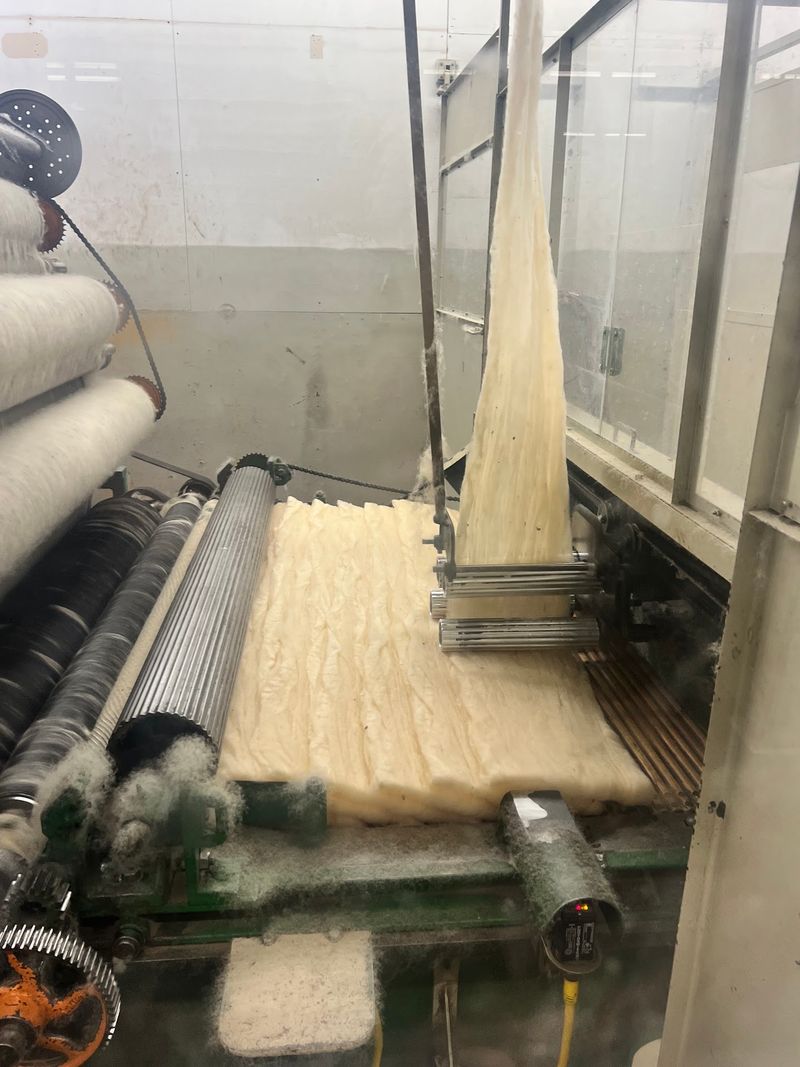
Wool takes quite a journey before it ever touches your couch. At this mill, scoured wool moves through a series of machines on its way to becoming jacquard fabric.
Much of that cleaned wool comes from the company’s sister mill in Washougal, Washington. So the process is a team effort between two Pacific Northwest mills.
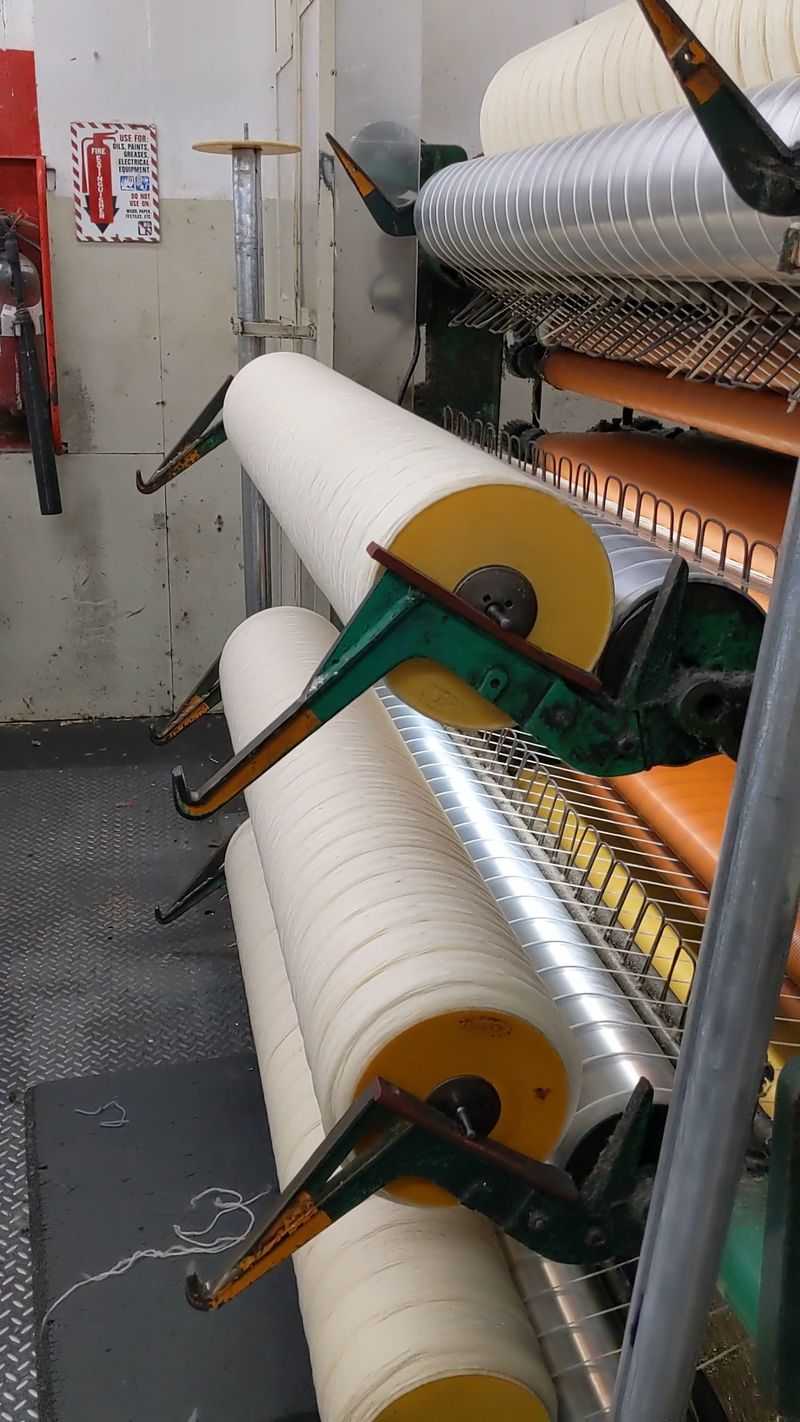
The tour lets you see parts of that chain in action. You’ll spot yarn on spools, machines prepping threads, and finally the looms weaving the patterns.
It’s a little like watching a recipe come together. Each step adds something until the final product looks nothing like where it started.
Here’s a fun detail about teamwork. The Washougal mill handles the finishing process for all the blankets, while the Pendleton mill focuses on weaving the jacquards.
That means the blanket you watch on the loom still has more work ahead. It’s not done yet, even when it looks gorgeous.
Machinery fans will love the industrial side of things. Textile lovers will enjoy seeing color and pattern build row by row. Either way, you leave understanding why these blankets cost what they do.
Concrete Floors Mean Your Comfiest Shoes Get The Job
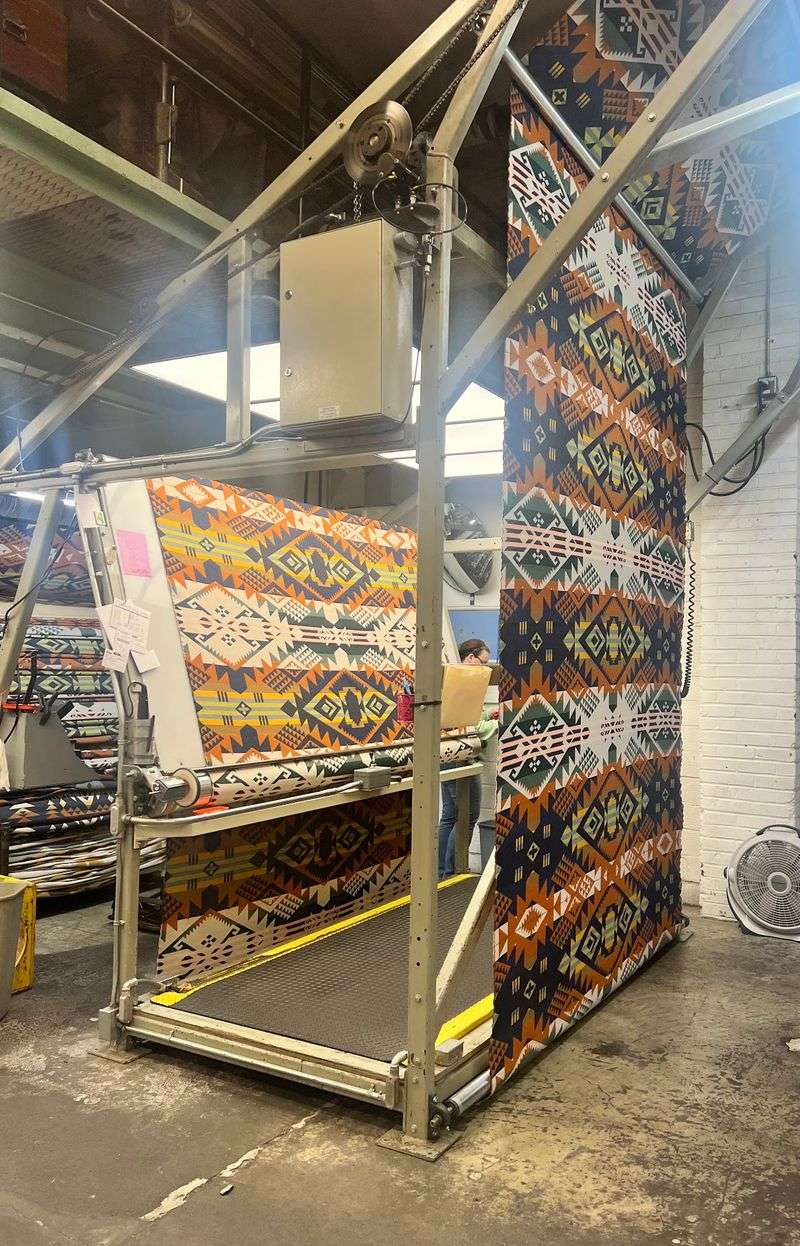
Sneakers beat sandals here, no contest. The factory floor is concrete, and comfortable shoes make the tour much more pleasant.
Fashion can wait until the gift shop. Your feet will thank you for choosing comfort over style for those 20 or 30 minutes.
The building itself is part of the story. It’s a three-story concrete mill built in 1909, and it still hums with production today.
Think about that for a second. A building older than sliced bread is still busy making blankets, which is impressive work ethic for any structure.
Families should plan a little too. All ages can join the tour, but kids need supervision around the machines. Moving equipment and curious hands are not a great mix.
A quick chat with your children before the tour helps. Explain the headphones, the noise, and the rule about staying close to the group.
Once everyone knows what to expect, the visit gets easier. Then the whole crew can enjoy the giant looms without anyone wandering toward a spinning spool. Smart planning keeps the experience fun from start to finish.
Six Generations Of One Family Kept The Shuttles Moving
Family businesses rarely last this long. Pendleton Woolen Mills has been owned and run by descendants of Thomas Kay since 1909, across six generations.
Thomas Kay was a master weaver. He opened a wool mill in Salem, Oregon, in 1889, and the company traces its wider history back to 1863.
The Pendleton chapter started a little differently. In 1894, Pendleton businessmen financed a wool-scouring mill, which opened in 1896 to process raw wool.
The wool-scouring operation later expanded into textile production. By 1896, it was producing Native American trade blankets, a big part of the brand’s identity ever since.
Then came a quiet setback. The scouring plant went idle, and in 1909 the family took over and opened the mill that stands here today.
Three years later, in 1912, they added the Washougal mill in Washington. That pairing still powers production today.
Knowing this history makes the tour feel richer. You’re not just watching machines. You’re watching a family tradition that has outlasted countless trends, fads, and fashion seasons, still weaving away in the same spot.
A Mini Museum Hides Inside The Shop
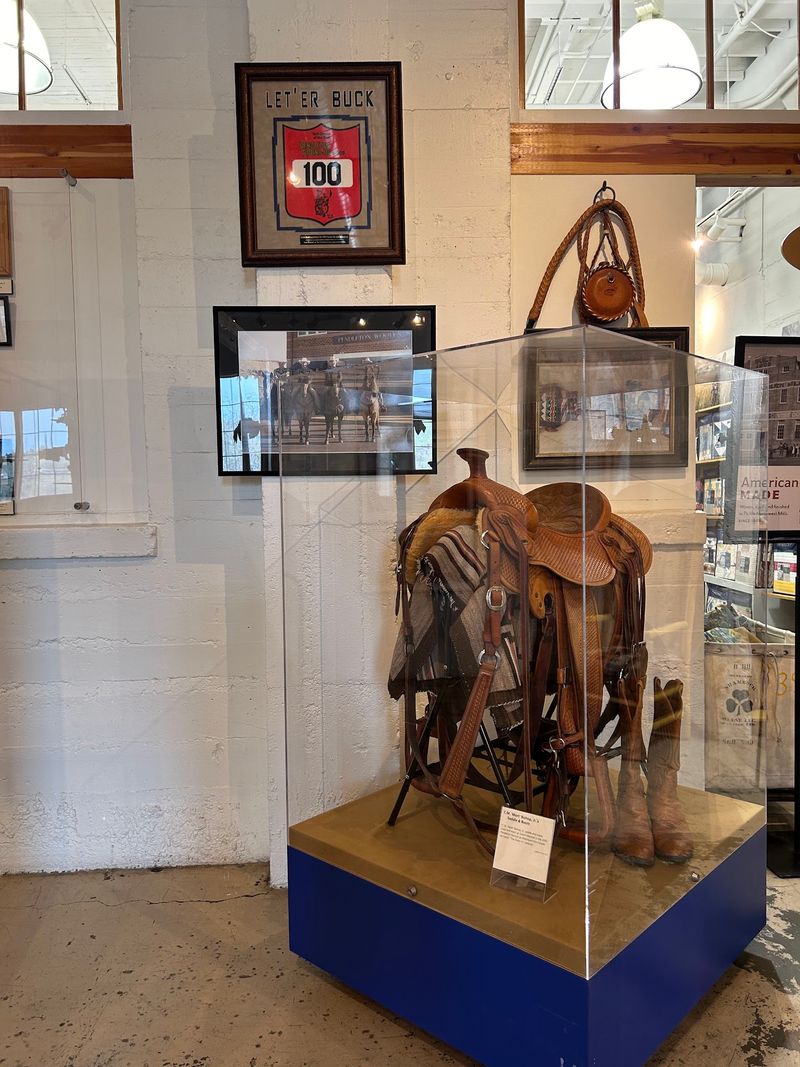
Most stores give you racks and a register. This one adds a small museum and a history timeline that walks through the company’s past.
It’s a smart stop before or after the tour. The displays fill in the story that the noisy factory floor can’t quite tell.
The timeline helps connect the dates. You can trace the jump from wool scouring to weaving, then on to the blankets people know today.
Those early Native American trade blankets are a key thread in that story. The history displays give context to how central they became to the brand.
Short on time? The museum is a great backup plan. Weekend travelers who miss the weekday tour can still learn plenty right inside the store.
Give yourself at least a few extra minutes here. Rushing past the displays would be like skipping the trailer and wondering why the movie feels confusing.
Bonus perk for history buffs. Reading about the patterns first makes the blankets on the shelves more meaningful. Suddenly that colorful throw has a backstory, and choosing one feels a lot more personal.
The Store Out Front Makes Leaving Empty-Handed Tough
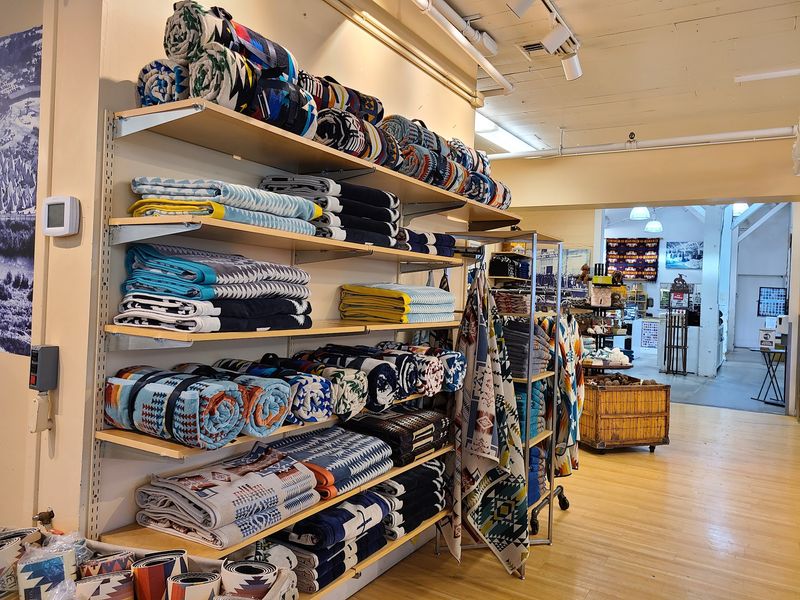
Good luck walking past those stacks of blankets. The retail store sits right in front of the mill, so temptation greets you first.
Shelves hold blankets, throws, and apparel for men and women. You’ll also find accessories and gifts, which helps when someone back home expects a souvenir.
The convenient location is the clever part. You watch blankets get woven, then step into the store to see finished ones waiting.
That connection makes shopping feel different. It’s hard to shrug at a blanket after seeing how much work goes into each one.
The store keeps daily hours from 10 AM to 5 PM. That’s handy for weekend travelers and anyone passing through on a long drive.
A little browsing strategy goes a long way here. Start with blankets, since they’re the mill’s specialty, then wander toward clothing and smaller gifts.
Set a budget before you go in. Wool goods are an investment, and the variety can make decisions tricky. Pick your favorite colors in advance, and you’ll have a fighting chance of leaving with just one treasure.
Plan Your Stop In This Easygoing Eastern Oregon Town
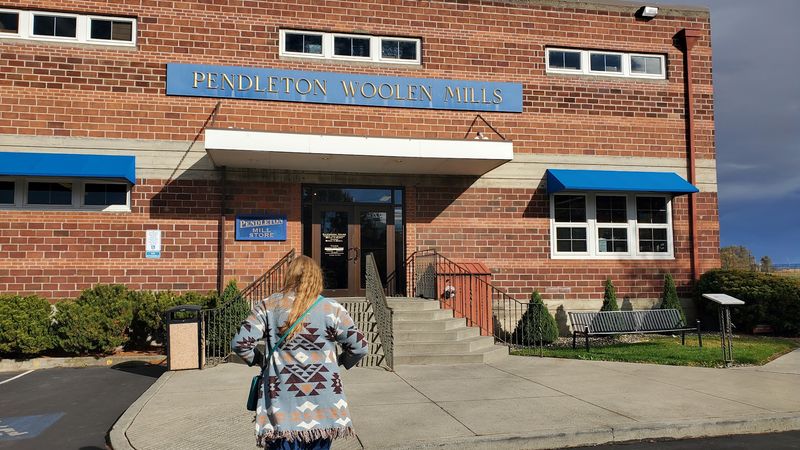
Finding the mill is refreshingly simple. Pendleton Woolen Mill sits at 1307 SE Court Place, Pendleton, OR 97801, in eastern Oregon.
The town shares its name with the blankets, which feels perfectly fitting. Few places can say their name is woven into products sold far beyond their borders.
Timing matters most for this visit. Aim for a weekday if you want the tour, since tours run Monday through Friday.
Summer brings extra tour times, which is great news for vacationers. Still, call ahead or use the online form to confirm before you drive.
Store-only visits work any day of the week. The shop opens at 10 AM and closes at 5 PM, giving you plenty of browsing time.
Pair the mill with a longer road trip through Oregon for a full day out. A stop here breaks up the miles with something truly memorable.
Leave a little trunk space too. You may arrive planning to just look, but a wool blanket has a funny way of buckling itself into the back seat for the ride home.