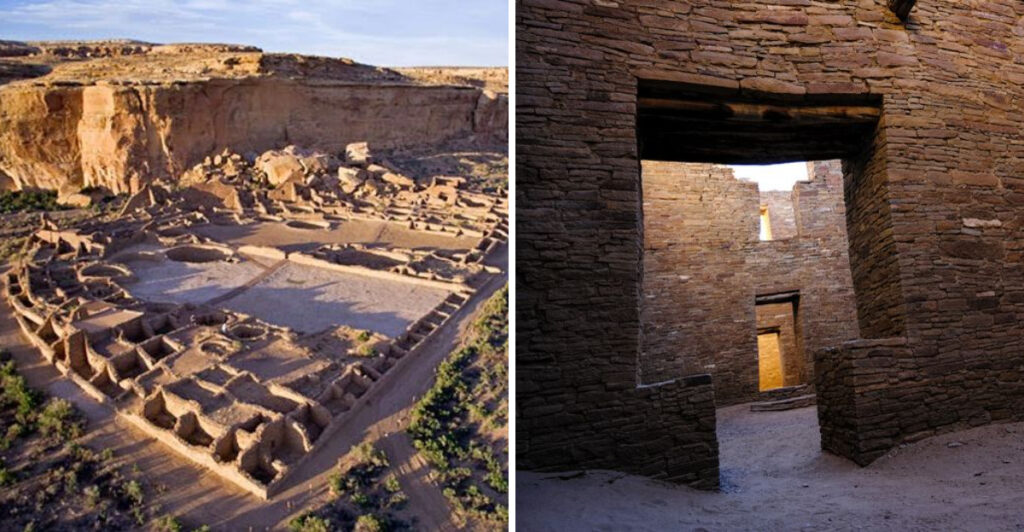
The first thing that hit me was the silence. No traffic, no crowds, just wind moving through a desert canyon filled with enormous stone buildings that were constructed nearly a thousand years ago.
I kept stopping every few minutes because the scale feels impossible in person. Some structures still rise several stories high, surrounded by cliffs and open land stretching for miles across New Mexico.
Archaeologists believe this area once connected major communities across the Southwest, which makes walking here feel even more fascinating. The night sky changes everything too.
Once darkness settles in, the stars look sharp enough to touch. This is not the kind of place you rush through for a quick photo and forget about later.
Every trail, ruin, and overlook pulls you deeper into the story. Ancient history suddenly feels vivid instead of distant here, and these eight experiences show why people cannot stop talking about it.
The Drive Feels Wildly Remote
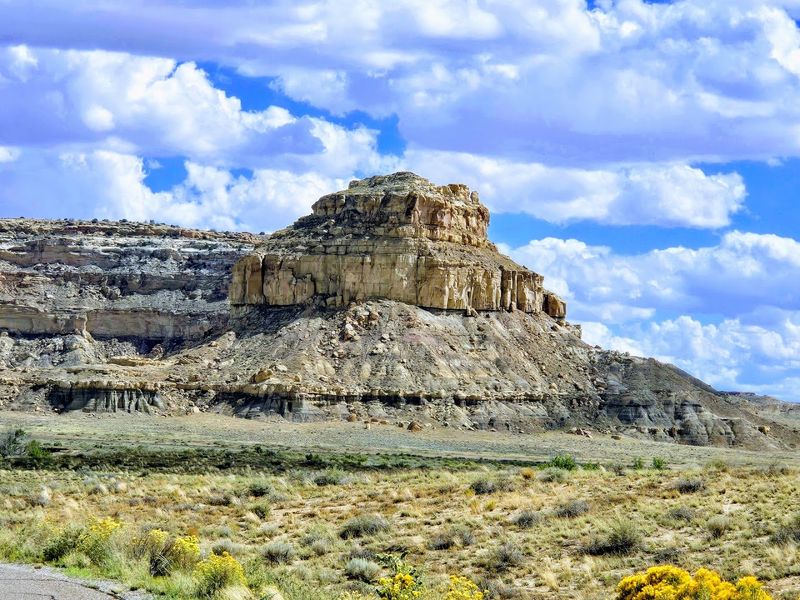
Before you even catch your first glimpse of the ruins, the road itself sets the tone for everything that follows.
Getting to Chaco Culture National Historical Park means committing to roughly 20 miles of unpaved, rutted, washboard dirt road that winds through open rangeland with zero services, zero cell reception, and zero guarantee that your back fillings will survive intact.
I drove in from the north, coming down through Farmington the night before, and even on a dry day the road demanded full attention and a slower pace than my GPS suggested.
Potholes appear without warning, the road narrows in spots, and the landscape around you is so open and empty that it feels like the rest of the world has simply opted out.
High-clearance vehicles are strongly recommended, and filling your gas tank before you leave the main highway is not optional, it is survival strategy.
Pack food, pack water, download offline maps, and give yourself more time than you think you need.
That long, humbling drive is exactly what makes arriving at Chaco Culture National Historical Park, located in New Mexico, United States, feel like stepping through a portal into a completely different world.
Massive Ruins Rising From The Desert
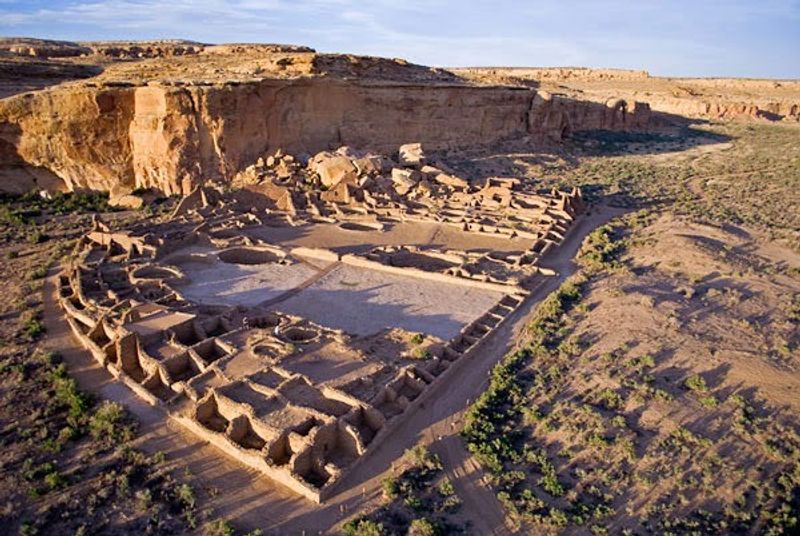
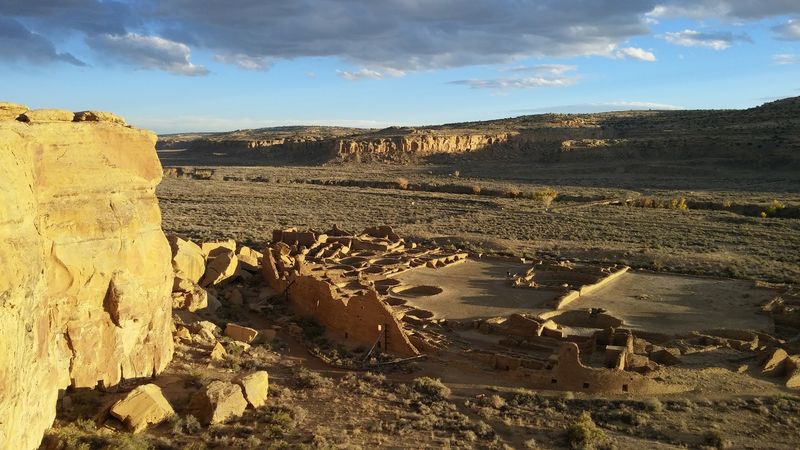
Nothing quite prepares you for the moment Pueblo Bonito comes into full view for the first time.
The sheer scale of it is almost hard to process, a D-shaped structure that once stood four stories tall, contained more than 600 rooms, and served as the beating heart of an entire civilization that flourished between roughly 850 and 1250 AD.
Walking through the outer walls and into the interior spaces, I kept running my hands along the stonework, marveling at how precisely each block was fitted without the use of modern tools.
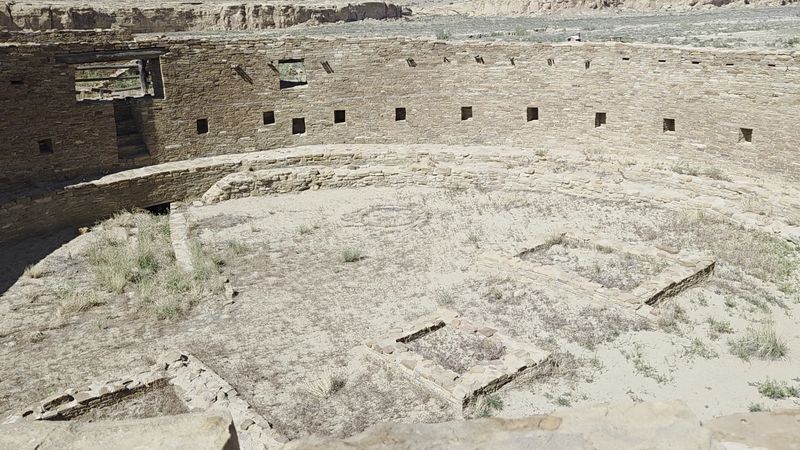
Chetro Ketl, the second-largest great house in the canyon, sits nearby and offers a different layout with its own enormous great kiva and sweeping open plaza that once hosted large community gatherings.
Hungo Pavi and Una Vida round out the self-guided trail options, each one revealing a slightly different chapter of the same remarkable story.
The ruins are well-preserved and clearly marked, so you can move at your own pace without feeling rushed or lost.
Seeing these structures rise straight out of the desert floor is the kind of visual that stays with you long after the drive home.
Petroglyphs Along Canyon Trails
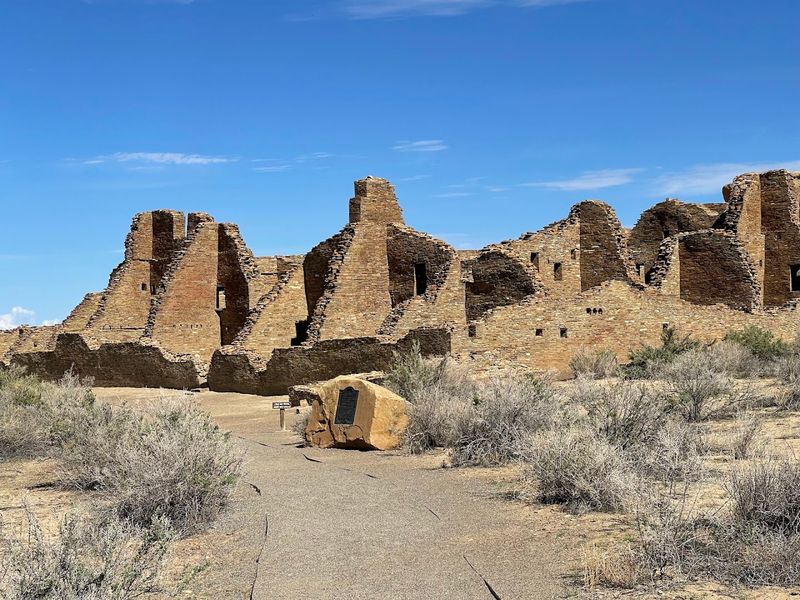
The petroglyphs at Chaco add a deeply personal layer to an already layered place, especially once you notice how boldly they stand out against the sandstone canyon walls.
These are not faint scratches you have to squint to see, they are deliberate images pecked into stone by ancestral Puebloan artists who clearly wanted their markings to last.
Spirals, animal figures, human forms, and geometric patterns appear along several trails, particularly near Una Vida, where the rock art panels feel almost like open-air galleries preserved in the desert.
I spent far longer than I planned standing in front of one particular panel, trying to read meaning into the shapes the way you might study a painting in a museum.
The park staff at the visitor center can point you toward the best petroglyphs and give context that transforms the images from mysterious marks into purposeful communication.
Sturdy hiking shoes are essential because the terrain around these panels is uneven and rocky.
Touching the carvings is strictly prohibited, and honestly, once you see them, that rule feels completely natural to respect.
Why The Night Sky Looks Unreal
Chaco holds a designation shared by only a limited number of protected places in the United States, it is an International Dark Sky Park, which means the light pollution here is so minimal that stargazing reaches a level most people have never experienced.
I stayed at the campsite one night during my visit, and when I stepped outside after dark, I actually stopped walking because the sky above me looked nothing like what I see from any city or suburb.
The Milky Way was not a vague smudge on the horizon, it was a full, dense river of light stretching from one end of the canyon to the other, close enough to feel almost physical.
The ancestral Puebloans who built Chaco were themselves deeply interested in astronomy, and several structures in the park appear to have been deliberately aligned with solar and lunar events.
Ranger-led night sky programs are offered seasonally and are worth planning your trip around if you can manage it.
A blanket, reclining chair, and star map app with offline capability will make your evening far more comfortable and rewarding.
Few places on Earth make you feel this small in the best possible way.
Ancient Rooms Built From Sandstone
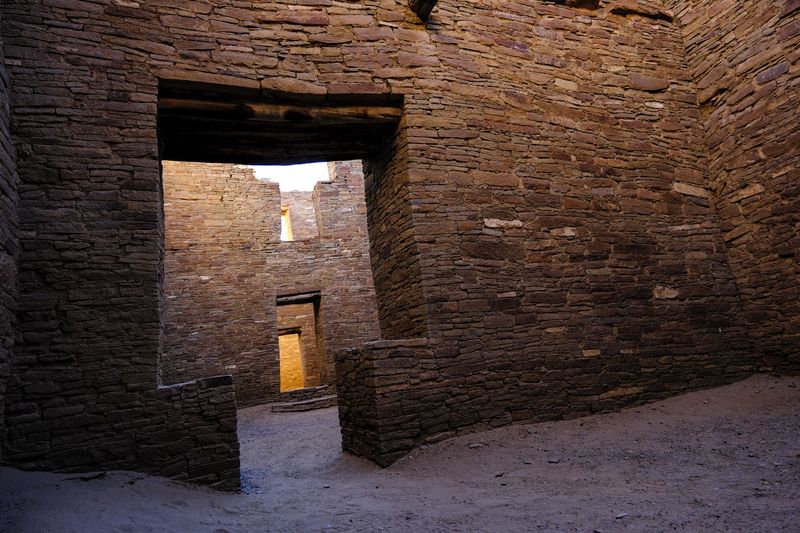
Walking through a doorway shaped by human hands more than a thousand years ago feels quietly astonishing once you realize the walls on either side are still standing.
The construction technique used by the ancestral Puebloans at Chaco is called core-and-veneer masonry, where a rubble core is sandwiched between carefully shaped sandstone facing stones, creating walls that are both beautiful and structurally impressive.
In some sections of Pueblo Bonito, you can see the different layers of construction added over generations, almost like reading tree rings in stone, each phase reflecting a community that kept growing and refining its vision.
The rooms themselves are compact by modern standards, but their precision is striking, with doorways lined up in long rows that create dramatic sight lines through multiple chambers at once.
Great kivas, the large circular ceremonial rooms, are scattered throughout the canyon and give a sense of just how organized and ceremonially important this society was.
Restoration work has been carried out carefully in recent decades to preserve the excavated structures without altering their original character.
Running your eyes along those perfectly chinked stone courses, you get a real sense of the patience and skill that built this place.
Scenic Trails Through High Desert
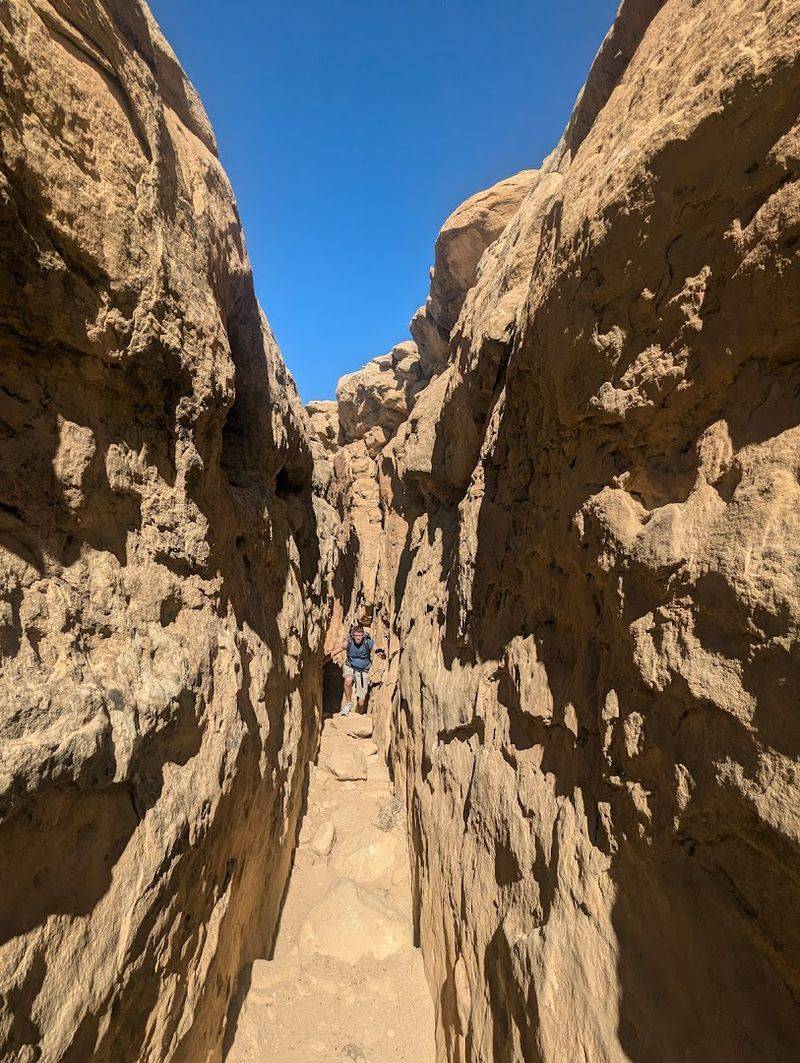
The trails at Chaco offer a hiking experience that feels equal parts physical and meditative, with routes ranging from flat desert walks to challenging scrambles up canyon walls.
The Pueblo Alto Trail quickly became my favorite hike in the park because the views at the top completely change your sense of the canyon’s scale.
The ascent through a narrow slot in the cliff face requires careful footwork, but once you reach the plateau above, the views across the canyon and surrounding desert make the effort feel completely worthwhile.
From the overlook, you can see multiple great houses spread across the canyon floor below, which gives you a spatial understanding of how this place was organized that no ground-level walk can fully provide.
Easier loops wind past ruins and rock formations at a gentler pace, making them a good option for travelers looking for a shorter or less demanding walk.
Sunscreen, a wide-brimmed hat, and more water than you think you need are non-negotiable companions on any trail here.
The high desert light at Chaco has a quality to it that makes every ridge and shadow look like a photograph waiting to happen.
The Mystery Behind Chacoan Roadways
One of the most quietly mind-bending features of Chaco is something you might walk right past without realizing what you are actually looking at: the roads.
The ancestral Puebloans constructed an extensive network of roads radiating outward from Chaco Canyon in remarkably straight lines, some stretching for dozens of miles across the desert landscape.
Some of these roads reached roughly 30 feet wide, carefully cleared and edged, and they connected Chaco to dozens of outlying communities throughout the region, suggesting a level of regional planning and coordination that archaeologists are still working to fully understand.
What makes them especially puzzling is that the Chacoan people had no wheeled vehicles and no horses, so the roads were not built for the kinds of transportation we might assume.
Some researchers believe the roads served ceremonial purposes, acting as processional routes for large gatherings or spiritual events rather than purely practical travel corridors.
The road system became one of the details that made the entire canyon feel especially surreal to me once I learned more about it.
The more you learn about the Chacoan road system, the more questions it raises, and that is exactly the kind of mystery that keeps drawing people back.
Sunset Views Over Ancient Walls
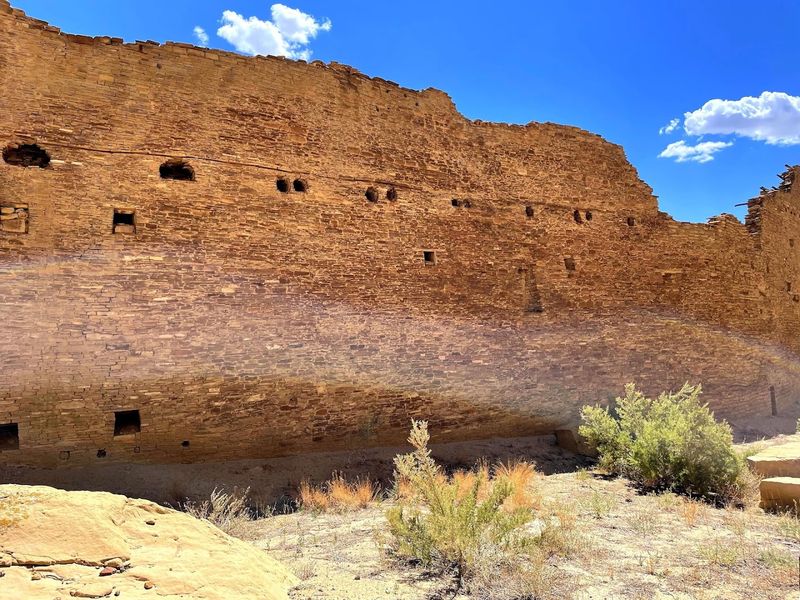
If you time your visit right and linger past the midday heat, Chaco at sunset becomes an entirely different experience from the one you arrived to earlier in the day.
The sandstone walls shift through a progression of warm tones as the sun drops toward the canyon rim, moving from pale tan to deep amber to a rich, almost glowing rust that makes the ruins look lit from within.
I sat near the outer walls of Pueblo Bonito one evening and watched the light change for nearly an hour, and it remains one of the more affecting experiences I have had at any historical site.
The canyon walls behind the great houses catch the last light at a steep angle, casting long shadows that carve the stone textures into sharp relief and make every surface look completely transformed.
Photography at this hour is rewarding even with a phone camera, because the quality of the light does most of the work for you.
Park hours vary depending on the season, so checking the current schedule before planning sunset photos is a smart idea.
Watching the desert go quiet around those ancient walls as the sky changes color is the kind of ending that makes the long drive feel completely worth it.