Your weekend plans have been trying too hard.
They keep demanding reservations, color-coded schedules, and enough luggage to confuse an airport carousel.
Minnesota has a better idea: take one road, stop in one small town, and let curiosity handle the rest.
This trip does not need a dramatic reveal. Its charm sneaks up through a historic downtown, a riverside trail, and an arts scene with far more confidence than the population count suggests.
You can arrive with half a plan and still leave with a day behind you. The real surprise is how quickly “just passing through” loses the argument.
One storefront earns another stop. One short walk becomes an afternoon. Even the old stone dam has better staying power than your original schedule.
Minnesota saves some of its best weekends for travelers willing to break. This town gives you several reasons, then lets you pretend stopping was your idea.
Highway 16 Makes A Strong First Impression
Highway 16 knows how to make an entrance without leaning on a welcome committee.
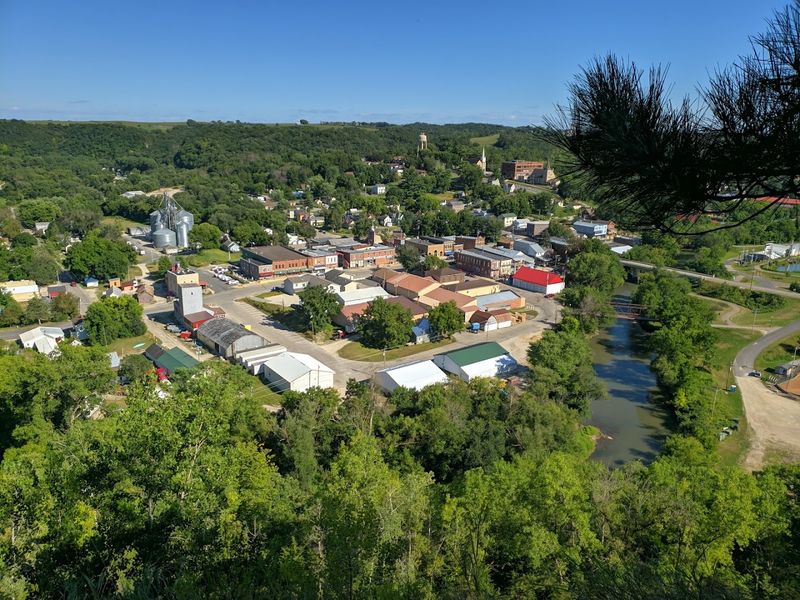
Lanesboro sits along the Historic Bluff Country National Scenic Byway, an 88-mile route across southeastern Minnesota. The federal scenic-byway program recognized the corridor in 2002, and the road earns that status before you reach the town limits.
The highway follows portions of the Root River country through a landscape built from sharp elevation changes rather than long, flat sightlines.
Wooded slopes rise near the pavement, farm fields open between ridges, and each curve resets the view before your passenger finishes pointing at the last one.
This is not a drive that benefits from racing the clock. Give the road enough time to explain the region.
The byway links small communities across Bluff Country, so a coffee stop, roadside overlook, or short walk can become part of the trip without sending the day off course.
Travelers coming from the east can follow Highway 16 west from the Mississippi River area. Drivers approaching from the west can join the same corridor near Interstate 90 and let the scenery improve mile by mile.
By the time Lanesboro appears, the odometer has already done some sightseeing.
A Population Of About 700 Keeps The Scale Refreshingly Small
A population of about 700 is not a traffic strategy, but it certainly helps. That was Lanesboro’s count in the 2020 Census, placing the city firmly in small-town territory.
The number explains why downtown stays manageable, why most stops sit close together, and why your weekend does not disappear into parking ramps and long walks between attractions.
The community was first settled in 1856 and officially founded in 1869. Its early growth followed the Root River, mills, and railroad connections, giving the town practical working roots long before weekend visitors began arriving with bicycles and overnight bags.
Start at the Lanesboro Visitor Center, a depot-style building at 100 Milwaukee Road West. It sits near trail access and provides maps, local information, and a useful point for deciding how much structure your day actually needs.
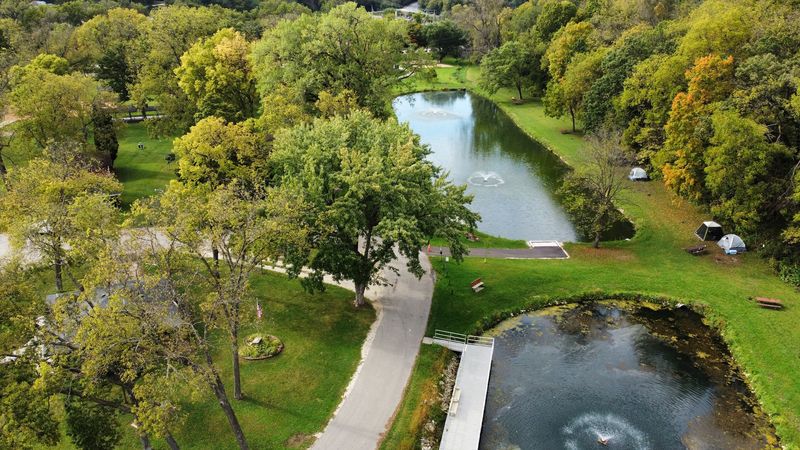
Sylvan Park adds another easy stop near the center of town. Established in 1881, the 11.5-acre park includes green space, trout ponds, picnic areas, and access near the historic dam.
You can move from visitor information to a riverside break without turning the outing into a logistical exercise.
Historic Downtown Gives Your Car The Afternoon Off

Downtown has a simple trick: it makes your car temporarily irrelevant.
Much of central Lanesboro belongs to the Lanesboro Historic District, which entered the National Register of Historic Places in 1982. A boundary expansion approved in 2017 recognized additional buildings and streets connected to the city’s development.
That history is easy to read from the sidewalk. Brick commercial buildings, older homes, former civic spaces, and converted storefronts show how the river town grew during the late nineteenth and early twentieth centuries. The district does not sit behind a fence.
It still serves the people who live, work, shop, and create here.
The compact layout encourages useful wandering. You can step into a gallery, browse a local shop, cross toward the river, and circle back without consulting a complicated route.
The town gives you enough variety to keep moving, but not so much that you spend the afternoon worrying about what you missed.
Look above the display windows as you walk. Decorative brickwork, cornices, upper-floor windows, and old building shapes reveal details that cars pass too quickly to notice.
A short stroll can take an hour here, mainly because the street keeps interrupting you.
The Stone Dam Still Runs The Show
The town’s oldest power move is made of limestone.
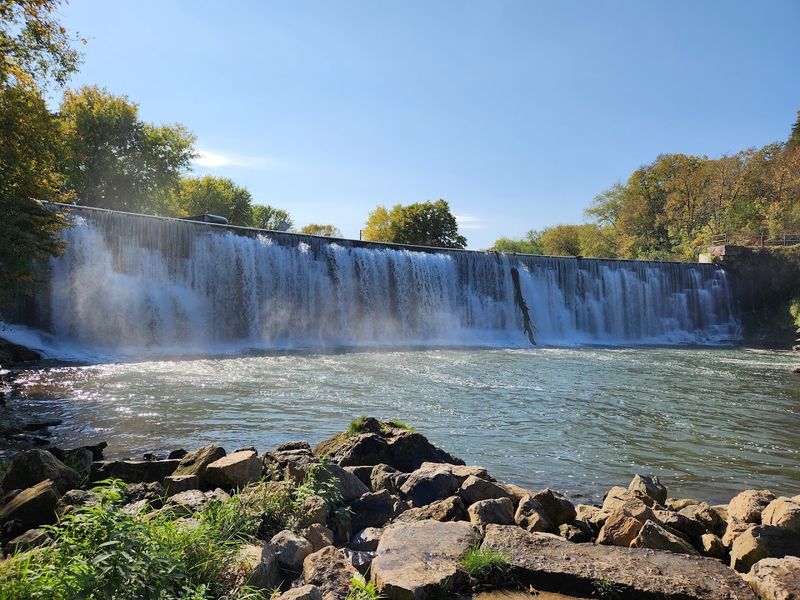
Completed in 1868, the Lanesboro Stone Dam helped turn the settlement into a milling center. The Lanesboro Townsite Company built it to direct Root River water toward local mills and support the community developing beside the Southern Minnesota Railroad.
Irish immigrant Dennis Galligan designed the curved arch after an earlier dam failed. Craftsmen stacked locally quarried limestone without mortar, creating a structure that relied on its shape and stonework to resist the river.
The dam rises about 25 feet and stretches roughly 200 feet across the channel.
Its job did not end with the mill era. Water diverted by the dam later supported hydroelectric generation, and the city still owns the structure. A major rehabilitation project beginning in 2018 stabilized the historic stonework while adding modern support behind it.
You can reach the dam from the downtown and Sylvan Park area, making it an easy part of a walking route.
The rush of water provides a sharp contrast to the quiet streets only minutes away, while the curved wall makes the engineering visible even if you never planned to think about dams that day.
Bluff Country Rewrites The Usual Minnesota Scenery
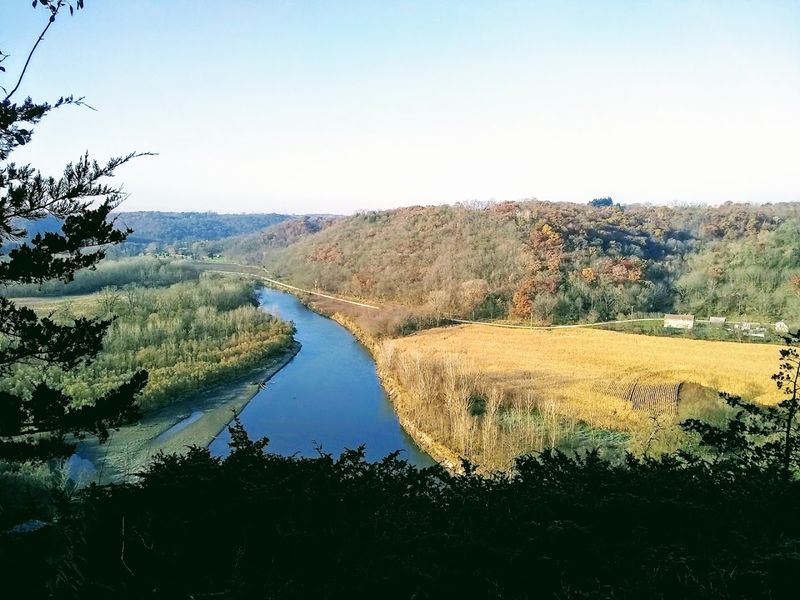
Minnesota forgot to flatten this corner, and every nearby road benefits. Lanesboro sits within the state’s Blufflands, part of the larger Driftless Area.
The most recent continental glaciers missed much of southeastern Minnesota, leaving limited glacial deposits compared with surrounding regions. Rivers and streams then cut deeply into the older plateau.
The result is a landscape of narrow valleys, wooded ridges, exposed limestone, and steep slopes that can surprise travelers expecting broad prairie or lake country.
Minnesota Department of Natural Resources material describes valley relief reaching hundreds of feet in parts of the Blufflands.
The rock beneath the region adds another layer. Limestone and dolomite allow water to move underground, producing karst features such as springs, caves, sinkholes, and cool streams.
You do not need a geology lesson to enjoy the scenery, but knowing why the land looks different makes the drive more satisfying.
Highway 16 gives you broad access to the valley, while local roads offer closer views of farms and forested hillsides. Pullouts and high points appear along the wider byway corridor, although safe stopping places deserve patience rather than a last-second turn.
When the passenger seat goes quiet, the bluffs have won the argument.
The Root River Trail Lets You Pick The Mileage
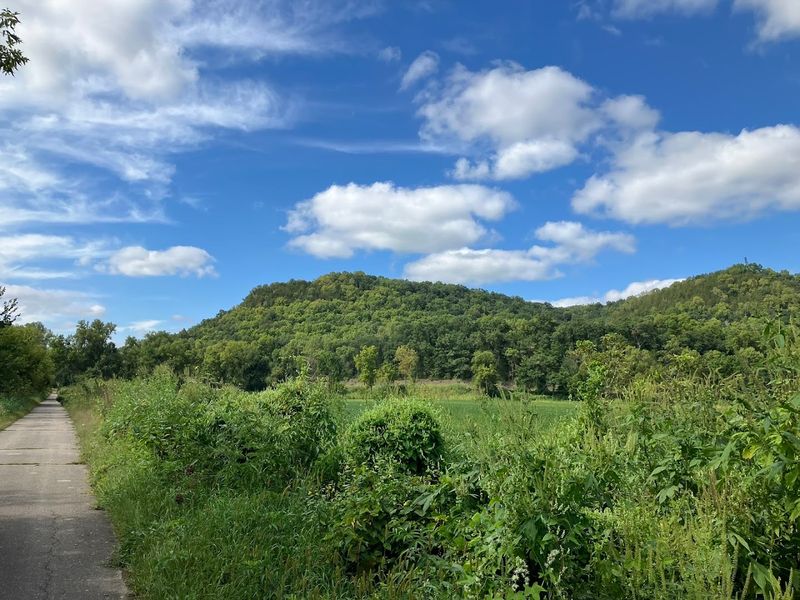
The Root River State Trail lets you choose your own definition of ambitious.
The paved route runs 42 miles from Fountain to Houston and passes directly through Lanesboro. It follows an abandoned railroad corridor, so most of the trail stays generally level.
A steeper half-mile near Houston is the main exception, far from a casual Lanesboro out-and-back.
That design makes the trail useful for more than serious cyclists. You can walk a short stretch, ride toward a neighboring trail town, or turn around whenever your legs begin negotiating. The scenery does not save its best material for people chasing the full mileage.
From Lanesboro, the trail moves beside sections of the Root River and beneath limestone bluffs. It also passes farm fields, former milling areas, railroad remnants, and communities shaped by the same corridor.
The route gives you the region at a speed that lets small details register.
Parking is available near Bass Pond and around the Community Center and Sylvan Park area. Restrooms are also available at the visitor center. Trail construction can temporarily affect distant sections, so the Minnesota DNR alert page is useful before a longer ride.
You choose the turnaround point, and the trail will gladly take the credit.
Local Art Refuses To Act Small

Then the town pulls a theatre ticket from behind its back.
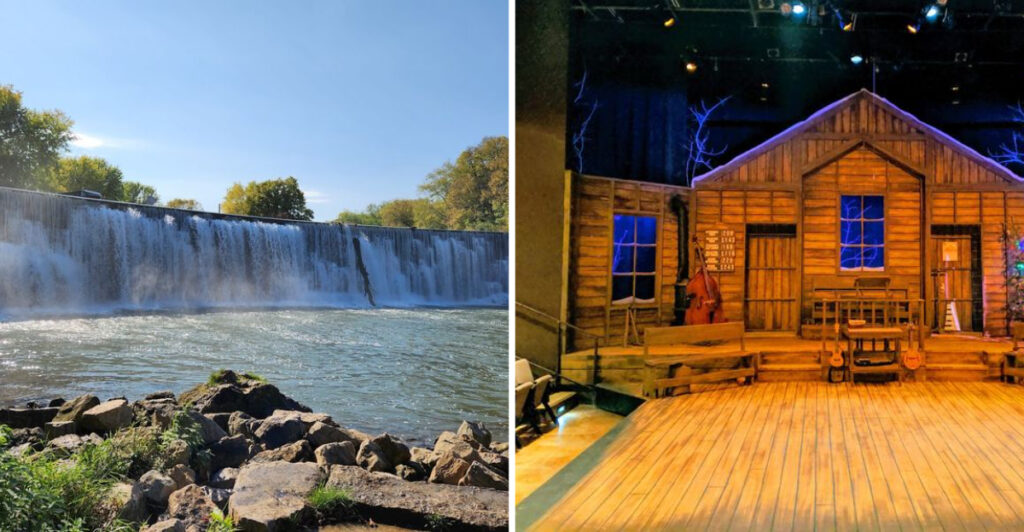
Commonweal Theatre Company began in 1989 after the Lanesboro Art Council encouraged founder Eric Lorentz Bunge to create a professional company in town. Its first season lasted eleven weeks.
Decades later, the resident ensemble still gives visitors a reason to build an evening around live theatre.
The Commonweal performs at 208 Parkway Avenue North, close to the historic center. Its presence is unusual for a city with 724 residents, which is exactly why it belongs in the weekend plan.
The production schedule can turn a daytime drive into a full overnight escape without changing the town’s scale.
Lanesboro Arts strengthens that creative side through exhibitions, classes, public art, artist programs, and performances. Its juried gallery operates at 103 Parkway Avenue North, while the historic St. Mane Theatre stands at 206 Parkway Avenue North.
The theatre began as a furniture store in 1897 and later served as a movie house before reopening as an arts venue in 1984.
You can spend the morning beside the river, wander through downtown after lunch, and finish with a performance. Few towns this size can deliver that progression so naturally.