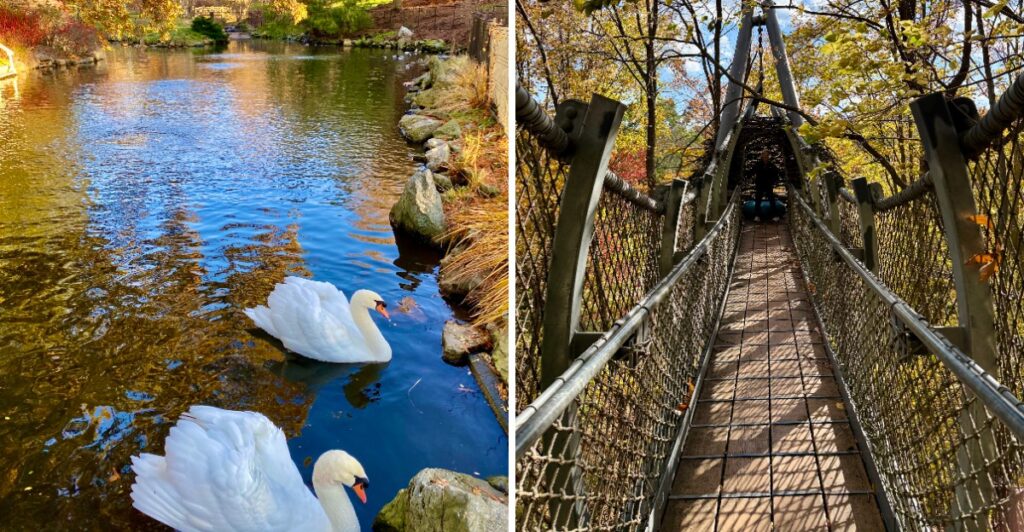
Imagine lying in a giant rope net, 50 feet above the ground, with nothing but autumn leaves beneath you. Not your usual afternoon stroll, that’s for sure.
Down below, Pennsylvania is putting on quite a show.
Sugar maples line the entrance drive, tupelos turn fiery red, and a rose garden dating back to 1888 adds even more color. There’s even an 1899 glasshouse filled with ferns.
The paths take you past rare trees from Asia, while a miniature train winds through a tiny woodland village made of bark and moss during its operating season.
It’s basically a fall afternoon with a few unexpected plot twists.
Late fall is peak leaf season, so bring your camera. Those colors are not going to photograph themselves.
Ninety-Two Acres Of Leaves Are Waiting For Your Attention
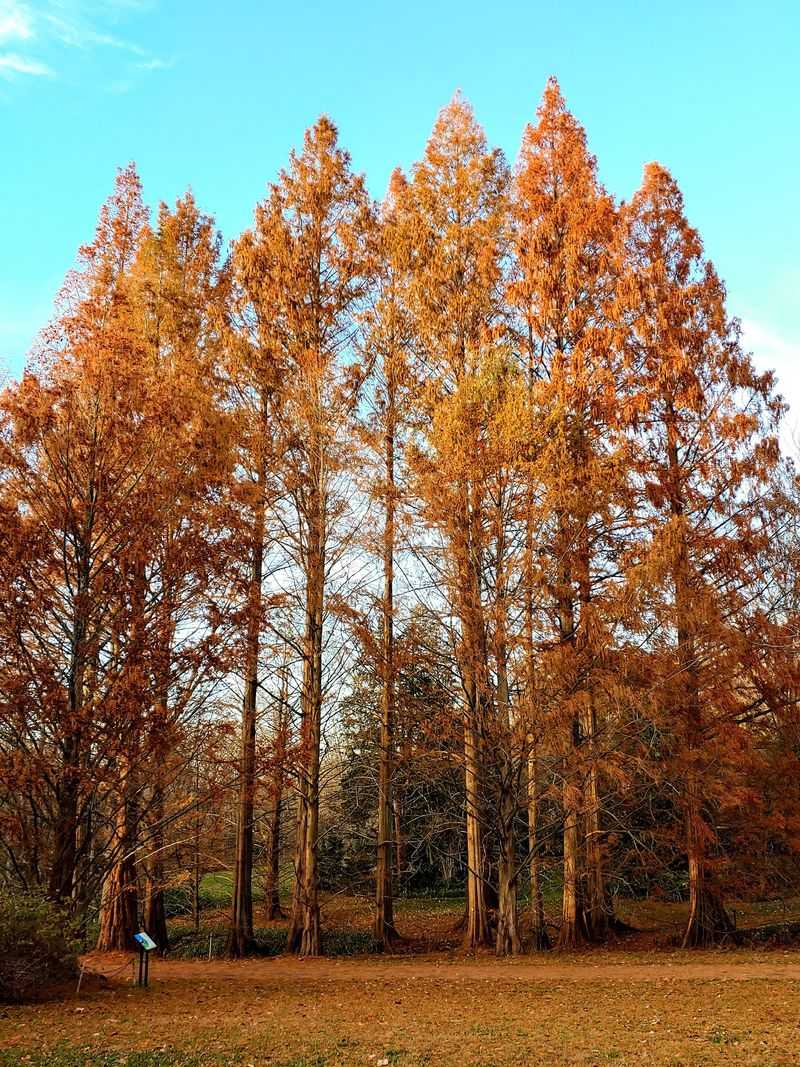
Plenty of gardens claim to be special, but few are the official arboretum of an entire state. Morris Arboretum & Gardens of the University of Pennsylvania holds that title for the Commonwealth of Pennsylvania.
The grounds stretch across 92 acres in the Chestnut Hill neighborhood of Philadelphia. That’s a lot of room for trees to show off once autumn arrives.
The name itself got a refresh in 2023. Adding the word Gardens signals a bigger focus on colorful plantings, not only rows of labeled trees.
Think of it as a living museum that changes its exhibits every week. In fall, the change happens almost overnight, and the whole collection seems to switch on at once.
Paths here curve and loop instead of running in straight lines. That design keeps surprises coming, because the next bend often hides a bright maple or a quiet pond.
Wear comfortable shoes and plan for a few relaxed hours. Rushing through feels a bit like speed-reading a great novel, so give the place the time it deserves.
Your best move is simple. Pick a path, follow the color, and let curiosity steer the rest of your afternoon.
Maples And Tupelos Put On A Seriously Fiery Show
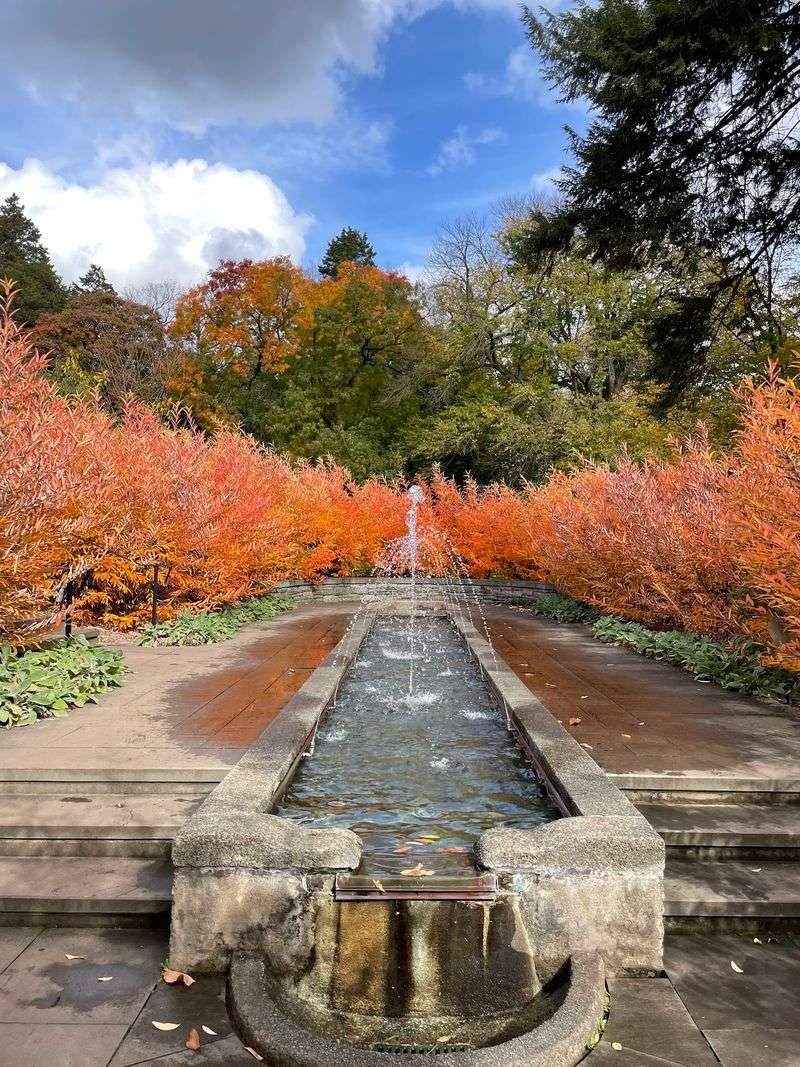
Sugar maples line the entrance drive, and in autumn they glow like a welcome sign nobody needed to plug in. It’s a strong opening act before you even park.
Up above the Rose Garden, black tupelos turn a dramatic, deep red. Their color forms a bold backdrop for the formal beds below.
Japanese maples add some of the brightest reds on the grounds. Some look almost too vivid to be real, which makes them very popular with phone cameras.
Then there’s the Persian parrotia, a tree that refuses to pick just one color. Its leaves mix yellow, orange, and deep red on the same branches.
Don’t overlook the white oak, either. It shifts to a purplish-red shade that feels richer and moodier than the flashy maples nearby.
Peak color typically arrives around late October. Weather can nudge that timing earlier or later, so a flexible schedule helps.
A smart tip is to visit on a sunny afternoon. Low light shines through the leaves and makes the reds and golds look even warmer.
Bring a light jacket, too. Pennsylvania fall days can start crisp and finish surprisingly mild.
Your Inner Squirrel Will Love This Treetop Walkway
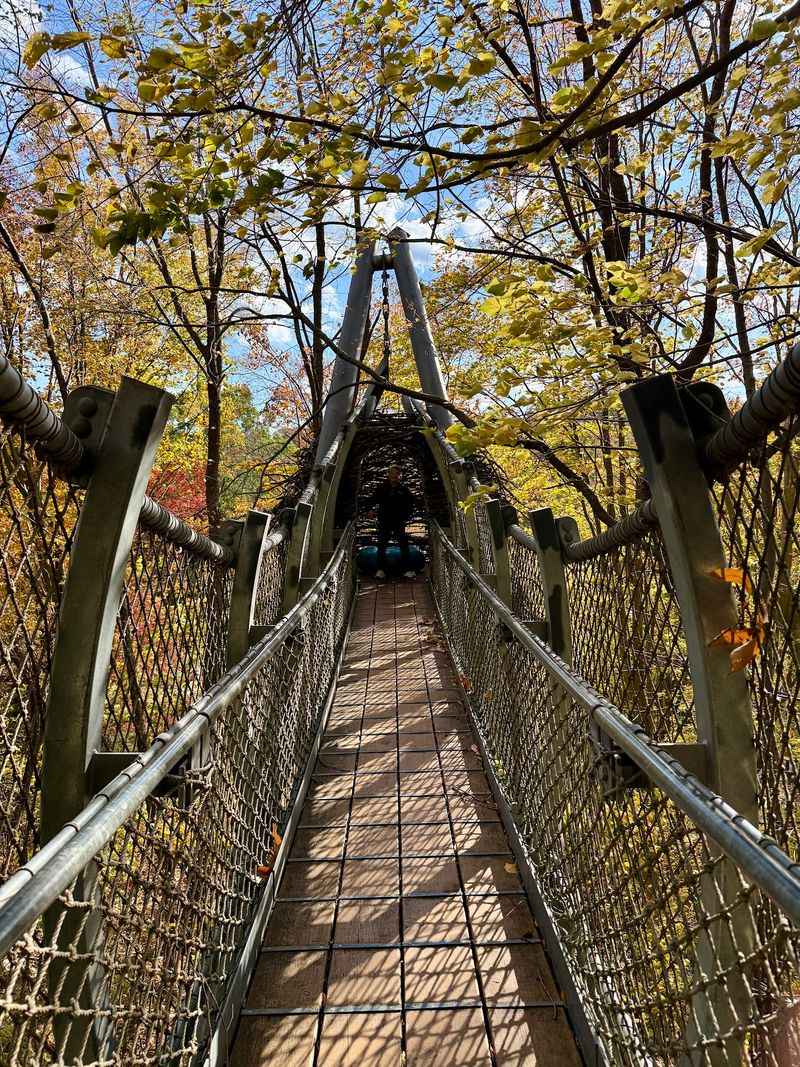
Fifty feet up is a pretty great place to watch leaves change. The Out on a Limb Tree Canopy Walk puts you right at that height.
The walkway runs about 450 feet long through the forest canopy. It’s designed to be accessible, so the climb happens gradually instead of up steep stairs.
The star feature is the Squirrel Scramble. It’s a huge hammock-like net where you can lie down and look straight through the ropes to the ground.
Kids usually head straight for it, and adults rarely stay dignified for long. Fair warning: if heights make you queasy, maybe just admire it from the side.
Next comes the Bird’s Nest, a human-sized nest with giant robin eggs inside. It’s playful, a little silly, and a clever way to think like a backyard bird.
The structure uses recyclable galvanized steel and wood. Builders aimed to fit into the woods rather than overpower them.
In autumn, this exhibit becomes a front-row seat for color. You see the crowns of trees up close, which most people only view from far below.
Hold onto your hat on breezy days. The view is worth it either way.
Tiny Trains Chug Through A Landscape Made Of Bark
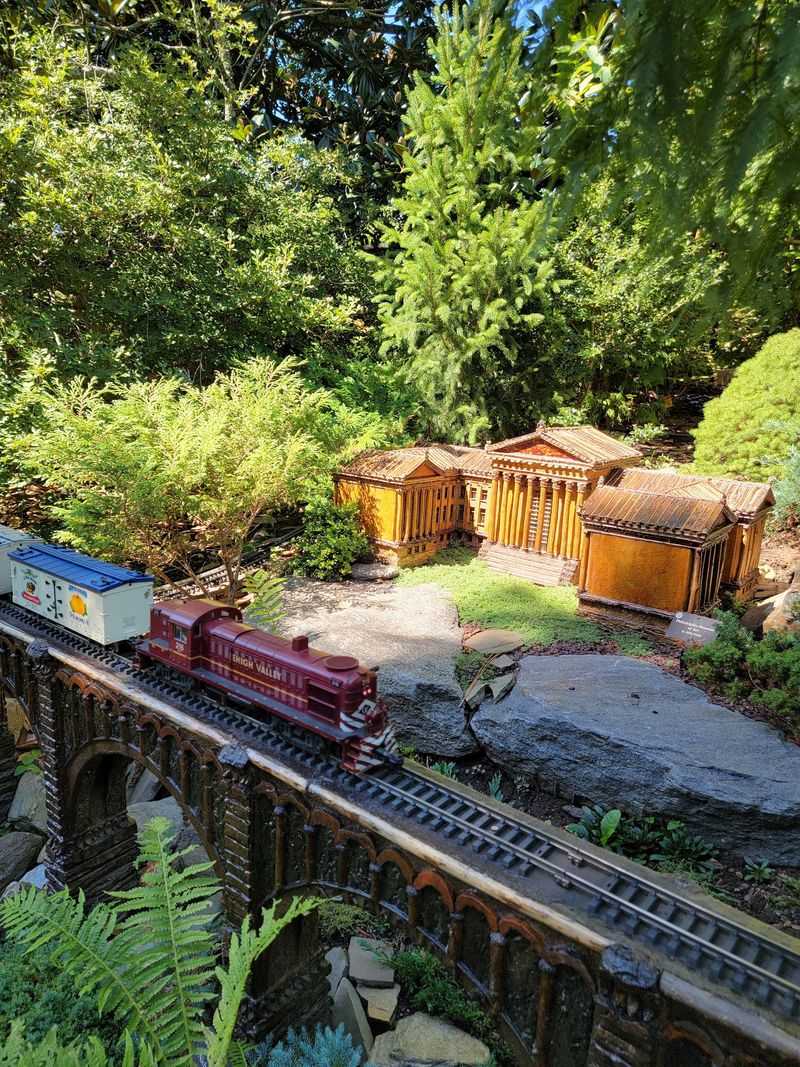
Model trains don’t usually steal the spotlight from giant trees. At the Garden Railway, they come surprisingly close.
About a third of a mile of track winds through tunnels and over bridges.
The trains roll past miniature buildings that look carefully handmade.
Here’s the fun twist. Every building is crafted from natural materials like bark, leaves, twigs, and moss.
That means a tiny rooftop might be made of seed pods. A little window frame could be a carefully trimmed stick, and suddenly you’re inspecting it like a detective.
The railway often changes themes. One recent display called Revolutionary Philly featured mini versions of landmarks like Independence Hall.
As fall turns to winter, the tracks get a sparkly makeover. The Holiday Garden Railway adds thousands of twinkling lights for the season.
Check the schedule before you go, since the regular Garden Railway operates from Memorial Day weekend through September 30, before reopening for the holiday season in November.
Missing it would be a real bummer.
Families with young kids should plan extra time here. Little ones tend to follow a favorite train around the full loop, then ask to do it again, and honestly, that’s fair.
An 1899 Glasshouse Full Of Ferns Steals The Show
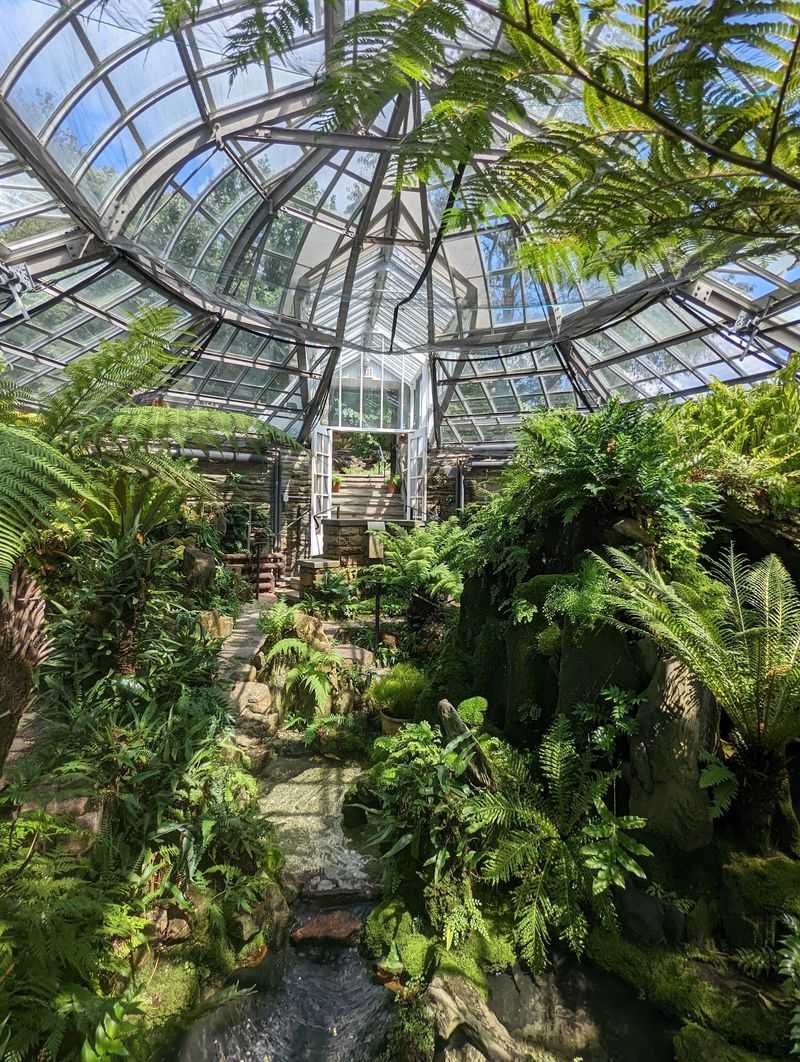
Only one freestanding Victorian fernery remains in North America. You’ll find it right here, and it’s called the Dorrance H. Hamilton Fernery.
Built in 1899, this glasshouse feels like a green time capsule. Inside, ferns grow around trickling waterfalls and quiet reflecting pools.
On a chilly fall day, it makes a cozy break from the breeze. The lush green also offers a nice contrast to all the reds and oranges outside.
Architecture fans should also visit the Mercury Loggia. This temple-like structure went up in 1913 to celebrate the estate’s 25th anniversary.
A bronze statue of Mercury stands there, with a grotto beneath. It brings a classic touch to the English Park area.
The Rose Garden has its own long story. John Morris first designed it in 1888 as a mixed kitchen garden.
Today it’s a formal garden with a wide range of roses and perennials. Some blooms may still linger into early autumn, depending on the weather.
Take a slow lap through all three spots. Together, they show how carefully the original owners mixed plants with beautiful buildings.
Fall Brings Pumpkins, Scarecrows, And Plenty Of Giggles
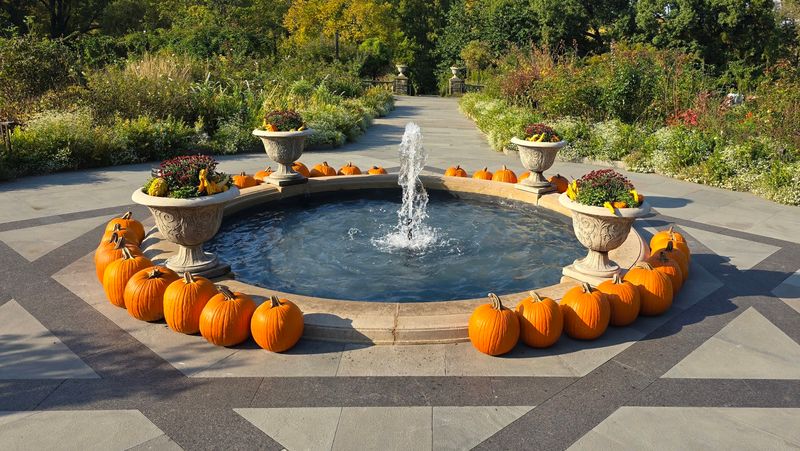
Pumpkins by the hundreds take over the grounds every fall. The celebration goes by the name ArBOOretum Month, and yes, the pun is intentional.
A big orange display gathers around the Morris Pumpkin Cottage. It’s one of the easiest spots for a cheerful fall photo.
Then come the scarecrows. The annual Scarecrow Walk places more than 40 creative figures around the gardens.
Each year brings a fresh theme. One recent theme celebrated the 70s, with scarecrows inspired by different decades ending in that number.
That means you might find a scarecrow from the 1970s next to one from the 1870s. History class never looked this goofy.
Kids enjoy hunting for each one along the paths. Adults usually end up picking favorites and debating them on the drive home.
These displays blend nicely with the natural color show. Orange pumpkins and red maples make a pretty unbeatable seasonal combo.
Check event dates before your visit, since themes and timing can change yearly. Arriving mid-fall often gives you scarecrows, pumpkins, and leaves all at once, which feels like hitting the fall jackpot.
A Little Planning Makes Your Visit Much Smoother
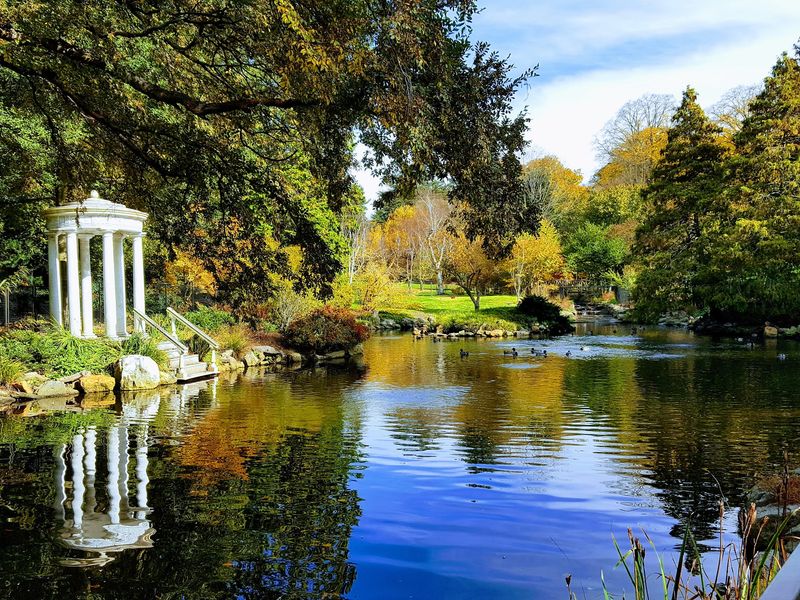
Set your GPS for 100 E Northwestern Ave, Philadelphia, PA 19118. The arboretum sits in Chestnut Hill, at the northwest edge of the city.
The garden is open daily, with hours that shift by season. From November through March, hours run 10 am to 4 pm.
Last entry comes an hour before closing. Late arrivals might get only a quick peek, so aim to show up early.
Major holidays mean closed gates. That list includes Thanksgiving, Christmas Eve, Christmas Day, New Year’s Eve, and New Year’s Day.
There’s no full cafe on site. The gift shop sells snacks and cold drinks, which helps when hunger sneaks up on you.
Packing a lunch is a solid plan. Designated picnic areas give you a spot to eat surrounded by trees.
Accessibility gets real attention here. Paved paths and accessible parking make getting around easier for many visitors.
Complimentary mobility scooters and wheelchairs are offered first come, first served. If you need one, arriving early improves your chances.
A quick check of current hours before leaving home saves headaches. Seasonal changes happen, and nobody enjoys staring at a locked gate.
Two Plant-Loving Siblings Started It All Back In 1887
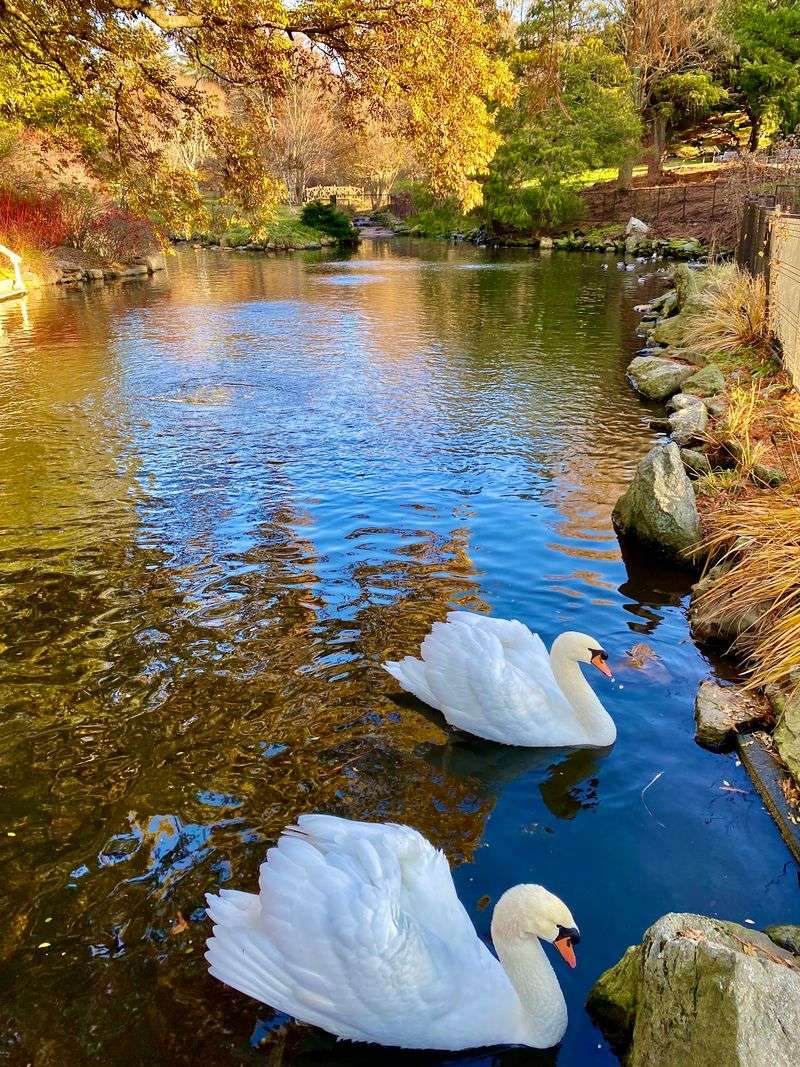
Long before trains and treetop nets, this land was a private estate called Compton. Siblings John and Lydia Morris began it in 1887.
Both loved plants and travel. They gathered a huge variety of trees and shrubs from around the world.
Picture the ultimate souvenir habit, except the souvenirs keep growing for decades. That’s basically what they built.
Lydia Morris left the estate to the University of Pennsylvania in 1932. Her gift made sure the gardens would serve research and education.
The public got its first official welcome in 1933. For many years, the place was known as the Morris Arboretum of the University of Pennsylvania.
Today, Morris Arboretum & Gardens of the University of Pennsylvania blends art, science, and the humanities. It’s a garden, a classroom, and a research hub all at once.
Some of the trees you admire this fall connect back to that early collecting spirit. Every bright leaf carries a bit of family history.
Pennsylvania has plenty of lovely parks, but few started with such a personal passion. Walking these paths feels like borrowing a dream two siblings shared well over a century ago.