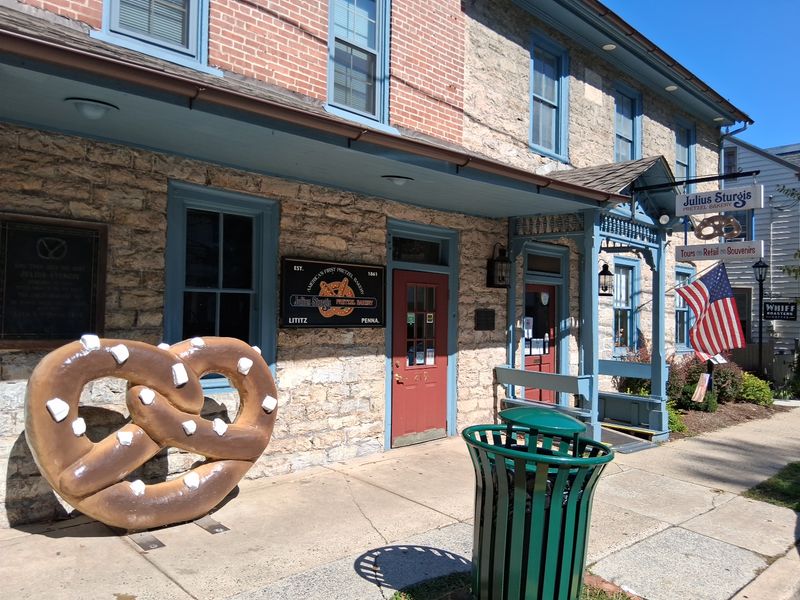
Some of the best surprises hide inside plain stone walls along a quiet main street in Pennsylvania. Tucked behind an old doorway is a place where the smell of warm dough greets you before you even step inside.
What looks like a simple snack shop turns out to be a living piece of American food history, still twisting pretzels the exact same way bakers did over 160 years ago. If you love good food and a good story, this one is worth a detour.
A Stone House That Started It All
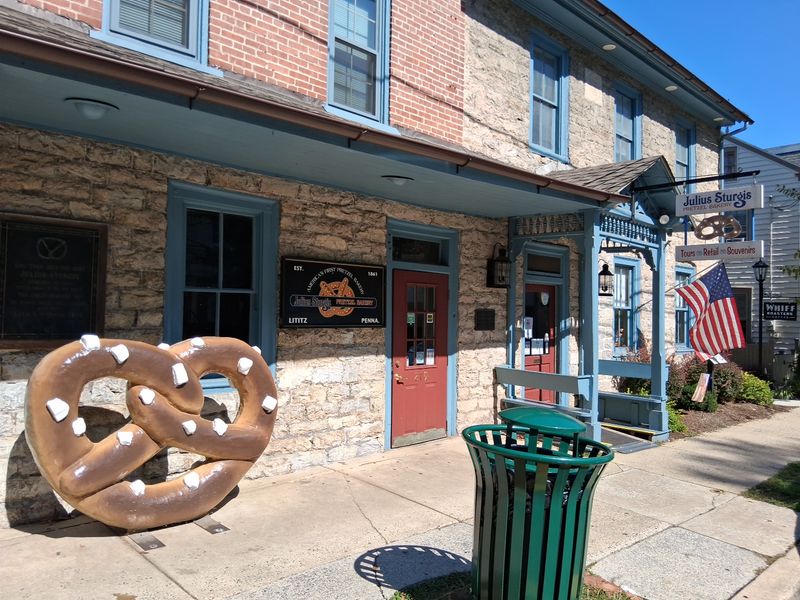
Right on East Main Street in Lititz sits a sturdy stone home that hides an outsized legacy. Behind its thick walls, Julius Sturgis opened what is recognized as the first commercial pretzel bakery in the United States back in 1861.
The building itself is even older than the business. Peter Kreiter built it in 1784, and if you look closely you can still spot quirky details like the small musket windows tucked down in the cellar.
What makes it special is how little has changed. The same family carried the tradition through five generations, sticking to Julius’s original techniques and a sourdough recipe that dates all the way back to that first year.
Walking up to the entrance, you are greeted by a giant pretzel out front that begs for a photo. Visitors love snapping pictures there before heading in.
It is the kind of humble, homegrown landmark that feels like stepping straight into a storybook version of small-town America.
The Legend of How the Pretzel Recipe Arrived
Every great snack deserves a good origin tale, and this one has two. According to one story, Julius Sturgis was a bread baker who received a pretzel recipe from a grateful traveler in exchange for a warm meal.
The other version is a happy accident. Some say Julius left soft pretzels in the oven too long, and instead of ruining them, he discovered a crispy, long-lasting snack that would go on to change American munching forever.
Whichever tale you believe, the hard pretzel that came out of it became a genuine Pennsylvania invention. Baking gave the pretzels a much longer shelf life, which made them popular far beyond the little town where they were born.
Guides here love sharing these stories, and visitors mention how the history sticks with them long after the pretzels are gone. It is a reminder that some of the tastiest discoveries happen by chance, or by kindness, over a simple exchange of food and gratitude.
Learning the Three-Step Twist
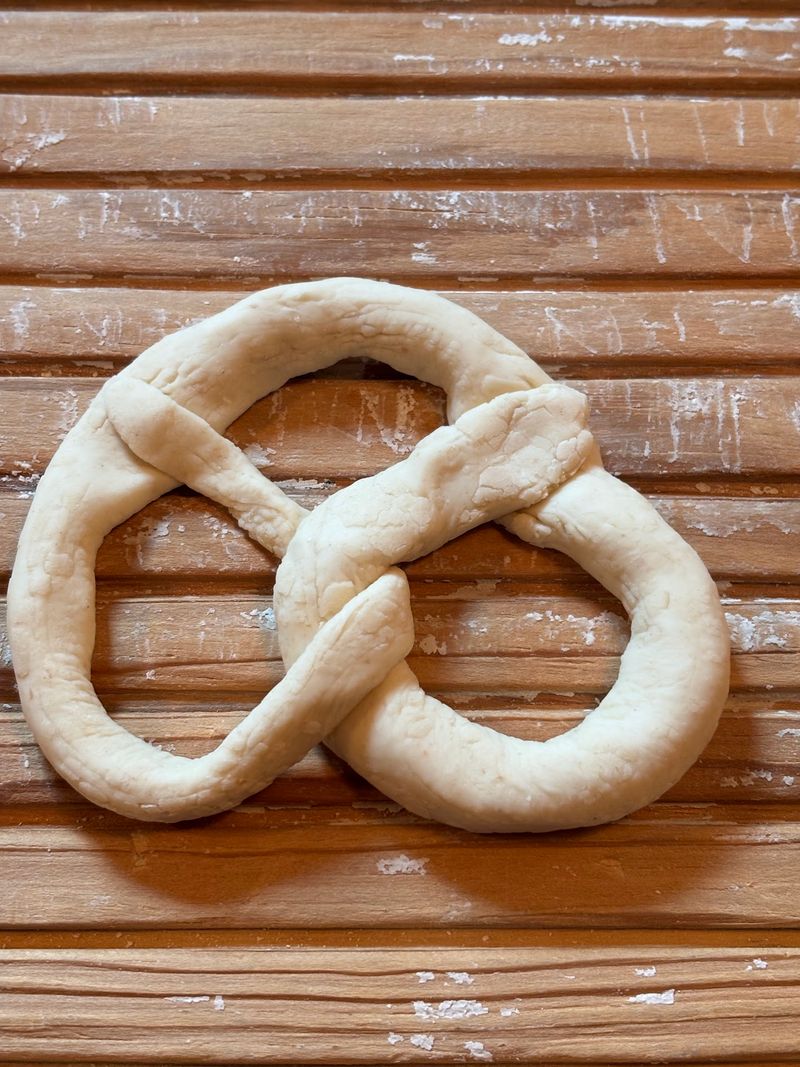
Grab a rope of dough and you quickly realize twisting a pretzel is trickier than it looks. Bakers here still hand-twist old-fashioned soft pretzels, and they teach guests to try the same moves.
The method follows a charming little sequence. You roll the dough into a strand about 12 to 14 inches long, bend it into a “U” shape, cross the ends into an “X,” give one more twist, and press the ends down to form three tidy openings.
There is meaning baked into each fold. The “U” represents children praying with arms raised to the sky, the twist stands for marriage, and the final fold symbolizes family coming together.
Visitors of all ages get a kick out of shaping their own. Many admit they are not sure they could pull it off a second time, but the hands-on fun is a highlight everyone remembers.
It turns a simple tour into something you actively take part in, dough and all.
The Original Brick Ovens
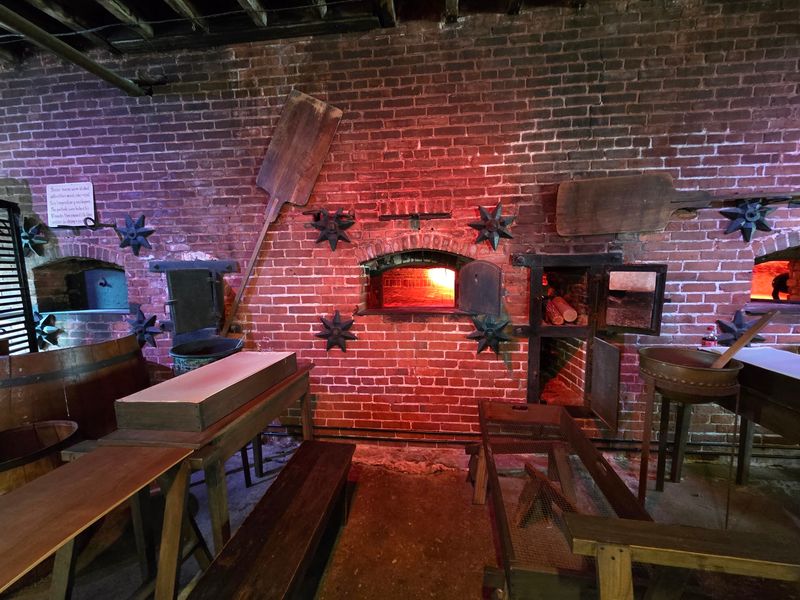
Step toward the back of the bakery and you meet the true stars of the show: the original brick ovens Julius Sturgis built in 1861. They are still part of the historic building, standing as silent witnesses to where it all began.
Guests describe them as impressively huge. Back in the day, bakers slid pretzels in and out using a long-handled tool that looks a lot like a pizza shovel, then let them bake for about ten minutes.
Sadly, you will not see them firing today. Health rules and the age of the old, unstable ovens mean the pretzels visitors roll cannot actually be baked on site.
Even without the heat, seeing them up close is a genuine thrill. There is something powerful about standing where generations of bakers worked, imagining the glow and the smell that once filled these rooms.
For history lovers, the ovens alone make the visit feel like touching the past with your own eyes.
Warm Soft Pretzels Fresh From the Shop
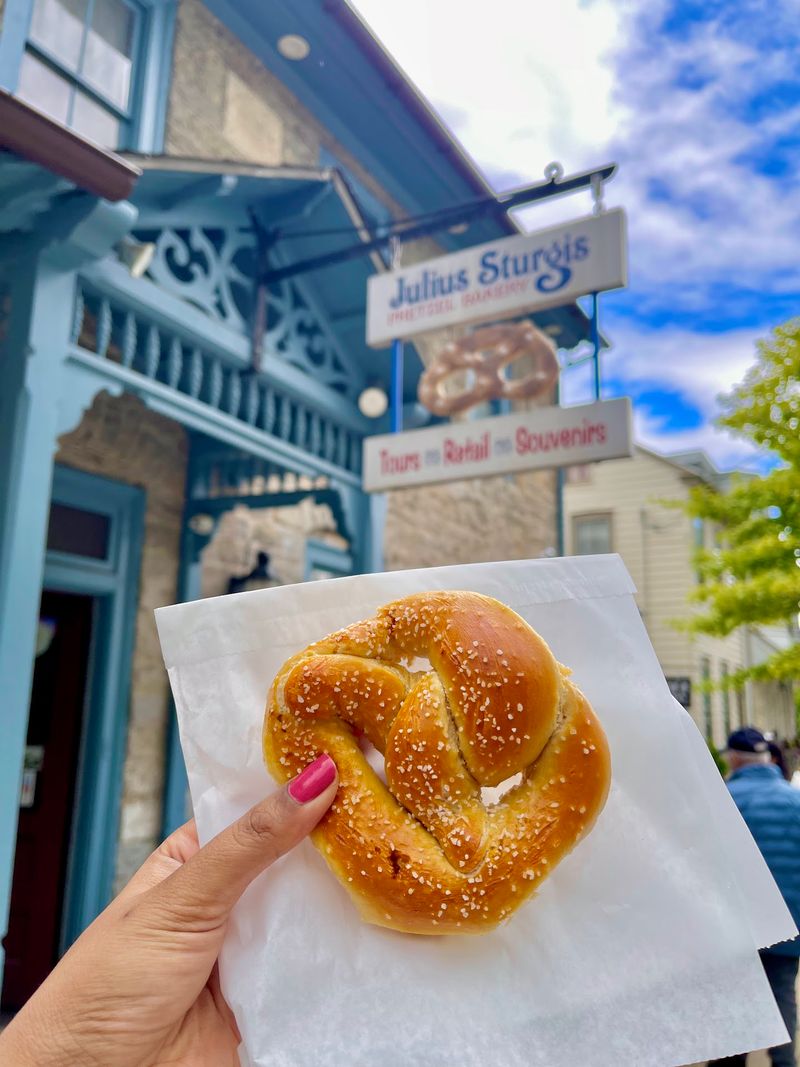
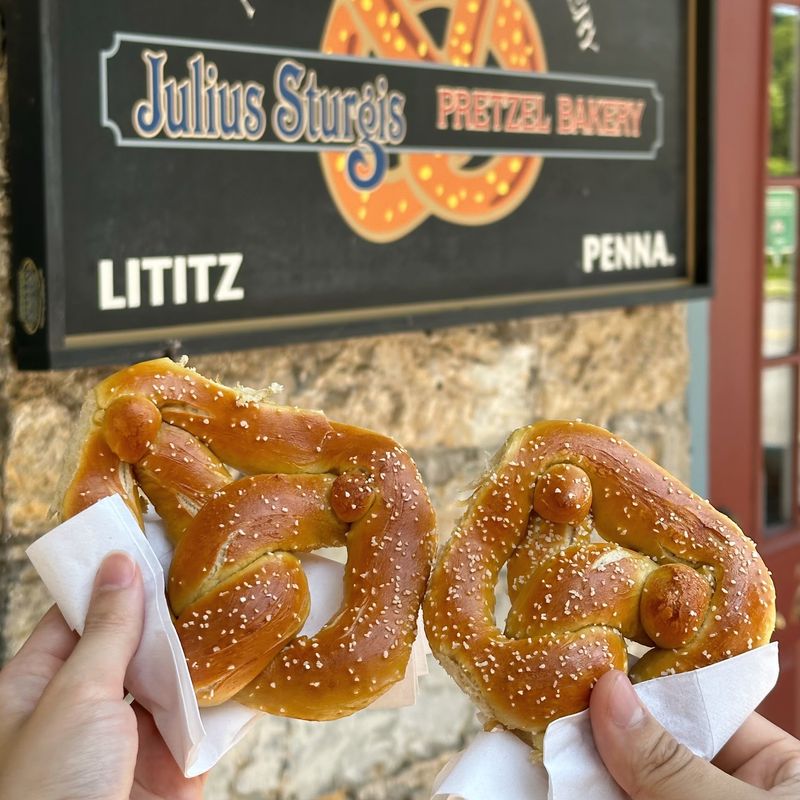
Few things beat biting into a soft pretzel that is still warm, and the shop here delivers exactly that. Guests grab freshly baked soft pretzels for around a dollar or two, making them one of the friendliest treats around.
Folks who know the Philadelphia street style notice the difference right away. These come out softer and doughier, with what tastes like a wheat-based flour, giving them their own distinct personality.
Opinions vary a little on flavor. Some visitors find them mild, while others rave that they are perfectly baked and phenomenal, especially when eaten hot on the spot.
A handy tip from regulars: pretzels can sell out near closing time, so do not wait until the very last minute if your heart is set on one. Snagging a warm one right after a tour is a bit of a tradition.
Whether you eat it there or make it last a few days at home, it is a simple pleasure that keeps people coming back.
Hard Pretzels and Chocolate-Covered Delights
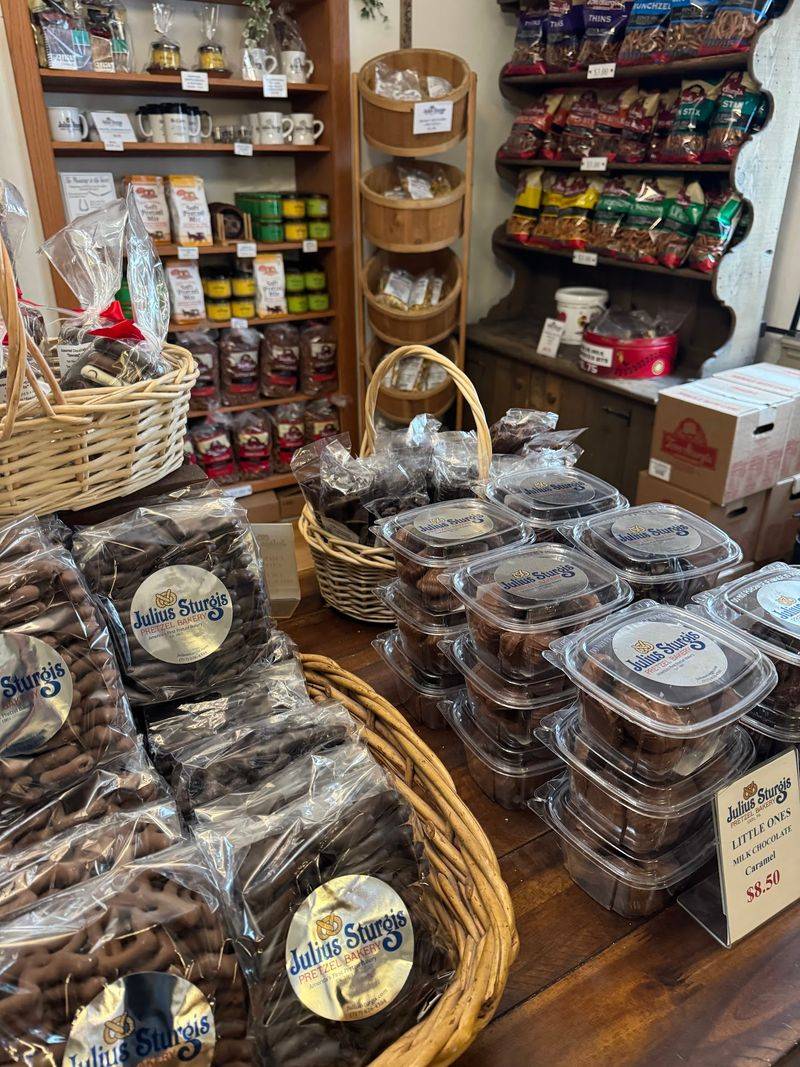
If crunch is your thing, the shelves here are a happy playground. Hard pretzels come in all sorts of flavors, including ones you did not even know you needed until you spotted them.
Then there are the chocolate-covered varieties, which turn a humble snack into something dessert-worthy. Visitors mention picking up options coated with caramel or peanut butter, perfect for gifting or sneaking a bite in the car.
Remember, the hard pretzel is considered a homegrown Pennsylvania creation, so buying a bag here feels a bit like taking home a piece of local pride. Everyone who finishes a tour also receives a little bag of hard pretzels to enjoy.
Shoppers often admit they spend more than planned because everything looks so tempting. Between the flavored minis and the sweet-coated treats, it is easy to fill a basket for family back home.
The variety is part of the charm, giving both crunchy purists and chocolate lovers a reason to linger a little longer at the counter.
A Gift Shop Full of Pretzel Personality
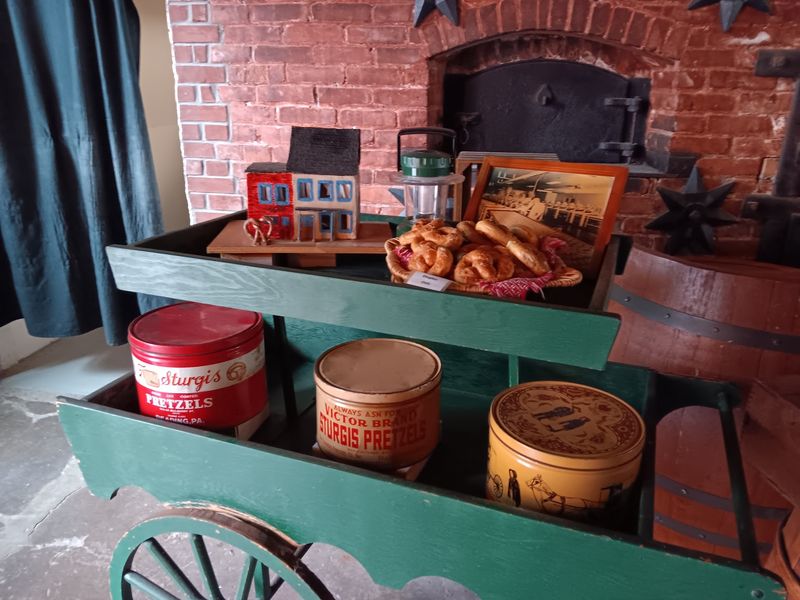
Beyond the snacks, the on-site shop is a delightful rabbit hole of pretzel-themed treasures. Think t-shirts, postcards, mugs, hats, towels, cookbooks, and cuddly stuffed toys, all celebrating the twisty snack.
One crowd favorite is the adorable horse-and-buggy shaped pretzels, which are so cute that people buy them just for the fun of it. Little touches like that make browsing here as entertaining as the tour itself.
There is even a squished penny machine for collectors, offering several designs stamped with the date. It is the sort of quirky extra that turns a quick stop into a keepsake-filled adventure.
Prices around the shop stay reasonable, which visitors appreciate. Many describe stocking up on souvenirs and treats for relatives, walking out with bags of goodies and big grins.
Do not rush past the walls, either. They are lined with old photos and historical placards, plus a small museum area that showcases the family’s journey.
Leaving a little extra time to wander through it all is well worth doing.
Pennsylvania, the Proud Pretzel State
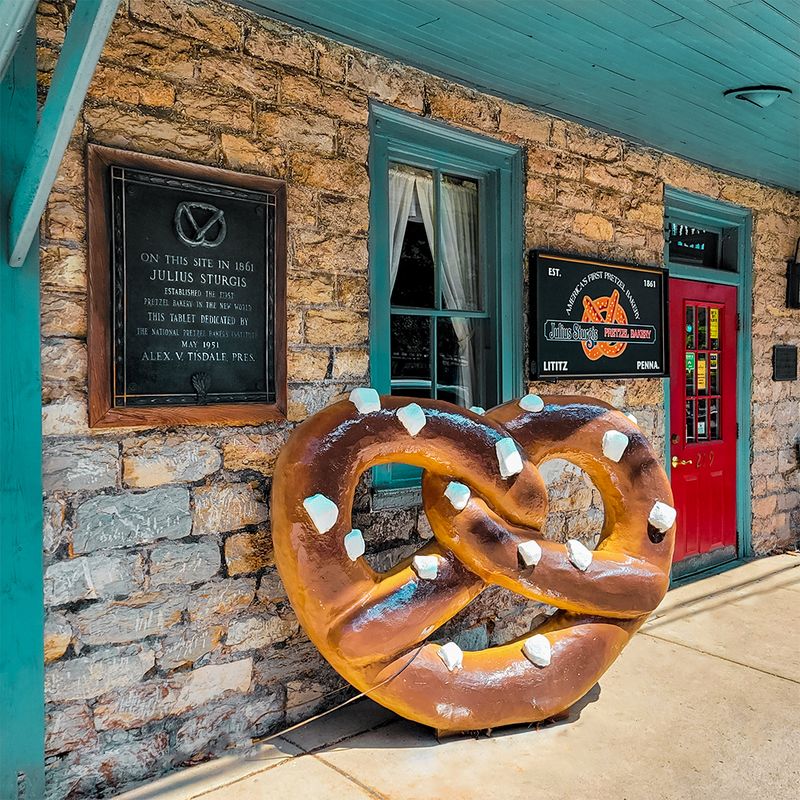
Ever wonder why pretzels feel so tied to this part of the country? Pennsylvania proudly wears the nickname “Pretzel State,” cranking out roughly 80 percent of the pretzels sold across America each year.
The snack’s roots run deep and old. Historians trace pretzels back to Southern Europe around 610 A.D., where monks are believed to have shaped dough into little rewards called pretiola, resembling arms folded in prayer for children learning their verses.
German and Swiss immigrants carried these baking traditions across the ocean and planted them firmly in Pennsylvania soil. That heritage is exactly why a place like this fits so naturally in Lititz.
Standing inside the bakery, you feel like a small link in a very long chain. From praying monks to modern machines, the humble pretzel has traveled centuries to reach your hand.
Knowing the bigger picture makes the whole visit richer. It transforms a snack stop into a genuine lesson about how food, faith, and immigration shaped a state’s identity.
A Family Tradition Across Five Generations
What keeps a business alive for over 160 years? Around here, the answer is family.
Five generations of the Sturgis clan have carried Julius’s craft forward, guarding his original methods like a treasured heirloom.
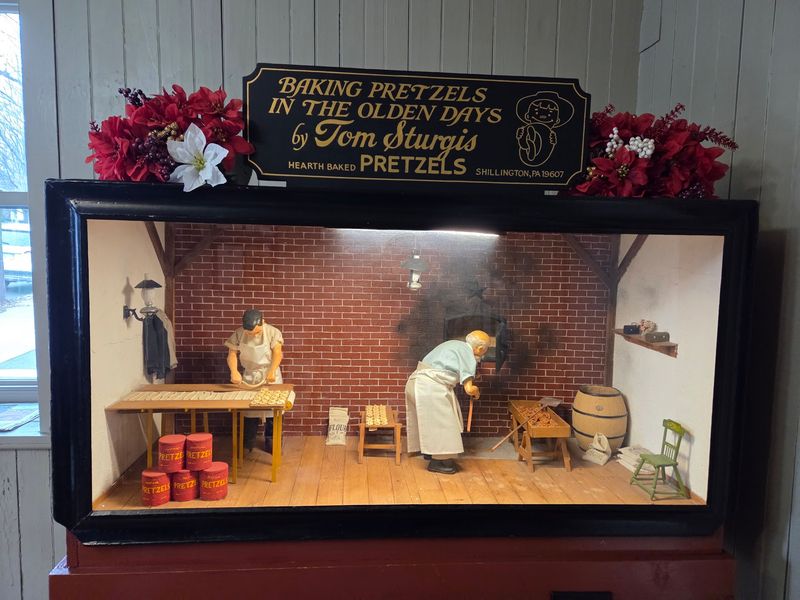
The story branches out beyond Lititz, too. Julius’s grandson, Marriott “Tom” Sturgis, went on to found Tom Sturgis Pretzels in Reading, Pennsylvania, in 1946, continuing the family’s baking legacy in a new place.
Progress touched the trade as well. The first automatic pretzel twisting machine arrived in 1933, boosting output from about 40 pretzels a minute by hand to roughly 250 by machine.
Yet at this historic spot, the human touch stays front and center. Visitors often walk away moved by the sense of an American dream built on hard work, discipline, and sticking together as a family.
It is a heartwarming thread that runs through the whole experience. Parents especially love that kids can see how dedication and teamwork built something loved all over the world from such a small, twisty beginning.
Planning Your Visit and Final Thoughts
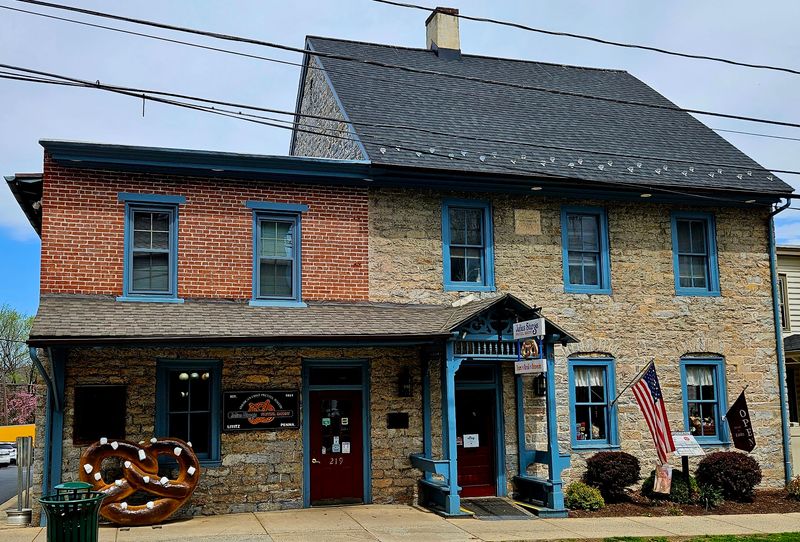
Ready to go? The bakery sits at 219 E Main St in Lititz and welcomes guests Monday through Saturday from 10:30 AM to 4:30 PM, with Sunday hours running noon to 4 PM.
You can reach them at 717-626-4354.
The interactive tour is a genuine bargain, running around five or six dollars per person and lasting about half an hour, with a bag of pretzels included at the end.
A few friendly tips from those who have been: book ahead on weekends so you do not miss a spot, and try not to grab the very last tour if you want time to shop afterward. Parking can be a little tricky, so arrive with patience.
Cooler months are more comfortable, since the historic building can warm up inside. Guides earn steady praise for being enthusiastic, kind, and great with children.
All told, this is one of those rare stops that fills your belly and your imagination at once. If you are anywhere near Lancaster County, it is an easy yes.