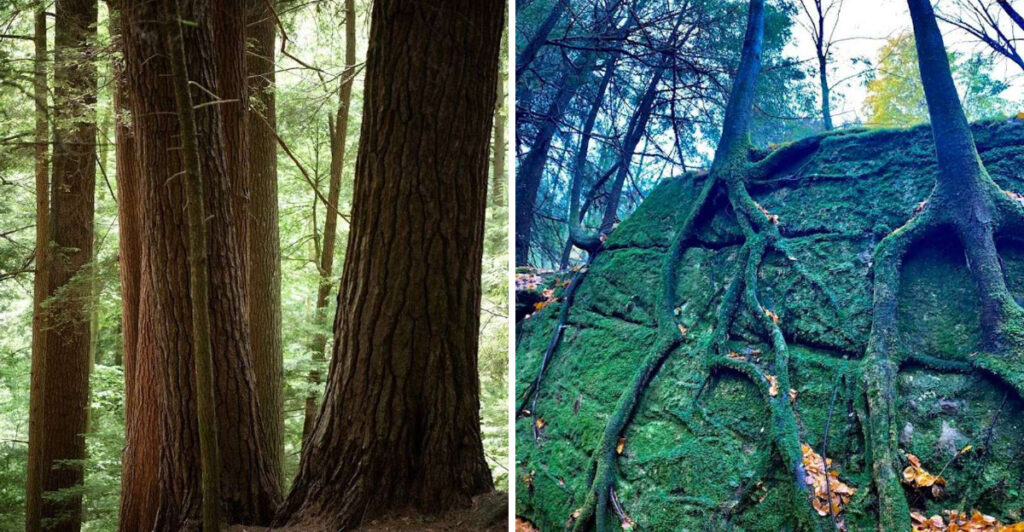
Four hundred years of silence, and Pennsylvania kept it hidden in plain sight.
In the northwestern corner of the state, a forest of ancient white pines and hemlocks has been standing since before the country had a name, and walking through it feels exactly as significant as that sounds.
The canopy closes in high overhead, the noise of the world drops away, and suddenly, the trees around you have been growing since the 1600s. Pennsylvania’s most extraordinary natural landmark does not announce itself loudly.
It simply stands there, centuries deep and quietly breathtaking, waiting for the visitors willing to make the drive and find out what genuinely old growth actually feels like.
A Forest That Predates Almost Everything You Know
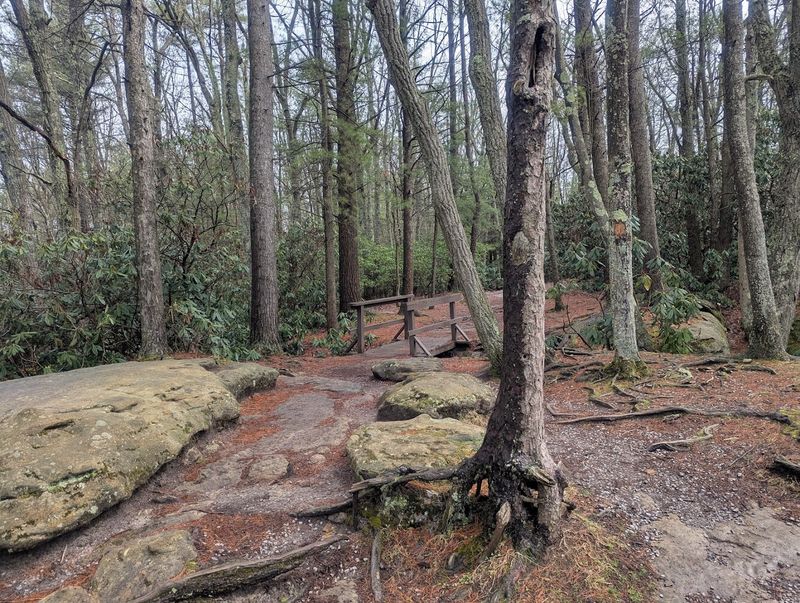
Before the American Revolution, before the first colonial settlements took hold, these trees were already reaching for the sky. The Forest Cathedral is one of the last remaining old-growth forests in the eastern United States, and that fact alone makes it remarkable.
Located within Cook Forest State Park in northwestern Pennsylvania, the natural area covers approximately 315 acres within a 448-acre protected zone.
The Eastern white pines and Eastern hemlocks here are roughly 350 to 400 years old on average, though some individual trees trace their origins to the early 1500s.
Researchers believe much of this forest regenerated after a major fire in 1644, with certain trees surviving that event entirely. The sheer age of these woods gives the place a weight that is difficult to describe.
Standing beneath a canopy that has watched centuries pass overhead is a genuinely humbling experience that no photograph can fully capture.
The Cathedral Feeling Is Real
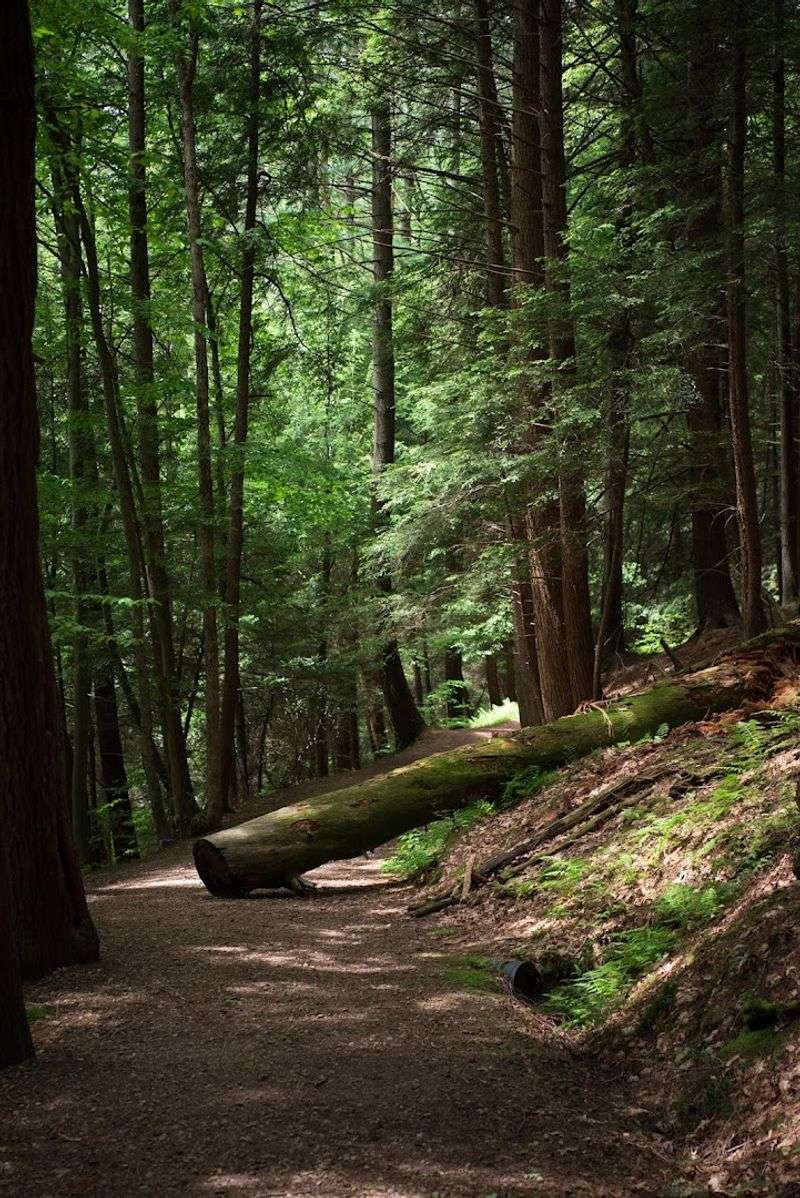
The name is not just poetic marketing. When you walk into the Forest Cathedral, the visual effect is genuinely similar to stepping inside a grand stone cathedral, except the columns here are living trees and the vaulted ceiling is woven from ancient branches.
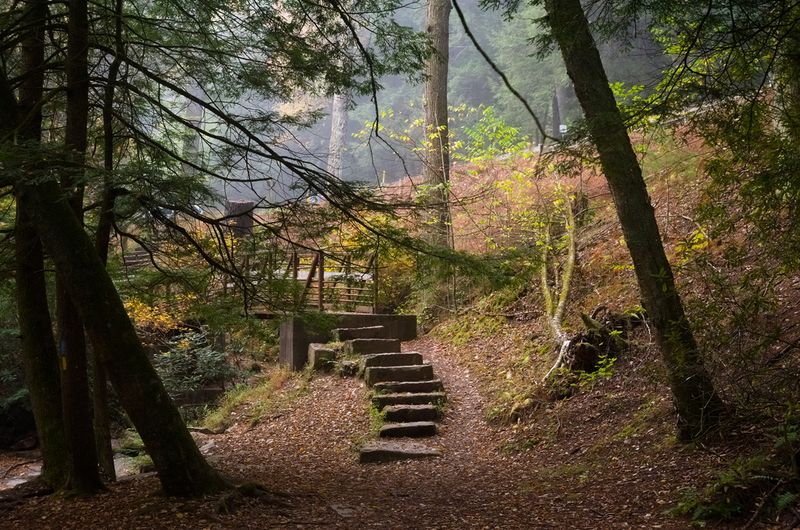
The dense canopy blocks so much light that very little undergrowth survives on the forest floor. This creates an open, almost hushed interior space beneath the towering pines and hemlocks.
Sound behaves differently here too. The noise of the outside world fades quickly, replaced by the soft creak of branches and occasional birdsong.
Many trees exceed three feet in diameter and push toward heights approaching 183 feet tall, with the tallest white pines ranking among the highest in the eastern United States.
The white pines here are sometimes called Pennsylvania cork pine because of their unusually thick, cork-like bark. That bark texture, combined with the towering scale, makes each tree feel like its own quiet monument worth pausing beside.
How This Forest Got Its Official Protection
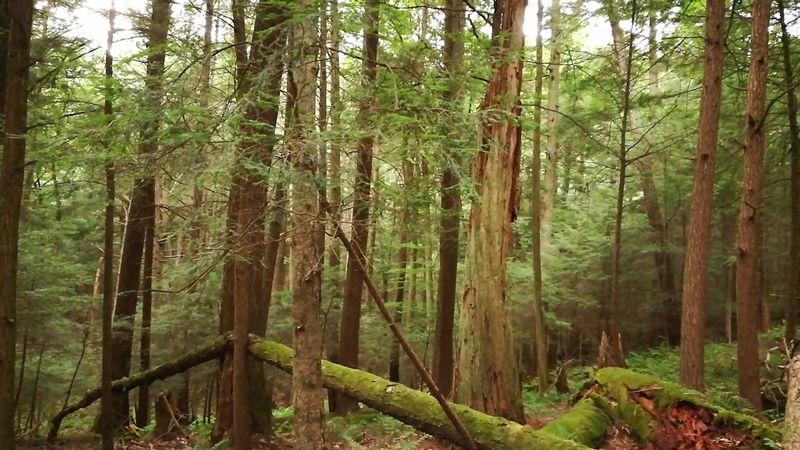
Cook Forest State Park holds a meaningful distinction in Pennsylvania history. It was the first state park in Pennsylvania created specifically to protect a natural area rather than simply provide recreational space.
That decision came in 1928 after decades of advocacy from people who recognized what was at stake.
By the late 1800s and early 1900s, logging had stripped enormous portions of Pennsylvania’s forests bare. The old-growth stands at what would become Cook Forest somehow survived that era, and conservationists fought hard to keep them that way.
Their efforts eventually succeeded, and the park was officially established to ensure these trees would remain standing.
In 1967, the Forest Cathedral received designation as a Registered National Natural Landmark, cementing its scientific and ecological importance on a national level.
It was also accepted into the Old-Growth Forest Network, a recognition that underscores just how rare and irreplaceable this particular patch of Pennsylvania woodland truly is.
The Longfellow Trail And Where To Start Walking
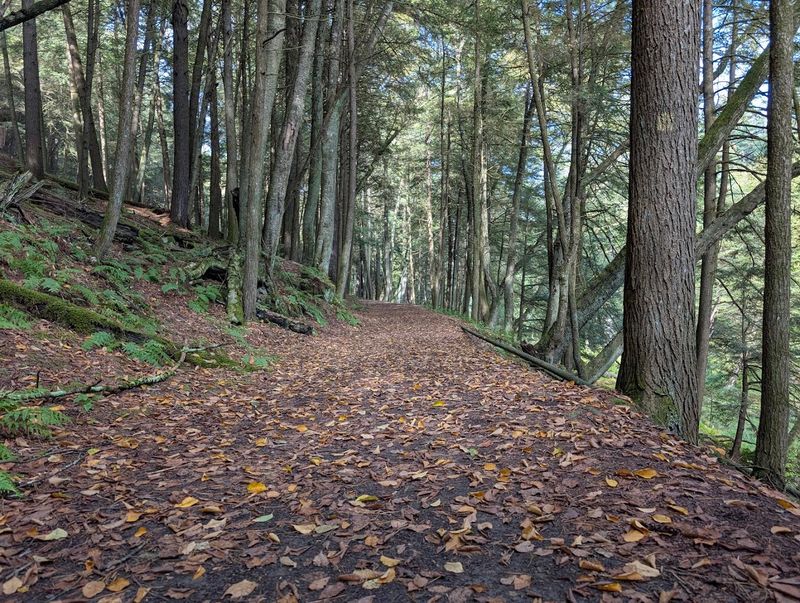
The Forest Cathedral features about 6.5 miles of trails winding through its ancient stands, and the Longfellow Trail is the one most visitors head for first.
It cuts right through the heart of the old-growth area and puts you face to face with the finest white pine stands the forest has to offer.
The trail is relatively accessible and does not require advanced hiking skills, making it a good option for families, casual walkers, and anyone who simply wants to spend time among the trees without a strenuous workout.
A large parking lot near the Log Cabin Environmental Learning Classroom provides a convenient starting point for most visitors.
For those wanting more mileage, portions of both the North Country National Scenic Trail and the Baker Trail pass through this area as well.
All trails here are open year-round, which means the forest can be explored in every season, each offering a completely different visual mood and atmosphere worth experiencing on its own terms.
What The Trees Actually Look Like Up Close
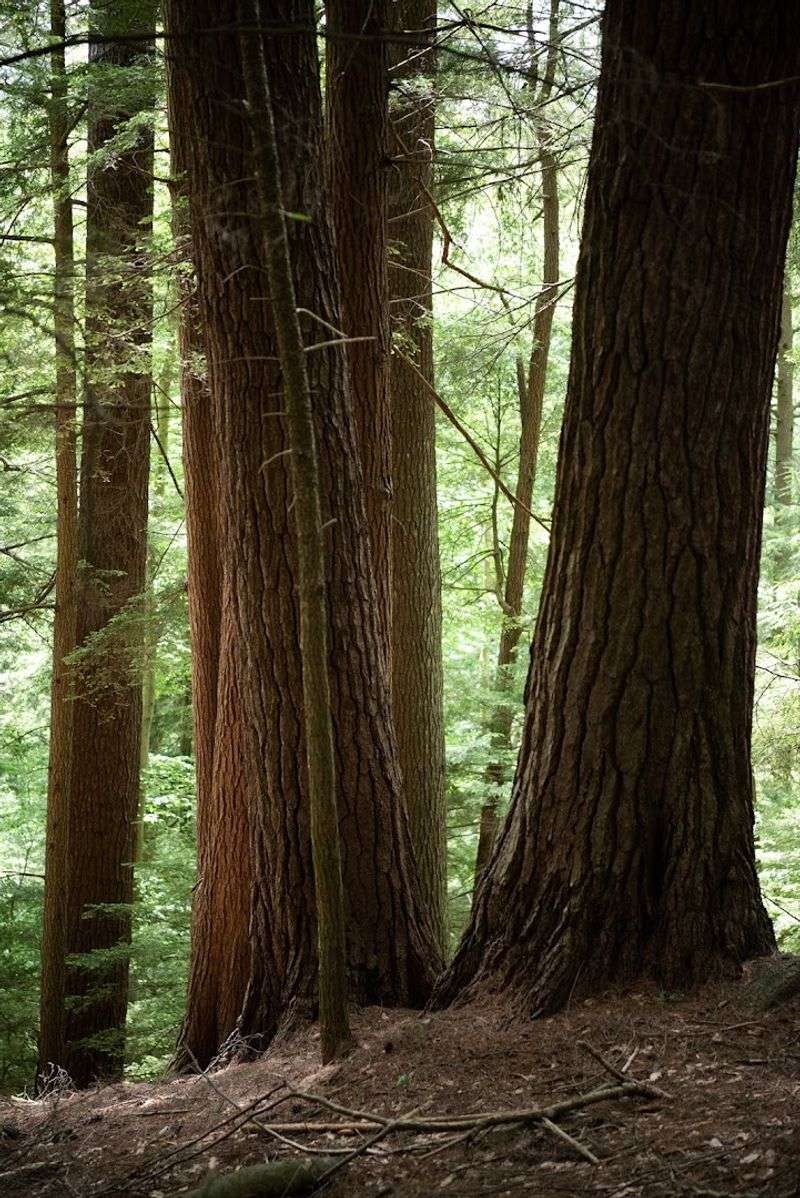
Reading that a tree is 180 feet tall is one thing. Standing next to one and craning your neck back until it aches is something else entirely.
The Eastern white pines in the Forest Cathedral are genuinely massive in a way that photographs rarely communicate well.
Their trunks rise straight and clean for much of their height before branching out into the canopy far overhead. The bark is thick and deeply furrowed, almost spongy in texture, which is exactly why locals have long called them Pennsylvania cork pine.
Running a hand across that bark gives a tactile sense of just how long these trees have been growing.
The Eastern hemlocks share the canopy with the pines and add a darker, denser texture to the forest interior. Other old-growth species present in the area include American beech, black cherry, white oak, northern red oak, yellow birch, and cucumber tree.
The variety of species means that even a slow walk reveals new textures, bark patterns, and branch shapes around every turn.
Visiting In Different Seasons Changes Everything
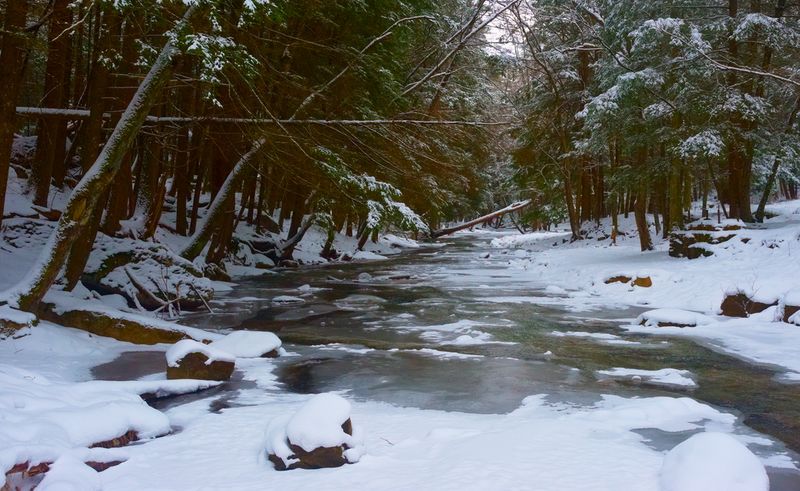
The Forest Cathedral does not have an off-season, at least not in any negative sense. Each time of year brings a genuinely different version of the same ancient forest, and regular visitors often say no two trips feel quite alike.
Spring brings a brief window when wildflowers push up through the forest floor before the canopy closes in overhead. Summer turns the interior cool and green, with filtered light creating a soft, almost underwater quality to the air inside the old-growth stands.
Autumn is particularly striking because the surrounding mixed forest lights up in gold and orange while the evergreen pines hold their deep color, creating a sharp visual contrast that makes the ancient trees stand out even more dramatically.
Winter strips away the deciduous layers entirely and leaves the pines and hemlocks as the dominant presence, their dark silhouettes rising against snow-covered ground. Visiting in the quieter months also means fewer crowds and a more personal encounter with the forest itself.
The Scale Of Cook Forest State Park Beyond The Cathedral
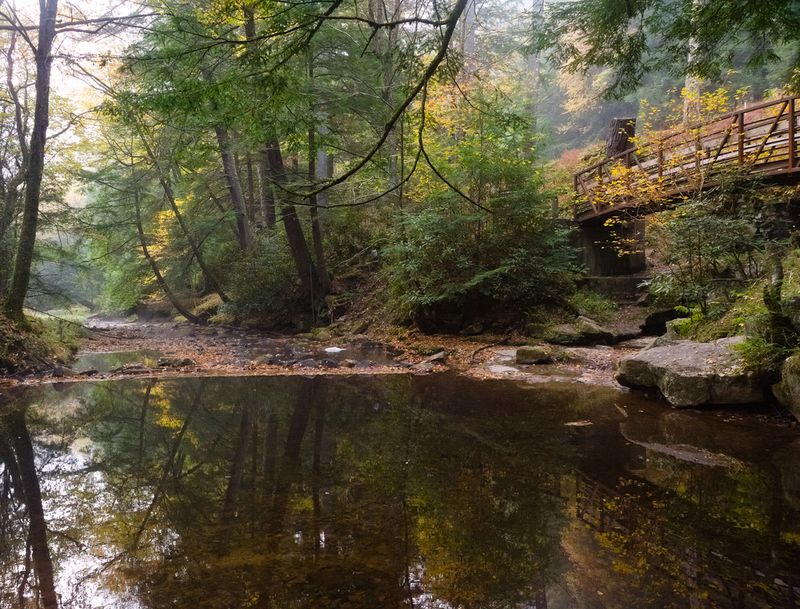
The Forest Cathedral sits within a much larger protected landscape. Cook Forest State Park covers roughly 8,500 acres in total, and the old-growth natural area is the crown jewel of a park that offers considerably more to explore.
The Clarion River runs along the park’s edge and draws visitors for fishing, kayaking, and canoeing throughout the warmer months. Tom’s Run, a smaller stream inside the park, is a popular spot for wading and casual exploration, especially with younger visitors.
A historic fire tower elsewhere in the park offers elevated views across the forest canopy that provide a completely different perspective on the landscape.
Seneca Point is another viewpoint within the park worth seeking out for its panoramic look over the river valley. The park also includes campgrounds, rental cabins, and ramada shelters that make multi-day stays practical and comfortable.
For anyone who wants to fully absorb what this corner of Pennsylvania has to offer, spending more than a single day here is well worth considering.
Wildlife That Calls This Ancient Forest Home
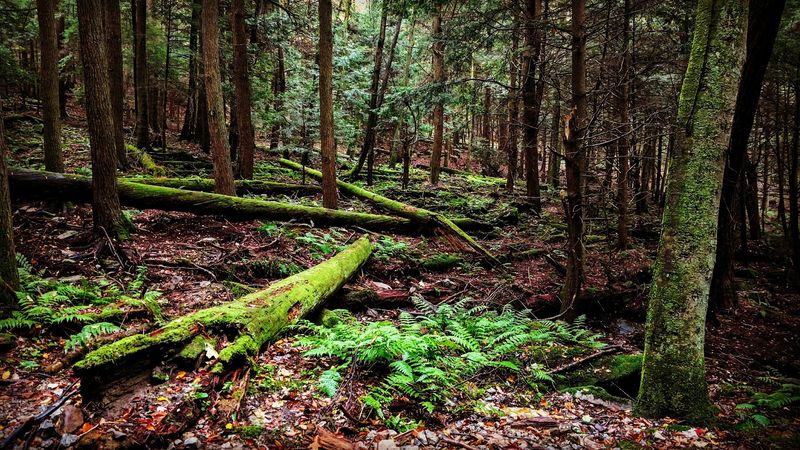
Old-growth forests support ecosystems that younger woodlands simply cannot replicate. The Forest Cathedral, with its centuries of accumulated fallen wood, layered canopy, and minimal human disturbance, provides habitat for a wide range of wildlife that thrives in exactly these conditions.
White-tailed deer move quietly through the open forest floor, and wild turkey are commonly spotted picking through the leaf litter. Raptors, including osprey and bald eagle, have been reported in the broader park area, making the sky worth watching as much as the trees.
Smaller creatures, including various woodpecker species, benefit directly from the standing dead wood that old-growth forests naturally produce over time.
Salamanders, frogs, and other amphibians favor the cool, moist conditions near Tom’s Run and other water features within the park.
The wildlife here is not the main draw for most visitors, but it adds a living dimension to the experience that makes the Forest Cathedral feel like a complete, functioning world rather than simply a collection of very large trees.
Why Old-Growth Forests Are So Rare In The East
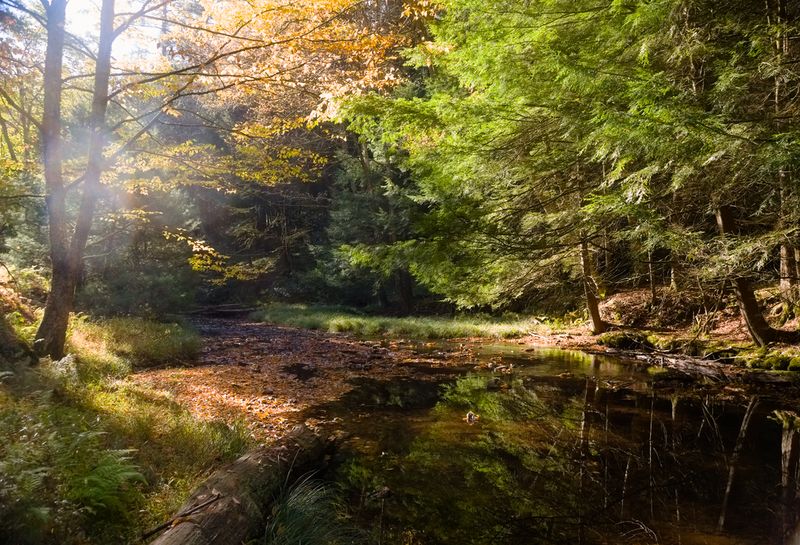
Most people do not realize just how little original old-growth forest remains in the eastern United States. The logging era of the 18th and 19th centuries was extraordinarily thorough, clearing millions of acres across Pennsylvania and the broader region in a relatively short period of time.
What survived did so largely by accident, through geographic inaccessibility, private ownership decisions, or early conservation intervention. The Forest Cathedral is one of the rare places where the combination of factors aligned in the trees’ favor.
Approximately 315 acres of genuine old-growth forest now exist within a 448-acre natural area, and that acreage represents something genuinely uncommon in the northeastern United States.
Old-growth forests are ecologically distinct from regrowth forests in ways that matter beyond aesthetics. The structural complexity, carbon storage, biodiversity, and soil characteristics of a centuries-old forest cannot be replicated quickly or artificially.
That irreplaceability is exactly why the designation as a National Natural Landmark carries real weight and why ongoing protection of this Pennsylvania forest remains so important.
Practical Tips For Making The Most Of Your Visit
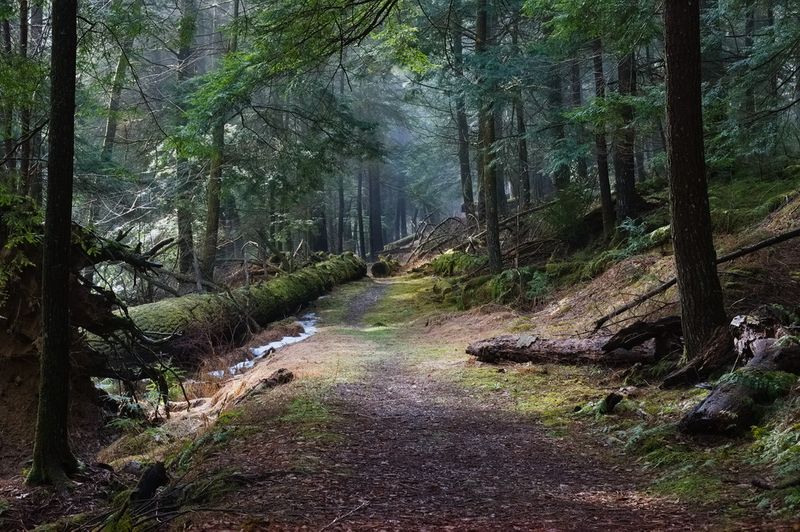
Planning a visit to the Forest Cathedral does not require much advance preparation, but a few practical considerations will make the trip more enjoyable.
Comfortable walking shoes or light hiking boots are strongly recommended, as the trail surfaces can be uneven and occasionally rooty.
The parking area near the Log Cabin Environmental Learning Classroom is the most convenient access point for the Longfellow Trail and the heart of the old-growth area.
Arriving earlier in the morning tends to mean fewer people on the trails and better chances of experiencing the forest in quiet conditions.
Bringing water, a light snack, and a camera with a wide-angle lens will serve most visitors well. The forest interior is significantly cooler than open areas, so an extra layer is worth packing even in summer.
Dogs are welcome in the park, though keeping them on a leash is expected. Cell service in the area can be limited, so downloading a trail map in advance is a smart move.
The Atmosphere That Makes This Place Unforgettable
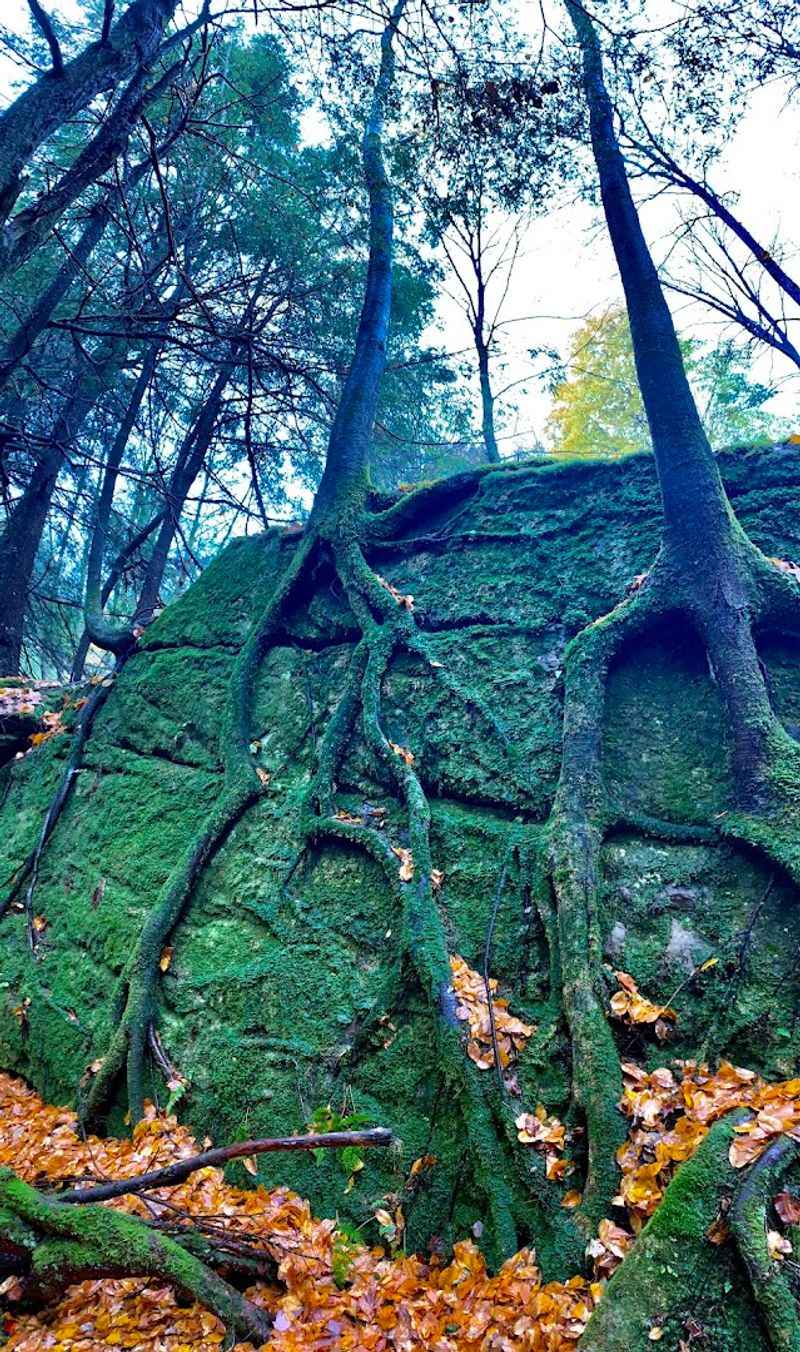
Atmosphere is one of those things that travel writers reach for when describing places that resist easy explanation. The Forest Cathedral has an atmosphere that earns the effort.
The silence inside the old-growth stands is not the absence of sound but rather a specific quality of quiet that feels earned by centuries of undisturbed growth.
Light moves differently here. It filters down through layers of pine needles and hemlock branches in soft columns that shift with the wind and the time of day.
Early morning fog sometimes lingers at ground level while the upper canopy catches the first gold of sunrise, creating a visual layering that feels almost theatrical without any artificial help.
The scale of the trees reframes your sense of proportion in a way that is hard to shake even after leaving. Many visitors describe a kind of stillness that settles over them after just a few minutes inside the forest.
That feeling is not accidental. It is what centuries of continuous growth, left largely undisturbed, actually produces in a living landscape.
Why Pennsylvania Should Be On Every Nature Lover’s Map
Pennsylvania does not always get the credit it deserves as a destination for serious nature experiences.
The state tends to be overshadowed by more famous natural landmarks elsewhere in the country, but the
Forest Cathedral is the kind of place that changes that perception quickly for anyone who visits.
The combination of genuine old-growth forest, accessible trails, surrounding park amenities, and the broader landscape of northwestern Pennsylvania makes Cook Forest State Park a destination that rewards visitors at multiple levels.
It works as a day trip from Pittsburgh or as a base for a longer stay in the region.
Pennsylvania’s forests have a long and complicated history of logging, clearing, and slow recovery, which makes the survival of this particular patch of ancient woodland feel genuinely significant.
The Forest Cathedral is not a recreation of what Pennsylvania’s forests once looked like. It is the actual thing, still standing, still growing, and still offering one of the most quietly powerful natural experiences available anywhere in the eastern United States.