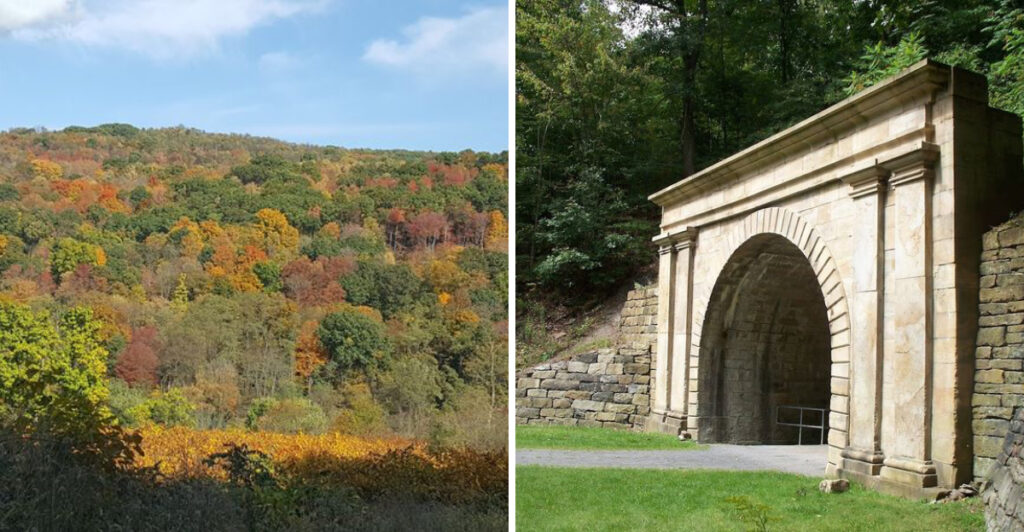
A good tunnel is history holding its breath and waiting for someone nosy enough to notice. Be nosy, and it pays off.
Pennsylvania makes this simple passage feel like the trail equivalent of finding a note tucked inside an old library book.
The walk starts quietly, then the mood gets deliciously curious. A bend appears, the trees lean in, and suddenly the stone ahead seems to know more than it is willing to say out loud.
That is the fun of a place like this.
It does not shout for attention. It gives a little nudge, lets local lore do the eyebrow raise, and rewards anyone willing to follow the path with a story carved into rock.
This place turns the whole outing into a sweet little history chase.
The Story Behind The Stone
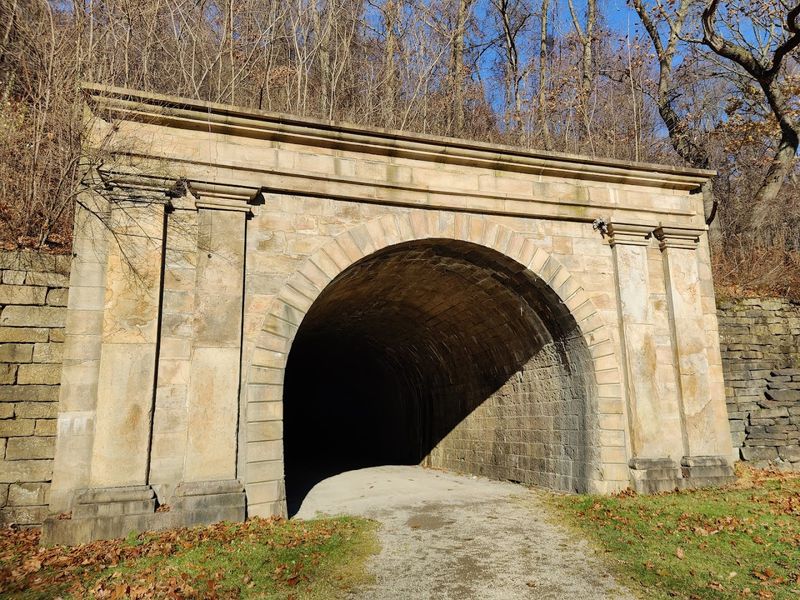
History does not always announce itself loudly. Sometimes it simply stands in the side of a hill, waiting for curious visitors to show up.
The Staple Bend Tunnel is the first railroad tunnel ever dug by hand in the United States. Workers carved it through solid rock in the early 1800s, using tools that seem almost impossibly basic by today’s standards.
The result was a passage that helped connect eastern and western Pennsylvania by rail.
The tunnel is part of Allegheny Portage Railroad National Historic Site. It can be reached from a trailhead off Beech Hill Road near Mineral Point, about four miles east of Johnstown, Pennsylvania.
This site preserves the memory of one of the most ambitious engineering projects of its era.
Those markings are a raw, unfiltered record of the people who passed through. Seeing them up close turns the tunnel from a curiosity into a genuine conversation with the past.
What The Trail Feels Like From The Start
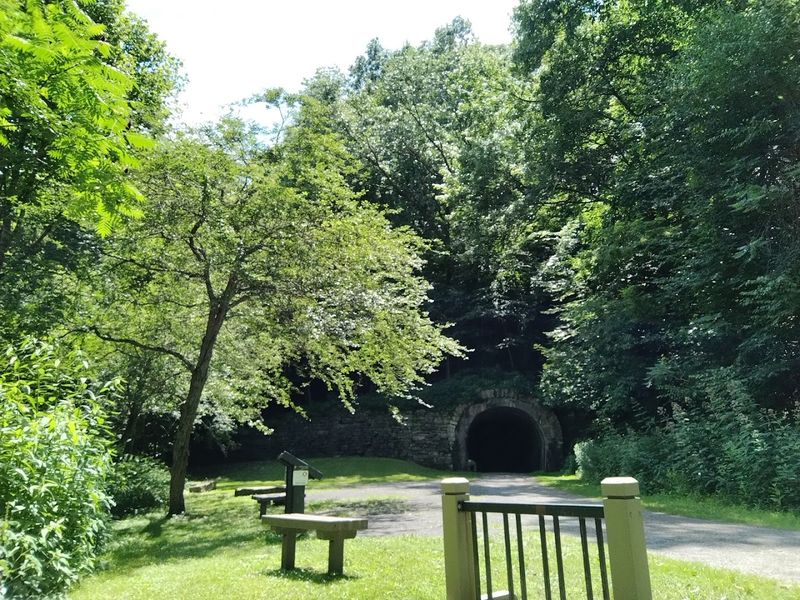
Right from the first step, this trail surprises people. The path is flat, wide, and covered in small gravel, making it accessible to almost everyone.
The route runs close to a river for much of the way.
Train tracks sit just down a gentle hillside, and real freight trains pass by regularly. Hearing a loud train rumble past while standing in quiet forest is an oddly satisfying contrast.
The trail stretches roughly two miles from the parking area to the tunnel entrance. That makes the full round trip about four miles of easy, comfortable walking.
Benches appear at regular intervals along the path, so rest stops are never far away.
Bikers use this trail too.
The gravel surface handles both foot traffic and bicycle tires well.
Families with young children find the flat terrain especially manageable, and the steady stream of small details along the way keeps younger walkers engaged without any complaints about tired legs.
Wildlife Along The Way
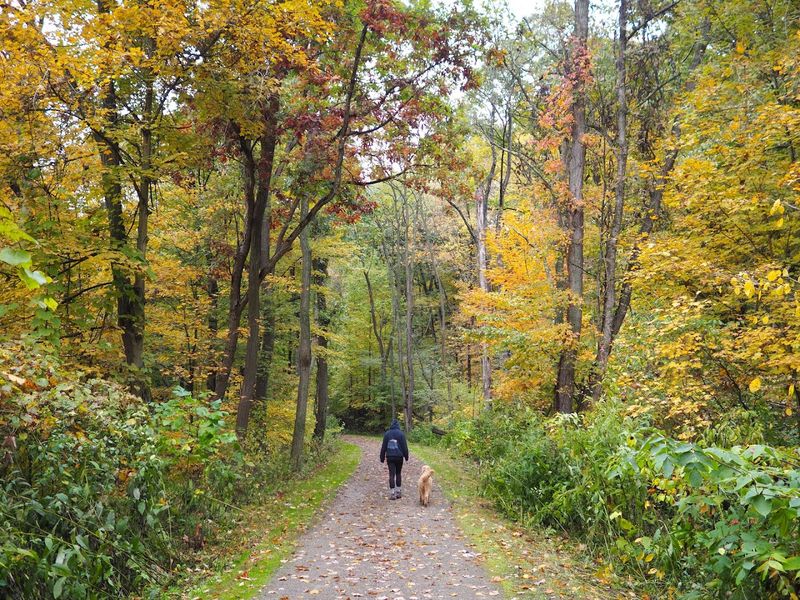
Keep both eyes open on this trail. The wildlife here does not hide particularly well, and surprise encounters are common.
Visitors have spotted black snakes sunning themselves on the path. Those snakes are typically calm and unbothered by passing hikers, but it is always smart to give them space.
Deer appear near the tree line during quieter morning hours, and birds are almost constant companions throughout the walk.
The river nearby draws a variety of water-loving species. Watching the water from the trail edge while a freight train rumbles past in the background creates a sensory experience that is hard to replicate anywhere else in Pennsylvania.
Fall visits bring a different kind of wildlife show. The trees along the trail turn brilliant shades of orange and red, and the leaf canopy transforms the entire walk into something almost painterly.
Morning visits tend to offer the most peaceful conditions, with fewer people on the trail and the best chance of spotting animals before the day gets busy.
Stepping Inside The Tunnel
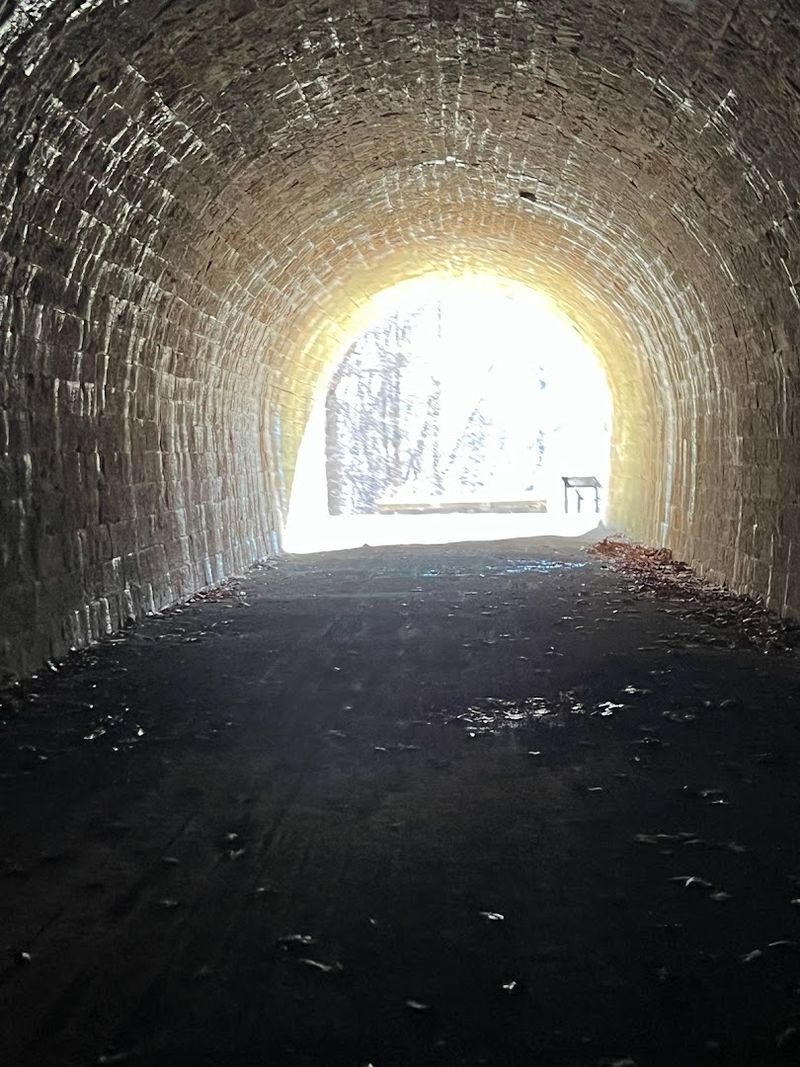
Cool air hits immediately upon entering the tunnel. Even on the hottest summer days, the temperature inside drops noticeably, making the tunnel a genuinely refreshing stop mid-hike.
The passage is wide enough to walk through comfortably.
At roughly 0.2 miles long, it does not take long to cross from one end to the other. But most visitors slow down once inside, drawn in by the texture of the stone walls and the soft echo of their own footsteps.
Bringing a flashlight is strongly recommended.
The tunnel gets quite dark toward the center, and the old stone carvings on the walls are easier to spot and appreciate with a good light source. Some of those carvings date back over two centuries.
The tunnel ends at a wooded area where the trail continues onward toward the Path of the Flood trail. That extension adds more mileage and more challenge for those who want to keep exploring beyond the tunnel.
The sense of stepping out into daylight after the cool darkness feels genuinely rewarding.
The Historic Carvings On The Walls
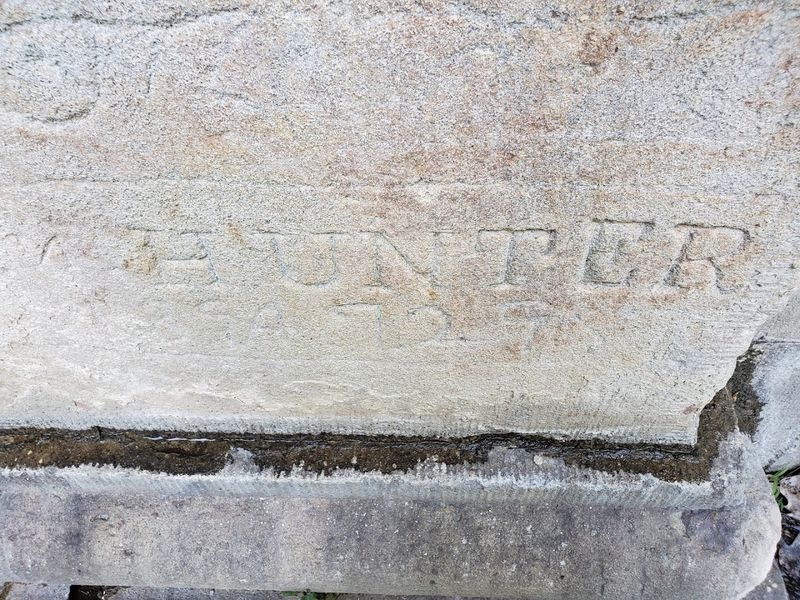
Old stone has a way of holding secrets, and the walls of the Staple Bend Tunnel are full of them. Carved names, dates, and markings cover sections of the interior stone.
Workers, travelers, and curious visitors left their marks over generations, turning the walls into an unplanned historical record.
A flashlight makes these details much easier to see. The low light inside the tunnel can make the carvings easy to miss without one.
Taking time to scan the walls slowly reveals layers of history that a quick walk-through would miss entirely.
These inscriptions add a deeply personal dimension to the site. Unlike museum exhibits behind glass, these marks are right there at arm’s reach.
Touching centuries-old stone carved by human hands connects visitors to Pennsylvania’s past in a way that no written sign fully replicates.
The tunnel is quiet, but its walls have plenty to say.
Practical Things To Know Before Going
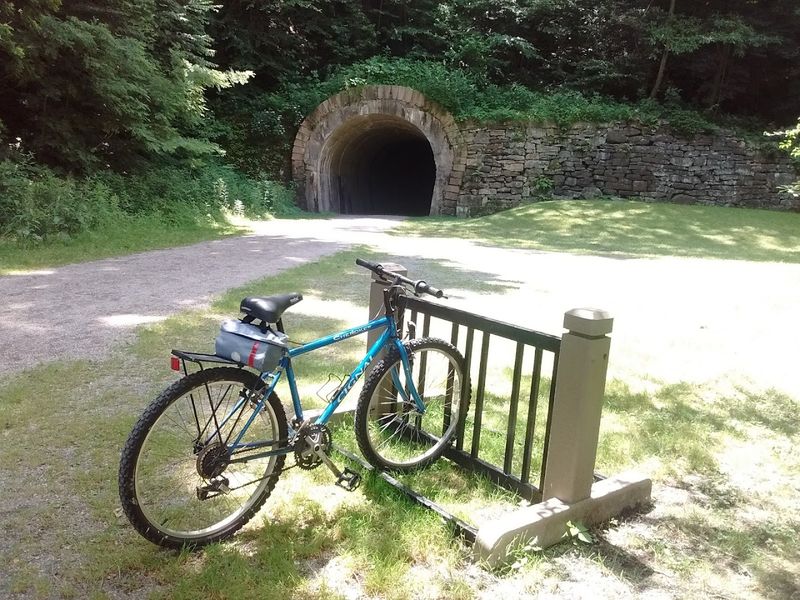
Good preparation makes any outdoor trip more enjoyable, and this one rewards a little planning.
The parking area at the trailhead is free, but the lot is on the smaller side.
Arriving early in the morning increases the chances of finding a spot without any hassle.
Restrooms are available at the entrance and are consistently reported to be clean and well maintained.
A bike repair station is also on site, which is a thoughtful addition for cyclists.
The trail surface is small gravel throughout. Sturdy walking shoes or trail sneakers handle it easily.
Sandals or flip-flops would make the walk less comfortable, especially over the full four-mile round trip.
Packing a snack and a drink is a smart move. There are no food vendors along the trail or at the tunnel.
Picnic tables sit near the trailhead for a relaxed stop before or after the walk.
The site operates as part of the National Park Service, so the overall maintenance and cleanliness standards are reliably high throughout the entire area.
Why Fall Is A Favorite Season Here
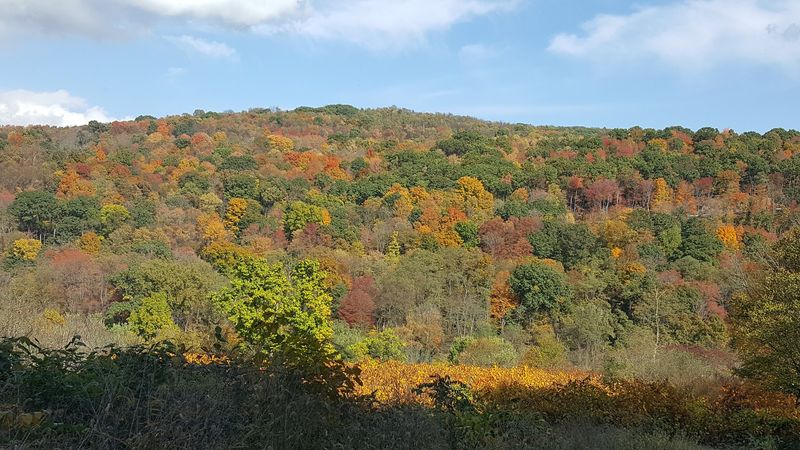
Autumn transforms this trail into something genuinely spectacular.
The trees that line the path turn vivid shades of orange, red, and gold as the season progresses.
The flat terrain makes fall hiking here especially pleasant.
Cool temperatures, colorful leaves overhead, and the occasional freight train rolling past create a sensory combination that draws repeat visitors year after year.
Morning light filtering through fall foliage along the river section of the trail is particularly striking.
Crowds stay relatively light even during peak fall color season. That quietness is part of what makes the experience special.
A walk here on a crisp October morning can feel almost entirely private, with just the sounds of the river, the wind in the trees, and distant train whistles for company.
Pennsylvania’s Laurel Highlands region delivers reliable fall color, and this trail sits right in the middle of some of the best of it.
The tunnel itself, cool and shadowy against the bright autumn forest outside, creates a memorable visual contrast that photographers and casual walkers both appreciate deeply.
Biking The Trail To The Tunnel
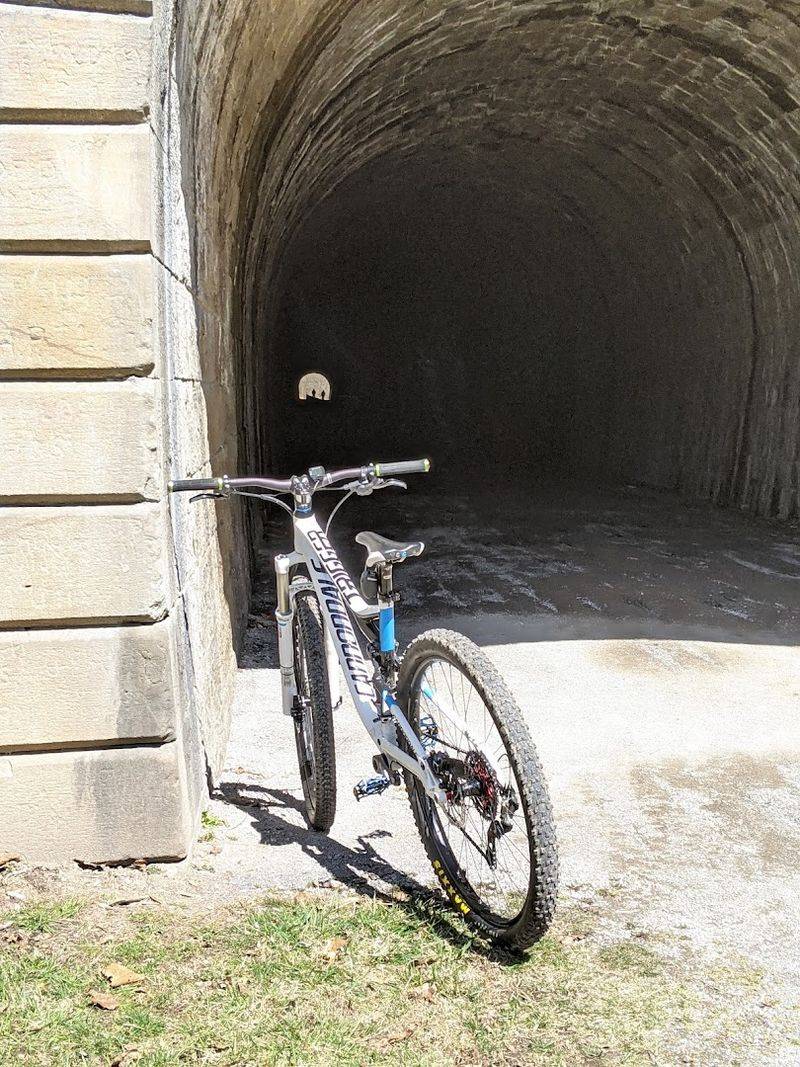
Two wheels work just as well as two feet on this trail.
The flat, well-maintained gravel surface handles bicycles smoothly, making the ride to the tunnel an easy and enjoyable outing.
Families with young riders find this trail particularly well-suited for a relaxed bike trip.
The absence of steep grades means even beginners can manage the full distance without much difficulty.
The two-mile stretch from the trailhead to the tunnel passes quickly on a bike.
Beyond the tunnel, the trail connects to the Path of the Flood, which presents more varied terrain for riders looking for additional challenge.
The bike repair station at the trailhead is a practical touch for anyone who needs a quick adjustment before heading out.
Cyclists are encouraged to be mindful of walkers sharing the path, especially near the tunnel entrance.
Trains Still Run Right Next To The Trail
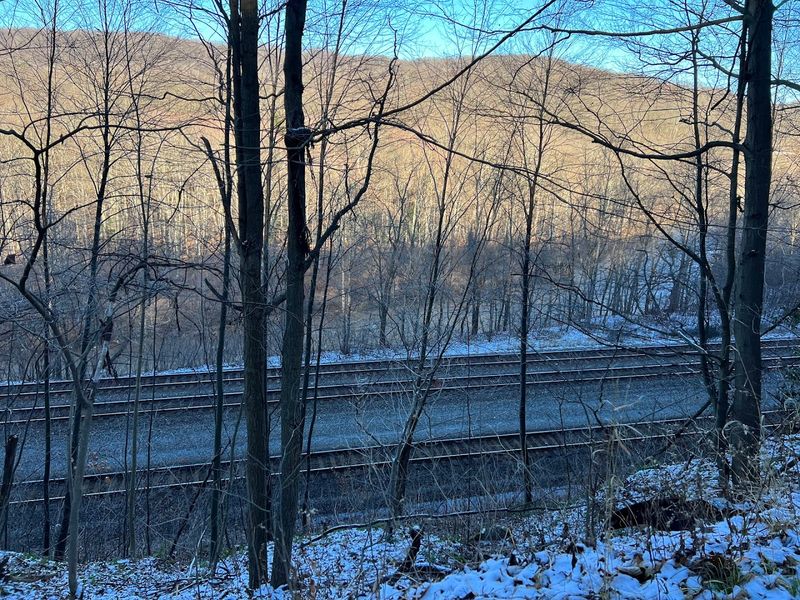
Here is something unexpected about this trail: active freight trains still run right alongside it.
The tracks sit just down a gentle slope from the walking path.
During a typical two-hour visit, multiple trains may pass. They are loud, and they are fast.
Watching a full freight train roll through a quiet forest setting is genuinely exciting, especially for younger visitors who may not have seen one up close before.
The contrast between the historic tunnel and the working railroad is part of what makes this site so layered.
Pennsylvania has always been railroad country, and this location makes that legacy feel immediate rather than distant.
Train spotters often visit specifically for the views along this section of track.
The combination of river, forest, and active rail line creates a backdrop that changes constantly depending on the time of day and season.
Early mornings are quieter, while midday visits may catch more train activity. Either way, the trains add an unexpected energy to what might otherwise be a purely contemplative walk.
The Path Of The Flood Extension
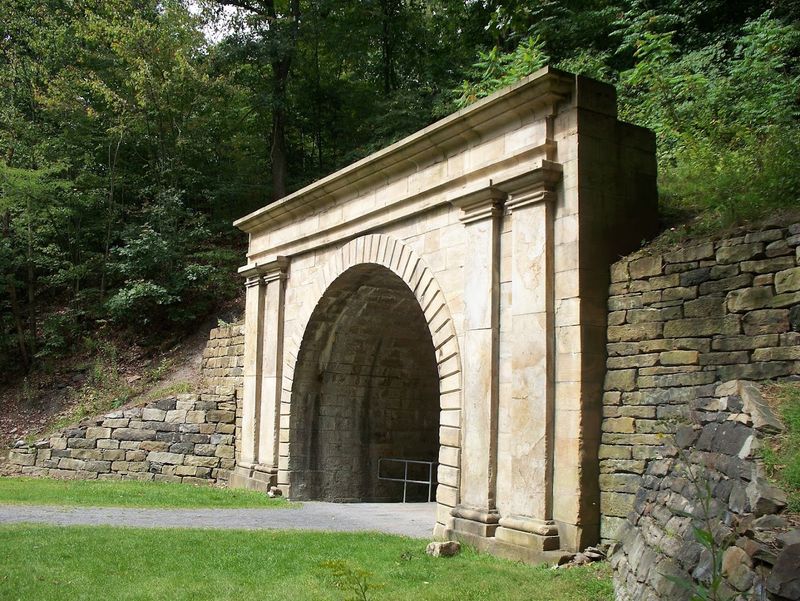
Curious what lies beyond the tunnel? The trail does not end at the stone archway.
It keeps going, and things get more interesting the further one travels.
Past the tunnel, the route connects to the Path of the Flood trail.
The terrain shifts from flat gravel to something more rugged and varied as the path progresses.
The change in character is noticeable almost immediately after passing through the tunnel.
The trail narrows, the ground becomes less even, and the forest grows denser. It is a rewarding challenge for those who want more than a casual stroll.
The Path of the Flood trail carries its own historical significance tied to the broader story of the Johnstown region in Pennsylvania.
Interpretive signs along the route add context without overwhelming the experience.
Visitors who complete the full loop earn a thorough understanding of the landscape and its layered past.
Proper footwear becomes even more important on this section of the trail.