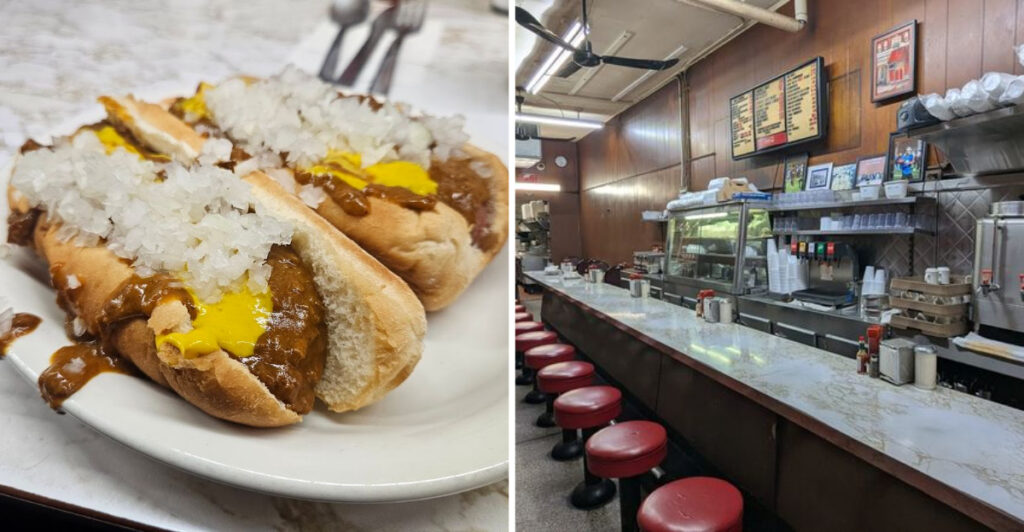
Some food rituals are so deeply woven into a city’s identity that they stop being just a meal and become something closer to a handshake. In Detroit, that ritual is the coney dog.
It is a hot dog dressed with chili, mustard, and onions. You order it fast, eat without ceremony, and then you give it a loyal review usually reserved for hometown teams.
The people who grew up eating coneys do not need a long explanation. They sit down, order with confidence, and know exactly what should land in front of them.
That rhythm, and no-fuss approach to a satisfying plate of food, are what make Detroit coney counters so worth paying attention to.
Michigan has plenty of places that call themselves coney islands, but only a handful carry the lived-in credibility.
That comes from decades of regulars, quick plates, and counter stools that never needed glamour. This is a story about one of those places, and why it still matters.
The Vernor Highway Counter Where Detroit Still Orders Fast
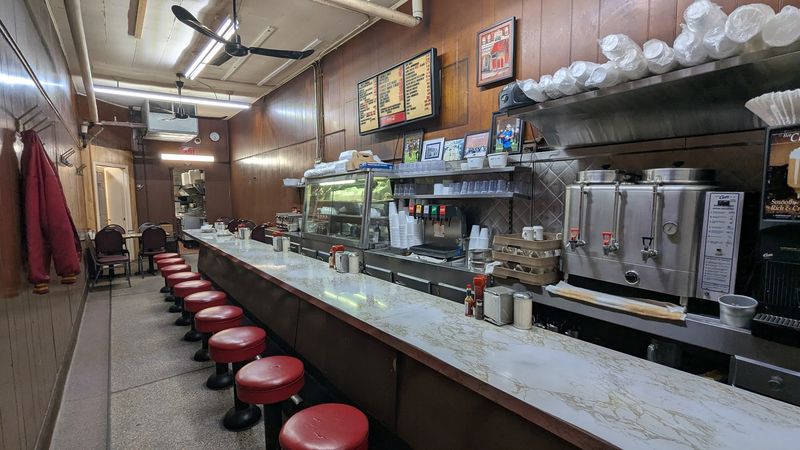
Duly’s Place Coney Island is the kind of counter where the whole meal seems to understand your schedule. You sit down, get noticed, and feel the order rhythm begin before you have had time to overthink anything.
That is part of the charm. This is not a dining room built around lingering, posing, or making a simple lunch sound complicated.
It is built for people who want the food hot, direct, and exactly as expected. Vernor Highway runs through Southwest Detroit, a part of the city with its own strong pace and personality.
The neighborhood does not perform for visitors, and neither does this counter. That match is important.
A coney place like this works best when it belongs to the street around it, not when it feels dropped in for effect.
The stools face the action, so the meal is never mysterious. You watch the work happen, the plates move, and the food arrive with practiced confidence.
That honesty is what gives the counter its pull. It does not need to be polished when the routine already works.
A Coney Story That Traces Back To 1921
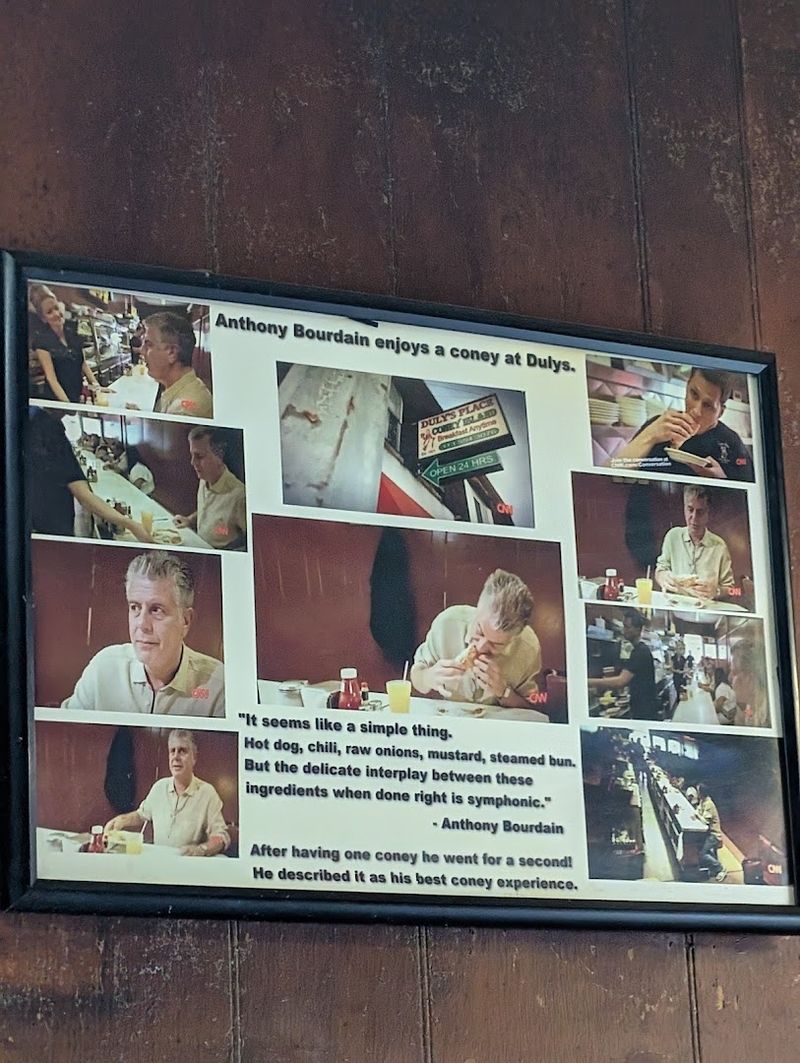
The story reaches back to 1921, when George Dulyakis opened the counter that would become Duly’s Place Coney Island.
Today, the restaurant stands at 5458 Vernor Hwy in Detroit, and that address gives the history a real place to land.
More than a century is a long time for any restaurant to keep serving. For a small coney counter, it is remarkable.
Dulyakis’ story also fits a larger Detroit pattern. Greek families helped shape the city’s coney culture in the early twentieth century, turning a simple hot dog format into something that became distinctly local.
The chili, the mustard, and the compact counter setup all point toward food built for the working class.
That practicality still gives the place its identity. Nothing about the story needs to be dressed up.
A small counter opened, people came, and the food kept giving them a reason to return. That is how a restaurant becomes part of a city’s language.
Why The No-Frills Mood Works So Well
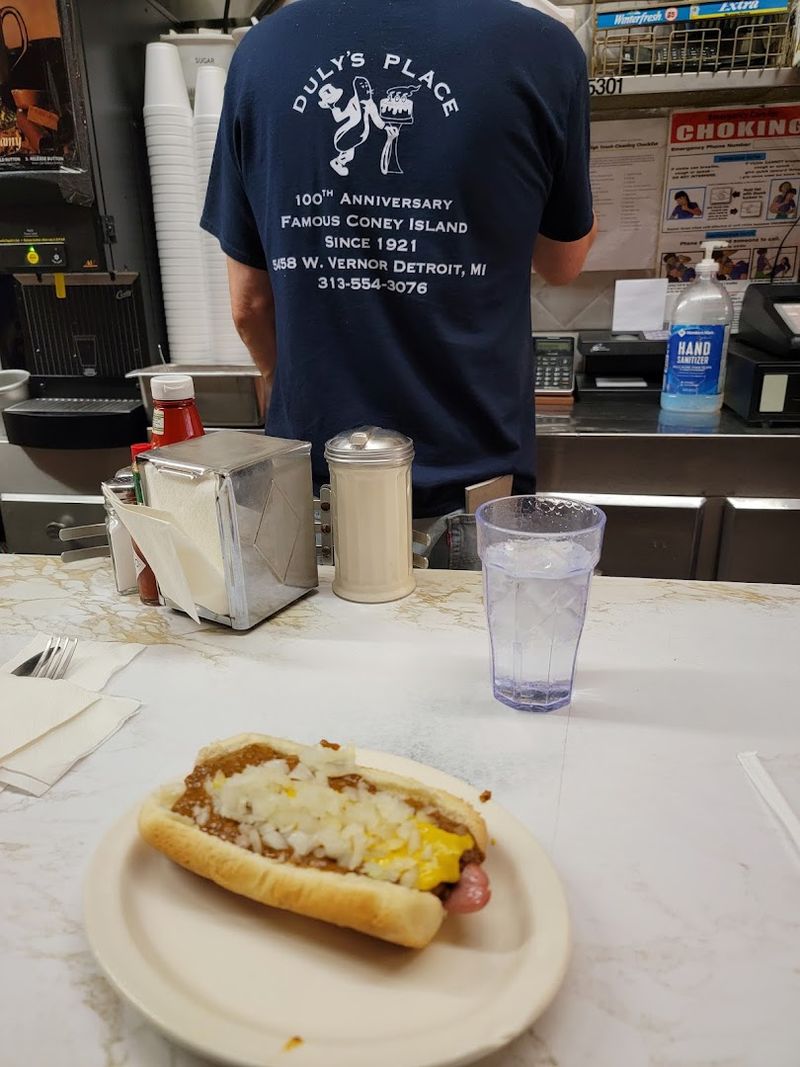
The no-frills mood is not a flaw here. It is the whole point. Duly’s does not try to make old-school look decorative. It simply operates like a place that has known itself for a very long time.
The counter, the tight space, and the quick movement all tell the same story. This is a Coney Island place built around function first.
That matters because the best old Detroit counters do not ask to be admired before they feed you. They win people over by doing the basics well.
The room has the kind of wear that comes from use, not neglect. There is a difference. A place can look lived-in because it has been serving real customers for real decades, and that feeling is hard to manufacture.
The menu is straightforward, the seating is practical, and the pace keeps everything moving. Even the old-school counter feeling belongs to the experience.
It strips the meal down to what people came for in the first place: order, eat, pay, go. Some restaurants would make that sound plain. At Duly’s, plain is part of the personality.
Chili, Mustard, Onions, And The Detroit Ritual
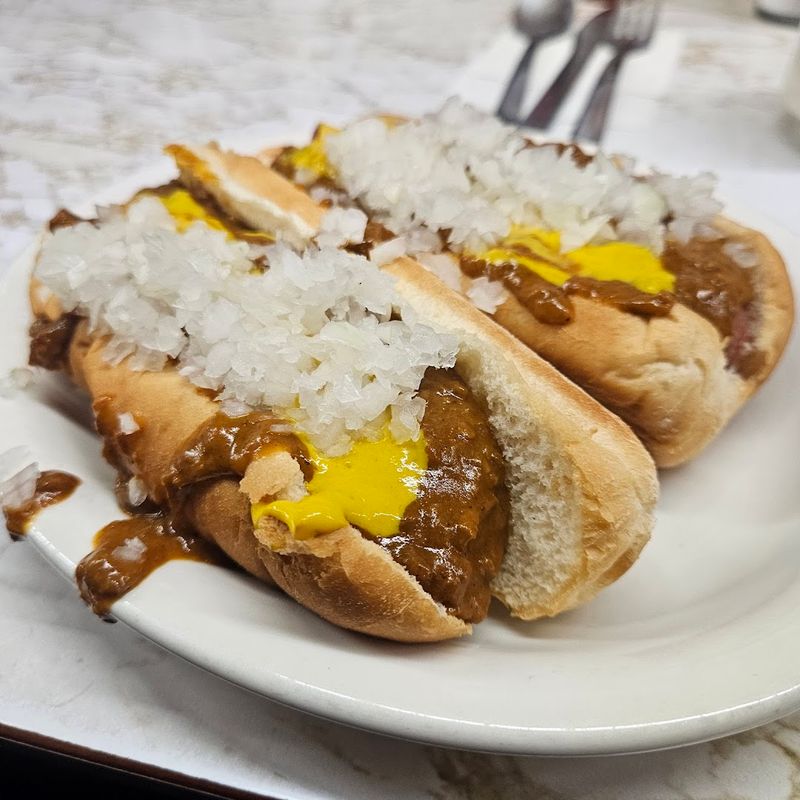
A Michigan coney is not complicated, but getting it right takes consistency. That is where the ritual begins. The hot dog matters, of course, but the toppings turn it into Detroit language.
Chili, mustard, and onions work together in the same familiar order. At Duly’s, that combination is the reason the counter still makes sense after all these years.
The chili has to be rich enough to carry the dog without burying it, and the mustard has to cut through with a bright little snap.
The onions need to be sharp, fresh, and present enough to remind you that this is not just a plain hot dog wearing a heavy coat.
Maybe none of this sounds fancy, but the proportions matter. Too much of one thing throws off the whole bite. Too little and the coney loses its point.
What makes the ritual feel like a ritual is repetition. People do not study the menu like homework.
They sit down and order what they came for, often the same thing they ordered last time. That kind of loyalty is built on food that behaves exactly the way people need it to.
Fast Service Is Part Of The Charm
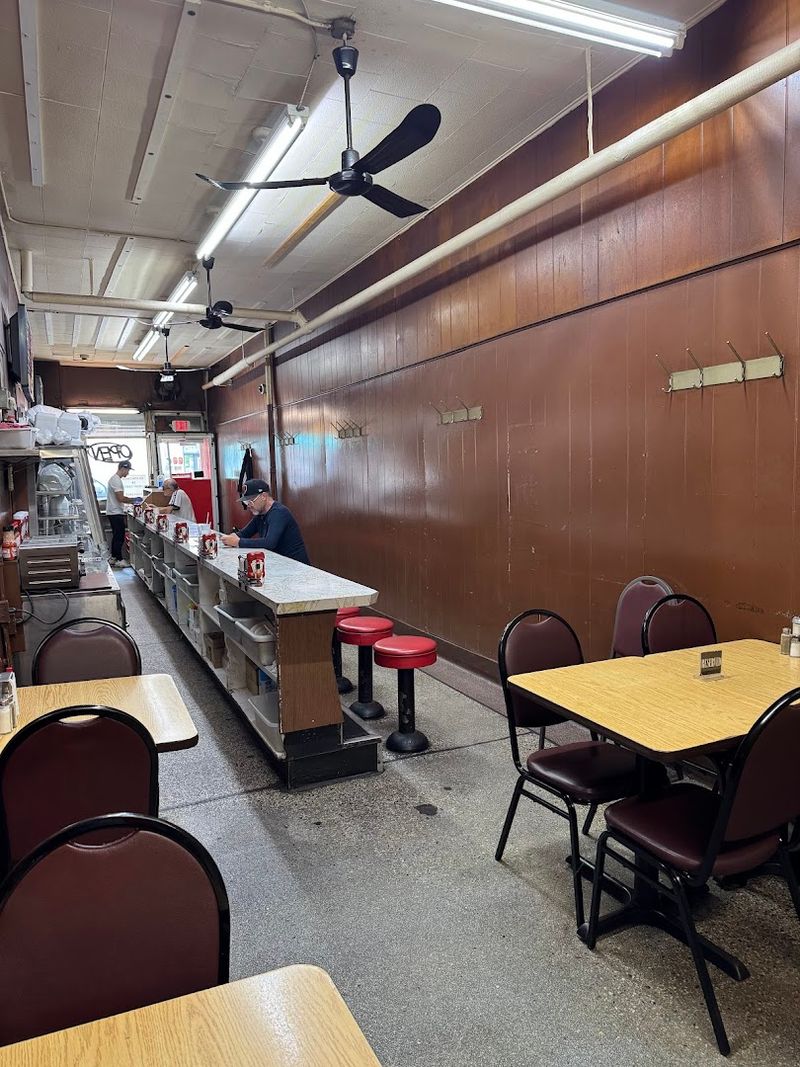
Speed is not an accident at a counter like this. It is part of the design. The layout, the wall-menu simplicity, the counter seating, and the short path between grill and plate all work toward the same goal: getting food in front of people quickly.
At Duly’s, fast service does not feel rushed in a careless way. It feels practiced. That distinction matters.
A good coney counter has its own rhythm, almost like a small kitchen performance that nobody pauses to announce. Orders move, and the cook keeps working.
Plates arrive, customers make room for the next person, and the whole thing has a satisfying momentum. This is something that slower restaurants rarely capture.
There is charm in being fed without a lot of delay or drama. The food does not arrive with a speech, and it does not need one. Still, quick service does not mean cold service.
The best counters manage to be brisk and welcoming at the same time, and that balance is part of why people keep coming back. A smile, a nod, a remembered order, and a hot coney can do more for a day than any polished production ever could.
The Counter Keeps Michigan Coney Culture Alive
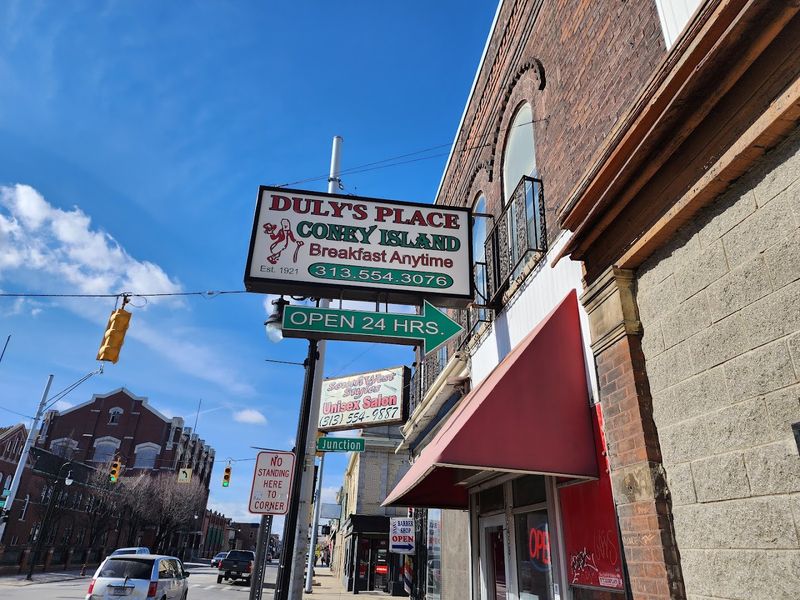
Michigan has a specific relationship with the coney dog, and Detroit sits at the center of that attachment. A coney is not just a menu item here. It is a local reference point.
The kind of food people use to talk about neighborhoods, routines, late lunches, and family habits. Asking someone where they get their coneys can turn into a whole conversation, and the answer usually comes with confidence.
Duly’s belongs firmly in that conversation. It has lasted long enough to become more than a place people try.
It is a place people remember, recommend, and return to because it feels connected to a version of Detroit that still values practical food service.
Southwest Detroit gives the counter an even stronger sense of place. The surrounding food culture is rich, varied, and deeply rooted.
Duly’s fits into that landscape because it has earned its spot over time. It does not need to imitate anything around it. It just keeps being itself.
That is one of the quiet ways a restaurant protects food culture. It keeps showing up until the routine becomes part of the city’s memory.
Why Old-School Detroit Places Like This Still Matter
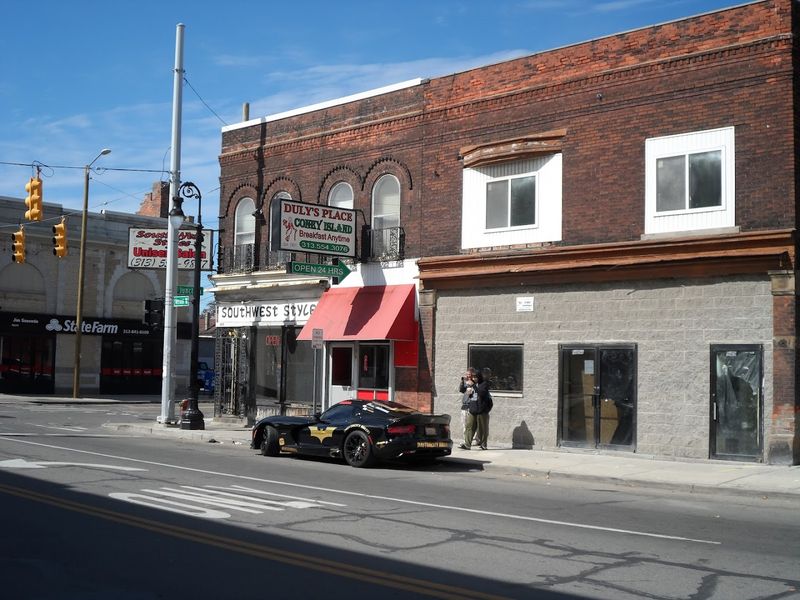
There is a version of food culture that constantly chases the next opening, the next concept, and the next thing to photograph.
Then there is the version that keeps returning to the same counter, ordering the same plate, and feeling completely satisfied with that choice. Duly’s belongs to the second version.
A newer restaurant can borrow the look of an old counter, but it cannot borrow the years. It is not able to fake the natural wear, the regulars, the quick exchanges, and the confidence of an authentic kitchen.
Those details only arrive through time. That is why a simple coney dog can carry more weight than it seems to.
When the same kind of food is served with consistency and care for more than a century, it becomes more than lunch. It becomes a connection to a place.
Detroit has changed enormously since 1921, and it will keep changing. That is what cities do.
But as long as Duly’s is open on Vernor Highway, some part of that original counter rhythm will remain intact. A hot dog, chili, mustard, onions, a stool, and a quick plate that can still say plenty.