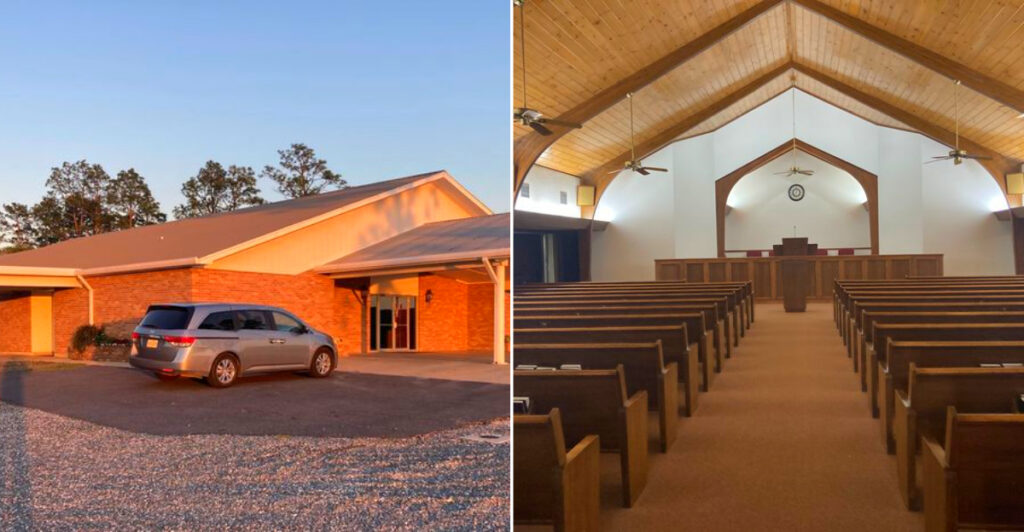
Driving through the pine forests of central Louisiana, the road signs start to shift. A church with a distinctly Anabaptist name appears on a loop road that was named after the congregation itself, which tells you this community has been here long enough for the mapmakers to take notice.
The Mennonite settlers arrived in this part of the state in the early twentieth century, drawn by affordable farmland, the quiet isolation that let them practice their faith without interference.
The school still operates, the cemetery holds generations of the same family names, the church holds services every Sunday just as it has for decades. There are no tourist attractions or gift shops, just a living community that has persisted on its own terms.
This Louisiana town is a reminder that the state’s cultural layers run deeper than its famous cuisine and music, and that history lives in unexpected corners.
Sunday Morning Is The Only Open Door
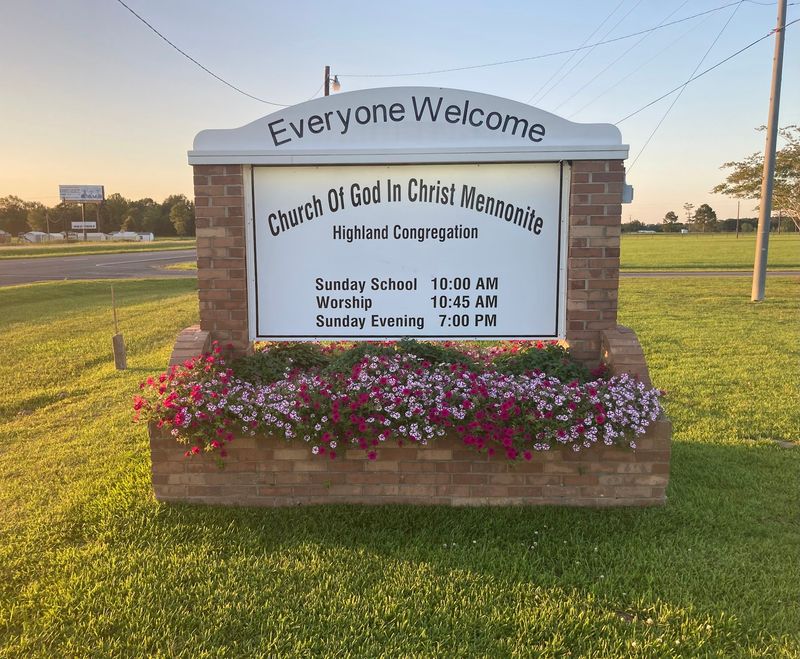
Sunday is the clearest time to understand this community from the inside. Highland Congregation meets at 171 Mennonite Church Loop, DeRidder, LA 70634, about eight miles south of town.
Its current listening page lists Sunday school at 10 a.m. followed by worship at 11, which gives visitors a more reliable schedule than older listings that simply describe a two-hour morning window.
Anyone hoping to attend should remember that this is an active congregation, not a heritage attraction. Dress modestly, arrive a little early, and follow the cues of the people around you rather than treating the service like a tour.
The Church of God in Christ, Mennonite tradition emphasizes simple worship, and congregational singing is typically unaccompanied.
For people who cannot attend in person, Highland currently streams services through ListenToChurch and keeps recent audio available online. That public stream is useful because it confirms the congregation remains active in 2026.
Outside worship hours, do not expect a staffed visitor center or scheduled sightseeing. The surrounding property belongs first to a living religious community.
A respectful Sunday visit offers more context than simply driving past the building on Mennonite Church Loop and wondering what happens inside on a quiet Louisiana morning.
US-171 Gives Way To Mennonite Church Loop
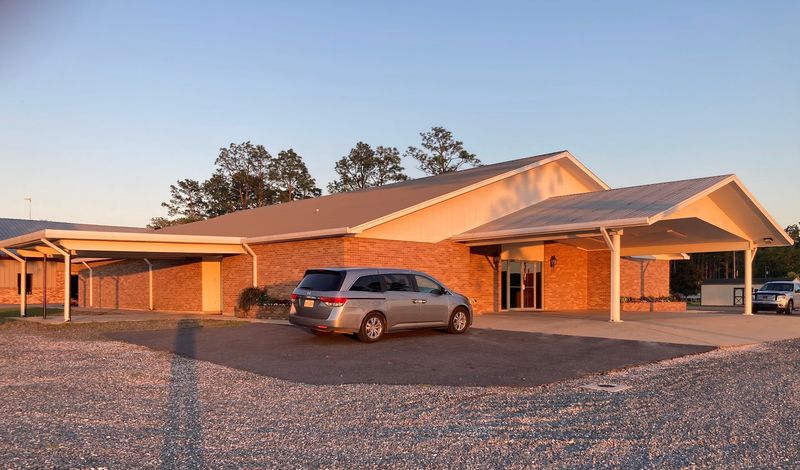
For a first visit, US-171 is the easiest orientation point. From DeRidder, drive south through Beauregard Parish toward the rural settlement, then turn onto Mennonite Church Loop for Highland Congregation at 171 Mennonite Church Loop, DeRidder, LA 70634.
The church works well as a navigation landmark because the wider community spreads across farms, homes, and country roads rather than forming a conventional downtown.
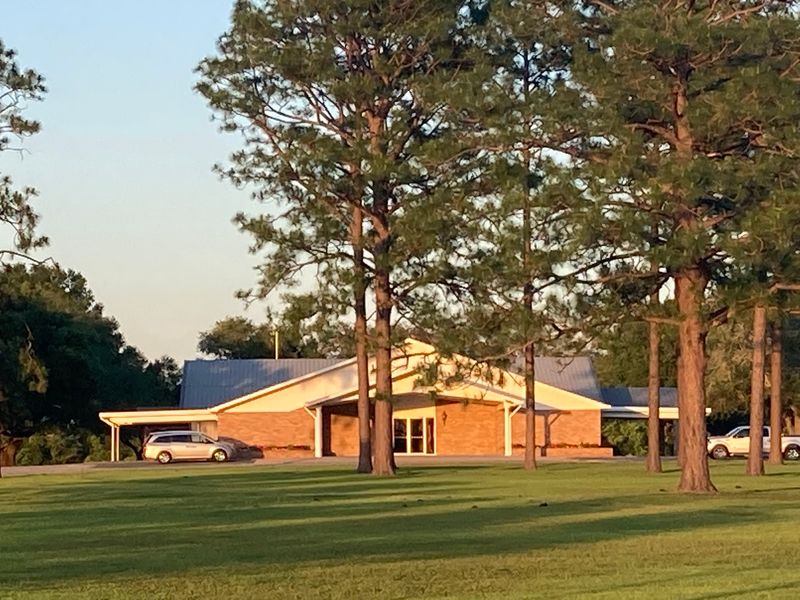
The approach matters. Pine woods and open fields replace DeRidder’s commercial streets, and the road network begins to feel more agricultural within a few miles.
Highland Cemetery sits behind the church property, while other community businesses and residences lie farther through the countryside.
Treat those surrounding roads as someone’s neighborhood, not a sightseeing circuit. There are no public pullouts designed for photographing private homes, farms, or people, and the lack of tourist infrastructure is part of what keeps the area feeling ordinary rather than staged.
For a practical itinerary, use the church only when attending a service, then return toward DeRidder for public stops such as Little Willow Mercantile. Hill Crest Creamery lies elsewhere south of town at 635 Willow Branch Road and offers a better reason to leave the highway for a farm purchase as well.
Dust Bowl Refugees Who Chose Pine Country
Hard times pushed the first families toward Beauregard Parish. Historical accounts place the beginning of the Highland congregation in 1937, when Mennonite families from Texas moved into deforested, inexpensive land south of DeRidder after enduring the devastating dust storms of the 1930s.
Noah Schmidt arrived first in June 1937 in the area that became known locally as the Mennonite Settlement. Six more families followed that same year, including minister F.
C. Fricke.
The congregation organized a religious and agricultural community where farming, dairying, and family networks could take root far from the Dust Bowl.
That timeline is more solidly documented than some colorful versions of the story. Claims about exact land prices or every family’s Kansas connection appear in local retellings, but the strongest sources consistently identify 1937, Texas families, cheap undeveloped land, Schmidt, and Fricke.
The community expanded rather than disappearing. By 2000, growth at Highland led to the establishment of another Church of God in Christ, Mennonite congregation east of DeRidder called Southern Magnolia.
Knowing that history changes the drive. The pine country no longer looks empty.
It becomes a landscape chosen by families rebuilding livelihoods after environmental disaster and carrying their faith into a new Louisiana home.
Ceiling Woodwork Worth Tilting Your Head For
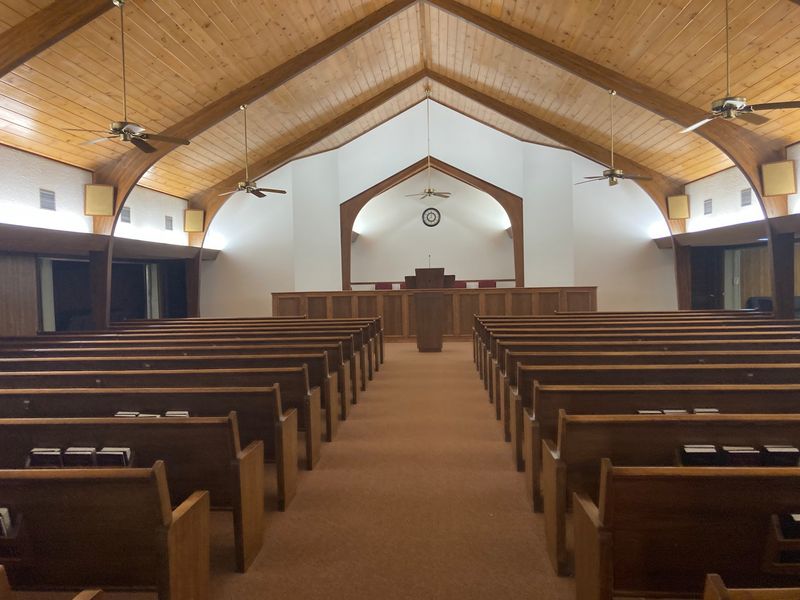
Plainness is part of the visual language inside a Church of God in Christ, Mennonite sanctuary. The denomination’s worship spaces generally avoid elaborate religious decoration and musical instruments, so materials and careful carpentry can stand out more strongly than in an ornamented church.
That makes the Highland sanctuary worth observing quietly if you attend a service. Look at how the room is built rather than searching for stained glass, statues, or decorative altars.
Simplicity is intentional here, reflecting a broader religious emphasis on modesty and separation from display.
Historical sources confirm that the congregation dates to 1937, but details repeated online about every construction phase of the present building are harder to verify from current primary material. Older local histories describe a dedicated church structure replacing earlier borrowed worship spaces, yet I would avoid presenting an exact 1949-to-1972 building chronology as settled fact without stronger documentation.
The safest way to appreciate the architecture is the most respectful. Arrive before Sunday school, take your seat, and notice the craftsmanship without turning the room into a photo assignment.
This remains a working sanctuary used by an active congregation. Its beauty comes from restraint, usefulness, and the care invested in a worship room.
Singing That Fills The Room Without Instruments

Four-part voices can fill a room without a piano, guitar, or organ, and that sound is central to Mennonite tradition. The Church of God in Christ, Mennonite practices a cappella congregational singing, with musical instruments generally absent from worship.
Highland’s Sunday gathering offers something very different from amplified services common in many churches.
The effect depends on participation, not performance. Harmony is learned through repeated community use, and the music belongs to worship instead of functioning as a concert inserted into the service.
That distinction matters when you are listening as a guest.
Older accounts mention special singings and youth gatherings, but schedules for those events are not consistently published. The reliable option is the Sunday service, with Sunday school at 10 a.m. and worship at 11.
Highland also streams audio through ListenToChurch, so the sound can be heard without entering the sanctuary.
Keep the phone away unless someone explicitly says recording is welcome. Members of plain Anabaptist communities can have strong preferences around photography and media, and a church service deserves the same courtesy you would give any religious gathering.
Listening closely is enough. The harmony, room acoustics, and absence of instruments make the experience memorable on their own.
Milk With A Cream Line At Hill Crest Creamery

Old-fashioned milk has a visible cream line, and Hill Crest Creamery still delivers it. Daylon Schmidt, a member of the community, milks his herd twice daily, every single day.
The milk is pasteurized but not homogenized, which means the cream floats to the top of the bottle instead of being blended in permanently. Shake it or spoon that layer off, depending on your plans for breakfast.
Small dairies operate on tight schedules, so call ahead rather than dropping by during milking hours. Bring a cooler if the drive home stretches past twenty minutes.
Dairy farming was the settlement’s economic backbone early on, and tasting the product connects you to that history far better than reading about it does.
Bulk Grains And Elderberry Syrup Downtown

Downtown DeRidder holds a piece of this story too. Little Willow Mercantile is run by Michaela Smith, another member of the Mennonite community, and she describes the shop as organic, clean, and all-natural.
Shelves carry bulk organic grains, cheeses, herbs, and her own homemade elderberry syrup. Some customers drive hours for that syrup, which tells you plenty about its reputation.
Bulk bins reward a little preparation. Bring containers or a sturdy tote, and take a photo of your pantry gaps before leaving home so you do not buy three bags of the same flour.
The store also gives you a chance to talk with someone from the settlement in a comfortable, ordinary setting.