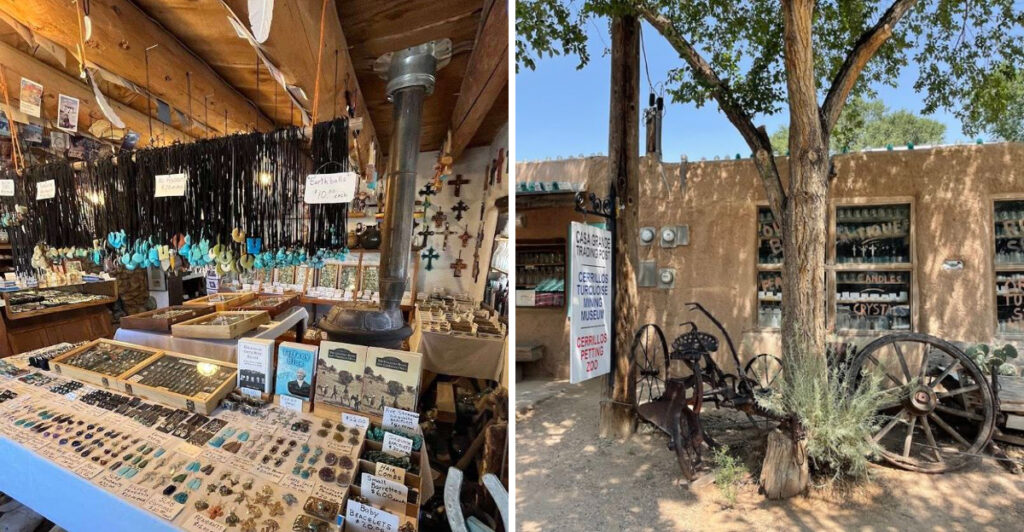
Take the old road between Santa Fe and Albuquerque and you may hit a village that feels like the 1880s kept one boot in the dust. This stop along a New Mexico highway still has dirt streets, creaky storefronts, and that dry desert silence that makes every doorway feel worth checking.
I pulled in with the lowest possible commitment. A quick look.
One photo. Back in the car.
Then the place started working on me. Glass cases flashed with turquoise jewelry.
Mining relics sat there with dents, rust, and a past you could almost picture. Outside, the animals spotted the feed pellets fast and immediately became the welcoming committee.
By the time I looked at the clock, my “ten minute stop” had turned into nearly two hours. That is the fun of this place.
It does not beg for attention.
It just keeps giving you reasons to stay longer anyway
Adobe Walls And Desert Light
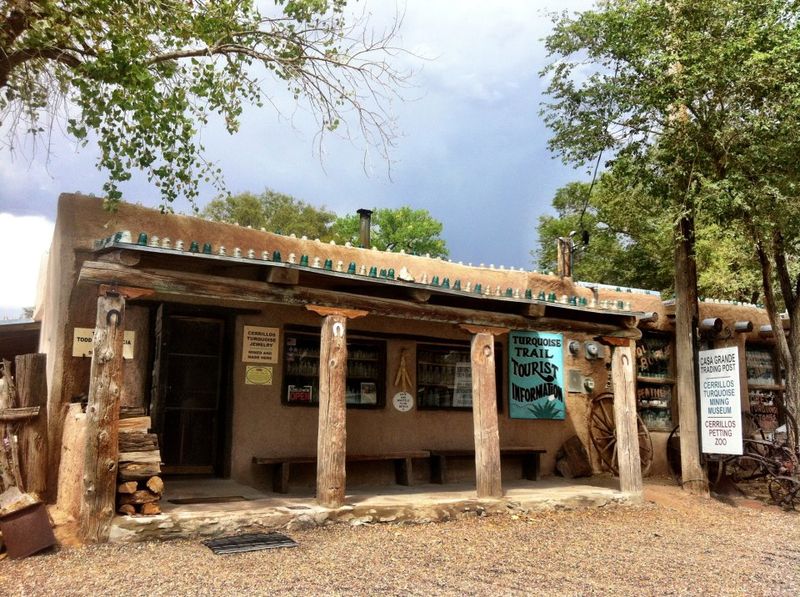
The first thing I noticed outside was the thickness of those adobe walls. A hand on the surface makes the whole place feel slower and sturdier.
The family behind the property built this 28-room adobe hacienda with help from many friends, pressing and stacking roughly 65,000 handmade adobe bricks to create the structure that now houses the trading post, museum, and more.
That number alone stopped me in my tracks when I heard it, because 65,000 bricks is not a weekend project; it is a life commitment baked right into the walls.
Desert light hits adobe differently than it hits any other surface, turning the mud-colored walls a warm amber in the late morning hours and a deep copper closer to afternoon.
The thick walls also keep the interior surprisingly cool, which matters a great deal when the New Mexico sun is doing its best impression of a heat lamp directly overhead.
Every corner of the exterior shows a personal touch, from hand-carved wooden accents to details that only someone who truly loves their work would bother to include.
The entrance makes the structure feel less like a business and more like a family home that decided to share itself with travelers passing through. That place is Casa Grande Trading Post, 17 Waldo St, Los Cerrillos, NM 87010.
Old West Corners Full Of Character
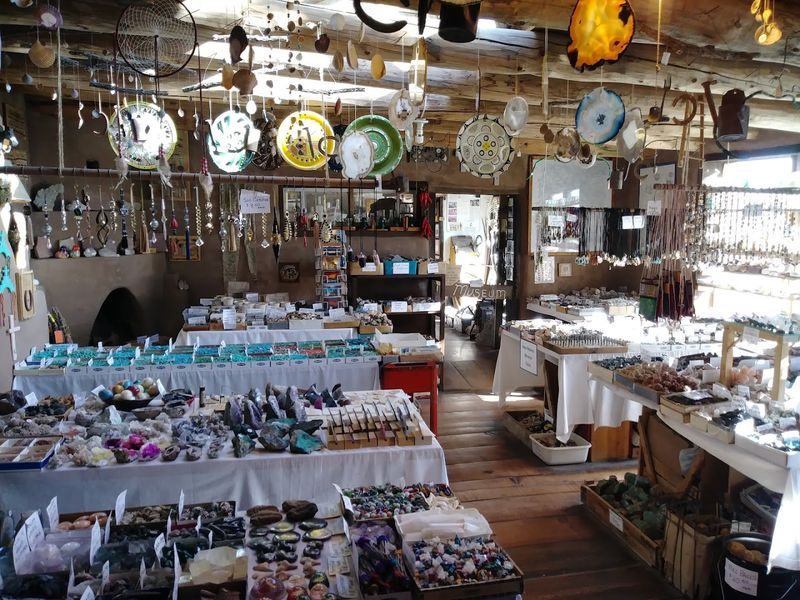
Old buildings have their own kind of quiet, especially when every corner seems to be holding onto a little bit of local history.
Los Cerrillos itself was once a roaring mining boomtown that was even discussed as a potential capital city for New Mexico, which tells you just how much energy once ran through these dusty streets.
That boom-and-bust story left behind a village that looks almost untouched by modern development, with unpaved roads and weathered storefronts that have drawn film crews and photographers over the years.
Inside the trading post, those old-town vibes continue without missing a beat, with shelves stacked in a way that rewards slow, careful browsing rather than a quick scan.
Vintage-style souvenirs sit alongside antiques, fossils, fetishes, and locally crafted items that carry real regional identity rather than plain tourist-shop appeal.
The experience feels a little like stepping into a time capsule, only with more dust, more texture, and more reasons to slow your pace.
Every dusty corner here tells a chapter of a story that the Southwest has been writing for well over a thousand years, and that layered past still feels present in the quiet lanes outside the trading post today, too, somehow.
Turquoise Treasures Behind Weathered Doors
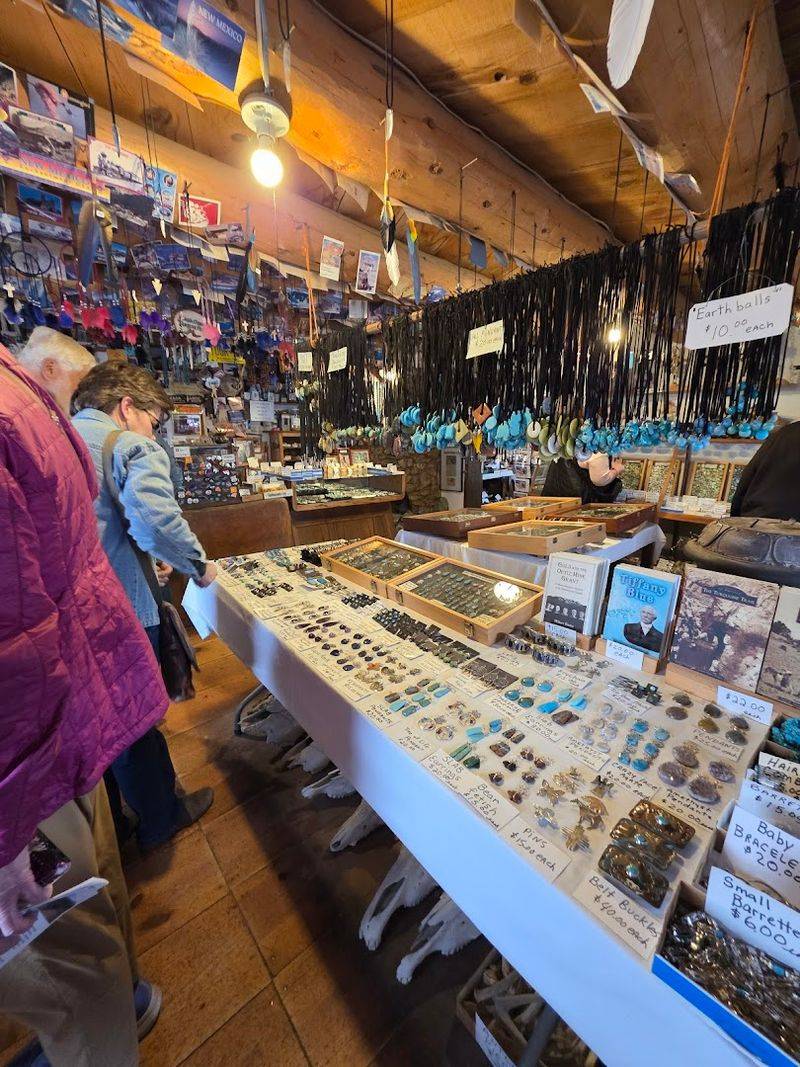
Not all turquoise is created equal, and the green Cerrillos variety sitting behind the glass cases here carries a geological personality all its own.
The family connected with the trading post holds registered claims tied to the Little Chalchihuitl Turquoise Mine in the surrounding Cerrillos Hills, which means the stones in the gift shop travel only a short distance from the earth to the display case.
The shop offers handcrafted sterling silver jewelry made with this distinctive green turquoise, and the combination of local sourcing and skilled craftsmanship gives each piece a story that mass-produced jewelry simply cannot match.
I spent a good chunk of time at the jewelry counter, turning pieces over in my hand and appreciating how the green tone differs from the sky-blue turquoise most people picture when they hear the word.
Prices vary, and some pieces may run higher than comparable tourist shops, so it pays to know what you are looking for before you open your wallet.
The Cerrillos Hills mining district holds some of the oldest known turquoise workings in North America, with Native American mining activity documented back more than a thousand years.
A piece from this shop feels less like a souvenir purchase and more like carrying a small fragment of that ancient regional story home with you.
A Dusty Stop Along The Turquoise Trail
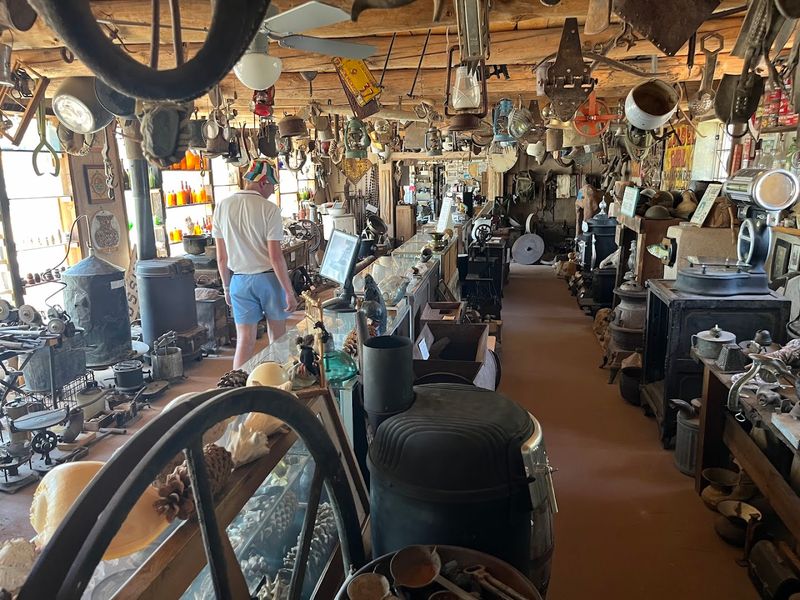
The drive itself sets the mood long before you arrive, with the Turquoise Trail corridor delivering sweeping high-desert scenery that makes the journey feel like part of the experience rather than just the commute.
Los Cerrillos sits about 20 miles south of Santa Fe, making it a very manageable detour on a drive toward the capital or back toward Albuquerque.
I had been warned by a friend to follow the small signs once I turned off the main highway, and that advice proved useful since the village does not announce itself with any grand commercial fanfare.
Hours can change, so it is smart to check the official website or call 505-438-3008 before making the drive down those scenic but unpaved roads.
That kind of planning is worth it because the place rewards a relaxed, unhurried visit rather than a rushed ten-minute sweep through the front room.
Arriving closer to opening time on a weekend tends to give you the best combination of cool morning air and a less crowded shop floor.
Casa Grande Trading Post earns its place as one of the Turquoise Trail’s most distinctive and personally operated stops for travelers who like places with a real local story behind it all nearby.
Sunbaked Streets With Mining Town Charm
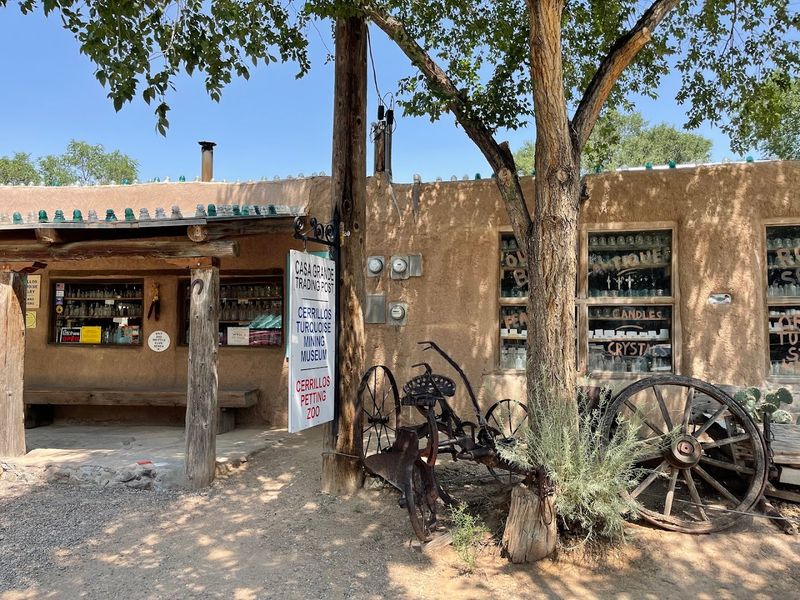
The unpaved main street of Los Cerrillos has a funny way of changing your pace. One step out of the car, and the ground almost seems to tell you to slow down.
The village has resisted the kind of commercial polish that smooths away all the interesting rough edges from historic towns, and that resistance is a rare gift to visitors who appreciate real atmosphere over curated charm.
Mining activity in the Cerrillos Hills shaped this community for centuries, drawing prospectors, traders, and Native American communities long before the Spanish arrived and long before the 1880s boom brought speculation.
The streets carry that layered history quietly, without turning every corner into a staged attraction or a heavily marked exhibit.
A block or two beyond the trading post adds real context to what you see inside the shop and museum.
The surrounding hills, visible from nearly every angle in the village, are the same hills that have been mined for turquoise, lead, zinc, and other minerals across multiple centuries and cultures.
A sunbaked street can feel surprisingly grounding when the story of human industry stretches back far enough to make the 1880s boom feel almost recent by comparison here, even on a short walk through town itself today.
Hidden Rooms Filled With Southwestern History
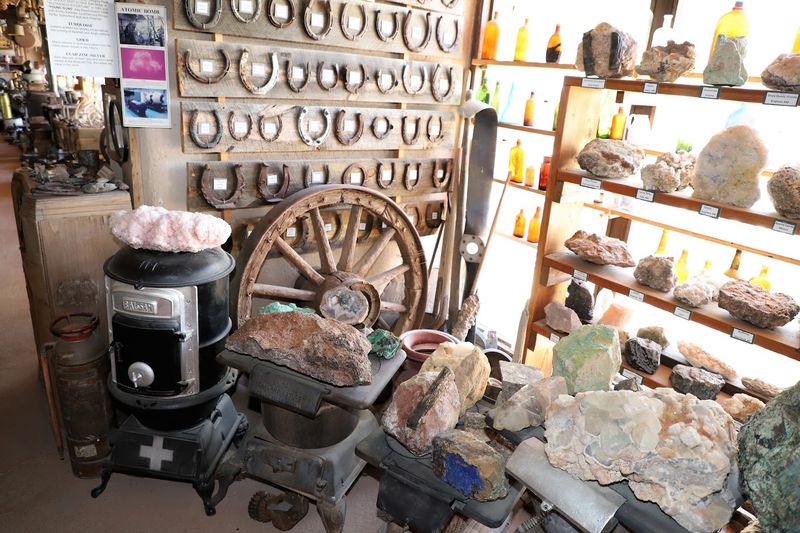
For a small fee of four dollars, a doorway inside the trading post opens into the Cerrillos Turquoise Mining Museum. The transition from gift shop to museum feels like crossing into a completely different kind of space.
The collection covers mining history from prehistoric Native American activity through the American Old West era, using tools, artifacts, and historical displays gathered over decades of living and working in this community.
I found myself reading labels and picking up context I had not expected to find in a small-town museum, particularly around the sheer age and regional significance of the Cerrillos Hills mining district.
The museum alone gives the stop more depth than the front rooms first suggest, especially once you start connecting the displays with the hills outside.
The four-dollar entry price feels reasonable given the depth of material on display and the local knowledge behind the collection.
Local coverage also connects the family behind the property with preservation and storytelling around the Cerrillos Hills, which suggests their commitment to this region runs much deeper than running a shop.
Those back rooms reward the curious traveler who takes a few extra minutes to look past the front display cases and into the longer story waiting behind them, especially after the road has already slowed you down and put the hills in clear view outside.
Desert Views And Vintage Trading Post Details
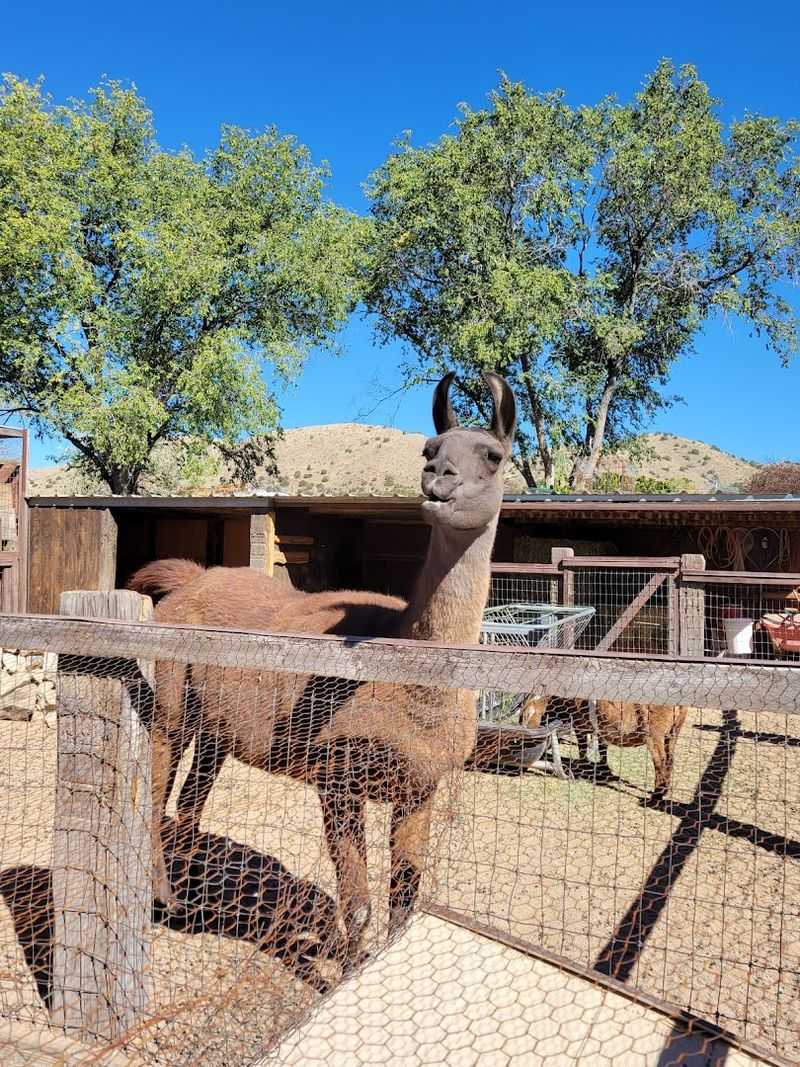
Past the museum entrance, the property opens into an outdoor area where the Cerrillos Hills stretch across the horizon in that particular shade of dusty purple that New Mexico seems to own exclusively.
The petting zoo occupies a corner of this outdoor space, and for four dollars you can buy a bag of feed and introduce yourself to a llama, goats, and chickens that have clearly grown comfortable with curious visitors.
Coco the llama has become part of the property’s personality, especially for people who enjoy animal encounters as much as old buildings and desert views.
The chickens on the property include Polish crested chickens, adding another small detail that makes the outdoor area feel more personal than polished.
The hills beyond the animal enclosure are more than scenery, especially when you know turquoise from this area has helped shape the village’s story for centuries.
The outdoor details, weathered wood, desert plantings, and the general unhurried pace of the place, contribute as much to the experience as anything inside the building.
This particular combination of open sky, vintage architecture, and living animals gives the property a personality that is hard to find anywhere else along the trail, especially when the afternoon light settles over the hills and the whole place seems to breathe a little slower, right along with anyone who has wandered outside for a quick break there.
A Timeworn Landmark With Local Color
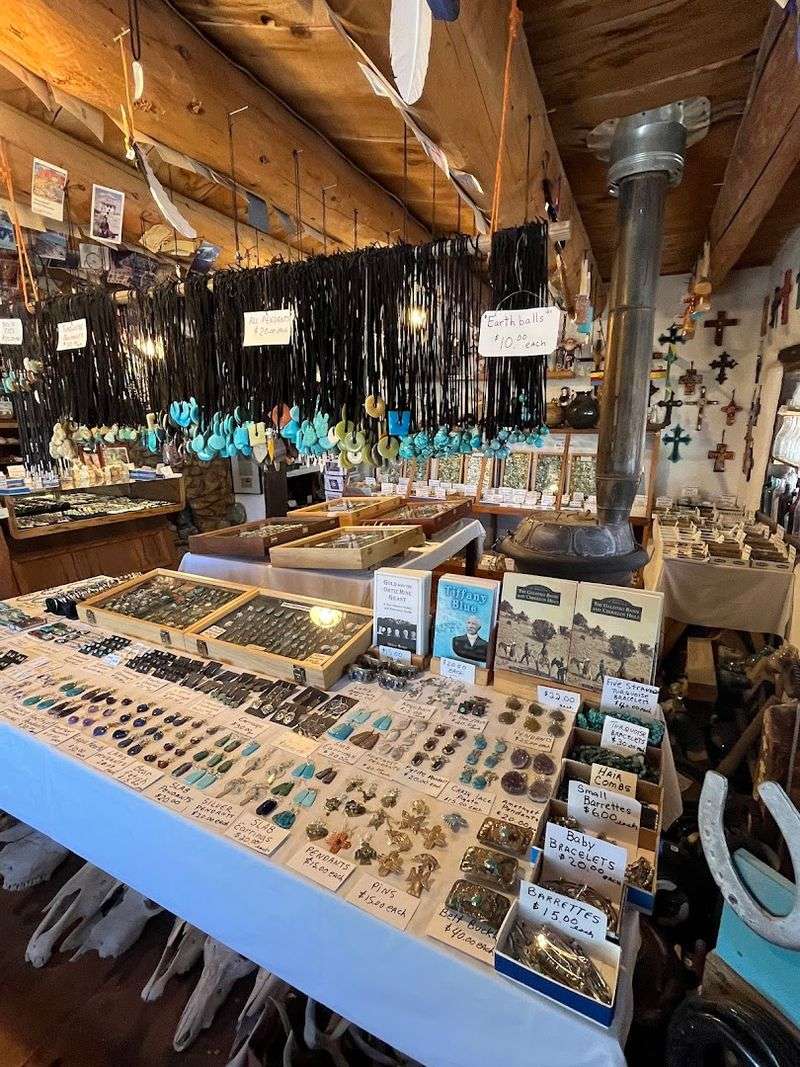
Since 1975, this family-run trading post has been an anchor of this particular corner of Los Cerrillos, building not just a business but a landmark that has become part of the community’s identity.
That kind of longevity leaves marks that no amount of fresh paint or rebranding can replicate, and those marks show up in the way the place carries itself, unhurried, confident, and thoroughly itself.
Visitors who take the time to ask questions often come away with a richer understanding of both the trading post and the broader history of the Cerrillos area.
The shop’s appeal comes from its mix of local history, turquoise, artifacts, animals, and the feeling that the place has grown slowly instead of being designed all at once.
Some visitors note the prices lean toward the higher end, while others point to the unique sourcing and handcrafted quality as fair justification.
Practical details worth knowing include the phone number, which is 505-438-3008, and the website at casagrandetradingpost.com, where you can confirm hours before making the drive.
Whatever your reason for stopping, this timeworn landmark has a way of leaving a quiet impression that stays with you well after the desert dust settles back onto your shoes, especially when the road pulls you onward again and the village shrinks behind you in the rearview like a place you should have stayed a little longer than planned.