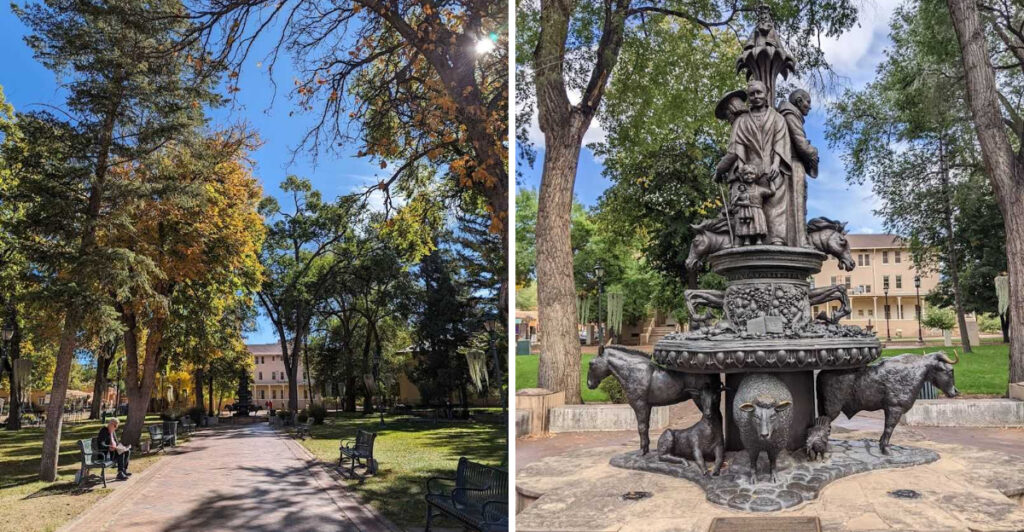
Busy streets, conversation, and cameras surround this small park, yet the moment you step inside, the volume seems to drop. Old sandstone pillars frame the entrance while mature trees spread shade over the lawn.
Beyond the branches, cathedral towers rise into view and give the setting a sense of drama without disturbing its calm. A bronze monument anchors the grounds, and nearby plaques invite visitors to pause long enough to notice the history beneath their feet.
This is not a sprawling park packed with attractions. Its appeal comes from the breathing room it creates in the middle of a busy historic district.
Sit on a bench, look toward the cathedral, and everything suddenly feels farther away than it really is. New Mexico has places built for grand adventures, but this quiet green space proves a short stop can leave an equally strong impression on travelers who slow down.
Sandstone Pillars Mark The Grand Entrance
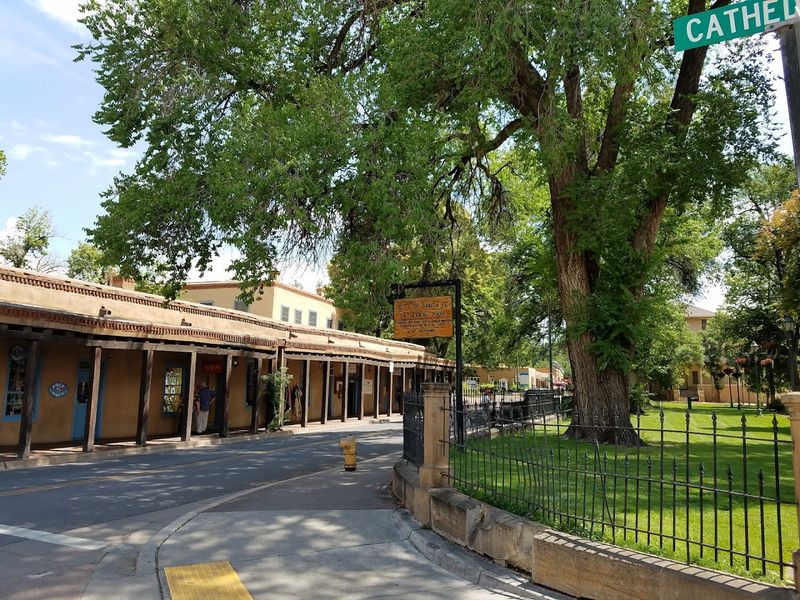
Before this place became the peaceful park you can visit today, it served a very different purpose. The sandstone pillars that frame the entrance were originally part of the formal drive leading to the St. Vincent Sanatorium, a facility that once stood on these grounds.
Those pillars were not just decorative touches. They were the first thing visitors saw as they arrived, signaling that something significant lay ahead.
Today, those same pillars greet a completely different kind of visitor. Families, history lovers, and curious travelers pass between them daily, often without knowing what those stones once marked.
That quiet contrast between past and present is part of what makes this spot feel so layered and worth exploring.
The park is now preserved as a public open space, free for anyone to enjoy at any hour. Sitting near those pillars, you can almost feel the weight of all the stories they have silently witnessed.
You will find this remarkable entrance at Cathedral Park, located at 131 Cathedral Pl, Santa Fe, NM 87501.
Cathedral Towers Rise Above The Trees
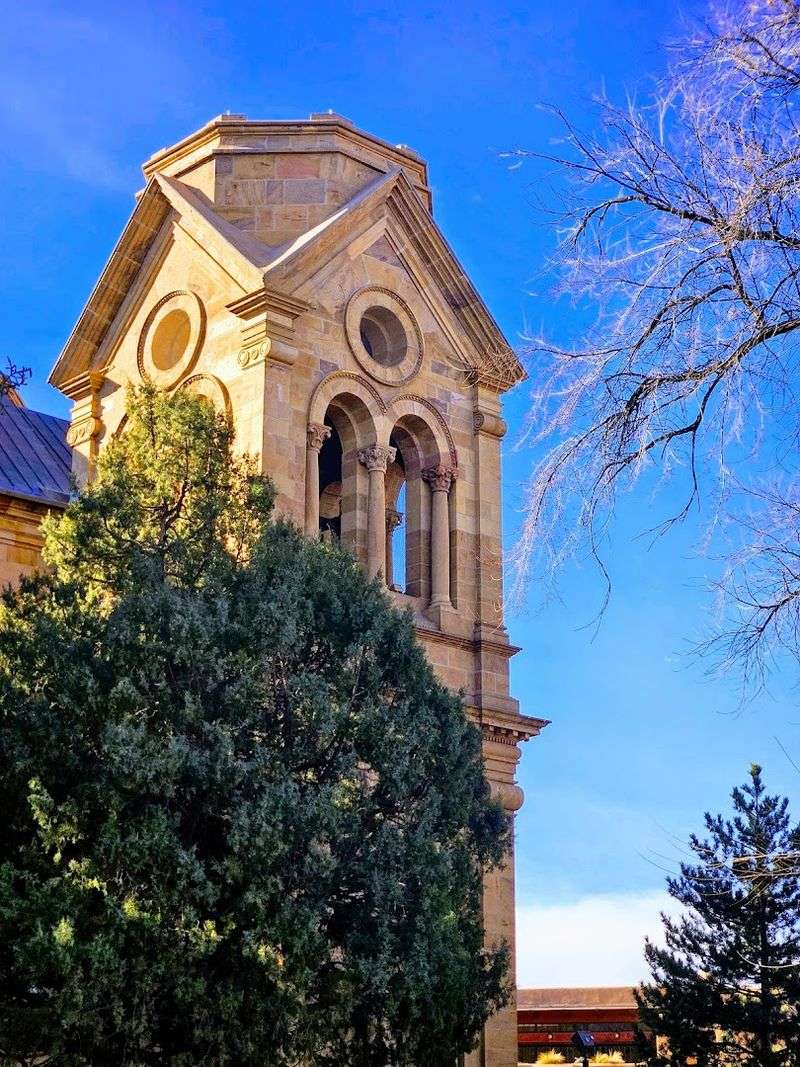
Few sights stop a first-time visitor in their tracks quite like looking up through the tree canopy and spotting those twin towers. The Cathedral Basilica of St. Francis of Assisi, which sits directly beside the park, was designed in the Romanesque Revival style, a bold architectural choice that stands in striking contrast to the adobe buildings surrounding it throughout Santa Fe.
Those two square towers were originally planned to support 160-foot steeples that would have soared dramatically into the desert sky. Funds ran short, and the steeples were never completed, leaving the towers in their current truncated form.
Honestly, they still command attention without needing another inch of height.
What makes the view from the park so memorable is how the towers seem to emerge gradually as you move through the tree-lined paths. One moment you see branches, and the next you catch a glimpse of that pale stone climbing skyward.
New Mexico has no shortage of dramatic scenery, but this particular view carries a quiet, almost reverent kind of power that stays with you long after you leave.
A Historic Monument Anchors The Lawn
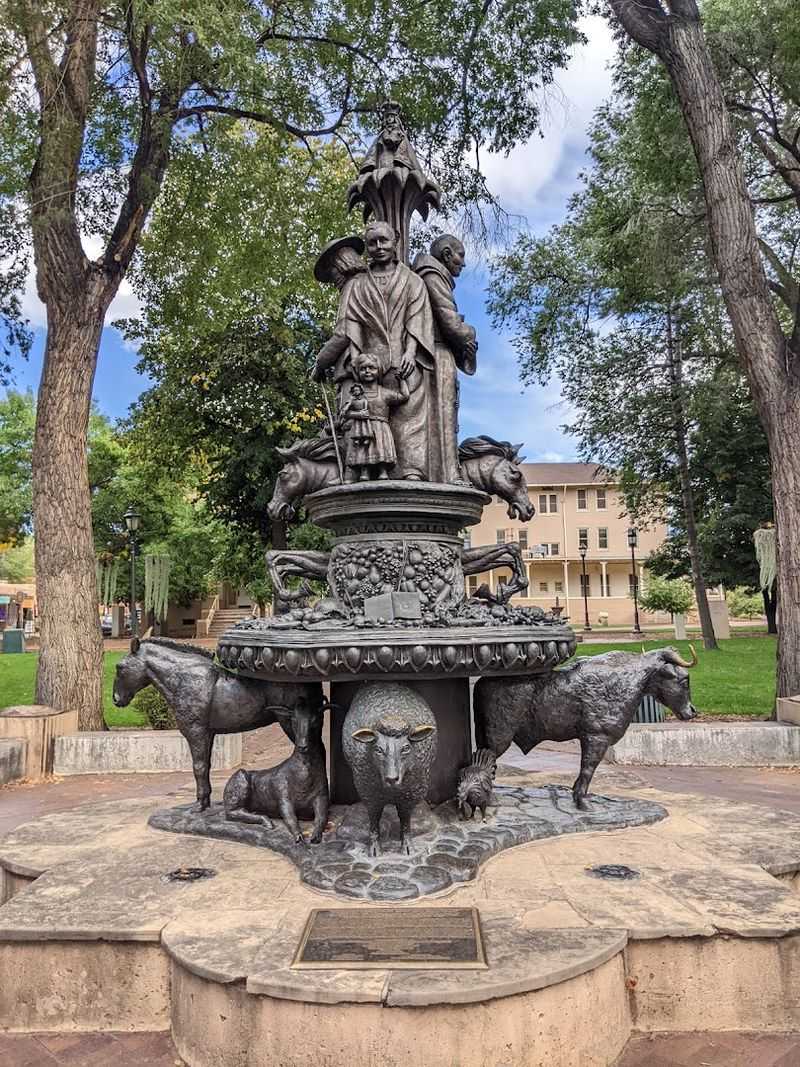
Right at the heart of the park stands a bronze sculpture that carries an enormous amount of historical weight in a surprisingly approachable package. Installed in the early 2000s, the monument commemorates the 400th anniversary of the Spanish colonists who made the journey into New Mexico in 1598.
That is over four centuries of history rooted in one quiet patch of lawn.
The sculpture features a conquistador, a Franciscan missionary, and a Spanish settler family. Around them, the artist incorporated representations of the animals, crops, and tools that these settlers introduced to the region, giving the monument an almost encyclopedic quality.
Crowning the entire piece is the figure of La Conquistadora, a historic Marian image whose presence adds a deeply spiritual dimension to the work.
Visitors often spend more time at this monument than they originally planned, reading the details and photographing the intricate bronze work from multiple angles. The craftsmanship rewards a slow, close look rather than a quick glance.
Few monuments in the American Southwest pack this much narrative into one beautifully composed piece of public art.
Shaded Benches Face Centuries Of History
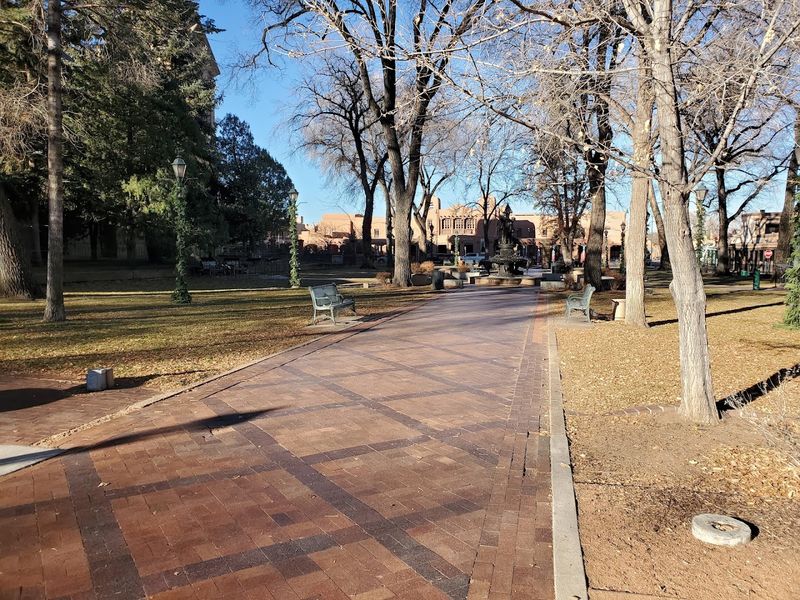
On a warm Santa Fe afternoon, those benches under the tall trees are pure gold. The park is well known for its generous canopy of shade-providing trees that make sitting outside genuinely comfortable even when the sun is doing its best to remind you that this is the desert.
Finding a shaded seat with a view of a centuries-old cathedral is not something most city parks can offer.
Scattered throughout the park, plaques detail significant moments from Santa Fe’s long and layered history. You can read about the city, the cathedral, and the people who shaped this corner of the Southwest, all while resting your feet after a morning of exploring.
The adjacent Cathedral Basilica of St. Francis of Assisi was constructed between 1869 and 1886, meaning the stones you are admiring have been standing for well over a century.
People come here to read, to think, to sketch, and sometimes simply to sit quietly and let the atmosphere do its work. The benches face the cathedral in a way that feels almost intentional, as if the park itself was designed to encourage reflection.
That combination of comfort and history is genuinely hard to replicate.
Tree-Lined Paths Quiet The City Around You
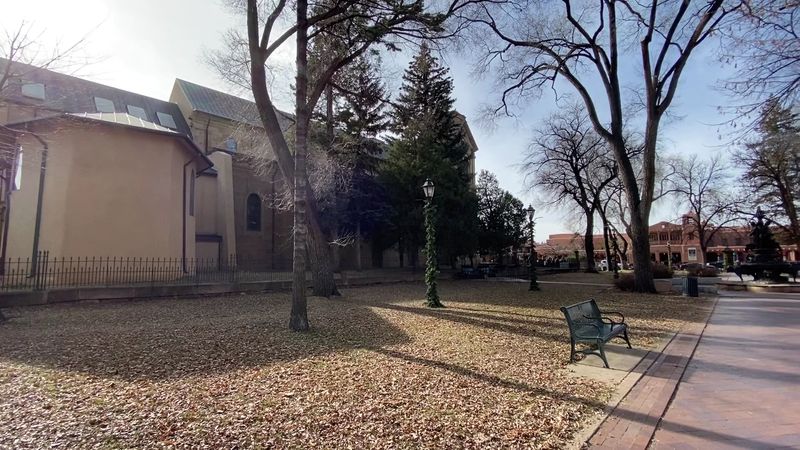
Step onto one of the winding paths inside the park and the noise of downtown Santa Fe fades faster than you would expect. The tree-lined walkways create a natural buffer that muffles street sounds and replaces them with birdsong and the soft rustle of leaves.
For a park that sits just a short stroll from one of the most visited plazas in New Mexico, the sense of calm here is almost startling.
Visitors who have made Cathedral Park a regular stop describe it as a shade-filled oasis that offers a genuine mental reset during a busy day of sightseeing. The paths wind gently through the grounds, giving walkers a reason to slow down and actually notice what is around them.
Green, lush, and well-maintained, the landscape feels like a deliberate act of kindness toward anyone who needs a moment to breathe.
I found myself walking the same loop twice without meaning to, simply because each pass revealed a new angle on the cathedral or a detail on the monument I had missed before. The paths are short enough to cover quickly but inviting enough to keep you circling back.
That is a rare quality in any urban park.
Old Stone Details Catch The Afternoon Light
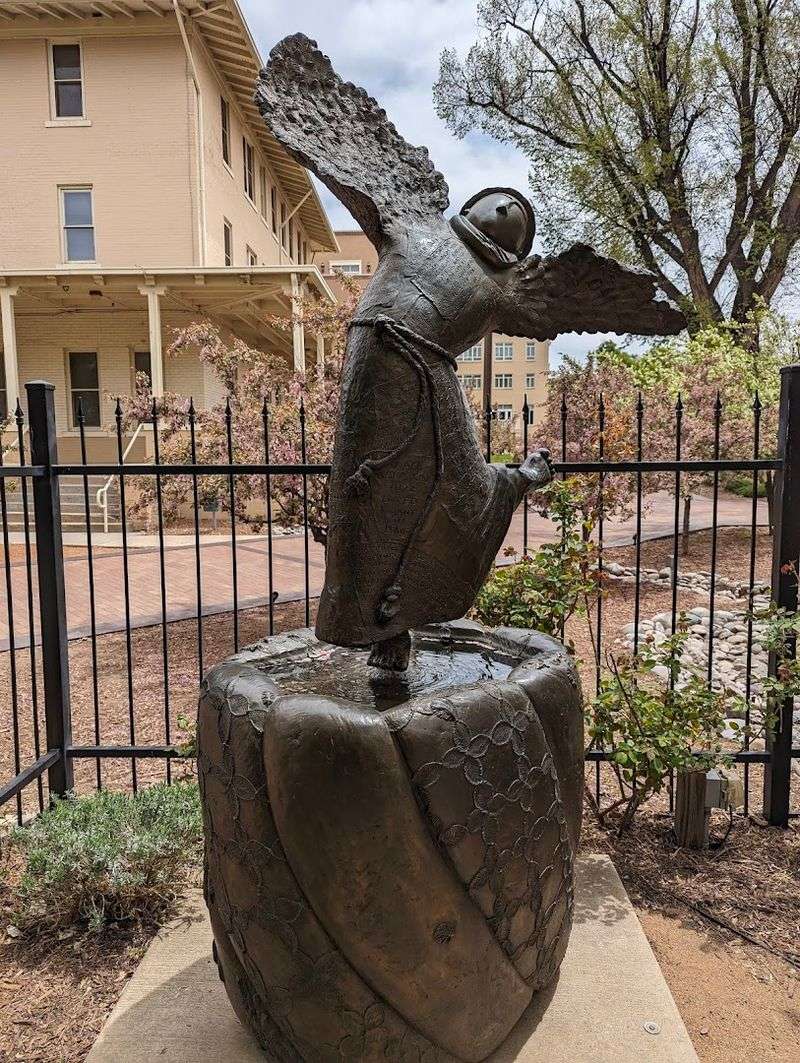
When the afternoon sun drops low over the Sangre de Cristo Mountains, it hits the exterior of the cathedral next door in a way that makes every carved detail pop. The Cathedral Basilica of St. Francis of Assisi was built using yellow limestone blocks sourced from local quarries, and that warm-toned stone practically glows when the light is right.
Photographers visiting Santa Fe quickly learn that late afternoon is prime time for this particular view.
The building’s Romanesque Revival style features distinctive round arches and Corinthian columns, architectural elements that feel both grand and precise up close. The cornerstone was laid in 1869, which means the craftsmen who shaped these stones were working during an era when every detail had to be cut and fitted by hand.
That level of care is visible if you take the time to look.
Standing in the park and watching the light shift across those stone surfaces is one of those slow, satisfying travel moments that does not require any planning or tickets. You just need to show up at the right time of day and pay attention.
The cathedral has been earning that kind of quiet admiration for well over 150 years.
Cathedral Towers Appear Between The Branches
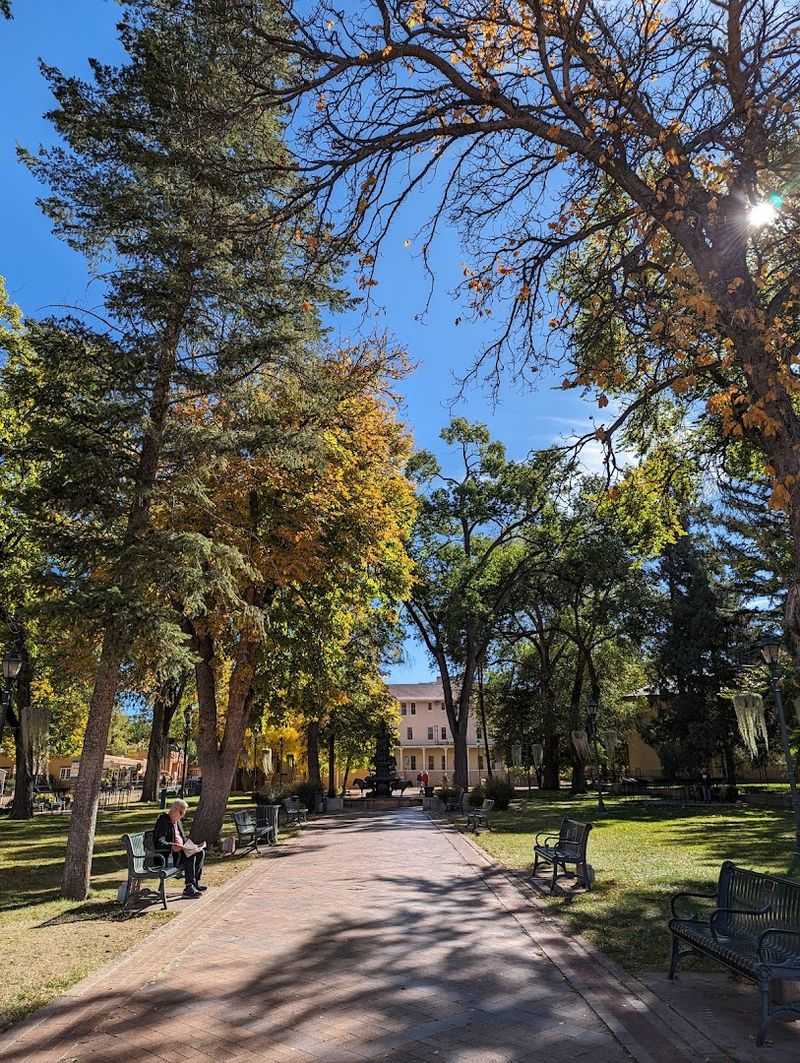
There is a particular moment while walking through the park when the trees part just enough to frame the cathedral towers perfectly between the branches. It happens almost by accident, and it tends to stop people mid-step.
The original design called for 160-foot steeples that would have made the building one of the most visually dramatic structures in the entire Southwest, but those steeples were never completed due to a shortage of funds.
What remains are two truncated square towers that still rise confidently above the surrounding treetops. They may be shorter than originally planned, but they carry a presence that the full design might actually have overwhelmed.
Sometimes less really does deliver more impact, and these towers are a solid case for that idea.
Adding to the visual richness, the cathedral’s large rose window is visible on the facade, and the nave windows depicting the Twelve Apostles were imported from France. New Mexico does not lack for stunning architecture, but few buildings layer European craftsmanship with Southwestern setting quite this successfully.
Catching those towers framed by green branches on a clear Santa Fe morning is the kind of image that tends to become someone’s favorite photo from the entire trip.
A Peaceful Green Space Hides Beside The Plaza
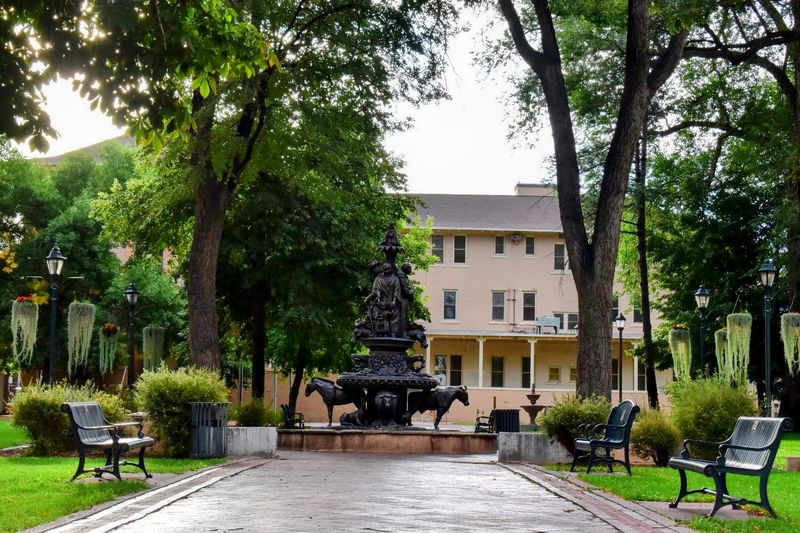
Just a short, easy walk from the historic Santa Fe Plaza, this verdant patch of green feels like a well-kept secret that somehow sits in full view of thousands of daily visitors. The grass here is genuinely surprising for a city in the high desert, and more than one visitor has noted that the lush, manicured lawn feels like a small act of defiance against the surrounding landscape.
It is open, inviting, and remarkably well-kept.
Dogs trot across the grass, families spread out for impromptu picnics, and solo travelers stretch out on the lawn with a book and nowhere urgent to be. On busier weekends, the park has hosted craft vendors and outdoor art exhibits, adding a lively community dimension to its usual calm character.
Even during those busier moments, the space retains its sense of ease.
New Mexico draws visitors for its landscapes, its art scene, and its rich cultural history, and Cathedral Park quietly delivers all three without asking for much in return. The park is open 24 hours a day, every day, which means the early morning light and the quiet evening hours are yours for the taking too.
Few urban green spaces offer this much without charging a single entry fee.