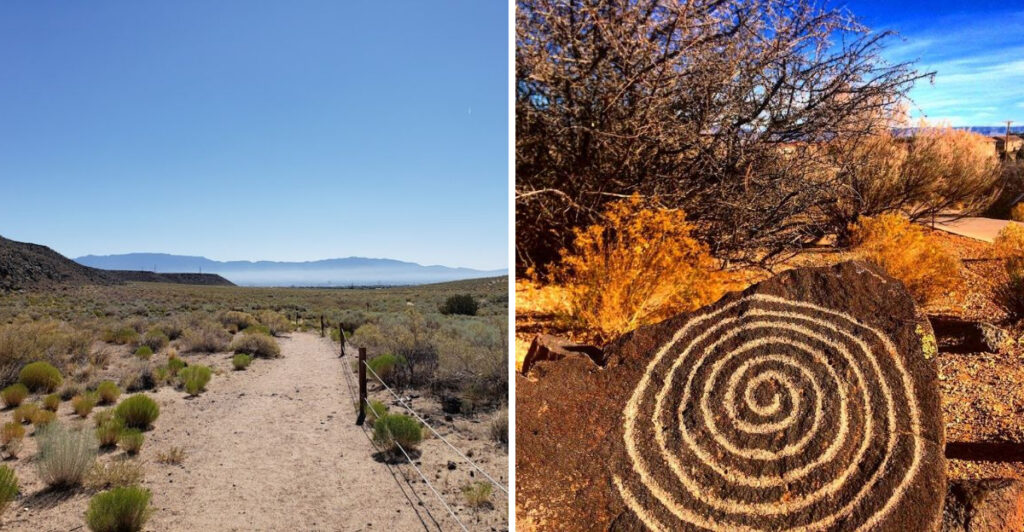
This is not the kind of hike you hurry through. This 2.2-mile route in New Mexico moves through wide desert space, quiet canyon views, and dark volcanic rocks covered with ancient petroglyphs.
At first, the trail feels simple. Then the carvings begin to appear.
A figure here. An animal there.
A shape you almost miss until the sunlight catches it just right. That’s what makes this walk so good.
It pulls you in slowly. The ground is mostly flat, the views are wide, and the rock art gives every few steps a reason to pause.
It is peaceful, but never boring. Bring water, sun protection, and a little patience, because the best details are not always the loudest ones.
By the end, the trail feels less like exercise and more like a quiet conversation with the canyon itself. Small details keep pulling your eyes back to the stone.
Ancient Symbols Across Desert Stone
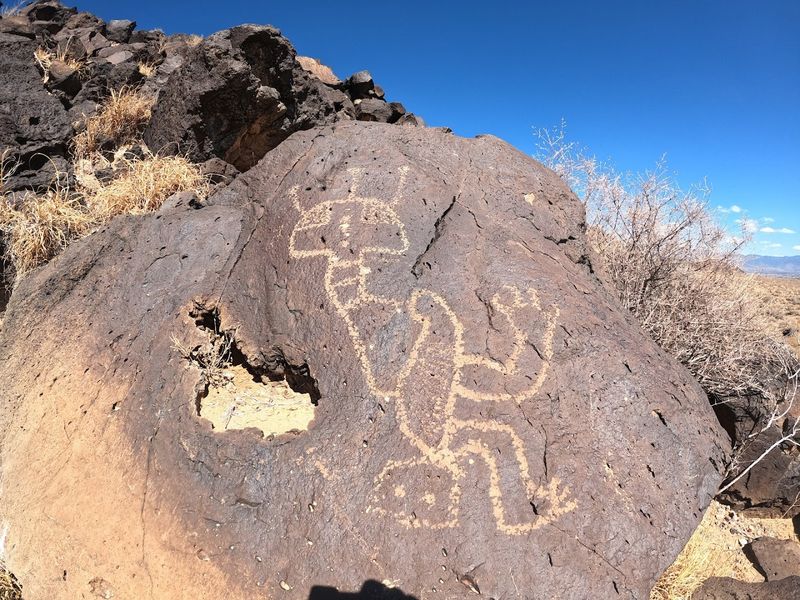
The first carved figure you spot on a dark basalt boulder explains the appeal better than any trail description could.
The petroglyphs here were created mostly by ancestral Pueblo peoples between 1300 and 1650 CE, with some images possibly linked to even earlier cultures in the region.
Park service estimates suggest there are around 300 images in this section of Petroglyph National Monument, though not every carving can be seen from the trail.
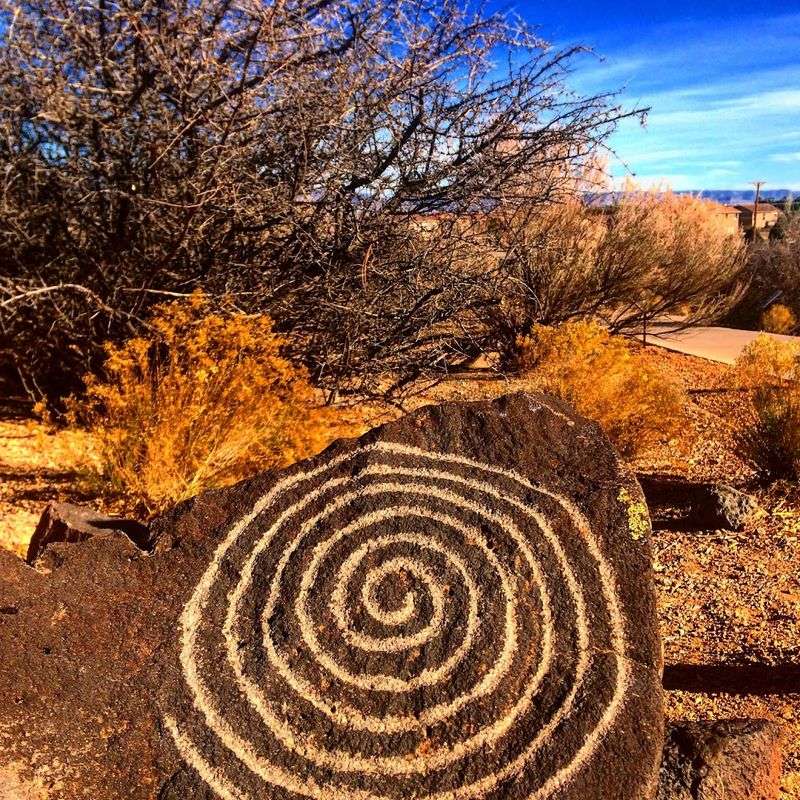
Spirals, animals, human figures, and geometric shapes cover the rock surfaces, forming a visual language that researchers are still working to understand.
Near one of these boulders, following the outline of a carved hand or four-legged creature with your eyes, not your fingers, feels like reading a message left by someone you will never meet but instantly respect.
The desert has preserved these symbols remarkably well, and the dark volcanic stone makes each carved line stand out on a bright day.
You’ll find it at Rinconada Canyon Trail, 3701 Unser Blvd. NW, Albuquerque, NM 87120, near St. Joseph Ave.
A Quiet Walk Through Volcanic Rock
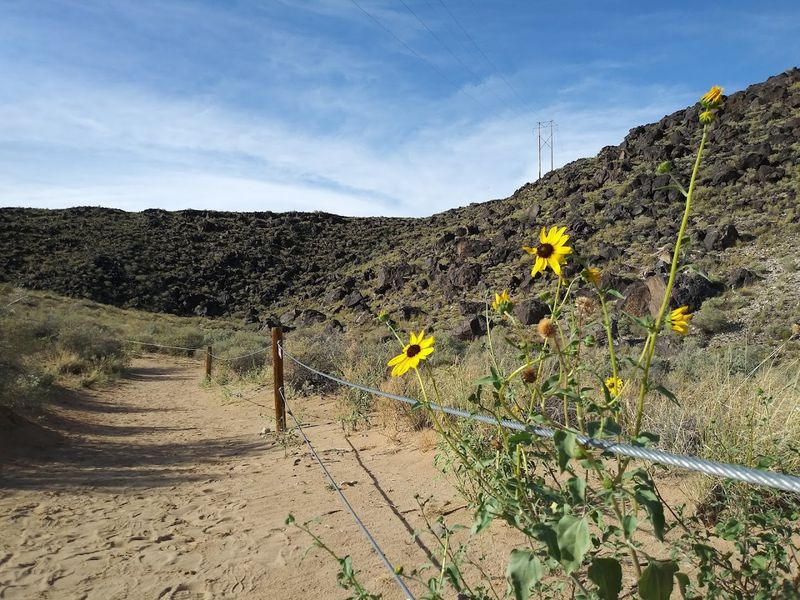
This trail has a calm that sneaks up on you, because it does not try too hard to impress you in the first few minutes, and Rinconada Canyon earns your appreciation gradually, not all at once.
The path stretches 2.2 miles as a loop, beginning at a trailhead with paved parking, restrooms, and a desert setting that makes the starting point feel easy to navigate.
For roughly the first half mile to three quarters of a mile, the trail moves through open desert with scattered volcanic rock and dry scrub before the petroglyphs begin appearing with more frequency.
The surface underfoot is mostly packed sand and dirt, firm enough through the middle section but noticeably softer and deeper near the start and end of the loop.
Closed-toe shoes or hiking boots are a smart choice here, and anyone with mobility concerns should know that the soft sand patches require a bit more effort than the firmer sections.
What stands out most about this walk is how the quiet builds as you move further from the parking area, until the only sounds are wind, distant birds, and the soft crunch of your own footsteps through the volcanic landscape.
Desert Views With Stories Etched In Stone
At the midpoint of the trail, the canyon opens into a sweeping 360-degree view of mountainous terrain that stretches in every direction, with the Sandia Mountains rising to the east and open high desert rolling westward.
The scenery shifts subtly as you walk, moving from open flats to sections where the basalt cliffs press closer to the trail and the canyon walls begin to feel more intimate and enclosed.
It is along these closer wall sections where the petroglyphs appear most concentrated, and where National Park Service signs and guide stops help visitors better understand what they are looking at without needing a ranger beside them.
The park also offers a free audio trail guide accessible by phone, with approximately 14 stops that correspond to distances along the route rather than numbered markers, which keeps you oriented even without a ranger nearby.
NPS signs and audio stops along the path add context to individual carvings and nearby rock panels, explaining cultural meanings and the communities responsible for creating them.
Every boulder you pass feels less like a rock and more like a page in a very old, very patient book that has been waiting for curious readers to show up and pay attention.
Sunlit Trails And Basalt Cliffs
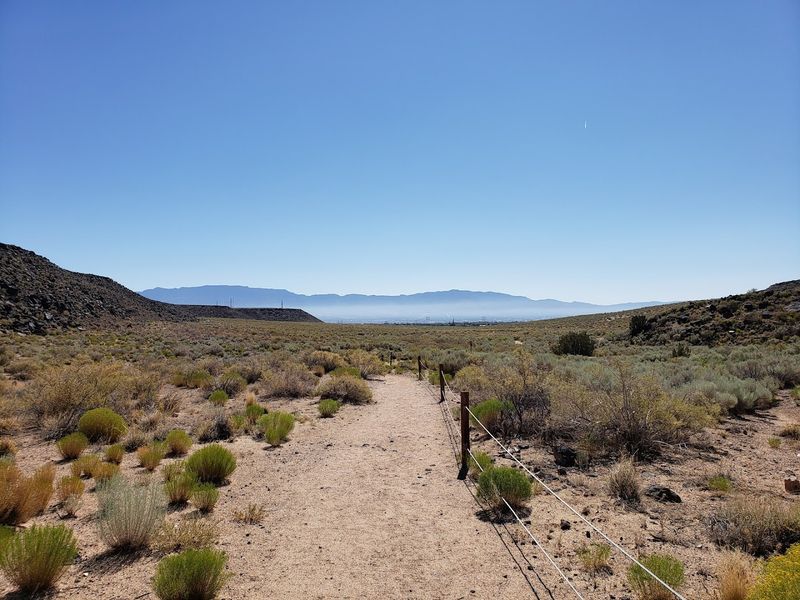
One thing no trail map can fully prepare you for is just how exposed this route feels under direct sunlight from start to finish, and that matters more than you might expect.
Shade is extremely limited along the 2.2-mile loop, which means the sun hits you from above and reflects off the pale sandy trail surface at the same time, making the temperature feel noticeably warmer than whatever your weather app is showing.
Even on mild mornings, the constant exposure can make the walk feel warmer than expected, so sunscreen, a wide-brimmed hat, and plenty of water are not optional accessories here, they are trail essentials.
The trail parking area is open daily from 8 AM to 5 PM, and arriving early, ideally soon after opening, makes a real difference in overall comfort level and crowd size, especially during warmer months when the exposed sand can feel intense.
Early morning is usually the best time to experience the place with cooler air, softer light, and more room to slow down along the canyon walls.
The basalt cliffs glow with a warm golden tone in morning light, and the way the sun catches the carved surfaces makes certain petroglyphs far easier to read than they would be under harsher midday brightness.
Centuries-Old Art Beneath Open Skies
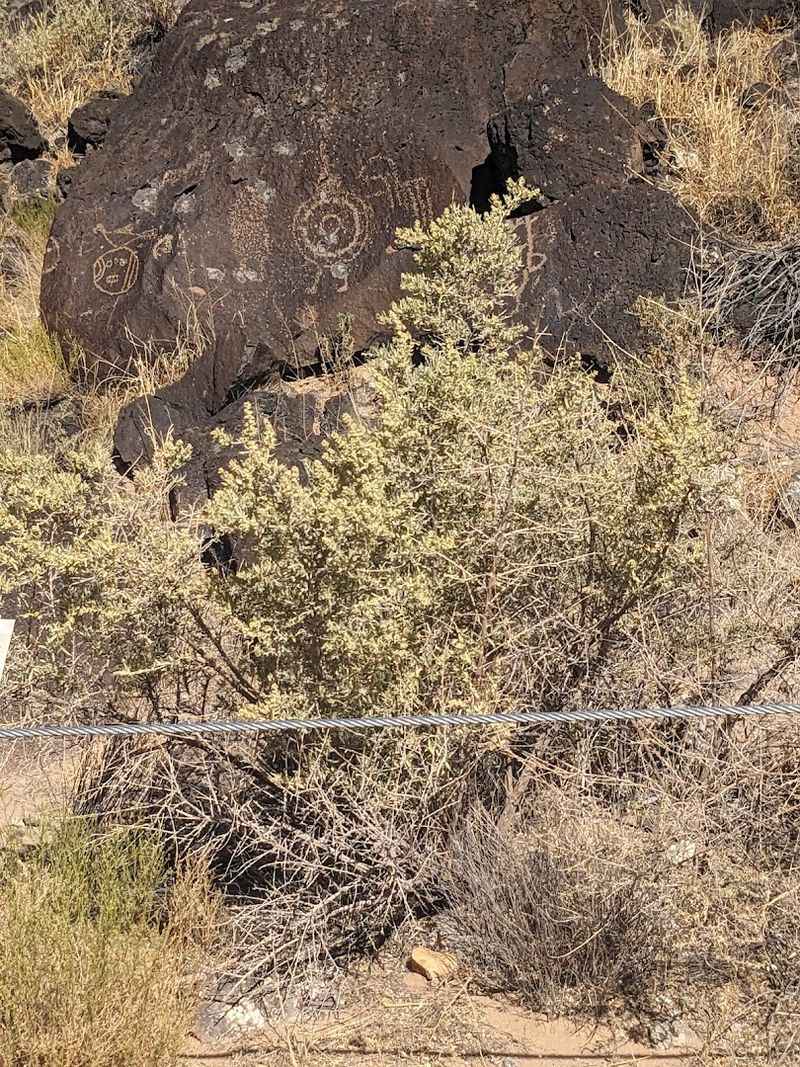
These carvings may look like ancient art at first glance, but the figures pecked into the basalt here represent something far more culturally layered than decoration alone.
Ancestral Pueblo peoples created the majority of these images between roughly 1300 and 1650 CE, using simple stone tools to chip away at the dark outer surface of the volcanic rock and reveal the lighter interior beneath.
The resulting images include spirals, masks, birds, quadrupeds, human figures, and abstract symbols that researchers believe held spiritual, ceremonial, and community significance for the people who made them.
Along the trail, post-and-cable barriers help protect the carvings from accidental contact while still allowing visitors to view the petroglyphs clearly from the official path, preserving context without encouraging anyone to step closer than the route allows.
Some carvings are crisp and immediately readable, while others have faded or eroded enough that patience and good lighting make a real difference in how much you can make out.
Bright morning light can sometimes wash out the finer details, so mid-morning visits on clear days often tend to offer stronger, more balanced viewing conditions for appreciating these quiet, enduring marks left beneath the open New Mexico sky.
Rocky Paths Through High Desert Silence
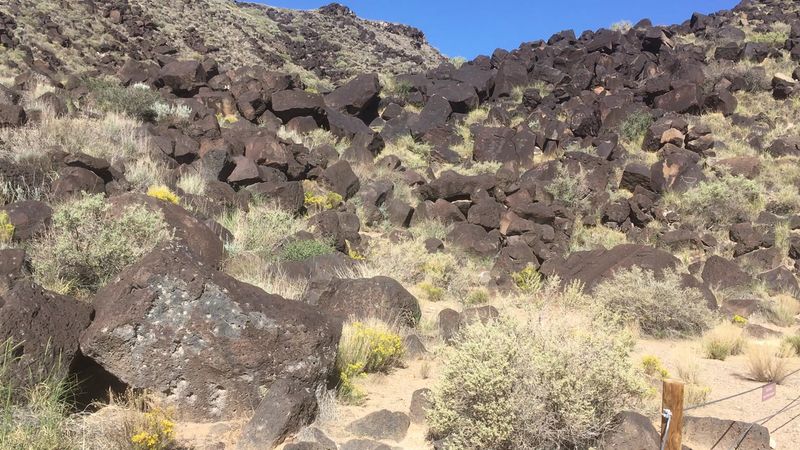
High desert silence is its own kind of sound, and this trail delivers it in a way that feels almost deliberate, as if the canyon itself is asking you to slow down and pay attention.
The trail surface transitions between firmer packed dirt and stretches of soft, thick sand that push back gently with each step, giving the hike a slightly different physical texture than paved or gravel paths.
Wildlife sightings add an unexpected layer of interest to the walk, with birds, lizards, insects, and other small desert animals sometimes appearing along the route, especially during warmer parts of the year.
Small high desert creatures are easy to miss if you move too quickly, so the best approach is to keep your pace relaxed and watch the trail as carefully as the rocks, especially near sandy stretches where movement blends into the ground.
The trail gains minimal elevation throughout the loop, keeping the physical challenge low enough for beginners and families while still covering enough ground to feel like a real outdoor experience.
That combination of easy terrain, natural desert quiet, and unexpected wildlife encounters is exactly what makes this rocky desert path feel more rewarding than its modest difficulty level might suggest on paper.
Hidden Carvings Along The Canyon Walls
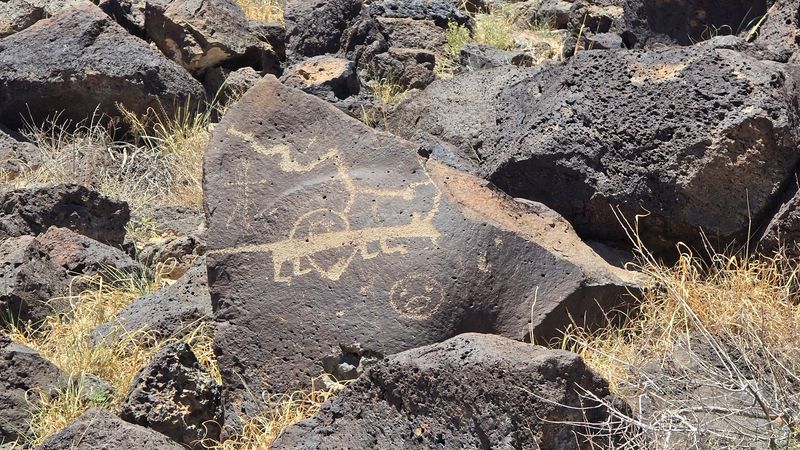
Part of what makes this trail so fun rather than just educational is the element of discovery built into every section of the route.
The petroglyphs do not announce themselves from a distance or cluster conveniently near the trailhead, which means the first half to three quarters of a mile requires patience and a willingness to scan the rock faces carefully as you walk.
That patience pays off near the back of the canyon, where the National Park Service notes the largest concentration of petroglyphs along the route.
The return side of the nature walk does not have petroglyphs visible from the trail, which makes the canyon’s main viewing area feel even more important to slow down and appreciate before the path loops away from the densest rock art during the viewing stretch.
The audio guide available through the National Park Service adds another layer of discovery, with stops that correspond to specific sections of the trail and provide cultural context that transforms a carving from a curious shape into a meaningful symbol.
A carving you almost walked past without noticing can produce a small, satisfying jolt of recognition that keeps the entire walk feeling fresh from beginning to end, especially when the light changes and a shape suddenly becomes easier to read.
A Timeless Landscape Of Stone And Sky
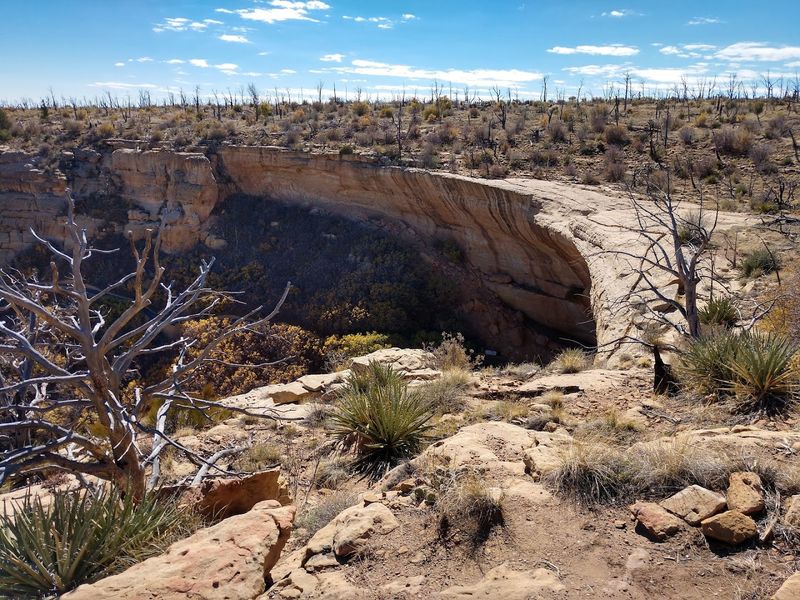
Near the far end of the loop, the trail curves and the full sweep of the canyon opens up around you, with volcanic stone, pale sandy ground, and enormous blue sky creating a view that feels bigger than the short distance suggests.
Early morning, soon after the parking area opens, adds a spectacular quality to that view, with the Sandia Mountains catching soft light to the east while the canyon still holds a cooler feel around you.
The trail is free to visit, family-friendly, and allows leashed dogs, which makes it one of the more accessible outdoor experiences in the Albuquerque area regardless of budget or group composition.
Restrooms at the trailhead and a large paved parking lot mean the practical logistics of visiting are handled before you even take your first step onto the sand, helpful on a desert route with limited shade.
Locals use the trail regularly as part of their weekly routine, and out-of-town visitors often describe it as a memorable part of their time in New Mexico, especially if they want scenery, history, and an easy route in one stop.
All of this adds up to an experience worth making time for, and you can find it at Rinconada Canyon Trail.