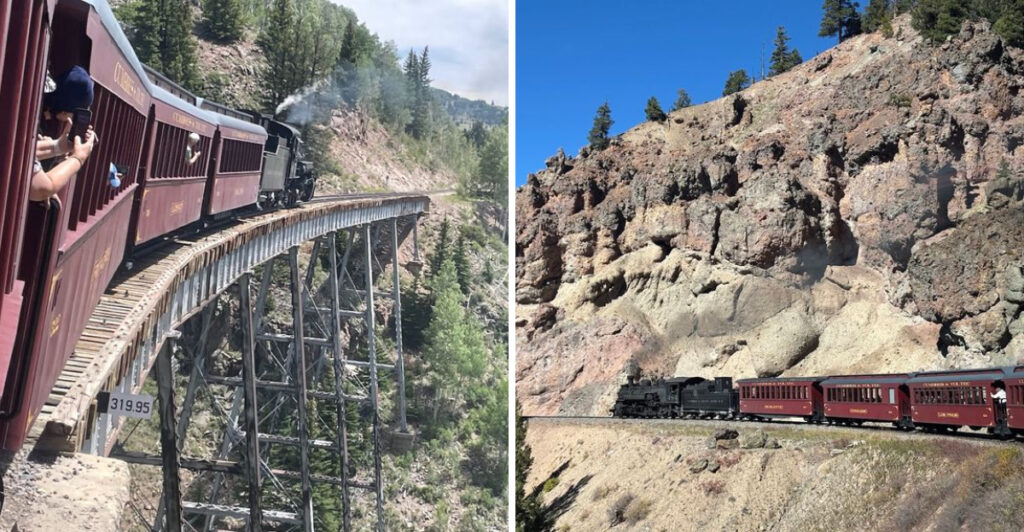
Coal smoke drifts past the window, the locomotive gives a deep pull, and the mountains begin to close around the track. This is where an ordinary train ride turns into something much more memorable.
The pace stays slow enough to watch the landscape change, yet the journey never feels dull. High trestles appear ahead, canyon walls rise beside the cars, and the engine works loudly as it climbs.
New Mexico scenery is only part of the attraction. The railroad itself feels alive, with historic track and steam-powered machinery carrying passengers through terrain that modern roads never reach.
I would be the person moving between the window and the open-air car, trying not to miss a single curve. By the time the train reaches the high country, the outside world feels distant.
The whistle, the swaying cars, and the mountain views make it feel like a day borrowed from another century.
Billowing Steam Signals The Start Of The Journey
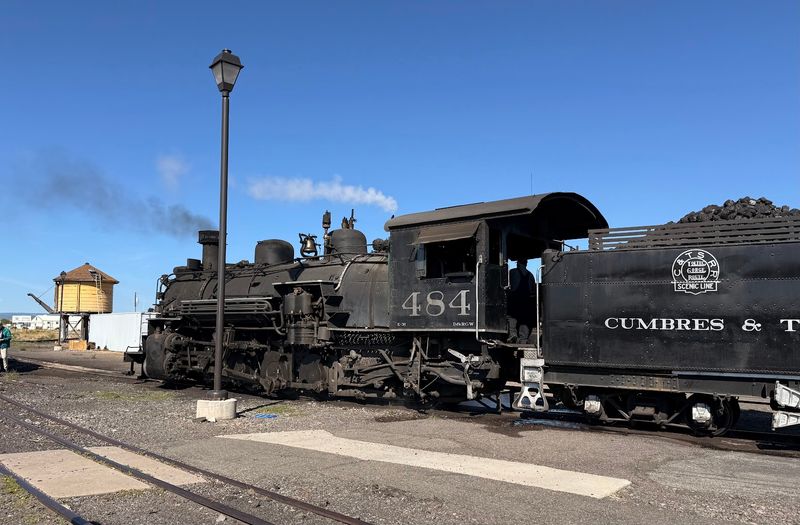
Before a single passenger steps aboard, the show has already started. At the Chama rail yard, crews work with practiced precision to load coal and water into the locomotive, and the whole process feels like watching a living museum come to life.
The hiss of steam, the smell of burning coal, and the low groan of the engine warming up create a sensory experience that no modern transportation can replicate.
The departure itself is something worth arriving early for. As the locomotive builds pressure, clouds of white steam roll across the platform and drift through the surrounding pines.
Photographers scramble, kids press their faces against windows, and even seasoned travelers tend to pull out their phones for one more shot.
What makes this opening moment so memorable is the steep 4% grade climb that begins almost immediately after leaving the station. The engine digs in hard, the stack talk gets louder, and the whole train shudders with effort as it starts its ascent into the mountains.
You can find this unforgettable experience at Cumbres and Toltec Scenic Railroad, located at 500 Terrace Ave, Chama, NM 87520.
Bright Red Cars Snake Through The Mountains
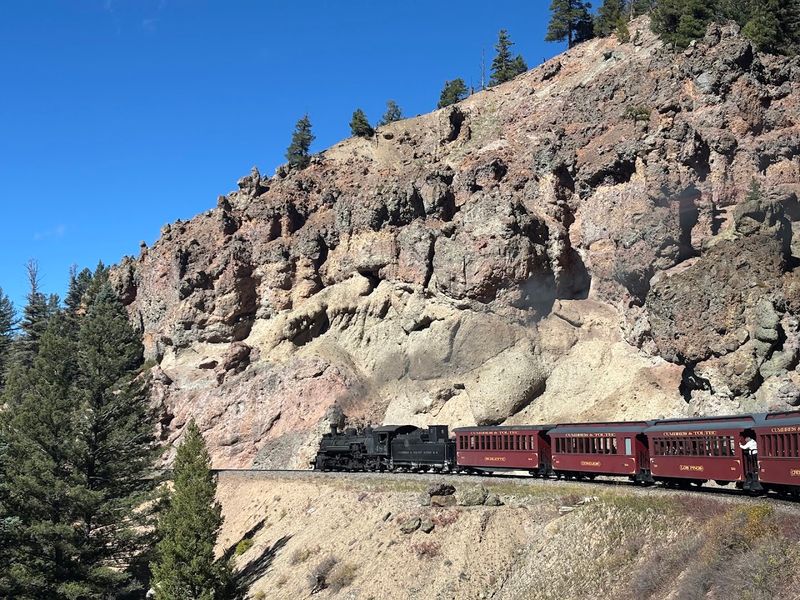
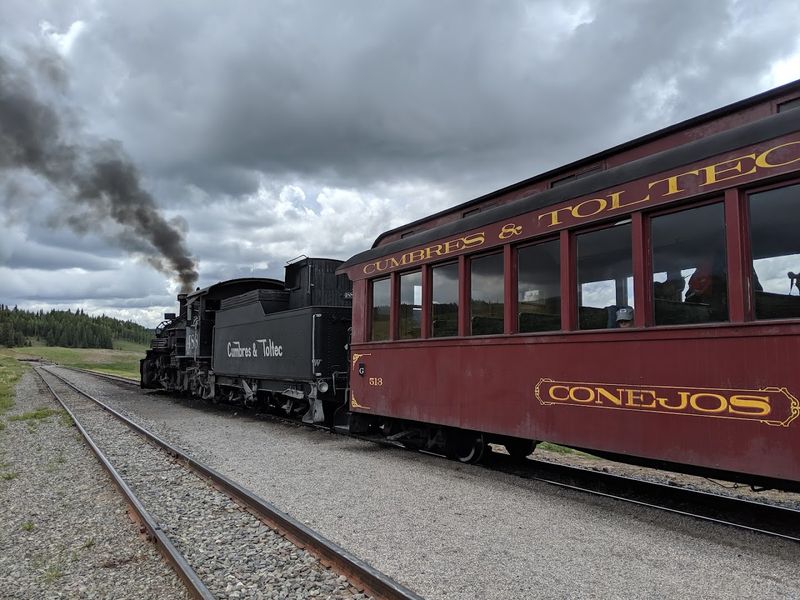
Few sights in American railroad travel are as visually striking as a string of cherry-red passenger cars winding through a mountain pass. The color pops brilliantly against the green pines and grey canyon walls, making every curve in the track feel like a postcard moment.
Open the window, let the cool breeze in, and watch the landscape shift from high desert scrub to thick conifer forest within the span of a few miles.
The route covers 64 miles of narrow-gauge track, and the terrain along the way is remarkably varied. Steep canyon walls, open meadows, and high desert stretches all take turns outside the window.
The train also crosses the New Mexico-Colorado border multiple times, which is a quirky geographic detail that adds a fun layer to the journey.
Narrow-gauge railroads have a slightly smaller track width than standard rail lines, and that compact scale gives the whole experience an intimate, almost toy-train quality that full-size locomotives simply cannot match. The cars sway gently through tight curves, and the mountains seem closer and more dramatic from that narrow vantage point.
Every mile brings a fresh angle on some genuinely spectacular high-country scenery.
Open-Air Views Stretch Far Beyond The Tracks
Most trains keep you safely behind glass, but this railroad gives you the option to ride with nothing between you and the mountain air. The open-air gondola car is available to every passenger regardless of ticket class, and it quickly becomes one of the most popular spots on the train.
Step out there on a clear morning and you will understand why within about thirty seconds.
The gondola offers full 360-degree views with zero obstructions, which makes it a dream for photographers chasing dramatic landscape shots. Wildlife sightings are also far more common from the open car since you can scan the ridgelines and meadows without a window frame cutting off your field of view.
Elk, bears, and eagles have all been spotted from this car by attentive passengers.
A practical tip worth keeping in mind: the open gondola can get chilly at higher elevations even during summer, so a light jacket tucked into your bag is a smart move. Sunscreen is equally important because the mountain sun at altitude is stronger than it feels, especially with a cool breeze keeping your skin comfortable.
The open car rewards those who come prepared with some of the best views on the entire route.
Historic Rail Yards Feel Frozen In Time
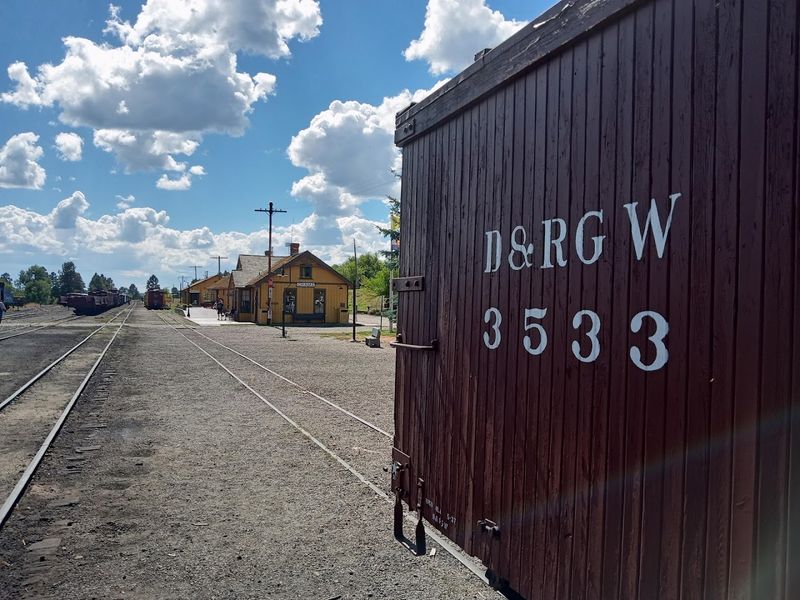
The Chama rail yard deserves more than a rushed arrival before departure. The collection of historic rolling stock and buildings spread through the yard reads like an open-air railroad museum, except this remains an active railroad facility.
Water towers, old section houses, and vintage maintenance equipment help preserve the appearance and working character of a nineteenth-century rail complex.
The Cumbres & Toltec Scenic Railroad holds the distinction of being a National Historic Landmark, and that designation carries real weight when you walk the yard and see how much original infrastructure has been preserved. The historic Cumbres section house, still standing along the route, is one of several surviving structures connected to the railroad’s early operating history.
A second rail yard in Antonito, Colorado, shares the Chama yard’s preserved character and is worth exploring during a full point-to-point journey. Both yards give rail enthusiasts and casual visitors alike a tangible connection to the era when narrow-gauge lines were vital to the Rocky Mountain region.
Few places in the country let visitors get this physically close to such a collection of historic railroad buildings, equipment, and operating steam locomotives.
The Train Climbs Into Thin Mountain Air
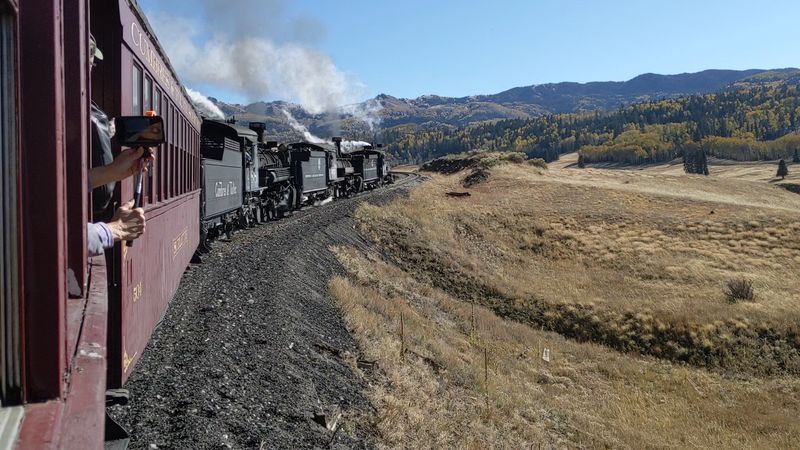
Shortly after leaving Chama, the locomotive faces one of its toughest assignments in railroading. The 4% grade climb toward Cumbres Pass is considered among the steepest sustained grades in North American railroad history, and you can feel every bit of that effort as the engine strains upward through the pines.
The stack talk, that rhythmic exhaust beat from the smokestack, quickens and deepens as the train works harder.
Cumbres Pass sits at an elevation of 10,015 feet, making it the highest railroad pass in the United States. At that altitude, the air is noticeably thinner and cooler, and snow flurries can appear even during summer months, which catches some visitors completely off guard.
Layers are genuinely useful here, not just a cautious suggestion.
Reaching the summit feels like a small triumph shared between passengers and locomotive alike. The views from the top stretch across vast stretches of the southern Rocky Mountains, and the sense of scale up there is hard to put into words.
New Mexico and Colorado spread out below in a patchwork of forest, meadow, and ridgeline that rewards every bit of the climb it took to get there. The air alone is worth the trip.
A High Trestle Opens Above The Valley
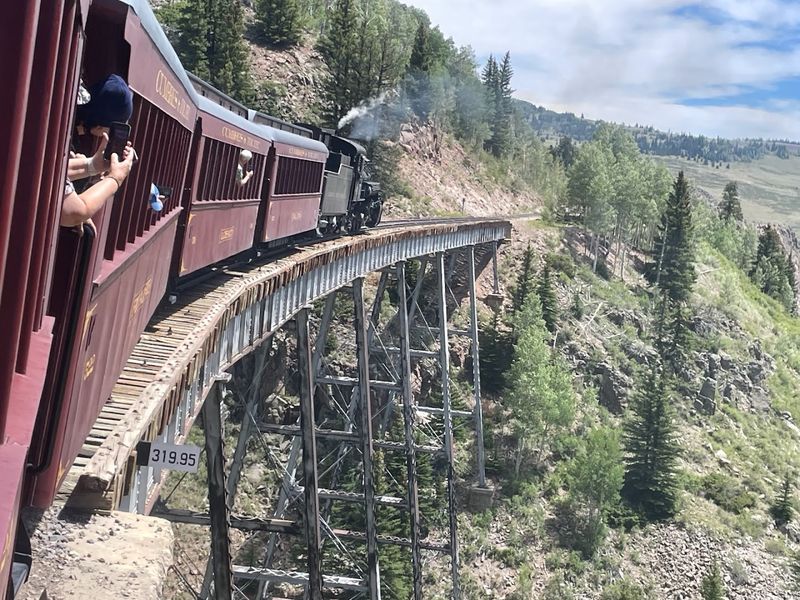
Crossing a railroad trestle at elevation is one of those experiences that makes your stomach do a small flip in the best possible way. The Cascade Creek Trestle stands 137 feet tall, making it the highest on the entire line, and the view from the car windows as the train rolls across is genuinely breathtaking.
The valley drops away on both sides, and for a few seconds the whole world seems to exist only at track level.
The Lobato Trestle, which spans Wolf Creek, is another significant structure along the route and draws plenty of attention from passengers who have done their homework before boarding. Both trestles are engineering achievements that were built to solve real problems in extremely rugged terrain, and they have held up impressively well over more than a century of regular use.
Trestle crossings tend to produce some of the most memorable photographs of the entire journey. The combination of the red cars, the open sky, and the valley floor far below creates a composition that practically frames itself.
If you are riding in the open gondola car when the train hits one of these crossings, the effect is even more dramatic and immediate than watching through a window.
Rocky Gorge Walls Close In Beside The Rails
Few sections of any railroad journey match the drama of the Toltec Gorge passage. The gorge plunges 800 feet, and the train picks its way along a narrow ledge carved into the canyon wall with the kind of engineering audacity that was common in the 1880s but looks absolutely wild from a modern perspective.
Passengers on the canyon side of the car can look straight down into the gorge floor far below.
At certain points, the rock walls press in so close on both sides that it feels like the train is threading a needle. The light changes inside the cars as the cliffs block the sky, and the sound of the locomotive echoes differently in the enclosed space, adding an almost theatrical quality to the passage.
Two tunnels, named Mud Tunnel and Rock Tunnel, punctuate this section of the route.
The gorge section consistently gets called out as the most dramatic stretch of the journey by passengers who have ridden the full 64-mile route. New Mexico has no shortage of canyon scenery, but experiencing it from a century-old train at ledge level rather than from a highway overlook is a genuinely different kind of encounter with the landscape.
The gorge does not disappoint.
Golden Aspens Turn The Route Into A Fall Spectacle
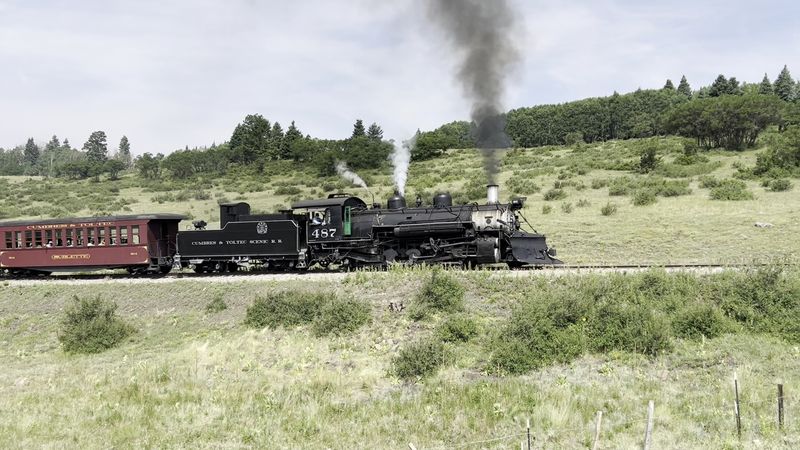
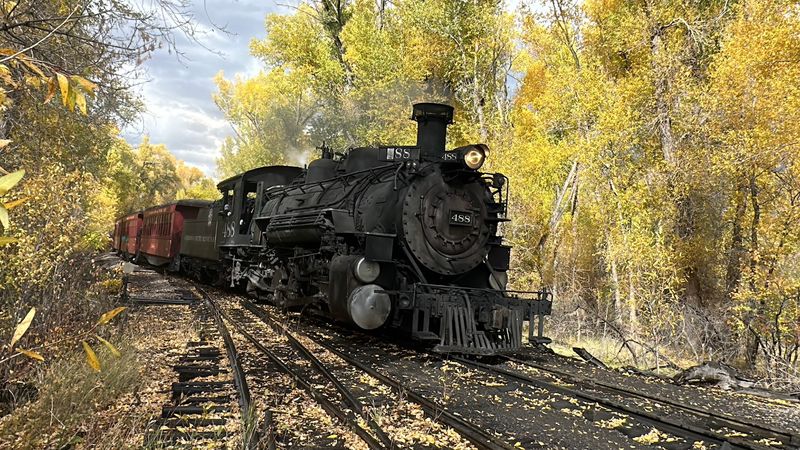
Autumn on this railroad is something that sells out fast, and for very good reason. From mid-September through early October, the route passes through vast groves of aspen trees that shift from green to blazing gold, amber, and orange as the season progresses.
The color change happens at different rates across the varied elevations of the route, which means the display keeps evolving mile by mile.
The elevation range along the journey spans from roughly 7,800 feet to 10,015 feet, and that vertical spread creates a layered fall color effect that photographers find endlessly interesting. Lower sections might still be green while the high passes glow with full autumn color, giving the train ride a quality of moving through multiple seasons in a single afternoon.
Booking well in advance is genuinely necessary for fall departures, as these trips fill up faster than almost any other time of year on the schedule. The combination of crisp mountain air, warm color, and the sensory richness of a steam-powered journey through the aspen groves creates a travel experience that is hard to match anywhere in the American West.
Fall on this railroad is not just scenic, it is the kind of thing people plan entire road trips around.