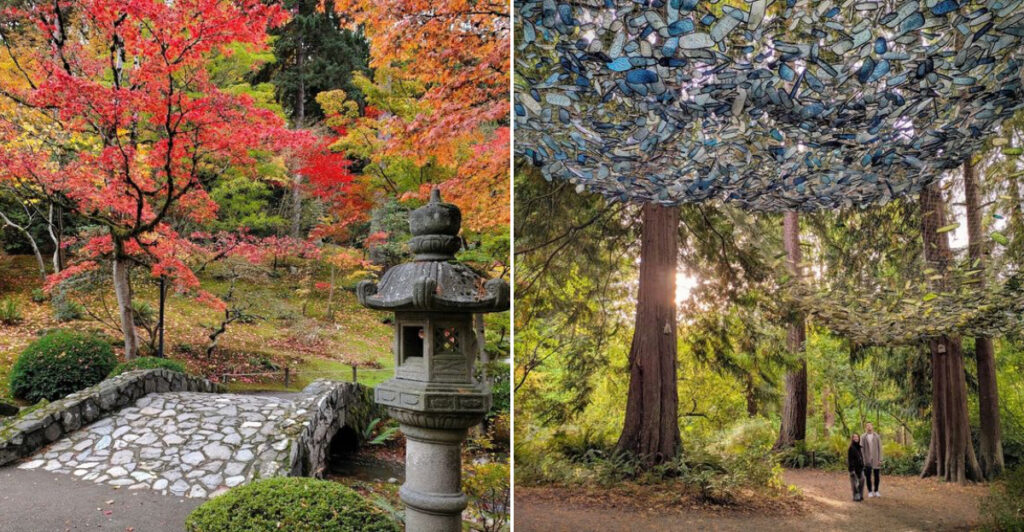
Some places soften the day the moment they enter it, and this Seattle arboretum is one of them. Its beauty is never hurried or showy.
Instead, it unfolds with quiet grace, inviting you to slow down and notice how gently nature can change the mood of an afternoon.
I love well-made arboretums more than most things. The grounds carry a sense of calm that makes even a short visit feel deeply restorative, while every season brings its own expression without repeating the last.
There is a lovely kind of leaf story here, written in color, texture, and time. You do not need a plan beyond allowing the place to guide the pace.
Washington offers many remarkable outdoor escapes, but this one holds a softer kind of magic, close to the city yet wonderfully removed from its noise.
Come for the beauty, stay for the stillness, and leave with Washington looking a little more poetic than before.
A Living Collection Unlike Any Other
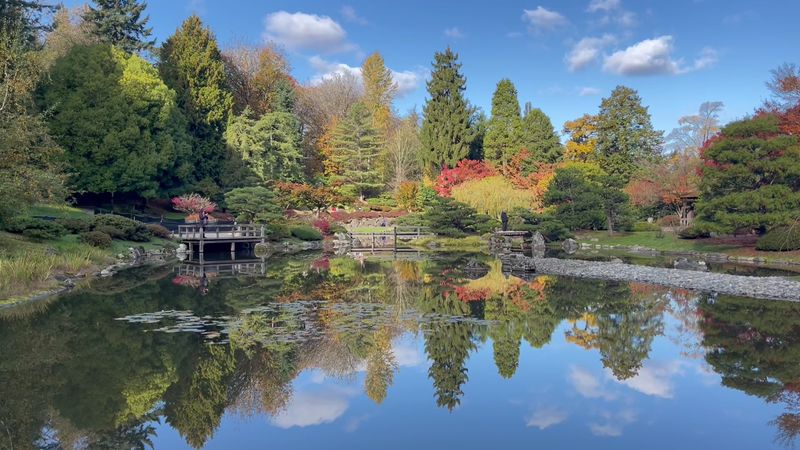
This landscape functions as an outdoor museum, holding thousands of plants gathered from many parts of the world.
The University of Washington and the City of Seattle manage the arboretum through a longstanding partnership. That collaboration supports scientific study while keeping the grounds open.
Tall conifers create the largest visual anchors, while flowering shrubs and ornamental trees fill the spaces beneath them.
Rare magnolias share the landscape with species many visitors may never have encountered elsewhere. Labels provide useful names, although recognizing every specimen is unnecessary for enjoying the walk.
I like how the collection works equally well for experts and casual visitors.
A botanist may study bark, leaf structure, or growth habit. Someone else may simply follow the prettiest path.
Neither approach seems incomplete.
The size allows several landscapes to exist within one park, including open lawns, shaded woods, ponds, and lakeside edges. That variety keeps longer walks from becoming repetitive.
It also creates enough space for quieter discoveries beyond the busiest routes.
Japanese Maples That Stop You In Your Tracks
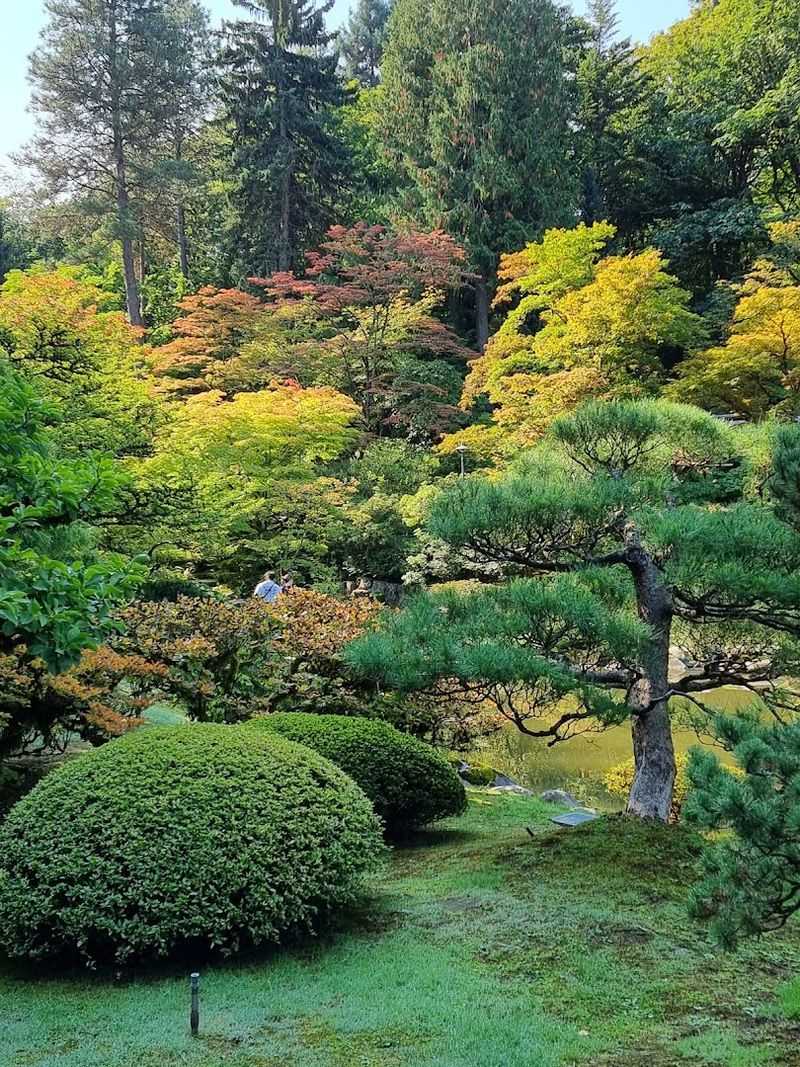
Japanese maples supply some of the arboretum’s strongest autumn color.
Their leaves shift through crimson, copper, orange, and deep red as temperatures cool. Weeping forms sit near upright trees with wider canopies, creating noticeable differences in shape.
Leaf patterns vary almost as much as the color.
Morning light can pass through thinner foliage and produce a warm glow across nearby paths. Overcast skies work beautifully too, softening shadows and preserving richer tones.
I love that cloudy weather becomes an advantage here.
Spring offers a gentler display, with new leaves appearing in pale green and muted purple.
Maples appear throughout several sections instead of occupying one isolated garden.
That scattered arrangement makes each sighting seem discovered rather than scheduled. A bright canopy may appear beside dark conifers and stop a conversation without warning.
The color also changes week by week.
One visit may bring leaves still glowing overhead, while another covers the path with a rustling red carpet. Both versions give photographers and casual walkers plenty to notice.
Woodland Garden Secrets Worth Seeking Out
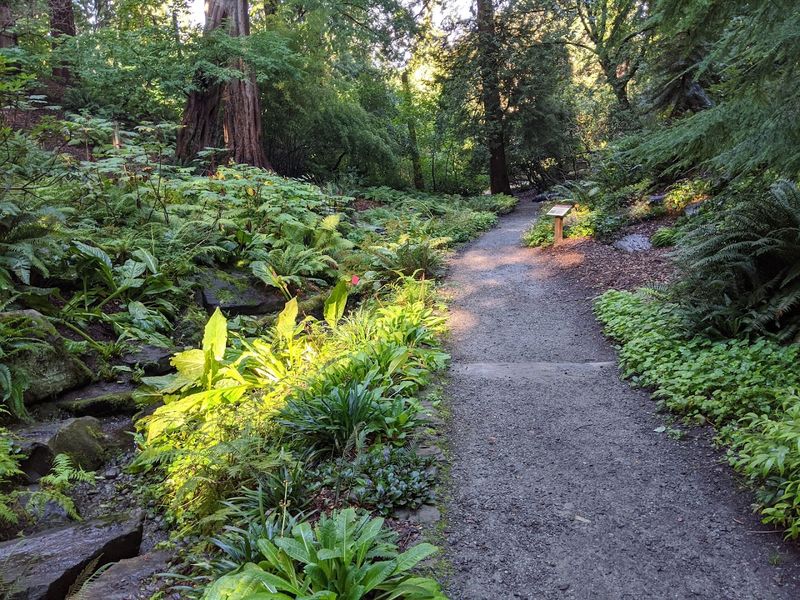
The Woodland Garden changes the mood through shade, filtered light, and dense planting close to the ground.
Tall trees form a canopy above ferns, hostas, trilliums, and other plants suited to cooler conditions. Moss gathers on logs and roots, adding texture across the forest floor.
The planting receives careful maintenance, yet the scene carries a wonderfully untamed character.
Smaller details often provide the strongest rewards. An unusual bark pattern, tiny flower, or curled fern can hold attention longer than a broad view.
I like sections that make observation more useful than speed.
Birds move through the understory, taking advantage of vegetation offering cover beyond the open lawns. Their movement can be easier to hear than see.
Grey skies deepen the greens throughout the year.
Rain also sharpens bark tones and gives leaves a cleaner surface. The paths stay approachable, although slower steps suit the softer ground and changing light.
A rushed visit would miss the garden’s best tricks.
Nothing here demands a grand reveal. The pleasure comes through layers, quiet sounds, and details that appear only after your pace begins matching the setting.
J. A. Witt Winter Garden Brings Color To The Cold
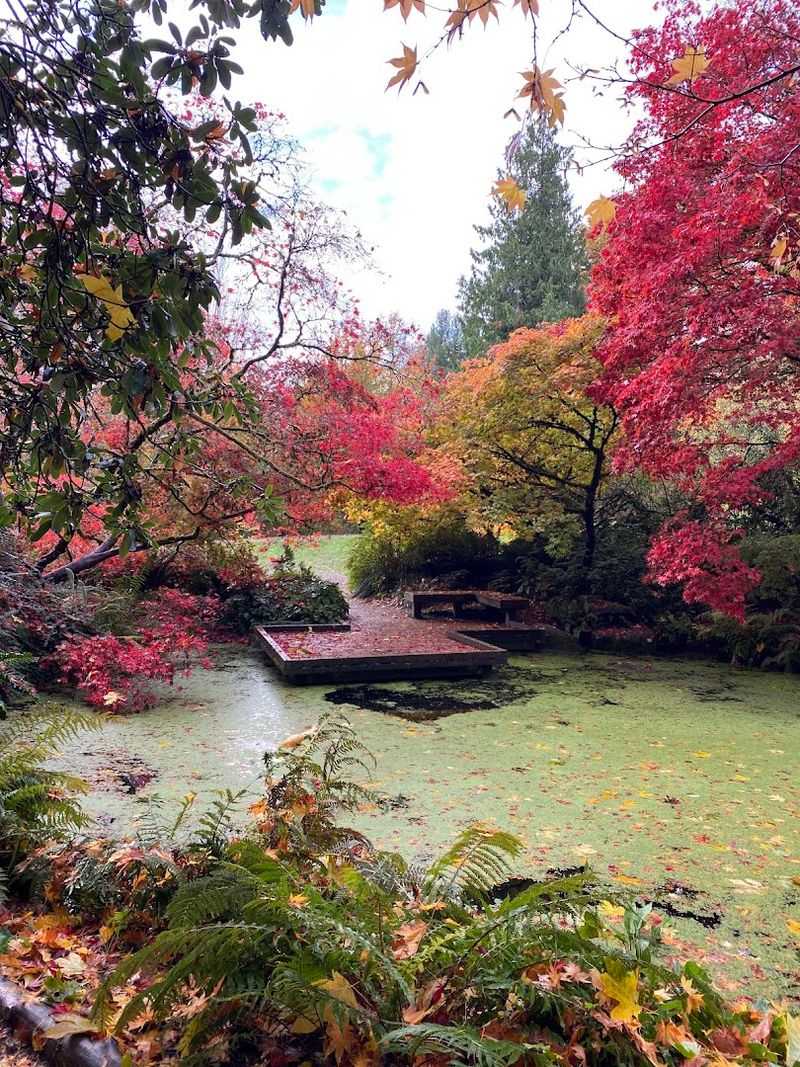
The J. A. Witt Winter Garden proves January does not need to be visually quiet.
Plants were chosen for cold-season flowers, bright stems, unusual bark, berries, fragrance, and strong structure.
Witch hazels provide the clearest surprise.
Their ribbon-shaped flowers appear in yellow, orange, and red when little else is blooming. A subtle fragrance becomes noticeable during still mornings.
Cornus species add red and yellow stems against dark soil and grey skies.
I love gardens designed around months many people usually ignore. Bare branches also reveal shapes hidden during summer, giving structure a larger role.
Hummingbirds may visit early flowers and interrupt the calm with sudden movement.
The garden honors a longtime arboretum director whose interest in year-round planting shaped the collection. That legacy appears through careful combinations rather than one single monument.
Seattle’s mild winters usually keep this section accessible.
Warm layers still improve the walk, especially when damp air settles beneath the trees. The reward is color without spring crowds or summer heat.
Turtle Pond Offers A Quiet Pause
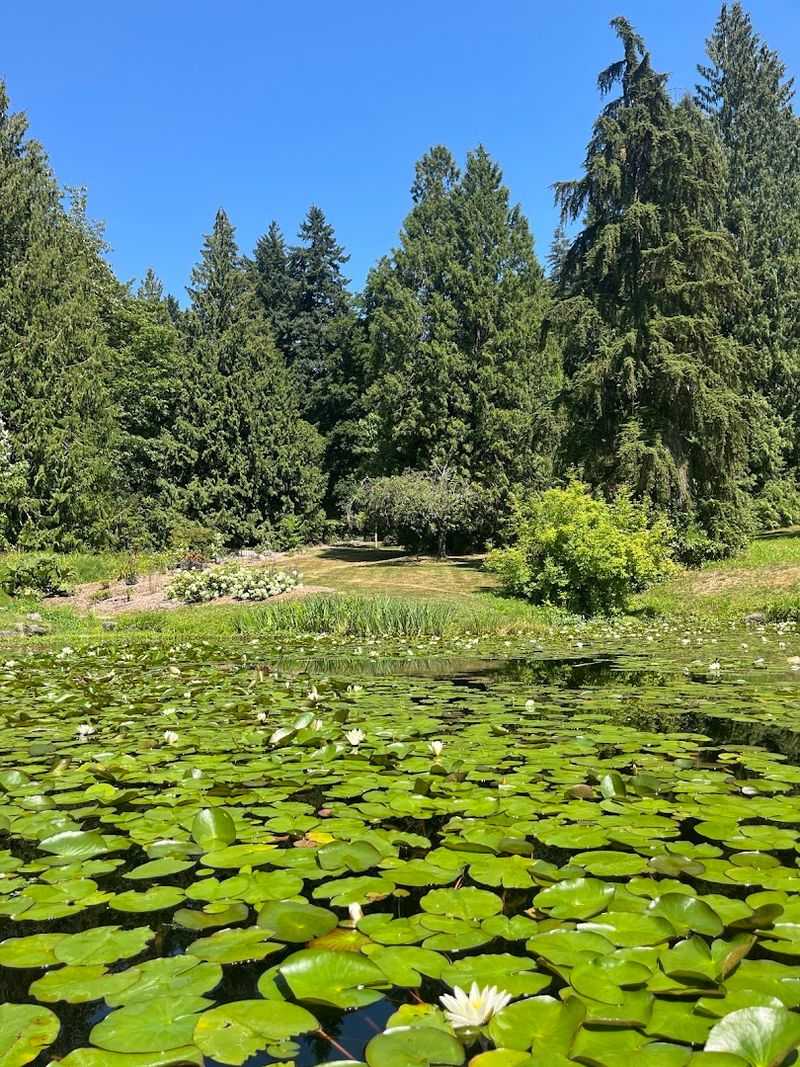
Turtle Pond offers a quieter rhythm than the broad lawns and popular flower displays.
On sunny days, turtles may bask on logs while visitors watch from the path. Ducks, herons, and occasional kingfishers add movement around the shoreline.
Summer brings lily pads across portions of the surface.
Reflections of surrounding branches shift whenever wind crosses the water. Children often respond quickly to wildlife they can observe without binoculars or long waiting.
Adults may appreciate the permission to stop moving.
I like places that offer a destination without requiring another activity. A bench and several quiet minutes can reset the entire visit.
Early mornings usually bring the calmest conditions.
Birdsong and small splashes become easier to notice before joggers and dog walkers fill nearby routes. Wildlife still follows its own schedule, so patience improves the experience.
The pond may seem still for several minutes.
Then a turtle slides into the water or a bird crosses overhead. That unpredictability gives the stop its charm and keeps the scene from becoming decorative background.
Giant Sequoia Standing Guard Over The Landscape
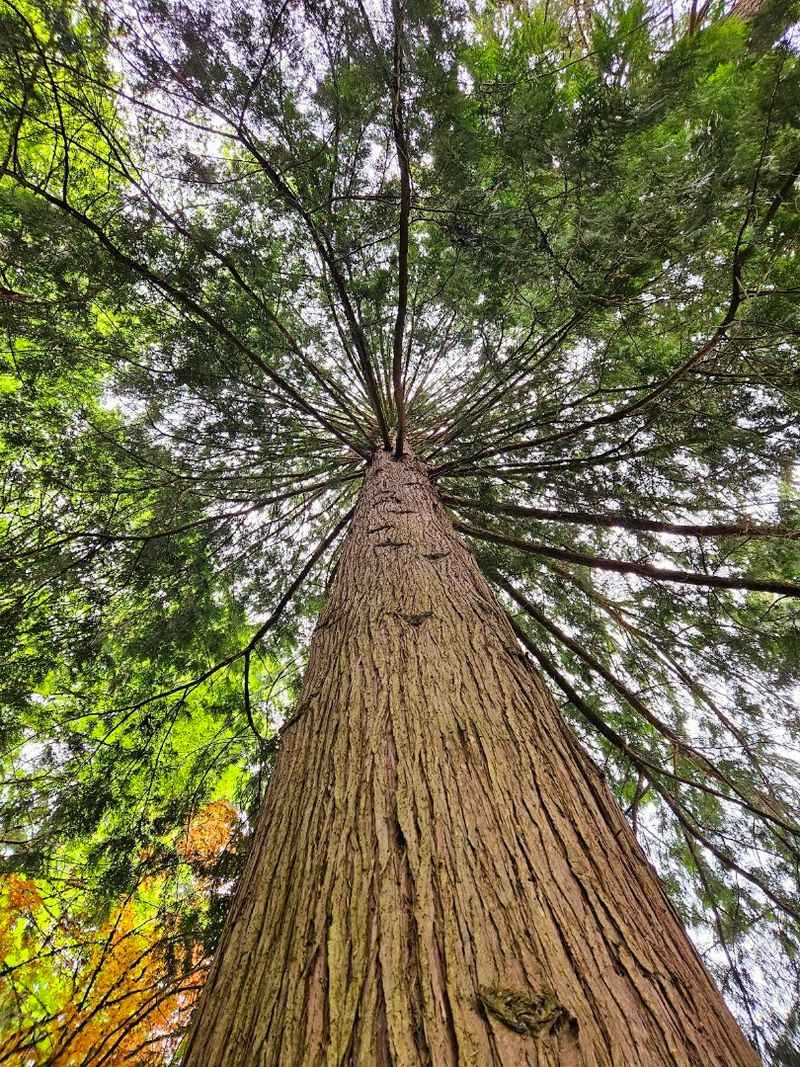
The arboretum’s giant sequoia provides a lesson in scale before anyone reads its name.
Its reddish bark carries deep furrows and a fibrous texture unlike many common garden trees. Looking upward from the base makes nearby plants seem briefly miniature.
The species comes from California’s Sierra Nevada.
Planted specimens grow impressively in the Pacific Northwest’s moist climate. Even a younger tree suggests a deeper timeline through trunk size and powerful structure.
I love trees that make ordinary time seem very small.
Old-growth sequoias in their native range can live for thousands of years. That knowledge adds weight to a simple pause beneath the branches.
The Union sculpture introduces another kind of contrast.
Its relationship with nearby trees changes according to season, light, and viewing position. Side trails provide the best chance of encountering it without advance ceremony.
The installation respects the vegetation instead of competing for control.
Together, the sculpture and sequoia encourage visitors to reconsider shape, age, material, and scale during the same walk. One is built by human hands, while the other keeps building itself.
Union Sculpture Adds Unexpected Art To The Canopy

The Union sculpture introduces human creativity without overpowering the living collection around it.
Its relationship with nearby trees changes according to season, light, and viewing position. Leaves may frame it in summer, while winter reveals sharper lines and a clearer silhouette against the sky.
The installation rewards movement.
One angle can make the work seem separate from the landscape, while another brings sculpture and trees into one composition. Shadows stretch across its surface throughout the day, adding details that may disappear when viewed from a fixed position.
I like public art that encourages a second look.
The materials and design acknowledge the surrounding plants instead of competing for control. Even the open spaces within the sculpture allow branches, clouds, and changing light to become part of the work.
Visitors following only the main loop may miss it. Smaller trails provide the best chance of encountering the piece without ceremony or a crowd gathered around it.
After studying trunks and foliage, the eye begins comparing organic forms with deliberate human lines. That quiet contrast gives the sculpture its strongest connection to the garden.
Azalea Way In Full Spring Bloom
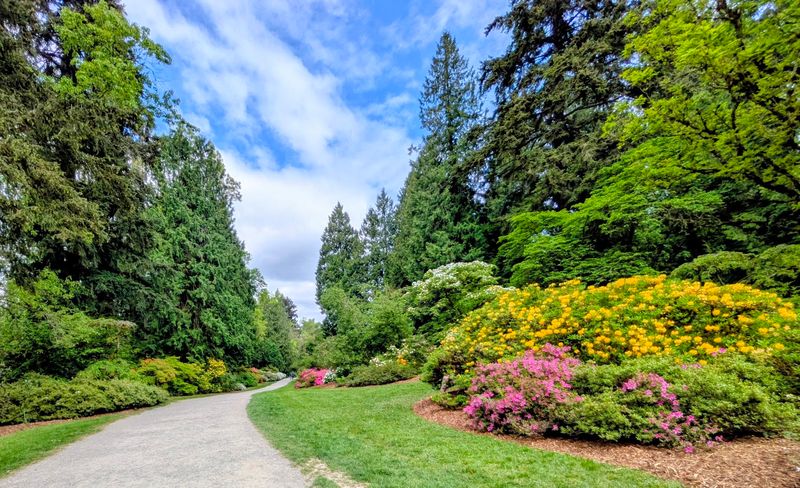
Azalea Way becomes one of the arboretum’s strongest spring displays.
A broad grassy corridor runs between mature shrubs blooming in pink, purple, magenta, and softer pastel shades. Magnolias and camellias may overlap with the show, adding larger blossoms and contrasting shapes.
The open terrain suits visitors who prefer flatter routes.
Families, couples, and photographers gather when the shrubs bloom together. Even simple phone photographs benefit from the scale, density, and long sightlines stretching down the corridor.
I love how the path turns into a shared spring ritual.
The central lawn gives everyone room to pause without blocking narrower trails. Children can move freely, while photographers step back for wider views or wait for passing groups to clear the frame.
Benches and open patches invite longer stops beneath the surrounding canopy. A slow walk also reveals individual blossoms that disappear within the larger sweep of color.
Peak timing changes with winter temperatures and spring rain. A slightly early visit may trade maximum color for quieter paths, fresher blooms, and more space to appreciate each section.
Trails For Every Kind Of Explorer
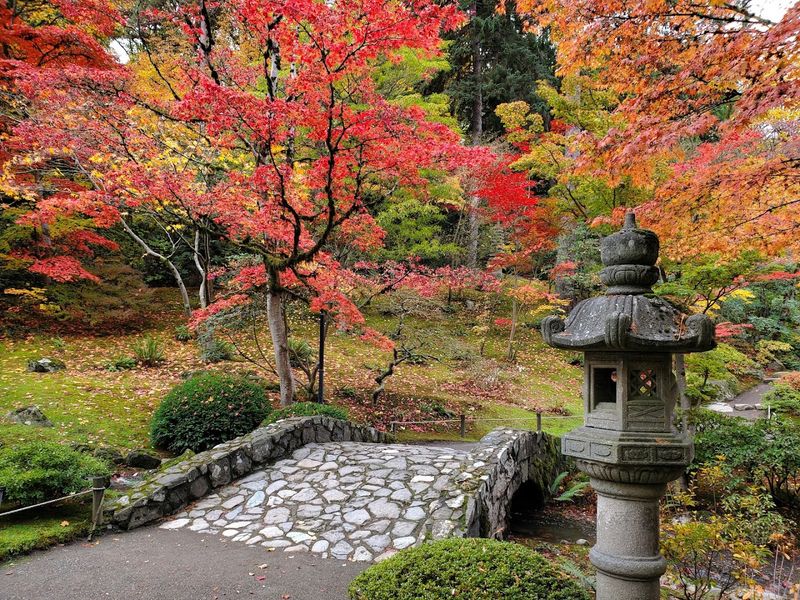
The trail network includes paved loops, gravel paths, grassy corridors, and smaller routes entering quieter sections.
Paved areas handle wet weather well and support strollers, wheelchairs, casual walkers, and runners. Gravel trails may soften after heavy rain, so sturdy shoes can make damp-day exploring more comfortable.
Dogs are welcome on leash through most of the arboretum.
Cyclists also use the main loop, making awareness important during busy weekends. Signage helps first-time visitors, although wandering can produce a better afternoon and reveal corners that planned routes skip.
Side paths bring the most satisfying discoveries.
They may lead toward a maple, unusual bark pattern, sculpture, or quiet bench. Some branches curve toward secluded lawns or water views, giving short detours a clear reward.
The route rarely needs a complicated plan.
Seasonal changes also reshape familiar sections. Fallen leaves, fresh growth, and shifting light can make the same trail look entirely different several months later.
The address is 2300 Arboretum Drive East, Seattle, Washington.
I like leaving part of the map unfinished. Another trail then provides an easy reason to return and discover what the first visit left unexplored.