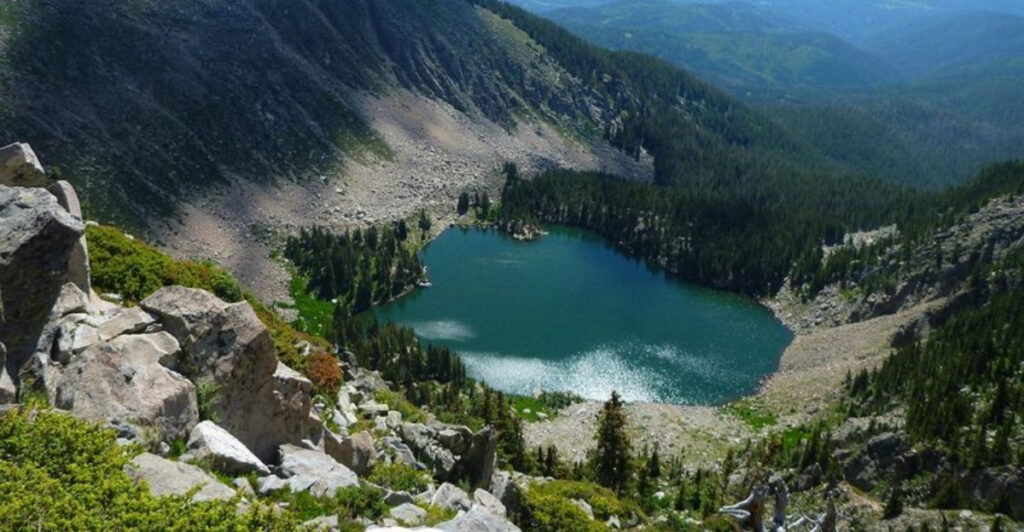
This alpine lake does not roll out an easy welcome, and that makes the arrival feel even better. The trail climbs into the Sangre de Cristo Mountains with rocky steps, forest shade, and long stretches where your breathing becomes the whole soundtrack.
I kept thinking the water had to be close, then the path would rise again. Classic mountain trick.
When it finally came into view, I forgot every complaint. It was clear, bright, and perfectly still, with stones visible under the surface and peaks standing close around it.
The scene felt clean in a way photos barely capture. You want to whisper, even if nobody told you to.
You want to sit down and let the wind do its thing. New Mexico has plenty of places that impress you quickly, but this one builds the moment slowly, then delivers a view that feels personal, hard-earned, and worth the climb.
A Glassy Shoreline Beneath Rugged Peaks
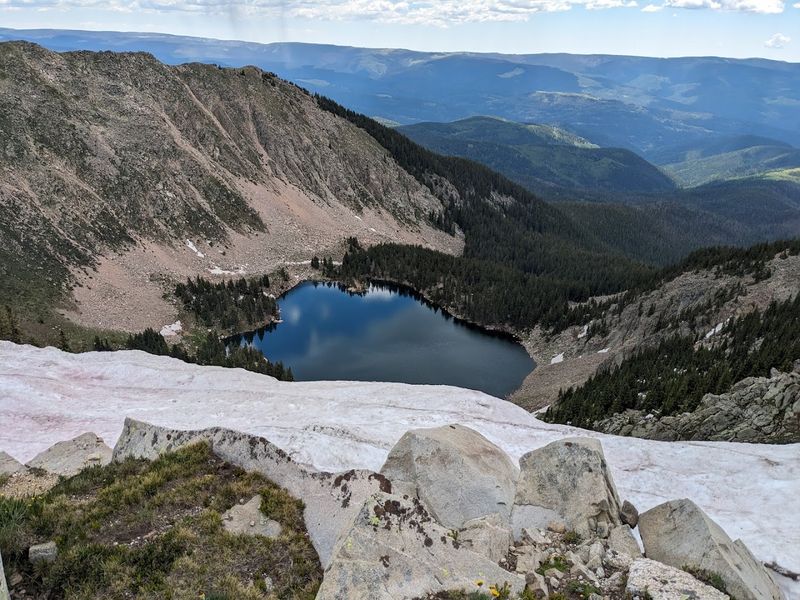
At the edge of the shoreline for the first time, I had to remind myself to breathe.
The water here is not just clear in the way that most mountain lakes are clear.
It sits at a high elevation where wind, cold temperatures, and limited human traffic help keep it in a remarkably clear, still condition.
Looking straight down from the bank, I could see the rocky bottom in vivid detail, every stone visible as if there were nothing between my eyes and the lakebed at all.
The peaks surrounding the basin rise sharply above the waterline, their rugged profiles cutting into the sky with a kind of raw authority that photographs never quite capture.
Granite walls and jagged ridgelines frame the scene on nearly every side, giving the shoreline a dramatic, enclosed feeling that makes the calm water seem even more striking by contrast.
I sat at the edge for a long while, watching the reflection of the cliffs shift slowly as the light changed.
This is Lake Katherine, resting in the Sangre de Cristo Mountains at New Mexico 87506, and its shoreline alone is worth every step of the climb that brings you all the way here.
Where Clear Water Meets High Mountain Silence
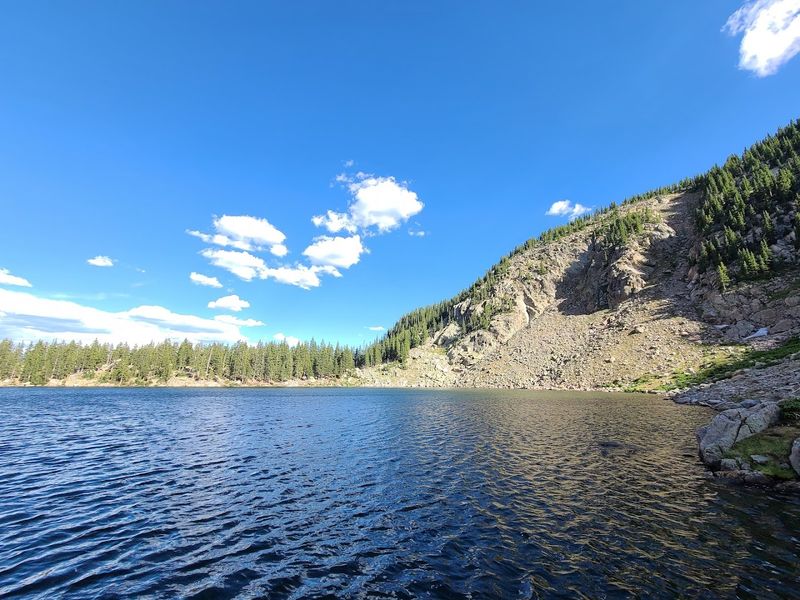
Few places I have visited carry the kind of silence that Lake Katherine holds so naturally.
Up at roughly 11,700 feet, the usual noise of the world does not follow you.
There are no road sounds, no traffic, and no background hum of daily life, just wind brushing across open water and the occasional call of a bird somewhere above the treeline.
The clarity of the water plays into that silence in a way that feels almost intentional, as if the lake is performing its own kind of transparency, hiding nothing and offering everything to anyone willing to look closely.
Cold temperatures at this elevation can help limit algae growth, which is one reason the water stays so remarkably clear through much of the hiking season.
Even in late spring, when snow can cling to areas above 11,000 feet, the lake holds its glassy quality in a way that makes the cold feel worthwhile.
I found myself lowering my voice without thinking about it, matching the mood of the place instinctively.
High-country silence has a texture to it, and Lake Katherine wraps you in that texture the moment you arrive at its banks.
A Remote Alpine Escape Above The Pines
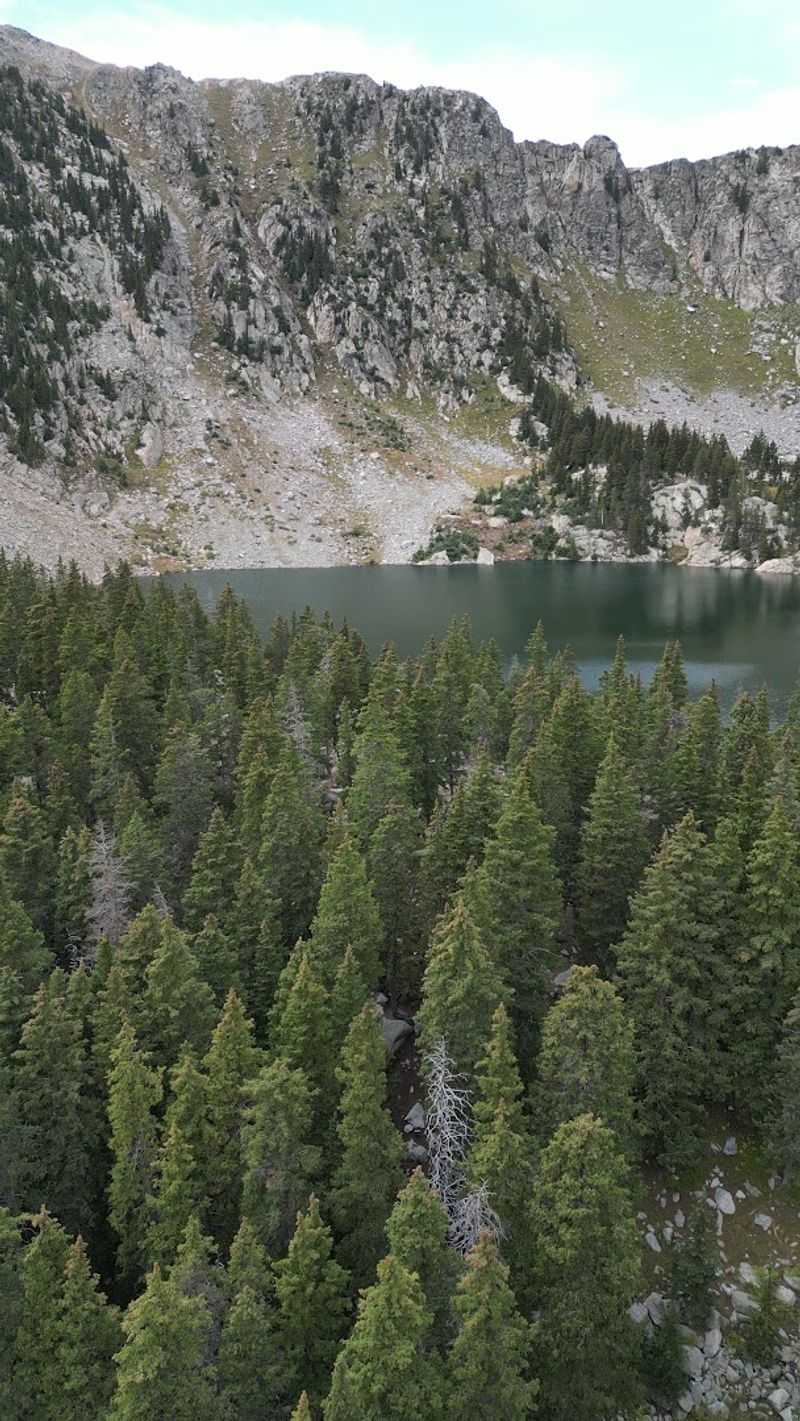
The way up to Lake Katherine is not a casual afternoon outing, and that is honestly a big part of its appeal.
The trail rises steeply from the trailhead, pulling hikers upward through thick stands of spruce and fir before eventually opening into exposed high-country terrain.
That transition from dense forest to open ridgeline is one of the most dramatic moments on the trail, and the views that open up once you clear the pines make the burning legs feel almost irrelevant.
The hike typically takes around seven hours round trip, and the elevation gain is serious enough that hikers with limited experience in mountain terrain should plan carefully and honestly assess their fitness level before committing.
Narrow sections of trail with steep drop-offs on one side demand full attention and confident footing, especially when carrying a loaded backpack for an overnight stay.
I started early in the morning, which is a smart move for avoiding afternoon weather that builds quickly at this altitude and for reaching a legal campsite at least 200 feet from the water.
Once I reached the open country and the lake came into view ahead of me, it felt like cracking open a door to a completely separate world.
Rocky Trails Leading To Still Blue Views
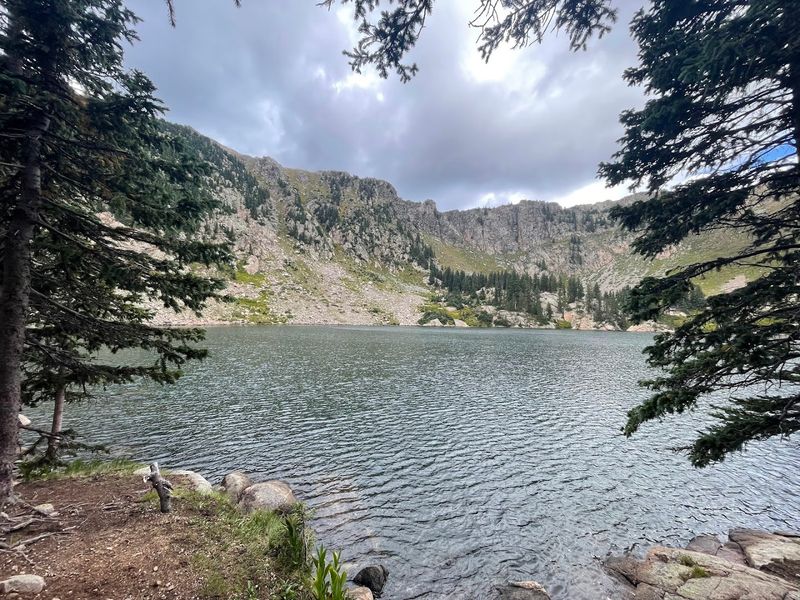
The trail to Lake Katherine does not pretend to be anything other than what it is: demanding and completely honest about the effort it requires.
Switchbacks cut back and forth across steep slopes, and the rocky surface underfoot keeps you focused on each step rather than the scenery around you, at least until the trail levels out near the top.
I counted what felt like dozens of switchbacks before reaching the saddle, and that saddle section is where many hikers feel the full weight of the elevation and the pack on their backs.
Tree roots and fallen logs cross the path in several places lower on the trail, requiring hikers to step over, duck under, or work around obstacles that add a bit of scrambling to an already physical outing.
Trekking poles made a noticeable difference on the steepest sections, and I would not attempt this trail without them again.
Footwear matters here too, since loose rock and uneven surfaces make ankle support a real priority rather than a casual suggestion.
Once I reached the final approach and the trail flattened near the lake basin, the still blue water appeared ahead like a reward that had been quietly waiting for me all morning.
A Quiet Basin Framed By Forest And Sky
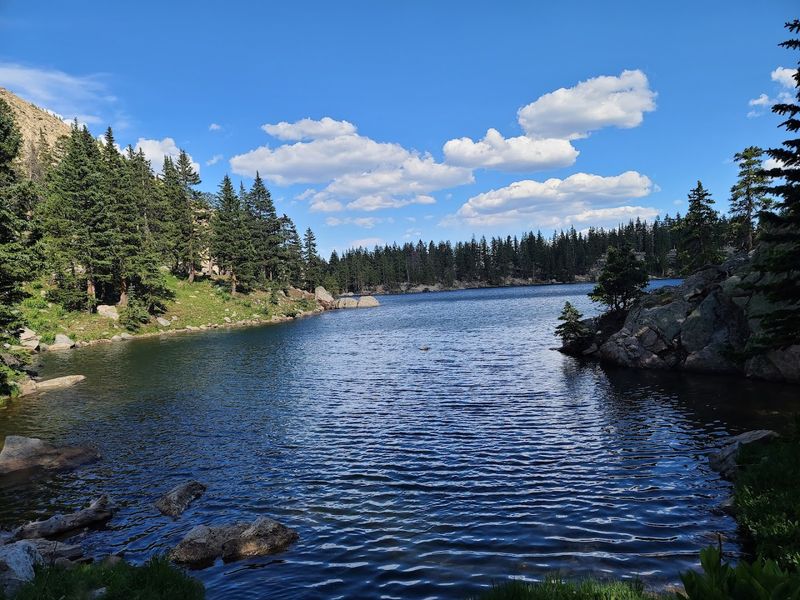
The basin that holds Lake Katherine has a natural architecture to it that feels almost too perfectly arranged to be accidental.
Forest rises on the lower slopes, giving way to open rock and low alpine vegetation as the terrain climbs toward the peaks that ring the upper basin.
Sky fills the space above with a kind of generous openness that only high-altitude places can offer, and on a clear day the blue overhead is so deep it almost looks painted.
A night near the lake puts you inside that frame, and waking up at dawn with the basin holding early light and cold, still air around you is the kind of experience that stays with a person for a long time.
Nights here are truly cold even in summer, so sleeping gear rated for low temperatures is not optional equipment.
I layered up before sundown and was grateful for every piece of insulation I had packed, since temperatures dropped sharply once the sun left the basin walls.
Morning brought mist sitting low over the water, and the forest edge reflected perfectly in the glassy surface in a way that made the whole basin look like it was holding its breath.
Wildflower Meadows And Crisp Mountain Air
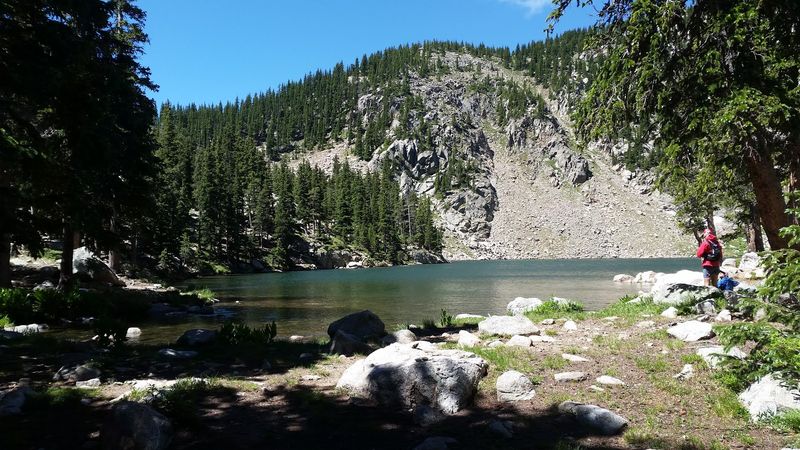
Late summer brings one of the most rewarding surprises along the trail corridor leading to Lake Katherine: stretches of wildflowers scattered across open meadow sections that break up the rocky climb.
Patches of color appear between the trees and along stream crossings, with blooms in yellow, purple, and white standing out against the green and grey of the surrounding terrain.
The air at this elevation carries a crispness that is especially refreshing after the physical exertion of the ascent, each breath feeling noticeably cleaner and cooler than what you left behind at the trailhead.
I stopped at one of the small meadow openings to eat, leaning back against a rock and just taking in the kind of landscape that reminds you why people seek out places like this in the first place.
Wildflowers at high altitude tend to bloom in concentrated bursts due to the short growing season, so timing a visit for mid to late July often rewards hikers with the fullest displays.
The combination of cold clear air, open sky, and scattered color along the trail makes the approach to the lake feel like its own experience, separate from but connected to the destination waiting above.
Reflections That Make The Hike Worth It
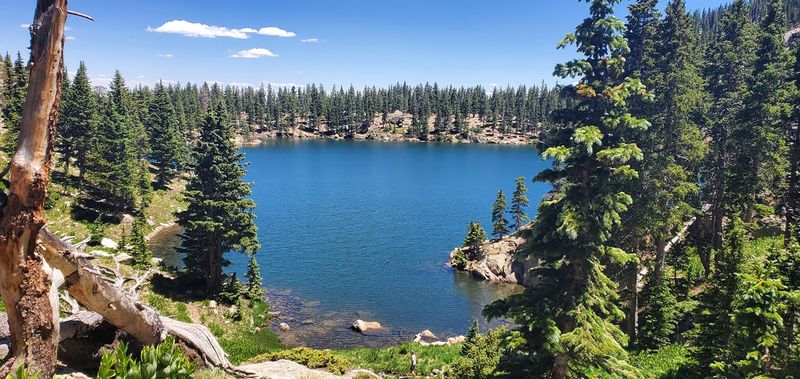
One moment seems to define this hike better than any other: the instant the lake comes fully into view and the reflection stops you in your tracks.
On a calm morning, the surface of Lake Katherine acts as a near-perfect mirror, doubling the peaks and sky above into an image that seems almost too composed to be real.
That reflection is one of the reasons the effort can feel completely worthwhile, even after a seven-hour round trip with elevation gain that tests the legs and lungs in equal measure.
I arrived at the lake just as the early light was warming the rock faces above, and the reflection shifted color with each passing minute, moving from deep shadow tones into gold and then into the bright clarity of midday.
I sat quietly at the edge with a warm drink from my pack, watching the water hold that image without a ripple, and it felt like one of those travel moments that needs no caption or explanation.
The truth is simple: big hike, big payoff, and after standing at that shoreline myself, I would not argue with a single word of that assessment long, long after the trail ends.
A Hidden High-Country Scene Worth Slowing Down For
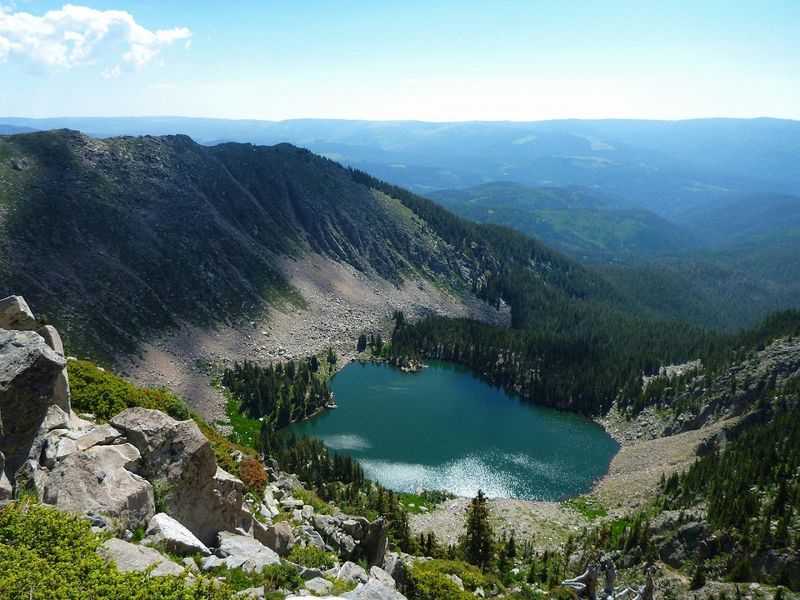
Places that require serious effort to reach tend to hold their visitors differently than places that are easy to access, and Lake Katherine is a clear example of that dynamic.
Hikers who arrive here have earned the view, and that earned quality changes how you experience the stillness, the water, and the surrounding peaks.
People linger longer, speak more quietly, and move with more deliberate attention than they might at a roadside overlook or a paved park path.
The remoteness is part of the reward, and the distance from quick-access routes means the experience stays personal and unhurried in a way that more accessible destinations rarely manage.
An overnight stay helps you absorb what this place offers, as long as you choose a legal campsite at least 200 feet from the water.
The light at dawn and dusk transforms the basin into something different from the midday version most day hikers see.
Bring enough food, water, and warm layers, start early, pace yourself on the switchbacks, and resist the urge to rush the final approach.
This high-country scene does not need improvement or embellishment, it simply needs your full, unhurried attention, and it will return that attention with something memorable.