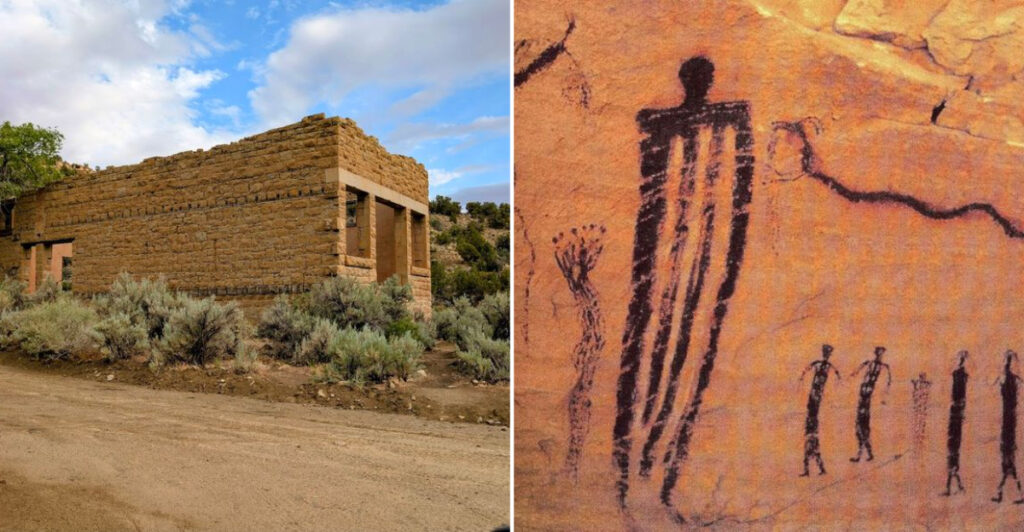
Some roadside detours make you question every time you decided to keep driving. This desert stop is one of those rare places where a quick pull-off turns into a full reset, because the moment you face those canyon walls, the whole landscape starts feeling alive with memory.
In eastern Utah, ancient rock art stretches across stone in a way that feels both massive and intimate, with figures and symbols left by more than one cultural tradition. The scale alone is enough to stop you.
Some panels rise nearly life-size, framed by red rock, open sky, and the hush of a place that asks for attention without demanding it. And the best part?
You do not need a long hike, a reservation, or a ticket to experience it. Across Utah’s canyon country, few free stops deliver this much wonder with so little effort.
The Canyon Itself: A Setting That Does Most of the Work
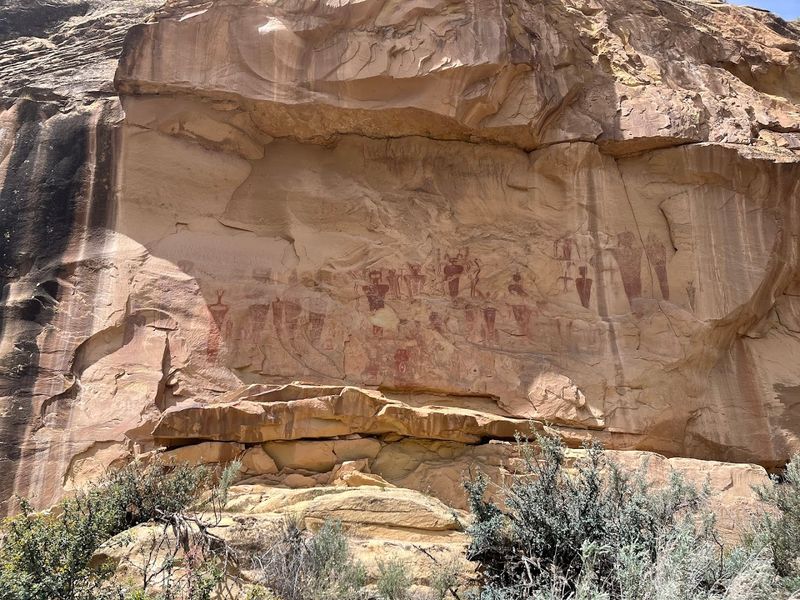
Not every natural backdrop earns its reputation on looks alone, but this spot comes close. The narrow canyon corridor frames the sky in a way that feels almost cinematic, with towering sandstone walls rising on either side as you walk in from the parking area.
The scale catches most visitors off guard.
Standing at the base of those walls and looking up at panels of rock art that stretch well above head height gives you a perspective that no photograph quite captures. The canyon creates its own atmosphere, quiet and unhurried, in a way that makes the drive off the highway feel like a genuine reward rather than a minor detour.
Quick Tip: Visiting near sunset bathes the canyon walls in warm light that makes the imagery on the rock face far more vivid and easier to photograph. Arrive with at least 30 minutes to spare before the light shifts.
The site sits along Sego Canyon Road in Thompson Springs, Utah 84540, and the road in is paved and accessible for standard passenger vehicles. Even on a busy travel day through the region, the canyon itself tends to feel remarkably uncrowded.
Petroglyphs and Pictographs: Two Distinct Art Forms on One Wall
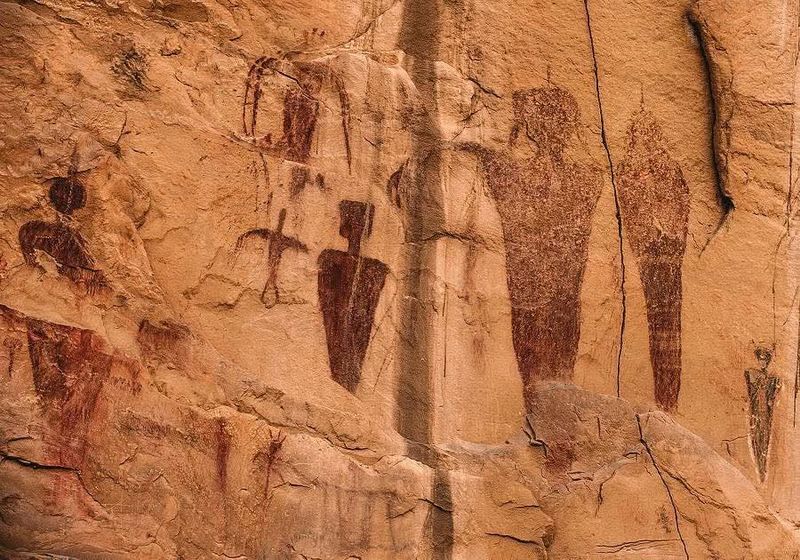
Most people use the word petroglyph and pictograph interchangeably, which is a forgivable mistake until you are standing in front of both on the same canyon wall. Petroglyphs are carved or pecked directly into the rock surface, while pictographs are painted onto it.
Sego Canyon has both, displayed in close proximity.
The distinction matters because it hints at different cultural practices and time periods layered onto the same stretch of stone. Visitors who take a moment to look carefully will notice differences in technique, color, and style that tell a more complex story than a single glance suggests.
Why It Matters: Understanding the difference between these two art forms helps visitors appreciate the site as a multilayered historical record rather than a uniform collection of old drawings.
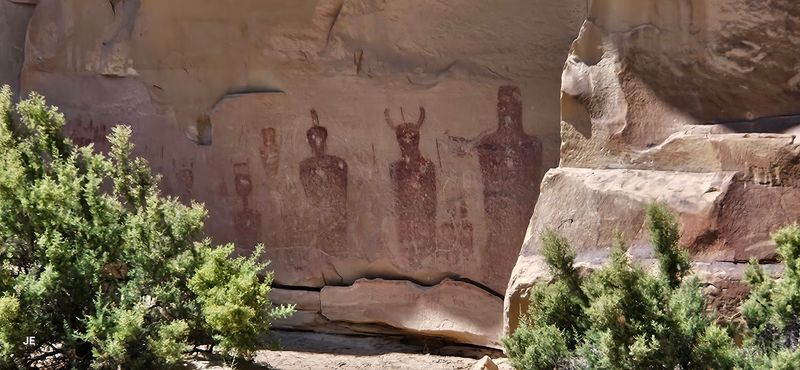
The Barrier Canyon style pictographs here are among the most visually striking, featuring large, elongated figures with haunting detail. The Ute-style imagery adds another cultural layer, making this canyon wall one of the more genuinely instructive outdoor panels in the region.
Bring binoculars if you have them; some details reward a closer look that the required viewing distance does not allow.
The Barrier Canyon Style Figures: Ancient Art That Stops You Cold
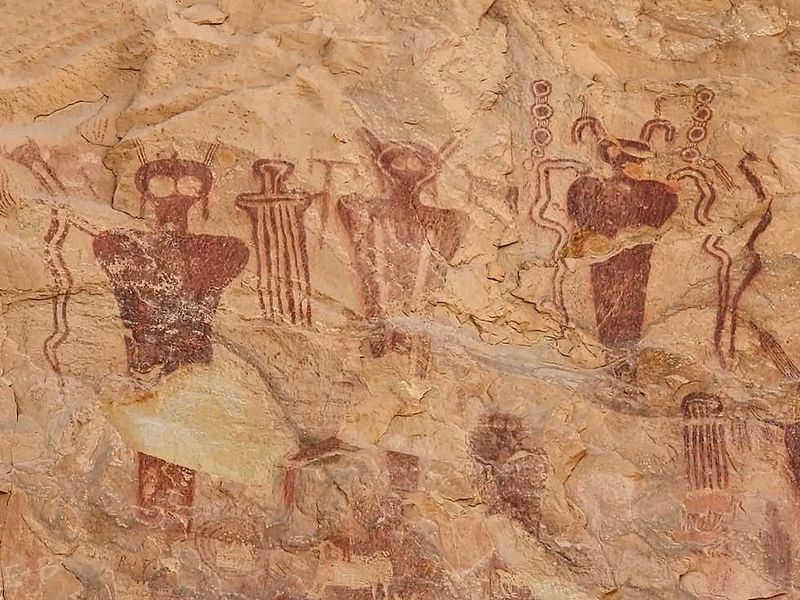
There is a specific kind of quiet that happens when you first see the Barrier Canyon style figures at Sego Canyon. These are not small scratches on a rock face.
They are large, commanding, painted figures with an otherworldly quality that has led more than a few visitors to reach for their phones and then immediately put them back down, because a screen simply does not do them justice.
The style is named for Barrier Canyon, now known as Horseshoe Canyon, and is considered one of the most distinctive and ancient rock art traditions in the American Southwest. The figures at Sego Canyon represent some of the most accessible examples of this style anywhere in Utah.
Insider Tip: The figures are best observed in the morning or late afternoon when angled light catches the pigment. Midday direct sunlight can flatten the visual contrast and make details harder to read.
Researchers estimate some of these paintings could be several thousand years old, though exact dating remains a subject of ongoing study. Standing in front of imagery that old, in the open air, with no admission fee and no rope barrier between you and the wall, is a genuinely unusual experience in the modern world.
Thompson Springs: The Ghost Town You Drive Through to Get There
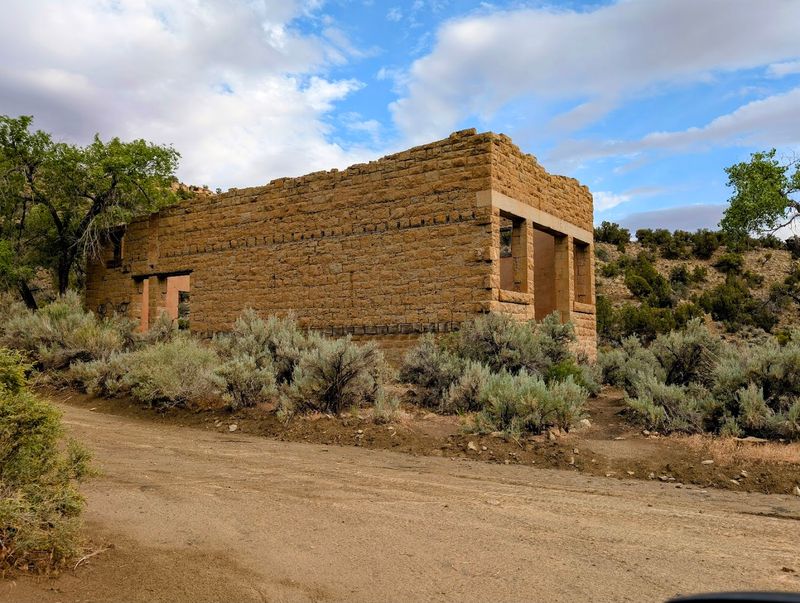
Getting to Sego Canyon requires driving through Thompson Springs, and that short drive is its own minor chapter in the experience. Thompson Springs has the quiet, unhurried character of a community that peaked in an earlier era, with a handful of structures that speak to a livelier past without demanding your full attention.
It functions as a natural transition zone, shifting your mindset from highway speed to canyon pace before you even reach the rock art. The town is small enough that you pass through it in under two minutes, but that brief passage does something useful for the visit ahead.
Best For: Travelers who appreciate context and like understanding the full picture of a place, not just the headline attraction. Thompson Springs adds a layer of regional character that makes the overall stop feel more complete.
One specific small-town cue: the road through Thompson Springs is quiet enough that you will likely be the only car on it, which gives the whole approach a pleasantly unhurried quality. Follow the main road through town, stay on it past the structures, and the canyon entrance comes into view naturally.
No complicated navigation required, just a straight shot through a slice of old Utah.
The Trail Itself: Short, Flat, and Genuinely Manageable
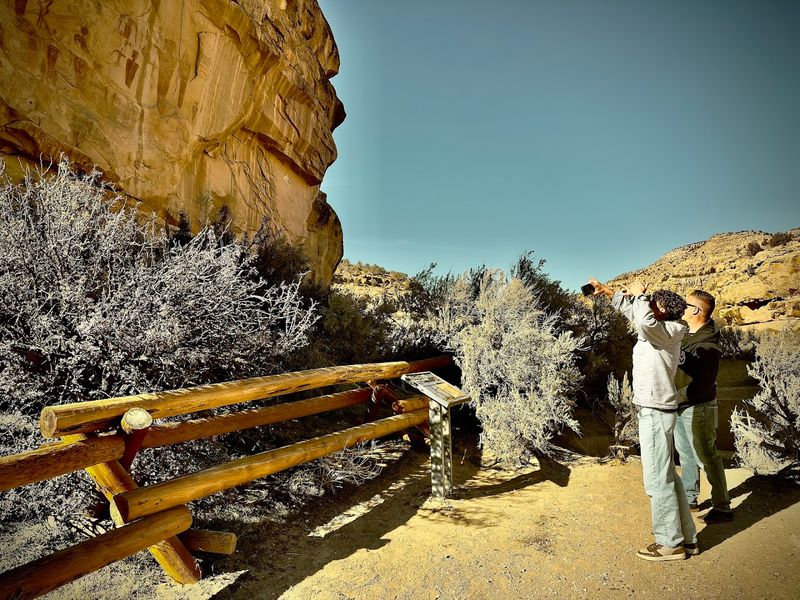
Calling this a trail is generous in the most useful possible way. The walk from the parking area to the main rock art panels is short and flat, making it accessible to a wide range of visitors without any real physical preparation required.
You are not conquering anything here, which is precisely the point.
The path follows the canyon floor, and a small stream runs alongside it in wetter periods. The footing is generally solid, though desert terrain means uneven ground in spots.
Standard walking shoes handle it comfortably; hiking boots are helpful but not necessary for the main panels.
Planning Advice: Keep dogs on a leash and be mindful of water sources along the canyon floor. The stream, while scenic, is not suitable for drinking, for humans or pets alike.
The short distance to the primary panels means even visitors with limited mobility or young children can reach the main attraction without significant effort. The site is designed for easy access, and the interpretive signage along the way adds context that makes the walk feel purposeful rather than just transitional.
Budget 20 to 30 minutes for a comfortable visit, or longer if you want to sit with the canyon and actually absorb what you are looking at.
Visiting for Free: One of Utah’s Best No-Cost Stops
Utah has no shortage of spectacular public land, but free access to a site this historically significant still feels like a minor miracle in an era when every overlook seems to require a pass or a reservation. Sego Canyon charges nothing, requires no permit, and even provides a restroom at the parking area.
That combination of free entry and basic facilities makes it one of the more practical quick stops along this stretch of I-70, especially for families or road trippers managing a budget. The no-cost factor also removes any hesitation about whether the detour is worth the time investment.
Quick Verdict: If you are driving through eastern Utah and have 20 minutes to spare, there is no logical reason to skip this stop. The value-to-effort ratio is essentially unmatched along this corridor.
The site is managed as a public interpretive area, and the on-site signage provides enough context to make the visit self-guided and educational without needing a ranger or guided tour. Parking is available directly at the trailhead, and the overall setup is clean and well-maintained.
For families doing a long road trip through the region, this is the kind of stop that earns a mention at dinner for the rest of the trip.
Preserving What Remains: The Vandalism Problem Worth Knowing About
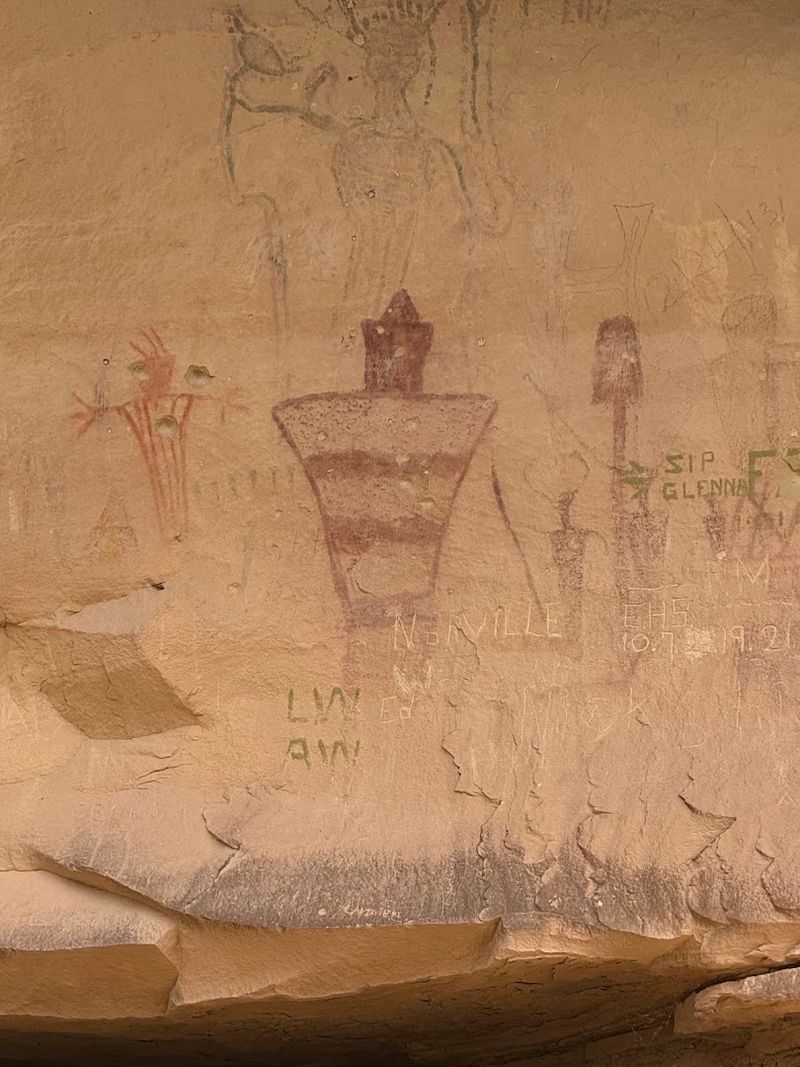
Not everything about Sego Canyon is uncomplicated, and the most responsible thing a feature like this can do is say so plainly. Some of the panels have been vandalized, and the damage is visible.
It is the kind of thing that stops you mid-visit and shifts the mood, because you are looking at irreplaceable cultural material that someone decided to mark up.
The site carries a Leave No Trace ethic, and the interpretive signage reinforces the message clearly. Touching the rock art, even lightly, contributes to degradation over time.
The oils from human hands cause damage that accumulates invisibly and accelerates deterioration of pigment and carved surfaces.
Common Mistakes to Avoid: Do not touch the panels, do not attempt to chalk or trace any imagery, and stay within the designated viewing areas. These are not suggestions; they are the difference between the site surviving for future generations or not.
The vandalism that has already occurred makes preservation all the more critical for what remains intact. Visitors who approach the site with genuine respect tend to leave feeling that they have participated in something meaningful.
Those who treat it casually miss the point entirely. Come with curiosity, leave with nothing but photographs, and the canyon will still be here for the next person who needs it.
Making It a Practical Road Trip Stop Between Green River and Moab
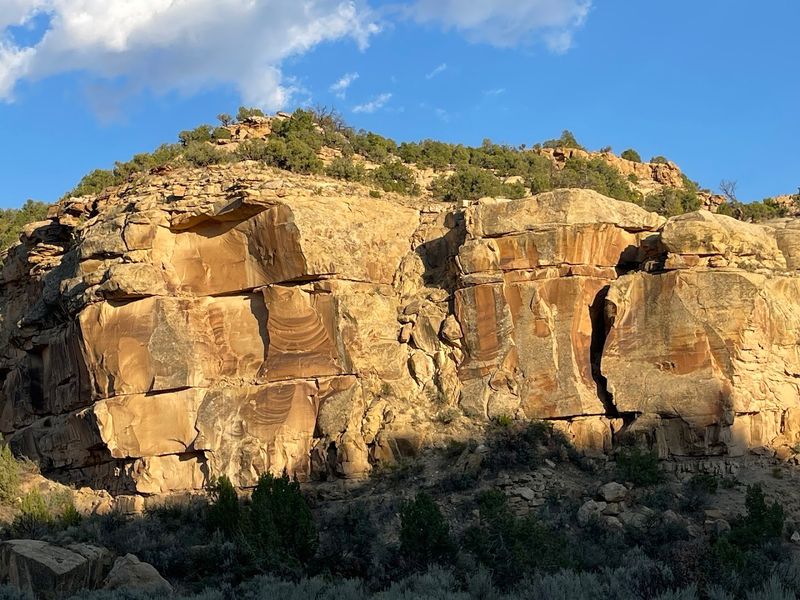
The geographic logic of this stop is almost too convenient to ignore. Sego Canyon sits right off Interstate 70, positioned neatly between Green River and the Moab area, which means it fits naturally into one of the most popular road trip corridors in the American Southwest.
You are not going out of your way; you are simply stopping during a stretch where the highway offers very little else to break up the drive.
The exit to Thompson Springs drops you off the interstate quickly, and the total time from highway to canyon wall and back is well under an hour if you move at a reasonable pace. For travelers headed to Arches or Canyonlands, this is the kind of pre-arrival stop that sets the right tone for the days ahead.
Best Strategy: Pair the Sego Canyon stop with a fuel or food break in Green River before or after, turning two logistical needs into a single efficient stretch of the drive. That way the detour feels like a bonus rather than a disruption.
The road into the site is suitable for standard passenger vehicles, so no special equipment is needed for the primary viewing area. If you continue deeper into the canyon beyond the interpretive site, four-wheel drive becomes advisable, but the main panels are fully accessible without it.
Why This Canyon Stays With You Long After You Leave
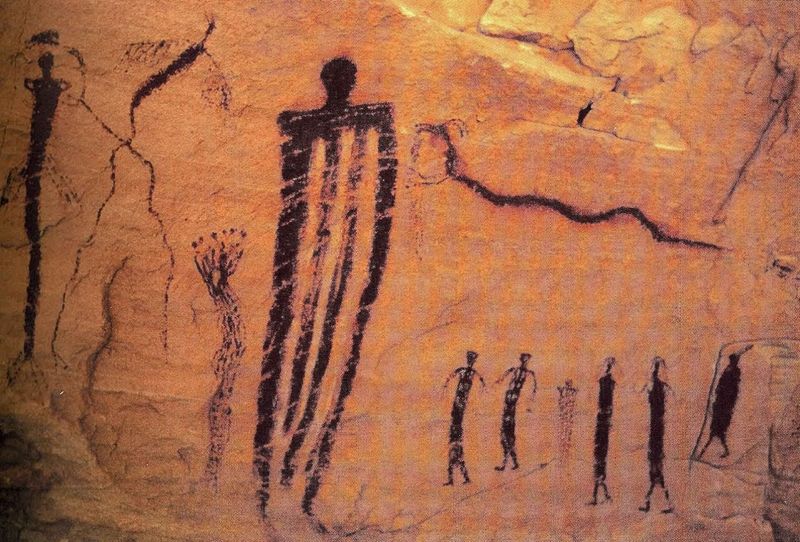
Some places earn their reputation through scale or spectacle. Sego Canyon earns it through accumulated weight, the quiet accumulation of realizing that what you are standing in front of has been there for potentially thousands of years, and that it exists for no commercial purpose whatsoever.
Nobody is selling you anything here.
The panels do not demand interpretation or explanation to land with force. Even visitors who arrive knowing nothing about Barrier Canyon style imagery or Ute cultural history tend to leave with a sense that they have encountered something genuinely old and genuinely significant.
That reaction does not require expertise; it requires only a moment of actual attention.
Who This Is For: Curious road trippers, families looking for a meaningful stop that requires minimal effort, couples who want a shared experience that sparks actual conversation, and solo travelers who appreciate finding something real in an unexpected place.
Who This Is Not For: Anyone unwilling to walk a short flat path or anyone expecting a fully developed visitor center experience. The site is intentionally simple, and that simplicity is a feature, not a limitation.
Come with low expectations and a willingness to look slowly. That is the entire formula.
The canyon handles the rest.