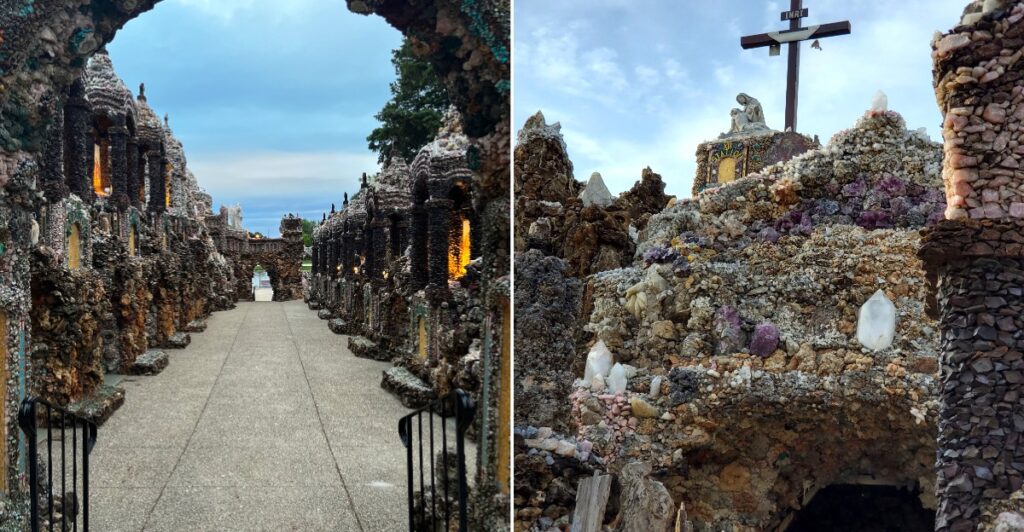
A 300-pound Brazilian amethyst is embedded in the wall above a nativity scene inside a small Iowa church. That alone would be enough to earn a road trip.
It isn’t even the main event.
Next door stands the largest man-made grotto in the world. One priest spent 42 years building it from minerals, fossils, shells, and petrified wood.
The rocks have been estimated to be worth more than four million dollars. I can’t imagine hauling that many stones, let alone fitting them together piece by piece.
I like how this place refuses to hibernate. The outdoor grounds stay open every day of the year, even when November turns the cornfields gray.
The shrine is also known for its nighttime illumination, giving visitors another reason to explore after sunset.
So why let a little chilly weather keep you away from a stone wonder this big?
One Promise Turned Into A Lifetime Of Stacking Stones
Before becoming a priest, German immigrant Paul Dobberstein made a promise. He had recovered from a serious illness and vowed to honor the Virgin Mary in return.
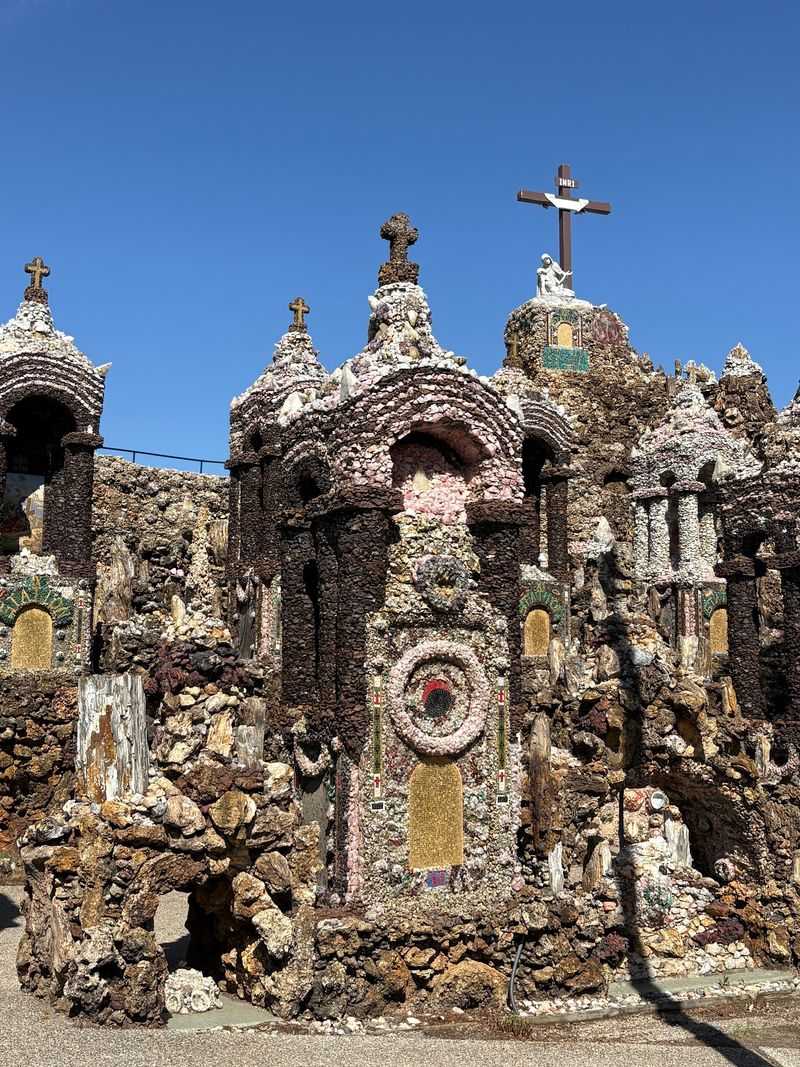
He kept that promise in a very big way. Construction began in 1912, eventually producing the Shrine of the Grotto of the Redemption, now known as the largest man-made grotto on the planet.
Father Dobberstein worked on it for 42 years, until 1954. That’s longer than most people stay at one job, and his job involved lifting rocks.
The work didn’t stop with him. Father Louis Greving and Matt Szerensce carried it forward, and Father Greving added decades of effort.
Do the math, and you get nearly a century of patient hands. It’s hard to picture anyone attempting a project like this today.
Father Dobberstein had two goals in mind. He wanted the grotto to tell the story of redemption, and he wanted it to act as a geological classroom.
Both ideas still shine through today. You can come for faith, for rocks, or simply for the jaw-drop factor.
Knowing the backstory makes every glittering wall feel more personal. Each stone represents a choice someone made, one piece at a time.
Nine Grottos Tell A Story You Can Walk Through
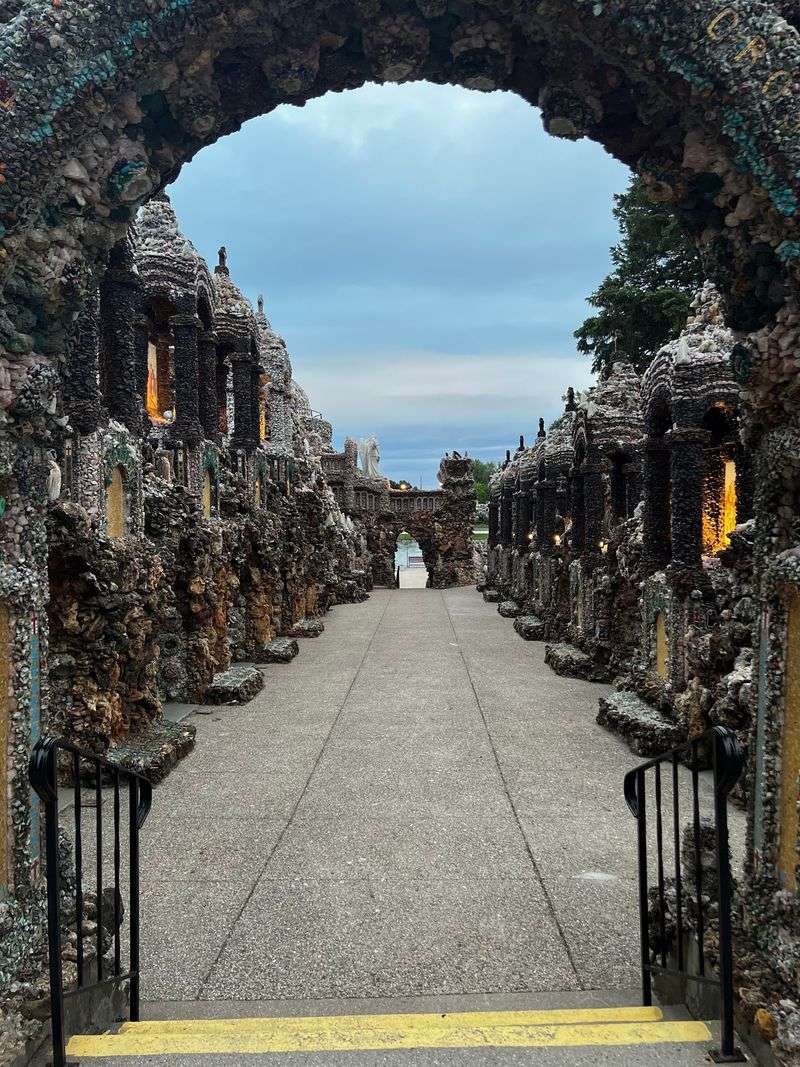
Think of the grotto as a giant storybook made of stone. It holds nine separate grottos, and each one shows a scene from the life of Jesus.
The layout lets you move from one chapter to the next on foot. That turns a simple stroll into something more like reading with your feet.
The scenes aren’t tucked away behind glass. They’re set right into the massive rock structures, framed by sparkling arches and textured walls.
Each grotto has a placard nearby explaining what you’re seeing. That’s handy if you don’t know every story by heart, or if kids start asking questions.
The Stations of the Cross mosaics are another highlight worth slowing down for. The detail packed into them is impressive.
Here’s a smart approach for a first visit. Walk the whole path once to get the big picture, then circle back to your favorite scenes.
The second lap is where small details start popping out. You’ll notice shells, crystals, and colors you completely missed the first time around.
The entire site covers about a city block. That makes it big enough to feel grand, but small enough to explore without a map meltdown.
Rock Lovers Should Probably Clear Their Whole Afternoon
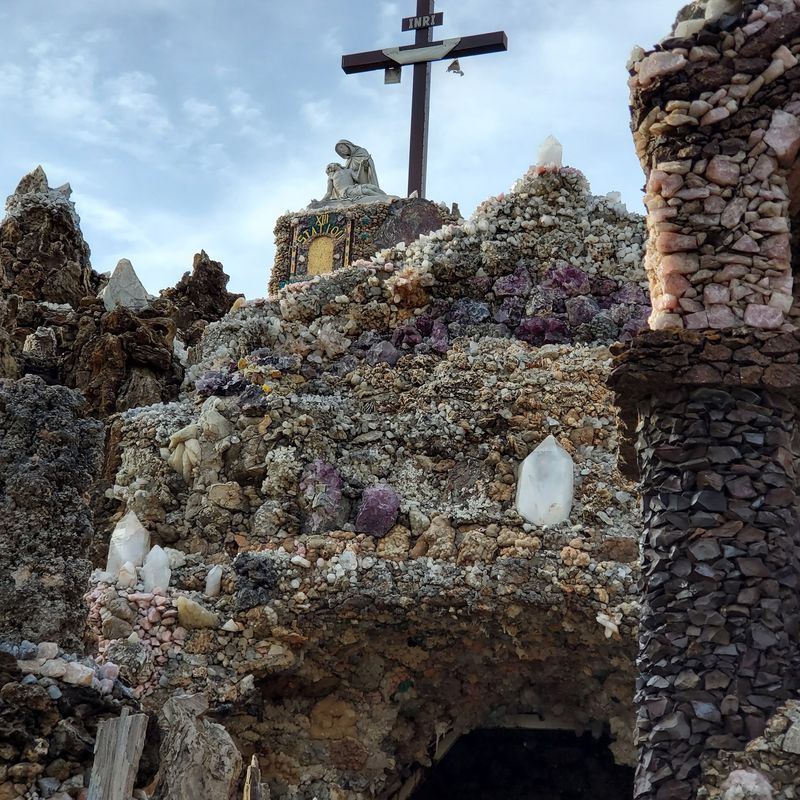
Geodes, quartz, petrified wood, fossils, and seashells all share the same walls here. The grotto holds the most complete man-made collection of minerals, fossils, shells, and petrifactions gathered in one spot.
Its rocks and minerals are valued at more than four million dollars. That’s a lot of sparkle for a small town.
The stones were chosen carefully to fit each scene. Colors and textures work together, so the walls feel planned rather than random.
Bring curious kids along for this part. Even children who claim rocks are boring tend to change their minds when a giant crystal catches the light.
A good tip is to get close, then step back. Up close, you see individual treasures, while from farther away, the full designs come together.
Remember that Father Dobberstein wanted this place to teach geology. It works as a hands-off science lesson, so look closely but keep your fingers to yourself.
Budget extra time if you love minerals. A self-guided visit can run anywhere from 30 to 90 minutes, and rock fans will likely land on the longer end.
Yes, The Grounds Really Stay Open All Year Long
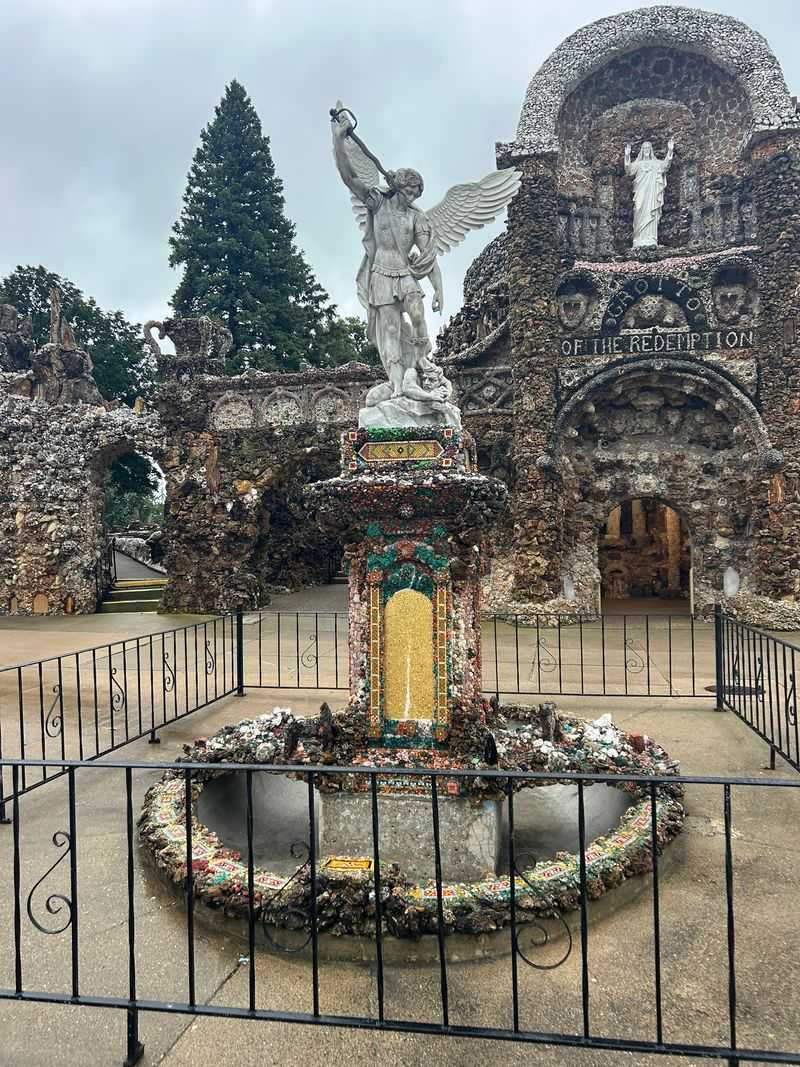
November in Iowa usually means closed signs and shorter days. The Shrine of the Grotto of the Redemption skips that routine.
The outdoor shrine grounds are open 24 hours a day, seven days a week. That includes the entire month of November, plus every other month on the calendar.
Regular guided tours run from April through the end of October. Visitors coming in November can still enjoy a self-guided walk through the outdoor shrine.
Groups can contact the shrine to inquire about special tour arrangements. The staff recommends submitting tour requests at least three weeks in advance.
That’s useful news for church groups, clubs, or family reunions. Plan ahead and confirm what’s available before you go.
The gift shop keeps shorter hours in November, running from 9 a.m. to 4 p.m. Plan your stop accordingly if souvenirs are on your list.
Bundle up, though. The grotto is outdoors, and a late-fall wind across the prairie can feel sharp.
Good shoes, gloves, and a warm hat will keep you comfortable while you explore. A thermos of hot cocoa in the car never hurts either.
There’s a bonus to off-season visits too. Cool, crisp air pairs nicely with a quiet, reflective walk through the stone scenes.
After Dark, The Whole Place Puts On A Glow
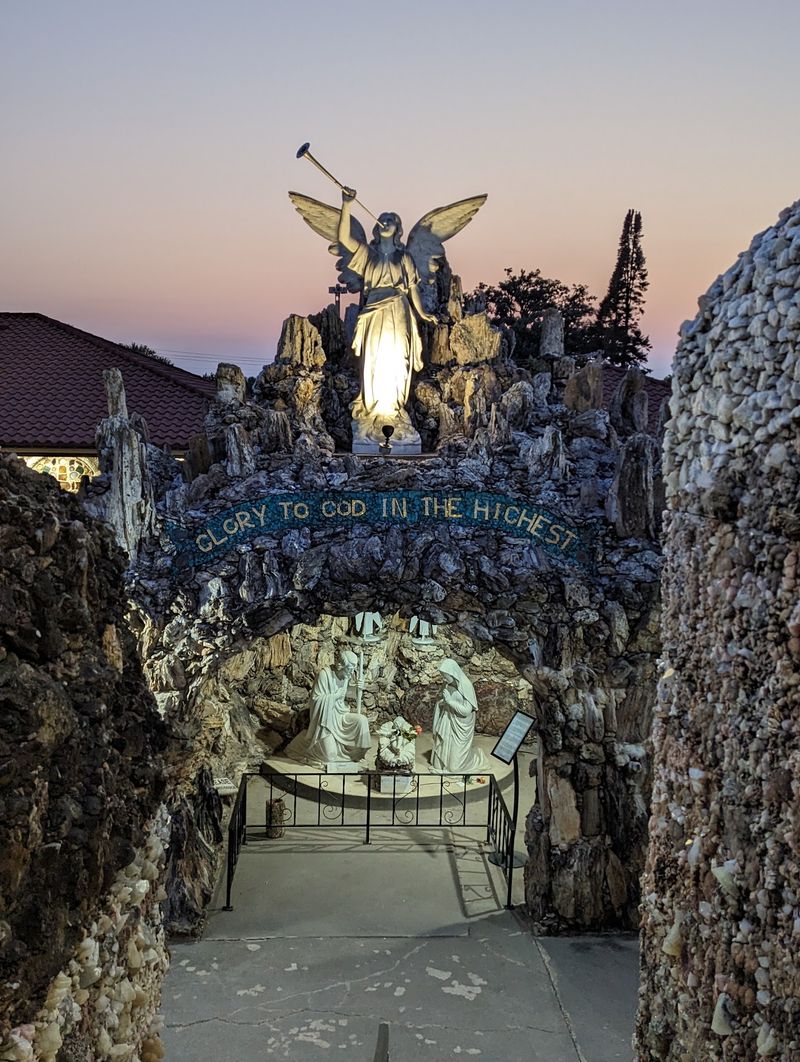
Short November days actually work in your favor here. The grotto is known for its nighttime illumination, so sunset doesn’t necessarily end the fun.
Historical visitor information describes the shrine as illuminated until 10 p.m. Since the current website doesn’t specify an exact lighting cutoff, confirm the evening schedule before planning a late visit.
That gives you two very different ways to see the same place. Daylight shows off the colors and textures of the stones.
Nighttime lighting changes the mood completely. The structures take on a softer, more dramatic look against the dark sky.
If you can manage it, try visiting both times. Arrive in the late afternoon, explore in daylight, and stay until the lights become visible.
That plan lets you compare the two views without making a second trip. It also stretches a short fall day into a full evening outing.
Photographers will want to bring a steady hand or a small tripod. Lit stonework can look stunning in pictures, but low light rewards patience.
Dress even warmer for an evening walk. Temperatures drop quickly once the sun goes down in late fall.
Families with young kids might enjoy this option most. A glowing stone wonderland after supper feels a little magical, no matter your age.
The Museum Fills In The How Did They Do This Questions
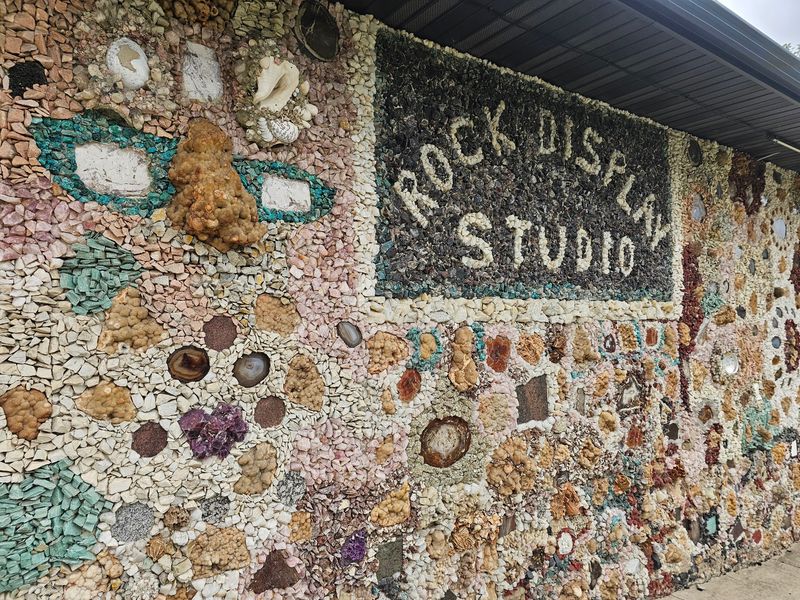
Sooner or later, everyone wonders how one priest built something this enormous. The on-site museum helps answer that question.
It showcases precious and semi-precious stones from around the world. The displays give you a closer look at gems you might never see otherwise.
You’ll also find photographs and artifacts from the grotto’s construction. These pieces show the long, hands-on process behind the finished walls.
Seeing old photos makes the scale even more impressive. Remember, this work happened without modern shortcuts.
The museum is a great stop for students and history buffs. It connects the art, the faith, and the geology into one clear story.
Pair it with the gift shop for a complete visit. Just keep the November shop hours of 9 a.m. to 4 p.m. in mind.
A tip for planners is to visit the museum first. Learning the backstory upfront makes the outdoor walk feel richer.
Once you know the effort involved, you’ll look at every crystal differently. Some might even call it an Eighth Wonder of the World, and plenty of people already do.
Free To Enter, But Your Donation Keeps It Shining
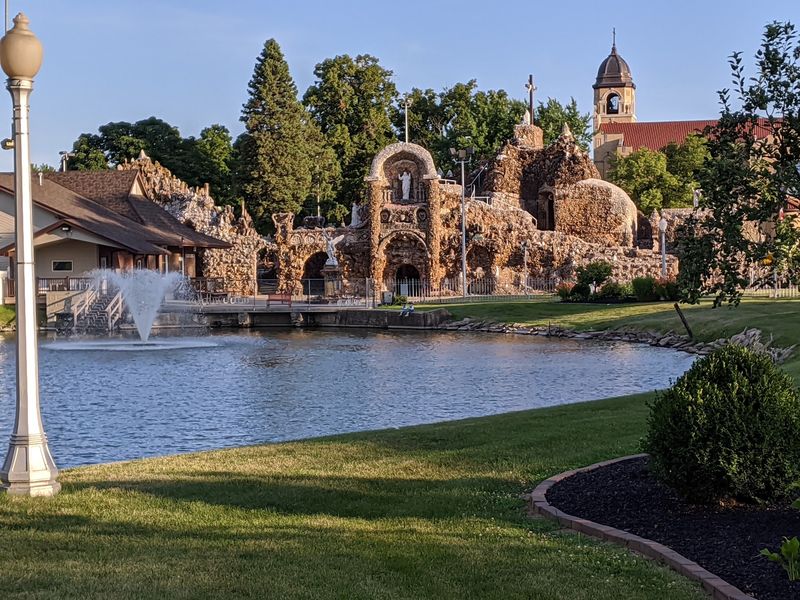
Good news for budget travelers. There’s no required admission fee to explore the grotto.
Donations are gratefully accepted instead. That money supports ongoing maintenance, which matters a lot for a structure made of countless tiny stones.
Weather and time wear on any outdoor landmark. Gifts from visitors help keep the colors bright and the walls in good shape.
You’ll find the shrine at 208 1st Ave NW, West Bend, IA 50597. The town is small, so the grotto is easy to locate once you arrive.
The grounds also include a pond and a campground with 53 sites for campers and tents. Unlike the year-round shrine, the campground normally closes around November 1, depending on weather conditions.
There are also restrooms on site. That’s a welcome detail after a long drive across Iowa.
Plan for anywhere from 30 to 90 minutes on a self-guided visit. For organized groups, the shrine recommends allowing around three hours for the tour, a meal, and time to explore the museum, church, and gift shop.
Either way, drop a little something in the donation box. Consider it your thank-you note to a century of stonework.
Make It A Road Trip Worth Bragging About
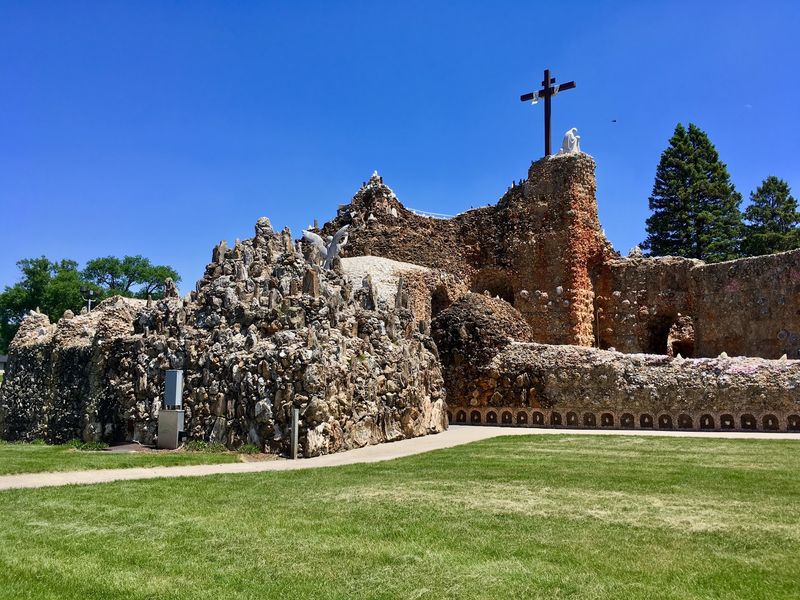
Miles of harvested fields roll past on the drive to West Bend. Then, suddenly, a glittering stone masterpiece shows up in a quiet Iowa town.
That contrast is part of the fun. Few road trips deliver a surprise quite this sparkly.
The Shrine of the Grotto of the Redemption was added to the National Register of Historic Places on February 23, 2001. That recognition puts it on a short list of truly special American sites.
It’s a great day trip for families, couples, or solo explorers. You don’t have to be religious to appreciate the craftsmanship and patience on display.
Pack a few road snacks and a fully charged phone for photos. Bring layers too, since November weather can swing quickly.
Try timing your arrival for mid-afternoon on a weekday. You’ll catch daylight, the gift shop, and the evening lights in one visit.
Leave yourself room to linger. Rushing through a place built over almost a hundred years feels a bit backward.
When friends ask about your weekend, you’ll have a better answer than errands. Few stories beat a four-million-dollar rock garden in the middle of farm country.