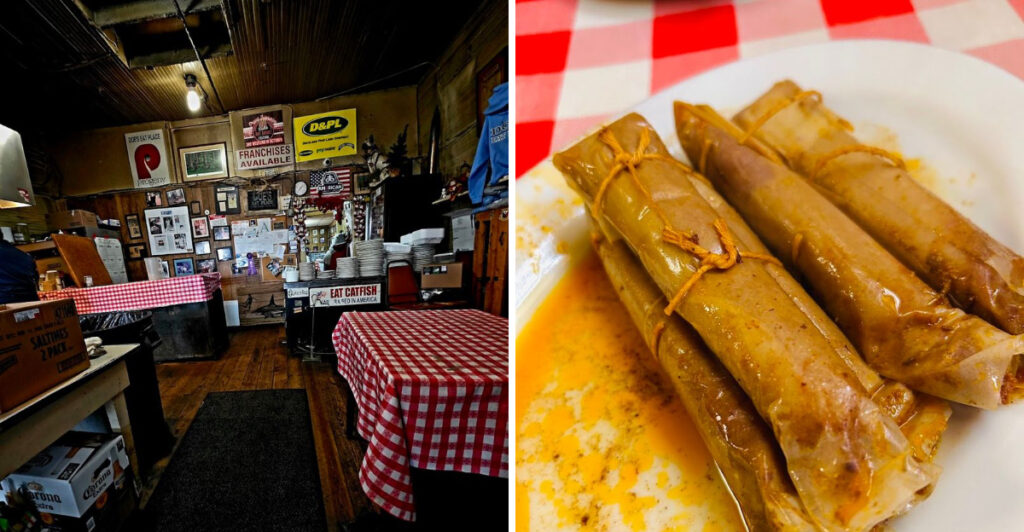
Mississippi Delta food does not need polishing to leave a mark. That is what makes a place like this so easy to remember.
The room feels lived in, the menu stays focused, and the tamales carry the kind of reputation that only builds over a very long time.
You are not showing up for a slick dining scene or a trend-heavy experience. You are showing up for something older, steadier, and a lot more rooted than that.
The draw starts with the food, then gets bigger.
There is history in the building, personality in the setup, and a sense that this spot has been doing things its own way for so long that changing now would miss the point. In Mississippi, places like this do more than feed people well.
They hold onto tradition in a way that still feels active and alive. By the end of the meal, Mississippi stops feeling like a backdrop and starts feeling like the whole story.
The Story Behind The Tamale Tradition In The Mississippi Delta
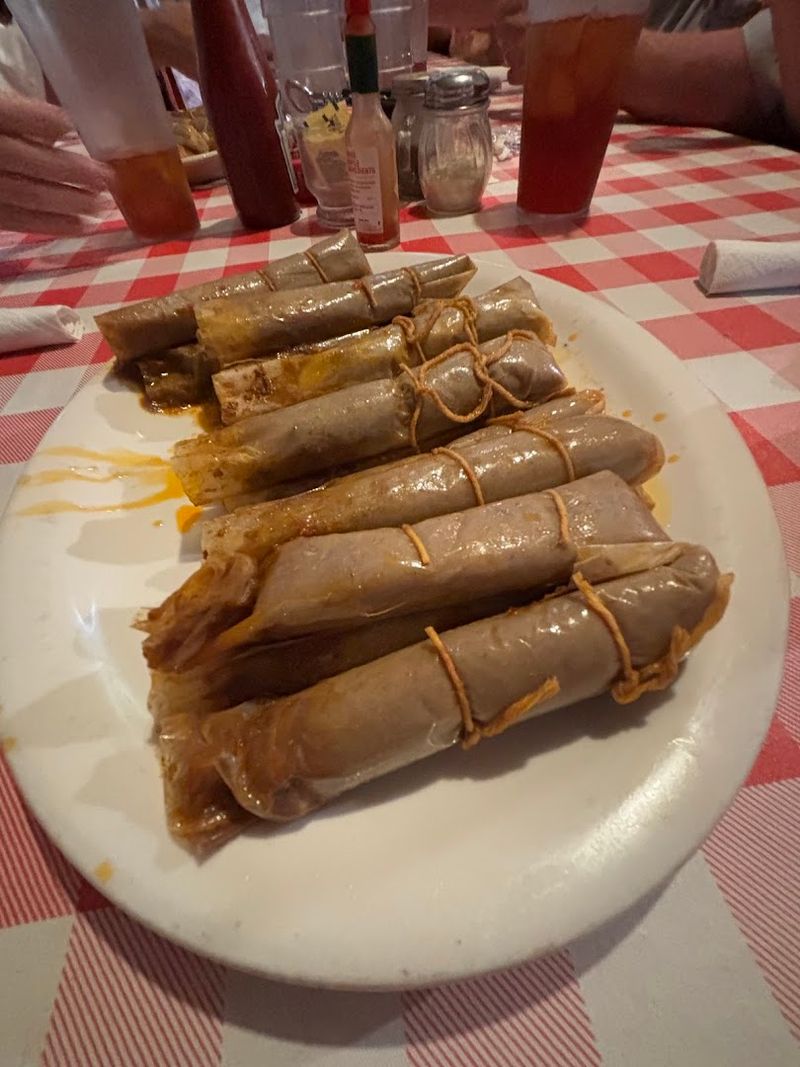
Hot tamales in the Mississippi Delta are not what most people expect. These are smaller, spicier, and made with cornmeal rather than the masa used in traditional Mexican tamales, giving them a completely different texture and bite.
The origins of this regional dish are layered and fascinating. One widely held theory suggests that Mexican migrant workers who came to the Delta in the early twentieth century shared their tamale-making traditions with African American laborers, and from that cultural exchange, a uniquely Delta version of the dish was born.
Other perspectives point to soldiers returning from the Mexican-American War, or even to roots in indigenous Native American cooking. Whatever the true origin, the Delta hot tamale became its own distinct thing entirely.
It is deeply tied to the land, the people, and the rhythms of life along the Mississippi River. Understanding this background makes every bite at a place like Doe’s Eat Place feel like more than just a meal.
It feels like a connection to something genuinely rooted and real.
What Makes Doe’s Eat Place Different From Any Other Restaurant
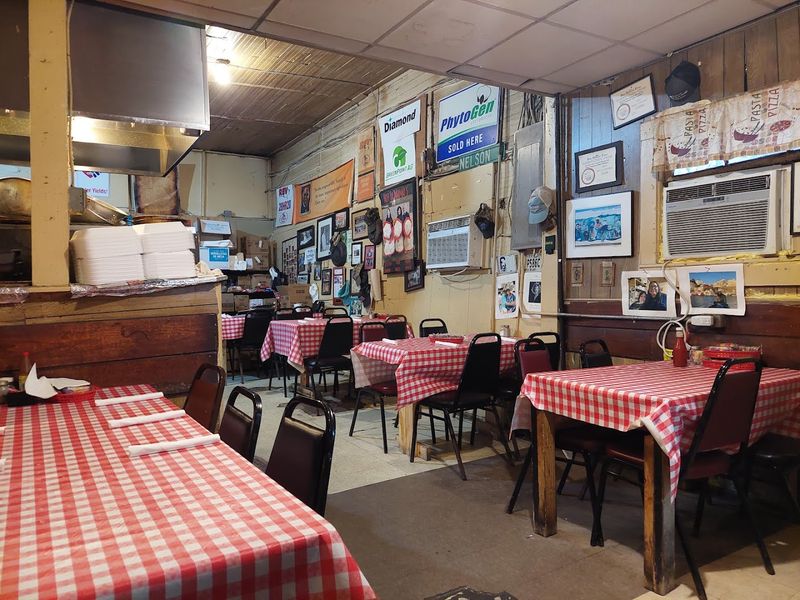
Not every legendary restaurant looks the part from the outside. The building at Doe’s Eat Place, located at 502 Nelson St, Greenville, MS 38701, is unpretentious and worn in a way that feels honest rather than neglected.
Guests actually walk through the kitchen to reach their seats, which means the sights and smells of cooking hit before anyone even sits down. That is not an accident or a quirk, it is just how the place has always worked, and it creates an atmosphere that no interior designer could replicate.
The menu is famously minimal, which is actually a sign of confidence rather than limitation. When a kitchen focuses on doing a small number of things exceptionally well, the results tend to speak clearly.
Doe’s Eat Place has earned a James Beard America’s Classics Award, which is one of the highest recognitions in American food culture, and yet the space itself remains casual and completely without pretension. That contrast is a big part of what draws people from hours away just to sit down and eat here.
The Hot Tamales That Keep People Coming Back
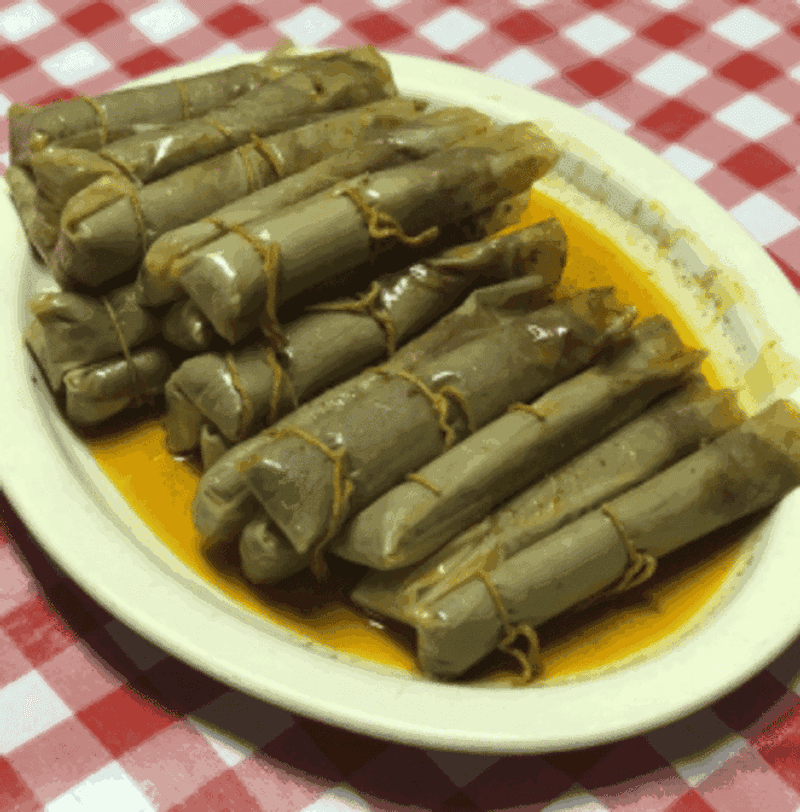
Hot tamales at Doe’s Eat Place are the kind of dish that gets mentioned in the same breath as the steaks, which says a lot. They are served as an appetizer, and for many regular visitors, ordering them first is simply non-negotiable.
Delta-style tamales are boiled rather than steamed, which gives them a softer, more yielding texture compared to their Mexican counterparts. The spice level tends to carry a real kick, and the cornmeal wrapping absorbs the cooking liquid in a way that makes each one feel dense and satisfying.
Crackers are typically served alongside, which is a classic Delta pairing that might seem simple but actually balances the richness of the tamale really well. The dish reflects the region’s culinary identity in a way that feels completely unforced.
There is no attempt to modernize or elevate it into something trendy. It is served the same way it has been served for generations, and that consistency is precisely what makes it so meaningful to the people who grew up eating it.
Walking Into The Kitchen Before You Even Sit Down
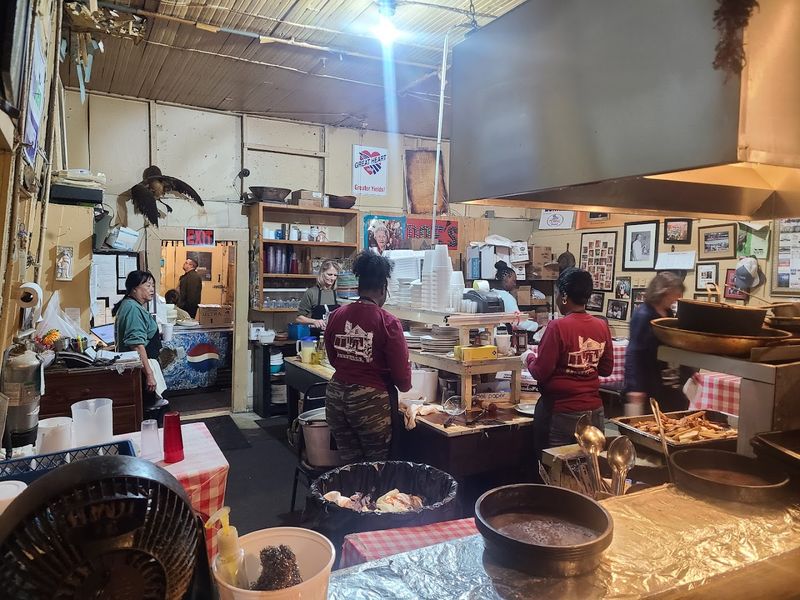
There are not many restaurants in the country where the kitchen is literally the first thing guests pass through on the way to their table. At Doe’s Eat Place, that is exactly the experience, and it sets the tone for everything that follows.
The grill is right there, seasoned from decades of use, and the smells of searing beef and simmering tamales fill the air immediately. It is sensory and immediate in a way that most dining experiences simply are not.
There is no curtain between the cooking and the eating, which creates a kind of transparency that feels refreshing.
Memorabilia lines the walls, and the overall space feels like it has accumulated its character organically over many years rather than being designed to look a certain way. Tables are simple, lighting is functional, and the noise level tends to be lively without being overwhelming.
Seating sometimes happens in the kitchen area itself, which gives diners a close-up view of the cooking process. It is one of those rare atmospheres that genuinely cannot be manufactured or reproduced anywhere else.
The Steaks That Have Built A Decades-Long Reputation
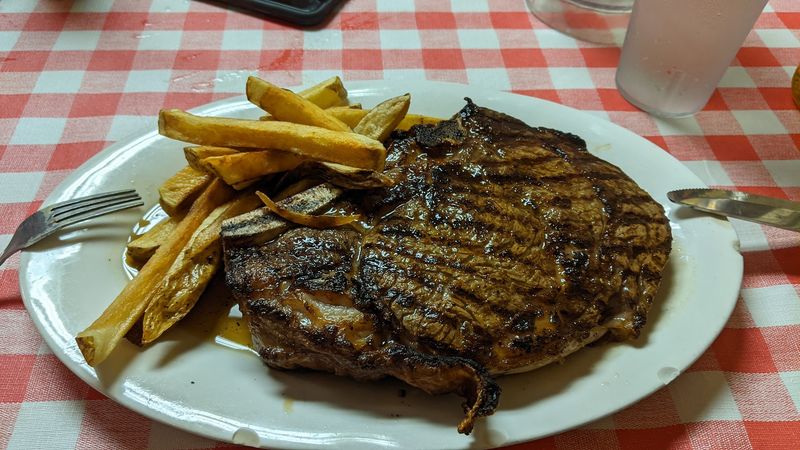
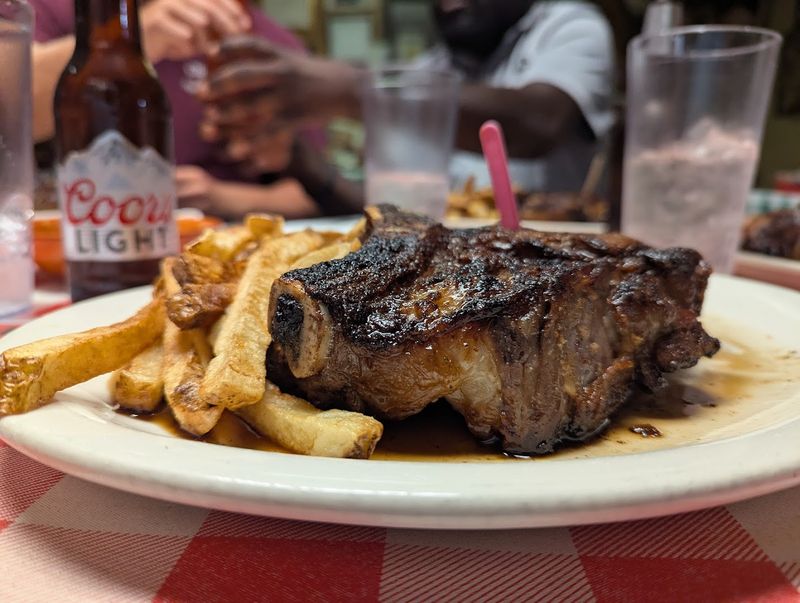
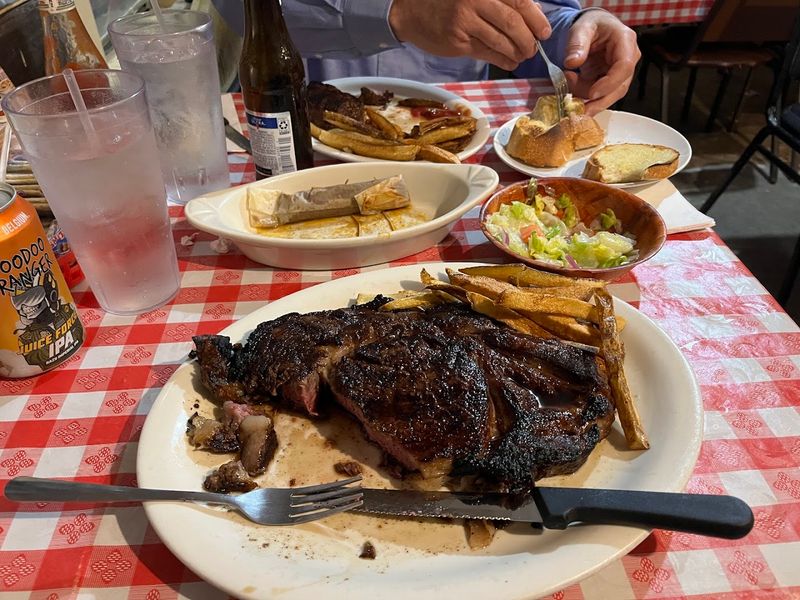
Steaks at Doe’s Eat Place are not small. The portions are generational in size, with cuts like the porterhouse often large enough to be shared comfortably between multiple people.
This is not a place where the steak arrives looking decorative on a wide plate with artistic sauce drizzles.
The beef is cooked to order, seasoned with care, and served in a straightforward way that lets the quality of the meat speak for itself. The filet tends to be notably tender, and the strip cuts carry a depth of flavor that comes from both the quality of the beef and the seasoning of a grill that has been used for a very long time.
Homemade fries accompany the meal, and they have their own reputation among regulars. The salad is simple, dressed with lemon and oil, and served with Melba toast or bread.
None of it is elaborate, but all of it is consistent, which matters enormously in a restaurant that people drive hours to visit. The focus here is on substance, not spectacle, and that philosophy runs through every dish on the menu.
The Broiled Shrimp That Surprises First-Time Visitors
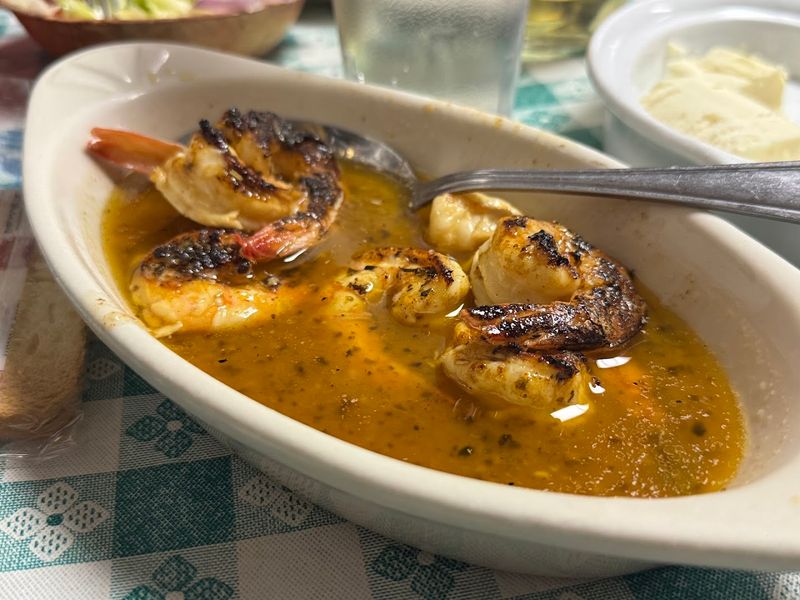
Shrimp might not be the first thing that comes to mind when thinking about a Mississippi Delta steakhouse, but the broiled shrimp at Doe’s Eat Place has developed its own loyal following. It is listed as an appetizer, but the portion size and flavor tend to make a strong impression.
The shrimp are prepared with garlic and served alongside bread, which is ideal for soaking up the cooking juices. The texture is tender without being overdone, and the garlic presence is noticeable but not aggressive.
Fried shrimp is also available, and both preparations have their advocates among regular visitors.
For those arriving expecting only steak and tamales, the shrimp can genuinely be the unexpected highlight of the meal. It is the kind of dish that gets mentioned when people recount their visit, often with a level of enthusiasm that catches first-timers off guard.
The simplicity of the preparation is intentional, and it reflects the same kitchen philosophy that runs through everything else at Doe’s Eat Place: use good ingredients, cook them well, and do not complicate what does not need to be complicated.
The Minimalist Menu And Why It Works So Well
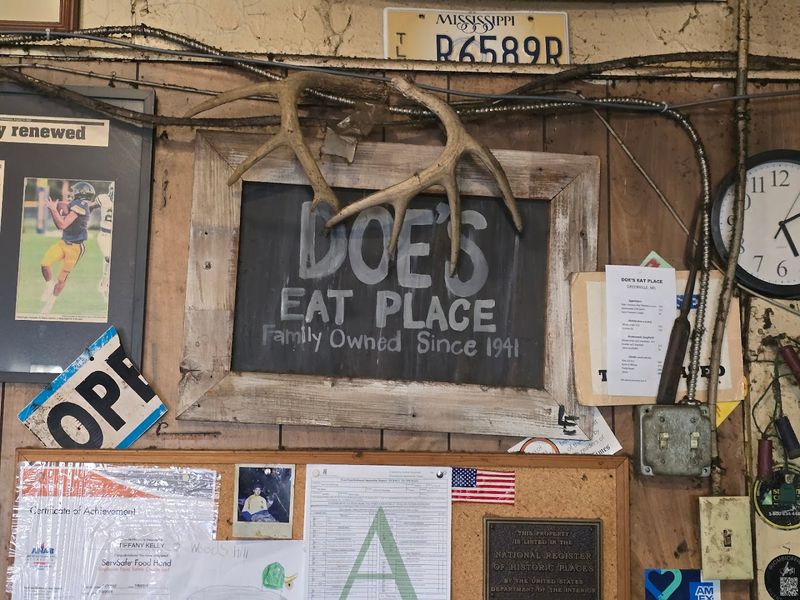
Doe’s Eat Place does not offer a sprawling menu with dozens of options. The choices are limited to a small core of dishes, and that restraint is one of the most telling signs of a kitchen that truly knows what it is doing.
Steak, tamales, shrimp, salad, spaghetti, and fries essentially cover the full range of what is available. That might sound limiting, but in practice it means the kitchen has refined each dish over many years without distraction.
Every plate that comes out has been made countless times before, which builds a kind of consistency that is genuinely hard to find.
For guests who are used to menus with extensive options, the simplicity can feel surprising at first. It is worth reviewing the available dishes before arriving, since printed menus are not always distributed at the table.
Knowing what to expect ahead of time helps make the ordering process feel relaxed rather than rushed. The menu’s narrowness also encourages sharing, which tends to make the whole experience more social and enjoyable for groups visiting together.
The Cultural Roots That Give The Food Its Meaning
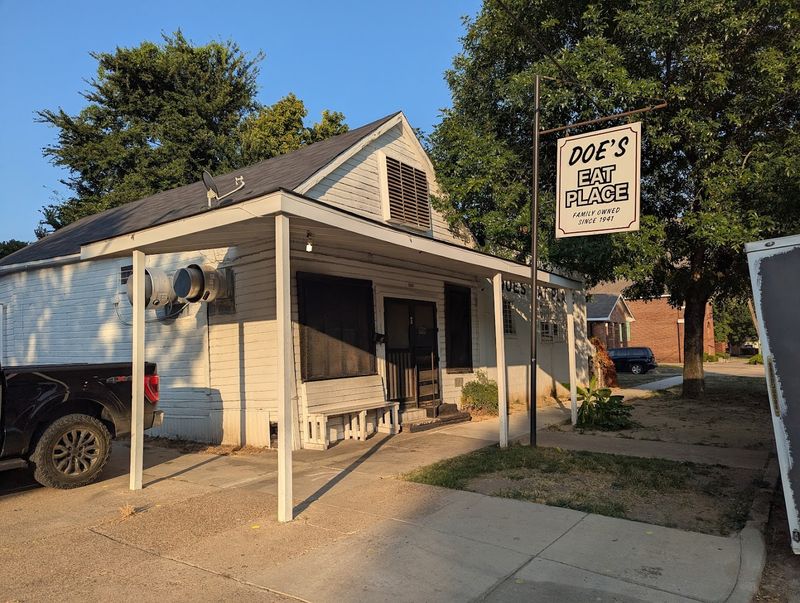
Food in the Mississippi Delta carries weight that goes beyond flavor. The region has a layered cultural history shaped by African American, Mexican, and Native American influences, and the hot tamale is one of the most visible examples of how those threads came together in a single dish.
At Doe’s Eat Place, the tamale is not presented as a novelty or a historical curiosity. It is simply on the menu, served the way it has always been served, because it belongs there.
That kind of continuity is rare, and it gives the restaurant a sense of authenticity that cannot be replicated by places that adopt traditions without the history behind them.
The Delta as a region has produced an outsized cultural contribution to American music, food, and storytelling, and restaurants like this one are part of that legacy. Eating here connects visitors to something larger than a single meal.
The tamale tradition at Doe’s Eat Place is a living thread in the fabric of Delta identity, and every plate served is a small act of preservation that keeps that history tangible and present.
The Atmosphere That No Renovation Could Improve
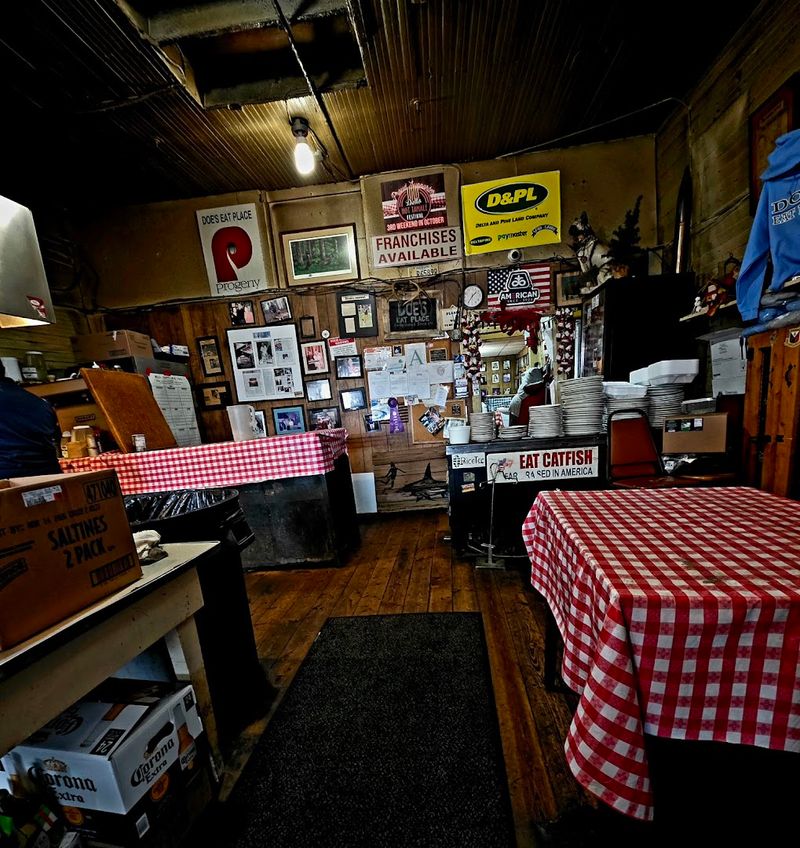
There is something genuinely irreplaceable about a space that has not been updated just for the sake of looking current. The interior of Doe’s Eat Place reflects decades of actual use, and that lived-in quality gives it a texture that newer restaurants spend years trying to fake.
Memorabilia covers the walls, the furniture is functional rather than stylish, and the lighting is warm without being atmospheric in a calculated way. The overall effect is a space that feels completely real, where the priority has always been the food and the people rather than the presentation of the room.
Noise levels during busy evenings can be lively, which adds to the energy rather than detracting from it. The pace of service tends to be unhurried, which suits the experience of being somewhere that is not trying to turn tables quickly.
For visitors used to polished dining environments, the contrast can take a moment to adjust to, but most people find that the food and the overall feeling of the place more than compensate for anything the decor lacks in conventional polish.
What To Expect When Planning A Visit

Planning ahead makes a visit to Doe’s Eat Place considerably smoother. The restaurant operates during evening hours on select days of the week, and it can fill up on busier nights, so arriving with a sense of timing and patience is genuinely helpful.
The dress code is relaxed and casual, which fits the overall character of the space. There is no need for formal attire, and the crowd on any given night tends to be a mix of locals and visitors who have made the trip specifically because of the restaurant’s reputation.
Parking in the surrounding area of Nelson Street is generally manageable, though busier evenings may require a short walk. Reviewing the menu options before arriving is a practical step, since printed menus are not always available at the table.
Going with a group, if possible, allows for sharing across multiple dishes, which tends to be the most satisfying way to experience the full range of what the kitchen offers.
The James Beard Award And What It Means For A Place Like This
Winning a James Beard Award is not a small thing. It is one of the most respected recognitions in American food culture, and it carries genuine weight in culinary circles.
For a modest, no-frills restaurant in the Mississippi Delta, receiving that kind of acknowledgment is a remarkable statement about what can be achieved through consistency and authenticity.
The award did not change how Doe’s Eat Place operates. The menu stayed the same, the kitchen kept its rhythm, and the tamales continued to be made the same way they always have been.
That refusal to shift in response to outside recognition is itself a form of integrity that is worth noticing.
For visitors who appreciate the context, knowing that this place has been recognized at that level adds a layer of meaning to the experience without making the restaurant feel self-important. The award sits in the background of the story rather than at the front of it.
The food and the atmosphere remain the main event, and the recognition simply confirms what the Delta has always known about this particular corner of Greenville.
Why People Drive Hours Just To Eat Here
Destination dining is a real phenomenon, and Doe’s Eat Place is one of the clearest examples of it in the American South. Visitors regularly make multi-hour drives specifically to eat here, and accounts of those trips often describe the journey as entirely worthwhile.
Part of what justifies that kind of effort is the combination of things that cannot be replicated elsewhere. The tamales carry a regional identity that is specific to the Delta.
The steaks are large, well-seasoned, and cooked on a grill with decades of accumulated seasoning. The atmosphere is genuinely unique in a way that feels accidental rather than engineered.
The other part is simply the feeling of eating somewhere that has meant something to a community for a very long time. There is a warmth to the service and a groundedness to the experience that tends to stay with visitors long after the meal ends.
For anyone who cares about food as a form of cultural connection rather than just sustenance, making the drive to Greenville to sit down at Doe’s Eat Place is the kind of experience that tends to be remembered for years.