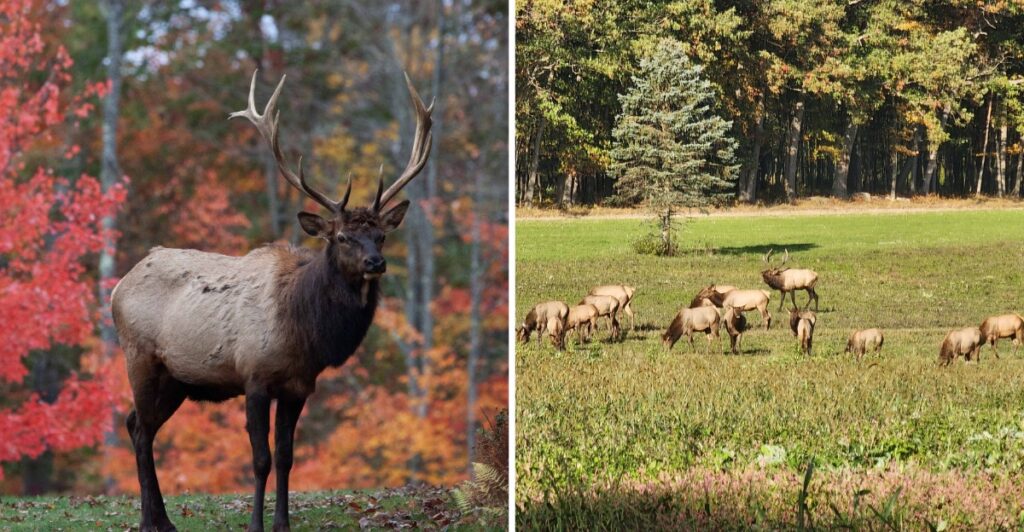
The first time you hear a bull elk bugle, you may wonder what on earth just made that sound.
It starts high, carries across the hills, and feels almost too wild for a quiet fall morning.
That is autumn in this part of Pennsylvania.
Wild elk roam the surrounding forests and fields, and breeding season gives them a soundtrack of their own. You may spot one grazing at the edge of a meadow, then hear another calling from somewhere you cannot quite see.
And these are not exactly subtle animals.
Adult bulls can be enormous, which makes seeing one step out of the trees a pretty memorable moment.
The leaves are changing. The hills are quiet.
Then an elk decides everyone within earshot should know he is there.
Good luck forgetting that sound.
Where Is Benezette, Pennsylvania?
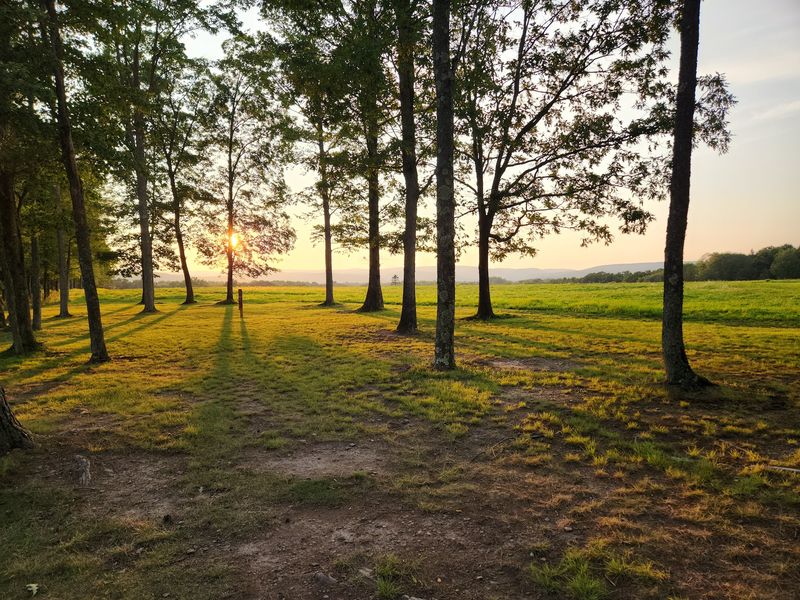
Deep in the forested hills of north-central Pennsylvania, a tiny village shares its fields with some of the largest animals in the eastern United States.
Benezette is near the Elk Country Visitor Center, and it sits within the state’s wild elk range. Every fall, the hillsides carry the high, whistling calls of bull elk during the breeding season.
If you have ever wanted to hear that sound in person, autumn is a good time to plan a visit.
Why Benezette Is Famous For Pennsylvania’s Wild Elk Herd
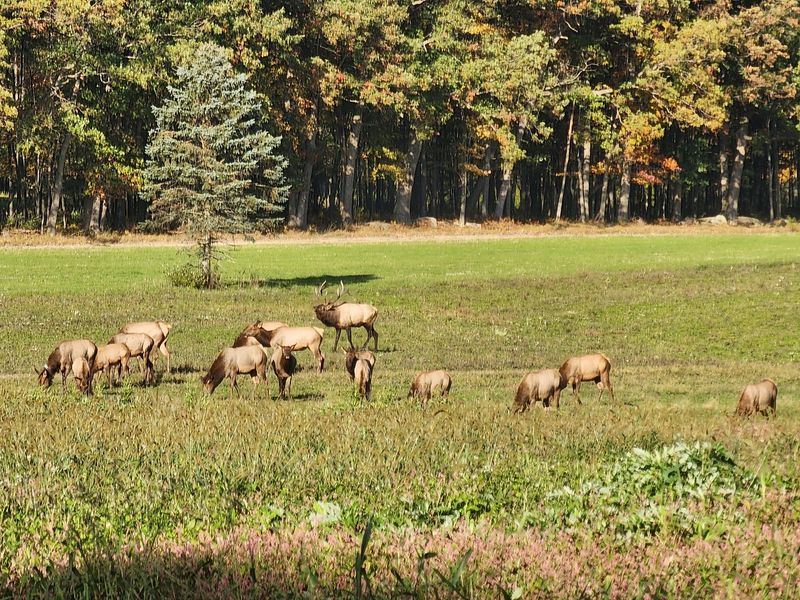
Most people associate wild elk with western mountains, but Pennsylvania has its own free-ranging herd. Benezette lies near the core of that range, and elk use the surrounding forests, open fields, and managed feeding areas.
Elk once lived across much of Pennsylvania before disappearing from the state during the nineteenth century.
The Pennsylvania Game Commission began reintroducing them in 1913, bringing animals from western sources and releasing them in several counties. Additional releases continued through 1926.
Today’s herd ranges across parts of north-central Pennsylvania, although the animals do not remain in one viewing area or follow a predictable daily route.
Adult elk are much larger than white-tailed deer. A mature bull may weigh hundreds of pounds and carry an impressive rack of antlers. Bulls shed their antlers and grow a new set each year, so a bull carries its new antlers for only part of each year.
Elk sometimes appear near homes and roads as well as in more remote habitat. Their presence close to developed areas does not make them tame. Watch from a distance and never attempt to move closer to an animal for a photograph.
Autumn Brings The Herd To Life
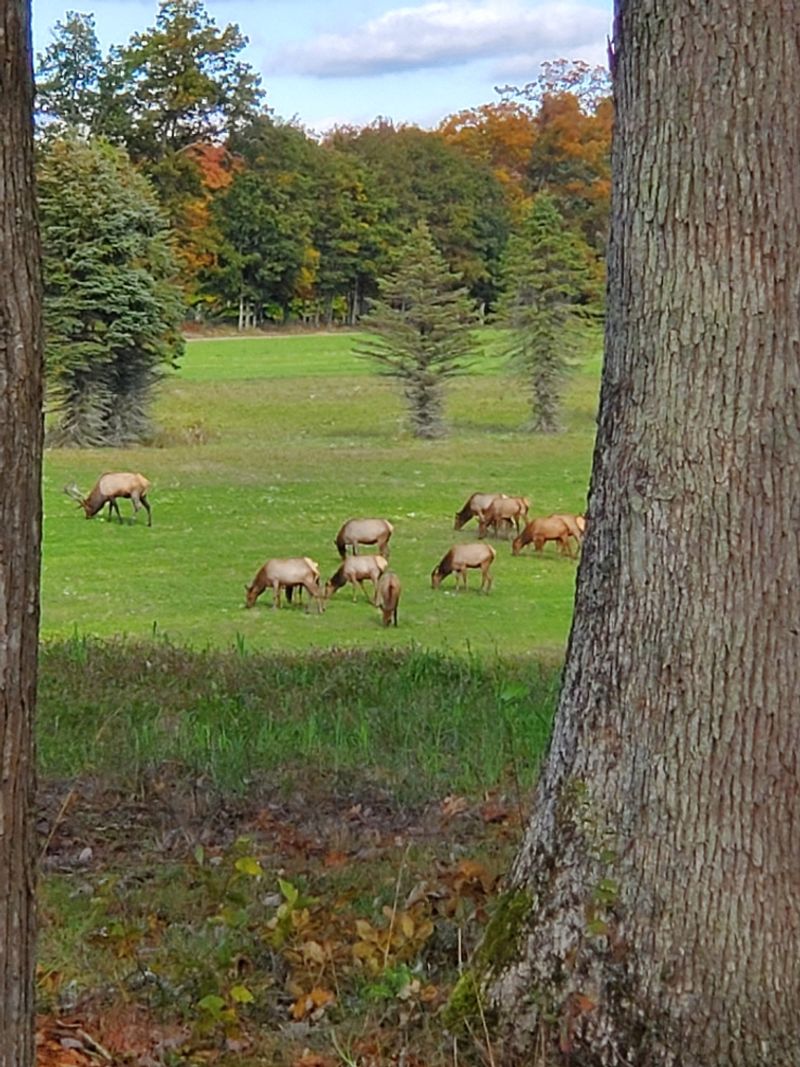
September mornings can be cool in the hills around Benezette, and a bull’s bugle may travel across an open valley. That sound is one of the distinguishing features of a fall elk-viewing trip.
Fall is the breeding season, known as the rut. Activity generally increases in September and carries into October, with the peak often falling between mid-September and early to mid-October. During that period, bulls call and compete for access to groups of cows.
Elk are usually most active near dawn and dusk, so those windows offer better viewing opportunities than the middle of the day. The animals may spend part of the daylight hours resting under forest cover, away from the fields visible from public overlooks.
Autumn also brings changing leaves to the surrounding ridges, with patches of yellow and red appearing through the forests as the season progresses.
Autumn weekends can bring substantial traffic to popular viewing roads. Give yourself extra time to reach designated parking areas and avoid stopping abruptly when elk appear near the road. Bring warm layers for time spent outside.
A hat, gloves, and a weather-resistant jacket may be useful during an early start, even when the forecast calls for a milder afternoon.
What Happens During Pennsylvania’s Fall Elk Rut?
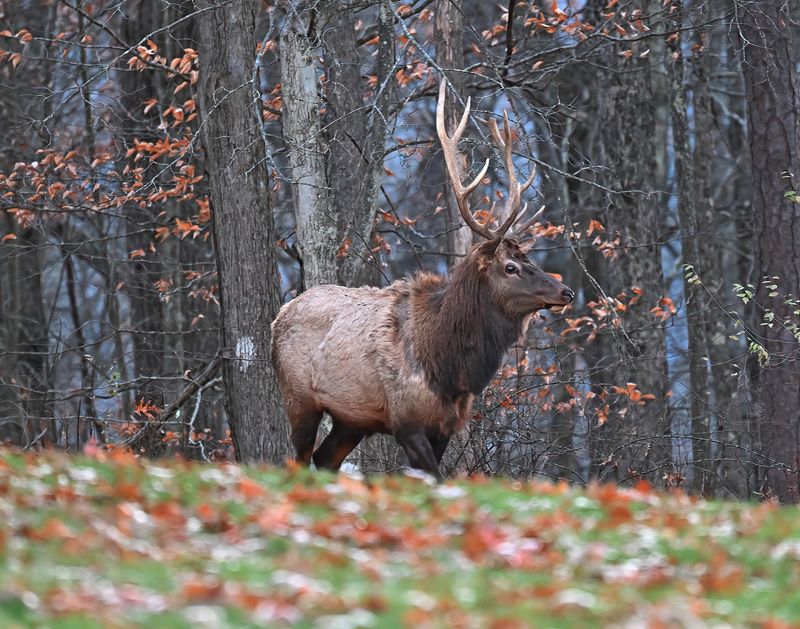
The rut is the period when bull elk compete for breeding opportunities. During these weeks, their behavior changes as they call, follow cows, and respond to other bulls nearby.
The most recognizable sound is the bugle. A call may begin with a lower note, rise into a high whistle, and finish with shorter grunts. Bulls may gather and guard groups of cows, often called harems.
They also use body posture, vocalizations, and movement to challenge competitors. When two bulls confront each other, they may lock antlers and push, although not every encounter ends in a physical contest.
Rutting bulls can be unpredictable and aggressive. Keep at least 100 yards between yourself and elk. Never feed them, attempt to touch them, or step into a field to get a better angle for a photograph.
Use binoculars or a zoom lens to watch details such as antler shape, body posture, and interactions within a group. Stay in designated public viewing areas and respect private property, even when elk are visible beyond a fence or across a field.
Prime Spots For Spotting Elk Around Winslow Hill
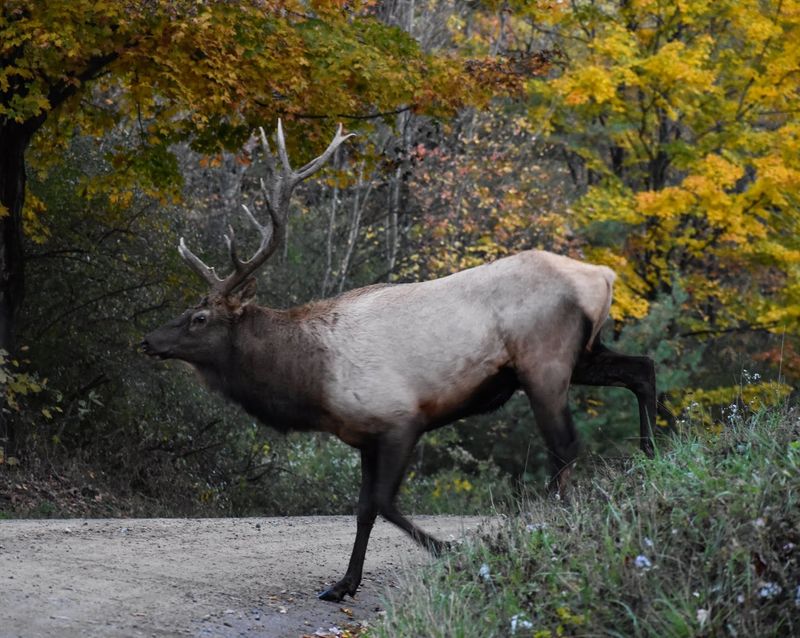
Open fields around Winslow Hill provide some of the area’s established elk-viewing opportunities. Several designated public overlooks and parking areas give you places to watch without entering elk habitat.
The Elk Country Visitor Center occupies a 245-acre property with managed forage areas. Walking trails lead to viewing opportunities around the grounds. Take time to check the fields from more than one point, keeping to marked paths and viewing areas.
There are also public viewing sites beyond the visitor center. The Winslow Hill Viewing Area on State Game Lands 311 has parking and an overlook. Nearby, the Woodring Viewing Area offers another place to watch the surrounding fields.
Dents Run Viewing Area is another established stop, with parking, picnic tables, and an elevated overlook. Elk sightings change by hour and season. You may see several animals feeding together, a lone bull crossing a field, or no elk at a particular overlook.
If a viewing area is quiet, it can be useful to wait rather than assume the animals have left the region.
Bring binoculars and clothing suitable for standing outdoors. Use marked parking spaces, avoid blocking rural roads or driveways, and never cross a barrier to follow an animal. Viewing from public facilities is the safest approach.
Inside The Elk Country Visitor Center
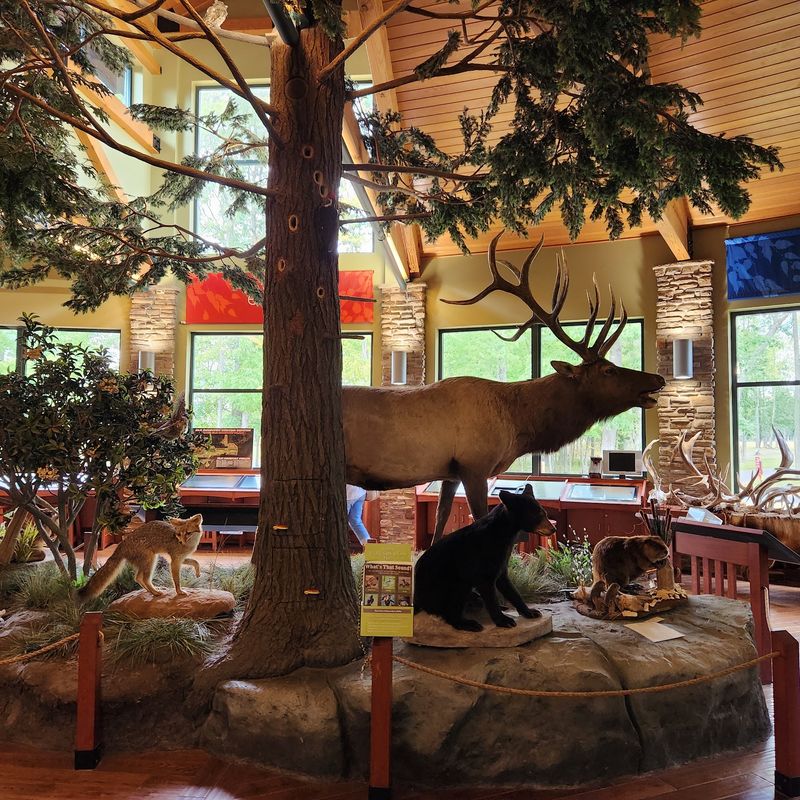
The Elk Country Visitor Center gives you a place to learn about the animals between stops at the outdoor viewing areas.
It opened in 2010 and operates through a partnership involving the Keystone Elk Country Alliance and Pennsylvania’s Department of Conservation and Natural Resources.
Inside, interactive exhibits introduce elk biology, seasonal behavior, habitat, and conservation.
The displays also explore how the surrounding landscape supports the herd. A multisensory 4D theater presents an elk-focused experience, and the Elk Country Store carries gifts and locally made products.
Check current theater arrangements when you arrive rather than assuming every activity is included or running continuously.
Outside, accessible trails connect the building with wildlife viewing locations. Seasonal horse-drawn wagon rides are another option. The guided tour lasts about 45 minutes and travels through the property’s viewing habitat, although elk sightings are never guaranteed.
For the 2026 season, rides generally operate from August through late October, subject to weather and availability.
Wagon reservations are taken on the day of the ride, beginning at 10 a.m. in person, with phone reservations considered if spaces remain. Arrive early during the busy fall season, and be at the loading area before your scheduled departure.
The visitor center is at 134 Homestead Drive, Benezette, PA 15821. Follow signs for the center after turning onto Winslow Hill Road.
Smart Planning For Your Autumn Elk Adventure
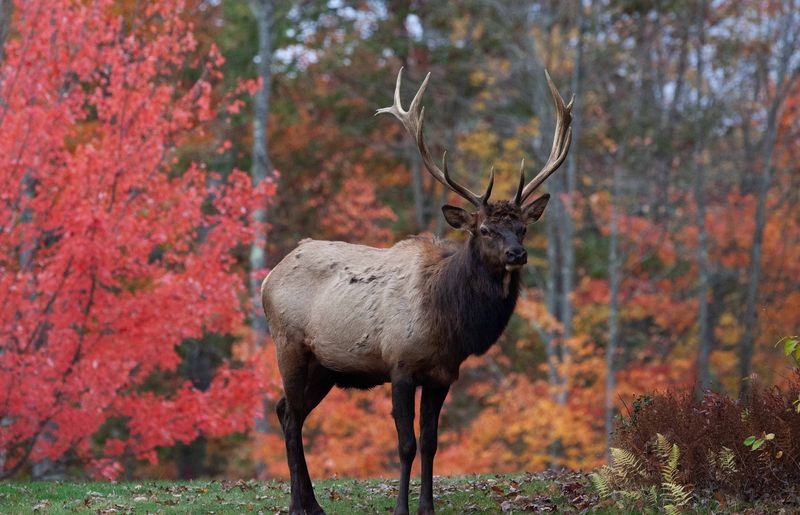
A little preparation can help you spend more of the day watching elk and less time finding your way between viewing locations.
Start with timing. Aim for September or early October if seeing rut activity is your priority, and plan outdoor viewing around dawn or dusk. Leave enough flexibility to return to a field later if your first stop is quiet.
The visitor center uses seasonal hours, and its fall schedule can differ from other parts of the year. Check the current schedule before departure, especially if you want to explore exhibits or arrange a wagon ride as well as watch elk outdoors.
Pack binoculars, a camera with a zoom lens if you have one, drinking water, and layers for changing temperatures. Choose shoes suitable for walking on outdoor paths, and carry a flashlight if you expect to return to your vehicle after sunset.
Be prepared to use designated parking areas instead of pulling onto a narrow roadside shoulder. Observe speed limits, watch for animals crossing the road, and leave driveways and access points clear.
If you are staying overnight, arrange accommodation well in advance of a fall weekend. Wagon rides have limited seating, so learn the current same-day reservation procedure rather than assuming you can book several weeks ahead.
Above all, give elk at least 100 yards of space, do not feed them, and stay out of fields and other areas closed to visitors. The wildlife remains free to move through its range, and a safe viewing distance should guide every stop.