Open water gets the postcards.
Narrow blackwater creeks get the better stories.
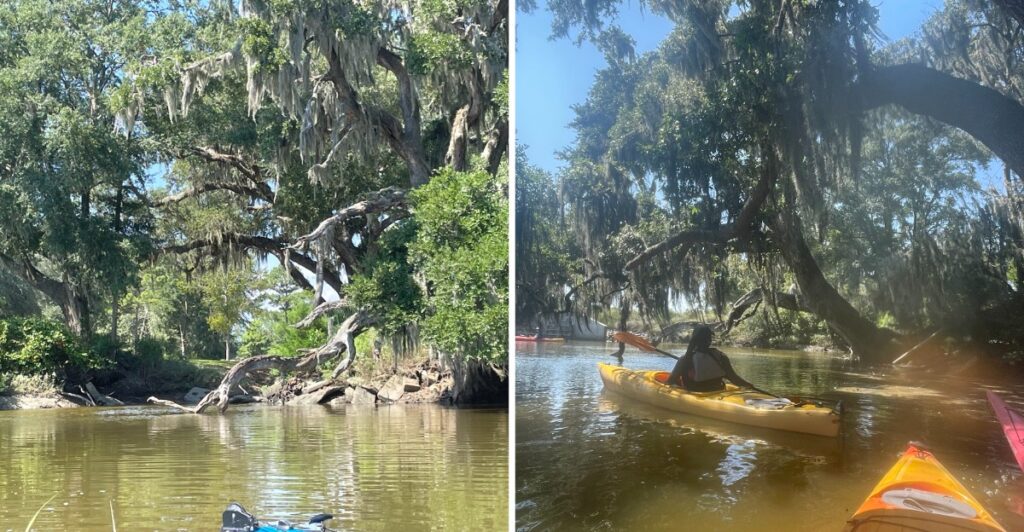
Here, your kayak slips between cypress and tupelo while dark, tea-colored water winds through the flooded forest. The banks stay close. The trees lean in.
South Carolina starts feeling much wilder than the coast just a few miles away.
You do not need much paddling experience either.
A naturalist leads the trip and helps you notice what is happening around you. Plants, wildlife, and wetland details become much easier to spot when someone knows where to look.
The trip lasts several hours, so bring lunch and plenty of water. Wear clothes that can handle a splash.
I would keep the camera close too.
This feels like the kind of paddle where the smallest thing beside the kayak may end up being the part you remember most.
Blackwater Creeks Lead Deep Into Francis Marion National Forest
Francis Marion National Forest covers a broad stretch of South Carolina’s coastal plain north of Charleston, and its blackwater creeks cut through flooded forest and bottomland hardwood habitat.
The kayak tour follows these inland waterways rather than the wider marshes around Charleston Harbor. Narrower channels bring the banks, tree trunks, and low branches closer to the boat, so the route can feel more enclosed than a typical salt-marsh paddle.
The water moves through cypress and tupelo habitat along sections of the route. Depending on conditions, you may paddle past exposed roots, submerged trunks, low branches, and quiet bends where reflections sit almost level with the kayak.
The company provides a sit-in sea kayak, paddle, personal flotation device, and the necessary paddling equipment. A pre-paddle lesson covers basic technique before the group launches, so previous kayaking experience is not required.
Bring your own lunch and water for the longer outing. Sun protection is useful even under tree cover, and insect repellent can make warmer months more comfortable.
Wear clothing and shoes that can get wet. A dry bag or waterproof phone case is also useful for anything you want to keep protected.
Arrive at least 15 minutes early at the meeting point listed in your booking information so the group has time to get organized before launching.
Towering Cypress Trees Rise From The Blackwater
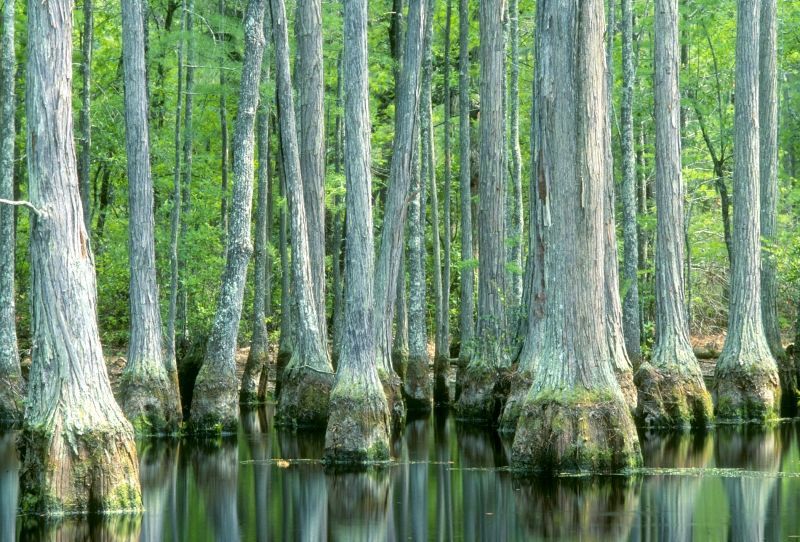
Baldcypress is one of the defining trees in South Carolina’s flooded forests, and the Francis Marion route passes through habitat where cypress and tupelo grow in wet ground and standing water.
The lower trunks often flare where they meet the water or saturated soil. Around some trees, woody projections called cypress knees rise from the root system.
Their exact physiological role is still not fully settled. Researchers have proposed functions connected with anchorage, gas exchange, and root stability, but no single explanation covers every setting.
From a kayak, you can study the shape of the trees without stepping into sensitive wetland ground. Look for wide trunk bases, knees around the root zone, and branches rising above darker water.
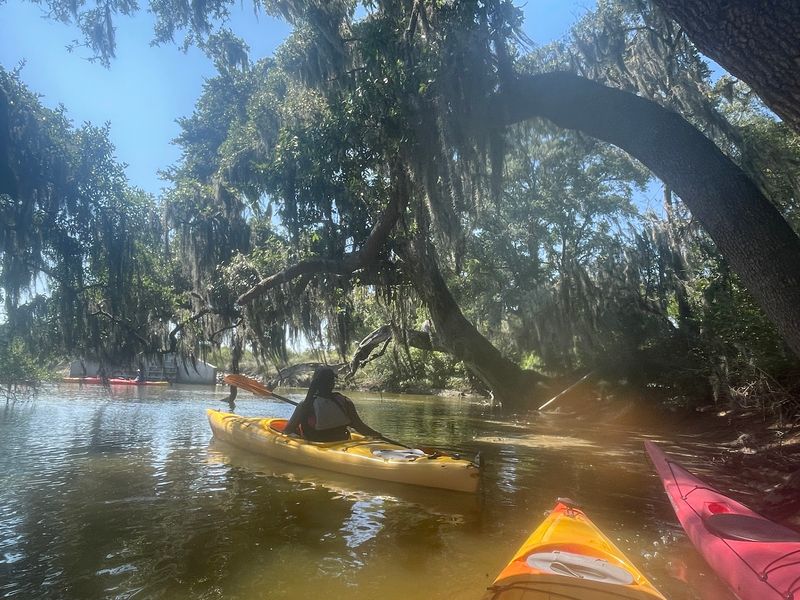
Light shifts between open sections of water and denser areas beneath the forest canopy. Open patches can brighten the water while denser sections create deeper shade beneath the canopy.
Keep your paddle close when the channel narrows. Low limbs, knees, and submerged wood can require small steering adjustments, especially where the route winds between trees.
A waterproof camera or phone case is useful if you want photos from the boat. Rest the paddle across your lap when the group pauses, then use the still water to frame trunks and reflections without drifting into vegetation.
Natural Tannins Give The Water Its Dark Color
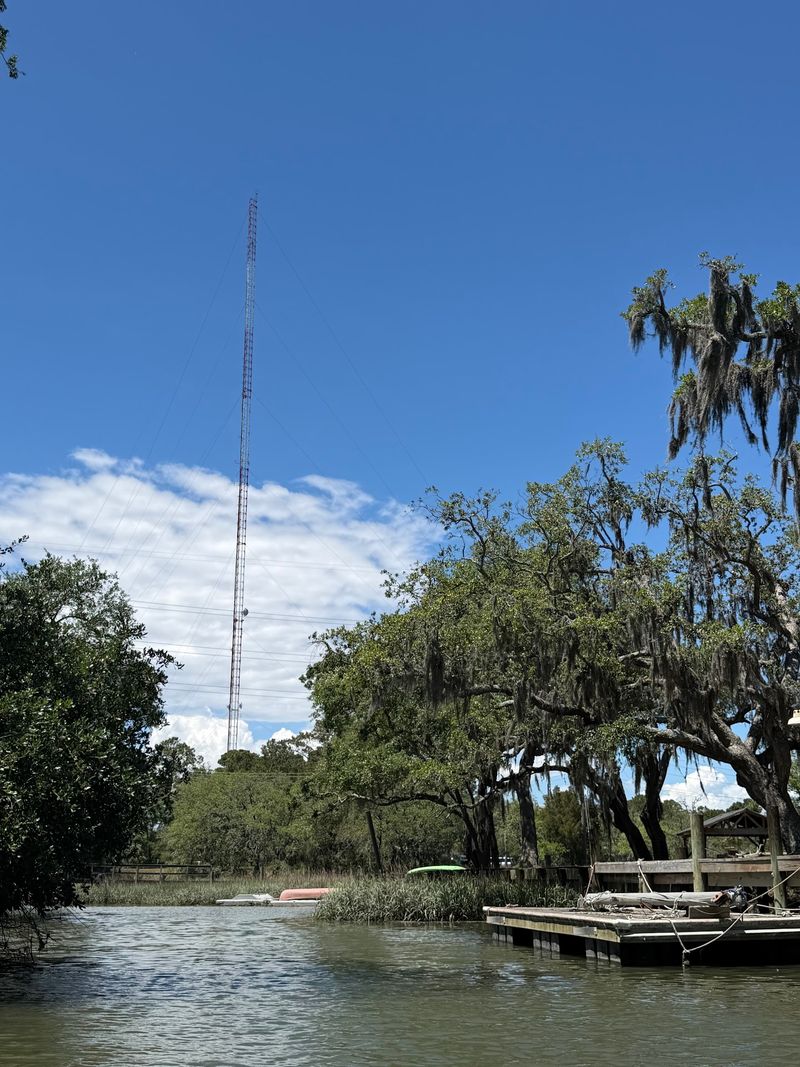
Blackwater creeks get their distinctive color from tannins released as leaves, bark, and other plant material break down in the water.
The result can look amber, brown, or tea-colored depending on light, depth, and conditions.
The dark color comes naturally from tannins released by decaying plant material. It is a common feature of slow-moving forested waterways where organic material collects and decomposes.
Dip a paddle blade into the creek and the difference can become easier to see. In direct sunlight, the water may show a reddish or amber tint. Under shade, it can look almost black.
Calm stretches can also produce clear reflections of tree trunks, clouds, and branches.
The same blackwater character appears in other parts of coastal South Carolina, including waterways in the ACE Basin and Black River region.
Watch how the color changes from one bend to the next as sunlight, depth, and overhanging vegetation shift.
Avoid reaching into the water or standing up in the kayak just to get a closer look. Staying seated keeps the boat stable and makes it easier to move through narrow sections without disturbing roots or shoreline vegetation.
Naturalist Guides Lead The Paddle Through The Wetlands
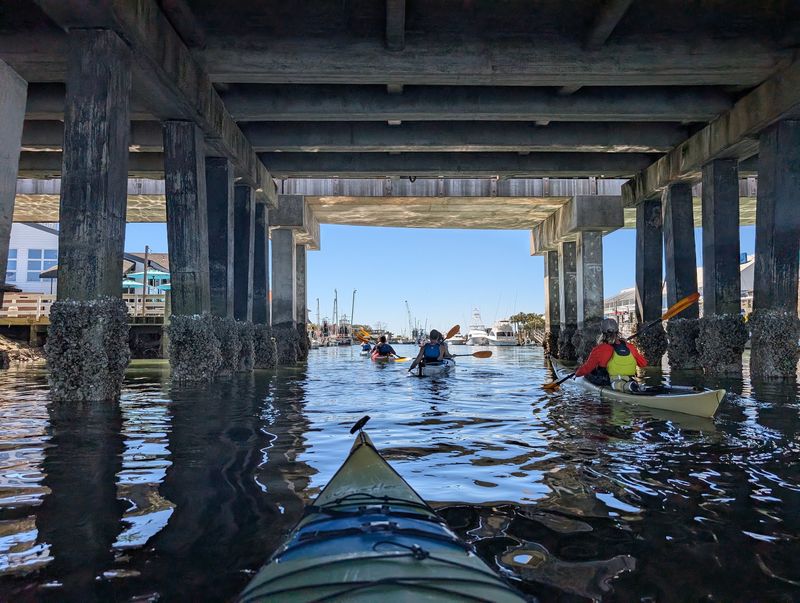
The Francis Marion Blackwater Kayak Tour is led by a professional naturalist guide.
Before launching, the guide provides paddling instruction and goes over the route, basic technique, and group procedures.
Once on the water, the guide interprets the surrounding habitat, including cypress, tupelo, bottomland hardwoods, birds, and signs of other wildlife.
Sightings vary from trip to trip. Birds may move through the canopy or along the water, and reptiles or other animals can appear when conditions suit them, but no specific species is guaranteed.
The guide also manages route choices around current conditions.
Water level, fallen trees, weather, and seasonal changes can affect which channels are used.
If you are new to kayaking, keep your strokes short and relaxed rather than trying to overpower the boat. Small corrections can help when navigating narrow waterways.
Ask questions when something catches your eye. A tree, bird call, root structure, or patch of flooded forest can lead into information about how the wetland functions.
Follow the guide’s spacing and direction through tighter sections, especially where low branches or submerged obstacles limit room to maneuver.
The Route Changes With The Seasons And Conditions
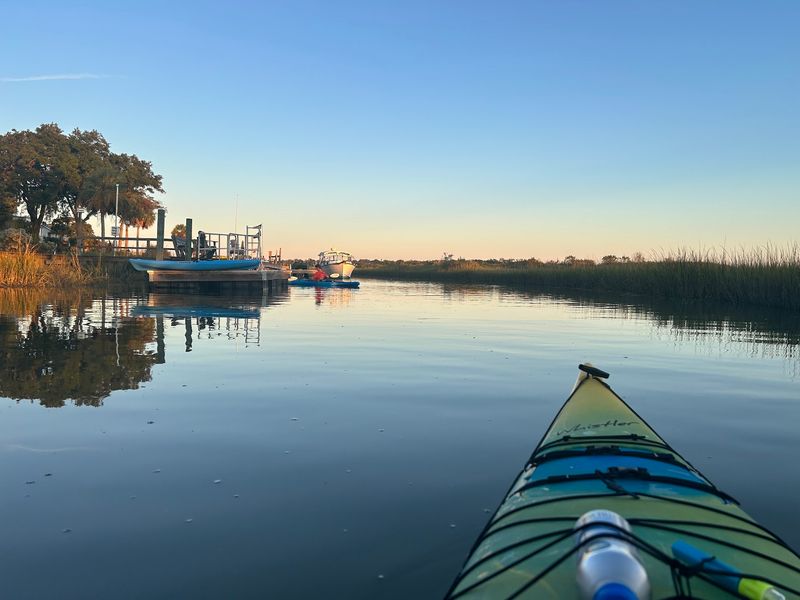
The Francis Marion tour does not follow one identical route every time.
The exact creek and launch point can vary with season, water level, weather, wildlife activity, and current conditions.
That means the meeting location in your booking information matters.
Do not assume the tour begins at the company’s Shem Creek base in Mount Pleasant. The Francis Marion trip may launch from a separate inland location selected for that day’s route.
Check the confirmation before leaving, and allow enough drive time to reach the listed meeting point at least 15 minutes early.
Season also changes what you see along the water.
Spring can bring fresh growth through bottomland hardwoods and swamp forest. Summer usually means higher heat and humidity, so water, sun protection, and insect repellent become especially important.
Autumn can bring changing color to deciduous trees and cypress foliage before needles drop. Cooler months may make longer periods in the kayak more comfortable, although weather can shift quickly.
Wildlife activity also changes through the year.
Instead of planning around one specific animal or one fixed creek, plan around the conditions listed for your trip and dress for the forecast.
Flooded Forests Reveal Another Side Of South Carolina
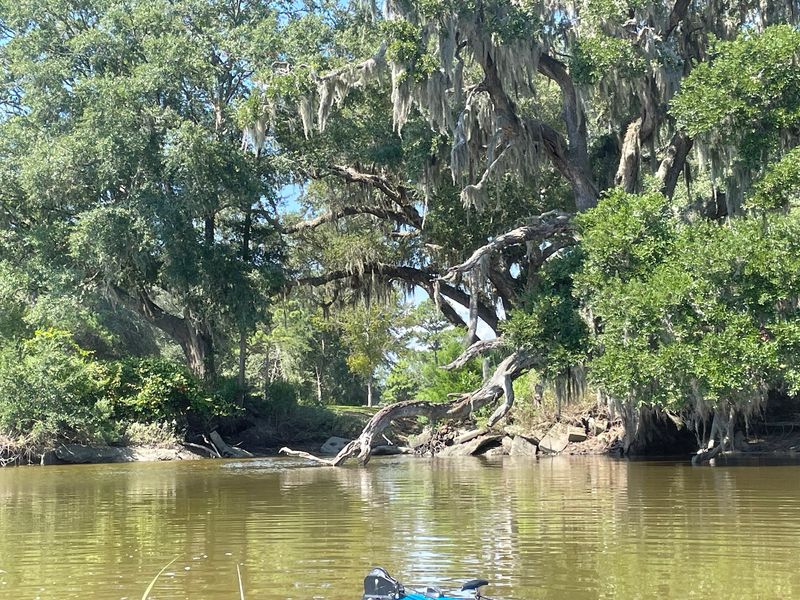
Francis Marion’s blackwater landscape looks very different from the salt marshes and beaches closer to Charleston.
Here, the route moves through forested wetlands where trees can stand directly in water or saturated ground.
Cypress, tupelo, and bottomland hardwoods create layered habitat above and beside the creek.
Tree trunks can sit only a few paddle lengths from the kayak, and narrow channels sometimes require careful steering between roots, low branches, and flooded vegetation.
Listen for bird calls and movement along the banks, but keep your attention on the water ahead as well.
A branch just above eye level or a submerged log can appear quickly around a bend.
Along the route, watch where open water narrows, where cypress knees gather around trunks, and where hardwood forest begins to replace flooded swamp.
Shoes that can get wet are a practical choice for launching and landing.
A hat can help with sun exposure in more open sections, while insect repellent is useful when the route passes through shaded, humid forest.
Keep lunch and extra water packed securely so loose items do not shift around the kayak.
Coastal Expeditions Has Guided Lowcountry Trips Since 1992
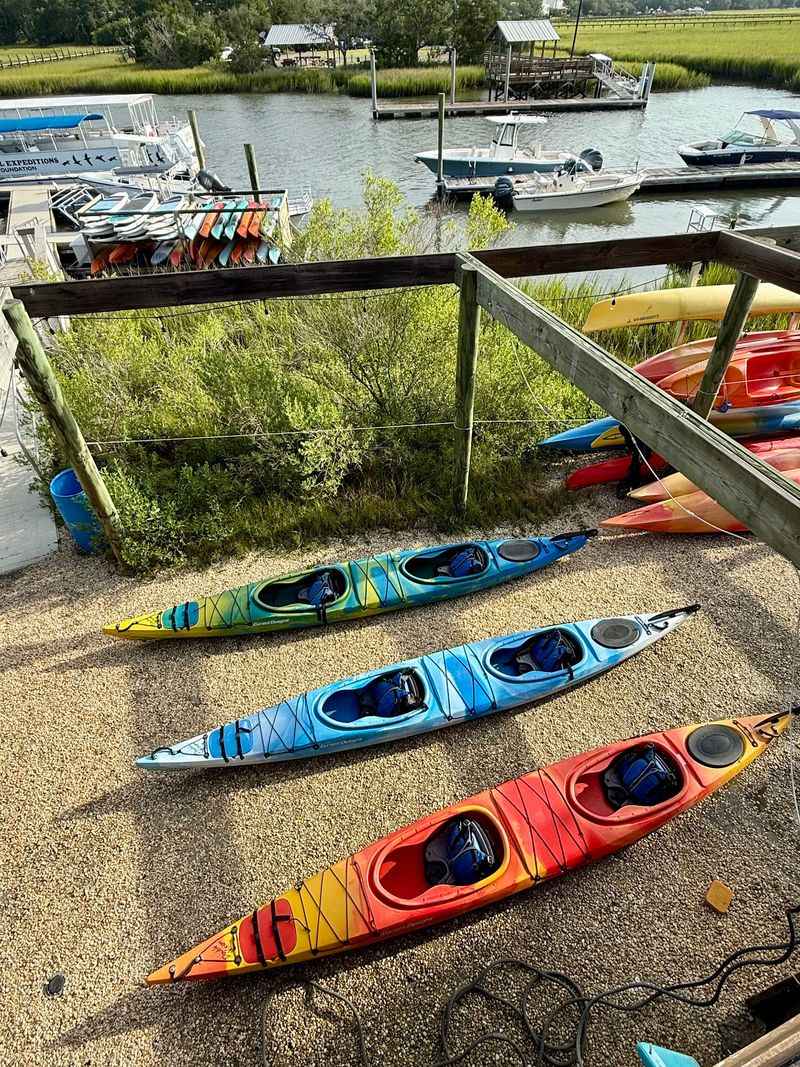
Coastal Expeditions began operating in Mount Pleasant in 1992 and has guided paddling trips in South Carolina for more than three decades.
Its current trips cover several Lowcountry environments, including salt marsh, harbor waterways, blackwater creeks, and flooded forest.
The Francis Marion Blackwater Kayak Tour is one of the company’s inland options and lasts about five to six hours.
The trip includes the kayak, paddle, personal flotation device, other necessary paddling gear, instruction, and a professional naturalist guide. Guests bring their own lunch and water.
The company’s flagship Shem Creek base is at 514 Mill Street, Mount Pleasant, SC 29464.
That address is not automatically the Francis Marion launch point. The meeting location for the blackwater tour is supplied with the booking and can vary with the selected route.
Check the confirmation before you leave, arrive at least 15 minutes early, and dress for a full half-day on the water.
A lightweight layer, sun protection, insect repellent, wet-friendly shoes, and a waterproof place for your phone cover most of the practical basics.
Once the kayak is in the creek, follow the guide’s pace, keep your gear secure, and follow the route through each bend in the blackwater.