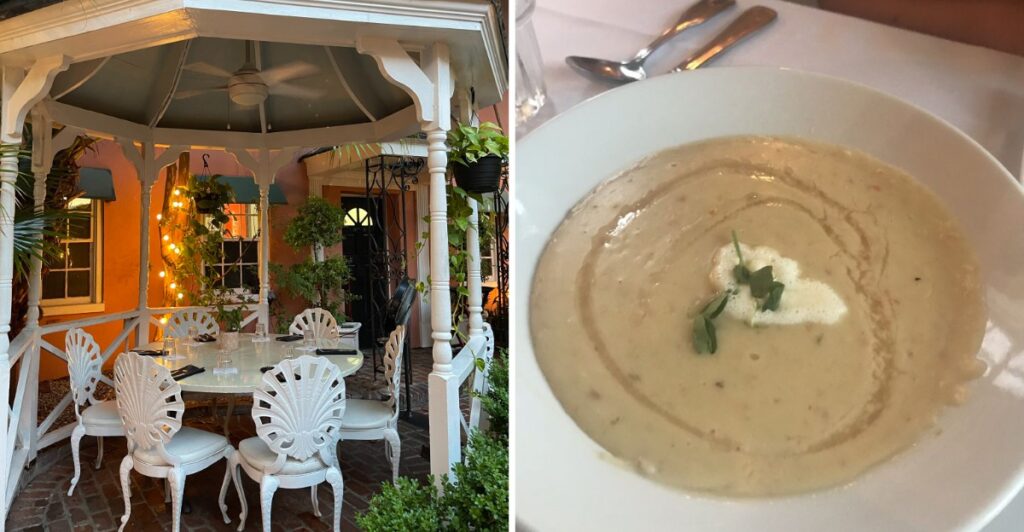
Keep an eye on the first spoonful.
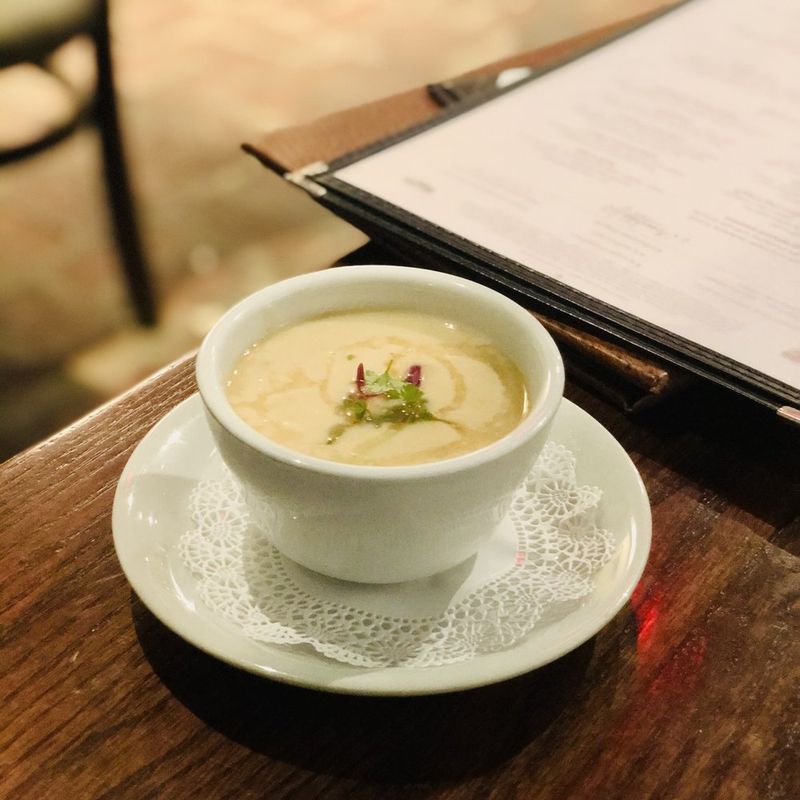
She-crab soup has been part of this restaurant since it opened in 1982, giving you an easy starting point for a meal built around Lowcountry cooking.
The creamy seafood soup can come by the cup or bowl.
That leaves you free to decide how much room you want for shrimp and grits, crab cakes, or another regional dish.
There is much more behind the menu than comfort food alone.
Charleston cooking reflects generations of African, European, Caribbean, and coastal influences, with seafood, rice, and greens appearing in different combinations across the table.
You can get into the backstory as the meal unfolds.
For now, start with the soup.
Then decide whether the next plate should stay with seafood or move toward one of the restaurant’s family-style Lowcountry sides.
The Restaurant Has Been Serving Lowcountry Cuisine Since 1982
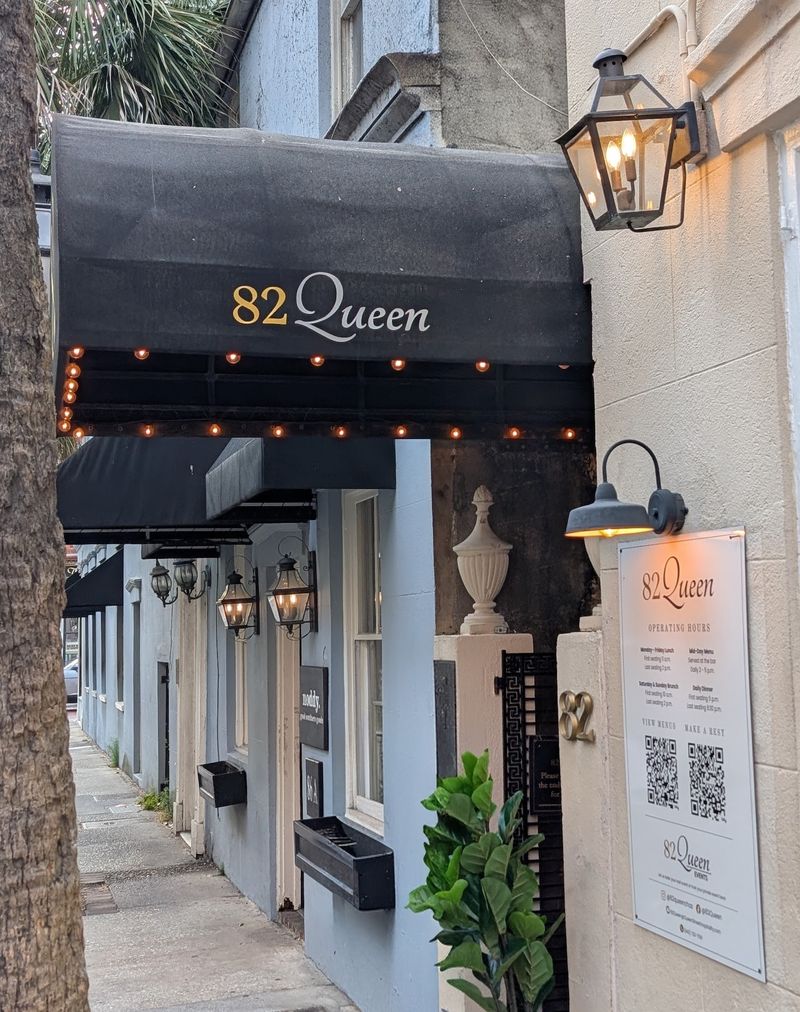
82 Queen opened in 1982 with a focus on Charleston and Lowcountry cooking. The restaurant occupies three buildings and a garden courtyard in the city’s Historic French Quarter, giving a meal here several different settings without leaving the same property.
The name came from the street location rather than a complicated piece of branding. When the founders needed a name, 82 Queen became the straightforward answer.
The layout also gives you some flexibility once you arrive. A courtyard table can make sense on a mild Charleston day, while the indoor rooms offer an easy retreat from summer heat or rain. That choice is worth making before you start working through the food decisions.
You can come for one regional dish, build a broader spread from the Lowcountry side of the menu, or keep things simple with an entrée and a shared side.
The restaurant’s early menus drew on several cultural influences that shaped Charleston cooking, including African, French, Caribbean, and Anglo-Saxon traditions.
Those threads still make sense in a city where rice, seafood, field peas, grits, and coastal ingredients have long crossed paths.
If Hoppin’ John is your starting point, use it as the anchor rather than trying to order every Charleston classic at once. One shared side leaves room to add another dish without turning lunch or dinner into a marathon.
She-Crab Soup Has Been Part Of The Menu Since 1982
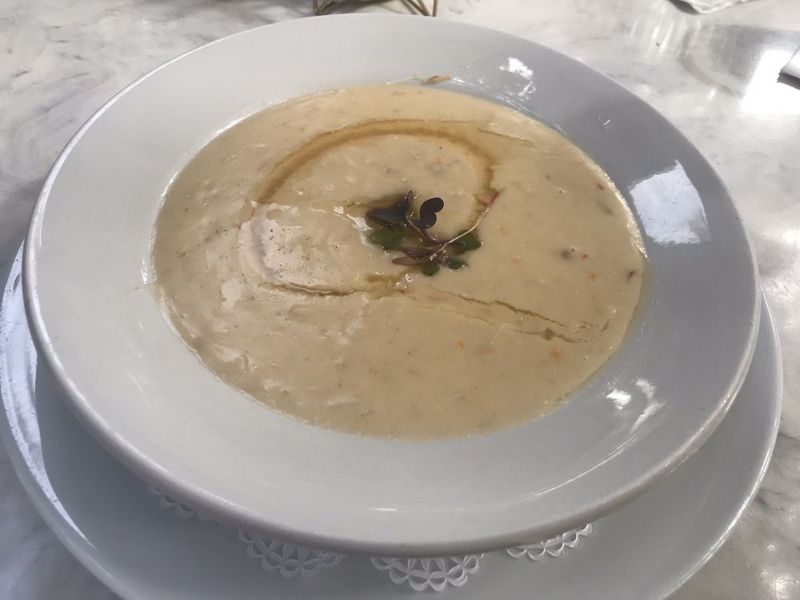
She-crab soup has been part of 82 Queen since the restaurant opened in 1982.
It remains available by the cup or bowl, giving you an easy choice depending on how much of the menu you want to explore afterward.
A cup works neatly as a first course before seafood, shrimp and grits, or another Lowcountry dish. A bowl gives the soup more room to carry the beginning of the meal.
The current menu offers plenty of ways to continue from there.
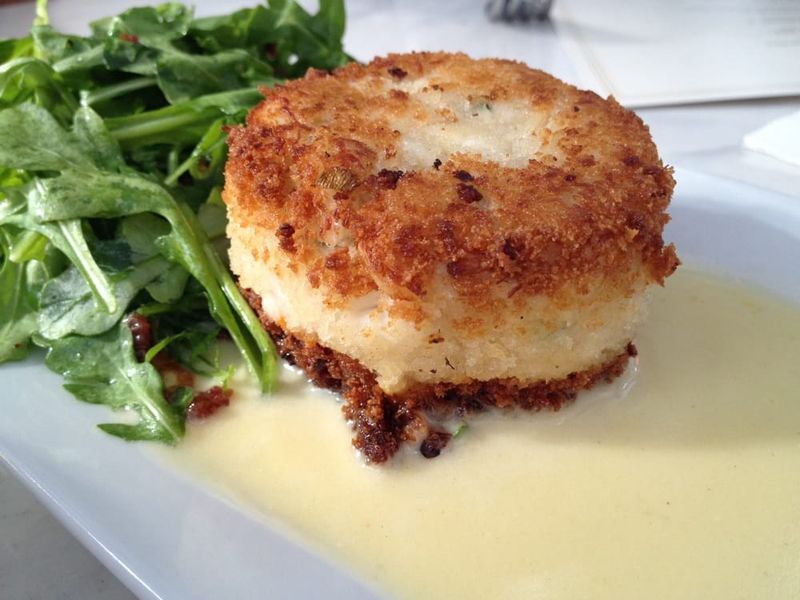
Carolina crab cakes keep the focus on seafood, while fried green tomatoes introduce a different texture.
Shrimp and grits bring another Charleston staple to the table, and family sides give you room to add collard greens, Charleston red rice, stone-ground grits, or Lowcountry Hoppin’ Johns.
If several people are sharing, start with the soup and add one or two dishes rather than covering the table immediately.
That keeps the first course distinct before the heavier plates arrive.
She-crab soup has a long association with Charleston, so it fits naturally into a meal built around the city’s coastal cooking without requiring every other dish to follow the same flavor profile.
The Soup Has Deep Charleston Roots
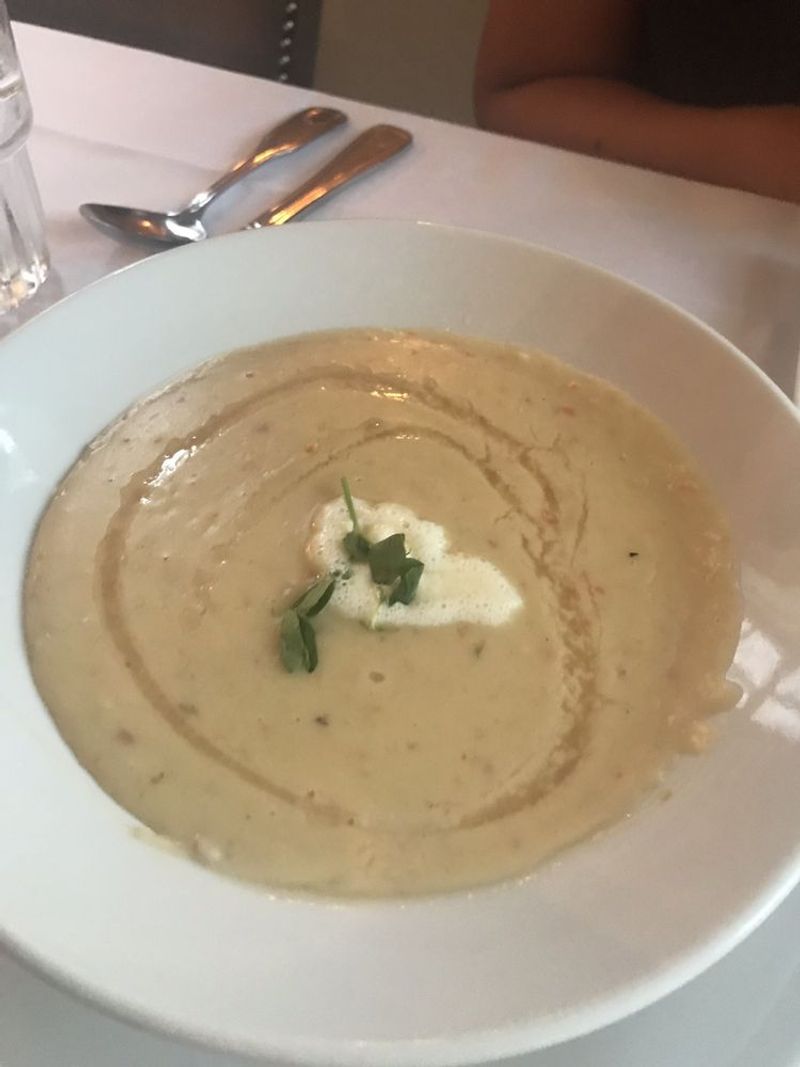
She-crab soup is closely associated with Charleston and the South Carolina Lowcountry.
The dish developed from older creamy seafood soups, with local crab becoming central to the Charleston version. Traditional preparations became known for the use of female crab and roe, although modern restaurant recipes can vary.
One well-known Charleston story connects the dish with a 1909 dinner for President William Howard Taft at the home of Charleston Mayor R. Goodwyn Rhett.
William Deas, an African American cook and butler in the Rhett household, is associated with the version served during that dinner.
The exact origin of she-crab soup is less certain than its long place in Charleston cooking.
That makes the dish easy to approach without turning lunch into a history seminar. Take a spoonful first, then move toward another regional dish with a different texture.
A crab cake keeps seafood at the center of the meal, while shrimp and grits bring stone-ground grits into the mix.
If you want rice and peas on the table too, Lowcountry Hoppin’ Johns remains available as a family side.
Lowcountry Flavors Stretch From Sides To Seafood
A bowl of she-crab soup does not have to carry the whole meal. 82 Queen gives you several ways to build outward from it without leaving the Lowcountry theme.
The crab-and-Parmesan glazed grouper is one route, served with Lowcountry Hoppin’ John, roasted broccolini, and green tomato chow chow.
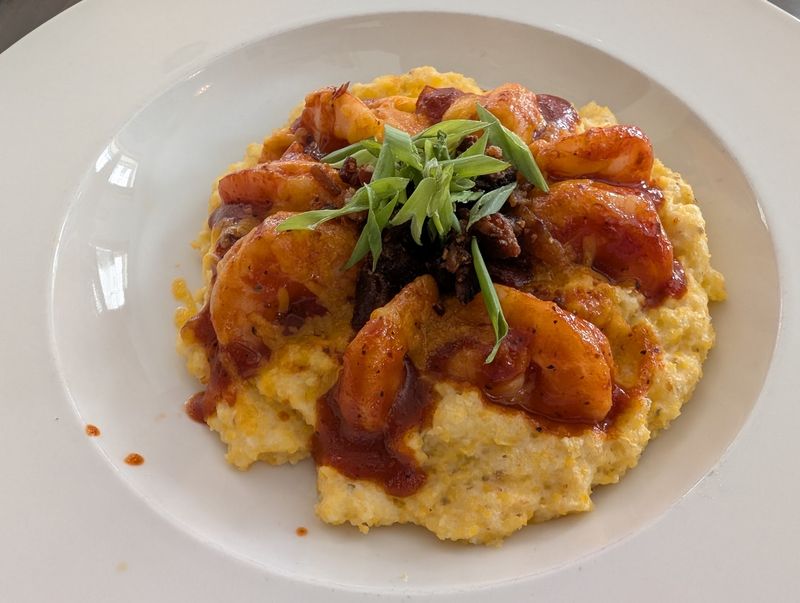
She-crab soup can also lead into shrimp and grits, another longstanding Charleston dish built around seafood and stone-ground grits.
Fried green tomatoes and Carolina crab cakes offer two more routes into Southern and coastal flavors.
If shrimp and grits sounds like enough food on its own, keep any extra sides limited rather than adding several more starters.
The easiest approach is to pick one first course, one seafood dish, and perhaps a vegetable or rice side if the table wants more variety.
That keeps the meal moving without burying the regional dishes under too many competing plates. If two people are sharing, a cup of soup, one main dish, and a family side can cover several Charleston flavors without turning the table into a balancing act.
Hoppin’ John can still make an appearance without carrying the entire meal. Order it as the family side, or choose the grouper entrée that already includes it.
The Queen Street Setting Gives You Several Ways To Dine
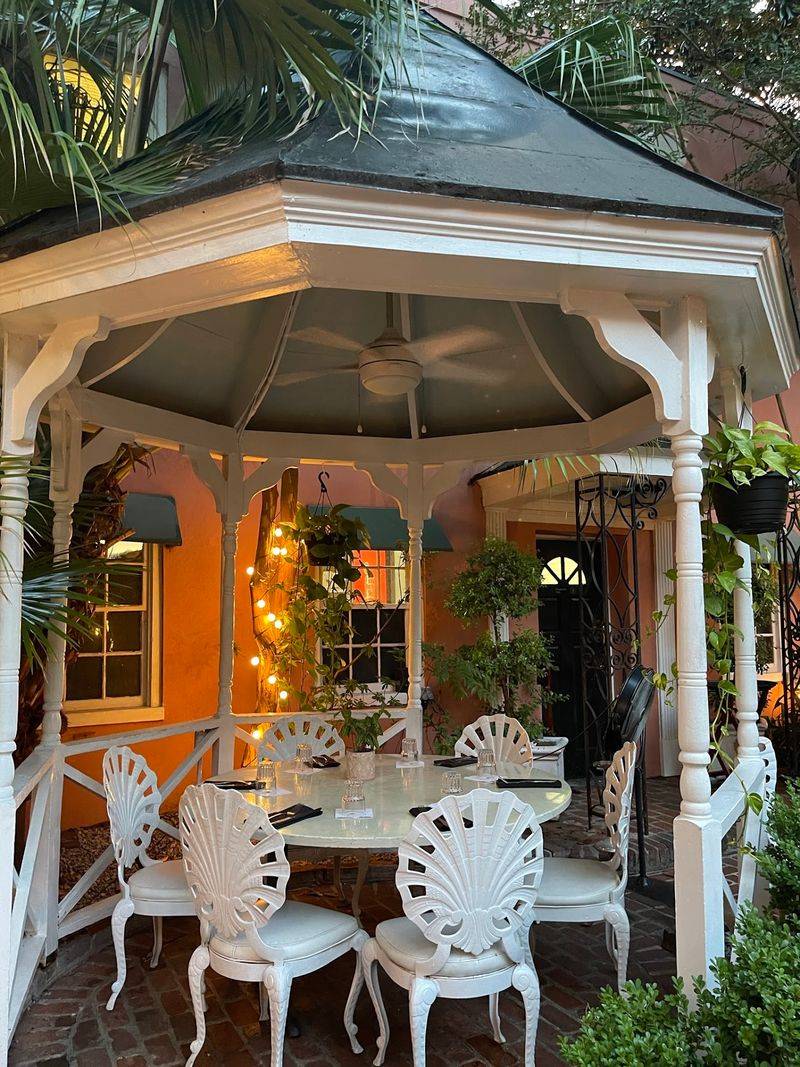
82 Queen spreads across three buildings and a garden courtyard in Charleston’s Historic French Quarter. That layout gives the restaurant a different rhythm from a single open dining room.
Some tables sit inside the connected buildings, while the courtyard brings the meal outdoors when the weather cooperates. Charleston heat, humidity, and sudden rain can change the plan quickly, so indoor seating can be just as useful as a courtyard table.
If you care about where you sit, make that part of the reservation rather than waiting until you arrive. A courtyard meal suits a mild day, while an indoor room can make more sense when summer weather is doing what summer weather does.
The French Quarter also makes the restaurant easy to pair with a walk through central Charleston. Give yourself enough time before or after the meal to wander rather than rushing straight from the table to the next reservation.
Take the streets slowly if your schedule allows. Historic buildings, narrow lanes, and shaded corners give you plenty to look at before returning to the busier parts of downtown.
For the meal itself, decide whether you want open air or an indoor room, then turn your attention back to the food.
Shrimp And Grits And Other Classics Add Options
If she-crab soup is the reason you came, it does not have to be the only Charleston dish you try.
The soup is available by the cup or bowl, which makes it easy to add without committing to another full entrée. A cup can be enough if the table already has several dishes coming.
Barbecue shrimp and grits appears in more than one part of the menu, including as a starter and a main course. Choose the smaller version if you want to taste it alongside another dish, or let the larger plate carry most of the meal.
Fried green tomatoes bring another Southern staple to the table, while Carolina crab cakes keep the focus on seafood. The family sides add still more choices, including collard greens, Charleston red rice, stone-ground grits, and Lowcountry Hoppin’ Johns.
Do not feel obligated to turn the menu into a checklist. Two or three regional dishes shared across the table can tell you more than an overloaded order that becomes work halfway through.
Start with whatever made you curious about Charleston cooking in the first place, then add one contrasting texture or flavor from there.
What To Know Before Visiting 82 Queen In Charleston
A little planning helps when a restaurant sits in the middle of Charleston’s Historic French Quarter.
Lunch is served from 11 a.m. to 2 p.m., dinner from 5 p.m. to 9:30 p.m., and weekend brunch from 10 a.m. to 2 p.m. Reservations are recommended, especially if you have a particular dining area in mind.
There is no on-site parking, so factor downtown parking into the schedule rather than arriving at the reservation time and then starting the search for a space.
If she-crab soup is your priority, ordering by the cup gives you the most flexibility for the rest of the meal. Choose a bowl when you want the soup to take up more of the first course.
From there, keep the meal flexible. Add crab cakes, shrimp and grits, fried green tomatoes, a seafood entrée, or a family side if appetite allows.
Hoppin’ John remains easy to work into the order. Choose the Lowcountry Hoppin’ Johns as a family side, or order the grouper entrée that includes it as part of the plate.
Charleston offers plenty to compete for your attention, but lunch does not need to become another race.
Pick a few dishes with strong Lowcountry roots, share where it makes sense, and give the long-running she-crab soup enough room to start the meal on its own.
You will find it at 82 Queen Street, Charleston, SC 29401.