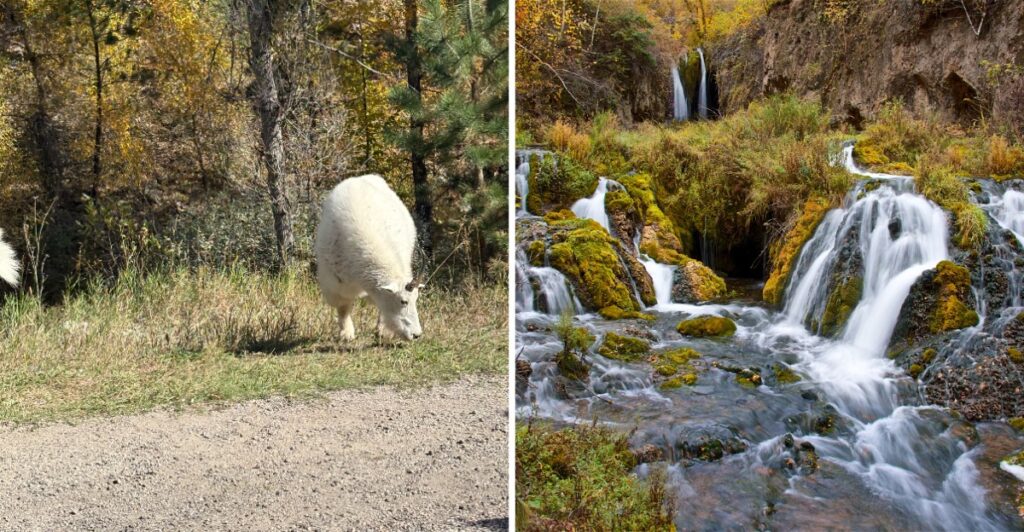
Gold aspen leaves flutter against pale limestone cliffs that rise up to 1,000 feet. A clear creek chatters beside the road, and around one bend a waterfall spills almost onto the shoulder.
The whole drive stretches about 19 miles through the northern Black Hills of South Dakota.
One canyon exposes ancient rock layers comparable in age to some found in the Grand Canyon. That is a pretty fun fact for a road you can finish before lunch.
To me, this canyon wins because the best parts sit so close to the pavement.
You barely leave the car before a waterfall, a trout stream, or a glowing hillside shows up, and I love that the payoff never asks you to work too hard.
Crisp mountain air, roaring water, and canyon walls that seem lit from inside by autumn.
Autumn Paints These Cliffs In Colors You Will Want To Frame
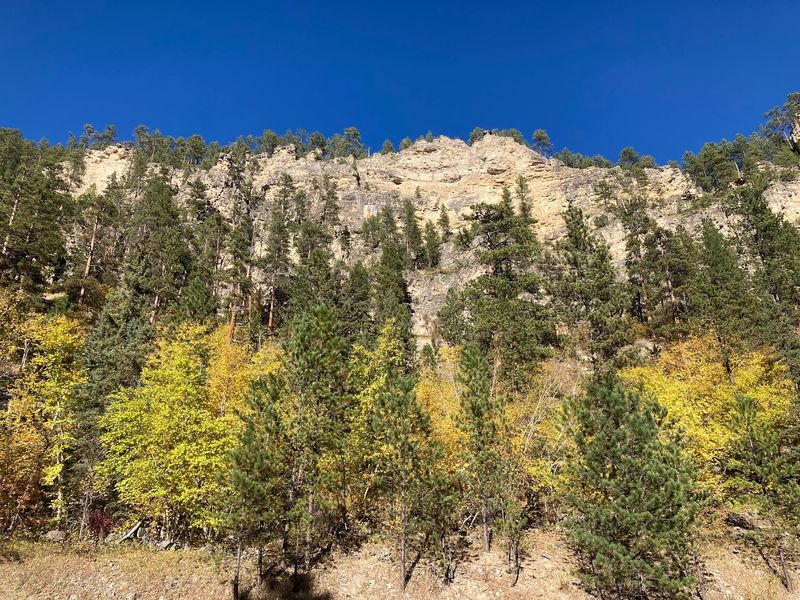
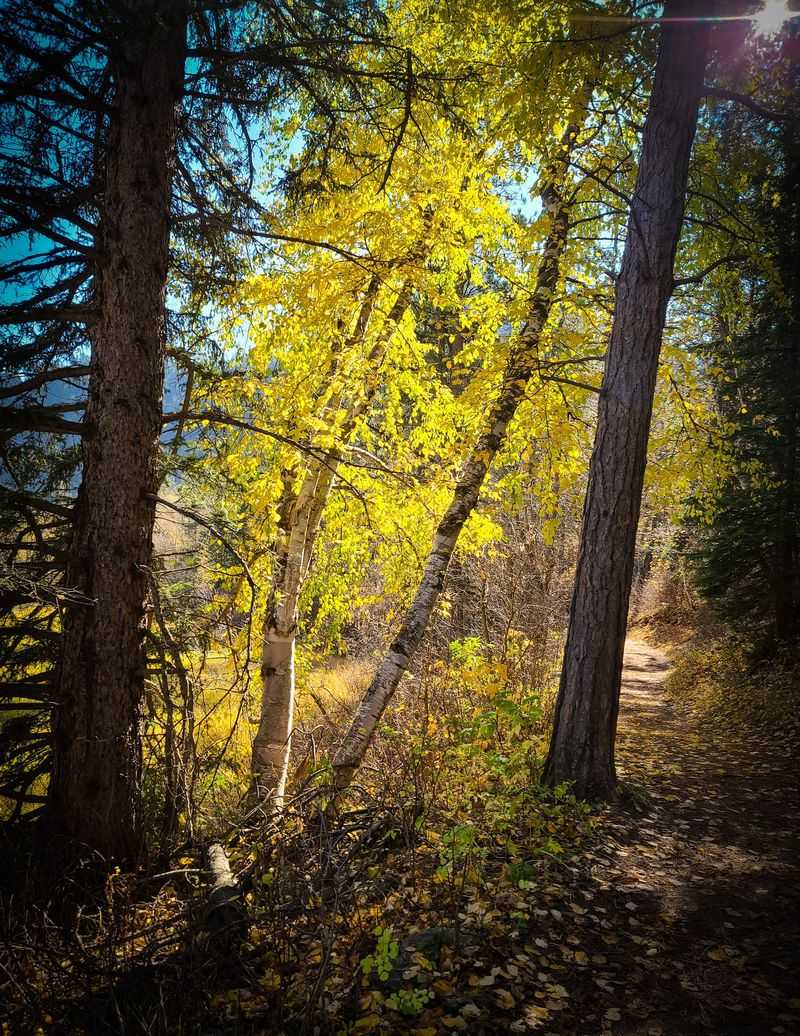
Every fall, the Spearfish Canyon State and National Forest Service Scenic Byway turns into a slow-motion fireworks show. Aspen, birch, and oak trees flip from green to bright gold, orange, and red.
Dark ponderosa pines stay green the whole time. That contrast makes the yellow leaves pop like someone turned up the color on your phone screen.
Peak color usually arrives in late September and early October. Timing shifts a little each year with weather, so checking a recent fall foliage update before your trip is smart.
Morning and late afternoon light tend to look the softest on the cliffs. Midday sun works too, but those golden hours make the canyon walls seem to glow.
The route follows US Highway 14A for roughly 19 to 20 miles. You could drive it straight through in well under an hour, yet almost nobody does.
Pullouts pop up along the way, though some come fast around curves. Driving slowly gives you time to spot them and ease off the road safely.
Pack a jacket even on sunny autumn days. Canyon shade can feel noticeably cooler than the open prairie outside it.
A Roadside Waterfall Shows Up Before Your Coffee Gets Cold
Some waterfalls make you earn them with a long hike. Bridal Veil Falls asks for almost nothing except a parking spot.
The falls sit right along US Highway 14A, a short drive south of Spearfish. Water drops roughly 60 feet down a rocky face in thin, lacy ribbons.
That delicate shape explains the name. It really does look like fabric draped over stone, especially when spring snowmelt gives it extra flow.
A small pullout lets you stop and admire it from a viewing area. It’s an easy win for kids, grandparents, and anyone who just finished a big breakfast.
Mountain goats are sometimes spotted on the rocky slopes around this stretch. Keep your eyes up, because they blend in surprisingly well against pale rock.
Spring usually brings the strongest flow. Late summer can thin the water out, though autumn leaves around the falls make up for it.
Parking here is limited, so patience helps on busy days. Pull fully off the road and watch for other cars easing in and out.
Got your camera ready? This is the stop where most canyon photo albums begin.
Lace Up For The Short Trail That Ends At A Thundering Drop
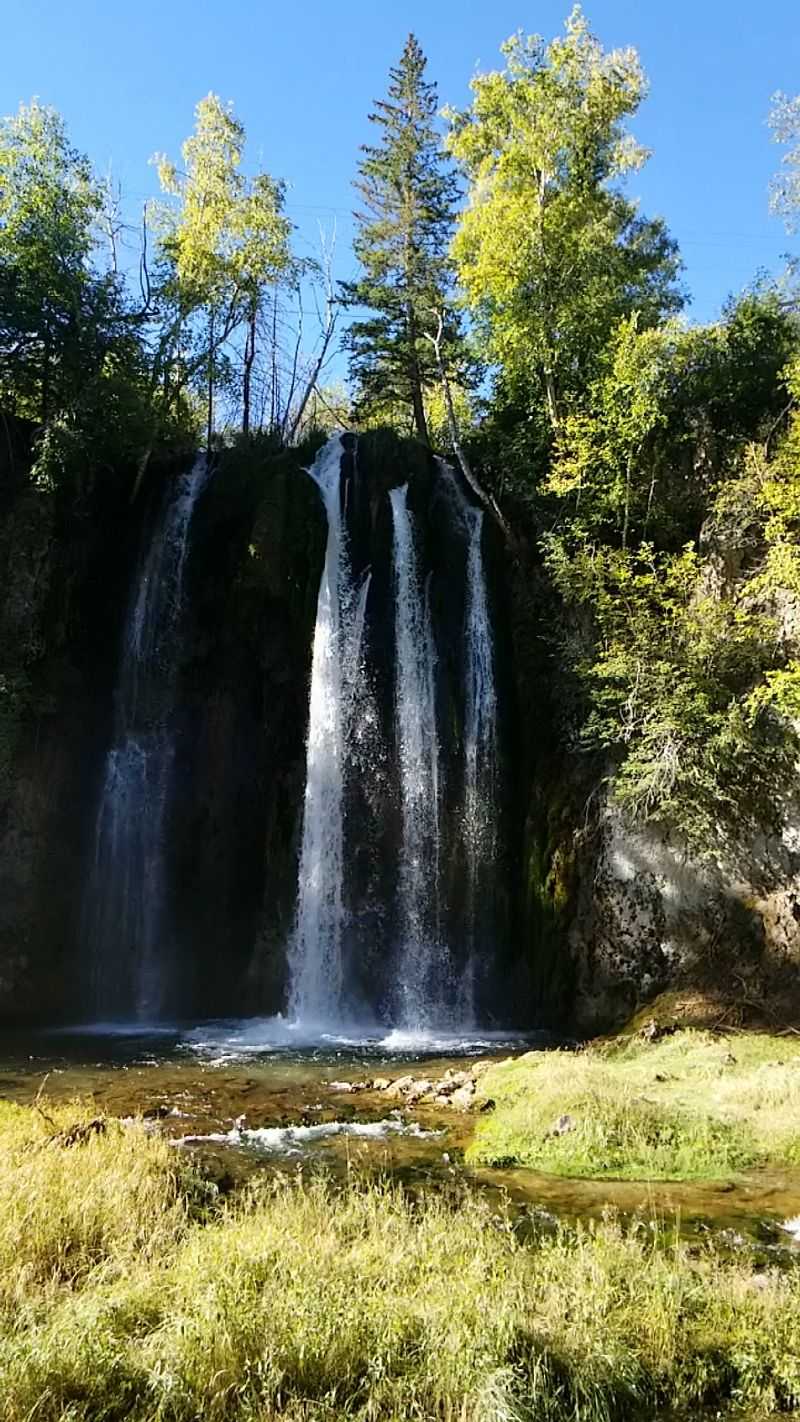
Short trail, big reward. Spearfish Falls rewards a modest hike with one of the most dramatic scenes in the canyon.
The trailhead sits near Latchstring Village in the small canyon community of Savoy. The path runs about three quarters of a mile each way, so the round trip is roughly a mile and a half.
Heading down feels easy as the trail drops into the gorge. Coming back up is the part your legs will remember, so take your time.
The falls tumble about 47 feet into a rocky pool surrounded by trees. Mist, moss, and the steady roar make it feel far wilder than its short distance suggests.
Fun fact: water was once diverted away from these falls for a hydroelectric project. Today the flow runs over the cliff again, and hikers get the full show.
Wear shoes with good grip, since rocks and roots can get slick near the water. A refillable water bottle is a good idea too.
Fall makes this hike extra special. Golden leaves line the trail, and the falls look even brighter against them.
Roughlock Falls Might Steal The Whole Show
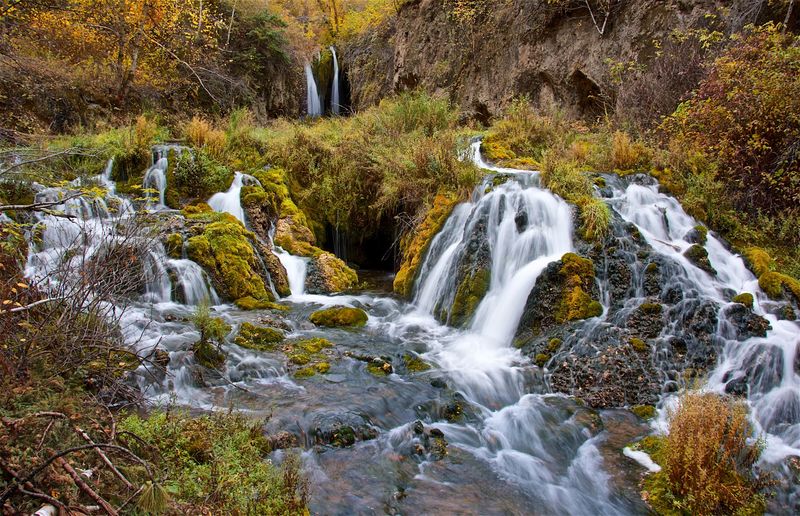
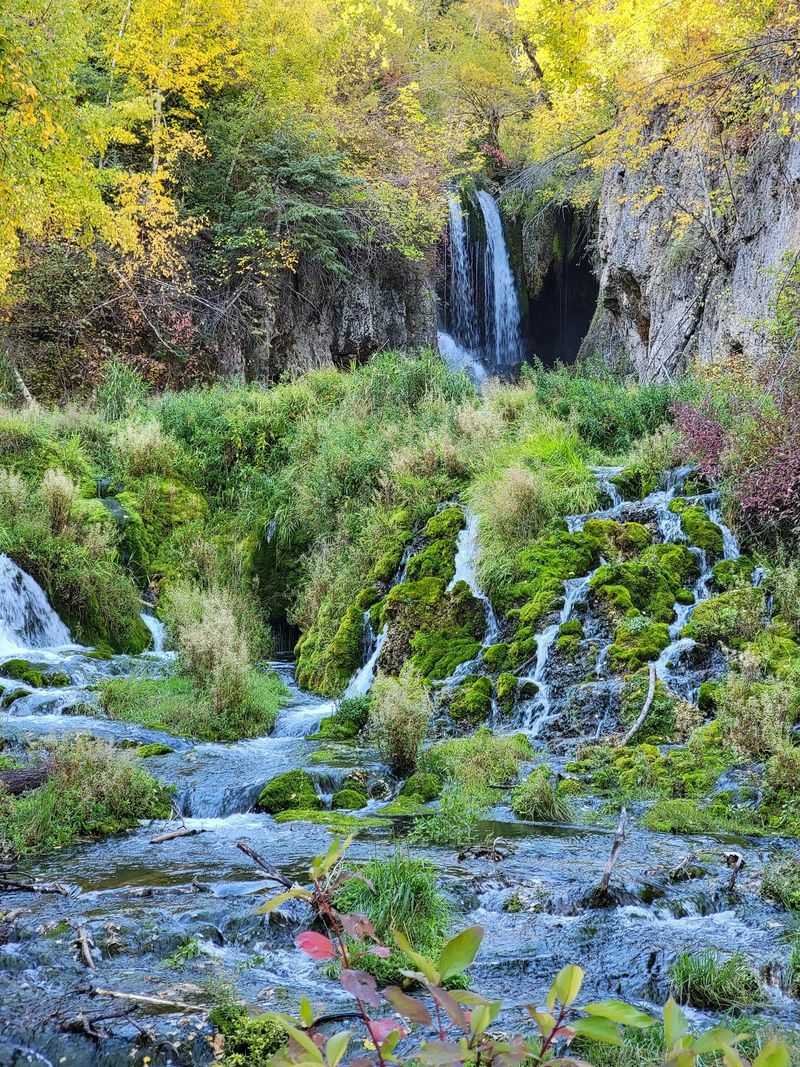
Turn west at Savoy and head up Little Spearfish Canyon. About a mile later, Roughlock Falls Nature Area greets you with layered cascades that seem made for postcards.
The falls step down over mossy limestone in several tiers. Water fans out, splashes, and regroups again, so the scene keeps changing as you walk.
Wooden walkways and viewing platforms make the area easy to explore. Families with little ones can enjoy it without a tough climb.
A trail also links Roughlock Falls with Spearfish Canyon Lodge. It follows Little Spearfish Creek, offering a pleasant walk if you’d rather leave the car parked.
The nature area has picnic spots, which makes it a great place for a packed lunch. Sandwiches taste better with a waterfall soundtrack, honestly.
Movie fans have another reason to visit. Winter scenes from the 1990 film Dances with Wolves were shot in Little Spearfish Canyon.
Birdwatchers enjoy this area, too. Keep your ears open for songbirds flitting between the trees above the creek.
Roughlock Falls Nature Area has no entrance fee. Bring a little patience for parking during peak autumn weekends.
Those Towering Walls Are Older Than The Grand Canyon’s Rocks
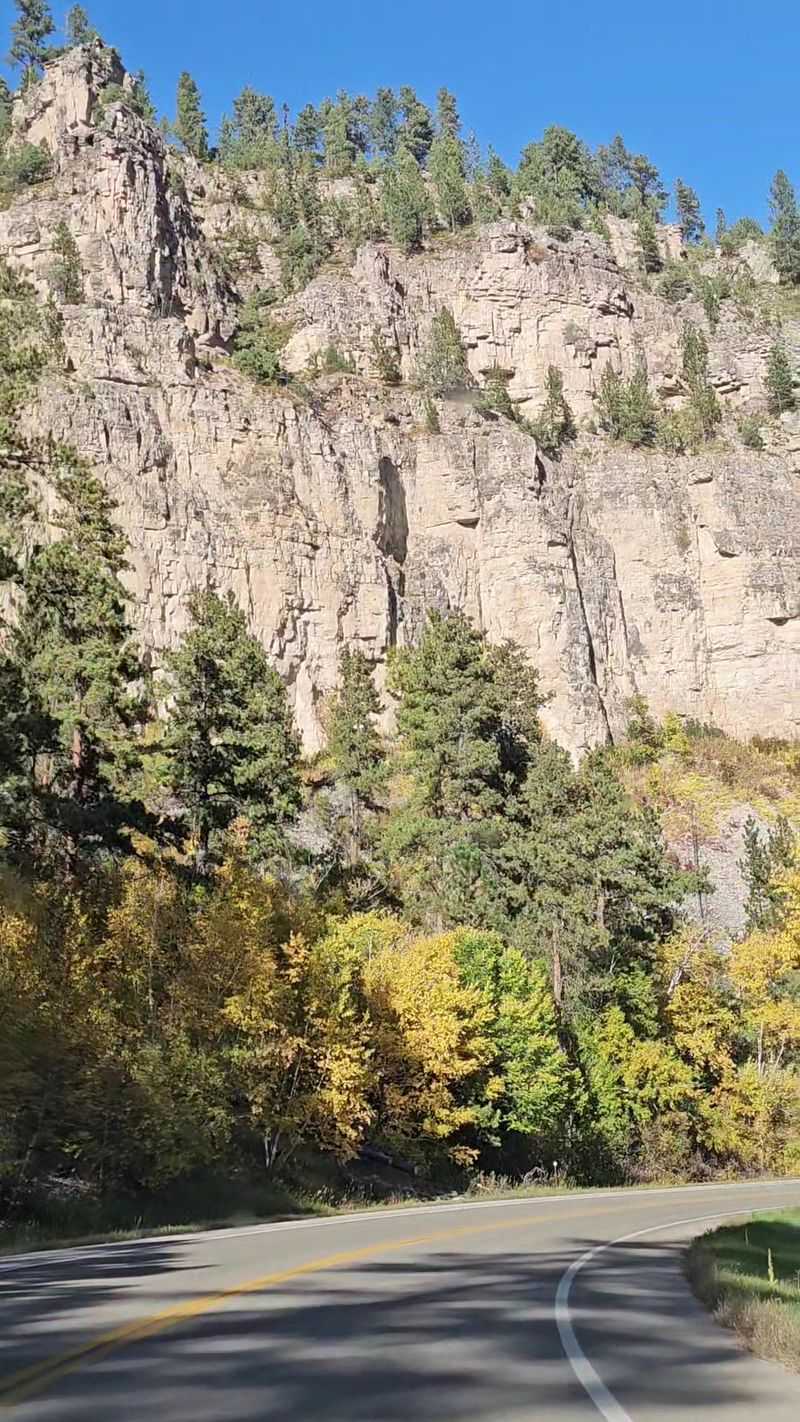
Here’s a fact that sounds made up but isn’t.
Spearfish Canyon and the Grand Canyon expose some rock layers of similar ages, although their geological histories differ.
Spearfish Creek carved this gorge over a very long time. Its work exposed bands of limestone and other sedimentary rock stacked like pages in a giant book.
Some cliffs rise as high as 1,000 feet above the road. Craning your neck becomes a regular activity, so passengers get the best seats.
The pale, sometimes reddish stone changes color with the light. Clouds passing overhead can make the same wall look gray one minute and warm tan the next.
In the fall, those cliffs act like a frame. Gold leaves cling to ledges and slopes, turning bare stone into a natural art gallery.
Kids who love rocks will have plenty to talk about here. Ask them to count the layers they can spot, and you’ll buy yourself a peaceful few miles.
Please admire the formations without climbing on unstable slopes. Loose rock is common in steep canyons, and staying on marked paths keeps everyone safer.
Bring A Fly Rod Because The Creek Is Basically Begging
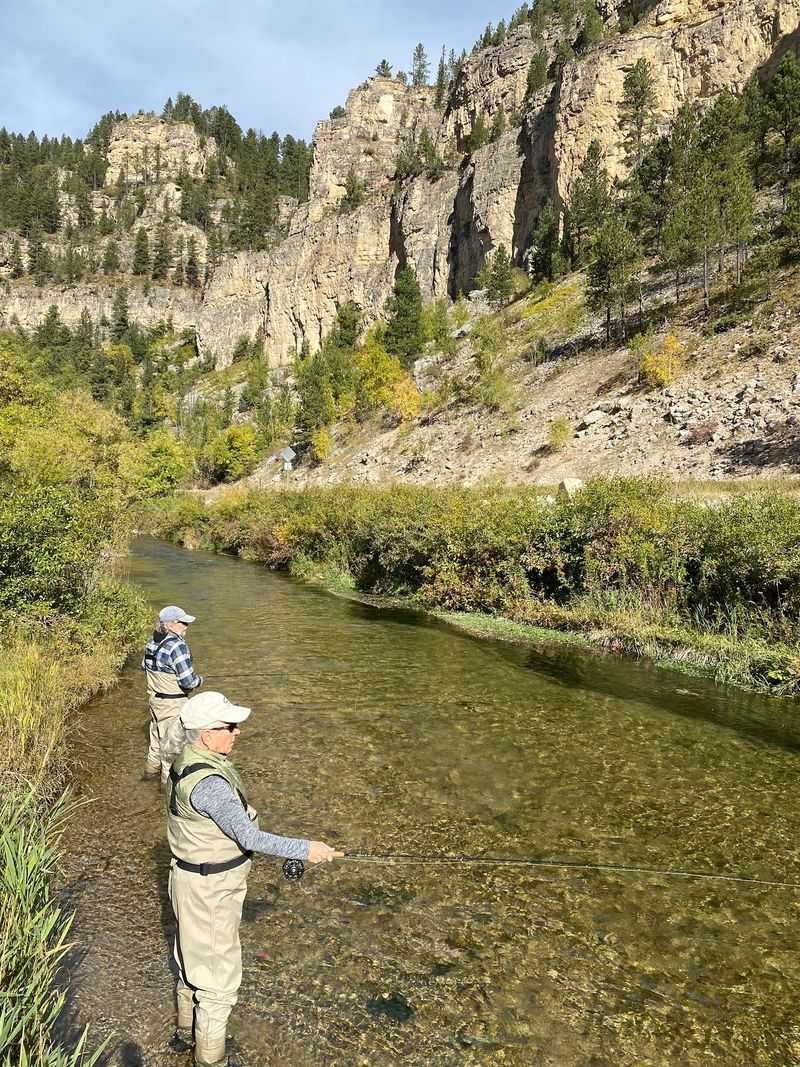
Spearfish Creek keeps you company for most of the drive. Clear, quick, and chilly, it’s one of the most loved trout streams in the Black Hills.
Anglers come for brown, rainbow, and brook trout. Fly-fishing is especially popular, and the creek offers plenty of riffles and quiet pools to try.
You’ll need a South Dakota fishing license if you’re old enough to require one. Rules can vary by section, so check state fishing regulations before casting.
Not into fishing? The creek is still worth a stop. Its rushing sound alone can melt away a stressful week faster than any phone app.
Many pullouts sit close to the water. That makes it easy to stretch your legs, snap photos, or let kids toss pebbles in safe, shallow spots.
Keep an eye on footing near the banks. Wet rocks get slippery, and the water stays cold even in summer.
Fall adds a bonus. Yellow leaves drift down and float along the current, creating a scene that looks almost too pretty to be real.
Slow Down, Because Mountain Goats Don’t Use Crosswalks
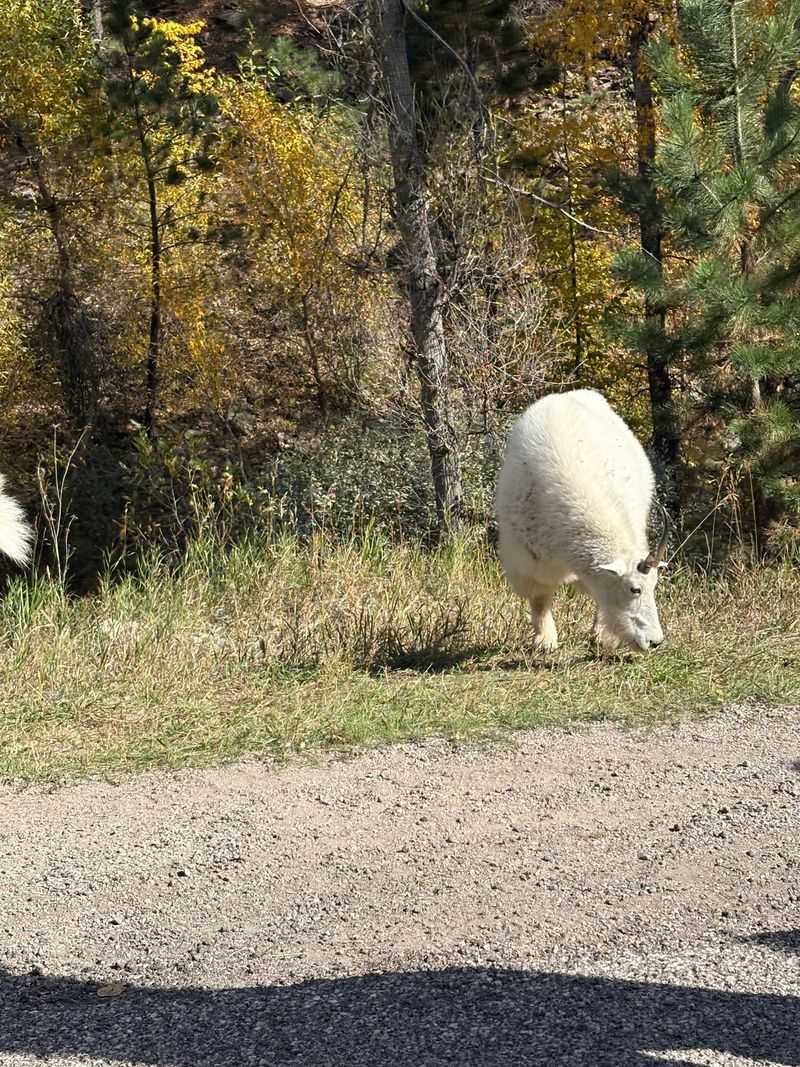
Mountain goats seem to treat this canyon like their personal playground. These shaggy white climbers are sometimes seen on cliffs and even strolling across the highway.
The area near Bridal Veil Falls is one spot where people often look for them. Spotting goats is never guaranteed, which makes each sighting feel like winning a small prize.
Deer also wander through the canyon. Dawn and dusk are times to drive extra carefully, since animals can step out with zero warning.
Give wildlife plenty of space and never try to feed them. A zoom lens beats getting close every single time.
The road itself rewards a relaxed pace. Curves are frequent, and pullouts can appear suddenly, so a lower speed helps you react smoothly.
Motorcycles and other vehicles share the byway, especially in warm months. Staying alert keeps the drive calm for everyone.
Got a passenger? Hand them the job of goat spotter. It’s the best way to keep your eyes on the road while still catching the action above.
Patience pays off here. Goats move on their own schedule, not yours.
Getting There Is Easy, Leaving Is The Hard Part
Starting your trip couldn’t be simpler. The Spearfish Canyon Scenic Byway begins right off Interstate 90 in Spearfish, using exit 10 or exit 14.
For your GPS, aim for US Highway 14A, Spearfish, SD 57783. From there, the road winds south through the canyon to Cheyenne Crossing.
Savoy sits roughly in the middle of the route. It’s home to Spearfish Canyon Lodge and Latchstring Village, making it a handy place to pause, eat, or stay overnight.
The Spearfish Falls trailhead and the turnoff toward Roughlock Falls are both near Savoy. That makes it a natural home base for waterfall chasers.
At Cheyenne Crossing, you can connect with US Highway 85. Many travelers continue toward historic Deadwood and Lead to turn the drive into a loop.
Cell service can be spotty inside the canyon. Downloading maps ahead of time saves a lot of frustration.
Fill your gas tank in Spearfish before heading in. Services along the way are limited, and running low in a gorgeous canyon is still running low.
Plan at least half a day. South Dakota saved some of its finest scenery for this one road.