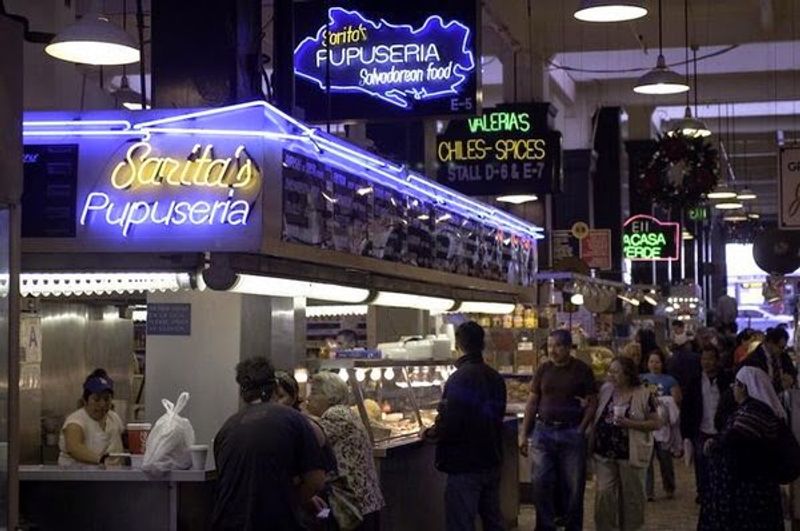
Some of the best meals hide inside busy food halls in California, tucked between other stalls where the smell of a hot griddle pulls you in before you even see the counter. Picture a thick, handmade corn cake pressed right in front of you, then stuffed with melty cheese and beans until it puffs on the flat top.
It is simple food, but the kind that sticks with you long after the last bite. Come hungry and a little curious, because this little spot turns a quick lunch into something you will want to tell friends about.
A Salvadoran Corner Inside Grand Central Market
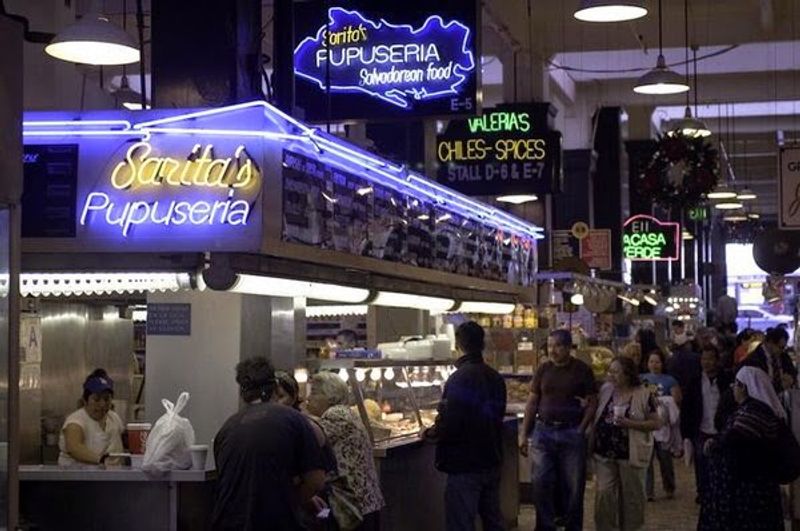
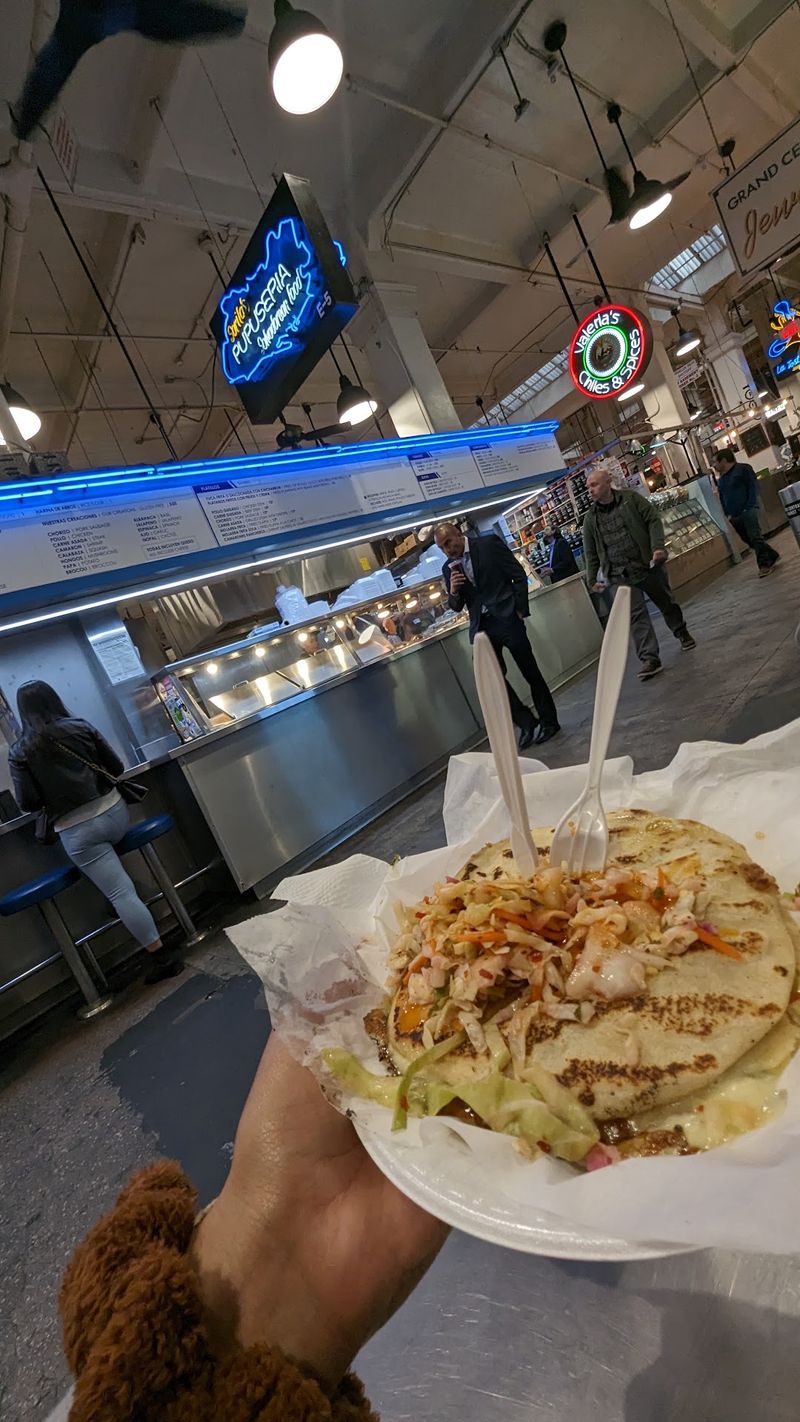
Wander through the bustling Grand Central Market in downtown Los Angeles and you will eventually hit a counter where masa gets pressed by hand all day long. That counter belongs to Sarita’s Pupuseria, a no-frills mainstay serving street eats from El Salvador right in the middle of one of the city’s most beloved food halls.
The address is 317 S Broadway, and the setting matters here. You are surrounded by dozens of other vendors, so the choice to stop for pupusas is a deliberate one, usually made after your nose catches the scent of corn and cheese sizzling on the flat top.
Classified simply as a Salvadoran restaurant, the stall keeps things focused on handmade pupusas and traditional plates. Visitors often mention how the food gets prepped right in front of them, hot and fresh off the griddle.
It is the kind of place that thrives on foot traffic yet still rewards anyone who slows down long enough to watch a masa cake come to life.
The Long Roots Of A Salvadoran Classic
Long before food halls existed, pupusas were feeding people. These thick, handmade griddle cakes trace back over 2,000 years to the Pipil tribes of pre-Columbian El Salvador, making them one of the oldest comfort foods still eaten daily.
The name itself carries history. Many believe pupusa comes from the Nawat word puxahua, which translates roughly to fluffy or stuffed, a fitting description for a corn cake packed with filling until it swells.
Crafted from cornmeal or rice flour, pupusas were originally vegetarian, filled with squash blossoms, herbs, and mushrooms. Meat fillings only became common around the 1570s, well after colonization reshaped local kitchens.
El Salvador takes them seriously enough to name the pupusa its national dish and celebrate National Pupusa Day on the second Sunday of November. Eating one at a place like Sarita’s connects you to centuries of tradition.
Understanding that backstory makes the wait at the counter feel less like a delay and more like a small piece of living history landing on your plate.
Masa Cakes Pressed And Griddled To Order
Watching a pupusa come together is half the fun here. Workers pat a ball of masa into a disc, tuck in the filling, then seal and flatten it before it hits the flat top to cook until golden and slightly crispy at the edges.
Everything is made to order, which one enthusiastic visitor called its own kind of show. You get to see each cake pressed, filled, and cooked, and that patience often pays off in the flavor.
Regulars describe the results as warm, savory, and just the right amount of tangy once you add the toppings. When done right, the outside carries a light crisp while the inside stays soft and gooey.
The stall leans into that handmade reputation. Pupusas here run bigger than average, with several people noting a single one is enough to fill you up.
Because nothing sits under a heat lamp waiting, the timing means your food arrives fresh from the griddle. That freshness is the whole point of ordering a cake built just for you.
The Revuelta That Regulars Rave About
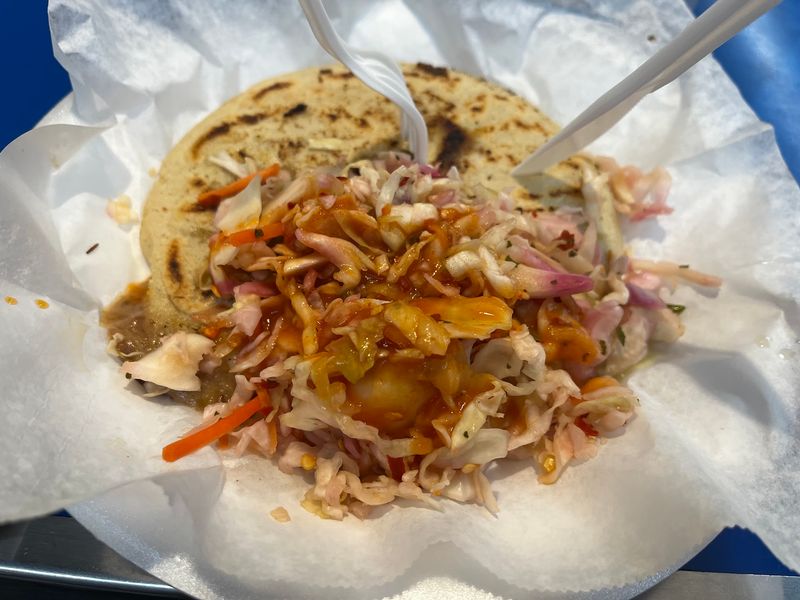
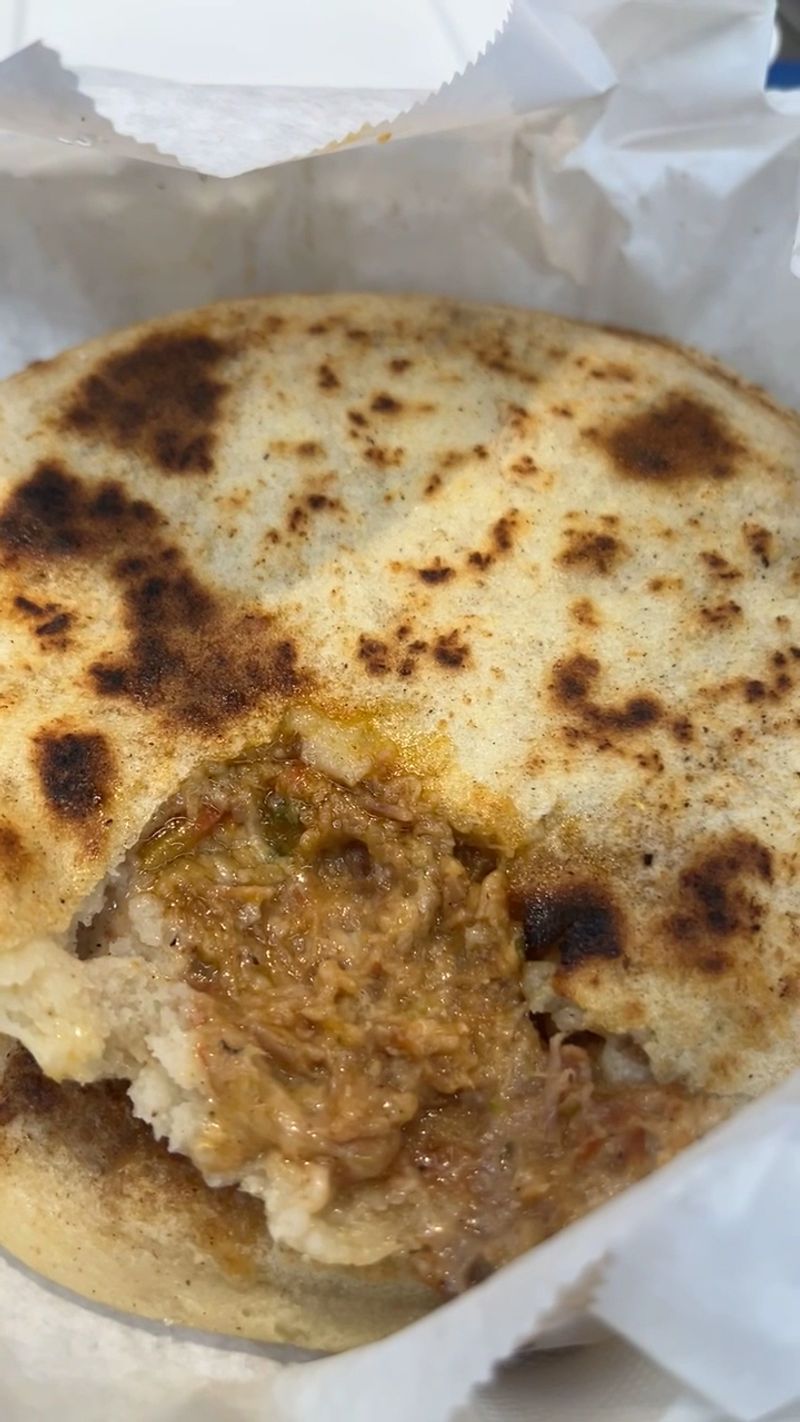
If one pupusa steals the spotlight, it is the revuelta. This mix of pork, beans, and cheese folds three fillings into a single cake, and fans here talk about it like it is the whole reason to visit.
One happy customer went as far as calling it the perfect bite, especially with curtido and a small drop of salsa layered on top. Warm, savory, and slightly tangy, it hits every note the way a good revuelta should.
Size is part of the appeal too. Visitors mention the revuelta comes out bigger than average, hot and crispy off the flat top, and well worth the modest price for how filling it is.
The blend of meat and beans gives it a richness that the pure cheese version cannot quite match, while the cheese still stretches through every bite.
For a first-timer unsure of what to order, this is the safe bet that regulars keep pointing to. Add the slaw and a squirt of hot sauce, and you have the classic combination people come back for.
Bean And Cheese For The Purists
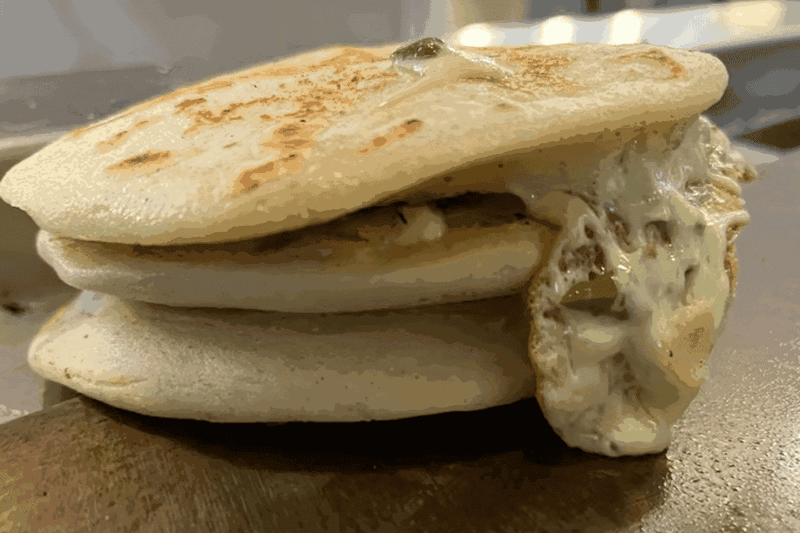
Not everyone wants meat in their masa, and that is exactly where the bean and cheese pupusa shines. Frijol con queso keeps things humble, pairing creamy refried beans with a generous layer of melted cheese.
It is the version that best shows off the corn cake itself, since there is no pork competing for attention. The beans add earthiness while the cheese brings that satisfying pull with every bite.
Cheese-only pupusas also earn their share of orders from folks who want the simplest option possible. Both land squarely in the traditional camp, the kind of fillings that have anchored Salvadoran kitchens for generations.
Here is a handy note for anyone with dietary needs: several visitors point out the kitchen works entirely gluten free, even if the signage does not say so. Just ask the staff, and people say they are happy to guide you.
For a meatless meal that still feels hearty, this pairing does the job. It is proof that a great pupusa does not need much beyond good masa, warm beans, and cheese that stretches.
A Menu That Reaches Beyond Pupusas
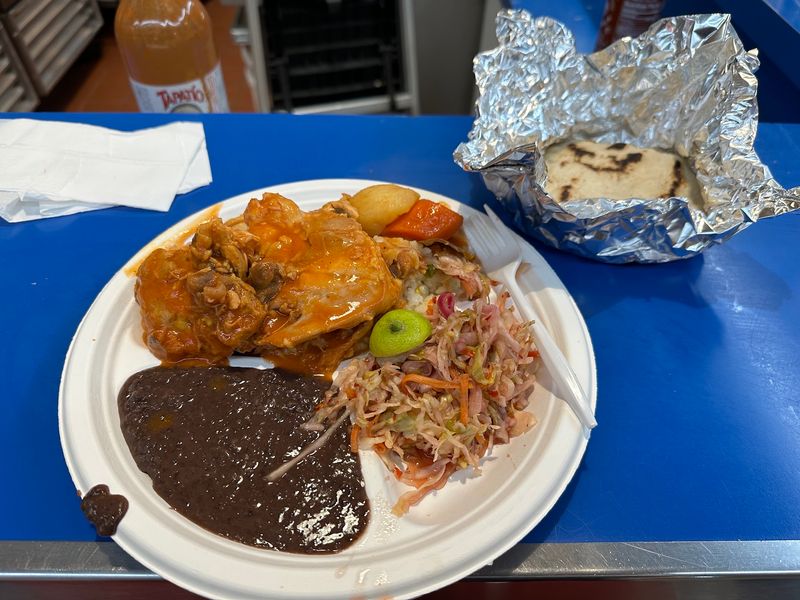
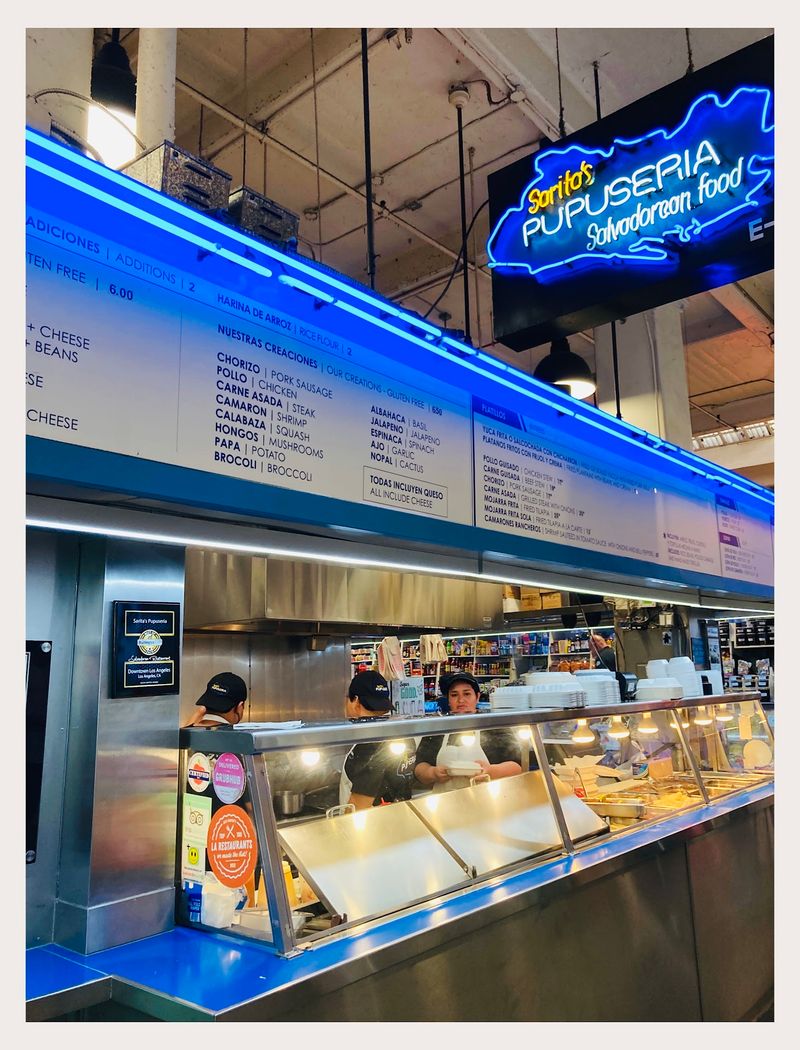
Pupusas may headline the menu, but the stall spreads its wings wider than that. You will find carne asada, chicken, and shrimp fillings alongside the classics, plus revueltas for those who want a little of everything.
Beyond the griddle cakes, the kitchen turns out traditional plates that round out a Salvadoran meal. Think yuca con chicharron, stews, and fried yuca that visitors single out as a must-order side.
One customer who catered an event ordered a whole range of pupusas, from carne asada to shrimp, and reported the whole spread tasted amazing to their coworkers.
There are breakfast options too, including scrambled egg plates served with rice, black beans, and tortillas for an earlier start to the day.
Adventurous eaters can even find fillings like nopales, the tender cactus that adds a slightly tart bite. With so many combinations, the stall rewards repeat visits.
Still, most seasoned advice circles back to the same idea: at a pupuseria, stick mostly to the pupusas and you will not go wrong.
Golden Plantains And Fried Yuca On The Side
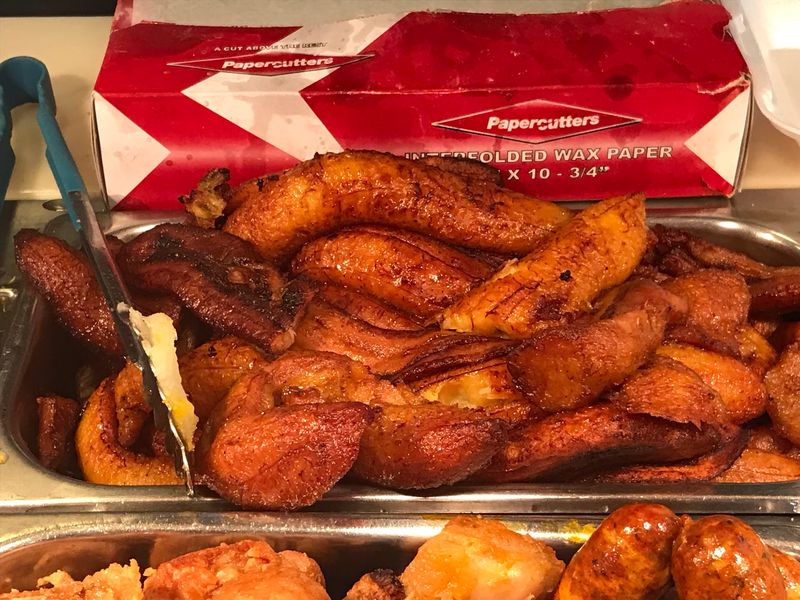
Sweet, soft, and naturally sugary, the fried plantains here have their own loyal following. One visitor came in specifically for platanos fritos and left happy, calling them warm and gently sweet, though the portion vanished in about a minute.
Plantains show up in conversation more than almost any other side, a sign that plenty of people treat them as a small treat alongside the main event.
Then there is the yuca frita. Crispy on the outside and starchy within, the yuca fries earn steady praise, with several diners recommending them as the perfect partner to a hot pupusa.
These sides lean into the comfort-food spirit of Salvadoran cooking, offering contrast to the savory masa cakes. The plantains bring sweetness while the yuca brings crunch and heft.
One fair heads-up from visitors: portions on some sides can feel small for the price, so plan your order accordingly if you are extra hungry.
Still, for rounding out a plate with something beyond pupusas, these two golden classics keep earning their spot.
Curtido And Salsa That Tie It All Together
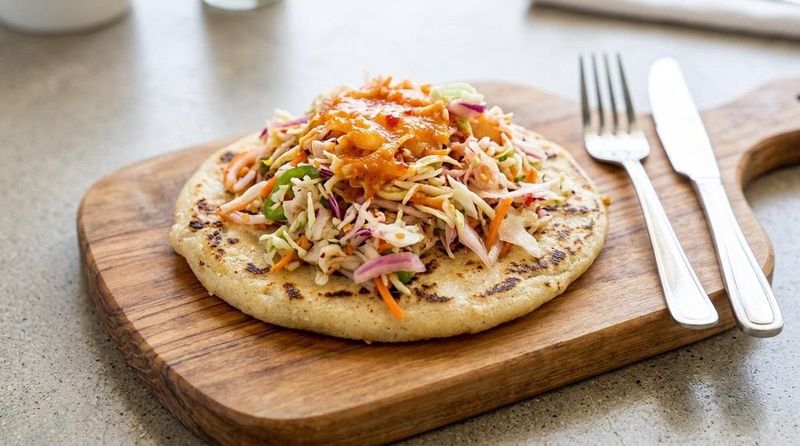
A pupusa without curtido feels unfinished, and the crew here knows it. That tangy, vinegary cabbage slaw comes alongside every order, adding crunch and a bright bite that cuts through the richness of melted cheese.
Visitors describe the slaw as having a nice kick and a satisfying crunch, the kind of topping that wakes up each mouthful. Pickled cabbage gets mentioned again and again as part of the experience.
Then comes the salsa. The house tomato-based sauce leans spicy, and one fan raved about its garlic-forward flavor, saying just a few squirts pull the whole pupusa together.
Layering both onto a hot masa cake is practically required. The tang, the heat, and the crunch balance the soft, savory interior in a way that feels intentional and traditional.
Here is a fun bit of history: this pairing of curtido and salsa has accompanied pupusas for generations across El Salvador, so you are eating them the way they have always been meant to be enjoyed.
Skip these toppings and you are missing half the magic.
Refreshing Sips Like Passion Fruit And Hibiscus
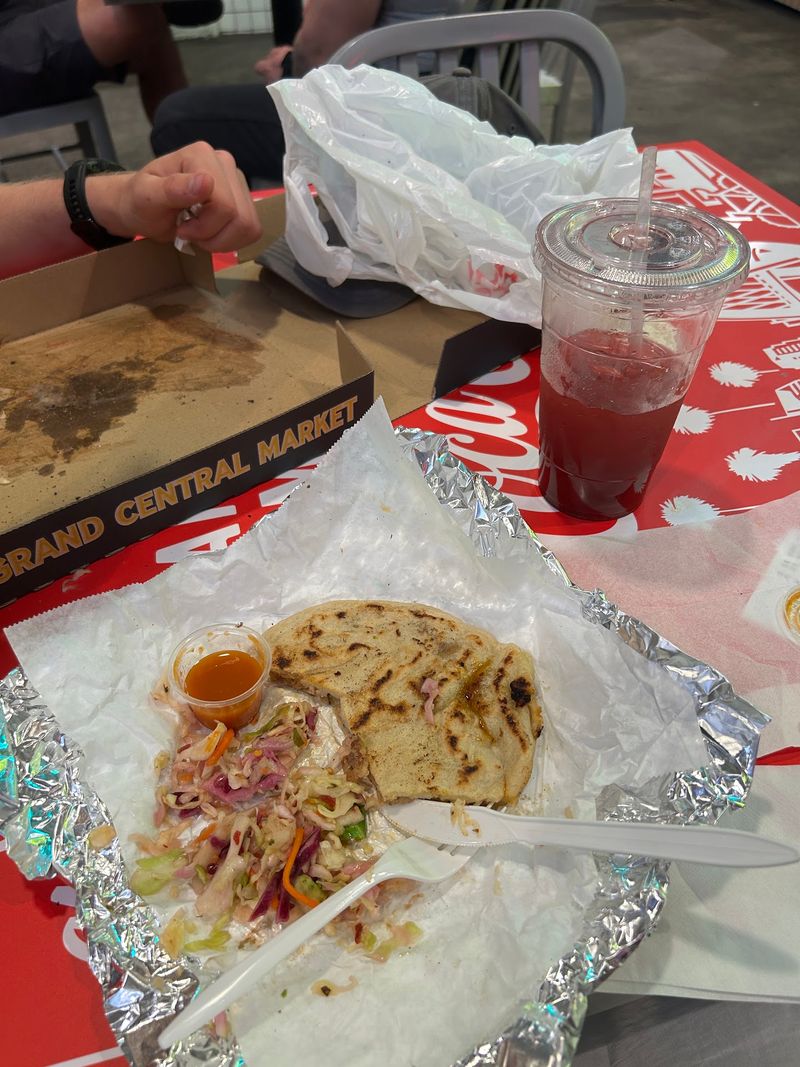
Grand Central Market can get warm, and a cold drink makes the whole meal better. Fans here point to the passion fruit and hibiscus beverages as a genuine highlight, with one visitor insisting you simply must try them.
Hibiscus, often called jamaica, brings a tart, floral sweetness that plays beautifully against spicy salsa and savory masa. Passion fruit leans bright and tangy, a tropical lift for a hearty plate.
These kinds of aguas frescas are staples of Salvadoran and broader Latin American tables, meant to cool the palate between bites of hot food.
Pairing a refreshing sip with a griddle-fresh pupusa is a small pleasure that regulars clearly appreciate. The drinks add color and a splash of fun to what is otherwise a very simple counter meal.
Since the atmosphere inside the market can feel hot, according to several visitors, having something chilled on hand is more than a nice touch.
Ask about the day’s offerings when you order, and treat the drink as part of the whole Salvadoran experience rather than an afterthought.
Patience Is Part Of The Deal
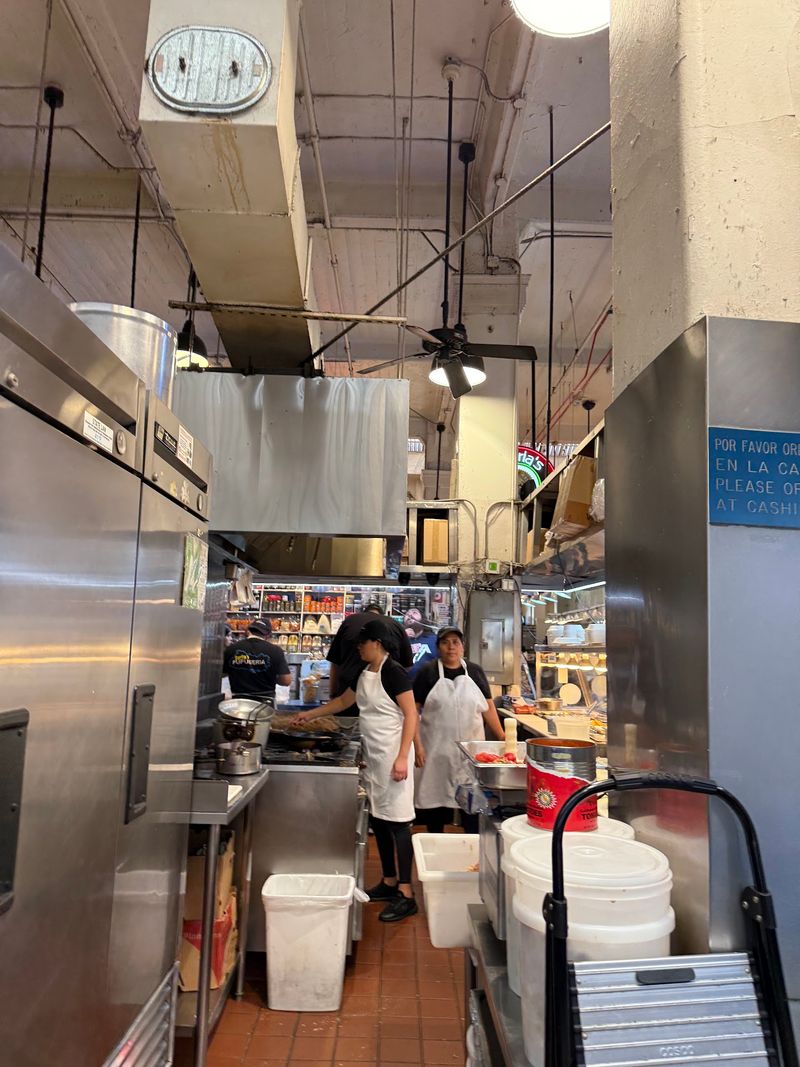
Here is the honest truth about visiting: you will probably wait. Because everything is cooked to order, the counter can move slowly, and several visitors mention waits ranging from ten minutes to much longer during busy stretches.
Weekends and lunch rushes stack up the fastest. Some diners report their food arriving quickly on a quiet weekday afternoon, while others describe longer waits when the market is packed.
A recurring tip from regulars: to-go orders can lag behind in-person ones, so if you are in a hurry, plan ahead or order at the counter and eat there. If you have a movie or appointment nearby, build in extra time.
The upside of the wait is freshness. One devoted fan framed it perfectly, saying these pupusas are not rushed, they are crafted, and you can taste that care in every bite.
Set your expectations before you arrive, bring a little patience, and the slow pace becomes part of the ritual rather than a frustration.
Come relaxed, watch the griddle work, and let the food take its time.
Hours, Prices, And Finding The Counter
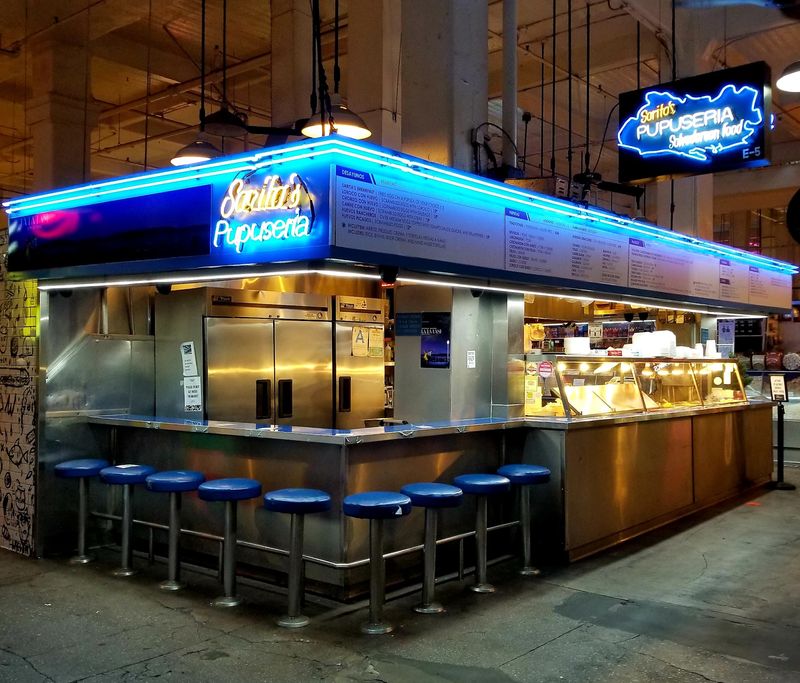
Planning a visit is straightforward once you know the rhythm. The stall opens at 9 AM on Friday, Saturday, and Sunday, and at 10 AM Monday through Thursday, closing at 8 PM every day of the week.
Prices sit in comfortable street-food territory. A revuelta pupusa runs around $5.50, described by visitors as a good deal for its bigger-than-average size, while sides like plantains land closer to $7.63 for a small portion.
You will find the counter inside Grand Central Market at 317 S Broadway in downtown Los Angeles, easy to reach given the market’s central spot in the city. The phone number is +1 213-626-6320 if you want to call ahead.
Because it lives inside a larger food hall, seating is shared market seating rather than a private dining room. That keeps things casual and lively.
A quick reminder based on visitor experiences: portions vary by dish, so check prices as you order to avoid surprises. Bring cash or card, arrive with time to spare, and let the market’s energy carry you to the griddle.
Is It Worth The Stop?
So where does all this leave a hungry visitor deciding whether to squeeze into the line? The honest answer is that opinions run the full range, and a smart approach helps you land on the happy side of it.
Those who love it point to fresh, generously sized pupusas, standout revueltas, and the small thrill of watching each cake pressed by hand. When the kitchen is on, people leave saying the food stays with them.
Others found slower service and portions that felt small for the price, especially on busy weekends. Managing expectations makes a real difference here.
The winning strategy is simple: come on a calmer weekday, order a couple of pupusas with plenty of curtido and salsa, add a cold hibiscus drink, and bring patience for the wait.
Treated that way, this little Salvadoran counter delivers exactly what it promises, a handmade taste of El Salvador in the heart of a legendary market.
For anyone curious about pupusas or craving a comforting, no-frills meal, it earns a spot on the list.