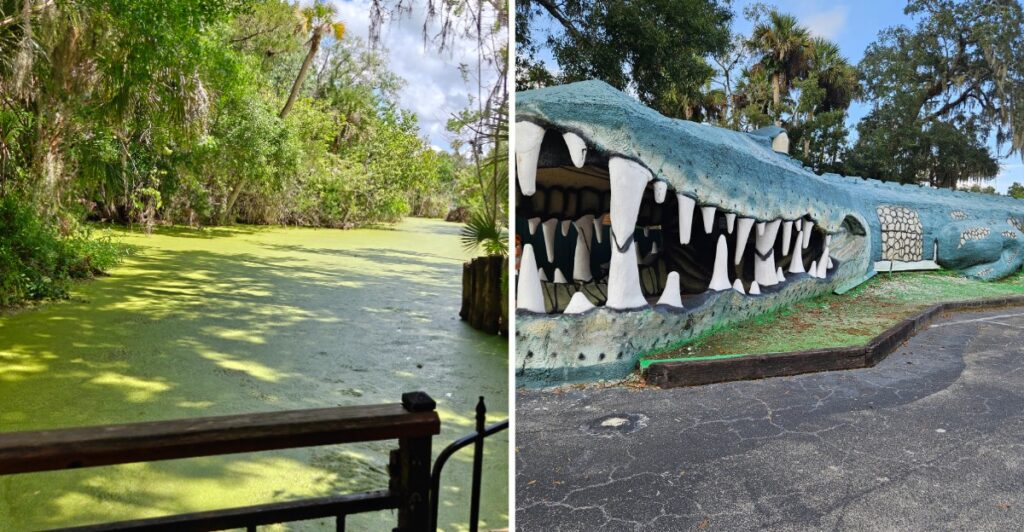
There are roadside stops that make you glance twice.
Then there are the ones that make you wonder who approved the blueprint.
Along one stretch of Florida highway, something enormous has been stopping curious drivers for decades.
It is strange enough to earn the pull-over before you even know what waits behind it.
And there is quite a bit behind it.
The property carries an older slice of the state with it, from wildlife and swampy surroundings to a nearby community with a name that comes with its own unexpected history.
You could easily treat the first sight as the main event.
That would be a little premature.
Because once you figure out what this enormous roadside landmark actually is, the next question becomes much harder to ignore.
What exactly is going on behind it?
Swampy Stretches Roughly Two Hundred Feet Beside State Road 50
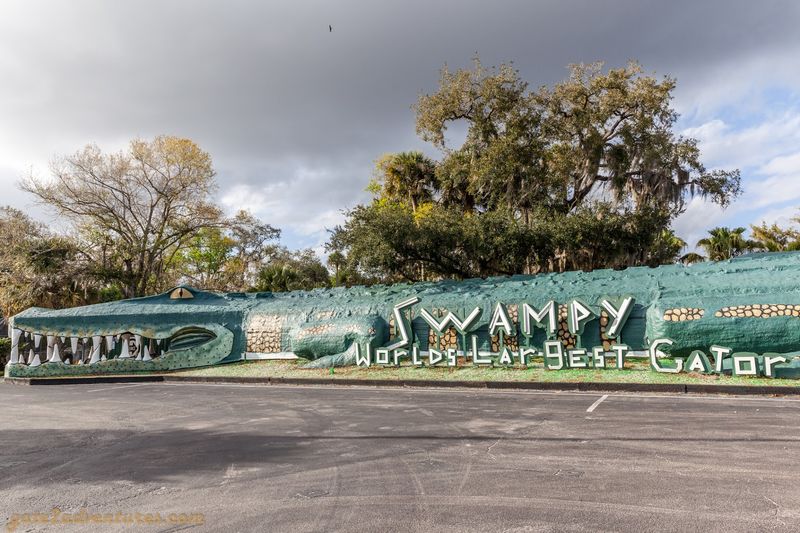
Swampy is the first thing most drivers notice. The alligator-shaped structure stretches for roughly 200 feet from snout to tail, large enough to turn the entrance into a roadside landmark rather than a simple sign.
The figure is often billed as the World’s Largest Alligator, although Swampy is a building rather than a real animal. A careful measurement put Swampy at 200 feet and 1 inch from snout to tail.
Swampy was built in the summer of 1989, when the attraction was still known as Gator Jungle. The structure has remained beside the highway through later changes to the park name and operation.
The scale is easiest to understand once you are standing beside it. A normal roadside mascot fits into one photograph. Swampy keeps going.
If you only have a few minutes, the exterior still gives you the main roadside moment. If you have more time, the park behind it adds the wildlife side of the visit.
Either way, pull into the property rather than trying to admire a 200-foot reptile while moving down State Road 50.
The Giant Alligator Is Also Part Of The Entrance Complex
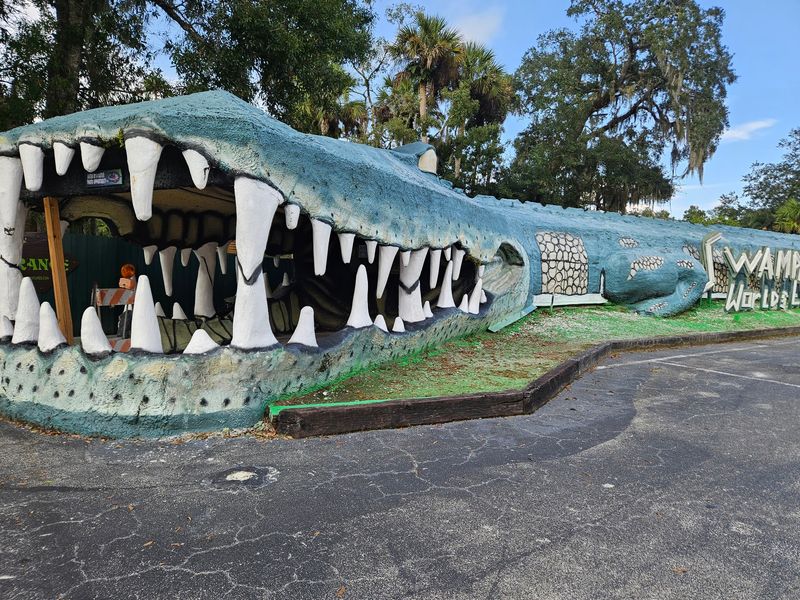
Swampy is not simply a sculpture resting beside the parking lot. Parts of the attraction’s entrance operation are built into the alligator-shaped structure, including ticketing, gift-shop, office, and related spaces.
That makes the building an example of novelty architecture, where the structure itself takes the form of the thing it represents.
Florida’s older highways collected plenty of oversized roadside figures, but a full-length alligator large enough to contain working interior spaces belongs in a more unusual category.
Part of an earlier building was incorporated into Swampy, tying the giant structure directly into the entrance complex.
You do not need to understand the architecture before arriving. The shape does the explaining quickly enough.
Walk around the exterior where public access allows, then look back toward the highway to see how effectively the long green body works as a landmark.
The attraction has changed over the decades, so follow current signs and staff directions around the entrance rather than assuming every older photo shows an area that is still open the same way.
Swampy can handle the posing. You only need to find enough distance to fit the whole thing into the frame.
Jungle Adventures Grew From A Small Operation In The 1970s
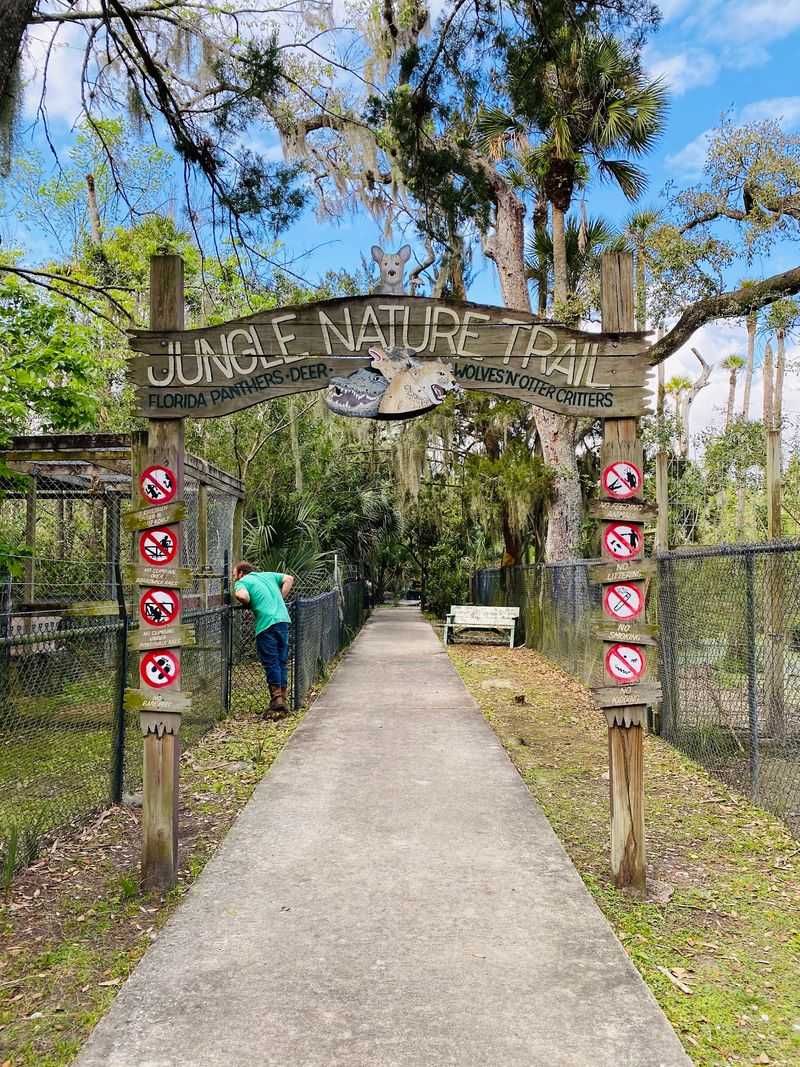
The animal park behind Swampy began as a hobby farm created by Herman Brooks in the 1970s. Over time, that operation expanded into the roughly 10-acre Jungle Adventures property that visitors see today.
The park has now been part of Central Florida’s roadside landscape for more than 50 years. Its current focus includes native and exotic wildlife, reptiles, birds, and guided educational programming.
Alligators remain central to the experience. The park operates as a licensed alligator farm and keeps animals of different sizes, from much smaller juveniles to large adults.
The property also includes Florida wildlife such as a panther, along with other mammals, birds, and reptiles.
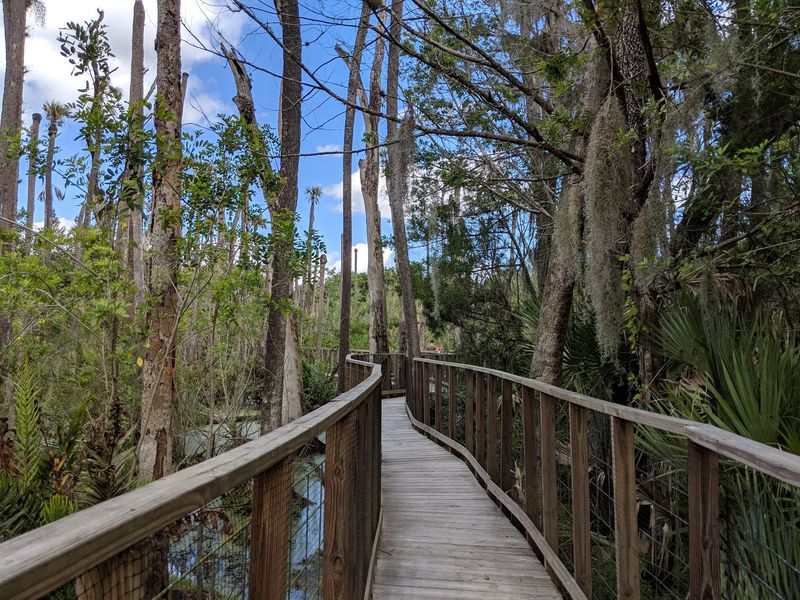
Guided activities are built into the visit, and more than 2,000 feet of boardwalks and pathways cross the property. The West Boardwalk is currently closed for refurbishment, with animal viewing continuing from the main walkways.
Comfortable shoes make sense, especially on a warm day. So does water.
If your schedule is tight, decide before entering whether you have enough time for the guided rotation rather than trying to squeeze a full animal-park visit into the space between two other stops.
Guided Wildlife Programs Keep The Visit Moving
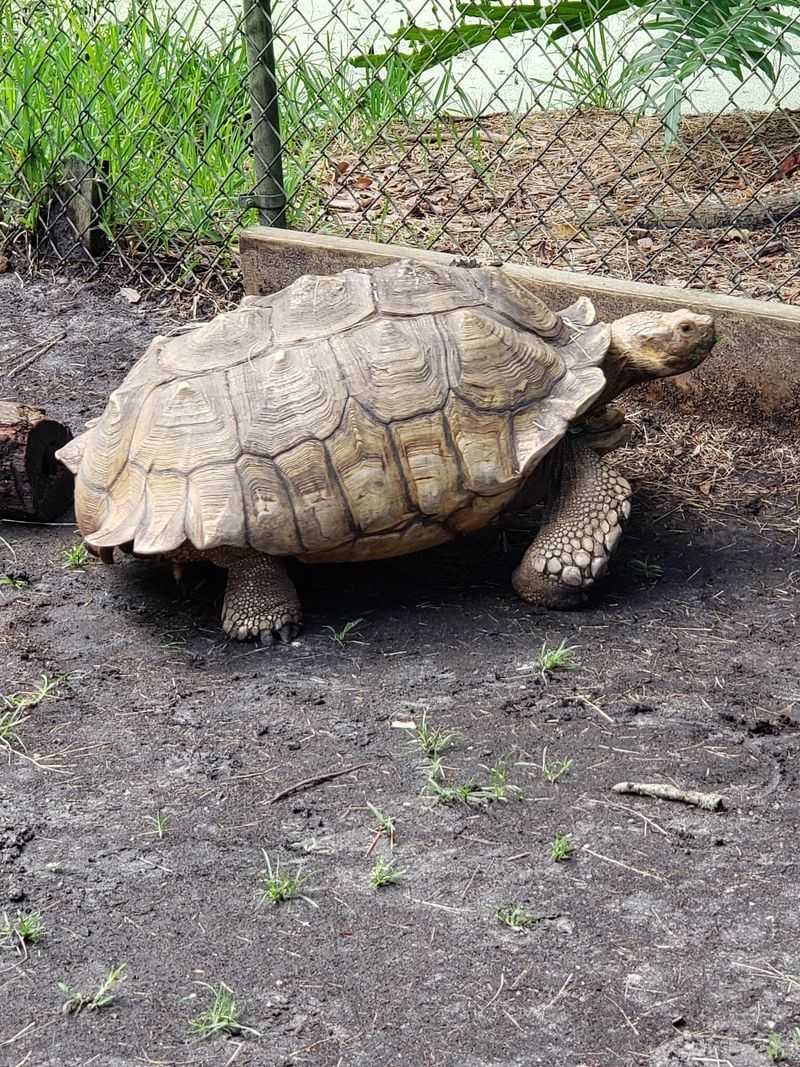
Jungle Adventures currently runs a rotation of guided activities rather than leaving every part of the experience completely self-directed.
One program centers on wildlife encounters, including close-up introductions to a baby alligator and other animals. Another focuses on larger alligators during a feeding presentation, with guides discussing the animals while working around the enclosure.
A separate presentation explores Native American and early Florida history through the park’s village area. That adds cultural context to a property that otherwise leans heavily toward wildlife.
The exact timing of activities can shift, especially when weather affects outdoor programming, so it helps to arrive with enough flexibility to follow the day’s sequence.
If one particular activity matters most, ask about the current rotation when you enter.
The guided rotation gives the visit a clear rhythm, with time to explore the animal areas between presentations.
Between programs, there is still time to walk through the animal areas at your own pace.
Keep expectations simple. The main decision is whether you want to follow the full rotation or focus on a shorter section of the park before moving on.
The Jungle Swamp Queen Cruises Through A Gator-Filled Lagoon
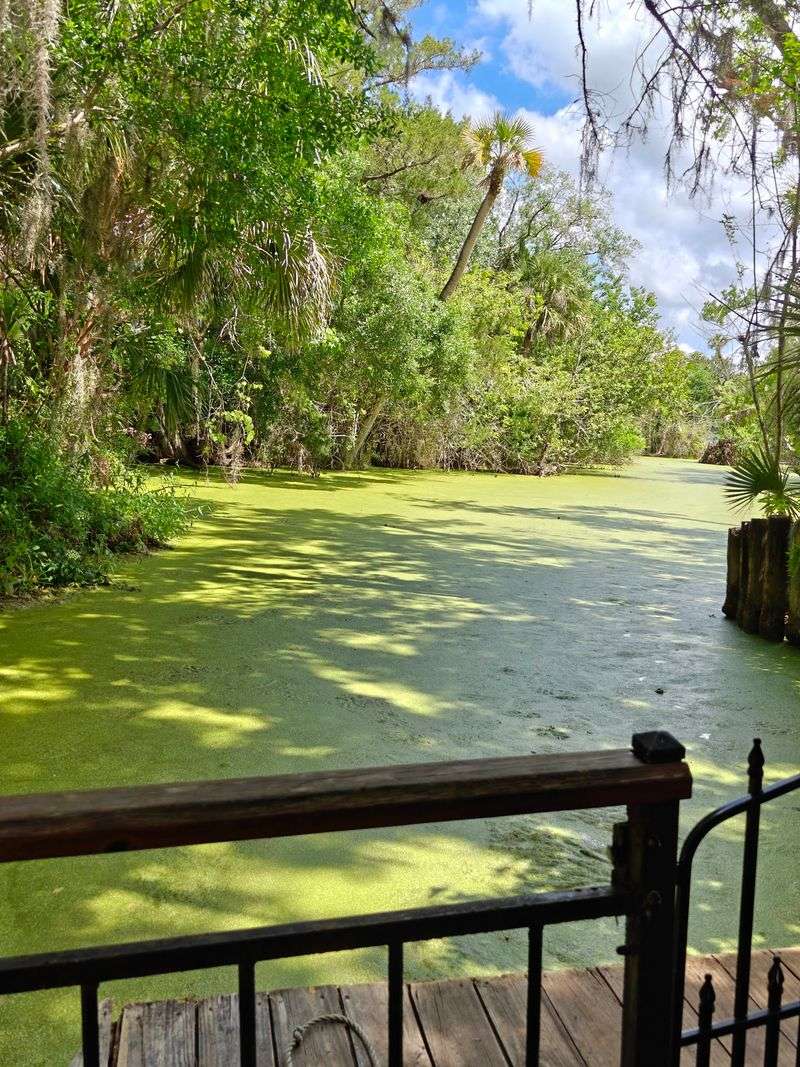
The boat ride changes the pace after the boardwalks. Jungle Adventures currently operates the Jungle Swamp Queen, an electric-motored pontoon boat that moves through the park’s lagoon.
The lagoon holds more than 150 alligators, keeping the water portion of the visit closely tied to the attraction’s central animal.
An electric motor keeps the ride quieter than a conventional gas-powered boat, which suits a short cruise through a wildlife setting.
Alligator activity can vary with temperature, weather, and time of day. Some animals may be visible in the water or along the edges, while others may be harder to pick out.
Treat the cruise as part of the guided experience rather than a guarantee of one exact sighting.
The boat does not operate during unsuitable weather, which is especially relevant during Florida’s rainy season. If clouds are building, check the day’s activity schedule before assuming the cruise will run exactly when you planned.
A hat and sun protection help when conditions are bright, while bug spray can be useful around wet areas.
After several stops on foot, sitting down for a slower pass through the lagoon is an easy change of rhythm.
The Park Keeps Long Daily Hours In Christmas
Jungle Adventures is at 26205 East Colonial Drive, Christmas, FL 32709. Current regular hours run from 9:30 a.m. to 5:30 p.m., with last park admission at 4 p.m. The park can occasionally close early, and outdoor activities may be delayed or postponed for weather.
That schedule gives you several ways to organize the visit. Morning can mean cooler temperatures and plenty of time for the full activity rotation. A midday arrival still leaves room for guided programs if you are not rushing.
Arriving near the last-admission window makes the day much tighter.
Parking is available at the property, including overflow space near Swampy’s tail when needed.
The park also has non-electric wheelchairs available on a first-come basis, and the property includes more than 2,000 feet of boardwalks and pathways.
Snacks and drinks are sold on site, and visitors can also bring lunch to use in the shaded picnic area outside the gift shop.
If the giant alligator is your only goal, the stop can be brief. If you are entering the park, give the guided schedule room to work instead of treating it like a five-minute roadside photo.
Christmas Has A Much Older Story Than The Giant Gator
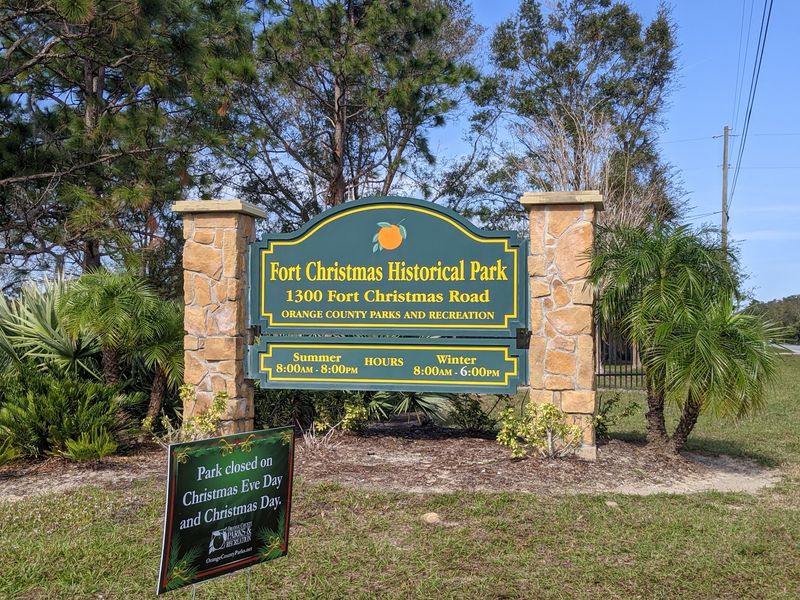
Swampy may dominate the roadside, but the community’s name comes from a much older piece of local history.
Christmas was named for Fort Christmas, a Seminole stockade built by U.S. soldiers on or around Christmas Day in 1837. The community later developed around the area, and a post office opened in 1892.
The holiday theme never disappeared completely.
Orange County still notes a permanent Christmas tree at the intersection of Highway 50 and Fort Christmas Road, along with street names such as Cupid Avenue, St. Nicholas Avenue, Rudolph Street, Dasher Street, and Blitzen Avenue.
Nearby Fort Christmas Historical Park adds to the deeper history. Its centerpiece is a full-scale replica of the 1837 fort, built in the late 1970s. The park also preserves historic homes, a schoolhouse, farm equipment, and exhibits connected with rural Florida life.
That makes an easy second stop if you want more than wildlife and roadside architecture.
There is no need to force both attractions into a rushed schedule, though. Spend the longer block of time where your interest is strongest.
A giant green alligator may be what gets you to slow down, but Christmas gives you enough history nearby to keep the stop from ending at the parking lot.