On the morning of May twenty-third, nineteen thirty-four, Clyde Barrow walked into a roadside cafe in Gibsland. He ordered a fried bologna sandwich.
Bonnie Parker waited in the car with a BLT.
Seven and a half miles down the road, one hundred and thirty rounds of ammunition ended their crime spree in an ambush that still draws visitors to this rural stretch of Highway one-fifty-four.
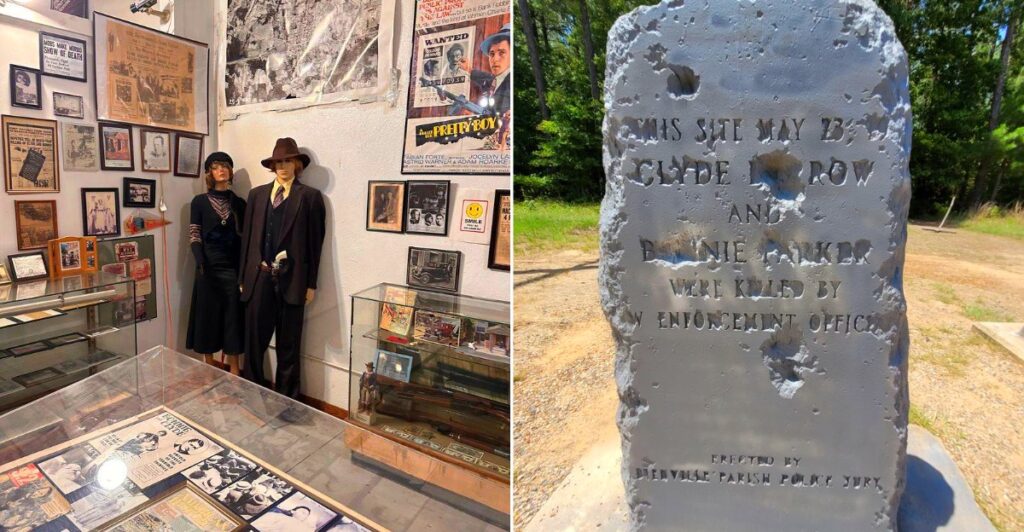
A modest museum now occupies the former cafe building. The operator has personal connections to Barrow family members.
He recounts stories of climbing inside the car as a child.
Exhibits display authentic artifacts including personal items and documentation of their two-year spree. The actual ambush site stands seven and a half miles south of town.
A Louisiana roadside cafe where the most infamous outlaw couple in American history shared their last meal now preserves that morning in vivid and unforgettable detail.
Try The Last Meal Connection
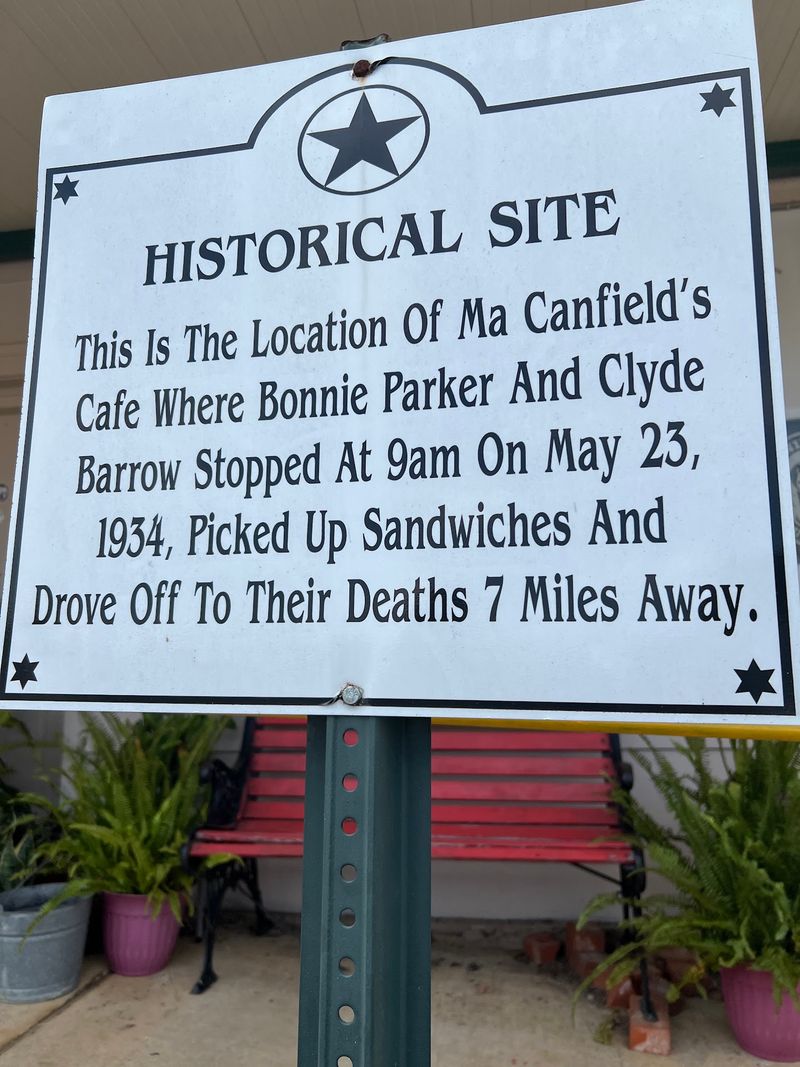
Few museum stops let you taste the story, but this one comes close. Accounts tied to the car suggest Clyde chose a fried bologna sandwich and Bonnie picked a BLT, with coffee and donuts earlier that morning.
At the Bonnie & Clyde Last Stop Cafe, those sandwiches are part of the experience, turning a famous final chapter into something oddly everyday.
Food can shrink history down to human size. Reading about outlaws is one thing, but picturing a to-go order on an ordinary morning makes the pair seem less like posters and more like tired travelers.
If you plan to eat, do it before or after the museum so the details connect in your mind. It is a simple stop, not a fancy one, and that plainness actually suits the story better than anything polished ever could for me.
Stand On The Original Cafe Site
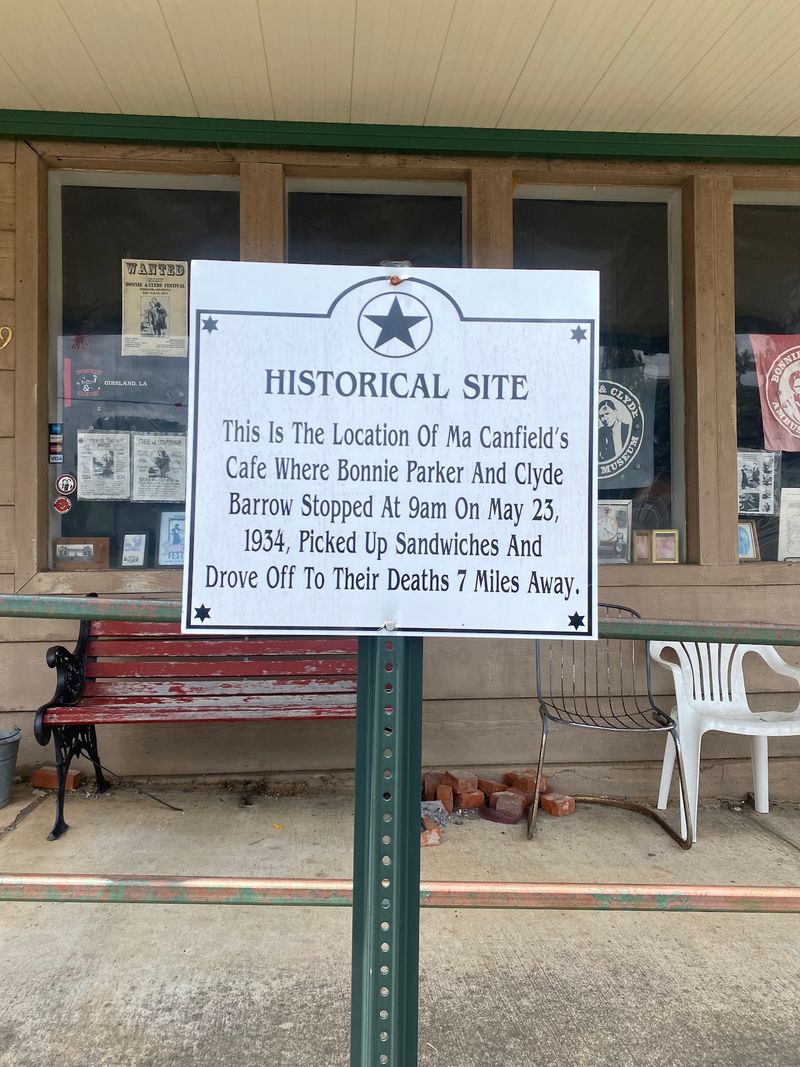
Bonnie & Clyde Ambush Museum sits at 2419 Main Street in Gibsland, Louisiana, right in the small downtown grid. Main Street is the road to aim for, with the museum occupying the former Ma Canfield’s Cafe building where Bonnie and Clyde stopped shortly before the ambush.
The final approach is compact and easy to read once you are in central Gibsland. Look for the old cafe-style storefront on Main Street rather than expecting a large museum complex, and you will know you are in the right spot before the road opens back out toward the countryside.
Park around the downtown museum area and walk straight to the Main Street entrance. If you are continuing to the actual ambush site afterward, head south out of Gibsland on Highway 154 for the separate roadside markers.
Pause At The Replica Car
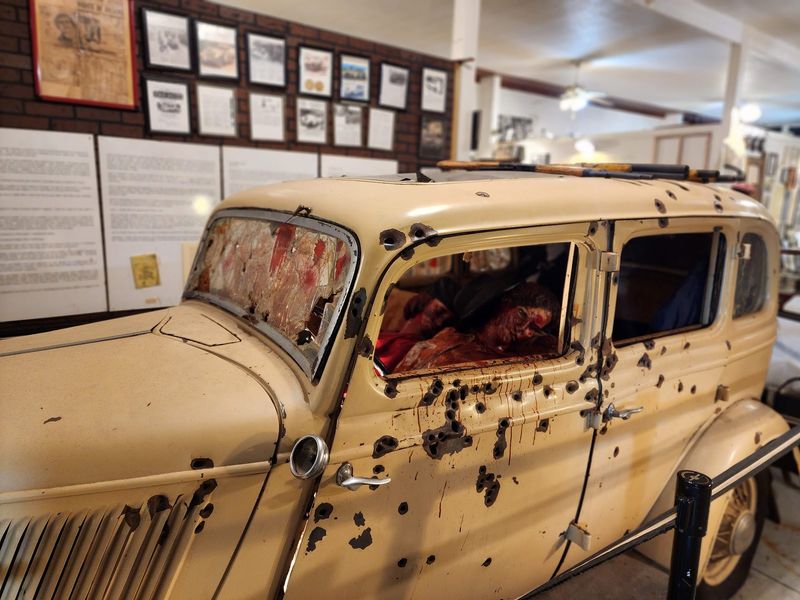
The room changes the moment the Ford appears. The museum’s replica of the 1934 V-8 car is covered with bullet holes, and the interior was recreated to suggest the chaos after the ambush.
However many articles you have read, a life-size car makes the violence feel blunt and immediate. It is the exhibit most likely to stop visitors in mid-step.
What struck me was how mechanical it all seems at first, just metal, glass, paint, and then the human cost catches up a second later. Perry Carver recreated the display to resemble the original car hit by a storm of bullets.
Give yourself time here instead of rushing for a photo. The car works best as a pause, a hard visual reminder that the story ended on a rural road, not on a movie screen that morning there either.
Look Closely At Personal Artifacts
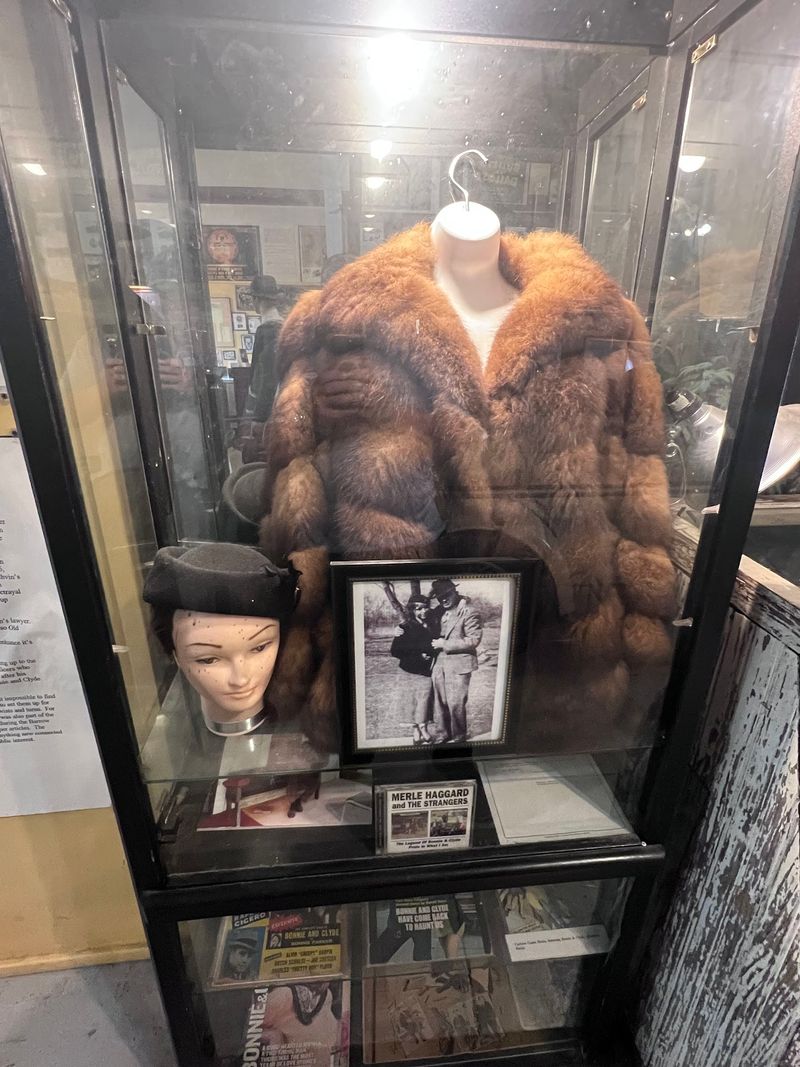
Shoes can say more than speeches in a place like this. Among the museum’s personal items are Clyde’s shoes, some of Bonnie’s clothing, and a plaster cast of Clyde’s hand, objects that pull the pair out of legend and back into ordinary size.
A hand cast is especially unsettling because it feels so direct, almost like a handshake frozen by history.
Most crime stories flatten people into headlines. Here, fabric, leather, and the shape of a hand remind you that Bonnie and Clyde were young, flawed, and physically real.
I found those quieter objects lingered longer in memory than the louder exhibits. Look closely at wear, scale, and texture instead of just reading labels.
Personal items do not excuse what they did, but they do make the past feel less abstract and far more human than expected at first glance.
Prepare For The Morgue Room
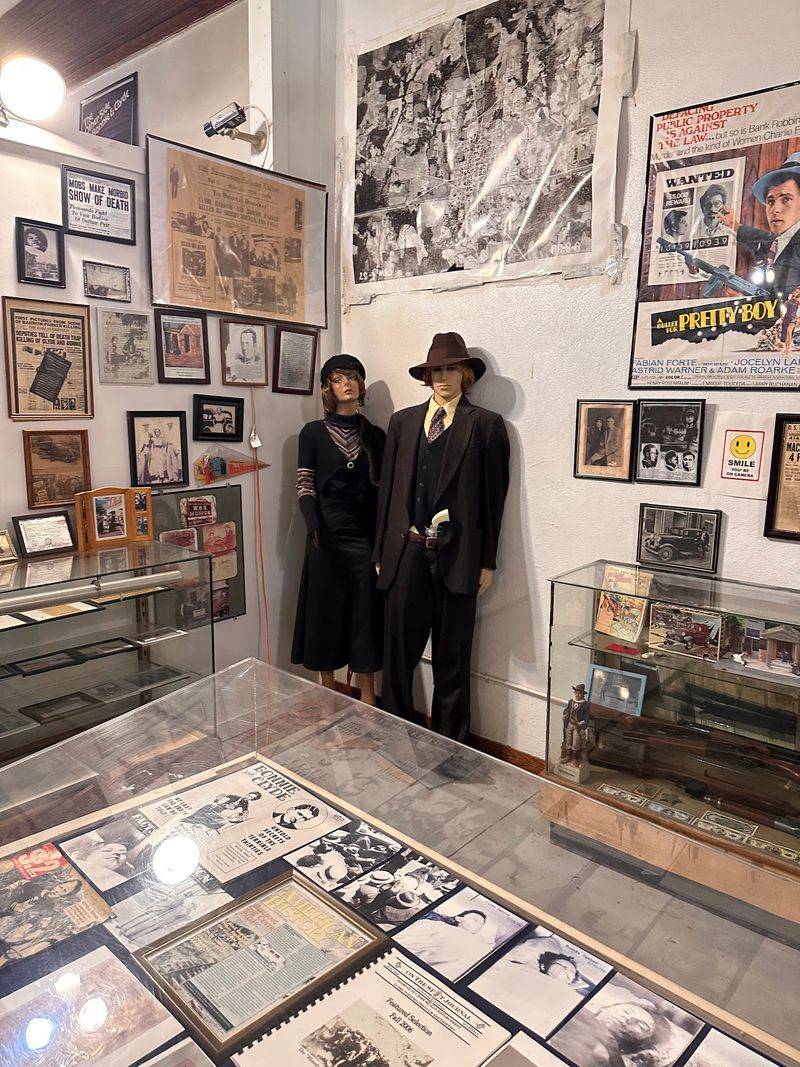
Not every part of this museum is easy, and the recreated morgue room proves it fast. The display uses mannequins to show Bonnie and Clyde after the ambush, and it includes an embalming table reportedly used for Clyde Barrow.
Nothing about the space feels playful. Instead, it pushes the story away from folklore and into the cold facts of handling and aftermath.
Visitors with younger kids or a weak stomach should know this section can be intense. The scene is graphic enough to change the tone of the whole visit, which may be exactly the point.
Crime here is not romantic, clever, or stylish. Take it slowly and step out if you need a break.
Oddly, the harshness of the room gives the museum moral weight, because it refuses to hide the ugly ending behind nostalgia or myth completely.
Notice The Lawmen In The Story
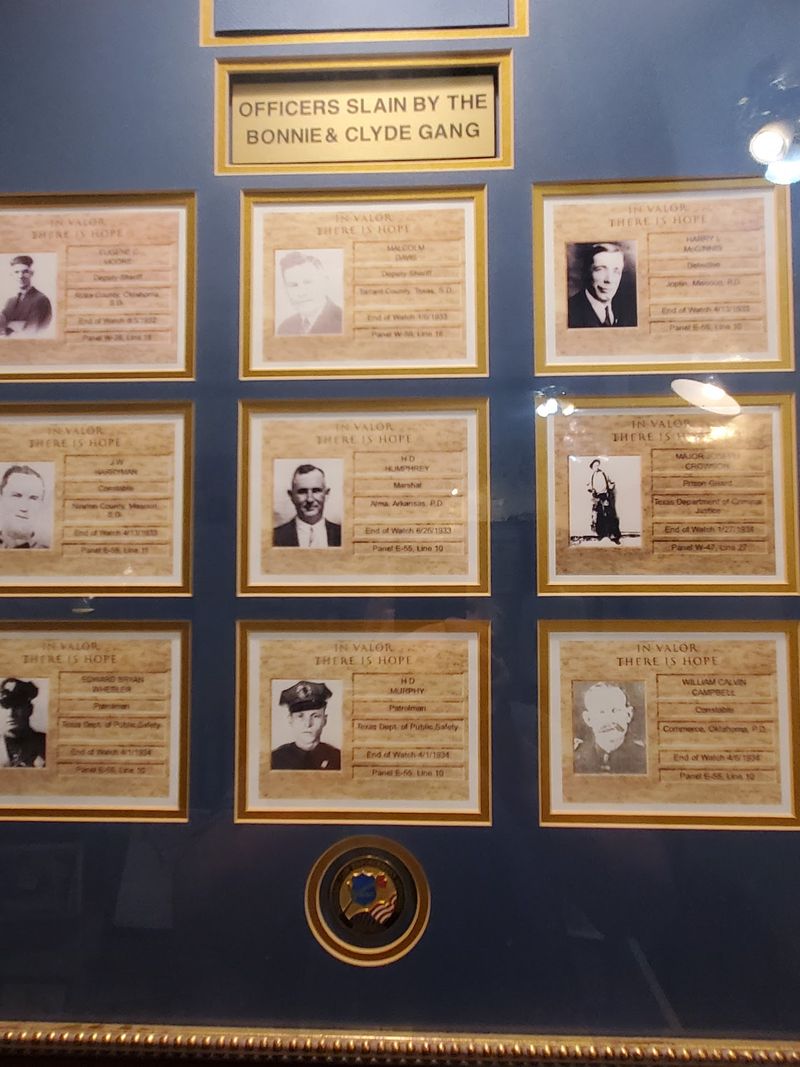
One of the museum’s smartest choices is that it does not tell only one side. Along with Bonnie and Clyde material, you will find paintings, photographs, and press clippings about the law officers involved in the ambush, including Sheriff Henderson Jordan and Deputy Prentiss Oakley.
That balance matters. Without it, the visit could slip too easily into outlaw glamour, which would miss the cost paid by others.
The exhibits quietly widen the story from two famous names to a manhunt that affected whole communities. Faces of officers, bits of reporting, and period images add depth that a film never gives.
Spend time with these displays even if the car and personal relics pull you first. They ground the museum in consequences and duty.
By the time you leave, Gibsland feels less like scenery and more like lived history.
Read Beyond Bonnie And Clyde
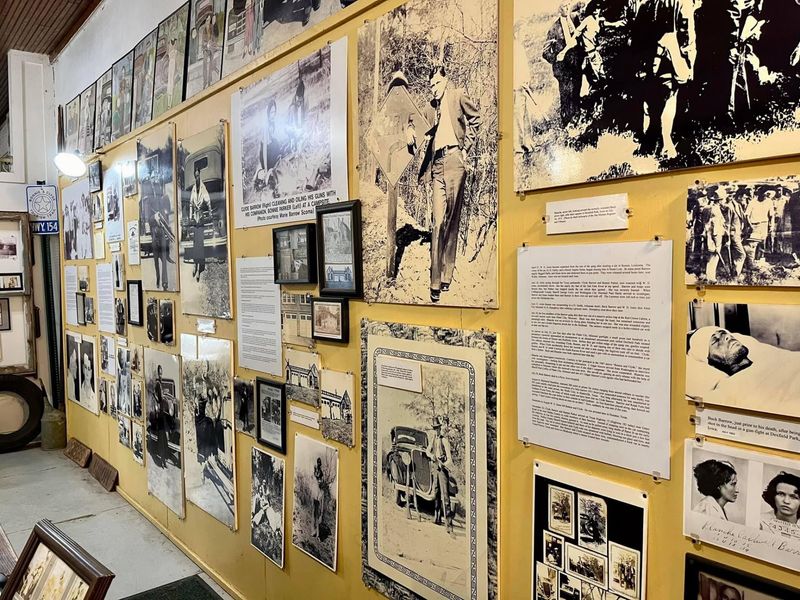
A small museum in a small town somehow opens into a much bigger decade. Beyond Bonnie and Clyde, the exhibits also touch the wider gangster world of the 1930s, including figures grouped as the Fab Five, such as John Dillinger, Baby Face Nelson, Pretty Boy Floyd, and the Barker gang.
That extra context helps the main story make sense. The couple were notorious, but they were also part of a larger wave of Depression-era crime.
Seeing those names around the room changes the mood from local curiosity to national history. Money worries, fast cars, newspapers, and public fear all start to connect.
If you like history beyond famous faces, slow down here and read. The museum is strongest when it shows how one roadside stop in Gibsland fits into a rough, restless chapter of American life that still echoes today there.
Drive Out To The Ambush Site
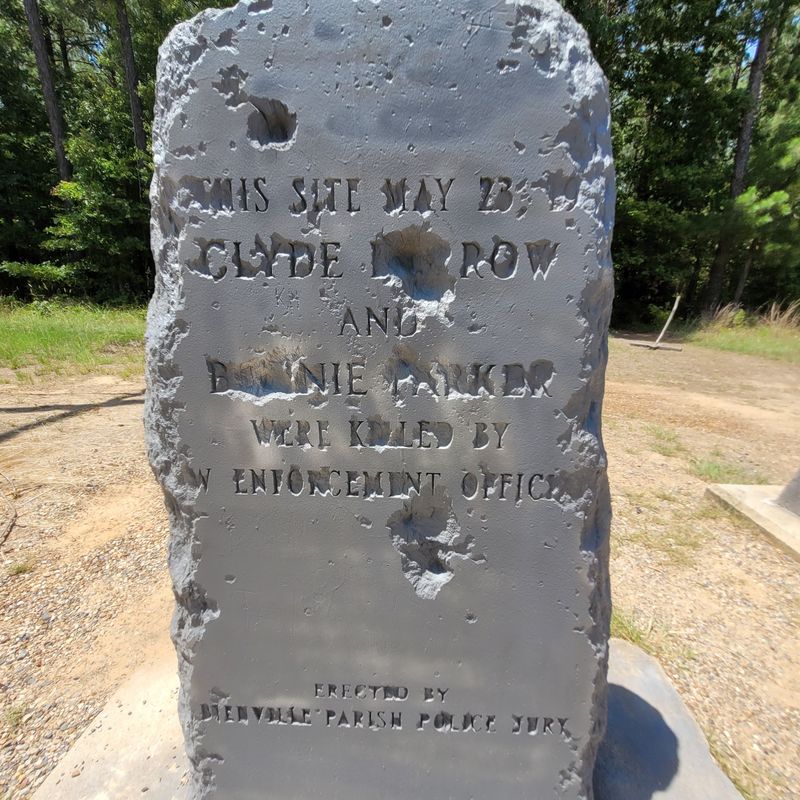
The museum marks the last meal. For the ambush site itself, you need to drive about seven to eight miles on Highway 154 between Gibsland and Sailes, where a stone monument marks the spot.
That separation is part of what makes the visit memorable. The story unfolds in stages: breakfast, sandwiches, a road, a wait, then a violent end.
Ask for directions before you leave the museum, because the route is part of the full experience. The drive is short, but it gives your mind time to shift from crowded exhibits to the quiet roadside where history closed in.
When I went, the stillness did more than the displays could. Treat the monument with respect, take a moment before speaking, and remember that the famous tale ended in a very ordinary patch of Louisiana landscape nearby there.
Appreciate The Owner’s Personal Connection
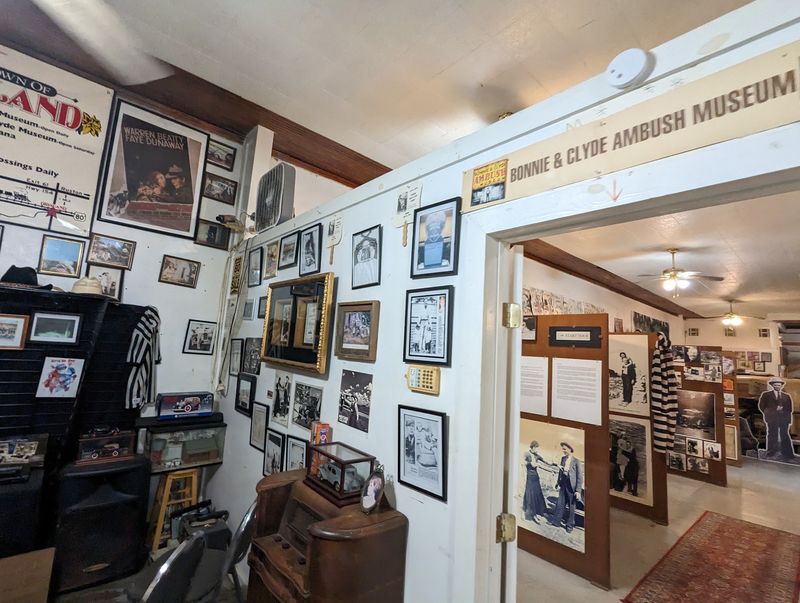
You can feel when a place is run by someone who has carried the story for years. Perry Carver bought the building and collection in 2012, then expanded what visitors could see.
His interest goes back much further, shaped by a childhood fascination with the car and family ties to people who knew its original owner. That personal thread gives the museum an unmistakably local heartbeat.
Instead of a polished, distant institution, the place feels preserved by stubborn curiosity and attachment. That may be why the rooms can seem so packed with clippings, objects, and details.
The collection reflects a person trying to save every scrap before it disappears. If you enjoy museums with personality, not just sleek design, you will appreciate that spirit.
The result feels less corporate and more like history being guarded by someone who cares.
Check The Gift Shop For Unusual Keepsakes
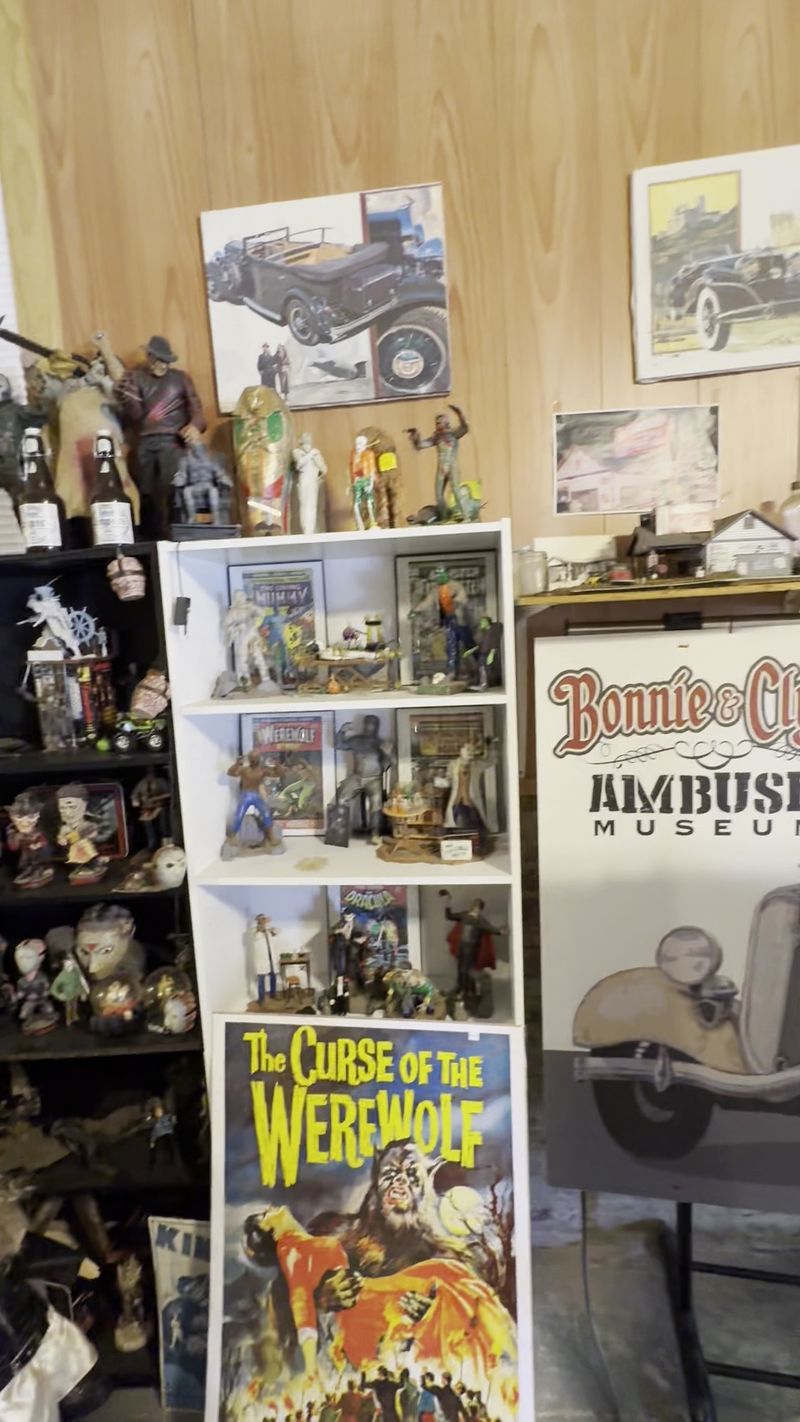
The gift shop leans into the museum’s oddball charm without losing the history. Along with expected books and keepsakes, it has sold unusual items connected to the story, including bricks from hideout sites and other northwest Louisiana places tied to Bonnie and Clyde’s last days.
That kind of souvenir is not for everyone, but it certainly matches the offbeat mood of Gibsland’s most famous stop.
I liked that the shop felt specific to the place instead of stuffed with generic trinkets. When a museum is this rooted in one event, a thoughtful memento can help the visit stick in your mind after the drive home.
Choose something small if you are unsure. A postcard, sticker, or book can carry just as much memory as the stranger items.
The best souvenirs here feel like conversation starters, not clutter for a shelf.
Time Your Visit For Festival Season
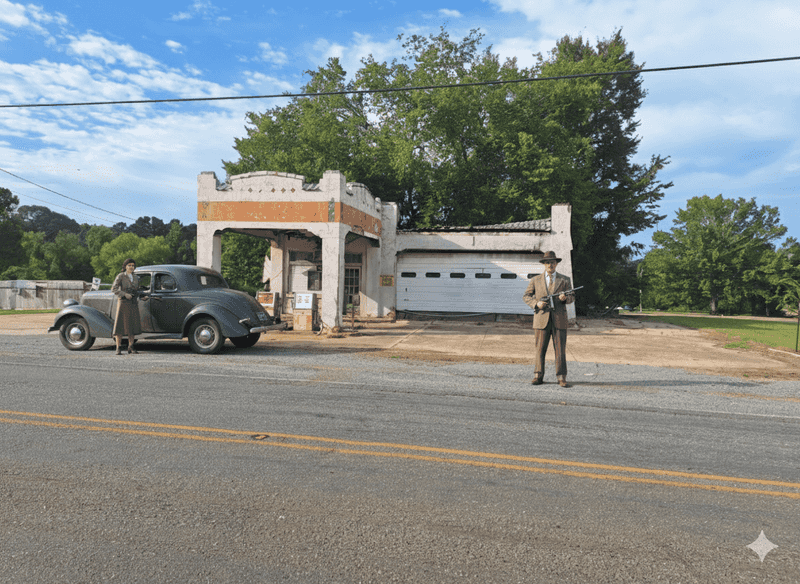
Every May, the story steps outside the museum walls and into town. Gibsland’s Authentic Bonnie and Clyde Festival keeps the ambush history in public view, and its best-known feature is a reenactment of the fatal roadside attack.
That event turns dry dates and names into movement, sound, and local ritual. Even if you usually avoid themed history events, this one helps explain how deeply the story still lives here.
Timing your trip for festival season can add a bigger community picture to the museum visit. Streets feel more animated, and the town’s unusual claim to fame becomes impossible to miss.
At the same time, the subject stays sobering beneath the crowd energy. Go early, expect attention around late May, and pair the festival with a museum stop for context.
It is history, remembrance, and small-town identity all tangled together there.