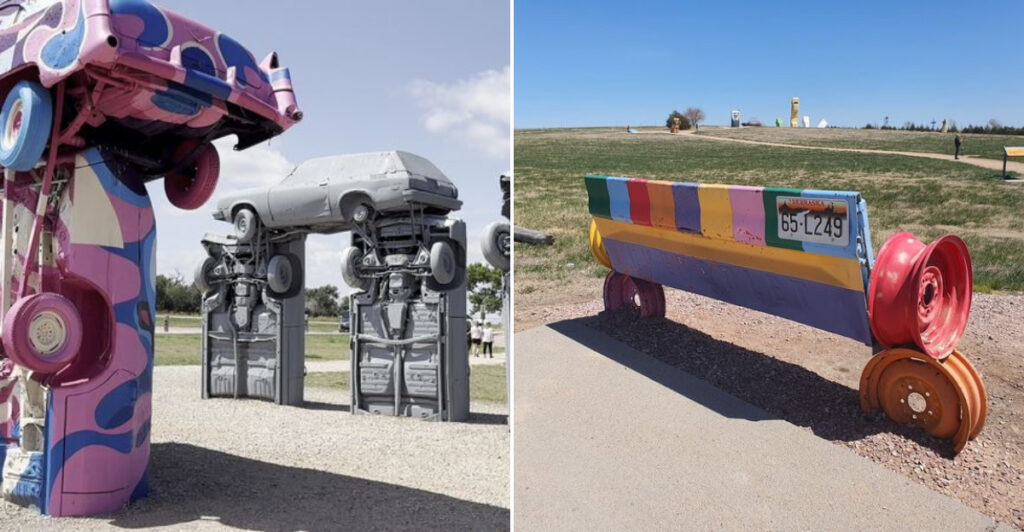
Wheel you believe Nebraska can turn a pile of retired cars into the road-trip story everyone repeats for years?
One tiny town took a famous ancient monument, swapped stone for steel, and gave American highways a wonderfully strange punchline.
This attraction succeeds because it is clever without trying too hard. The idea sounds ridiculous for about three seconds, then the craftsmanship begins winning the argument.
Every angle raises another question, usually followed by laughter and an urgent need to take one more photo.
Nebraska proves roadside art can be playful, thoughtful, and impressive at the same time.
The best detours do more than break up a long drive. They give your trip a personality, hand your camera a new favorite subject, and make the next ordinary exit sign look deeply disappointing.
The Story Behind The Cars In The Ground
Carhenge began with an idea bold enough to make ordinary roadside attractions look painfully underdressed. Old American cars replaced ancient stones in a carefully planned Nebraska tribute.
The creator spent time in England and studied the original Stonehenge monument. He later adapted its proportions using vehicles instead of massive stone slabs.
Each car was positioned to echo the shapes and arrangement found overseas. The result became far more precise than a random collection of automobiles in a field.
The installation was completed in 1987 as a family tribute. Local residents gathered for the unveiling, although early opinions were far from unanimous.
Cars buried upright near town were bound to raise eyebrows. Confusion gradually gave way to curiosity as more travelers began stopping for a closer look.
Over time, the installation earned recognition as one of the Midwest’s most unusual roadside attractions. Its strange appearance became the exact quality that helped it succeed.
The history gives every bumper and painted hood more purpose. Knowing the idea behind the structure turns a quirky photo stop into a personal work of art.
Nebraska supplied the open land, while imagination handled the construction plans. Apparently, even retired cars can earn a second career in ancient architecture.
What The Structure Actually Looks Like Up Close
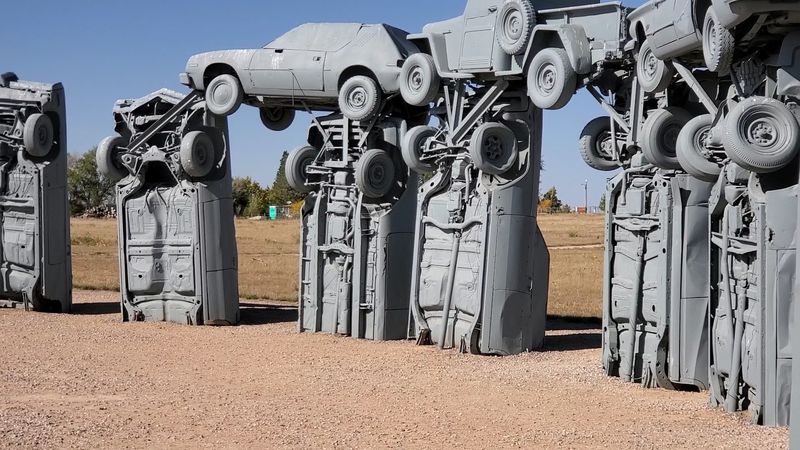
Up close, Carhenge stops looking quirky and becomes surprisingly monumental. The scale lands differently when visitors stand beside the upright vehicles.
You feel so tiny standing next to them. Surprisingly, that’s what I like the most.
Cars are buried trunk-first into the ground like oversized pillars. Others are welded above them to create the familiar arches associated with Stonehenge.
Every vehicle carries the same flat gray coating. That uniform finish helps the entire arrangement read as one structure instead of a crowded car collection.
Original automotive details still peek through the paint. Door handles, fins, bumpers, and hood shapes reveal what each “stone” used to be.
The circular layout is inspired by the ancient monument in England. Horizontal cars rest above upright ones, creating lintels with impressive visual balance.
Walking around the full circle reveals how carefully each piece was positioned. Different angles expose fresh details that photographs often flatten or miss.
The cars may look playful from the highway, but the construction shows serious planning. Precision gives the installation enough weight to support its enormous joke.
Nebraska never needed actual stones to build a memorable monument. A collection of retired cars apparently handles ancient history with remarkable confidence.
The Surrounding Sculptures That Share The Spotlight
Carhenge keeps another surprise beyond the main circle, where spare car parts become supporting stars. The surrounding sculpture garden deserves its own slow look.
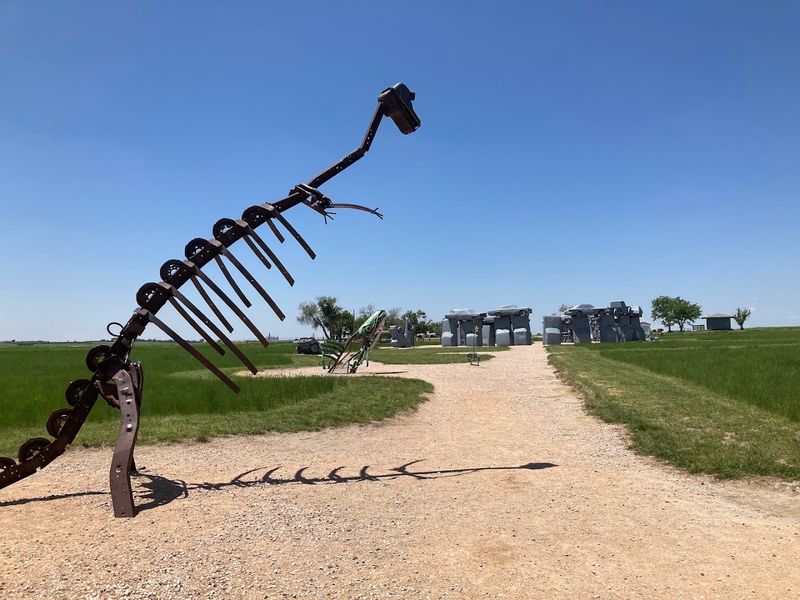
Salvaged automotive pieces become playful and abstract works throughout the grounds. Each creation approaches old metal with a different sense of humor and imagination.
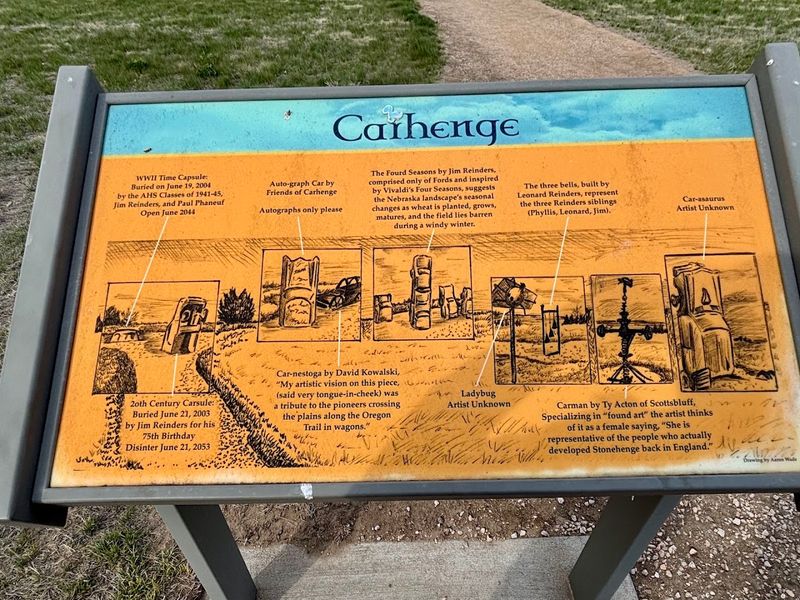
A large wind chime made from car frames ranks among the most memorable pieces. Nebraska wind can set it moving and add unexpected sound to the visit.
That motion catches visitors by surprise and gives the artwork another dimension. Apparently, retired vehicles can still make noise without an engine.
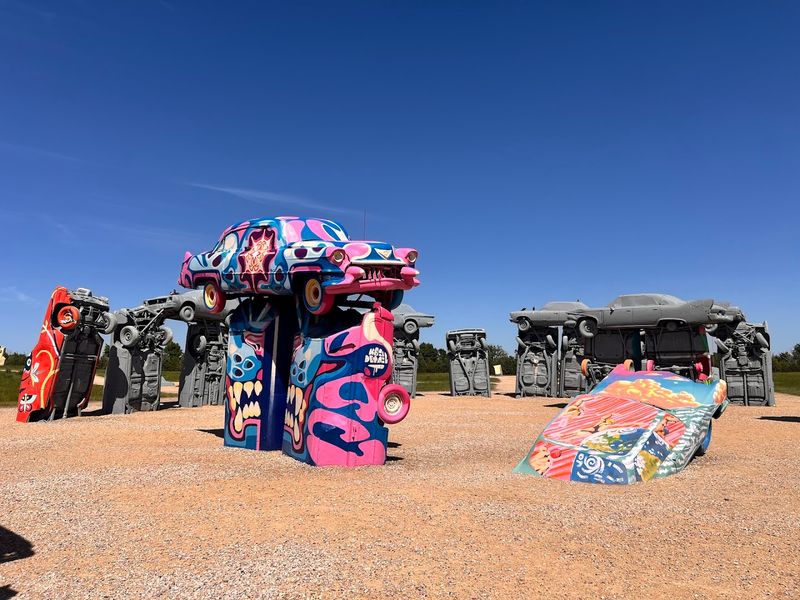
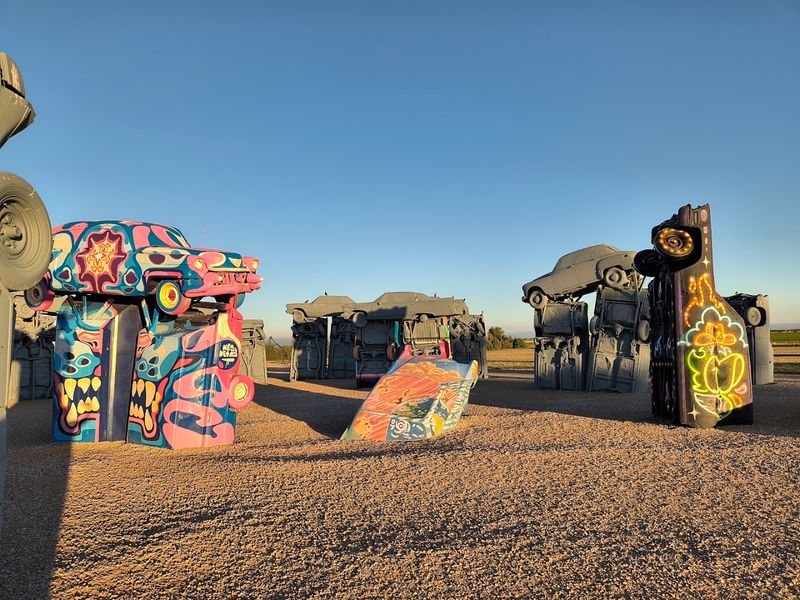
Colorful paintings also cover selected cars around the site. Bright patterns turn familiar automotive surfaces into oversized outdoor canvases.
Some sculptures make their ideas obvious, while others invite longer inspection. Their variety keeps the visit interesting after the central monument has already claimed the first round of photographs.
Exploring the entire property gives Carhenge more depth than a single roadside curiosity. The smaller works show how many creative directions salvaged materials can take.
The main circle may earn the headlines, but its metal neighbors know how to steal attention. Even the spare parts arrived ready for an encore.
How To Get There And What To Expect On Arrival
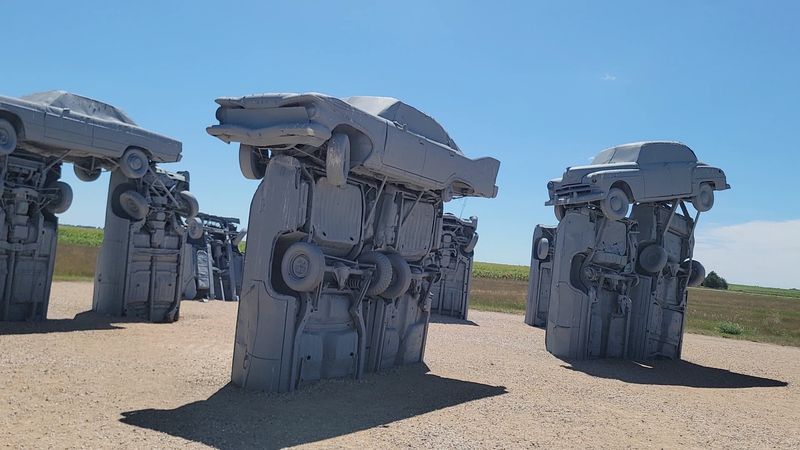
The drive to Carhenge builds anticipation. Flat High Plains terrain gives the structure plenty of room to announce itself and the nature is absolutely gorgeous.
The attraction sits just north of Alliance, making the detour easy to add to a Nebraska road trip. Clear access keeps arrival pleasantly uncomplicated.
Parking is available near the installation for standard vehicles and larger road-trip rigs. Once parked, visitors can begin exploring without navigating an elaborate entrance process.
Carhenge is located at 2151 County Road 59 in Alliance, Nebraska. The roadside position makes the enormous gray vehicles difficult to overlook.
Open grounds allow visitors to circle the central structure and inspect its automotive details. Nearby sculptures add more reasons to wander beyond the first photograph.
Alliance provides restaurants, lodging, and everyday travel essentials nearby. The town can support a longer break when the highway has already demanded enough sitting.
Travelers heading between Nebraska and South Dakota can fit the attraction into a broader route. The stop adds personality without hijacking the entire day.
Arrival requires little strategy beyond following the road. Once those cars rise ahead, even the navigation app seems unusually proud of itself.
Why Road Trippers Keep Adding It To Their Routes
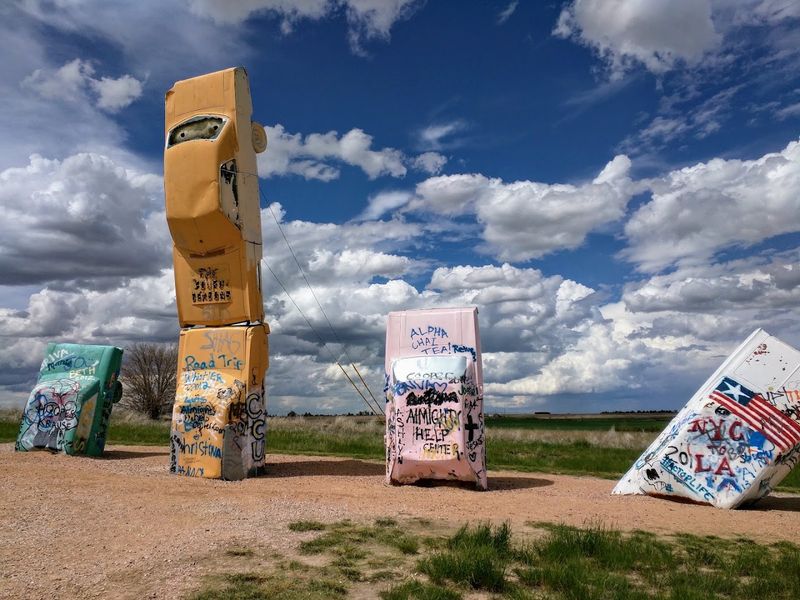
Long highway stretches can make even enthusiastic travelers start arguing with the navigation screen. What an excellent excuse to stop and reset, don’t you think?
The enormous automotive monument gives families room to stretch, wander, and discuss what they are seeing. It beats another silent break beside a vending machine.
Travelers moving between Colorado and South Dakota often include Alliance in their plans. The attraction fits naturally into longer journeys through the High Plains.
Children usually respond quickly to the giant cars and unusual design. Adults often spend longer studying the artistic planning behind the playful idea.
Free admission makes an unplanned visit easier to justify. Guests can explore briefly or take their time photographing every angle.
The open layout allows younger visitors to move around without losing interest. Meanwhile, curious grown-ups can inspect welds, paint, and carefully arranged vehicles.
Carhenge gives Nebraska road trips a story that lasts beyond the drive. Nobody returns home bragging about the rest stop with the cleanest parking lot.
The best detours interrupt boredom without ruining the schedule. This one swaps highway fatigue for giant cars and immediate conversation.
The Gift Shop And On-Site Amenities
Even the gift shop carries a name ready for the road.
The Pit Stop sells souvenirs, stickers, and small reminders of the attraction. Visitors can take home proof that giant buried cars really happened.
Gift shop availability may change with the season. Colder-weather travelers could arrive when the doors are closed, so expectations should stay flexible.
Jeske’s Over the Hill Campground sits next to Carhenge, offering full-hookup and primitive sites for overnight travelers.
Some campsites may require extra care when leveling. That minor challenge still beats searching for another overnight option after a long drive.
The sculpture garden and open grounds provide plenty to explore beyond the central circle. Visitors can wander, photograph details, and inspect the smaller automotive artworks.
Nebraska keeps the setup welcoming without loading the property with unnecessary extras. The attraction stays focused on art, curiosity, and road-trip convenience.
Carhenge may begin as a quick photo stop, but the amenities encourage a longer pause. Even your travel schedule might agree to another lap.
Best Times To Visit And What The Weather Can Do
Nebraska weather can change its mind faster than a road trip playlist. Carhenge stands fully exposed to every surprise overhead.
Sunshine may give way to rain within minutes. Wind can also sweep across the High Plains with impressive enthusiasm.
Summer usually provides comfortable conditions for exploring the entire property. Longer daylight gives photographers extra time to test different angles.
Spring and fall often bring dramatic clouds behind the gray cars. Those changing skies can make the monument look even more striking.
Early mornings offer quieter grounds and softer light. Wind may also be calmer before the day gathers speed.
Off-season visits bring fewer people and a slightly stranger atmosphere. Giant cars somehow look even odder when nobody else is nearby.
Layers are useful during any Nebraska visit because temperatures can shift quickly. A light jacket may earn hero status before the camera comes out.
Carhenge welcomes every season, but the forecast deserves a glance before departure. The cars can handle the weather, while your fingers may have stronger opinions.
Photography Tips For Capturing The Quirky Monument
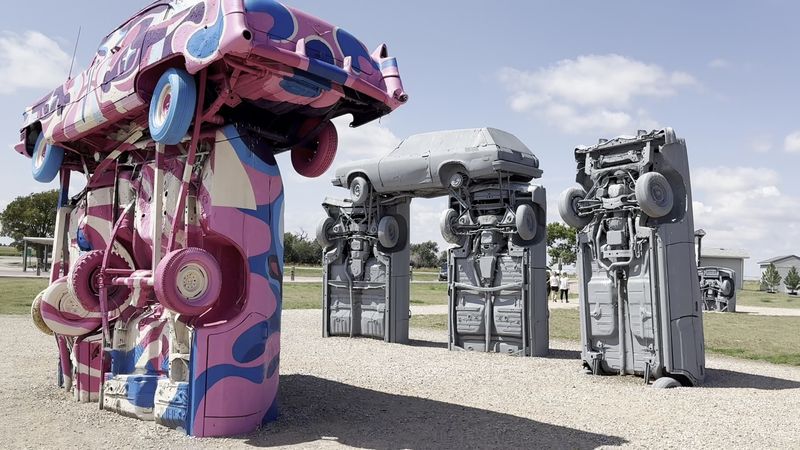
Carhenge rewards photographers who slow down and let Nebraska’s open horizon do part of the work. The uncluttered landscape gives every angle breathing room.
Early morning and late afternoon provide softer light across the gray vehicles. Those warmer tones highlight dents, welds, and painted details with extra clarity.
Low camera angles can make the upright cars appear even larger. Shooting through the arches also creates dramatic frames within the monument.
The open grounds allow visitors to move freely around the installation. Trying several positions can reveal compositions that the first viewpoint completely misses.
Painted vehicles near the main circle offer strong subjects for close-up images. Bright patterns and automotive textures create photographs with a different personality.
A wide-angle lens helps capture the complete circular layout. A zoom lens works well for isolating smaller details from farther away.
Clouds can add depth and drama behind the structure. Nebraska’s broad sky often becomes an important part of the final photograph.
Carhenge already brings the strange subject matter. Your camera only needs to prove giant gray cars can pose surprisingly well.