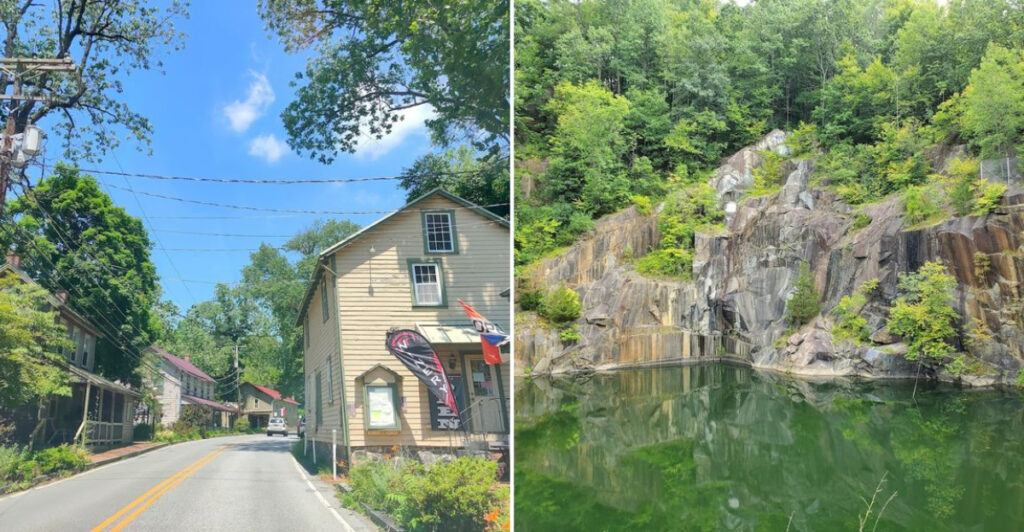
You won’t find this place in travel articles, and you’ll read almost nothing about it anywhere. That’s because it’s not a fancy spot with restaurants or clubs.
This place is exactly what it is: peaceful, quiet, and unassuming, and that is what makes it special. Urban life in Pennsylvania brings a lot of stress.
My father once said he wished he could move to a small town far from the city. At the time, I didn’t understand, but now I do.
This place gives you exactly what people need most: nature, calm, and silence. Here, you can truly hear the birds singing, feel a summer rain, and listen to a rooster welcoming the new day.
A Main Street with A Creek Running Beside It
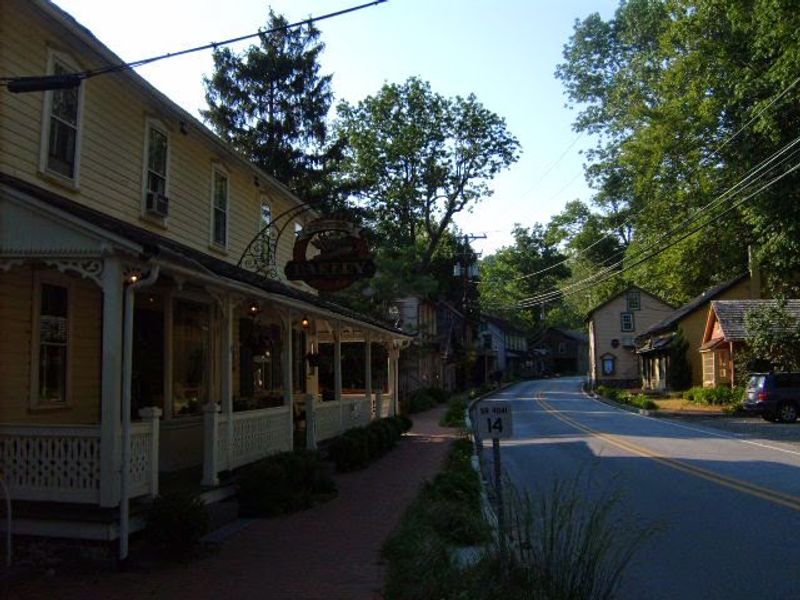
Anyone used to city crowds and noise will be captivated within the first five minutes in St. Peter’s. Also there is a real, living creek running right beside the main road.
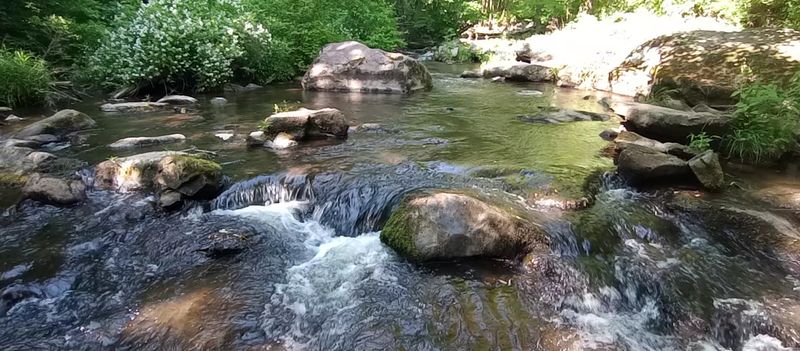
French Creek doesn’t just pass through here quietly. It announces itself with the sound of moving water that follows you the whole time you walk around.
That alone sets this village apart from every other small town in Chester County.
This place sits in Warwick Township along Hopewell Road. The layout feels almost charming.
The road curves gently, the creek sparkles on one side, and old stone structures line the other. You get the sense that this place was designed by someone who actually cared about beauty.
Nobody rushed anything here, and it shows in every corner you turn.
Getting here is easy from nearby towns like Pottstown or Phoenixville. Parking is simple since the whole place is small enough to explore entirely on foot.
Arriving on a weekday morning means you might have the entire creekside stretch practically to yourself. For me, that feels like a gift.
Stone Buildings And Old-World Charm
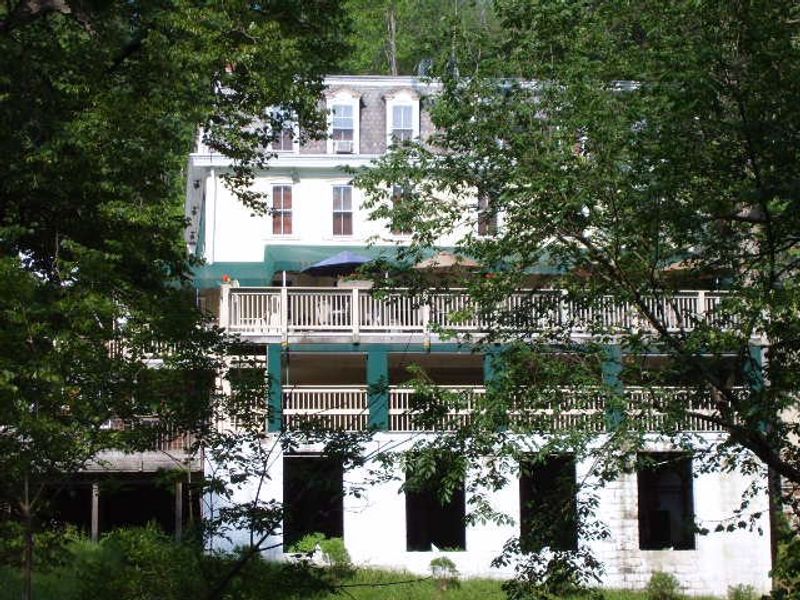
This place was built as an industrial company village in the 19th century. The stone buildings left behind from that era are stunning.
These aren’t decorative replicas or restored tourist facades. They are the real deal, built by workers who lived and labored here generations ago.
The craftsmanship in the stonework alone is worth the drive out from anywhere in the Philadelphia suburbs.
What makes the historic details so striking is how complete the picture feels. You’re not looking at one preserved building surrounded by modern construction.
The whole village retains its original character. The structures look like they belong in a European countryside painting rather than rural Pennsylvania.
The scale of everything is modest and human, which makes it even more endearing.
Old millworker cottages, stone walls, and narrow lanes all contribute to the frozen-in-time atmosphere that visitors talk about constantly. Chester County has plenty of history, but few places concentrate it this densely in such a small footprint.
Seeing all these buildings, you can almost hear the sounds of 1800s village life echoing between the walls. It is one of the most atmospheric historic spots in all of southeastern Pennsylvania.
Storybook Woods All Around
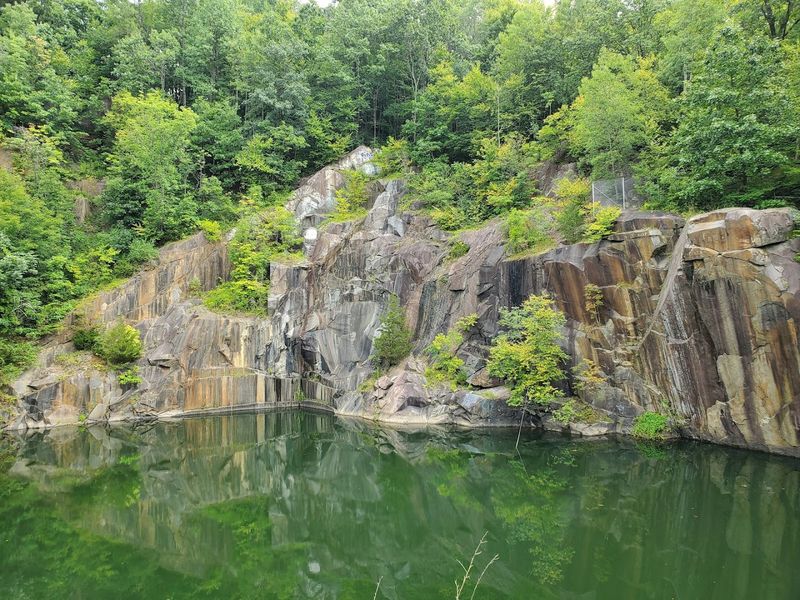
Hopewell Big Woods is one of the largest contiguous forest blocks in the entire mid-Atlantic region. St. Peters sits right inside it.
That context matters because the trees here aren’t just background scenery. They are the setting.
Towering oaks and maples press close to the village edges. The canopy overhead filters light in ways that make every hour of the day look like golden hour photography.
The forest gives St. Peters a quality that is genuinely hard to describe without sounding like you’re overselling it. Standing at the edge of the village where the woods begin, you get a real sense of wildness meeting history.
The transition from stone buildings to ancient forest happens within a few steps. That contrast is part of what makes this place so memorable for first-time visitors and regulars alike.
Kids especially react to these woods with pure wonder. There’s something about the scale of the trees and the depth of the forest that triggers the imagination immediately.
That spontaneous magic is rare and worth protecting.
A Peaceful Escape from Busy Pennsylvania Towns
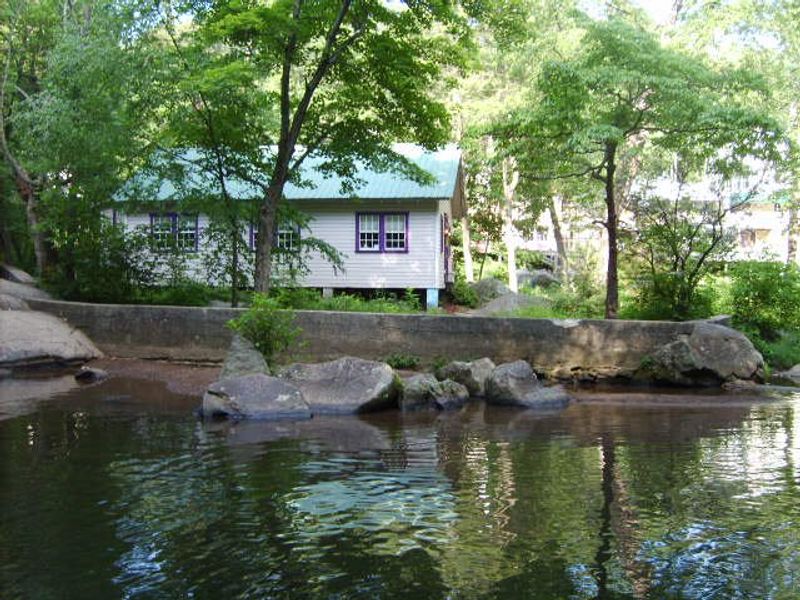
Living near Philadelphia or any of the busy Route 422 corridor towns means noise, traffic, and the constant pressure of schedules. St. Peters operates on a completely different frequency.
The village has no traffic lights, no chain stores, no honking, and no crowds jostling for space. What it does have is the steady sound of French Creek and birdsong filling the air from every direction.
I’ve been to a lot of so-called quiet destinations in Pennsylvania. Most of them are quiet only by comparison to something louder.
St. Peter’s is deeply quiet in a way that resets your nervous system within about fifteen minutes of arriving. Your breathing slows, and you start noticing things you normally walk right past.
As my therapist once told me, ‘Pay attention to the smells around you.’ You notice the texture of lichen on old stone, the way light moves across the water, and the scent of creek mud and pine.
The pace here is unhurried because nothing is pressuring you to hurry. There are no gift shop closing times to race against, no restaurant reservations to keep.
You visit St. Peters on the village’s terms. Those terms are wonderfully slow.
Anyone dealing with burnout, stress, or just the general exhaustion of modern life should put this place near the top of their weekend list immediately.
Small Shops, Local Stops, And Hidden Corners
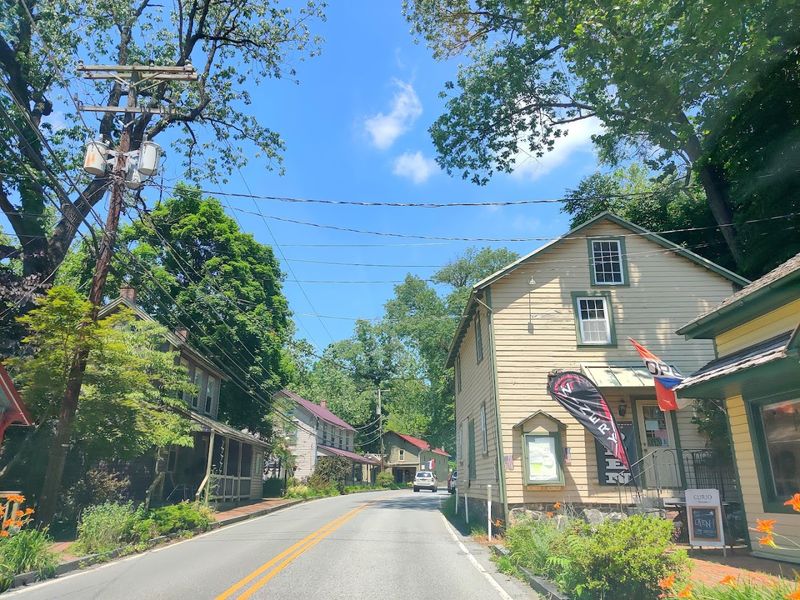
Wandering through St. Peter’s rewards the curious visitor who slows down and actually looks around. The village is small enough that you could technically see everything in twenty minutes if you rushed.
That approach, however, would be a waste. Hidden corners, unexpected architectural details, and small local stops reveal themselves only to people who take their time and stay curious.
The area around St. Peters connects to nearby spots that add variety to a day trip. Warwick Township has a handful of local businesses and rural stops within a short drive.
These places feel consistent with the unhurried character of the village itself. Picking up local goods or stopping at a nearby farm stand on your way in or out adds a satisfying, grounded quality to the whole outing.
What makes wandering here so rewarding isn’t any single dramatic attraction. It is the accumulation of small discoveries.
A moss-covered wall you didn’t expect. A view of the creek through a gap in the trees.
An old foundation half-hidden by ferns. This place is the place that gives more the longer you stay and look.
Visitors who plan to spend only thirty minutes often find themselves still walking around an hour and a half later.
Beautiful Walks Beyond The Village Center
French Creek State Park sits just minutes from St. Peters. The trail network there is excellent for anyone who wants to extend their visit into a proper outdoor adventure.
The park offers miles of marked trails that wind through the same Hopewell Big Woods ecosystem surrounding the village. The scenery stays gorgeous from the moment you leave the car to the moment you return.
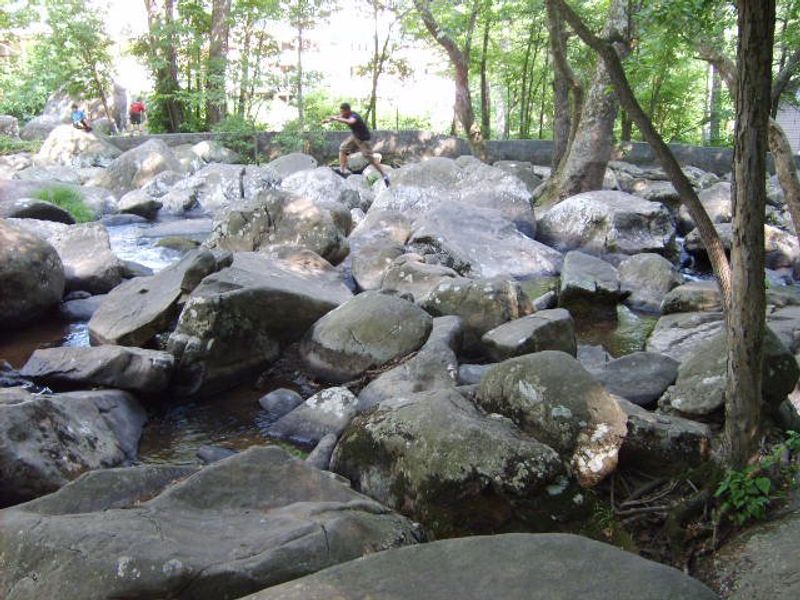
The Falls of French Creek, which gave St. Peter’s its original industrial purpose back in the 1800s, is a highlight that nature lovers should seek out.
The rocky creek bed, the sound of water moving over stone, and the forest walls on either side create a beautiful scene. Writers could easily fill an entire book with inspiration from a place like this.
Beyond the falls, the surrounding woodland offers boulder scrambles, creek crossings, and long stretches of quiet forest trail. These trails feel remote despite being close to suburban Pennsylvania.
Birders find this area especially rewarding during the spring migration season. The Hopewell Big Woods is recognized as one of the most ecologically important forest blocks in the region.
Every walk here feels like it actually matters beyond personal enjoyment.
Why Nature Lovers And Day-Trippers Keep Falling For This Place
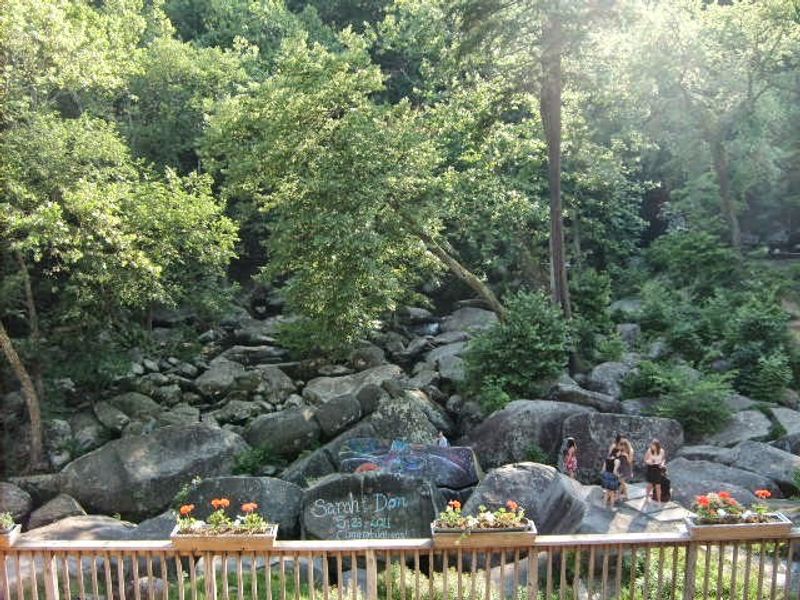
Nature lovers keep returning to St. Peter’s because the combination of elements here is almost unfairly good. You get history in the form of 19th-century industrial architecture.
You get wildness in the form of Hopewell Big Woods. You get water scenery in the form of French Creek.
All of this is within a village footprint you can walk across in five minutes. That density of experience per square foot is remarkable.
Day-trippers from Philadelphia, Reading, and the broader Delaware Valley have discovered that St. Peters fits perfectly into a half-day or full-day itinerary without requiring elaborate planning. Drive out, park, and walk around the village.
Then hit a trail in the adjacent state park. Enjoy a packed lunch by the creek and drive home feeling like you actually did something meaningful with your Saturday.
That is a formula that keeps people coming back season after season.
The seasonal changes here are worth experiencing independently. Spring brings wildflowers and rushing creek water from snowmelt.
Summer turns the forest canopy into a dense green ceiling. Fall transforms the whole Hopewell Big Woods into a color show that rivals anything in New England.
Winter strips the trees bare and reveals the stone buildings with stark, dramatic clarity. Every season offers a different reason to make the trip out to Chester County.
The Village That Feels Like A Secret
Most people who visit this place for the first time have the same reaction. They can’t believe they hadn’t heard about this place sooner.
It doesn’t show up on the usual Pennsylvania travel listicles or tourism brochures. It also doesn’t have a social media presence, pushing it into your feed.
You find out about St. Peter’s the old-fashioned way. Someone who loves it tells someone else who loves it, and the circle stays wonderfully small.
That secret-feeling quality is part of what makes visits here stick in your memory long after you’ve returned to regular life. You carry it with you the way you carry a good book you finished.
It is present in your mind and comes up in quiet moments. You also find yourself recommending it to people you actually like.
St. Peter’s doesn’t demand your attention the way louder destinations do. It earns it slowly and keeps it permanently.
Chester County has no shortage of beautiful places, but St. Peter’s occupies a category of its own. It is not a tourist attraction performing its history for visitors.
It is an actual historic place that has simply continued existing, quietly and beautifully, while the world moved faster everywhere else. One afternoon here is enough to make you want to protect it, return to it, and tell exactly the right people about it.