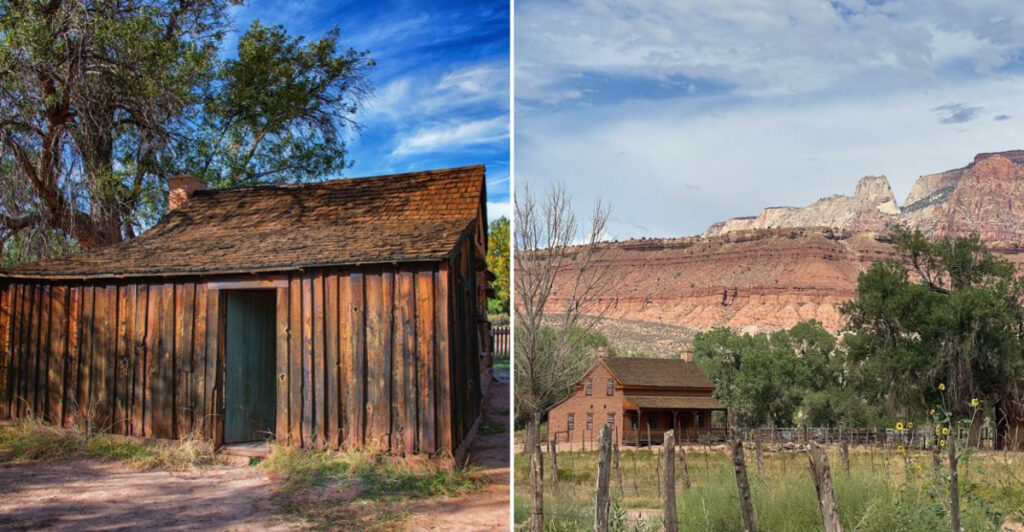
History feels unusually close when sunbaked walls still stand beneath cliffs that seem too dramatic to be real. This preserved ghost town invites you to wander past adobe ruins, weathered homesteads, and a quiet pioneer cemetery with no ticket booth, no gift shop, and no rush.
Set against the red-rock grandeur of southern Utah, the entire place looks like a film set that time forgot to dismantle. You only need about 30 minutes to explore, without consuming the rest of your day, yet the silence, dust, and century-old structures make the detour feel far bigger than its size.
Best of all, it is free and open around the clock, so the visit can fit almost any road-trip schedule. Come early for softer light or arrive near sunset when every wall glows.
Among Utah’s most atmospheric historic stops, this one proves that a brief pause can carry you 150 years backward.
A Ghost Town That Actually Earns the Name
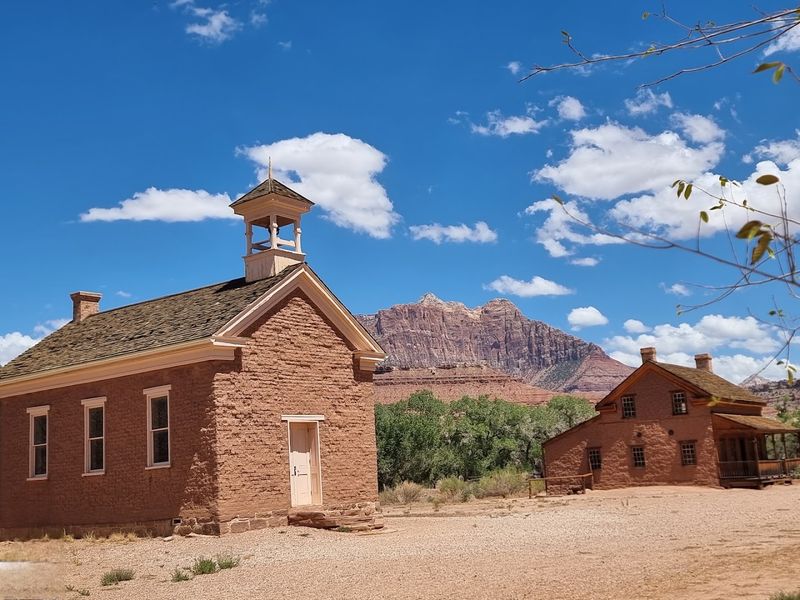
Some places get labeled ghost towns because a few old buildings survived a renovation budget cut. Grafton is the real thing.
Settled by Mormon pioneers in 1859 near Springdale, UT 84767, this tiny settlement was repeatedly flooded by the Virgin River until the last residents finally packed up and left by the mid-1900s, leaving behind a collection of structures that feel frozen mid-sentence.
What makes Grafton so quietly compelling is how much it resists being tidy. The remaining buildings are not a reconstruction or a theme park recreation.
They are original adobe-and-brick structures that have been carefully stabilized and preserved, not scrubbed clean of their age.
Informational signs placed throughout the site give real context without turning the visit into a lecture. You can read, wander, and piece together the story at your own pace.
The site is free to enter, no reservation needed, and open 24 hours a day, seven days a week, which means you can time your arrival for golden hour and watch those red cliffs absolutely glow behind the old rooftops.
Quick Tip: Arrive in the early morning or late afternoon for the best photographs and fewer fellow visitors wandering into your shots.
The Dirt Road That Sets the Mood Before You Arrive
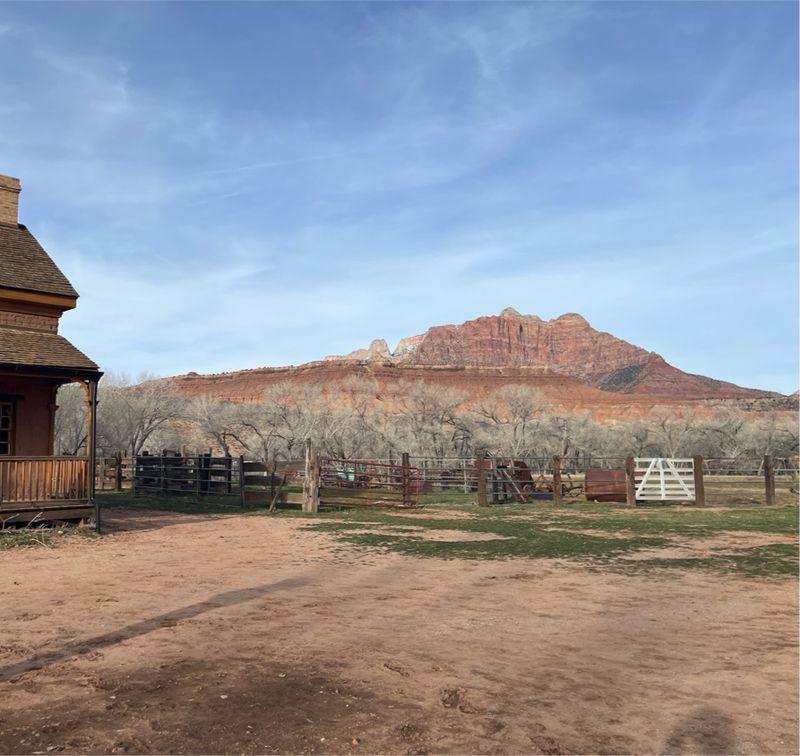
There is something to be said for an approach road that does a little storytelling before you even park the car. The drive to Grafton takes you past Rockville and down a dirt road that is less than a mile of unpaved surface, but it does the psychological work of signaling that you are leaving the ordinary behind.
Visitors consistently note that the road feels like a genuine transition, not a manufactured one. Any standard vehicle handles it without drama, and the surrounding scenery of rock formations and open desert scrub is worth the slower pace.
That said, a few practical notes matter here. There are no restroom facilities at the site itself, so make a stop at a gas station before you turn off the main road.
The floors inside some of the outbuildings are original and require a bit of mindful footing, so watch your step when exploring interior spaces.
Planning Advice: Fill up on gas and handle any restroom needs before turning off toward Grafton. The site is self-guided with no staff on duty, so come prepared and self-sufficient for a smooth, enjoyable visit.
The Pioneer Cemetery That Stops You Cold
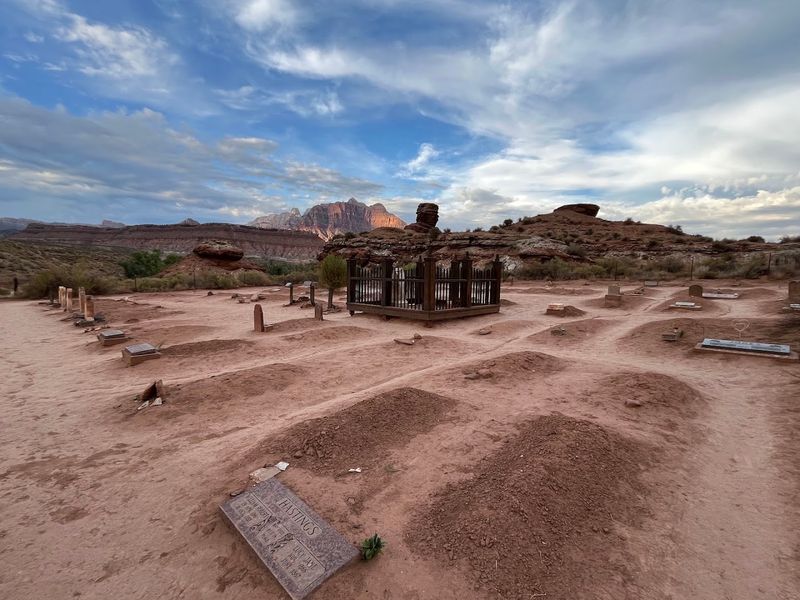
Before you even reach the main cluster of buildings, the Grafton cemetery appears on the left side of the road, and it has a way of making visitors go very quiet very quickly. The headstones mark lives that were hard and short, with dates clustered in ways that hint at floods, illness, and the brutal arithmetic of frontier survival.
Visitors frequently leave coins and small offerings at the graves, a spontaneous tradition that nobody organized but everyone seems to honor. Reading the names and dates etched into the stones turns abstract pioneer history into something immediate and human.
It is the kind of place that makes you recalibrate whatever you were stressing about on the drive over.
The cemetery is small and easy to walk through in ten minutes, but most people linger longer than they planned. It earns its place as a genuine highlight of the Grafton experience rather than just a footnote on the way to the buildings.
Why It Matters: The cemetery provides the emotional anchor for the entire site. Spending a few quiet minutes here before exploring the rest of Grafton gives the whole visit a deeper sense of meaning and historical weight.
Adobe Walls and Weathered Homesteads Worth Every Step
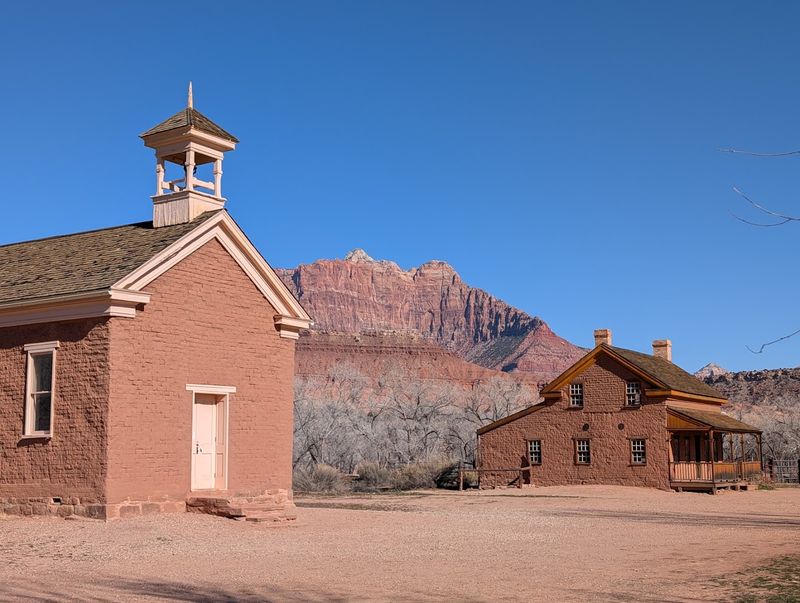
The main cluster of structures at Grafton includes a handful of buildings in varying states of preservation, and that variety is actually part of the charm. Two buildings, the church and the historic schoolhouse, have been fully restored, while the remaining homesteads retain much of their original character, meaning rough walls, original materials, and the kind of lived-in imperfection that no restoration budget would deliberately recreate.
Visitors can enter several of the homes, which makes this site feel genuinely interactive rather than just scenic. Inside the large house adjacent to the church building, informational signs provide detailed context about the families who lived there and the challenges they faced.
The church itself is typically locked, but a photograph of the interior is posted on the door so you can still get a sense of the space.
The grounds also feature remnants of what was clearly an established homestead: old fruit trees, grapevines gone wonderfully wild, and what appears to have been a livestock pen. These details reward slow, curious walkers who take the time to look past the obvious.
Best For: History enthusiasts, photography lovers, and anyone who appreciates genuine artifacts over polished replicas. This is a site that respects your intelligence as a visitor.
Where Butch Cassidy Rode a Bicycle Into Movie History
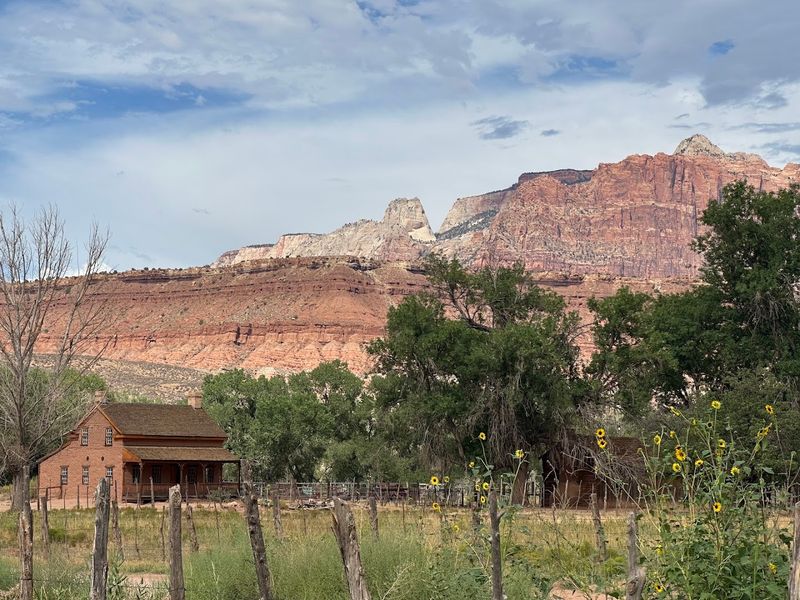
Not every ghost town can claim a cameo in a Hollywood classic, but Grafton can. The 1969 film Butch Cassidy and the Sundance Kid used this location for its famous bicycle scene, the one set to Raindrops Keep Fallin on My Head, which became one of the most recognizable sequences in American cinema history.
Standing in that same open space with the same red cliffs visible in the background, it is genuinely easy to picture the scene. The landscape has not changed much, which is either a testament to Grafton’s isolation or to the timelessness of Utah’s geology, probably both.
For film fans, this connection adds an extra layer to an already rich visit. For everyone else, it is a fun piece of trivia that lands well when you mention it back home.
Either way, the cinematic history gives Grafton a cultural footnote that distinguishes it from every other preserved pioneer site in the region.
Fun Fact: The bicycle scene from Butch Cassidy and the Sundance Kid filmed here is considered one of the most iconic musical sequences in Western film history, and the backdrop of Grafton’s buildings played a quiet but memorable supporting role.
The Zion Detour That Justifies Itself in Under an Hour
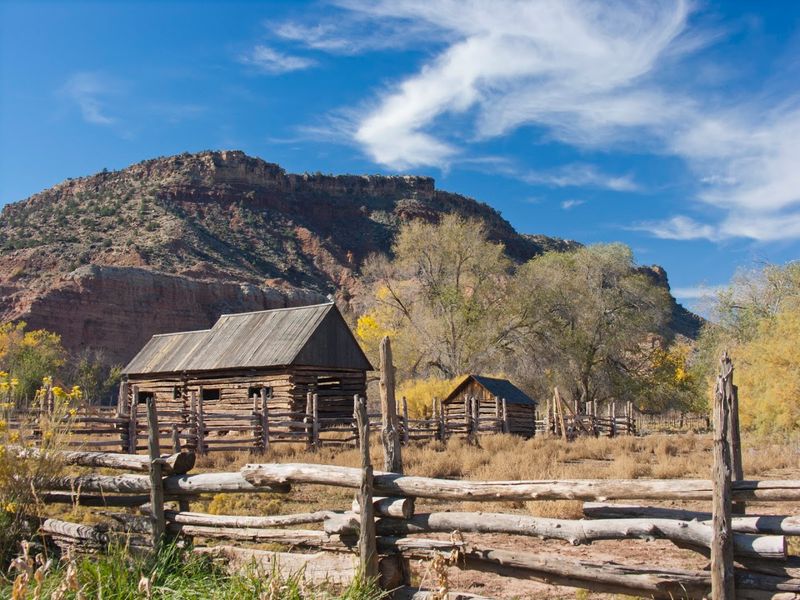
Grafton sits roughly 20 minutes from Springdale, which is the gateway town for Zion National Park. That proximity makes it an almost effortless add-on to any Zion itinerary, the kind of stop that costs you half an hour and pays back in memories that outlast the more crowded park experiences.
Visitors consistently describe Grafton as a welcome contrast to Zion’s busy trails and permit systems. There are no tickets, no timed entries, no rangers directing foot traffic.
You simply park, walk, read the signs, and absorb the atmosphere at whatever pace suits you. The red cliffs that frame Zion also frame Grafton, giving you that same dramatic scenery without the crowds.
Families with kids find the open, self-guided format easy to manage. Couples who want a quieter, more reflective experience often rate it as a personal highlight.
Solo visitors appreciate the freedom to linger or move quickly without coordinating with a group.
Best Strategy: Visit Grafton on your way out of the Zion area rather than on the way in. You will already be in the right headspace for a slower, more contemplative stop after the energy of the park.
A Living Lesson in Pioneer Resilience Without the Museum Price Tag
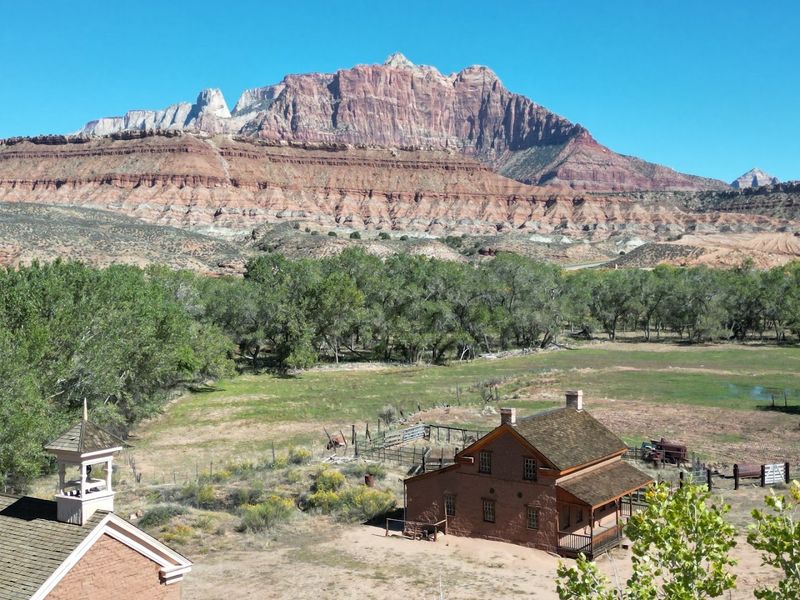
Free admission at a genuinely preserved historical site is rare enough to deserve its own moment of appreciation. Grafton charges nothing, requires no reservation, and delivers more authentic pioneer history per square foot than most paid attractions manage with considerably larger budgets.
The informational signs placed throughout the property are well-written and genuinely informative, covering the settlement history, the recurring floods that plagued the community, and the specific families who called this place home. Reading them does not feel like homework.
It feels like overhearing a good story.
The site is maintained by the Grafton Heritage Partnership, and the care they have taken is visible in every detail, from the stabilized walls to the clearly marked pathways. Bringing a small cash donation to leave on-site is a simple way to support that ongoing preservation work, and several visitors mention doing exactly that.
Insider Tip: Check graftonheritage.org before your visit for any updates on building access or special events. The church is sometimes locked, but the website can help you know what to expect so you are not caught off guard on arrival.
What the Landscape Tells You Without Saying a Word
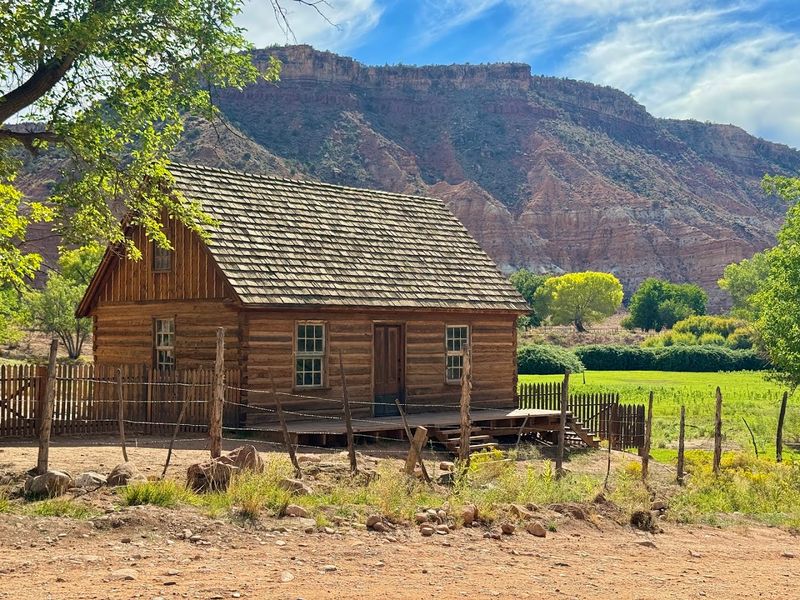
There is a moment at Grafton when you stop reading the signs and just stand still. The red canyon walls rise behind the old buildings, the desert scrub hums with whatever insects have decided this corner of Utah belongs to them, and the silence is the kind that cities spend billions trying to manufacture in spa packages.
Visitors note that the setting itself carries a magnetic quality that is hard to explain but easy to feel. Something about the combination of human history and raw geology creates an atmosphere that keeps people on-site longer than they planned.
One visitor described it as small but magnetic, which is about as accurate a three-word review as any place could hope for.
The vegetation around the property also tells its own story. Old fruit trees, overgrown grapevines, and what appears to be milkweed growing in unexpected spots all hint at the deep roots this community once had in the land.
Even the soil holds evidence of the lives that were built here.
Who This Is For: Curious travelers who find meaning in quiet places, families looking for a genuinely educational outdoor stop, and anyone who wants a photograph that looks nothing like the usual Zion crowd shots.
Your Confident Recommendation for the Drive Home
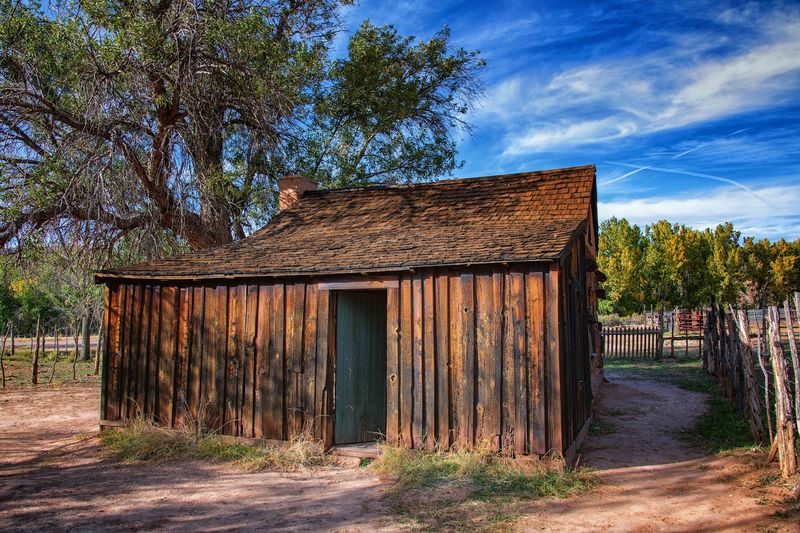
If a friend texted you asking what to do with a spare hour near Zion, the correct answer is now Grafton. It is the kind of place that requires almost no convincing once someone has been, and almost no explanation once you describe the setting: free, open always, genuinely preserved, and framed by some of the most dramatic canyon scenery in the American Southwest.
The experience works equally well as a post-hike wind-down or a pre-drive reflection stop before heading home. The pace is entirely your own, the entry cost is zero, and the payoff is a site that has been drawing visitors consistently and earning high marks across the board for good reason.
Grafton does not try to impress you with amenities or programming. It simply stands there, weathered and honest, and lets the story speak for itself.
That restraint is increasingly rare and, for exactly that reason, increasingly valuable.
Quick Verdict: Grafton Historic Townsite is one of the most rewarding free stops in southern Utah. Add it to your Zion itinerary without hesitation.
You will not regret the detour, and you will almost certainly tell someone else to go.