Some of the most memorable food finds are hiding in plain sight, tucked along busy city streets where you might not think to slow down. A generous slice of cream pie topped with a thick cloud of whipped cream sounds like something from a nostalgic dream, but for certain Los Angeles regulars, it is a real and recurring errand.
The place behind that dessert is smaller than you might expect, older than most local landmarks, and still drawing people back for the same reason it did decades ago.
An ordinary boulevard stop leads to an outsized dessert
Pico Boulevard is not a road most food travelers circle on a map. It moves through West Los Angeles the way busy city streets do: predictably, without ceremony, lined with the kind of storefronts that blend together after a few blocks.
So when a small, low-slung building catches your eye and you realize people are actually making a point of stopping there, curiosity takes over.
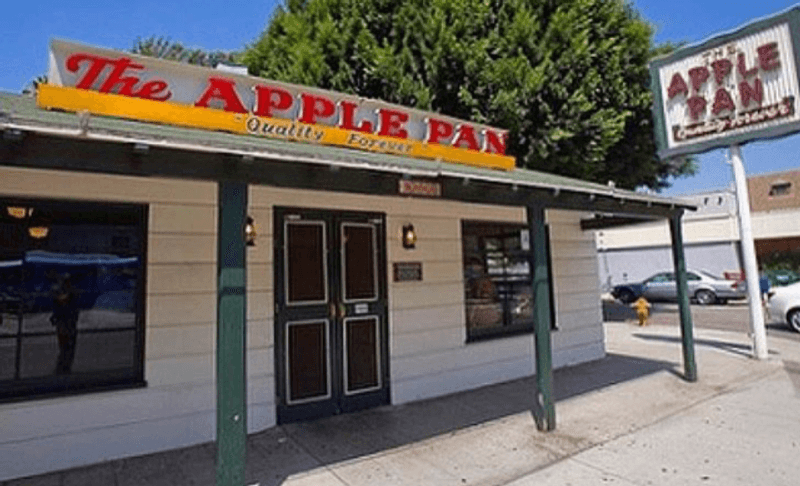
The place is The Apple Pan, and its exterior offers almost no clues about what waits inside. There is no flashy sign, no elaborate window display, and no line stretching dramatically down the sidewalk.
The official address is 10801 W. Pico Blvd. in Los Angeles, a thoroughly urban setting that makes the “roadside diner” label feel like a stretch.
This is a city restaurant, sitting on a city boulevard, doing a city restaurant’s steady, unhurried business.
What the premise gets right, though, is the feeling. There is something about walking up to a building this compact and this plainly decorated that creates a small jolt of anticipation.
The promise of cream pie crowned with a generous layer of whipped cream is the kind of detail that earns a detour even on a familiar commute. The Apple Pan is not a remote highway discovery, but the sense of stumbling onto something unexpectedly satisfying is entirely real.
The small counter creates the atmosphere
Walk through the door and the room resolves itself almost instantly. There is not much of it.
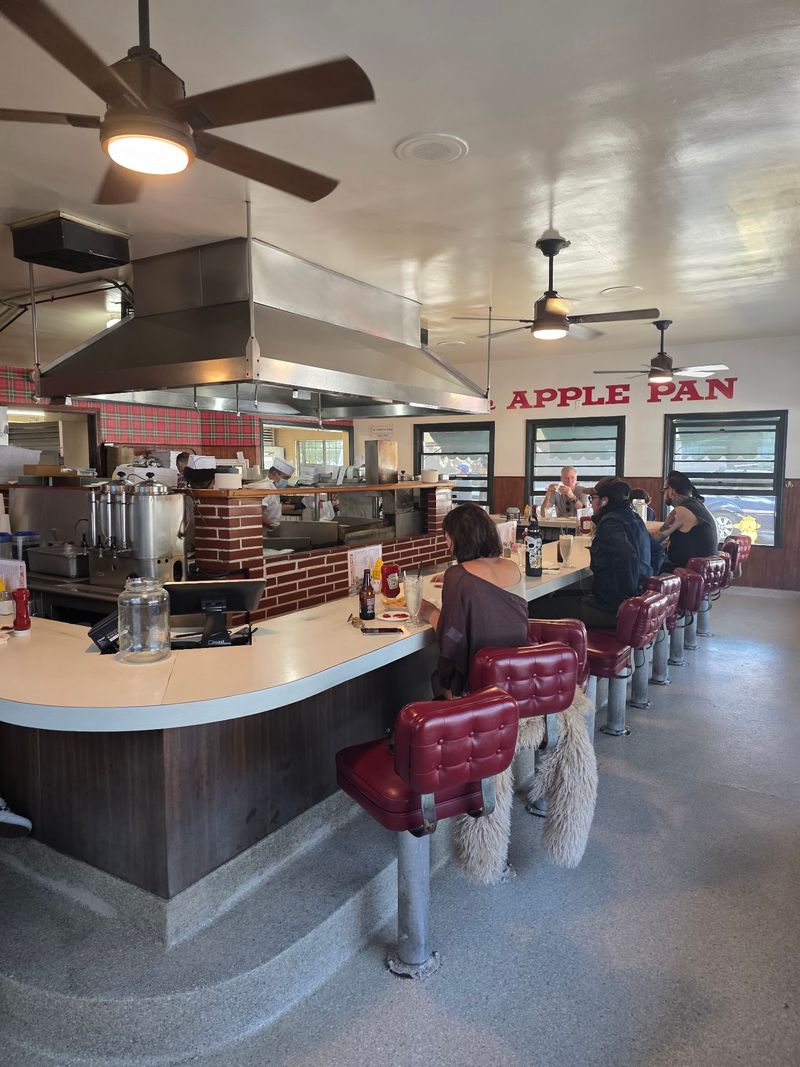
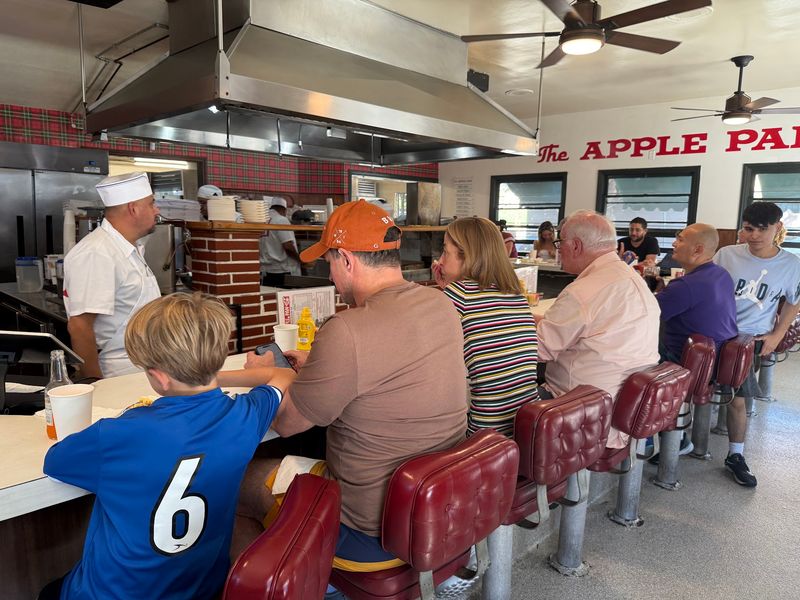
The Los Angeles Times described The Apple Pan as a “tiny building” built around a U-shaped counter with approximately 26 stools, a layout that leaves very little room for anything else. No booths, no sprawling dining room, no hostess stand.
Just the counter, the stools, and the kitchen activity that plays out in front of you.
That proximity is part of the appeal. Sitting at a counter this close to the work happening behind it turns an ordinary meal into something more like a shared ritual.
You watch. You wait.
You get exactly what you came for, and then you give up your stool to the next person. The Times reported that customers waiting for seats historically followed an informal arrival order rather than a conventional queue, an arrangement that suited the compact space and the relaxed but purposeful rhythm of the place.
Those operational details come from older coverage and may not reflect current conditions exactly, so treat them as a window into the restaurant’s reported character rather than a guaranteed experience.
What the format communicates, regardless of the specific details, is a deliberate resistance to expansion. The Apple Pan has not grown into something larger or more complicated.
That choice, sustained across decades, is itself a kind of statement. Eating here feels less like visiting a restaurant and more like being let into a neighborhood habit that has been running quietly on its own schedule for a very long time.
The intimacy is not accidental; it is the whole point.
The pies make their impression with a thick whipped-cream crown
Before you taste the pie, you see the topping. The whipped cream arrives in a generous, rounded layer that sits well above the filling, making the slice look almost architectural.
The Los Angeles Times reported that the cream pies at The Apple Pan are topped with approximately half an inch of whipped cream, a measurement that translates in person to something noticeably thicker than what most restaurants ladle on. That is the detail behind the promotional phrase “sky-high,” which is a vivid way of describing the topping but not a verified measurement or a documented California record.
Thickly crowned is accurate; tallest in the state is not something any reliable source has established.
The bakery operation behind those pies was described in the same historical reporting. According to the Times coverage, the restaurant maintained an in-house bakery area where pies were made using family recipes, with pastry work that included a crust roller and hands-on preparation.
That description comes from reporting that is now some years old, so it is accurate to say the pies are associated with family recipes and reported as made in the restaurant’s own bakery, rather than to state with certainty that the exact same process continues unchanged today.
What has not changed, at least in the way people talk about the pies, is the impression they make. A half-inch of whipped cream on a well-made custard filling is not something you forget after one visit.
The presentation is simple, not elaborate, which is part of why it registers. There is no garnish, no sauce drizzle, no architectural plating.
Just a thick, cool layer of cream sitting on top of a slice that means exactly what it looks like.
The reported pie lineup rewards different cravings
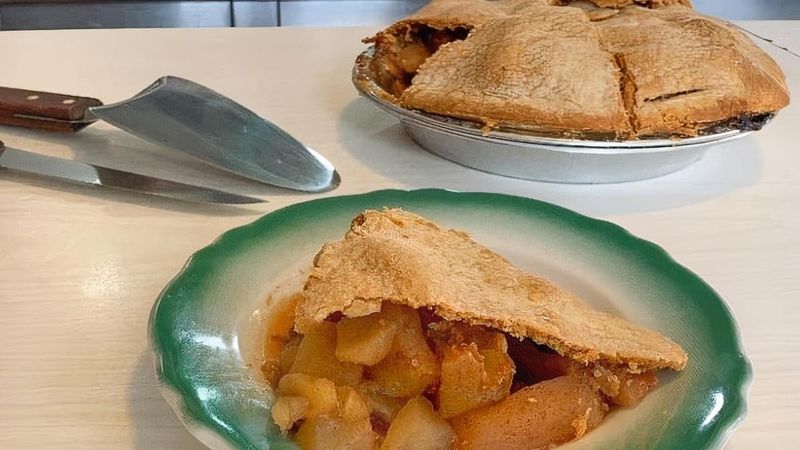
Banana cream tends to be the one people mention first, but the reported selection at The Apple Pan covers more ground than a single flavor. Eater Los Angeles identifies the restaurant as a destination for pie, noting cream varieties that include coconut, banana, chocolate, and boysenberry, along with apple and pecan as part of the broader menu.
That range means a visit can go in a few different directions depending on what you are in the mood for.
Banana cream is the smooth, cool choice: soft filling, ripe fruit flavor, and that thick layer of whipped cream making the whole thing feel indulgent without being heavy. Chocolate cream leans richer, with a filling that tends to read as dense and satisfying rather than delicate.
Coconut cream sits somewhere between the two, its flavor mild and slightly sweet, the texture similar to banana but with a tropical note that sets it apart. Boysenberry is the outlier in this group, a fruit-forward option with a deeper, slightly tart character that makes it a good counterpoint to the custard-based varieties.
Apple and pecan round out the selection on the non-cream side, offering something more traditional and less reliant on the whipped-cream presentation that defines the others. If your visit is built around a specific flavor, plan ahead.
Availability at The Apple Pan can shift by day or season, and there is no guarantee that every reported variety will be on hand when you arrive. Calling ahead or checking before you make the trip is a practical step, not an overcaution.
A pie run built around one particular slice deserves a confirmation first.
Continuity explains why regulars return
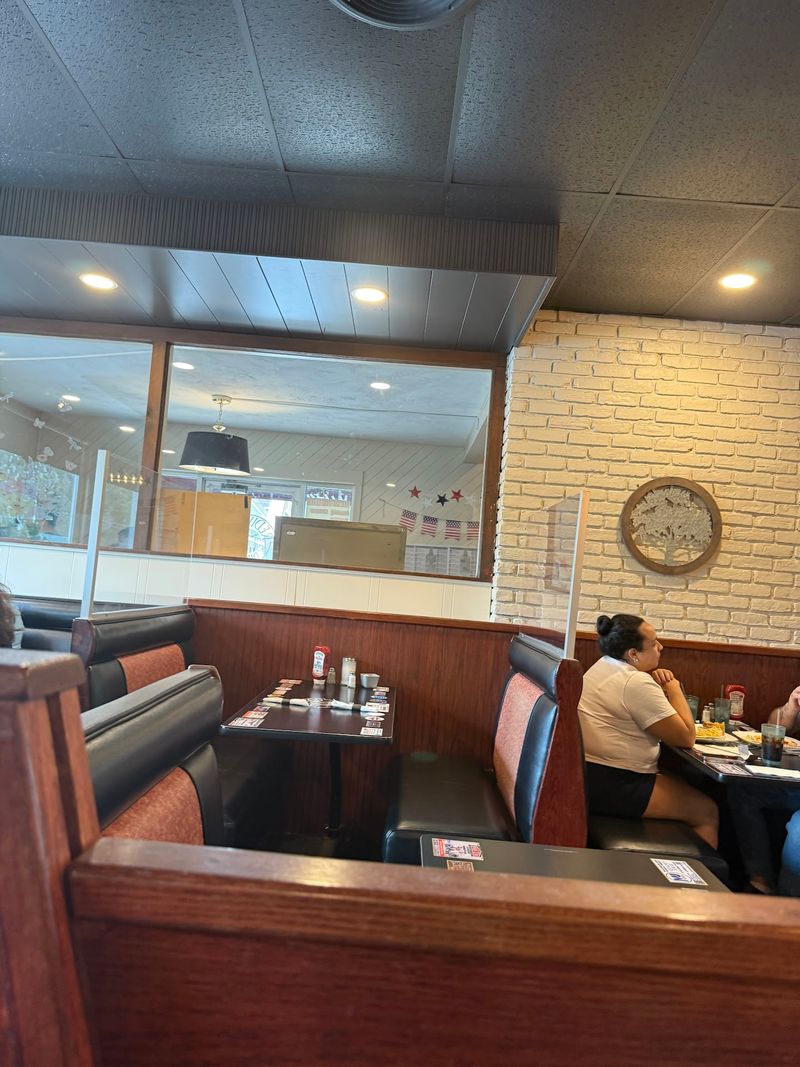
Familiarity is a powerful thing at a restaurant. At The Apple Pan, the pull for returning customers appears to have less to do with novelty and more to do with the comfort of finding things exactly as expected.
The Los Angeles Times specifically connected the restaurant’s appeal to regular customers, long-serving employees, stable recipes, and a deliberate resistance to major changes. That combination is rarer than it sounds in a city where restaurants cycle through concepts quickly.
Returning to a place that has not changed its recipes, its format, or its general approach creates a particular kind of reassurance. You already know what you are getting.
The pie will taste the way it tasted last time. The counter will look the way it looked.
The experience will not have been renovated into something unfamiliar. For a certain kind of diner, that reliability is exactly the point, and it is a different kind of appeal than excitement or discovery.
Regulars at The Apple Pan, based on historical accounts, are not chasing a trend. They are maintaining a habit.
That distinction matters when thinking about what kind of restaurant this is. The historical reporting does not describe nonstop queues or customers arriving from every corner of California.
It describes a steady, familiar following made up of people who have worked the restaurant into their routines over years, sometimes decades. That is a more modest and more honest kind of reputation than statewide fame, and it is probably more durable.
A place that keeps its regulars coming back without changing much is doing something right, even if it is hard to put a number on it.
Check the details before planning a pie run
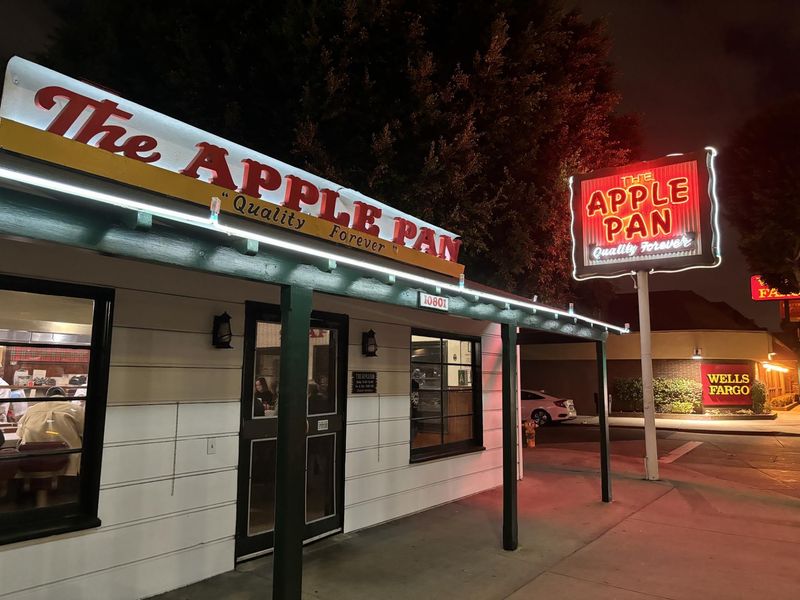
Getting the pie is the easy part once you have the logistics sorted. The Apple Pan’s official website lists the current address as 10801 W.
Pico Blvd. in Los Angeles and posts hours that vary between weekdays and weekends. Those hours are worth confirming directly before you make the trip, because posted times can shift and older coverage may not reflect current operations.
A quick check of the website before heading out takes less than a minute and removes the risk of arriving at a closed counter.
On the pie-buying side, Eater Los Angeles reports that pies at The Apple Pan are available by the slice or as a whole pie, and recommends ordering ahead for holiday purchases, particularly if you have a specific flavor in mind. That advice is especially useful around Thanksgiving and other high-demand periods when a particular variety may sell out before you arrive.
Calling ahead to reserve a whole pie is a practical step if the visit is built around a specific flavor rather than a general dessert stop.
The savory side of the menu is also worth knowing about, though with a caveat. Historical Los Angeles Times reporting documented a menu that included burgers, sandwiches, fries, coffee, and soft drinks alongside the pies.
Whether that full menu remains in place today is something to confirm directly, since older coverage cannot speak to current offerings. The Apple Pan is not exclusively a bakery or pie shop, but the savory items should be treated as historically documented rather than guaranteed until you verify them yourself.
The pie is the draw, but knowing the full picture helps you plan a visit that works.
A modest city counter delivers a memorable finish
Putting it plainly: The Apple Pan is a small, traditional counter restaurant on a West Los Angeles boulevard, and it is associated with cream pies topped with a notably thick layer of whipped cream and a durable following of returning customers. That is what the evidence supports.
The Los Angeles Times portrait of the restaurant describes continuity, regulars, and a compact format that has held its shape across decades, not a California ranking or a documented queue stretching down the block.
Calling the pies “sky-high” is promotional language. Calling the setting a remote roadside diner does not match the Pico Boulevard address.
What does hold up is the description of a generously crowned cream pie served in a setting that feels genuinely old-fashioned, not as a design choice but as a natural result of staying the same for a long time.
Eater’s current Los Angeles pie guide still includes The Apple Pan as a destination worth seeking out, which suggests the reputation has not faded. For anyone who values a place with character, a consistent dessert, and no pretense about what it is, a stool at this counter is a fine way to end an afternoon in the city.