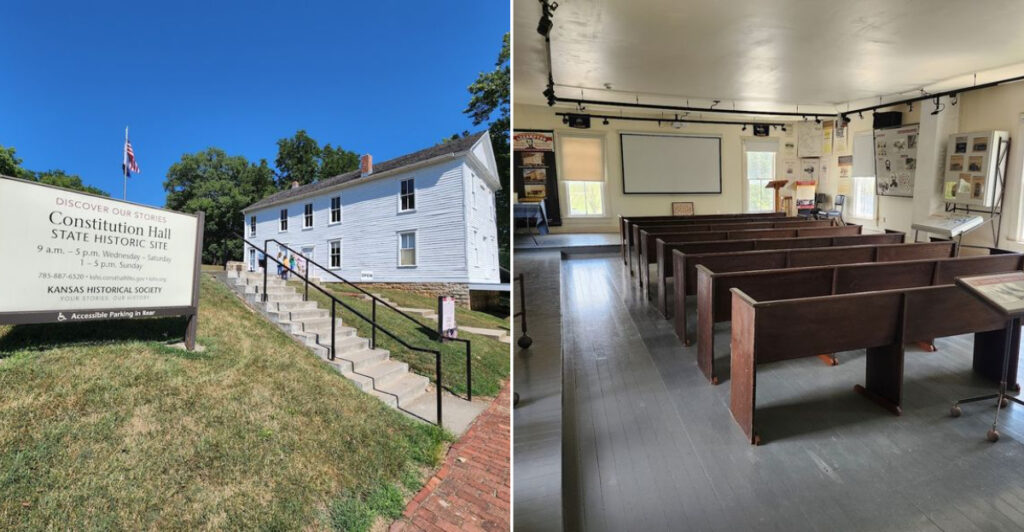
A plain-looking building can hold a surprisingly loud piece of history. This Kansas site may seem modest at first glance, but its story reaches into one of the most tense and defining conflicts America ever faced.
That contrast is what makes it so compelling. You are not walking into a place that needs marble columns or dramatic lighting to matter.
You are stepping into a room where arguments, decisions, and political pressure helped shape the path of a nation still fighting over its future.
History feels sharper when it appears in an ordinary space, because it reminds you how easily huge moments can hide behind simple walls.
I am always fascinated by places that look quiet from the outside, then completely change how I understand the past once I learn what happened there.
The Building Was Constructed In 1856 During a Period Of Intense National Tension
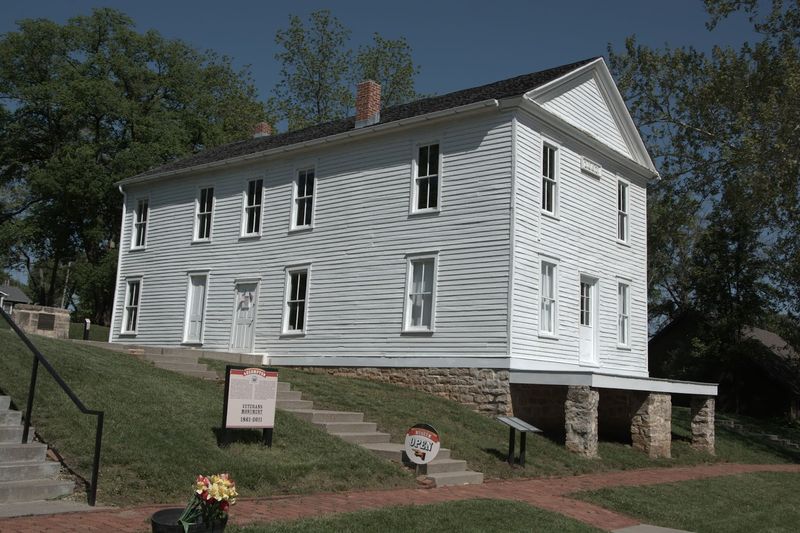
Long before anyone called it a historic site, this plain wooden structure went up fast and with purpose.
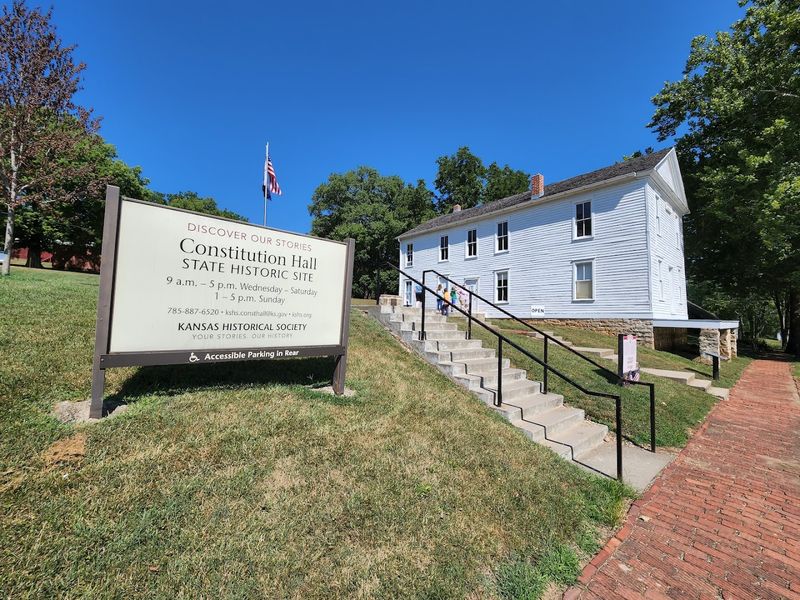
Built in 1856 at 319 Elmore Street in Lecompton, Kansas, the building was erected during one of the most politically charged moments in American history.
Kansas Territory was ground zero for a national argument about whether new states would allow slavery or not.
Settlers flooded in from both pro-slavery and free-state sides, and tensions ran dangerously high across the region.
Rather than a purpose-built government hall, it began as Samuel J. Jones’s commercial hall, then rented for land office, courts, legislative meetings, and decisions that would shape the future of a state.
What makes it remarkable is that it survived at all.
Many buildings from that era disappeared long ago, but this one stood firm, carrying its stories into the present day like a stubborn witness to history.
It Served Multiple Government Functions Under One Roof
Most people expect a historic building to have done one important thing. Constitution Hall managed to do several at the same time, which is honestly impressive for a structure this size.
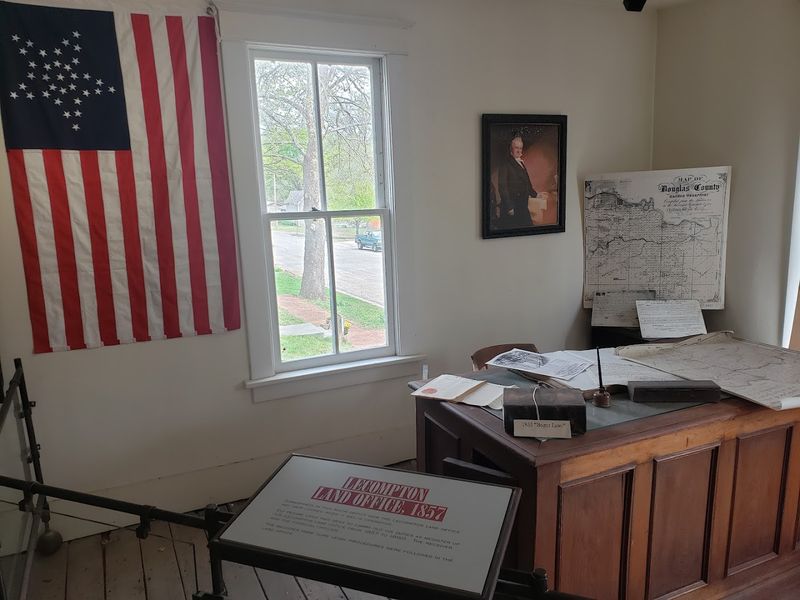
The first floor operated as a land office, the place where settlers came to officially file their claims for parcels of Kansas Territory land with the United States government.
It was busy, practical, and absolutely essential to the thousands of people trying to build new lives on the frontier.
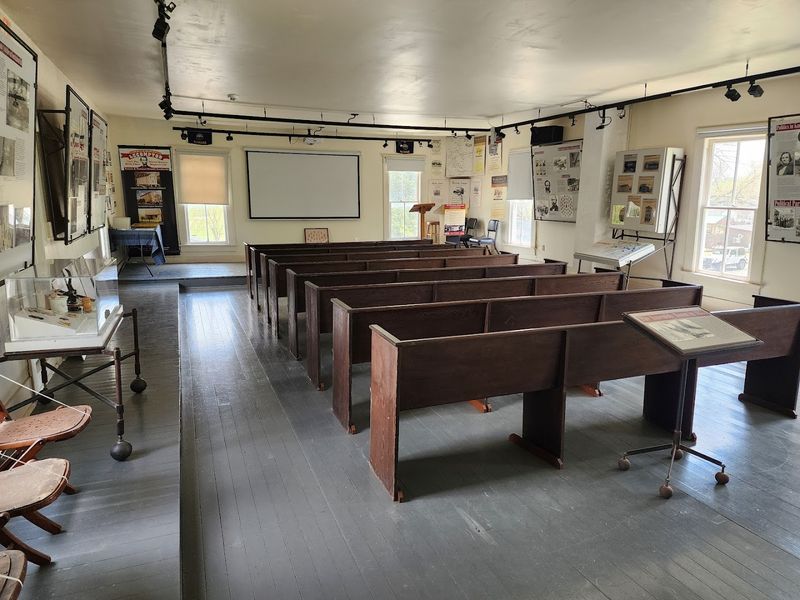
Meanwhile, the second floor served as both a courtroom and the chamber of the House of Representatives for the territorial government.
Lawmakers debated, judges presided, and decisions echoed down through the decades.
Packing that much governmental function into a single modest frame building says a lot about the raw, improvised energy of frontier Kansas, where people built institutions almost as fast as they built houses.
The Lecompton Constitution Was Written Here, Sparking A Nationwide Uproar
Of everything that happened inside this building, one event towers above the rest.
In 1857, pro-slavery delegates gathered on the second floor and drafted the Lecompton Constitution, a document that proposed Kansas enter the Union as a slave state.
The reaction across the country was immediate and furious. Free-state settlers in Kansas largely refused to participate in the ratification vote, calling the whole process rigged and undemocratic.
The document became a lightning rod for national outrage, drawing fire from newspapers, politicians, and ordinary citizens from coast to coast.
Even members of the same political party split over it, with Stephen Douglas famously breaking from President James Buchanan to oppose the constitution.
That fracture would have consequences that rippled all the way to the 1860 presidential election. One document, written in one room, in one small Kansas town, cracked the political landscape of an entire nation wide open.
“Bleeding Kansas” Is The Dramatic Nickname For What Happened Around This Building
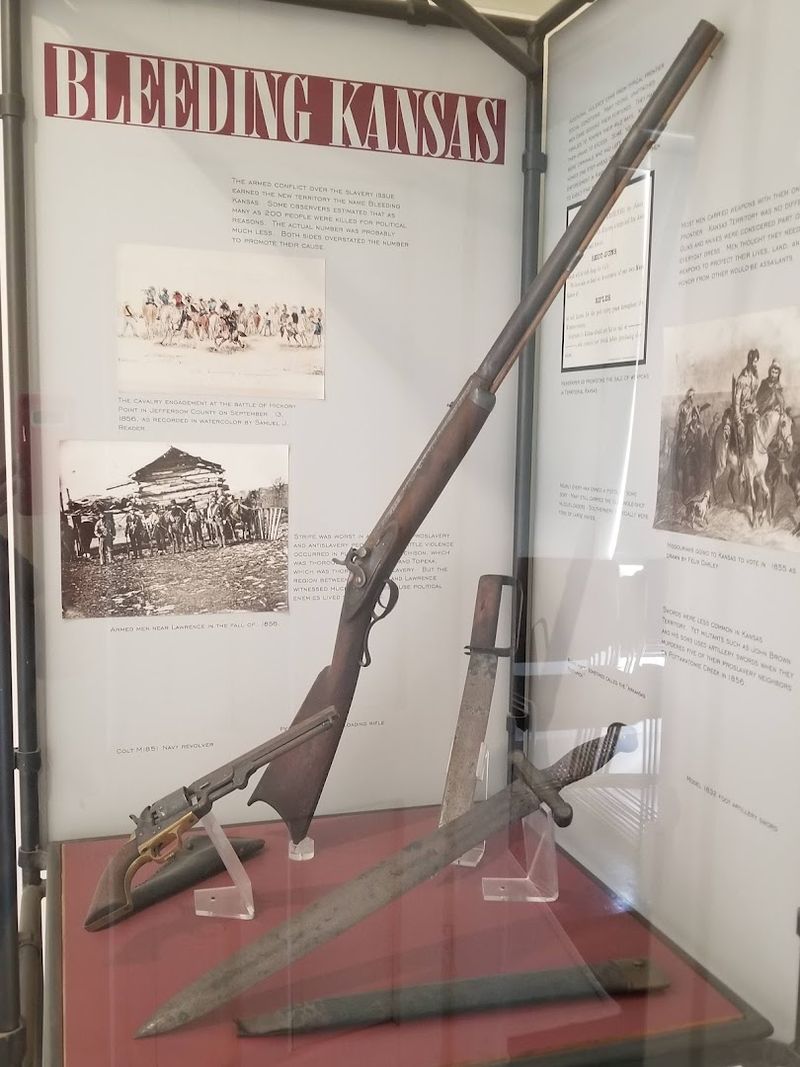
Kansas in the 1850s was not just politically messy. It was genuinely dangerous, and the phrase “Bleeding Kansas” captures that reality with grim accuracy.
After the Kansas-Nebraska Act of 1854 opened the territory to settlement and left the slavery question to a popular vote, both sides flooded in hoping to tip the outcome their way.
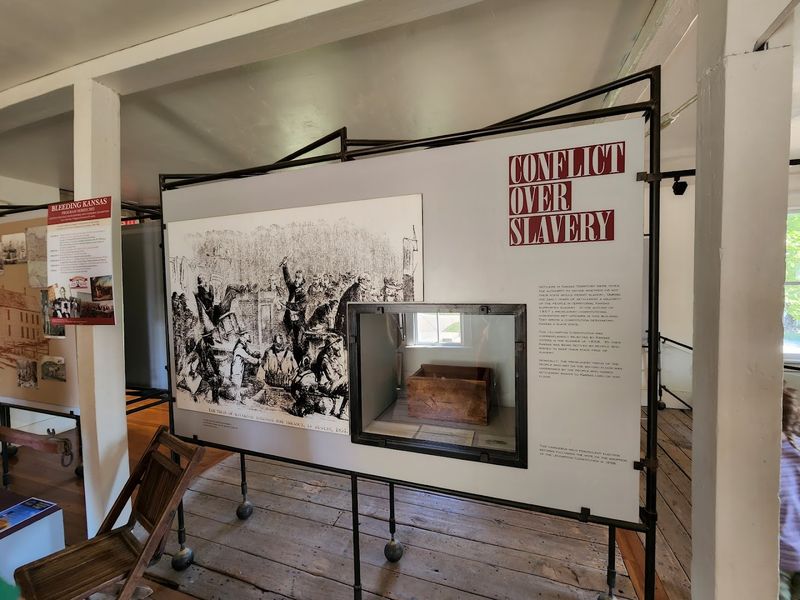
What followed was a wave of raids, skirmishes, and outright violence between pro-slavery and free-state factions that shocked the rest of the country.
Lecompton sat at the center of this storm as the territorial capital, and Constitution Hall was where the pro-slavery government tried to formalize its power through legislation.
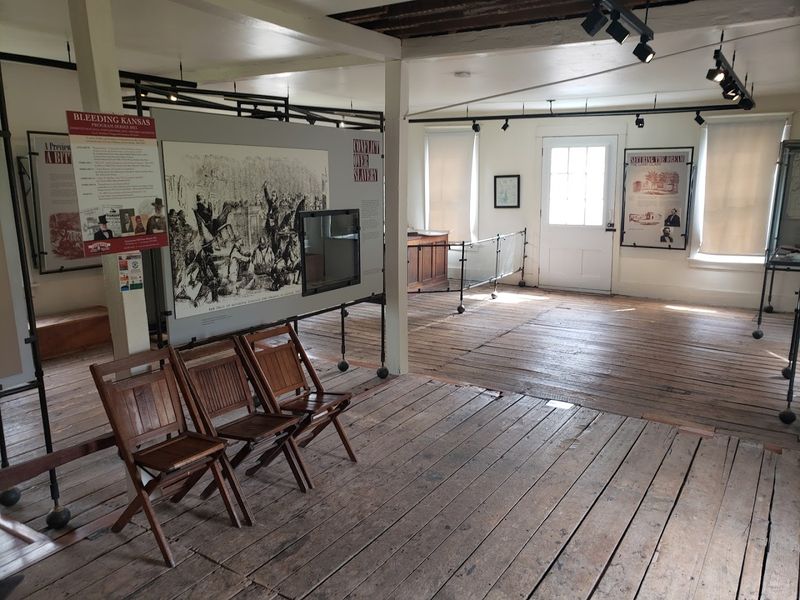
The exhibits inside the site today cover this turbulent chapter in detail, giving visitors a clear picture of just how close Kansas came to becoming a permanent battleground rather than a state.
History rarely gets more dramatic than this.
Abraham Lincoln And Stephen Douglas Both Referenced This Building In Their Famous Debates
The Lincoln-Douglas debates of 1858 are among the most celebrated political exchanges in American history, and the Lecompton Constitution sat right at the heart of them.
Stephen Douglas, running for Illinois Senate, had broken with his own party’s president over the Lecompton Constitution, arguing it did not reflect the true will of Kansas voters.
Lincoln pressed Douglas on his contradictions, using the Kansas controversy to expose the fault lines in Douglas’s position on slavery and popular sovereignty.
Those debates drew enormous crowds and national press coverage, turning what might have been a regional Senate race into a preview of the 1860 presidential contest.
Lincoln lost the Senate seat but gained a national reputation.
The arguments made in those debates, arguments rooted in the Lecompton Constitution drafted inside a modest building, helped define the terms of the conflict that would consume the entire country.
The Building Is One Of The Oldest Surviving Wooden Frame Structures In Kansas
Surviving 170 years as a wooden frame building is no small achievement, especially in a region that sees tornadoes, harsh winters, and scorching summers on a regular basis.
Constitution Hall is considered the oldest wood-frame building in Kansas still standing in its original location, a distinction that adds another layer to its already remarkable story.
While newer brick and stone buildings replaced most of the frontier-era wooden structures across the state, this one held on through luck and the dedication of people who recognized its value.
The original construction is still visible in much of the building, giving it an authenticity that carefully restored sites sometimes lack.
Standing inside and looking at cottonwood floor planks and black walnut siding, you get a tactile sense of the 1850s that no photograph or textbook can fully replicate.
The building does not just tell history; it physically embodies it in a way that feels immediate and real.
Admission Is Free, Making It One Of The Most Accessible History Experiences In The Region
Here is a fact that tends to make people do a double take: visiting Constitution Hall State Historic Site costs absolutely nothing.
Entry is free, with donation boxes available for those who want to support the site’s upkeep.
For families, teachers, students, or anyone curious about American history on a budget, that is genuinely great news. The site is managed by the Kansas Historical Society, which keeps it open Wednesday through Saturday from 9 AM to 5 PM, and on Sundays from 1 PM to 5 PM.
It is closed on Mondays and Tuesdays. The address is 319 Elmore Street, Lecompton, Kansas 66050.
For a destination this historically significant, the fact that it remains freely accessible to the public feels like a small but meaningful gift to anyone who cares about American history.
The Museum Features Interactive Exhibits That Bring The Frontier Era To Life
Walking through Constitution Hall is not a passive experience.
The exhibits inside are designed to engage visitors with original objects, including Albert Boone’s land office desk, territorial government documents, and artifacts tied directly to the political struggle that shaped Kansas statehood.
The first floor exhibits focus on the land office era and the daily lives of settlers who passed through Lecompton during the 1850s and 1860s.
Upstairs, the legislative chamber comes alive with context about the debates and decisions that took place there, making it easier to picture the room filled with arguing politicians rather than quiet museum-goers.
Teachers in particular can use the site’s curriculum materials for school groups and younger audiences, which is impressive given the building’s compact size.
The site proves that a great museum does not need a massive footprint to make a lasting impression. Sometimes a single room, packed with the right stories, is more than enough to spark genuine curiosity.
The Site Sits Alongside A Veterans Monument And Lecompton’s Restored Historic Jail
Constitution Hall does not stand alone on its block.
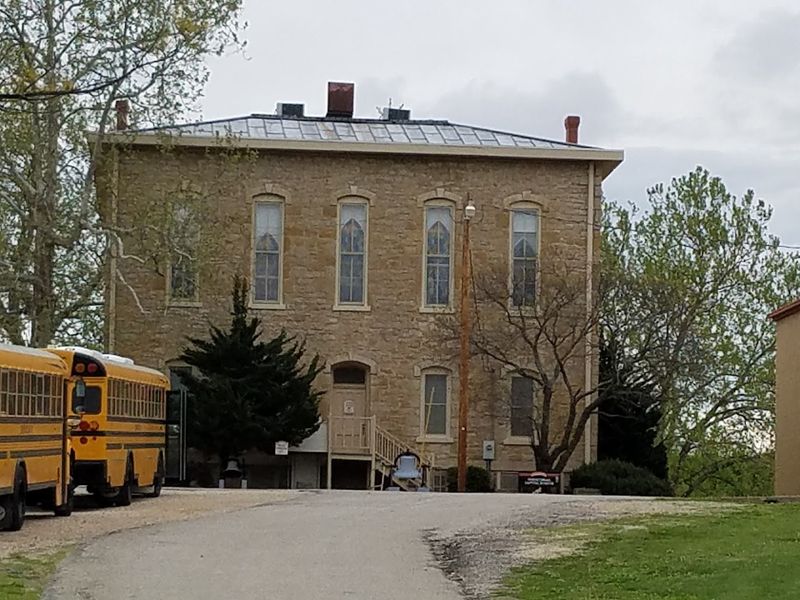
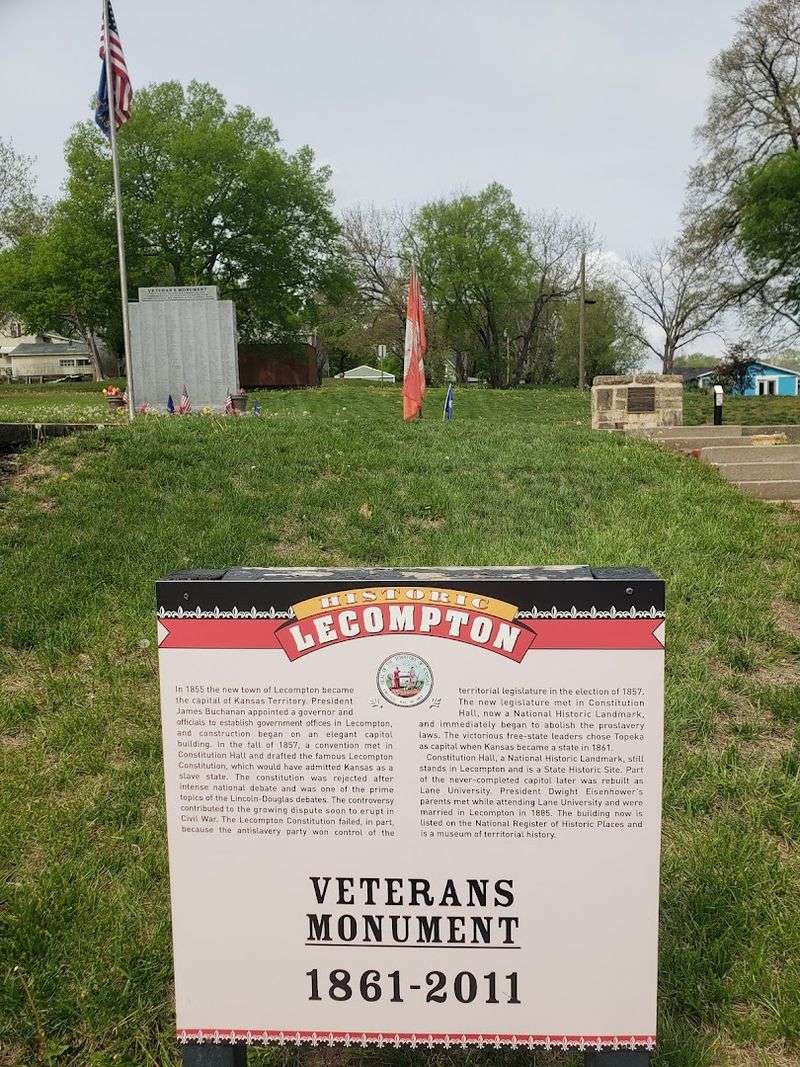
Right next to the building, visitors will find a veterans monument honoring those from the Lecompton area who served in America’s conflicts, adding a layer of community memory to the already history-rich site.
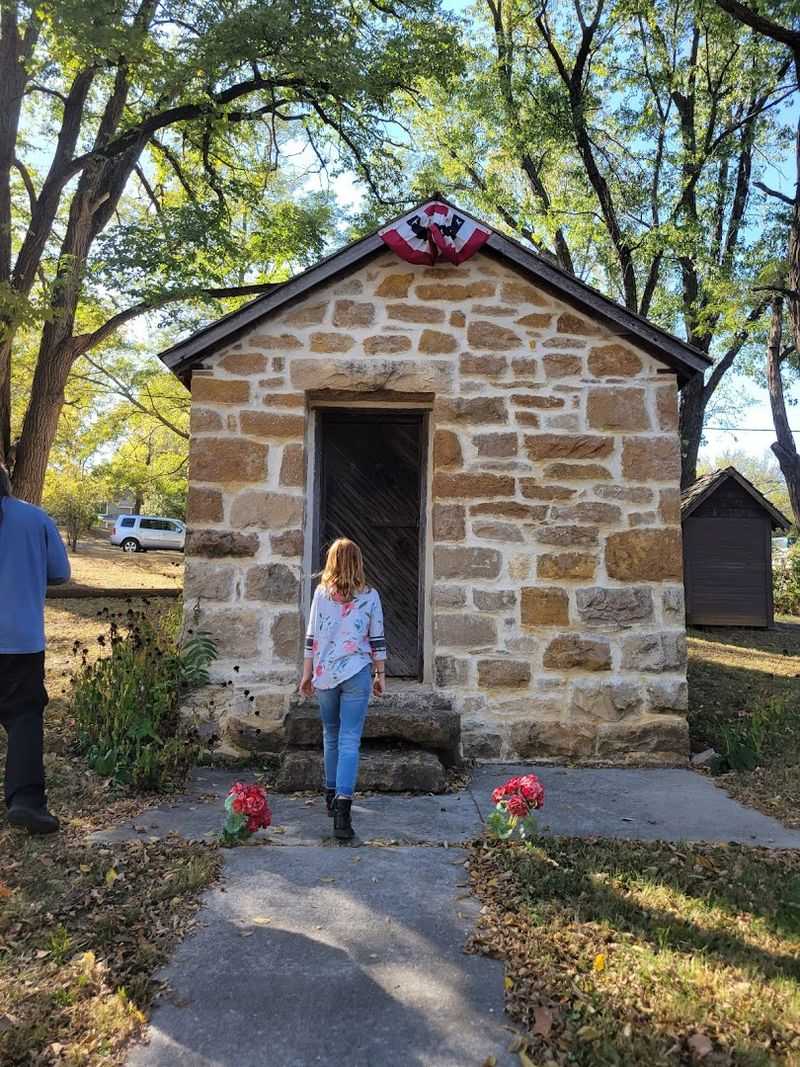
The town’s restored historic jail is also nearby, giving the whole area a kind of open-air history corridor that rewards anyone willing to slow down and look around.
Lecompton itself is a small town with a surprisingly deep historical footprint, and these adjacent landmarks help tell a broader story about life and governance on the Kansas frontier.
The combination of the hall, the monument, and the jail creates a mini historic district that is easy to explore on foot in an afternoon.
It is the kind of place where every building seems to have something to say, and the town itself feels like a living footnote to one of America’s most consequential chapters.
The Events At Constitution Hall Directly Influenced The Outcome Of The 1860 Presidential Election
It is rare that a single building can be credibly linked to the road toward a presidential election, but Constitution Hall has that distinction.
The controversy surrounding the Lecompton Constitution deepened the split within the Democratic Party in the late 1850s, sharpening northern and southern divisions that shaped the 1860 campaign in important ways.
That division helped give Abraham Lincoln a path to the presidency that might not have existed otherwise.
A unified Democratic Party would have been a far more formidable opponent, but the wounds opened by the Lecompton debate never fully healed before election day arrived.
Lincoln’s victory then triggered the secession of southern states, helping lead to the Civil War.
Tracing that chain of events back to its source lands you squarely in Lecompton, Kansas, inside a modest wooden building that most Americans have never heard of.
That gap between obscurity and importance is exactly what makes Constitution Hall State Historic Site worth knowing about.