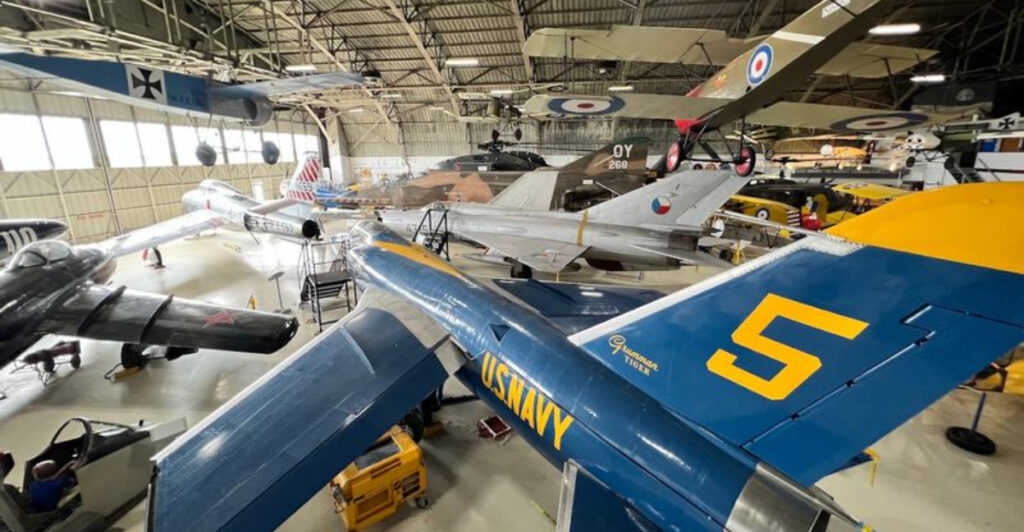
Step inside an unassuming Kansas hangar, and the air suddenly feels charged with history, as if every corner quietly holds echoes of aircraft and crews from another time.
Rows of combat aircraft, military artifacts, old engines, uniforms, and wartime stories can turn a quiet museum visit into a powerful look at courage, engineering, and the machines that helped shape the skies.
There is something gripping about seeing legendary aircraft up close. They are not just metal, wings, and rivets.
They are reminders of pilots, crews, missions, risks, and moments when history moved at full throttle. The setting makes it even better, because a hangar feels like exactly where these stories belong.
I would probably walk in expecting a quick look around, then end up studying every cockpit, every insignia, and every plane like it had one more story left to tell.
A Living Collection Across Two WWII-Era Hangars
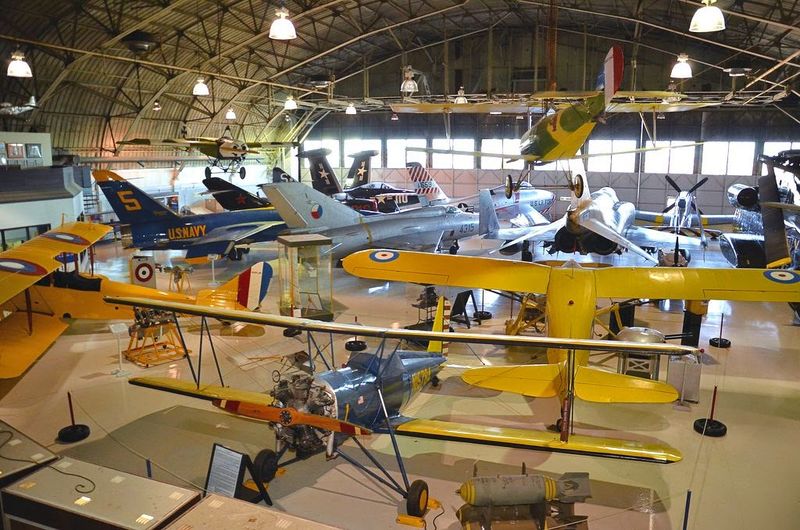
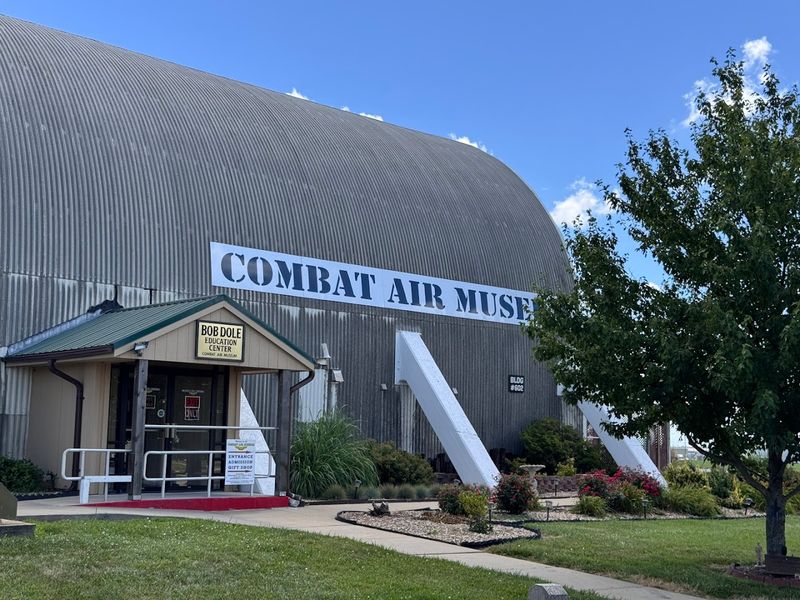
Walking through the entrance of the Combat Air Museum, the first thing that hits you is the sheer scale of it all.
Two classic aircraft hangars form the backbone of this collection, and together they create a space that feels both historic and alive.
The museum is located at 7016 SE Forbes Avenue, Forbes Field, Topeka, Kansas, right on the grounds of Topeka Regional Airport. That airport setting is no accident.
It means the hangars themselves are part of the story, tied to a place where aviation history and active flying still meet.
Unlike many aviation museums that feel sterile and hands-off, this one invites you to wander freely.
The layout rewards slow exploration, with aircraft tucked into corners and hallways that surprise even the most seasoned aviation enthusiast.
Ohio-based museum fans who have toured collections in that state often say this place rivals them easily.
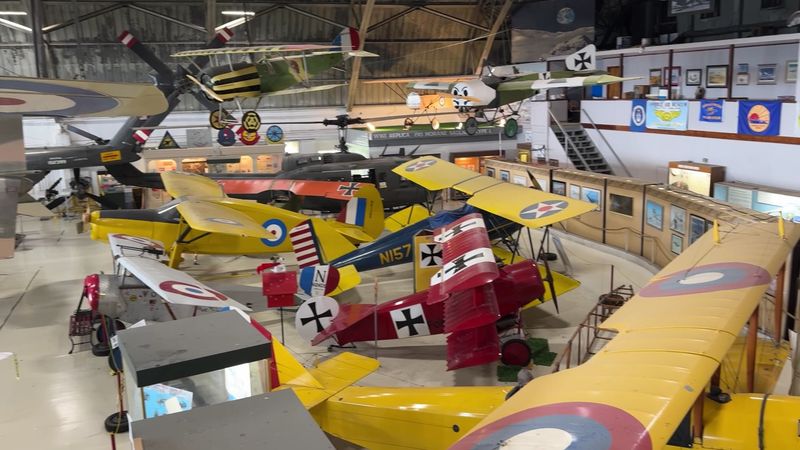
An Aircraft Roster That Spans Over A Century Of Flight
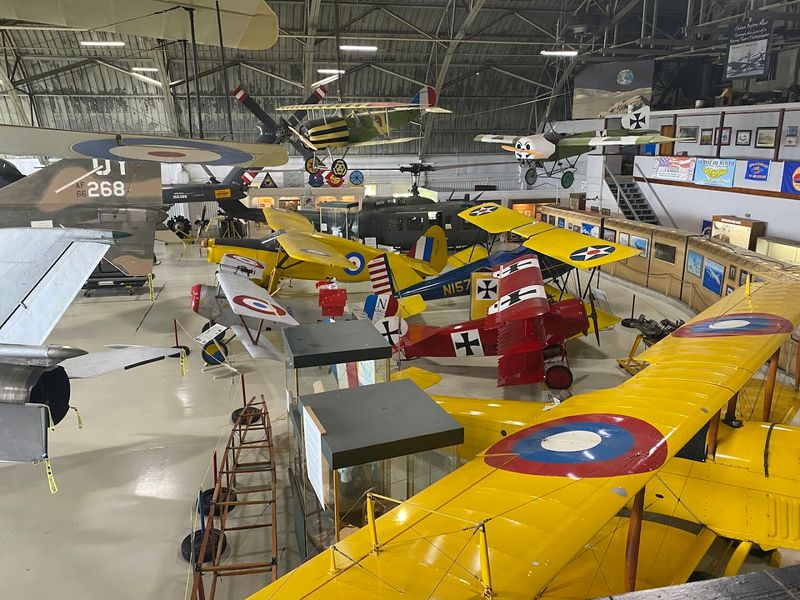
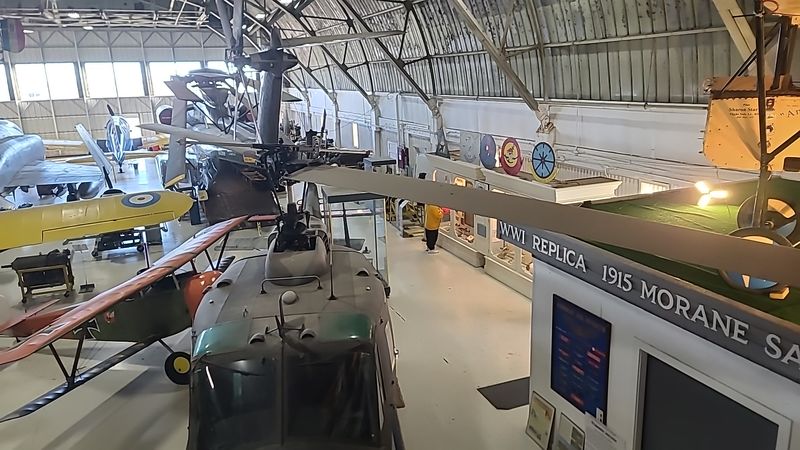
Few small-city museums can boast a collection that stretches from World War I replicas all the way to Cold War-era supersonic jets, but the Combat Air Museum does exactly that.
The range is staggering for a facility of its size. On any given visit, you might stand next to a Korean War-era fighter one moment and then walk around a Vietnam-era bomber the next.
The collection includes aircraft from multiple branches of the U.S. military, plus a handful of foreign aircraft that add an unexpected international dimension.
The curatorial approach here is about breadth as much as depth.
Each aircraft represents a chapter in the long, complicated story of military aviation, and the museum does a solid job of connecting those chapters through informational plaques and displays.
Aviation collectors from Ohio and beyond have described the roster here as surprisingly competitive with far larger institutions.
The Legendary F-14 And F-15 Are Both On Display
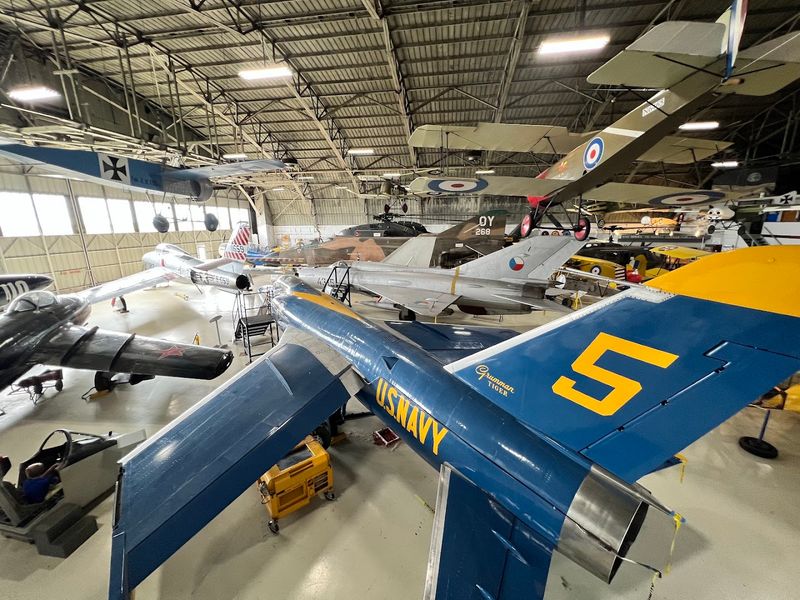
Two of the most iconic fighter jets in American military history share floor space at the Combat Air Museum, and seeing them side by side is a moment that aviation fans genuinely do not forget.
The F-14 Tomcat and the F-15 Eagle both have an undeniable presence that photographs simply cannot capture.
The F-14 earned its legendary status through decades of carrier operations and a certain blockbuster film that made it a household name.
The F-15, meanwhile, holds one of the most impressive combat records in aviation history, with zero confirmed losses in air-to-air combat.
Getting to stand within arm’s reach of both aircraft, reading about their actual service histories, gives the experience a weight that textbooks cannot replicate.
Visitors who have toured aviation museums in Ohio and other states consistently single out this pairing as one of the most impressive displays at the Combat Air Museum.
The EC-121 Constellation: You Can Actually Step Inside
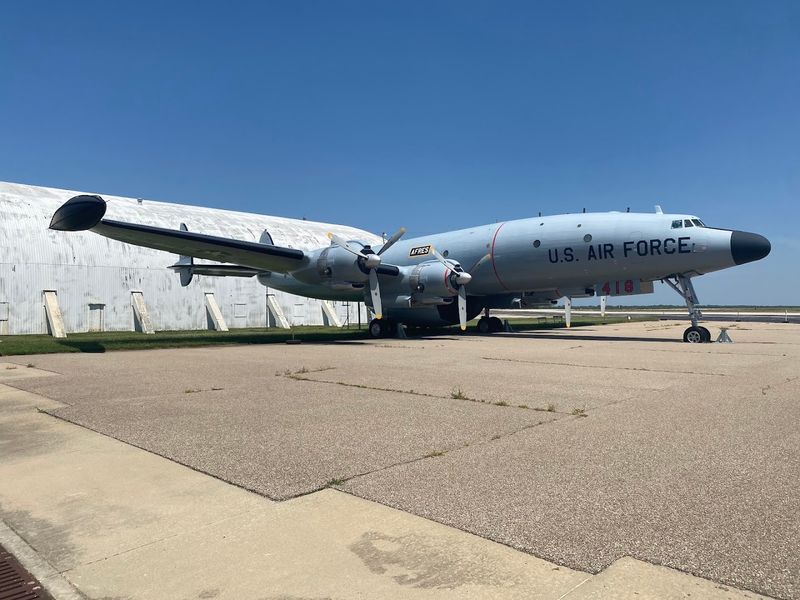
One of the most unique experiences at the Combat Air Museum is boarding the EC-121 Constellation, also known as the College Eye aircraft, which served as an airborne warning and control platform during the Vietnam War.
This is not a replica. It is the real thing.
The chance to step inside a full-scale historic aircraft and experience its actual interior is something most museums simply cannot offer.
The cramped workstations, the vintage instrumentation, and the overall scale of the aircraft tell a story that no placard alone could convey.
The EC-121 was the first AWACS-type aircraft in U.S. service, making it a genuinely significant piece of aviation and military history.
Ohio aviation enthusiasts who have made the trip to Topeka specifically to see this aircraft have called it one of the most immersive museum experiences available anywhere in the Midwest.
It is a standout even in a collection full of standouts.
MiG Aircraft: The Enemy’s Machines Up Close
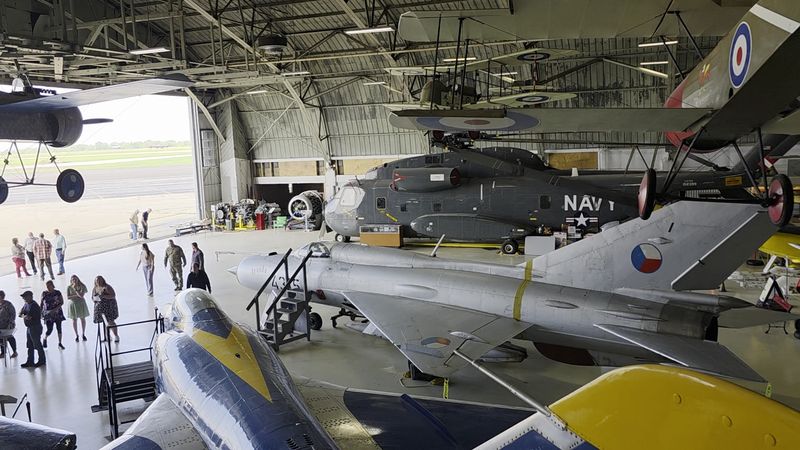
There is something deeply fascinating about standing next to an aircraft that was built to oppose American pilots, and the Combat Air Museum has at least three MiGs in its collection.
These Soviet-era fighters represent the other side of the Cold War story, and their presence here adds a layer of complexity that enriches the entire visit.
Seeing a MiG in person is a reminder that aviation history is not a one-sided narrative.
These aircraft were formidable machines, and the fact that American pilots faced them in combat over Korea and Vietnam makes the display feel genuinely significant rather than just decorative.
The museum’s decision to include enemy aircraft is a curatorial choice that elevates the whole collection. It is the kind of thoughtful approach that separates a great museum from a merely good one.
Visitors traveling from Ohio and other distant states have specifically mentioned the MiG display as a compelling reason to make the journey to Topeka.
A Flight Simulator That Puts You In The Cockpit
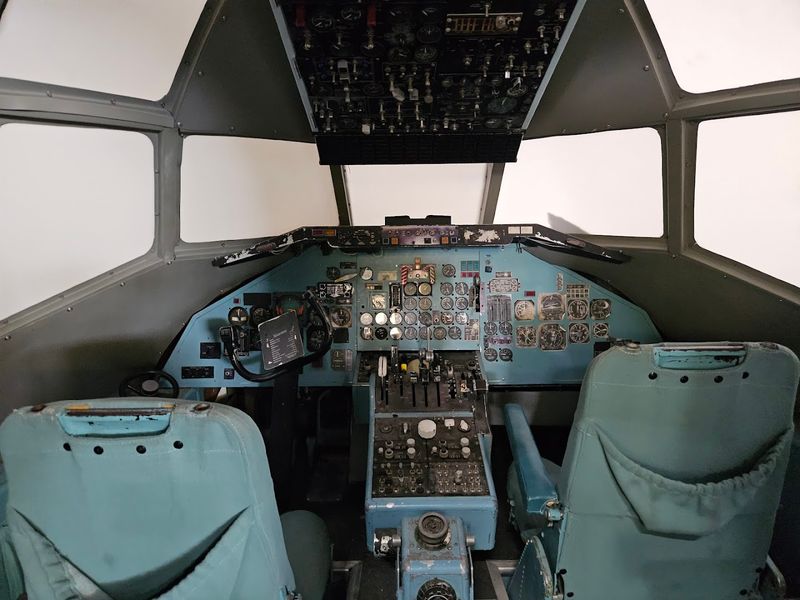
Reading about a fighter jet is one thing. Sitting in a simulator and getting a taste of flight controls is something else entirely.
The Combat Air Museum offers a flight simulator experience that consistently ranks among the most popular features for younger visitors, though plenty of adults are just as enthusiastic about it.
The simulator is not a high-tech virtual reality setup, but it does a solid job of giving visitors a hands-on appreciation for the complexity of aviation.
When available, museum volunteers can help make the experience accessible even for those with zero aviation background.
For families traveling with kids, this interactive element transforms the museum from a passive viewing experience into something participatory and memorable.
Families who have visited aviation museums across the country, including several in Ohio, often highlight interactive features like this as the deciding factor in whether kids stay engaged throughout the visit.
Volunteers Who Are Living, Breathing Aviation Encyclopedias
One of the most consistently praised aspects of the Combat Air Museum is its volunteer staff.
These are not people simply pointing visitors toward the restrooms. Many of them have direct connections to military aviation, whether through service, personal history, or decades of dedicated research.
On a good day, a volunteer might offer a private guided tour that runs for well over an hour, covering aircraft histories, personal anecdotes, and technical details that never appear on any placard.
That kind of spontaneous, knowledge-rich interaction is something that cannot be planned or programmed into a museum experience.
The warmth and genuine enthusiasm of the volunteer team creates an atmosphere that feels more like a conversation with a passionate expert than a formal museum tour.
Travelers passing through Kansas from as far away as Ohio have described these volunteer encounters as the single most memorable part of their visit to the Combat Air Museum. That is no small compliment.
Admission Pricing That Makes The Experience Accessible To Everyone
At ten dollars for adults, seven dollars for children ages 5 to 17, and reduced rates for seniors and military visitors, the Combat Air Museum still offers one of the better value-for-money experiences in Kansas.
For a collection of this size and quality, the pricing remains reasonable, and it reflects the museum’s commitment to keeping aviation history accessible to everyone.
The military rate is a meaningful gesture that acknowledges the connection between the aircraft on display and the people who actually flew and maintained them.
For many veterans, walking through these hangars is a deeply personal experience, and the discounted admission signals that the museum understands and respects that.
Budget-conscious families and solo travelers who have made long drives from states like Ohio specifically to visit the Combat Air Museum consistently express surprise at how much the admission fee underdelivers in terms of what it costs and overdelivers in terms of what it provides.
That gap between expectation and reality is exactly what makes this place special.
The Museum Sits Right Next To An Active Runway
The location of the Combat Air Museum at Topeka Regional Airport is not just a historical footnote. It actively enhances the visitor experience in a way that most indoor museums simply cannot replicate.
While exploring the collection, you can step outside and watch real aircraft take off and land on the adjacent runway.
That combination of historic static displays and live aviation activity creates a layered experience that connects the past and present in a very immediate way.
Seeing a modern aircraft taxi past while standing next to a Korean War-era jet is a quietly powerful juxtaposition.
The airport setting also means that pilots can actually fly in and park at the back of the museum, walking directly from their aircraft into the collection.
It is the kind of detail that feels almost too good to be true, and it speaks to the museum’s deep integration with the living world of aviation rather than treating it purely as a relic.
A Gift Shop And Art Gallery Worth The Extra Time
Beyond the aircraft themselves, the Combat Air Museum offers a gift shop that aviation enthusiasts consistently describe as one of the better-stocked examples they have encountered at a regional museum.
Detailed scale models, books, prints, and aviation-themed merchandise fill the space with options for every budget.
The art gallery component adds an unexpected dimension to the visit. Paintings and prints depicting historic aircraft and aerial combat hang throughout the exhibit areas, giving the collection a visual richness that goes beyond the mechanical.
Several pieces are genuinely striking, and the gallery quality would hold its own in any dedicated art space.
The gift shop also benefits from air conditioning, which becomes a practical consideration during Kansas summers when the hangars rely on fans to keep the air moving.
Visitors coming from as far as Ohio have mentioned picking up gifts here that they could not find at larger, more commercial aviation museums. That kind of exclusivity, even at a small scale, is always a good sign.