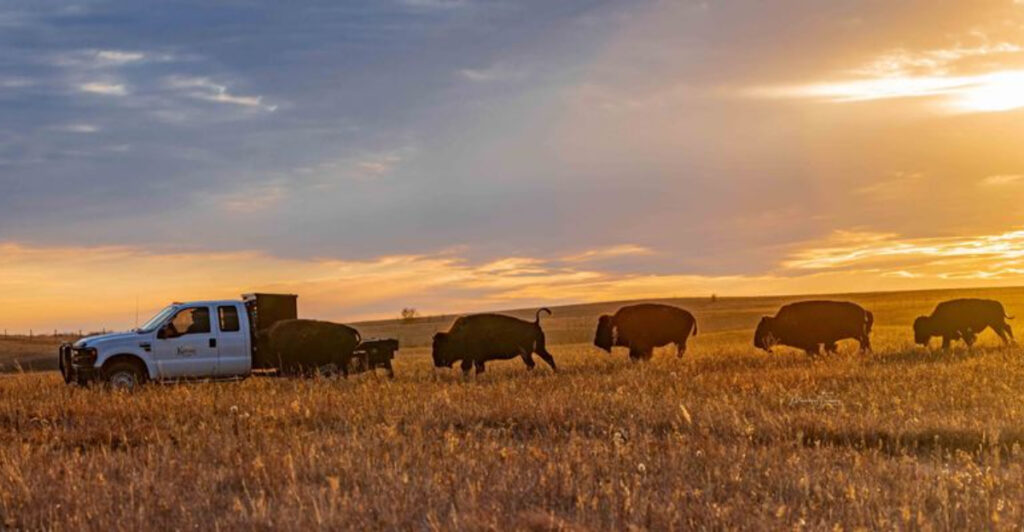
Seeing bison in the wild changes the mood of a park visit fast. One quiet Kansas refuge gives visitors a chance to watch these massive animals without the crowds that usually follow the state’s better-known attractions.
The setting feels open and unhurried, which makes spotting a herd in the distance even more memorable. There is no need for a complicated itinerary here.
The excitement comes from slowing down and paying attention. That simplicity is exactly what makes the experience work.
Wildlife does not perform on command, so every sighting feels a little more special when it happens naturally. The first time I saw bison from a respectful distance, I was surprised by how still everyone around me became.
Nobody needed to say much. I remember watching the herd move across the landscape and thinking the whole scene looked far bigger than it ever had in photos.
Since then, bison stops have had an easy way of getting added to my road-trip plans.
A Prairie Sanctuary Built On One Man’s Wish
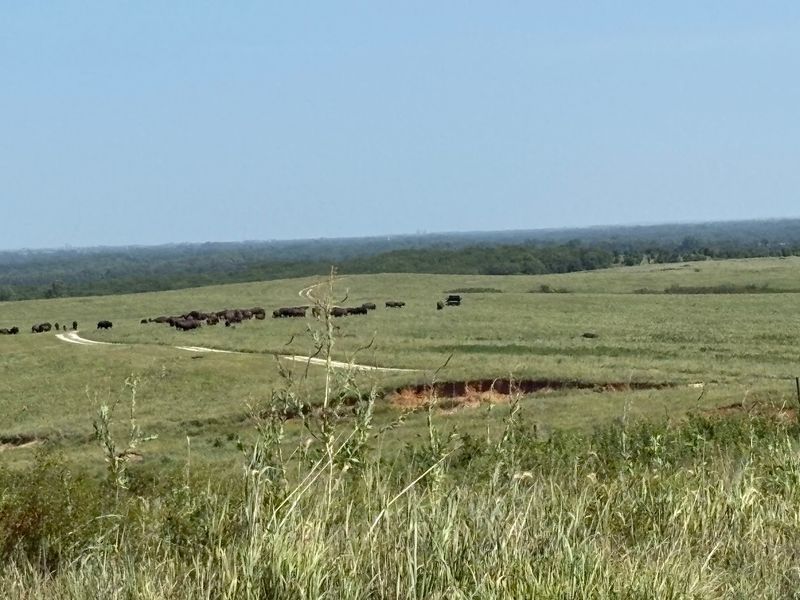
Long before this land became a refuge, its story began with the Maxwell family, and the story of how it turned public is refreshingly simple.
Henry Gault Maxwell dreamed of preserving prairie for future generations, and his son Henry Irving Maxwell later shaped his will to help carry that vision forward through a carefully structured gift to the state.
That wish became 2,560 acres of protected prairie north of Canton, in McPherson County, Kansas. The bison and elk herds were both established here in 1951.
I like that the whole place feels less like an attraction and more like a promise being kept. Nothing here has been dressed up for cameras.
The refuge is managed with conservation first and visitors second, which is exactly why it still feels wild. Interpretive work is handled largely by volunteers who genuinely care about the grass under their boots.
Knowing that backstory changed how I looked at every ridge line out there.
Bison Close Enough To Hear Grunting
My first honest surprise was the sound.
Bison grunt, snort, and rumble in a low conversational way, and standing near a herd of a few hundred means you hear them long before you finish counting them.
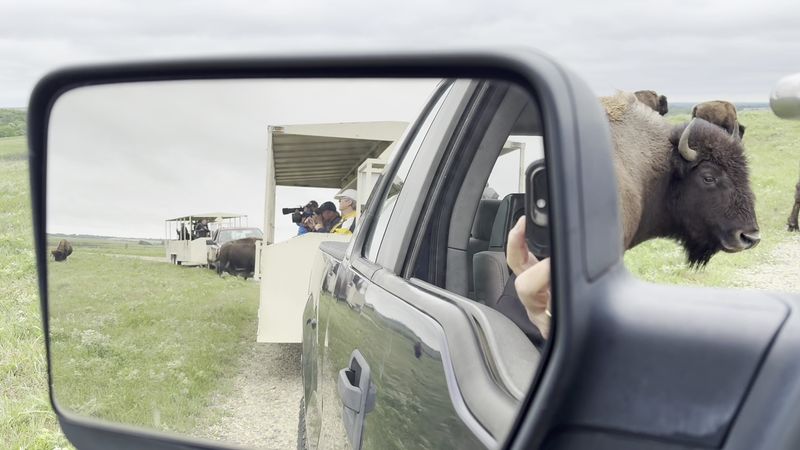
The refuge maintains a bison herd that typically numbers in the low hundreds, spread across open prairie rather than small pens. On a tram tour, the guide drives right into their world and the animals barely lift their heads.
That closeness is a privilege, not a right. Bison are enormous, fast, and unpredictable, and they can turn on a coin.
If you are exploring by car along the public road, stay inside the vehicle. Photograph through the window and enjoy the moment without becoming a cautionary story.
What struck me most was the scale of them against so much open sky. No zoo enclosure prepares you for a bull the size of a compact car walking past your mirror.
Elk Share The Grass Too
Everyone shows up for the bison, then gets an unexpected bonus.
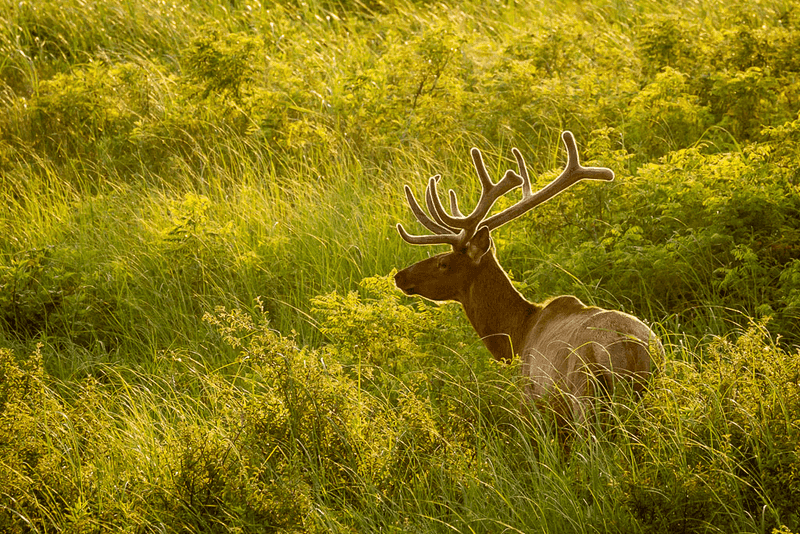
A herd of elk also lives on this prairie, and spotting one is a genuine thrill because they are shyer and far better at disappearing into a draw.
Elk once ranged across Kansas grasslands before settlement pushed them west. Their presence here restores a piece of the original picture that most people never think about.
Bulls carry impressive antlers, and autumn is when things get theatrical. During the rut, males bugle with a high whistling call that carries a surprising distance across open country.
I had better luck seeing them early in the morning and again close to sunset, when the herd moves toward water and cooler ground. Midday searches mostly turned up grass.
Bring binoculars. Elk often park themselves along distant tree lines, and a decent pair of lenses turns a brown smudge into an animal with a face.
The Tram Tour Is The Main Event
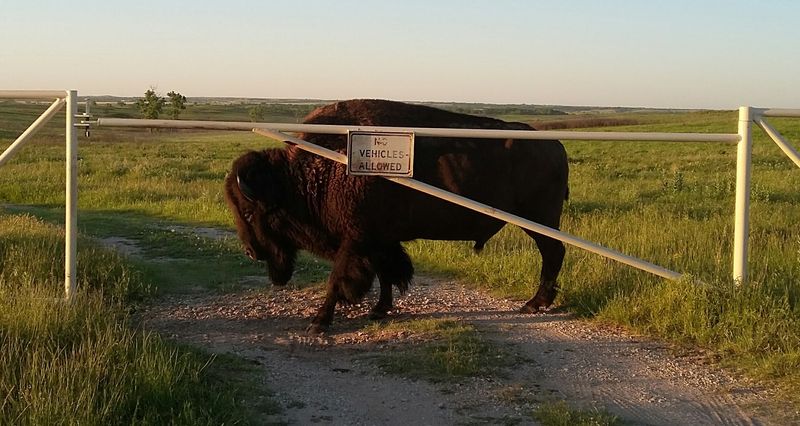
Here is the part worth planning your calendar around.
A guided tram ride takes small groups off the public road and out onto ground that regular visitors cannot reach on their own.
The tram is open-sided, so you feel the wind and smell the grass while a knowledgeable guide narrates.
Topics wander happily between prairie ecology, bison biology, local history, and the Kaw people who lived in this region.
Public tram tours currently run Tuesdays and Saturdays at 10 AM, with an 11 AM run if the first fills. Private group tram tours can be arranged for dates with advance reservations.
Bring a hat and sunscreen, because shade is a rumor out there. A light jacket helps in spring and fall when the wind picks up momentum.
I found the narration genuinely good, not recited. Two different guides on two different days told me two different sets of stories, and both were worth the drive.
Pueblo Road Doubles As A Free Safari
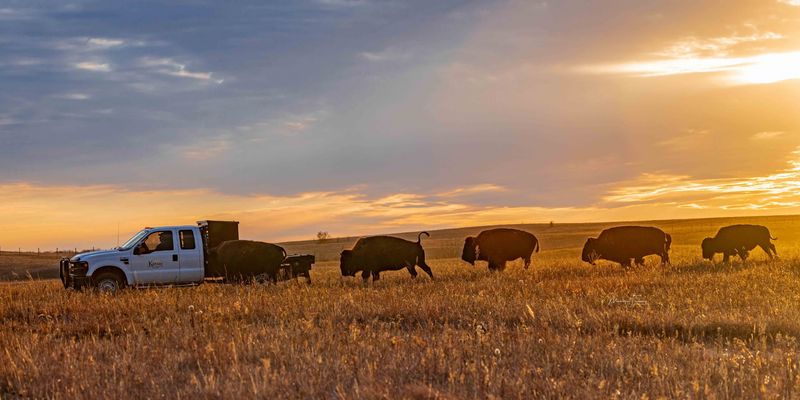
Not everyone can catch a scheduled tour, and honestly, you still have options.
A public road runs straight through the refuge, and driving it slowly can deliver bison sightings without paying a cent.
The address is 2565 Pueblo Rd, Canton, KS 67428, and that same road is your self-guided route. Bison sometimes graze within a few yards of the shoulder, which makes for the easiest wildlife photography in Kansas.
Sightings are never guaranteed, though. The herd roams thousands of acres and occasionally decides to spend the day somewhere you cannot see.
My advice is to drive it twice, once at dawn and once near dusk, and treat anything in between as a bonus round. Keep your speed low and your windows the only barrier.
Fall and winter drives worked especially well for me, with thinner grass and fewer leaves hiding animals. Patience pays better than mileage out here.
The Observation Tower Is Currently Awaiting Its Replacement
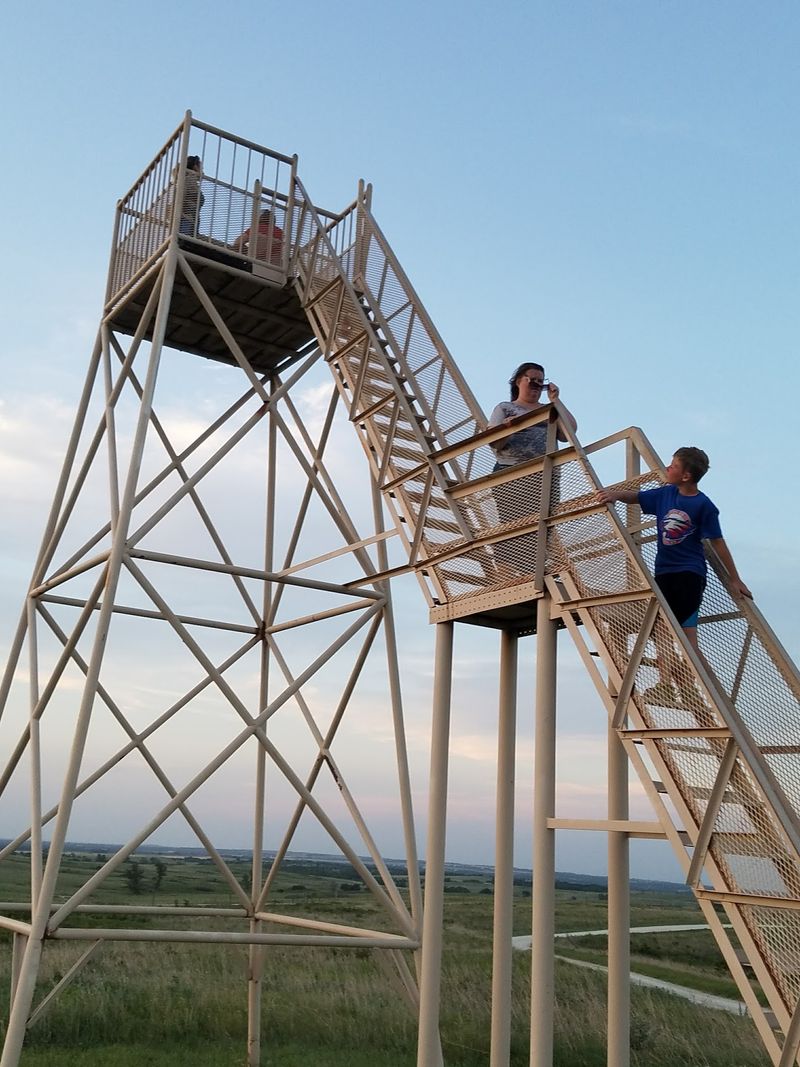
There was an observation tower on the property, but climbing it is no longer an option.
The structure, built in 1956, was recently removed after reaching the end of its safe-use lifespan.
The Kansas Department of Wildlife and Parks says a new viewing structure is planned for the site, though no opening date is currently posted.
For now, bring binoculars or a camera with real reach and use the public road for wildlife viewing. The refuge also offers guided tram tours for closer looks across the prairie.
The change matters if you remember older travel guides that still recommend climbing the tower. That advice is now out of date.
Until the replacement opens, the wide prairie views have to come from ground level or from a guided tour.
You can still scan for bison and elk, but there is currently no observation platform for visitors to use or climb above the grass.
Spring Calving Season Brings The Red Dogs
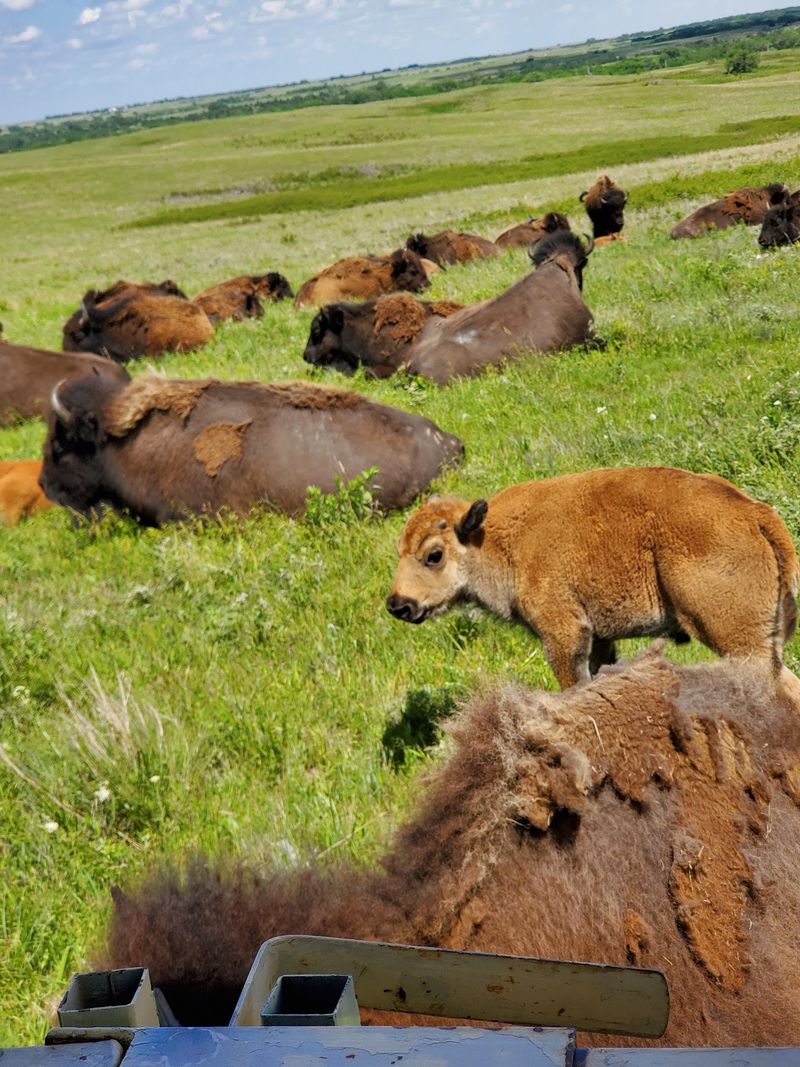
Ask anyone who visits in late spring what they remember, and the answer is usually small and orange. Newborn bison calves are a bright cinnamon color, which earned them the nickname red dogs.
Calving generally happens in spring, and the refuge sometimes hosts special events built around the arrival of the little ones. Seeing dozens of them bouncing around the grass is comedy and biology rolled together.
Calves stay close to their mothers, and mothers get protective in a hurry. Keep a generous distance and let the guides manage the approach.
Green grass, cooler air, and wildflowers make spring the prettiest season out here anyway. Add wobbly calves and the trip more or less sells itself.
Book early if you want a spring tour, because those dates fill fastest. I would happily plan an entire Kansas weekend around a single morning of red dogs in the tallgrass.
Dark Skies That Deserve More Attention
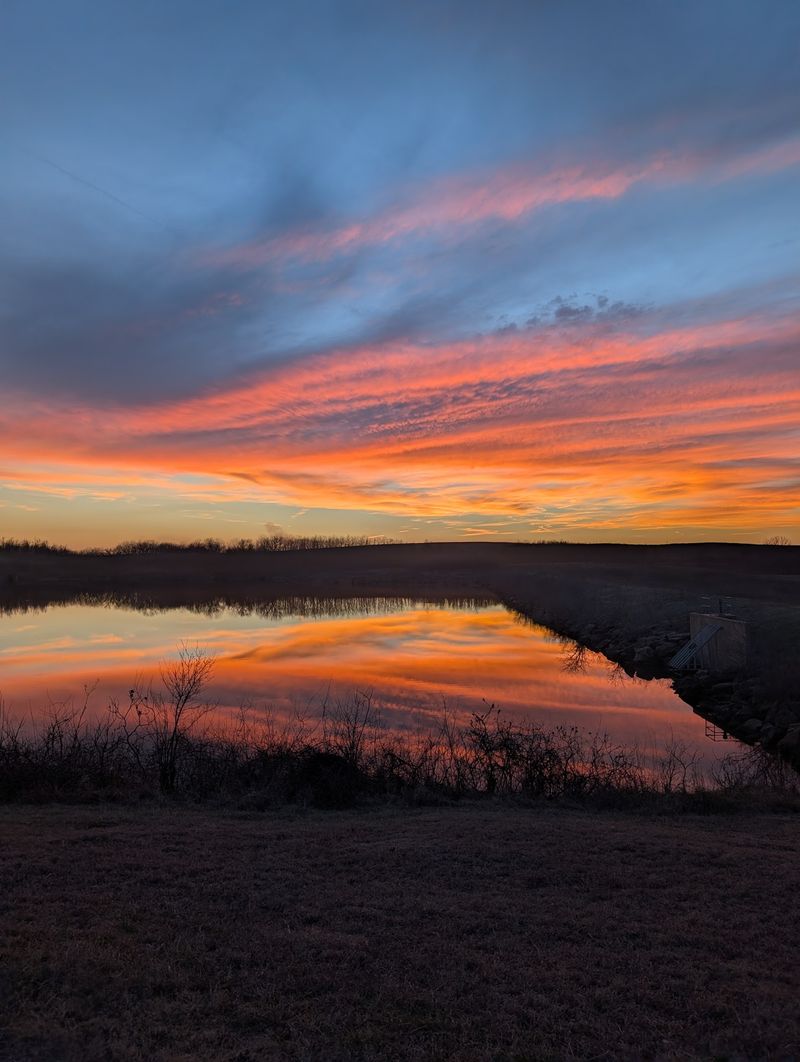
Something happens here after the sun goes down that almost nobody talks about.
With limited city glow, the sky above this prairie can fill with stars many visitors rarely witness.
The Milky Way can show up as a band under dark, clear conditions. Meteors can streak through on clear nights without any special occasion.
The refuge does not currently advertise regular astronomy programs, though photographers have documented the Milky Way here.
Even without an organized gathering, the darkness can reward a late departure.
Dress warmer than you think you need to, because prairie nights cool off fast once the wind keeps blowing. A red flashlight preserves your night vision far better than a phone screen.
Check the moon phase before committing, since a full moon washes out the faintest stars.
My best night here came during a new moon, when the sky looked crowded and the grass rustled with things I could hear but never see.
McPherson State Fishing Lake Sits Right Next Door
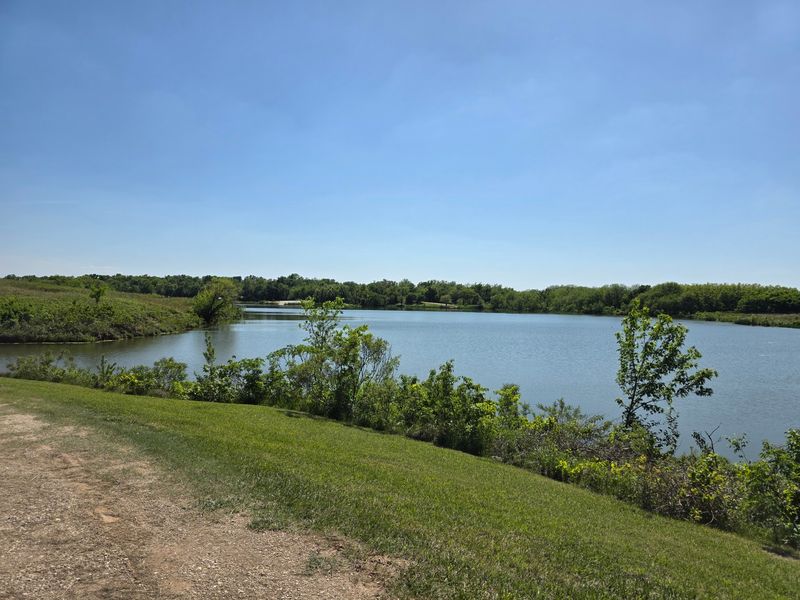
Bison get the headlines, but the water next door earns its keep.
A small state fishing lake borders the refuge, giving visitors somewhere to cast a line, picnic, or set up a tent.
Fishing requires a valid Kansas license, and the shoreline is pleasantly uncrowded on most weekdays. Camping spots come with tables and fire rings.
Facilities are basic, and I mean genuinely basic. There are primitive restrooms and no showers, so pack accordingly and manage your expectations before you unroll a sleeping bag.
Staying overnight nearby solves two problems at once. You get early morning wildlife light and those remarkable night skies without a long drive in either direction.
Haul out everything you bring in, since the upkeep here depends heavily on visitors behaving decently. Waking up to prairie birds with a bison herd a mile away is a fine trade for skipping a hot shower.
Plan Around Those Short Visitor Center Hours
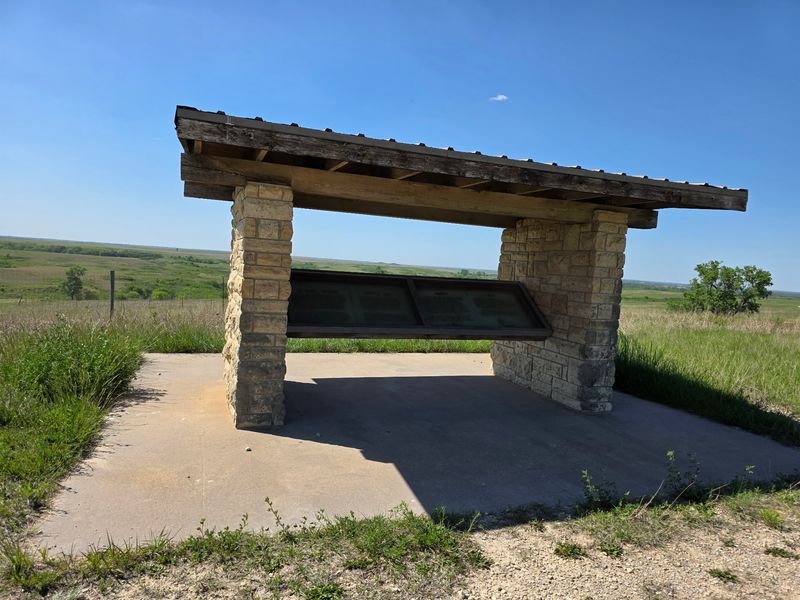
One practical detail can make or break the day.
The visitor center keeps limited hours, generally opening mornings on Tuesday, Thursday, and Saturday from 9 AM to noon, and staying closed the rest of the week.
Public tram tours currently run Tuesdays and Saturdays at 10 AM, with an 11 AM run if the first fills. Booking ahead is smart because seating is limited.
Check the booking page before making plans.
The refuge grounds and the public road remain accessible outside those windows, which is why the self-guided drive matters so much.
Canton sits a short hop off Interstate 135 between Wichita and Salina, making this an easy detour on a longer Kansas road trip. Wichita is roughly an hour away.
Fill your gas tank and pack water before turning off the highway. Services thin out fast, and the best part of this Kansas prairie has no vending machines whatsoever.