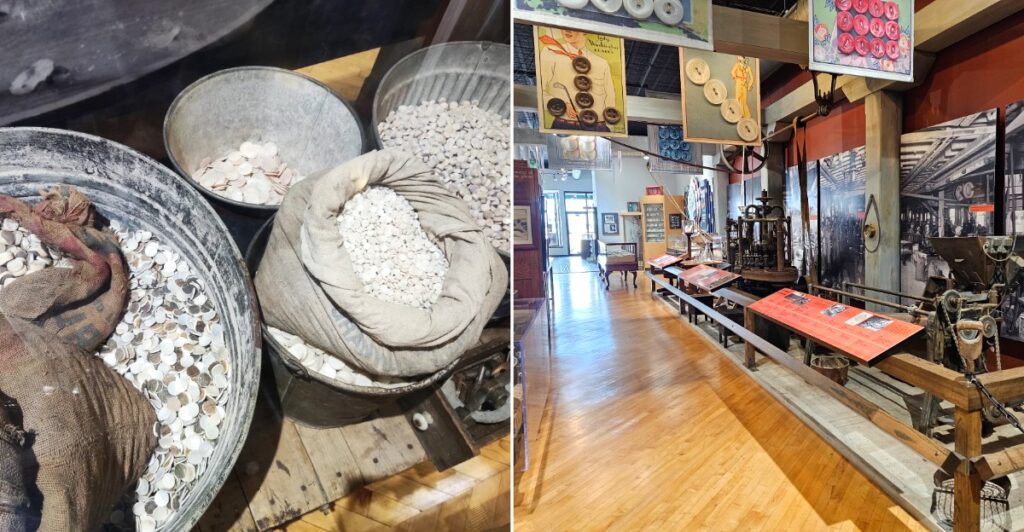
Buttons rarely get much attention until one falls off at the worst possible moment.
I used to think that was about as interesting as they got, but a small museum in Iowa convinced me otherwise.
Believe it or not, one town along the Mississippi River once built an enormous industry around these tiny everyday objects.
What surprised me most was that the whole story began with something people were pulling straight from the river.
The more I learned about the workers, inventors, and factories behind those little pearl buttons, the more fascinating it became.
Walking past the old machinery, I found myself wondering how something so ordinary could have such an extraordinary history.
And that’s what makes this Iowa museum worth discovering.
It tells a story that most people probably never think about, even though a small piece of that history might be holding their shirt together right now.
A German Craftsman Finds Treasure in the River
Every big story has a spark, and this one belongs to John F. Boepple.
He was a German button maker who came to America in 1887 hunting for better raw material.
Back in Hamburg he had shaped buttons from horn, bone, hooves, and seashells. He knew quality when he saw it.
Around 1891, he found thick freshwater mussel shells in the Mississippi River near Muscatine. They could be cut into buttons with a pearly shine.
He opened a small factory in town. The shells were hard, so profits started slowly, but his foot-powered machines worked.
Other people noticed and copied his methods fast. Soon a handful of workshops turned into a booming trade.
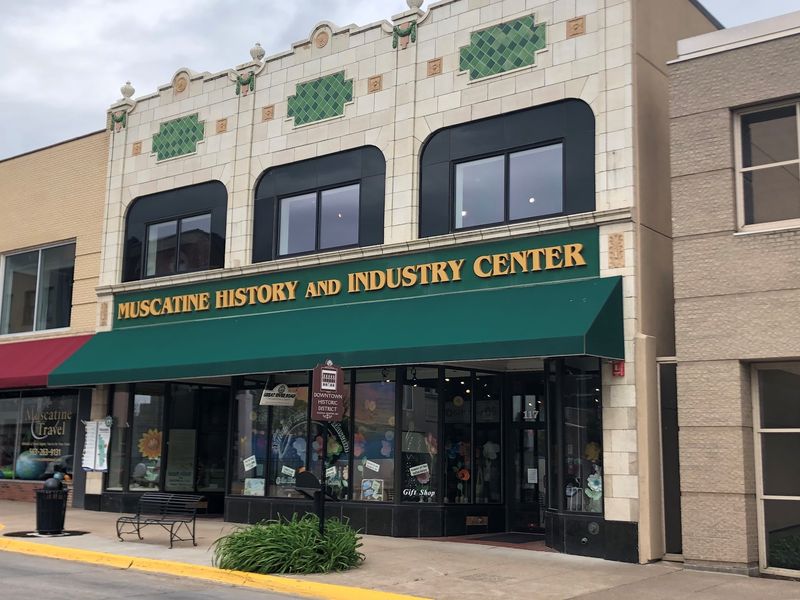
I found this origin tale a great place to begin my visit, since it explains why a museum with such an odd name sits where it does. You can find it at The National Pearl Button Museum @ The History and Industry Center, 117 W 2nd St, Muscatine, IA 52761, in the state of Iowa.
One lucky find on a riverbank changed the whole town.
Button Capital of the World
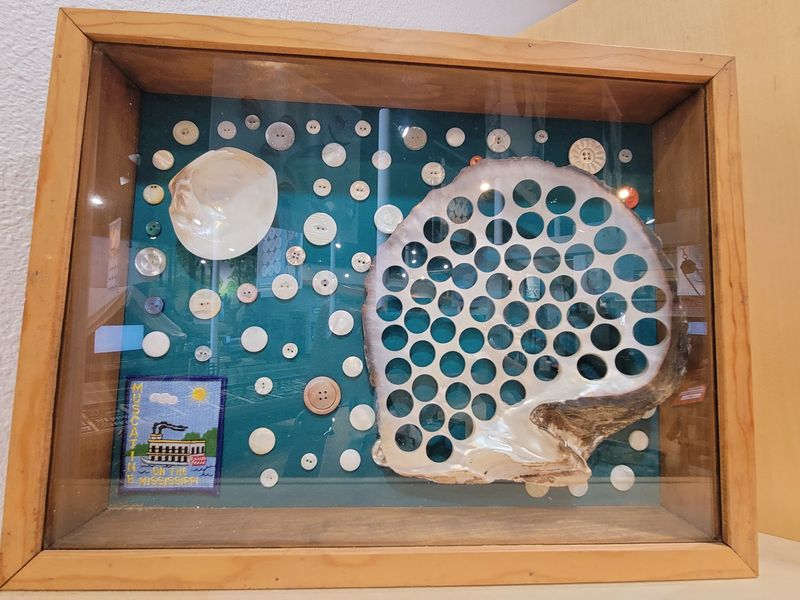
Picture 1.5 billion buttons made in a single year. That was Muscatine’s output at its peak, roughly one third of the world’s supply.
Stack them side by side and the tower would reach about 2,900 miles high. I did the math twice, and it still made me grin.
Ready-made shirts, blouses, and children’s clothes were selling fast across America. Every one needed fasteners, and pearl buttons were cheap and handsome.
By 1911, more than half of the town’s 3,500 wage earners worked in button-related jobs. Nearly every family knew someone who cut, ground, sorted, or sewed.
The museum’s first floor lays out this golden age with photos, product cards, and displays that make the numbers feel real.
Reading about it, I understood why locals still talk about buttons with pride. A river town earned a nickname that stuck for decades.
It is hard to imagine a bigger success for something so small.
Clammers and Crowfoot Hooks
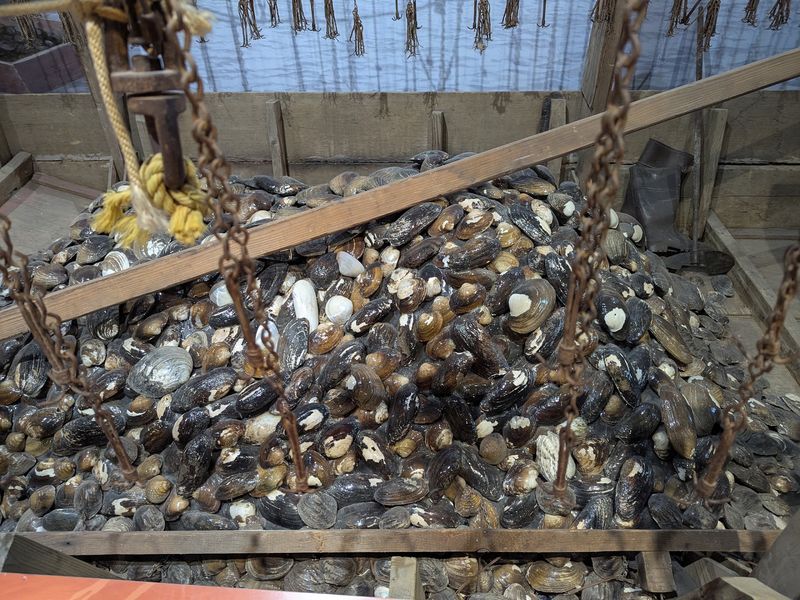
Long before a button reached a shirt, someone had to fetch the shell. Those workers were called clammers.
They drifted along the Mississippi dragging crowfoot hooks across the river bottom. The mussels snapped shut on the hooks and came up in clusters.
Shells were piled in boats and hauled to the factories, sometimes by the ton. It was muddy, wet, tiring work.
As the mussel beds near Muscatine thinned out, clammers traveled to rivers in many other states. That added cost and effort to the whole business.
The museum has shells on display, so I could hold my gaze right at the ridges and thick layers that made them so valuable. A shell looks plain outside, but the inside gleams.
Down by Riverside Park, a statue named Mississippi Harvest, nicknamed Gus, honors this trade. It shows a clammer in his boat with mussels at his feet.
Pause there, and the museum story clicks into place.
How a Shell Becomes a Button
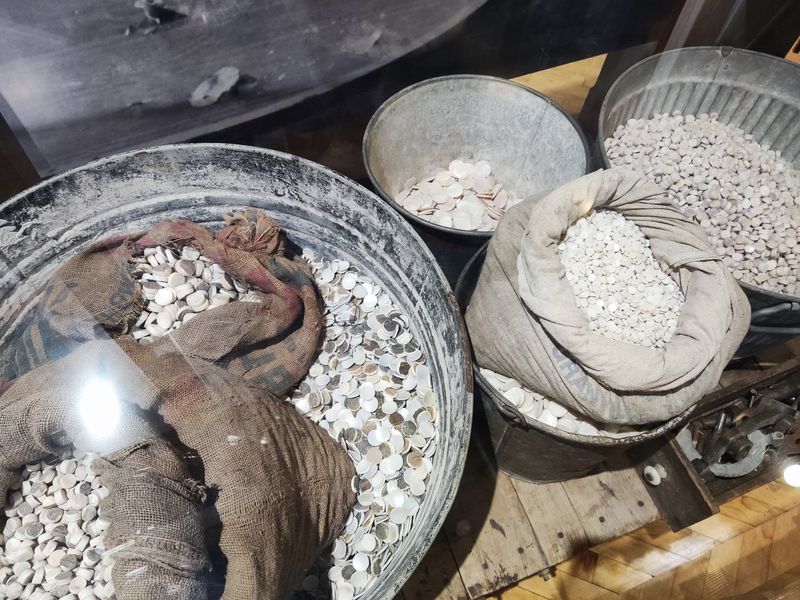
Here is a fun surprise: a button took many steps and many hands. Nothing about it was quick.
First, shells soaked for about a week to soften them. That kept them from splintering under the saw.
Next came cutting the blanks, which are round discs sawed from the shell. Cutters were often men, and they earned the top pay because skill meant fewer wasted shells.
Women and girls often ran the machines that smoothed the blanks and drilled the holes. Then the buttons tumbled with pumice for half a day to bring up the shine.
After washing and drying in sawdust, workers sorted them by hand for color and quality. Finally they were sewn onto cards or boxed for shipping.
The old equipment at the museum helped me picture each stage. Reviewers call it tedious work, and I agree after seeing the tools up close.
Next time you fasten a coat, give that tiny disc a little respect.
Inventors Who Sped Things Up
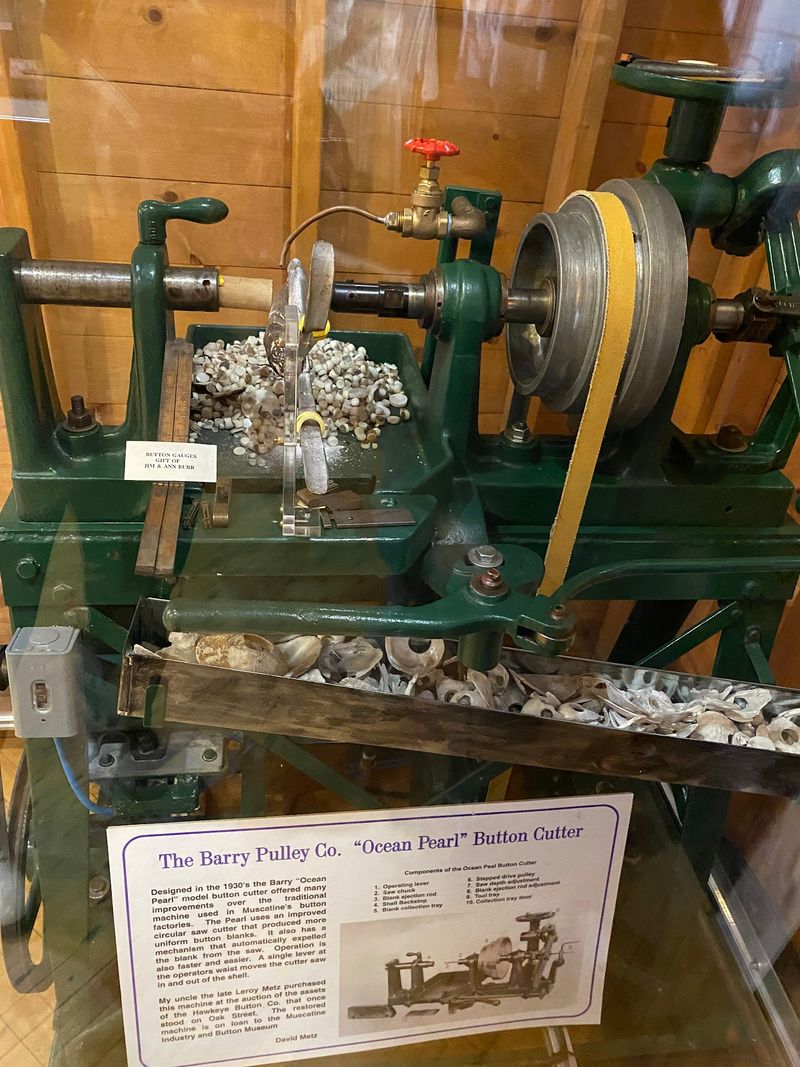
Boepple lit the match, but local inventors fanned the flames. Machines made the real jump possible.
Nicholas Barry and his sons built equipment that sped up the early hand methods. Work that once took patient fingers now moved along a line of belts and blades.
That meant more buttons per day and more jobs for the town. Efficiency helped Muscatine stay ahead of other places trying to copy the idea.
I like that the museum shows this side of the story with real machinery. You can see how a simple idea grew into a factory system.
Plenty of visitors mention the old pieces of equipment as a highlight. They give a hands-on feel to something that might sound dull on paper.
Staying ahead in business takes constant tinkering, and Muscatine’s workshops never stopped. Many of those habits carried over to later industries, which you can explore upstairs.
Clever tools turned a craft into a powerhouse.
Life on the Factory Floor
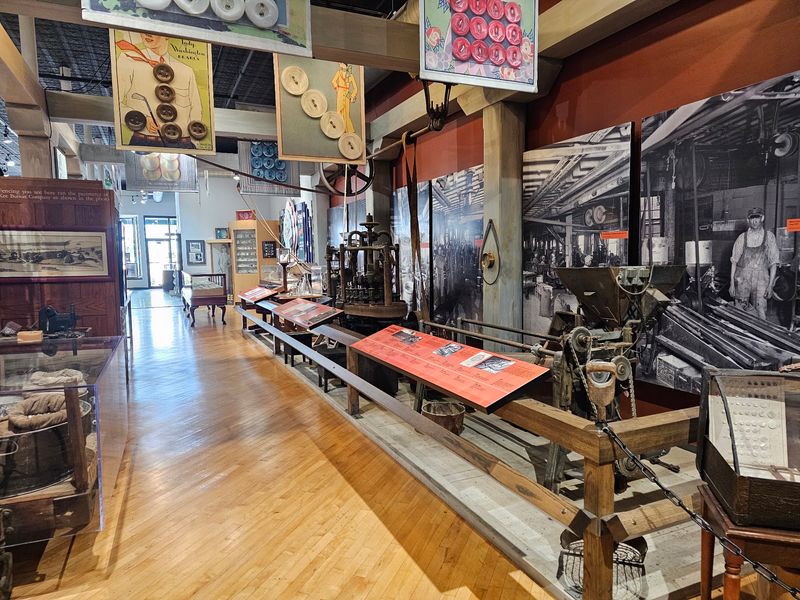
Jobs were plentiful, but they were not easy. Workers put in 54 to 60 hours a week, and some logged even more.
Men, women, and boys stood near noisy machines in dusty rooms. Pay and conditions led to plenty of disagreements.
Workers formed the Button Workers Protective Union. In 1911, a lockout and strike began and lasted fifteen months.
It drew national attention, and groups like the American Federation of Labor and the Women’s Trade Union League offered support. The Iowa National Guard was even called in.
The dispute ended in 1912 with no clear winner. Still, it showed how much the town’s livelihood rested on those workers.
At the museum, old photos and tools made these people feel close. Guides also share personal stories that add real flavor.
I left with new respect for the hands behind every button.
Mussels Under Pressure
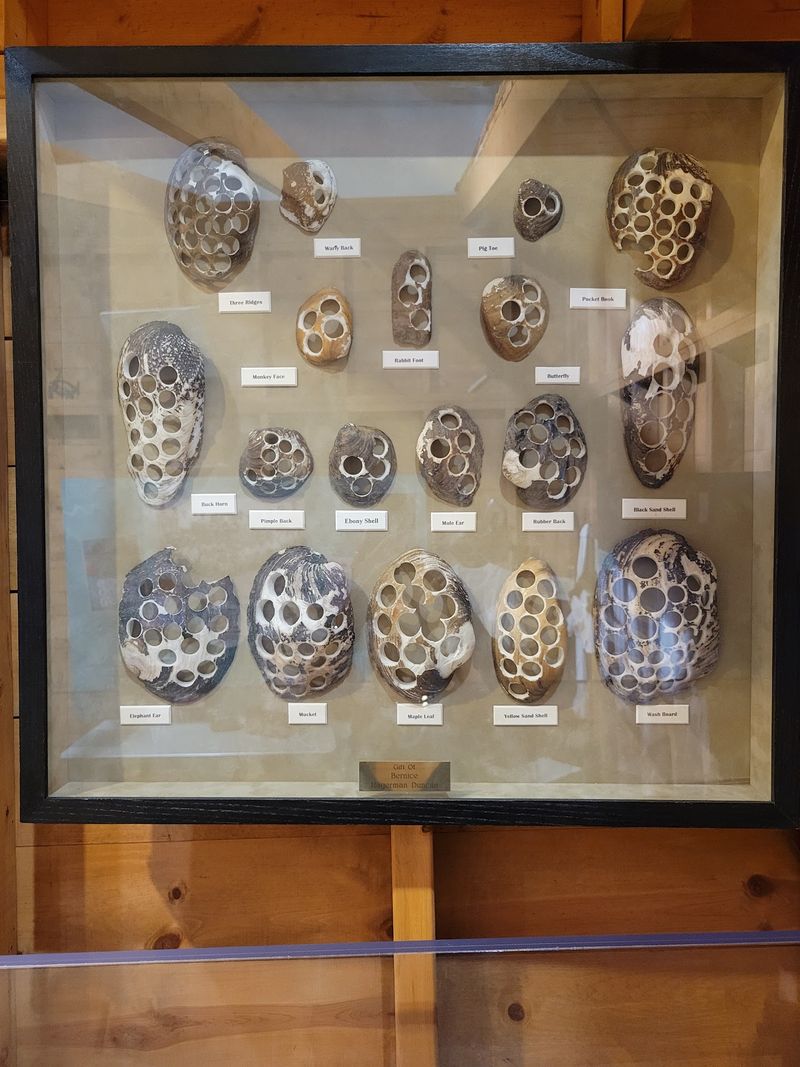
Mussels filter river water, so they are tiny cleaners hard at work. Sadly, button demand took a heavy toll on them.
Within the first decade, beds near Muscatine ran low. Clammers had to search rivers across 19 states.
North America is home to roughly 300 freshwater mussel species, but many have suffered serious population declines. The Upper Mississippi River system historically supported dozens of species, and some have disappeared from its waters.
Even Boepple eventually worked with the U.S. Bureau of Fisheries to protect them.
The federal government set up the Fairport Biological Station near Muscatine to re-seed rivers with young mussels. Pollution and dams made that job harder.
Today freshwater mussels rank among the most threatened animals in the country. They act as early warning signs for the health of our waterways.
A giant mussel display at the museum was a favorite for kids who visited. Staff even hand out pamphlets to help families learn more.
The lesson sticks: protect what fuels your success.
When Plastic Took Over
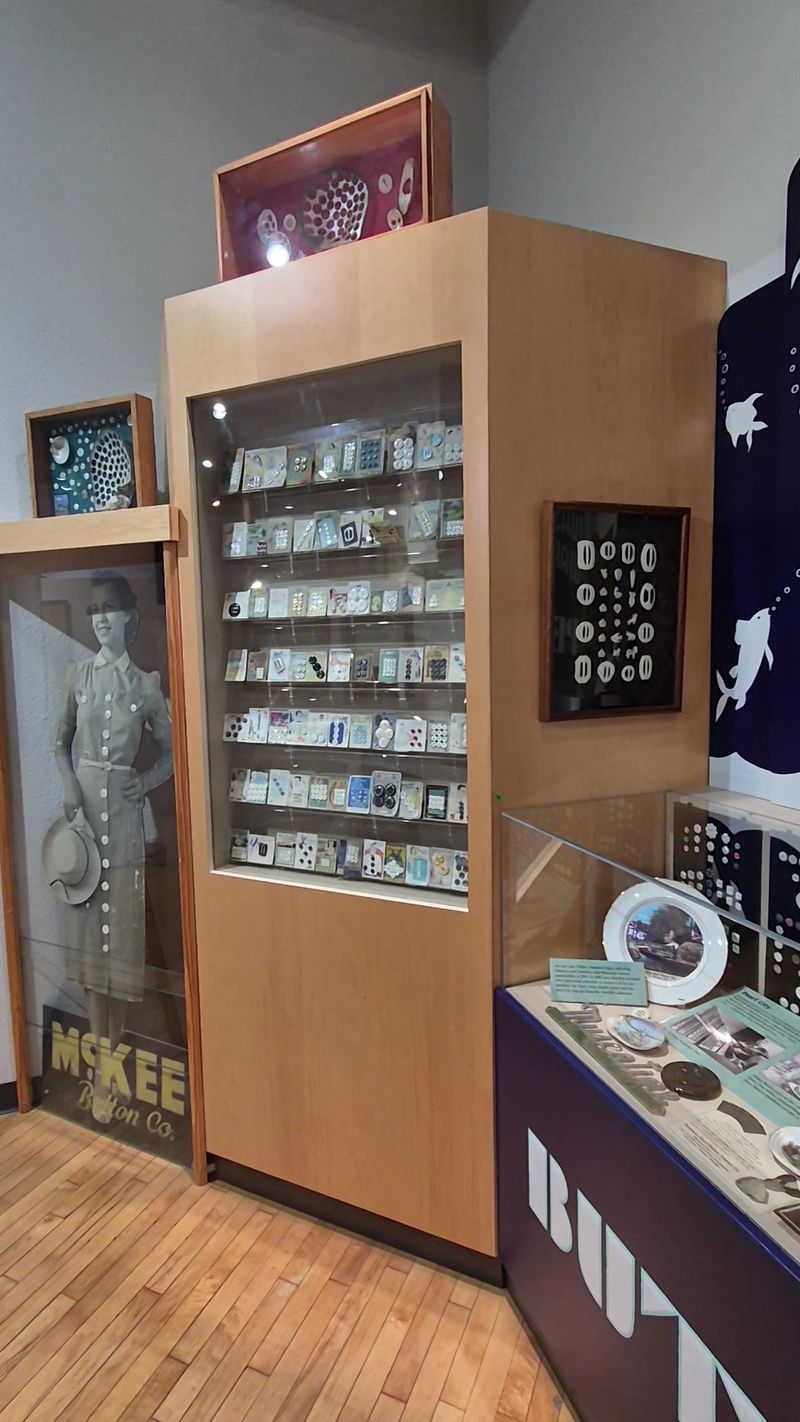
Every boom eventually cools. For pearl buttons, the chill began in the late 1930s.
Plastic was cheaper and easier to make. Manufacturers jumped at it.
During the 1930s, some Muscatine manufacturers began experimenting with plastic buttons as an alternative to pearl. World War II accelerated the growth of the plastics industry even more.
Many Muscatine factories closed their doors between the 1920s and 1940s. Others adapted by switching to plastic production and continued operating for years.
That kind of flexibility says a lot about the town. It refused to fade away with the shells.
The museum shows this turning point with cards of colorful buttons from different eras. I enjoyed comparing the glossy plastic with the soft glow of real pearl.
One look at both and the difference is easy to spot.
Planning a Visit
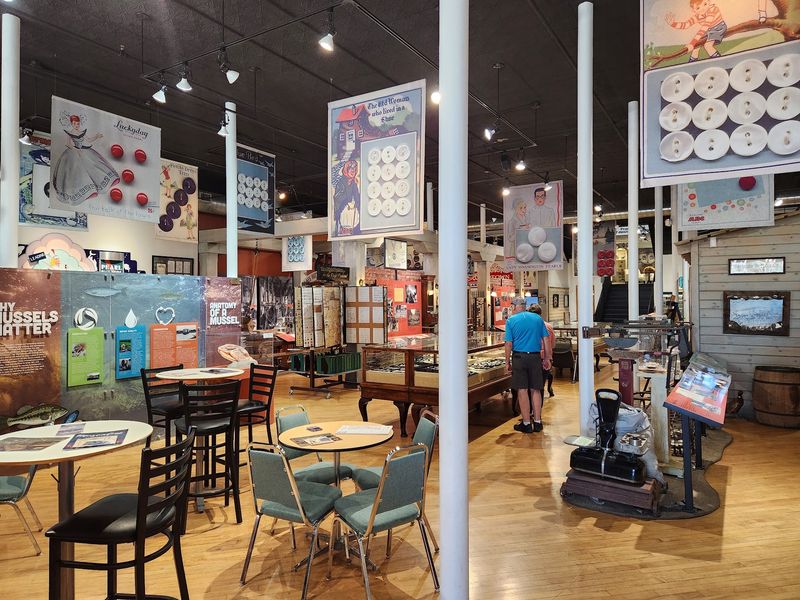
Good news for budget travelers: admission is free. A donation box sits near the front door, and gifts keep the place running.
Doors are open Tuesday through Saturday from 10 AM to 4 PM. Sunday and Monday are closed.
Most people spend about an hour to an hour and a half. If you can, ask for a guided tour, since reviewers rave about the knowledgeable guides and volunteers.
The first floor covers the button story, plus a gift shop with affordable jewelry. Kids can explore a small house exhibit that shows how families sewed buttons onto cards.
The space is wheelchair accessible, and videos have captions. Call 563-263-1052 if you want to plan a group visit.
I would aim for a Friday or Saturday, when reviewers say friendly guides are often on hand. Bring questions, because the stories run deep.
A short stop turns into a memorable afternoon.
Upstairs, Downtown, and Beyond
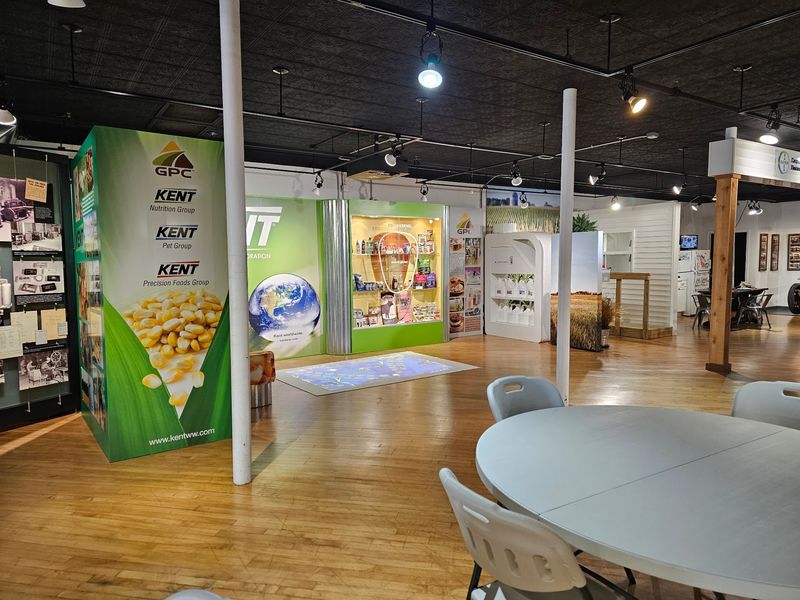
Take the stairs for the second floor. It covers Muscatine’s other industries, including office furniture, retread tires, and corn processing.
Entrepreneurs in the 1940s and 1950s widened the local economy after the button boom. It shows a town that kept reinventing itself.
Outside, downtown is easy to walk. Restaurants, boutique shops, and Victorian homes are close by.
Riverside Park sits just two blocks away with Mississippi views, trails, picnic areas, and statues. The Merrill Hotel and the local visitor center are right across the street.
The story even earned national attention. Iowa pearl buttons and museum photos appeared at the Smithsonian’s National Museum of Natural History in an America 250 exhibit.
That recognition proves small places can hold big history. I left with a fresh view of a humble fastener and a river town that buttoned up the world.
Buttons never looked so important.