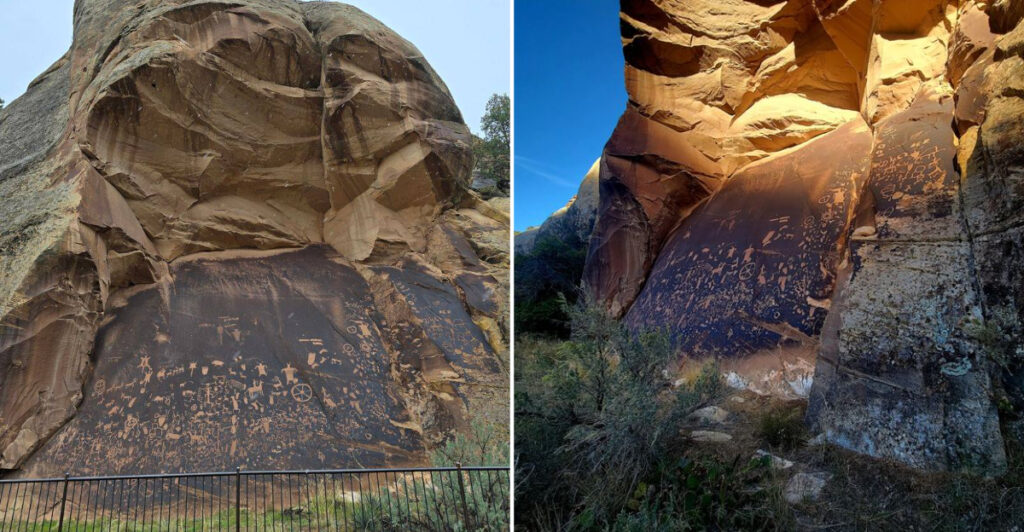
A quick roadside pause can hold more history than an entire afternoon of sightseeing. Here, a sandstone panel crowded with hundreds of petroglyphs turns a simple stop into a conversation with people who passed through centuries ago.
Near the southeastern edge of Utah, the rock face records marks made across generations, layered together in a way that feels both intimate and enormous. You do not need a guidebook lecture to feel the weight of it.
The carvings invite you to look closer, notice patterns, and wonder who stood in the same spot long before highways existed. That is what makes the stop so effective: almost no planning, yet plenty to think about afterward.
Travelers moving through this stretch can pull over, take their time, and leave with a sense of the region. On a Utah road trip, few short stops manage to feel this old, this vivid, and this immediate.
A Roadside Stop With A Much Older Clock
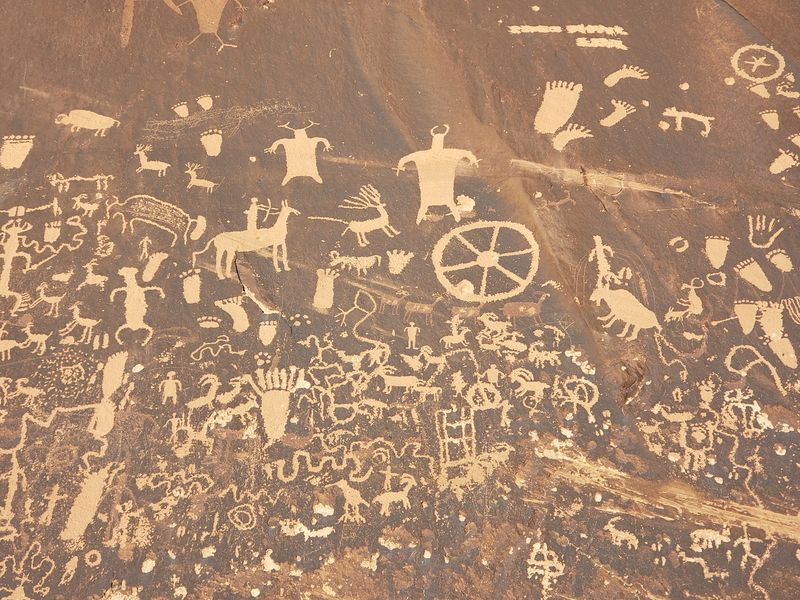
The best travel plans sometimes begin with the words, wait, pull over. This spot turns a simple roadside pause into a meeting with centuries of human marks.
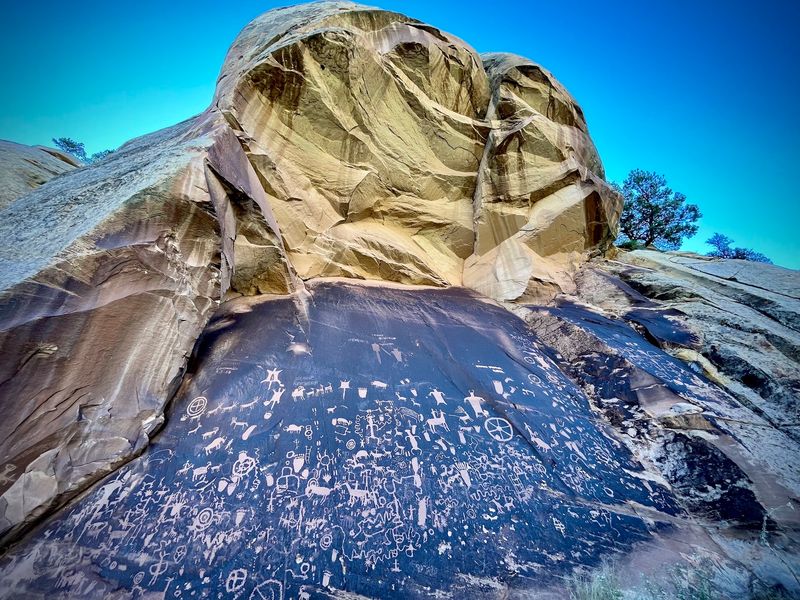
The site is known for a large sandstone panel covered with more than 650 petroglyphs. These images were made by Indigenous peoples and later travelers over a long span of time, often described as about 2,000 years.
That is a lot of history for one rock face to carry without asking for applause.
For visitors moving through southeastern Utah, the appeal is refreshingly clear. Park, walk a short distance to the viewing area, and look closely.
Animals, human figures, feet, hands, riders, and abstract shapes crowd the dark desert varnish. Some are easy to spot, while others make you lean in and admit the past had better handwriting than most of us do.
The Name Tells You How To Look
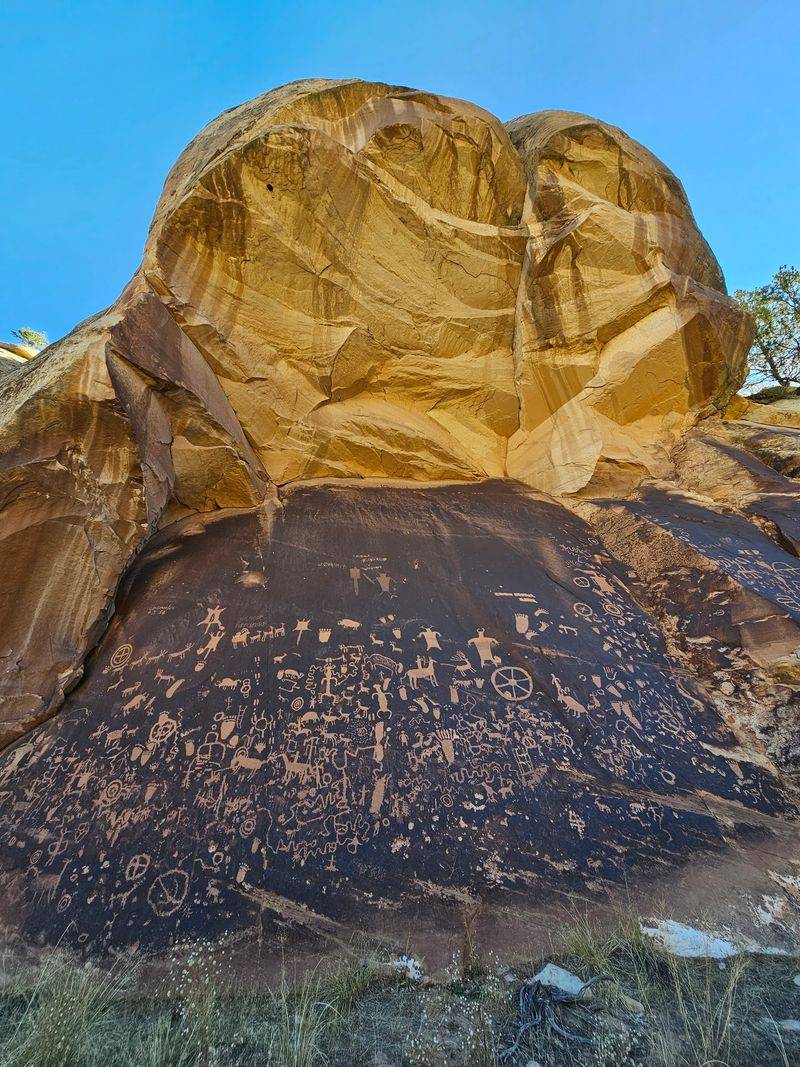
Newspaper Rock is not a newspaper in the folded on the porch sense. The name points to something older and more patient: a shared surface where people left pictures, signs, records, and possibly messages across generations.
Newspaper Rock State Historic Monument is also associated with the Navajo name Tse Hane, commonly translated as rock that tells a story. That phrase helps visitors approach the panel with the right kind of attention.
Nobody needs to pretend every symbol has one neat meaning. Archaeologists and tribal communities have long recognized that rock imagery can carry many kinds of meaning, including cultural, spiritual, practical, and personal ones.
The useful advice is simple: slow down before deciding what you see. A bighorn sheep may stand out first.
Then a hand, a foot, a rider, or a shape you missed completely appears. The panel rewards patience, which is inconvenient for modern attention spans but good for the soul and probably cheaper than another app subscription.
Indian Creek Canyon Gives The Rock Its Frame
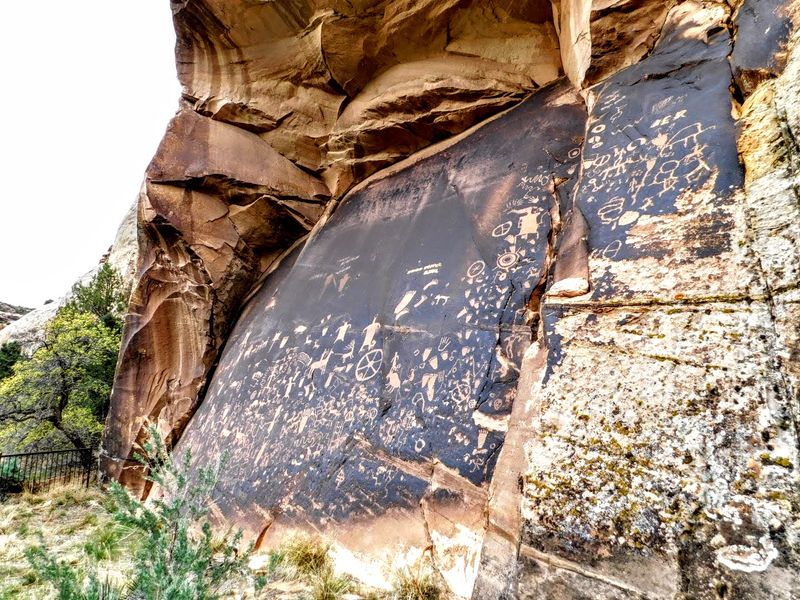
Before the carvings take over your attention, the setting does some quiet work. Newspaper Rock State Historic Monument is located in Indian Creek Canyon in southeastern Utah, along the route many travelers use toward the Needles area of Canyonlands National Park.
The petroglyphs appear on a darkened sandstone face, where desert varnish created the surface ancient artists could peck through to reveal lighter stone below. That contrast is why many images remain visible without a museum case, a spotlight, or a docent with a laser pointer.
Nature provided the bulletin board, and people supplied the content.
The surrounding canyon landscape matters because it reminds visitors that the panel was not made in empty scenery. People moved through, lived near, hunted, traveled, and returned to this region long before highway maps made the route look tidy.
In Utah, distances can fool you. A place may appear remote on paper, yet feel connected once you understand the routes, water, canyons, and repeated human presence around it.
Hundreds Of Images Share One Sandstone Wall
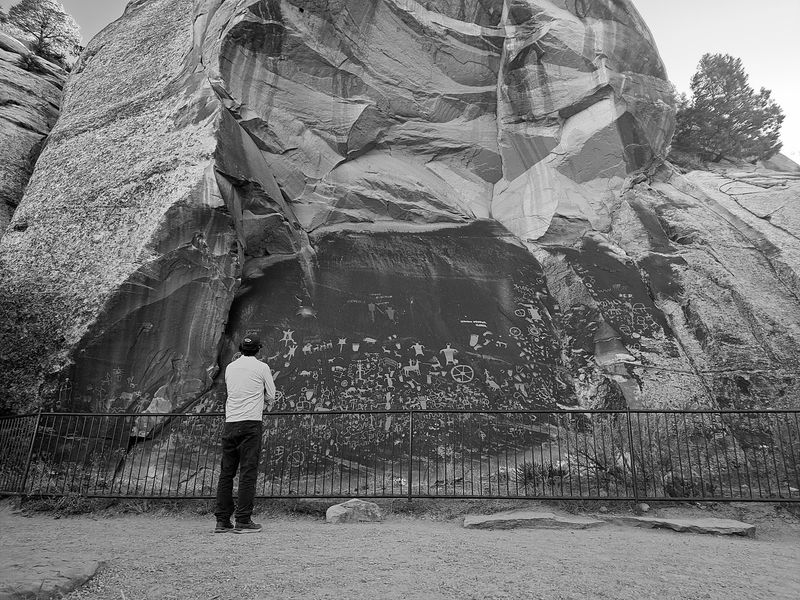
A single glance at the panel can feel busy, almost like opening a group text that started centuries before you were invited. The difference is that this conversation was carved into stone, not fired off during lunch.
Newspaper Rock State Historic Monument contains one of Utah’s best known concentrations of petroglyphs. More than 650 images appear across the panel, including animal forms, human figures, tracks, circles, and other marks.
Some sources connect the carvings with several cultural groups over time, including Ancestral Puebloan, Fremont, Ute, Navajo, and others. That layered authorship is part of the monument’s importance.
Good To Know: The site is managed as a public historic monument, and current visitor information lists it as open all day.
The main rule is respectful distance. A fence helps protect the panel, and visitors should not touch, trace, chalk, wet, or add anything to the rock.
The carvings have lasted because stone is durable, but they are not indestructible. Human curiosity is welcome.
Human improvement projects are not.
A Short Walk That Works For Many Travelers
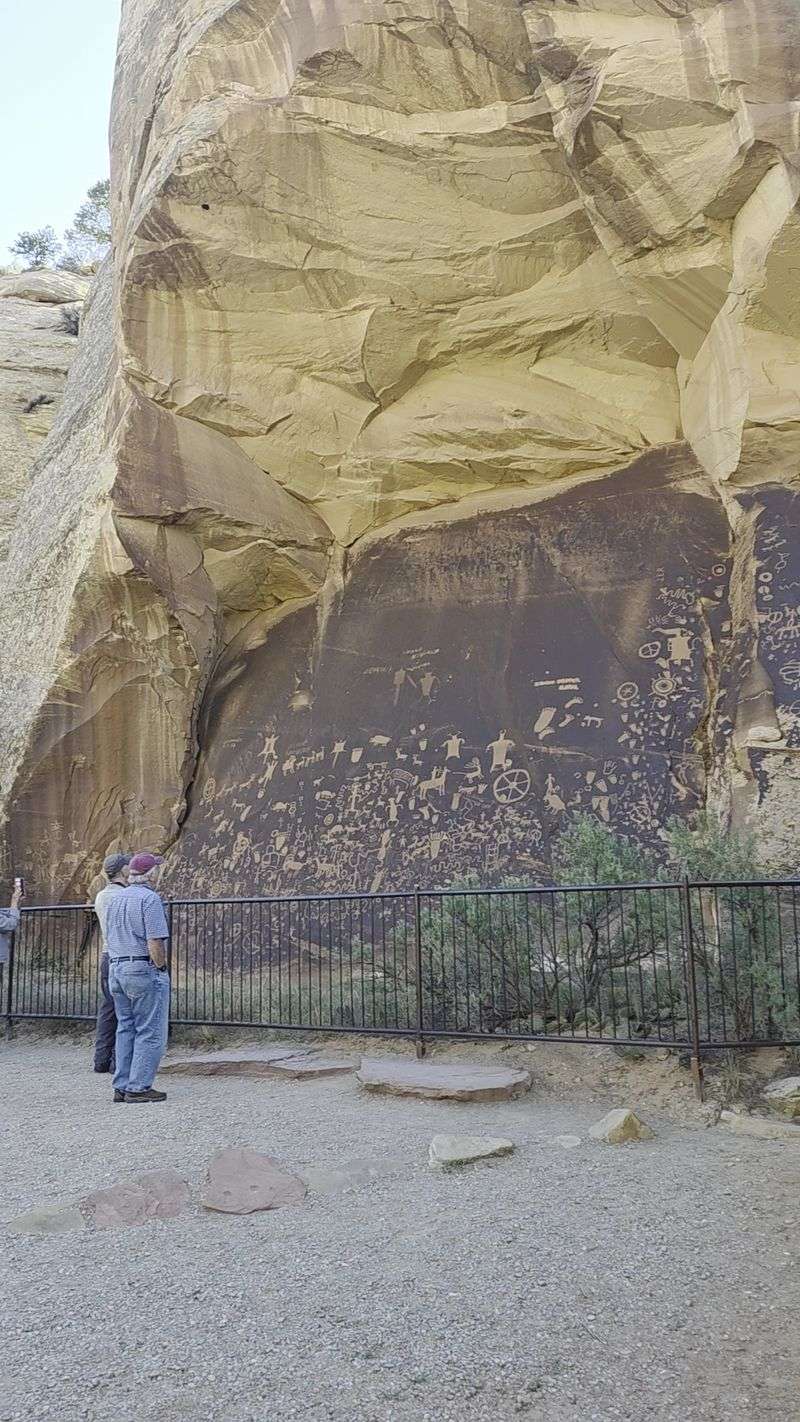
Nobody wants a history stop that secretly turns into a forced march. One practical reason Newspaper Rock State Historic Monument fits so many trips is that the main viewing area is close to the road and does not require a long hike.
That matters for families with kids who have already asked how much longer, couples trying to keep a relaxed day relaxed, solo travelers watching daylight, and weekend visitors who packed ambition but forgot extra patience. The experience is focused.
You come to see the petroglyph panel, and the site makes that purpose easy to understand.
Still, easy access should not be confused with a drive by glance. The carvings deserve more than thirty seconds and a photo taken while mentally locating snacks.
A slow look reveals layers of images, differences in style, and the way newer marks sometimes sit near older ones. In a state full of big landscapes, this Utah stop narrows the scale in a useful way.
Instead of chasing the horizon, you study one wall and realize it can hold an enormous amount of time.
Monticello Makes A Sensible Base Point
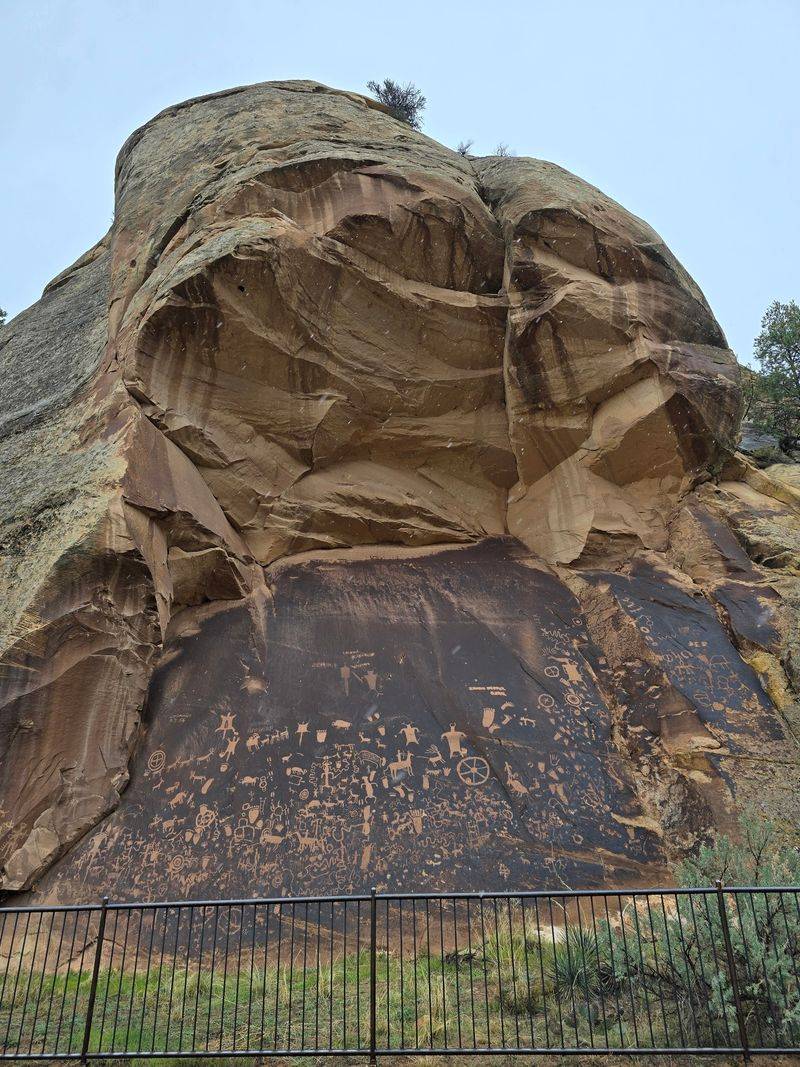
Monticello gives travelers a practical reference point, which is helpful because southeastern Utah can make distances feel elastic. Newspaper Rock State Historic Monument is listed at UT-211, Monticello, UT 84535, placing it along a route that feels made for people who prefer their history with open sky around it.
A simple Saturday detour works well here. You do not need to build a complicated itinerary or pretend every minute has a theme.
Bring water, check road and weather conditions, use the restroom when you have a reliable chance, and give yourself enough time to actually look at the panel.
The drive also rewards basic preparation. Cell service can be uneven in canyon country, so downloading directions before leaving town is sensible, not dramatic.
Comfortable shoes help, even for a short stop, because travel days have a way of turning small inconveniences into committee meetings. Newspaper Rock State Historic Monument is easy to visit, but it still sits in a desert region where planning like a grown up pays off.
The Petroglyphs Are Clear But Not Simple
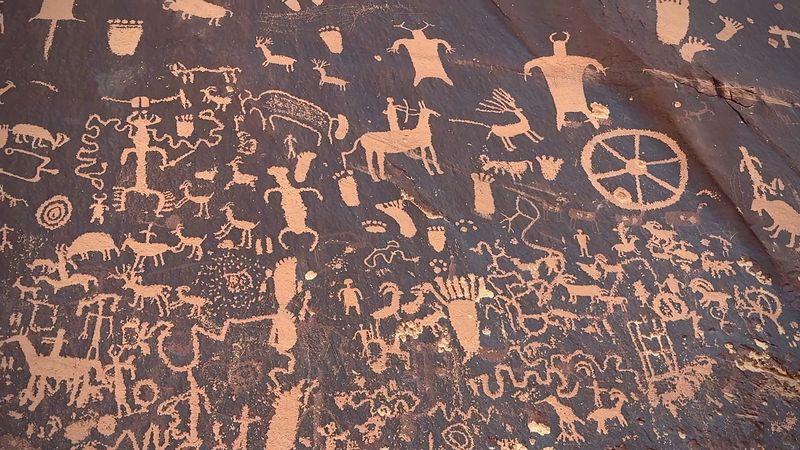
One reason the panel catches attention so quickly is visibility. Many figures at Newspaper Rock State Historic Monument stand out sharply because the carvings cut through dark desert varnish into lighter sandstone beneath.
Clear, however, does not mean simple. A visitor may recognize a sheep like animal, a human shape, a footprint, or a rider, but recognizing a shape is different from knowing its full meaning.
That gap is healthy. It keeps the experience from turning into a caption contest where every ancient image gets reduced to a modern guess.
The better approach is to observe first and interpret carefully. Notice repeated forms.
Compare sizes. Look for overlapping marks and areas where the panel feels especially crowded.
Think about how many people, over how many years, returned to the same surface and decided it mattered enough to mark. Utah has plenty of places that impress through scale, but this one impresses through accumulation.
It is not one grand statement. It is a long record of many gestures, each one small enough to miss and lasting enough to humble your phone battery.
A Monument With Official Recognition
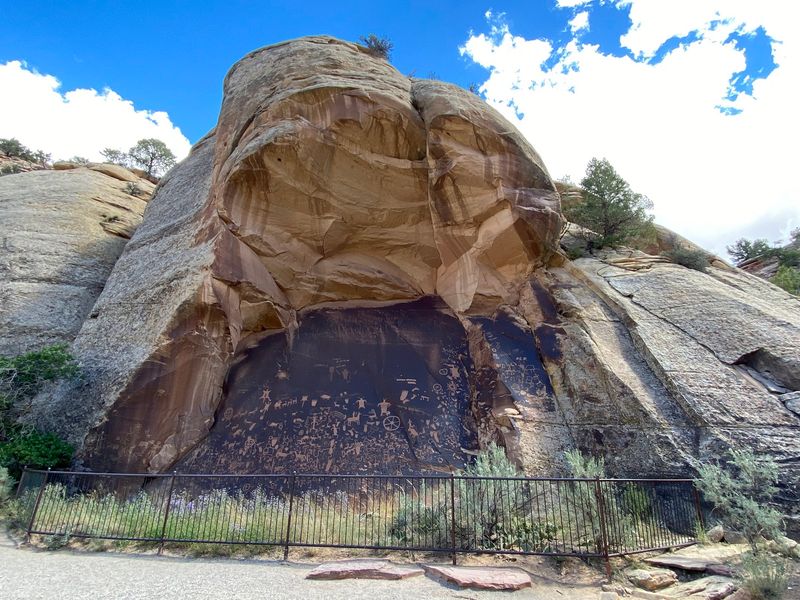
Official recognition matters here because it confirms that the panel is not just an interesting rock beside a road. Newspaper Rock State Historic Monument was designated a Utah State Historical Monument in 1961 and was later listed on the National Register of Historic Places in 1976.
Those dates help explain why the site appears on maps, travel guides, and public history materials. Recognition also reminds visitors that the panel belongs to a larger story of preservation.
Rock imagery can survive for centuries, then suffer quickly from careless touching, scratching, or modern marks. A fence and posted guidance are not decoration.
They are the quiet adult supervision the rest of us apparently require.
The monument’s importance comes from both age and concentration. Hundreds of carvings gathered on one panel make the site unusually readable for visitors who may not have much background in archaeology.
You do not need specialized training to understand that many people, across many eras, considered this wall meaningful. The official status simply gives that obvious feeling a public framework and a reason to treat the place with care.
Families Can Turn Curiosity Into A Game
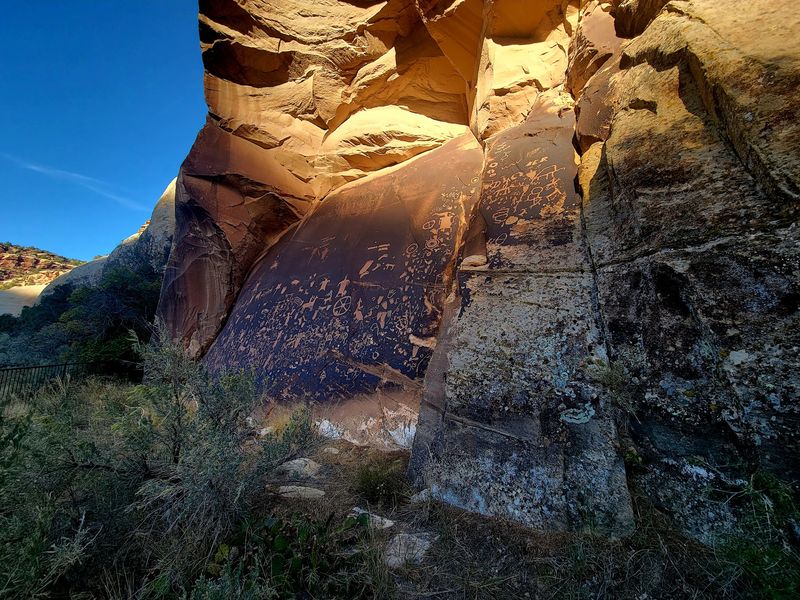
Children often understand picture based history faster than adults expect. At Newspaper Rock State Historic Monument, families can turn the viewing area into a quiet search game without making the site feel like homework.
Ask younger visitors to find an animal, a hand, a foot, a person, or a shape that repeats. Older kids may enjoy comparing how different figures were made or wondering why people returned to the same wall.
The trick is to encourage looking, not guessing wildly and announcing final answers like a game show contestant with canyon dust on their shoes.
Parents should also make the preservation lesson plain. The fence is there for a reason.
No touching, no climbing, no adding names, and no trying to improve a 2,000 year old record with modern initials. That message lands better when framed as shared responsibility rather than scolding.
The carvings were left by people who cannot speak for themselves here. Families visiting this Utah monument can help by leaving the panel exactly as they found it, which is a refreshingly simple assignment.
Couples And Solo Visitors Get Room To Think
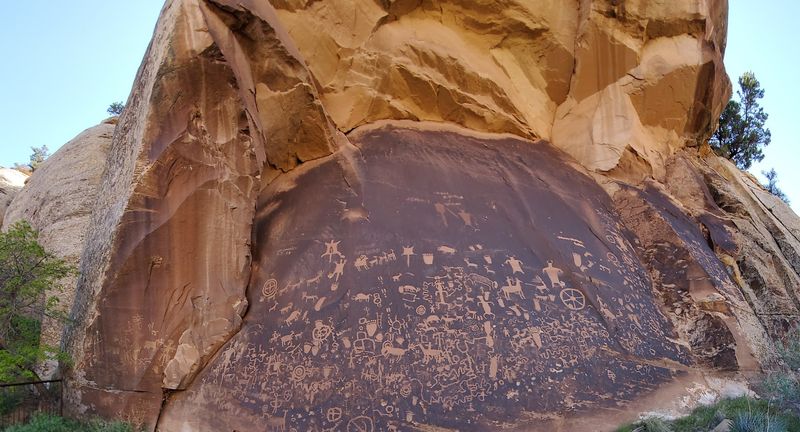
Not every outing needs a schedule packed tight enough to file taxes by. For couples and solo travelers, Newspaper Rock State Historic Monument offers a rare kind of stop: focused, quiet, and interesting without demanding performance.
Couples can look together and still have different reactions. One person may track animal figures.
Another may get caught by the hands and feet. A solo visitor can take the panel at an unhurried pace, moving from broad view to small detail without negotiating snack timing, photo angles, or the eternal question of who left the sunglasses in the car.
The site suits reflective travelers because it does not over explain itself. There is information available, but the main encounter is direct: a dark sandstone wall, hundreds of carved images, and the knowledge that the panel grew through repeated human attention.
That is enough. In a travel culture that often turns every stop into content, Newspaper Rock State Historic Monument feels better treated as a pause.
Look closely, keep respectful distance, and let the old marks stay a little mysterious.
The Stop Fits A Canyon Country Drive
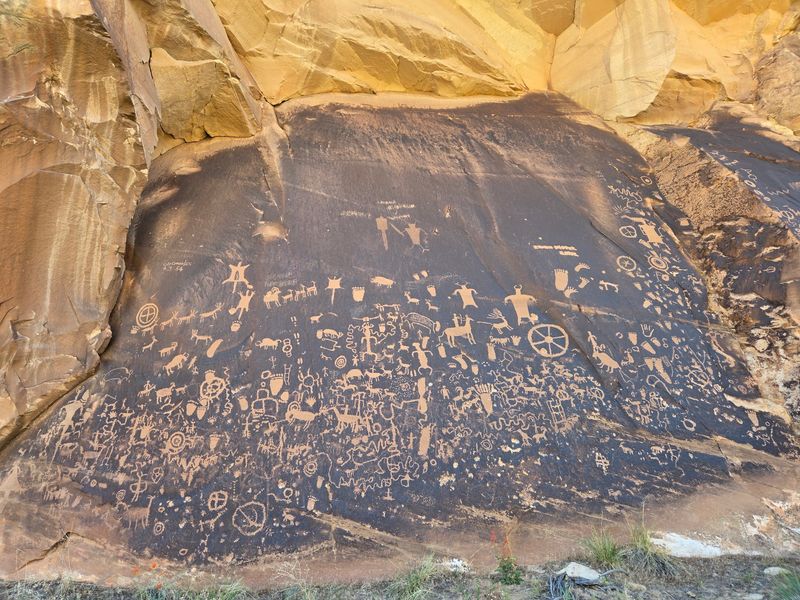
Canyon country drives can be wonderfully simple on a map and surprisingly long in real life. Newspaper Rock State Historic Monument gives travelers a clear reason to pause along UT-211 without turning the day into a logistical puzzle.
The site is often connected with trips toward the Needles area of Canyonlands National Park, though it deserves attention on its own terms. It is not a warm up act.
The petroglyph panel carries enough history and visual detail to stand alone, especially for road trippers who appreciate stops that add meaning rather than just mileage.
Practical habits help. Fuel up when it makes sense, carry water, keep an eye on daylight, and avoid assuming every remote road comes with instant services.
None of that is meant to sound heroic. It is just the basic adulting required when Utah scenery spreads out and your dashboard starts giving opinions.
A visit to Newspaper Rock State Historic Monument can be brief, but it should not feel rushed. Build in enough time to study the wall, read any posted information, and leave without treating the place like a roadside checkbox.
Ancient Marks Make The Present Feel Smaller
The lasting power of Newspaper Rock State Historic Monument comes from a simple contrast. The visit is easy, but the timeline is enormous.
A few steps from the parking area can put a person in front of marks made across centuries of movement, memory, and return.
That is why the title’s promise holds up. Walking near this Utah landmark does feel like brushing against thousands of years of history, not because the site has been polished into drama, but because the evidence is plainly there.
The panel does not need music, lighting, or a gift shop finale. It needs attention.
By the end of a visit, the most useful takeaway may be restraint. Look carefully.
Take photographs from the allowed area. Read what is posted.
Do not touch the rock. Leave the carvings for the next person, and for the person after that, because the whole point of Newspaper Rock State Historic Monument is continuity.
Some places ask you to cover ground. This one asks you to stand still long enough for the old wall to start making the day feel less ordinary.