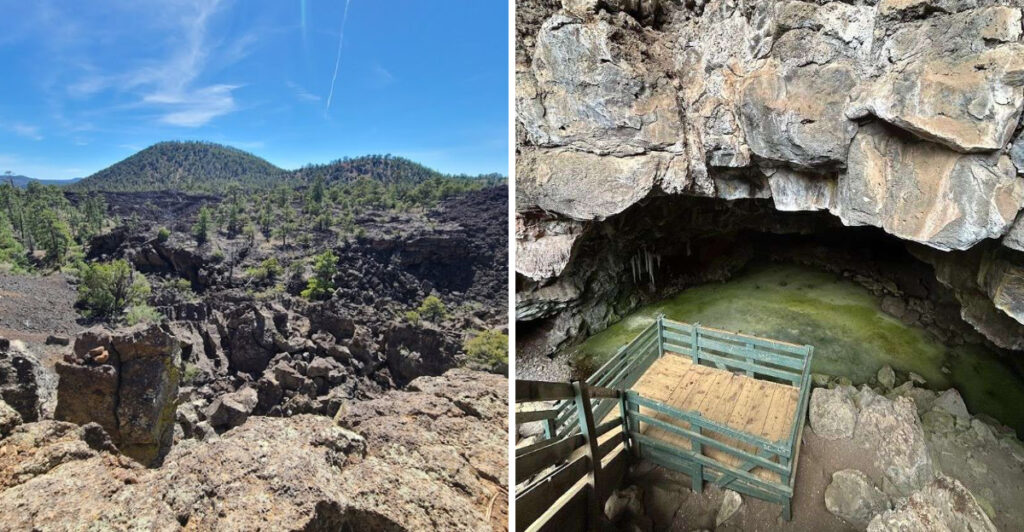
The little brown sign on the New Mexico highway did not look like much. Honestly, I almost kept driving.
It had that quiet roadside energy, the kind you usually notice too late and forget a mile later. This time, I turned.
And wow, that turn changed the whole drive.
The pavement gave way to gravel. The desert stretched out around me.
Soon I was walking across land shaped by an old volcano, with dark rock underfoot and a strange stillness in the air. Then came the part I still cannot get over: a cave with ancient ice inside.
Ice in the desert feels like a trick at first. Then you step closer, feel the temperature drop, and realize the place is not trying to impress you.
It simply exists, holding a piece of the past underground.
I thought I was stopping for a photo. I drove away with a story.
Ancient Lava Trails And Desert Stillness
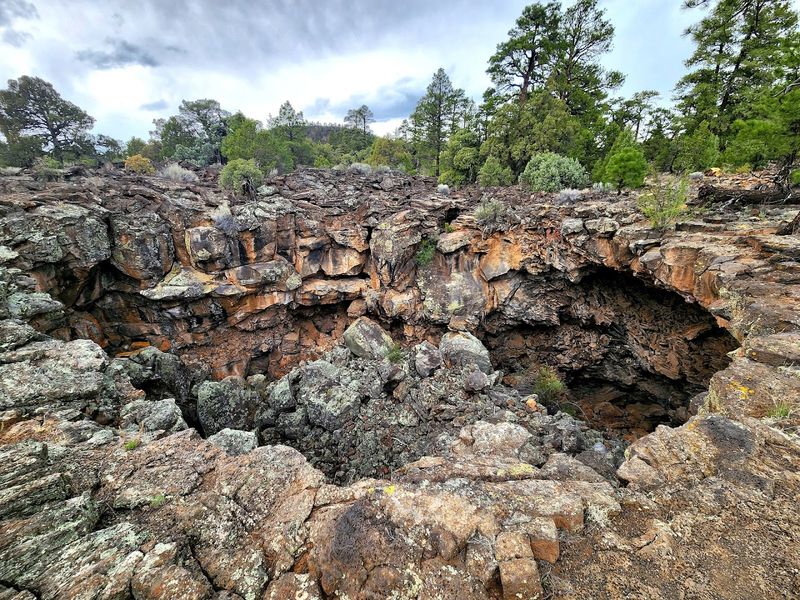
At the trailhead, the quiet settled around me like a thick blanket, broken only by the crunch of volcanic rock underfoot.
The landscape here tells a story that goes back thousands of years, when molten lava poured across this high desert plateau and cooled into the jagged black terrain you walk through today.
Numbered markers line the path, each one pointing out a specific geological feature, and the printed guide you pick up at the trading post ties everything together in plain, readable language.
I found myself stopping at almost every marker, curious about what each formation meant and how it got there.
The full walk is about 1.5 miles total, with mild elevation changes that most people handle comfortably in regular sneakers, though hiking boots give you better grip on the loose cinder rock.
Out here, the stillness feels ancient, as if the land is holding its breath between eruptions that ended long ago.
This self-guided experience begins at Ice Cave and Bandera Volcano, located at 12000 Ice Caves Rd, Grants, New Mexico 87020.
Geology and quiet adventure meet on the same rocky path.
A Crater View Shaped By Fire
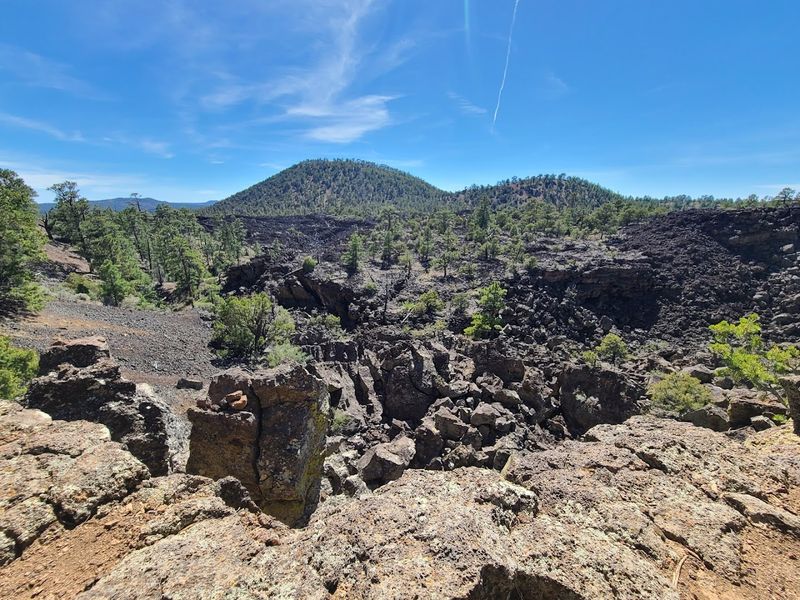
The first look into Bandera Volcano’s crater is one of those moments that makes your brain quietly recalibrate what it knows about the American Southwest.
The cinder cone rises from the surrounding lava field in a way that feels both dramatic and strangely peaceful, its slopes covered in loose volcanic gravel that shifts slightly with each step near the top.
Looking down into the wide crater, you get a real sense of the raw power that shaped this entire region long before anyone walked these trails.
I liked seeing the volcano first because the elevated view helps you understand the scale of the lava field before the trail leads you toward the ice cave.
The hike up is nearly half a mile each way with a gradual incline, nothing that requires serious fitness, just steady legs and a willingness to pause and look around.
Temperatures at the top can run hot in summer, hovering in the high eighties, so a hat and a water bottle are useful companions here.
The crater view rewards every step it takes to earn it.
Blue-Green Ice Beneath Volcanic Rock
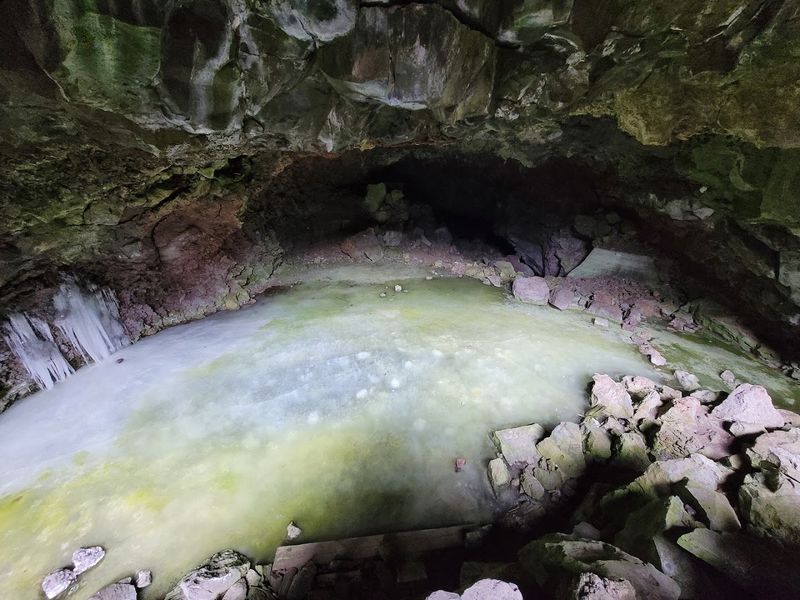
Nothing quite prepares you for the color of the ice inside this cave, a deep blue-green that looks almost artificial against the rough black lava walls surrounding it.
The cave temperature never rises above 31 degrees Fahrenheit year-round, which means even on a blazing August afternoon, you are stepping into what feels like a walk-in freezer carved by nature itself.
The cave formed inside a collapsed lava tube, and over centuries, cold air became trapped in a way that prevents the ice from ever fully melting, creating a geological feature that has fascinated scientists and casual visitors alike.
You view the frozen pool from a platform above, which protects this historically significant formation from being disturbed, though I will admit I leaned over the railing farther than probably necessary just to get a better look.
Icicles can appear along the cave walls when outside temperatures climb high enough to create the right contrast, and seeing them dangle above a frozen pool while sweat is still drying on your shirt feels unreal.
Small signs of life can appear in the cave walls too, adding an unexpected layer to what could otherwise feel like a purely geological spectacle.
The blue-green glow of that ice is something I still think about.
Twisted Junipers Along The Trail
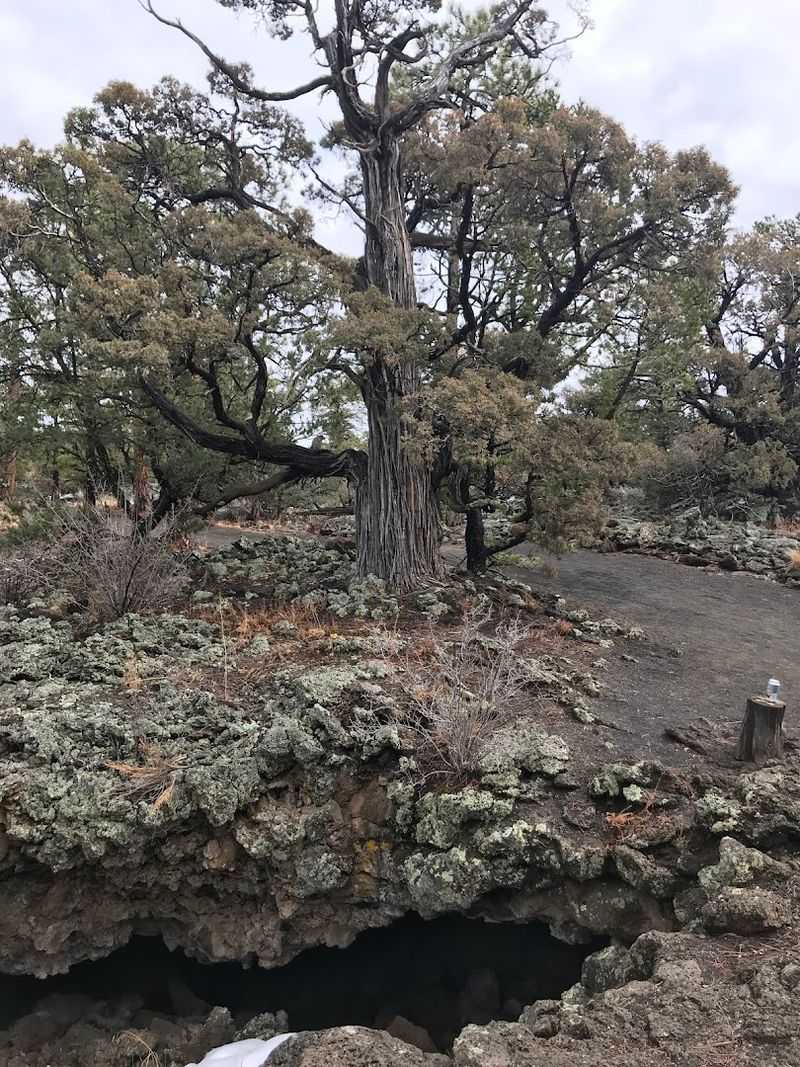
Not everything on this trail is volcanic rock and geological drama, and the twisted junipers scattered along the path deserve their own moment of appreciation.
These trees grow in conditions that seem almost hostile, pushing roots through cracks in hardened lava and bending into shapes that look more like sculptures than anything you would expect from a living plant.
I stopped to photograph one particularly gnarled specimen whose trunk had wrapped itself around a boulder over what must have been decades, and the image came out looking like something from a fairy tale set in the desert.
The pines and junipers along the scenic route add real visual contrast to the dark lava beds, softening the landscape in a way that makes the whole trail feel more varied and interesting than a simple geology walk.
Standing among the trees with volcanic rock in every direction makes the landscape feel tougher, quieter, and more alive than it first appears.
Wildlife can show up here too, with small animals moving between rocks and, if your timing is lucky, larger desert wildlife passing through the scrubland.
Nature has a way of thriving in the most stubborn places, and these trees are living proof of that quiet determination.
Dark Lava Beds And Cool Cave Air
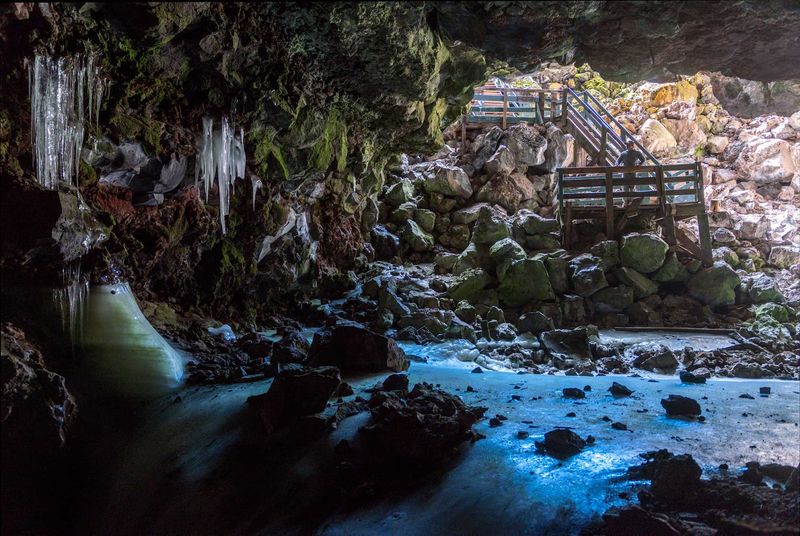
The walk through the lava beds before the cave takes you past different volcanic rock textures, each one with a formation story that the trail guide explains in satisfying detail.
The contrast between the hot, sun-baked lava surface and the cold air that begins seeping out as you approach the cave entrance is one of the most physically striking transitions I have experienced on any trail anywhere.
About halfway down the steep staircase leading into the cave, the temperature drops noticeably, and by the time you reach the viewing platform, the air is cold enough to make you wish you had brought a light jacket.
The stairs are steep and narrow, so anyone with knee concerns should take them slowly and use the handrails.
The cave air carries a clean, mineral smell that is hard to describe but immediately signals that you have entered somewhere very different from the sunlit trail above.
The dark lava walls absorb light in a way that makes the ice formations stand out even more dramatically, giving the whole space an otherworldly atmosphere that photographs struggle to fully capture.
Cold air and dark rock together create a mood that lingers well after you climb back into the New Mexico sunshine.
A Quiet Walk Through Fire And Ice
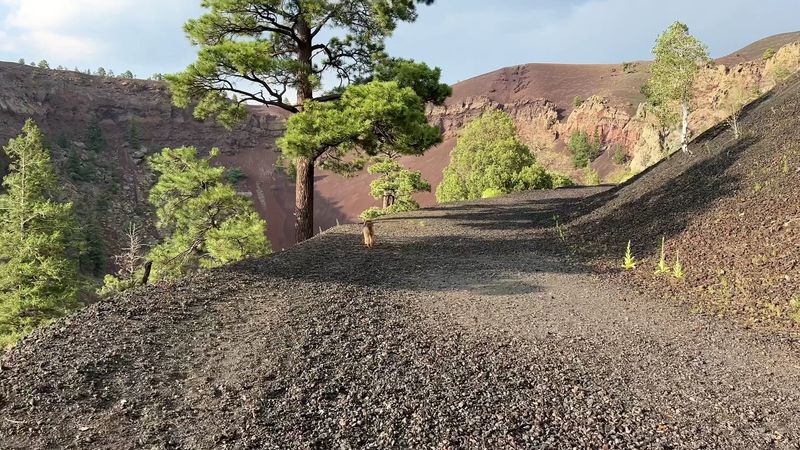
The full route here is sometimes called part of the Land of Fire and Ice experience, and once you complete it, that name feels exactly right in a way that no marketing phrase usually does.
Begin near the volcano and finish at the ice cave, and you move from one extreme to the other, from open sky and radiant heat to shadowed stone and freezing air, all within about 1.5 miles total.
The pace here is naturally slow, partly because the terrain demands attention and partly because there is a lot to look at between the two main attractions.
Benches are placed at intervals along the trail, which I appreciated more than I expected to, especially on a warm afternoon when sitting for two minutes in the shade of a juniper tree feels like a small luxury.
The self-guided format means you move at your own speed with no group to keep up with and no guide rushing you past the interesting bits.
Many people can see both sites in about an hour, though photos, markers, and lingering at the cave can easily stretch the visit longer.
By the time I climbed back out of the ice cave and felt the desert heat hit my face again, I understood exactly why this trail stays with people.
Rugged Cinder Paths With Wide Views
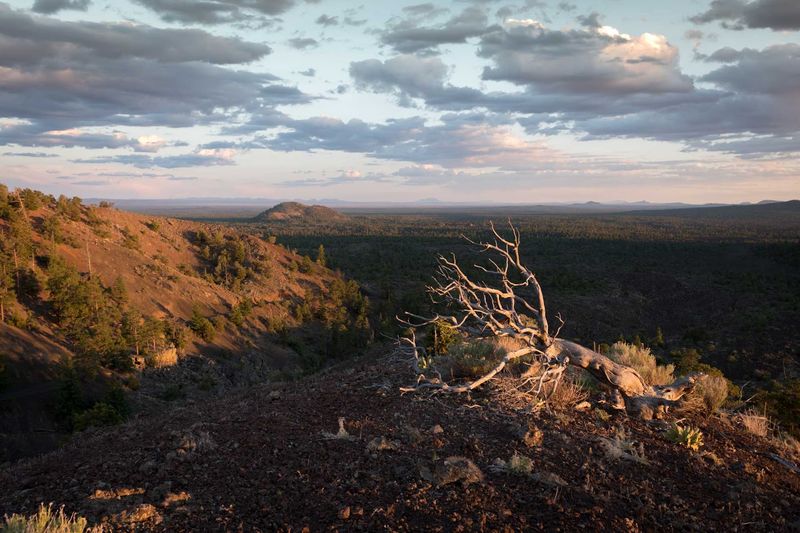
The cinder paths connect the volcano to the ice cave section of the trail.
They are looser and more uneven than the main route, which is part of what makes them feel like a real outdoor adventure rather than a manicured park walk.
Loose volcanic gravel shifts underfoot in a way that keeps you alert and present, and the footing demands enough attention that you tend to look up and appreciate the wide views only when you reach a flat stretch or a bench.
From certain points along the scenic route, you can see the broader landscape of the El Malpais region stretching out in dark waves of ancient lava, a view that puts the entire site into a much larger geographical context.
The rugged sections are manageable for many visitors, though walkers, wheelchairs, and strollers can be very difficult on the loose stone surface.
Good shoes are a smart choice here, and after navigating the cinder paths myself, I completely agree that extra grip makes a real difference.
The wide-open sky above the cinder trail is the kind of New Mexico sky that photographers chase, deep blue and cloudless in a way that makes the black rock below it look almost cinematic.
Every rugged step on this path earns you a view that feels worth the effort.
Frozen Shadows Inside A Lava Tube
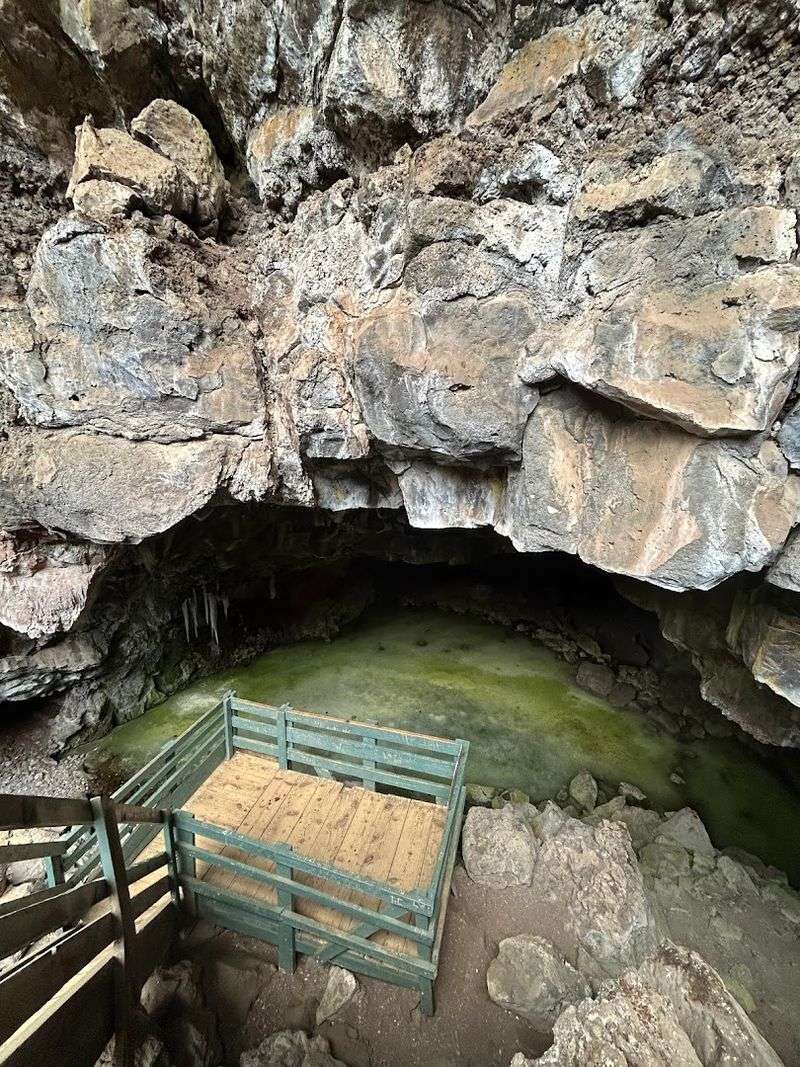
Geologically speaking, this ice cave is unusual for more than its cold temperature.
It exists inside a collapsed lava tube where natural airflow patterns have maintained freezing temperatures for an extraordinarily long time.
The frozen pool at the bottom of the cave has been building for thousands of years and is protected as a historical geological feature, meaning visitors view it from an overhead platform rather than touching or walking near it.
On that platform, looking down at a pool of ice while the desert bakes outside at eighty-plus degrees is the kind of contrast that makes a trip memorable.
The shadows inside the lava tube shift depending on the time of day and how much natural light filters down through the cave opening, creating subtle visual changes that make the ice look different at different hours.
Icicles can form along the cave walls during warmer months when the temperature contrast between inside and outside is at its greatest, adding dramatic vertical lines to an already striking scene.
The trading post near the entrance has a small museum with Indigenous pottery and historical artifacts that give useful cultural context to the broader landscape around the cave.
Few places in the American Southwest pack this much geological wonder into such a compact and accessible experience.