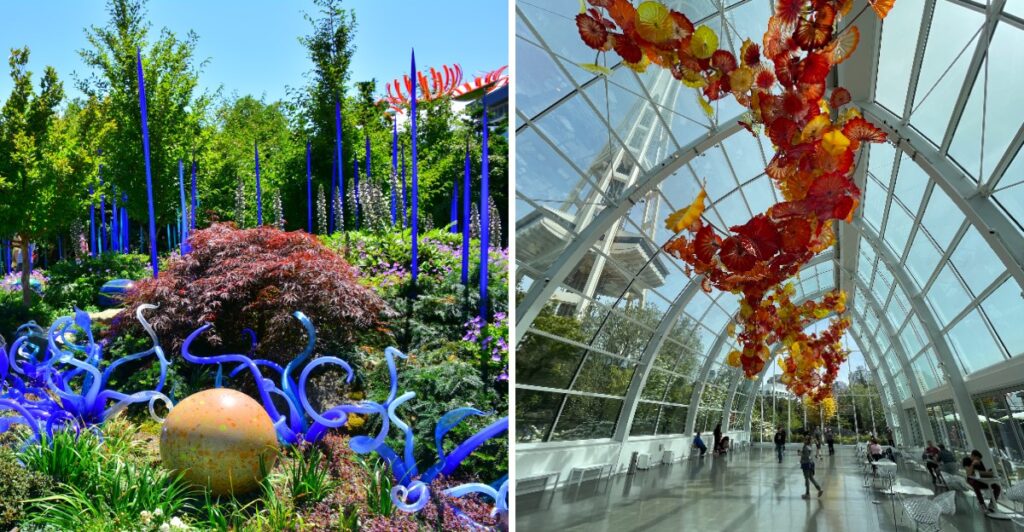
A 100-foot-long glass sculpture hangs inside a 40-foot-tall glasshouse in Washington. It’s built from more than a thousand hand-blown pieces. Nobody seems worried about a stray baseball.
And that’s just the beginning. One gallery has a ceiling made of glowing glass that looks like a sunny sky when you look up. Another is filled with glass boats, turning the entire room into something that feels almost like an underwater world.
I once called a glass vase my art collection. Embarrassing. This place makes my cabinet look like a yard sale.
Outside, glass sculptures pop up between real plants, and some look more alive than the leaves around them.
Honestly, I’d trust these flowers more than my houseplants. Forgetting to water them won’t get you in trouble here.
A Glass Garden Grew Right Next To Seattle’s Most Famous Tower
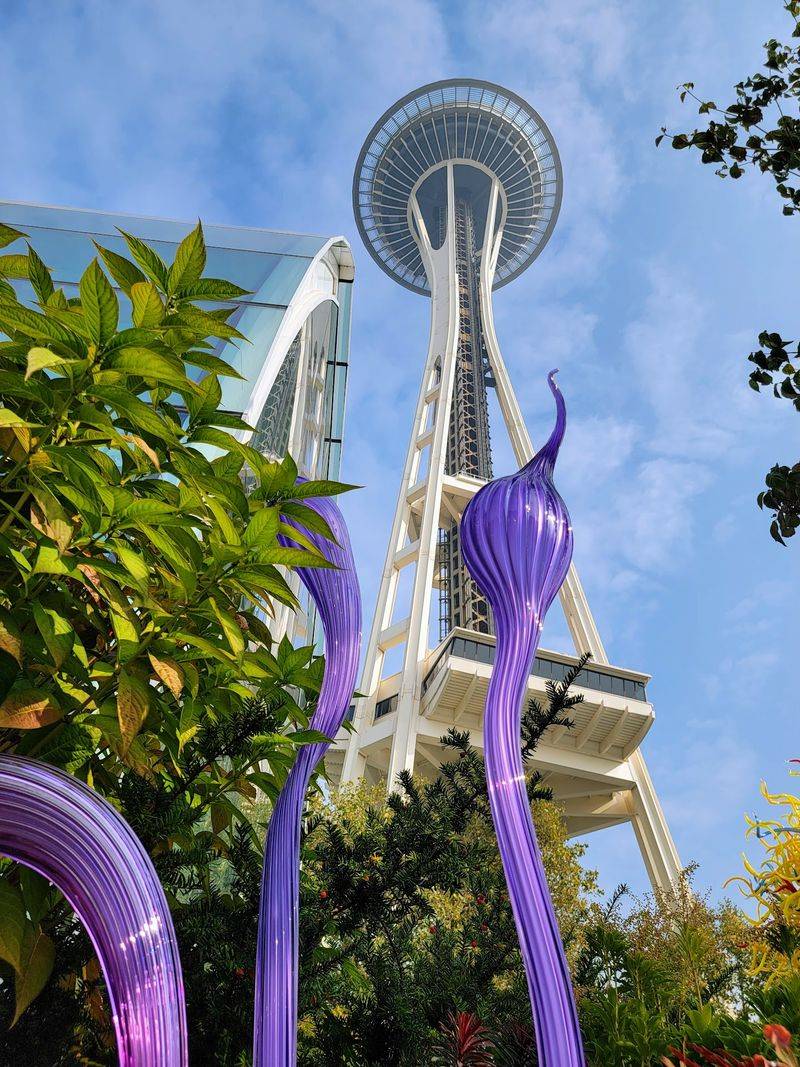
Chihuly Garden and Glass sits at Seattle Center, right at the foot of the Space Needle. It opened in 2012 and shows the work of Dale Chihuly, a glass artist born in Tacoma, Washington.
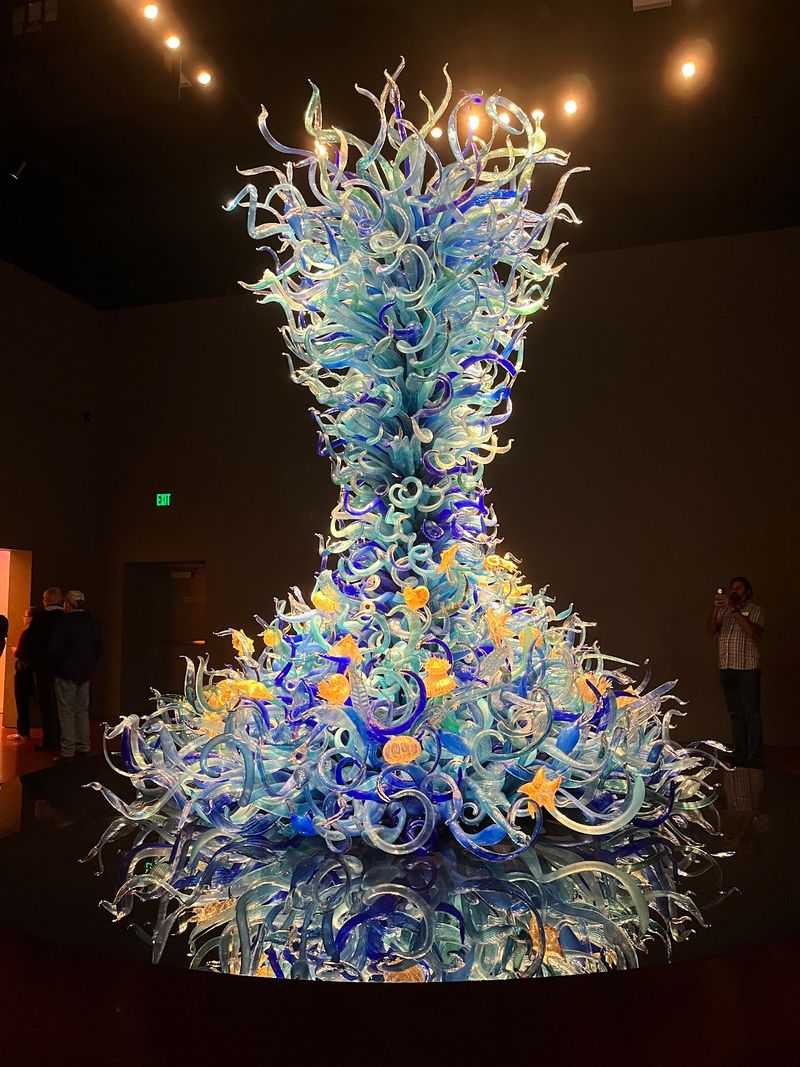
The museum mixes three big parts into one visit. You get indoor galleries, a towering glasshouse, and an outdoor garden filled with sculptures.
Chihuly helped make glass a serious art form for big public spaces. His pieces show up in museums and hotels around the world. Here, you see a huge collection of his major series gathered in one spot.
That makes this museum a kind of home base for his work. It’s the place to understand how one artist turned a hot, glowing blob into room-sized art.
The colors are the first thing you notice. Bright reds, deep blues, and sunny yellows fill nearly every corner. Even folks who never cared about glass usually find something to stare at.
Plan to move at a relaxed pace. The galleries and garden reward slow looking, and the details keep changing as you walk. Comfortable shoes are a smart call too.
Look Up Or You’ll Miss The Best Ceiling In Town
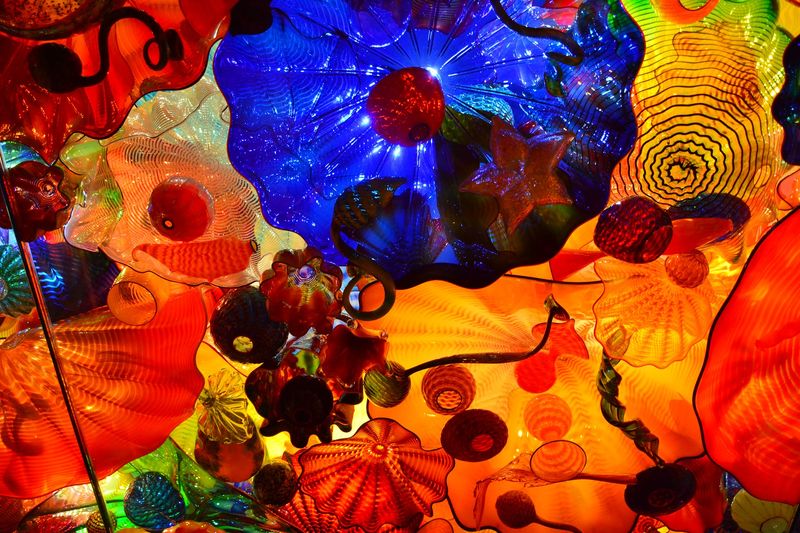
Most ceilings are boring white paint. The Persian Ceiling gallery flips that idea upside down, literally.
Dozens of colorful glass shapes rest on a clear panel above your head. Light shines down through them and spills color across the room around you.
It feels a bit like standing under an underwater garden. Shapes overlap, and some look like shells, flowers, or sea creatures.
Here’s a tip that helps. Walk slowly and keep shifting where you stand. The overlapping pieces form new patterns from every angle, so the view changes as you move.
This room is also a favorite for photos. The glowing colors on the walls make simple snapshots look surprisingly artistic. You don’t need a fancy camera to get something pretty.
Families tend to enjoy this space because there’s no right way to see it. Kids can play “spot the shape” while adults soak in the color.
Just remember the art is fragile, even when it’s overhead. Keep little ones close and walking, not running. The glass deserves a calm crowd, and honestly, so does your neck after all that looking up.
Boats Full Of Glass Float In A Room Of Their Own
Picture-perfect isn’t quite the right phrase for the boat room. Wild works better.
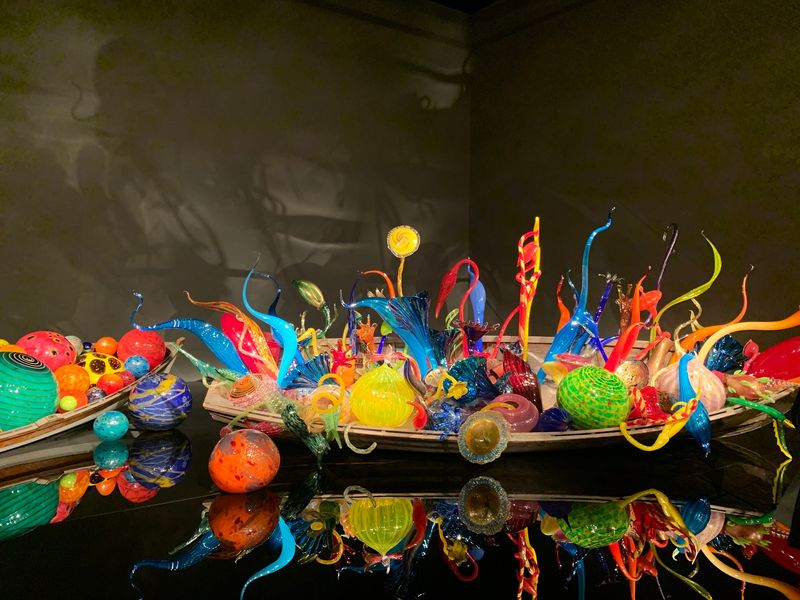
The Ikebana and Float Boat installation sets wooden boats on a dark, shiny surface. They overflow with glass balls and long, twisting stems.
The idea traces back to Chihuly tossing glass floats into a river in Finland in 1995, then watching local kids gather them in small boats.
That’s a fun backstory to share with whoever you bring. It turns a pretty display into a story about play.
Nearby, the Mille Fiori gallery feels like a glass garden built indoors. The name means a thousand flowers in Italian. Tall reeds, curly shapes, and round blooms stretch across a long display.
Chihuly said this work was inspired by his mother’s garden in Tacoma. Knowing that gives the bright jumble a warm, homey feel.
Both rooms use dark surroundings so the glass pops. The reflections double the color, which makes everything feel bigger than it is.
Take a minute in each one. Rushing through means missing tiny shapes hidden behind the big ones. Patience pays off here.
The Glasshouse Is Where Jaws Tend To Drop
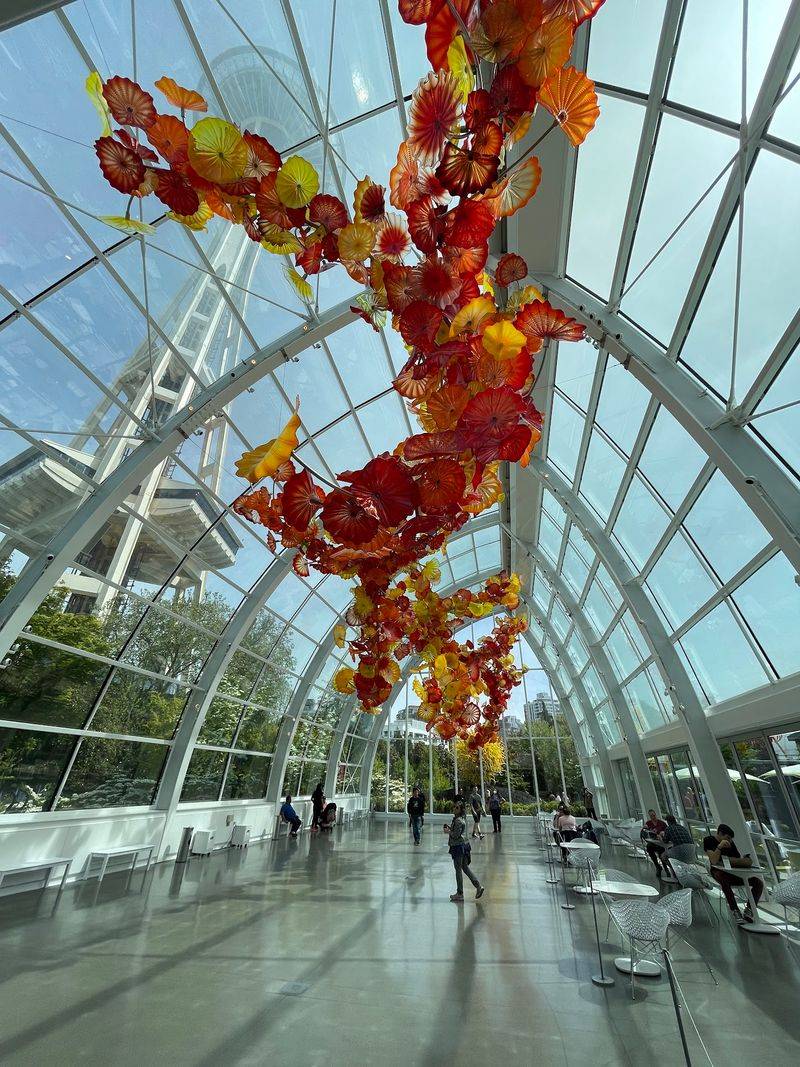
Forty feet tall and made mostly of glass, the Glasshouse is the museum’s centerpiece. Hanging inside is a suspended sculpture about 100 feet long.
The piece glows in shades of red, orange, yellow, and amber. Chihuly drew inspiration from Sainte-Chapelle in Paris and the Crystal Palace in London, two famous light-filled buildings.
Here’s what makes it extra fun. The Space Needle peeks through the glass walls and roof. You get modern art and Seattle’s skyline in the same frame.
Lighting shifts with the weather and the time of day. A sunny afternoon and a cloudy morning can make the colors feel totally different. Washington gray skies don’t ruin it either, since the warm tones still shine.
The Glasshouse also hosts private events, so its look can change for special occasions. During normal hours, it’s part of your regular admission.
Want a great photo? Stand back near the edges and tilt your phone upward. That way you catch the long sculpture and the tower together.
It’s the shot almost everyone wants, and for good reason.
Real Plants And Glass Plants Share The Same Flower Beds
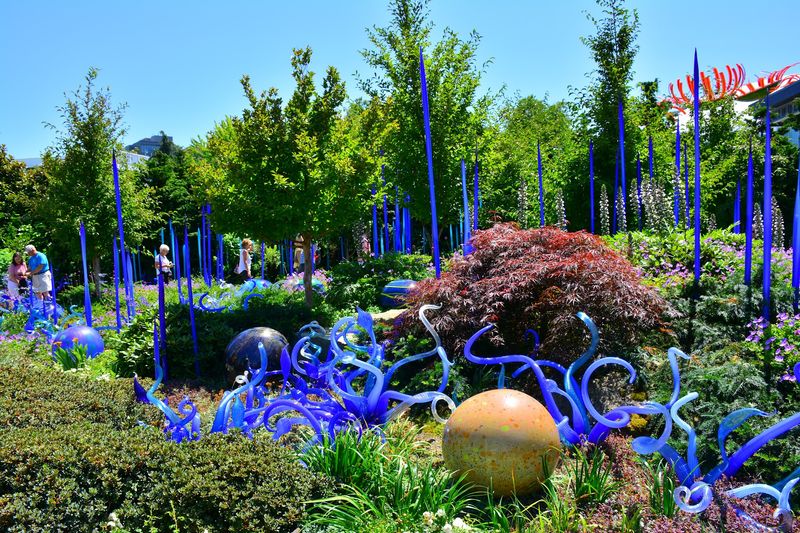
Gardeners and glass artists don’t usually team up. Outside, they clearly did.
The garden places Chihuly’s sculptures right among living trees, shrubs, and flowers. Plantings are chosen to match the colors and shapes of the glass. Bright reeds rise beside leafy plants, and glowing spheres sit where you’d expect boulders.
The effect is playful. Sometimes you have to look twice to tell what grew and what was blown.
Seasons matter here. Plants change through the year, so the glass gets new partners in spring, summer, and fall. A return trip can feel surprisingly fresh.
The paths are easy to follow, and the garden isn’t huge. Even so, it’s worth slowing down. Small pieces hide in corners that fast walkers tend to pass right by.
Bring a light jacket on cooler Seattle days. Most of this section is open-air, and the Pacific Northwest weather loves a surprise. A little drizzle can make the glass look shiny and bold.
And yes, the Space Needle shows up again. It towers over the garden like a very tall guest who forgot to leave.
Watch Hot Glass Turn Into Art Right In Front Of You
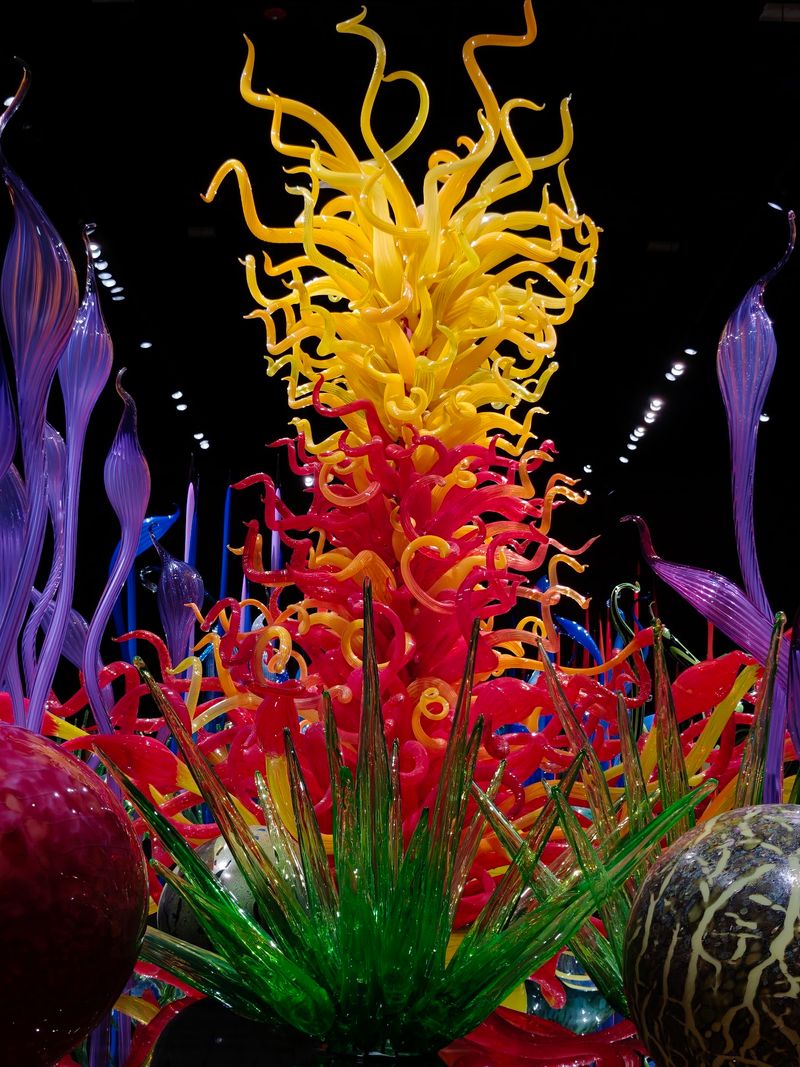
Molten glass glows like a tiny sun on the end of a metal pipe. Watching artists shape it is one of the most popular things to do here.
Chihuly Garden and Glass offers live glassblowing demonstrations. Artists explain each step as they work, from gathering the hot glass to shaping and cooling it.
It’s a great way to understand everything else in the museum. Once you see how hard it is to make one small piece, those giant installations feel even more impressive.
Demos don’t run nonstop, so check the schedule when you arrive. Planning your visit around one is a smart move.
Kids usually love this part. There’s heat, motion, and a real person making something from scratch. It feels more like a show than a lesson.
The museum also has short films about Chihuly’s life and process inside the Theater.
They explain how he works with a team, an approach he had already developed before a 1976 car accident cost him sight in his left eye.
Between the films and the demo, you’ll leave knowing far more about glass. Your friends may hear about it for weeks.
Lunch Comes With A Side Of Glass Art
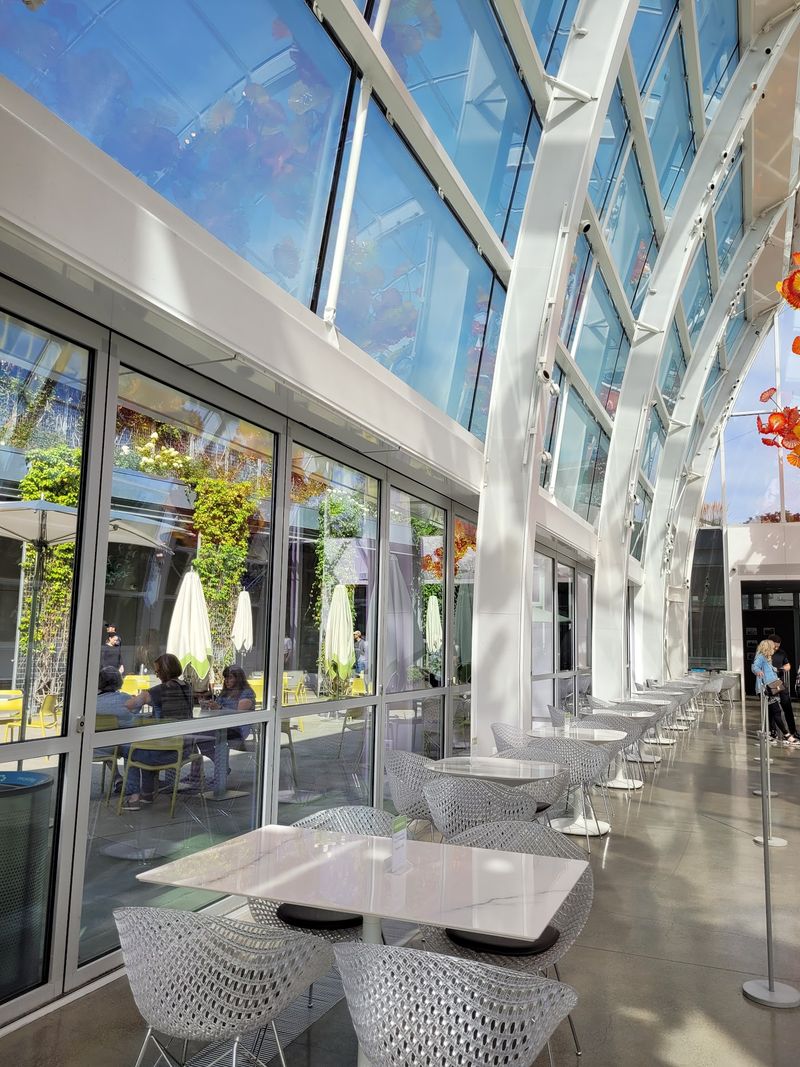
Hungry after all that staring? The on-site restaurant sits beside the exhibition.
One of the most charming features of it is its display of Dale Chihuly’s personal collections.
They fill shelves and even tables, so dinner feels like peeking into an artist’s closet.
It’s a nice look at a different side of him. Chihuly doesn’t just make art. He gathers fun stuff too.
The restaurant serves Pacific Northwest-inspired dishes and casual bites made with regional ingredients. It works well for lunch between the galleries and a nearby attraction.
Seating hours and menus can change, so check before you go. That keeps your stomach and your schedule happy.
The museum store is close by as well. You’ll find small glass pieces, books, and souvenirs that range from fancy to budget-friendly. Some glassworks there are made by the museum’s own team.
A tip for families: snacks and a short break make the rest of the visit smoother. Tired kids and fragile glass are not a dream team.
Timing Your Trip Makes The Glass Shine Brighter
Hours here are friendly for most schedules. The museum opens daily, usually at 11 a.m. on weekdays and 10 a.m. on weekends, with Saturday running until 6 p.m.
Hours can shift for holidays and events, so a quick check first is smart. Nobody wants to arrive at a locked door.
You’ll find the museum at 305 Harrison St, Seattle, WA 98109. That’s inside Seattle Center, the same campus as the Space Needle.
Tickets are sold for timed entry, and prices can vary by day. Buying ahead helps you lock in a spot.
Combo tickets with the Space Needle are available too. They’re handy if you plan to see both. Seattle CityPASS also includes options that cover the museum.
Most visitors spend somewhere around one to three hours. Art lovers who watch every film and demo may stay longer.
Earlier time slots and weekdays tend to be calmer. A quieter room means easier photos and more time with each piece.
Wear comfy shoes and dress for Washington weather. Part of the fun happens outdoors, rain or shine.