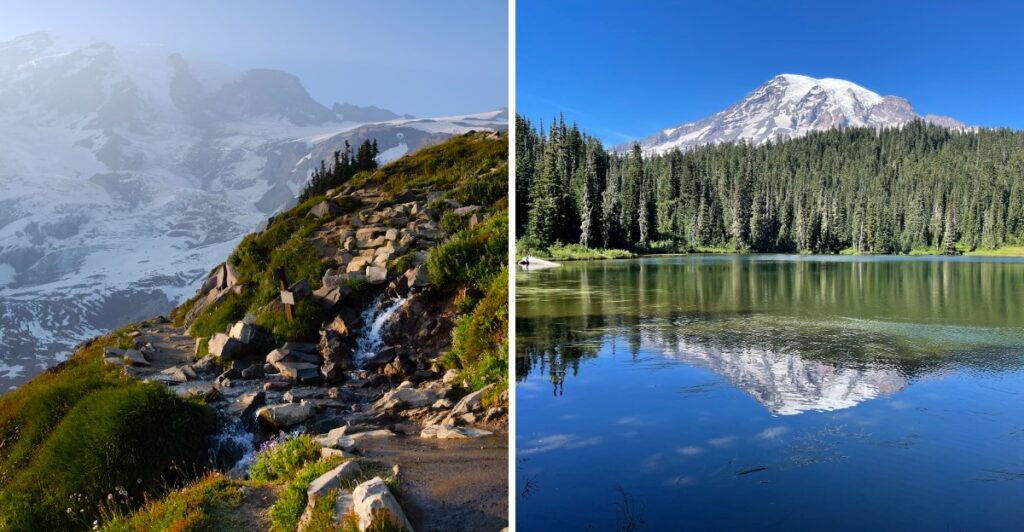
This mountain carries more than 25 major glaciers, which makes it the most glaciated peak in the lower 48. It is also an active volcano. Ice on top, fire underneath, and somehow it still looks calm in every photo.
I can barely keep one houseplant alive, so that level of multitasking feels a little personal. The peak rises 14,410 feet above Washington’s evergreen forests.
Around it, more than 275 miles of trails wind through wildflower meadows, old-growth groves, and glacier-fed waterfalls.
One loop circles the entire mountain for 93 miles. Honestly, that trail is the most ambitious thing in the Pacific Northwest, and I will not be taking questions.
Plan ahead for 2027, because summer gets busy. The glaciers can wait forever, but your parking spot cannot.
A Park So Old It Was Charging Cars Before Most People Owned One
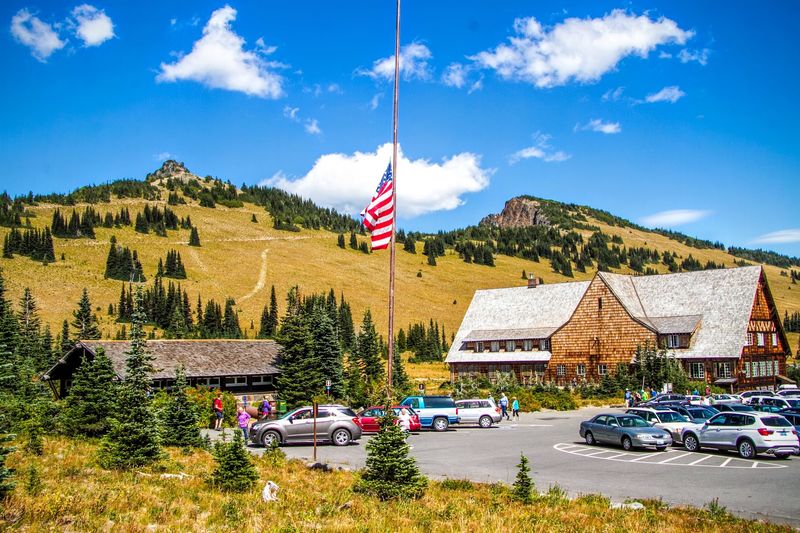
Mount Rainier National Park became the nation’s fifth national park on March 2, 1899. That makes it older than sliced bread, airplanes, and pretty much every family road trip tradition.
Here’s a fun twist for car lovers. It was the first national park to allow personal vehicles and the first to collect entrance fees, starting in 1907.
Long before any of that, the mountain mattered deeply to Indigenous peoples. The Coast Salish, Cowlitz, Nisqually, and Yakama have known it by names such as Tahoma or Tacoma.
That history gives the place real weight. You aren’t just visiting scenery. You’re visiting a landmark with stories older than any map.
Most trips begin at the Nisqually Entrance, the main year-round gateway. You’ll find it at 39000 State Route 706 E, Ashford, WA 98304, on the southwest side of Washington’s famous peak.
A rustic log entrance sign stands just before the pay station. A small pull-off nearby makes it easy to stop for a quick photo, but watch for traffic.
Give yourself a moment there. It’s the official start of a very big day, and the trees seem to know it.
Meet The Peak That Wears More Ice Than Any Other In The Lower 48
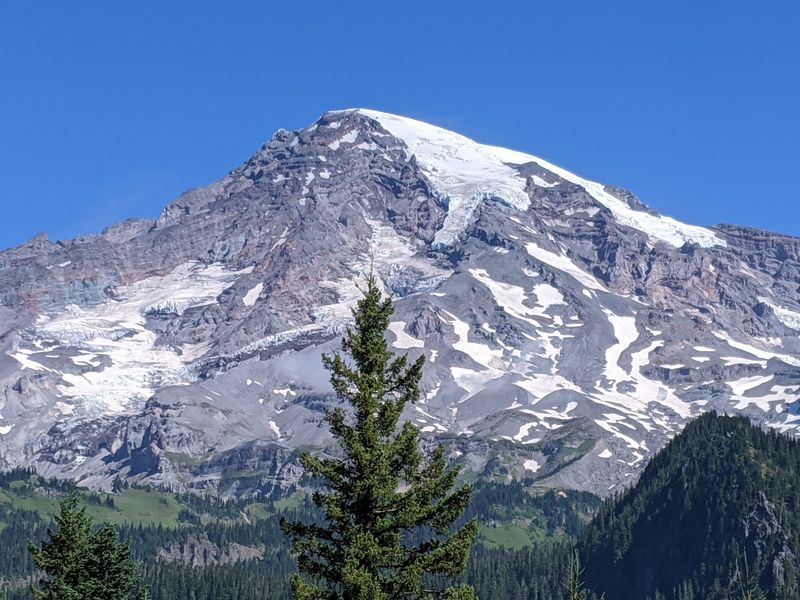
Fourteen thousand four hundred ten feet. That’s how high this active stratovolcano climbs, and it doesn’t do it quietly.
Rainier is the most glaciated peak in the continental United States. More than 25 major glaciers drape its slopes like a frosty winter coat that never comes off.
Those glaciers aren’t just pretty decoration. They feed creeks and rivers that tumble down into waterfalls throughout the park.
From many viewpoints, the mountain looks almost too large to be real. Clouds love to hide it, so a clear day feels like winning a small lottery.
Weather changes fast up high, even in summer. Pack layers, rain gear, and extra snacks, because the mountain makes its own rules.
Remember that it’s still classified as an active volcano. Scientists keep a close watch, which is honestly comforting for something this big.
Mount Rainier National Park protects all of this rugged terrain, from icy summit to forest floor. For many travelers, the first full view is the moment the trip suddenly feels worth every mile.
Keep your camera ready. The mountain may only show up for a few minutes.
Paradise Lives Up To Its Name Every Single July
Not every place gets to be called Paradise without some eye-rolling. This one earns the name honestly.
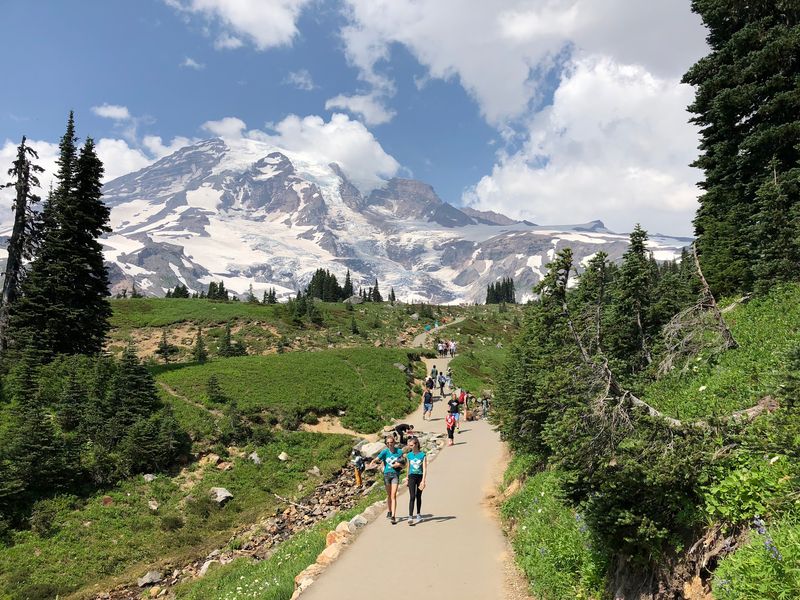
Paradise is the park’s most popular destination, and July and August are the reasons why. Wildflower meadows spread out in bright waves, with Rainier looming right above them.
The Skyline Trail Loop starts here and ranks among the park’s most iconic hikes. It delivers flowers, wide mountain views, and plenty of reasons to stop for photos.
Start at the Henry M. Jackson Memorial Visitor Center. It offers exhibits, films, and ranger programs, plus a gift shop and restrooms.
That visitor center is a smart first stop before you hit the trail. Ask a ranger about conditions, since snow can linger longer than you’d expect.
Paradise also stays busy in winter, when snowshoeing and cross-country skiing take over. The meadows simply swap their flowers for a thick white blanket.
Arrive early in summer if you can. Parking fills up, and nobody wants to spend paradise circling a lot.
Stay on marked trails too. The meadows are delicate, and those flowers took all year to show off.
Set Your Alarm For The Mirror Trick At Reflection Lakes
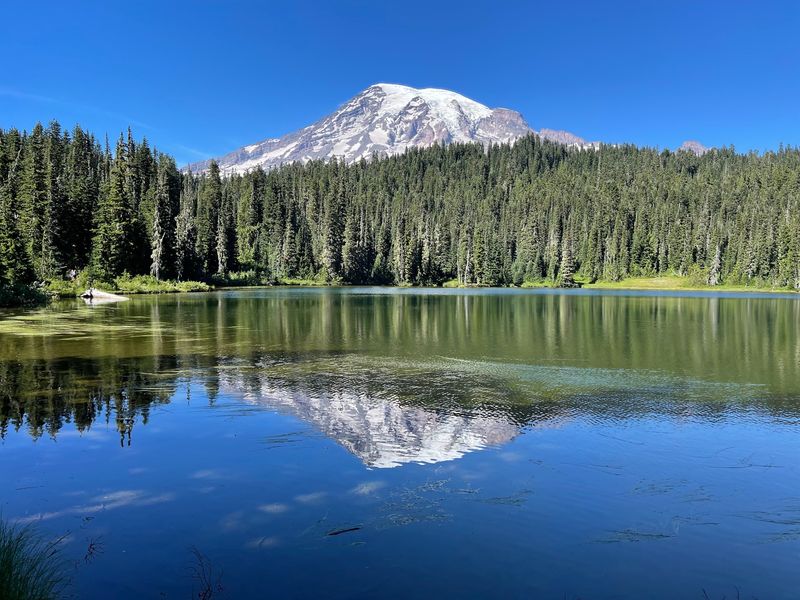
Calm water plus a giant volcano equals one of the best photos in Washington. Reflection Lakes, near Paradise, pulls off this trick on still mornings.
When the wind stays quiet, Rainier appears twice. One mountain points up, and its perfect twin points straight down into the water.
Photographers love this spot most at sunrise. The early light warms the snow, and the water often sits at its smoothest.
Yes, that means waking up early on vacation. Trust the process, because sleeping in won’t give you a double mountain.
A breeze can ruin the mirror effect in seconds. If ripples show up, wait a bit and see if things settle down.
Bring a warm jacket, even in summer. Mornings at elevation can feel surprisingly chilly before the sun climbs.
The lakes also sit close to the road, which makes them easy to reach. That’s great news for anyone who wants a big view without a big hike.
Pair this stop with Paradise for a full morning. Your camera roll will be stuffed by lunch.
Drive Higher Than Anywhere Else In The Park At Sunrise
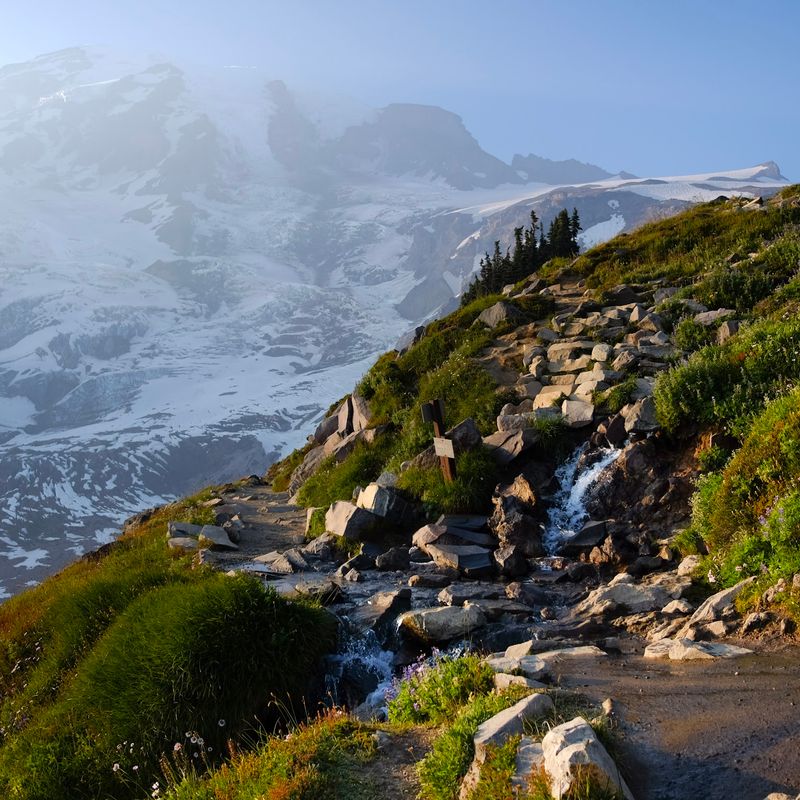
At 6,400 feet, Sunrise is the highest point in the park you can reach by vehicle. Your car does the hard climbing, and you collect the views.
The scenery here rivals Paradise, which is saying a lot. You get close-up views of the Emmons Glacier and hundreds of acres of wildflower meadows.
Timing matters with this area. Sunrise Road usually opens in late June or early July and closes in late September or early October, depending on snow conditions.
The Sunrise Visitor Center runs seasonally and makes a handy launch point. From there, the Mount Fremont Lookout Trail leads toward even bigger views.
Nearby options include the Naches Peak Loop, another favorite with serious scenic payoff. Each trail shows the volcano from a slightly different angle.
Bring water and sun protection. High elevation sunshine can sneak up on you, even when the air feels cool.
Many people focus only on Paradise, but Sunrise deserves a full day. Think of it as the other half of the mountain’s personality.
Check road status before you go. Snow decides opening day, not the calendar.
Old Mineral Springs Started A Whole Story At Longmire
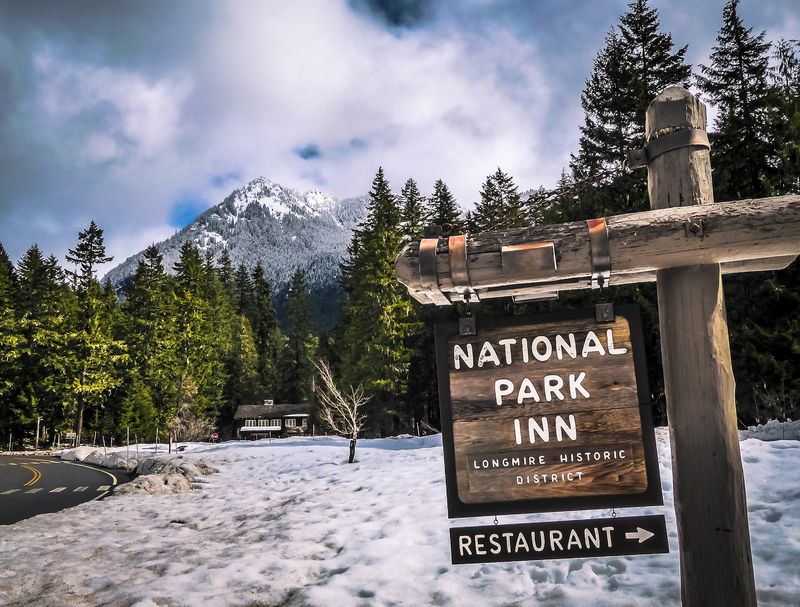
Back in the late 1880s, James Longmire spotted natural mineral springs and built a hotel and spa around them. That bold move kicked off the history of this corner of the park.
Today, the Longmire Historic District sits in the park’s southwest section. It’s a peaceful place to slow down and see how early visitors experienced the mountain.
The Longmire Museum stays open year-round. Its exhibits help explain the park’s past and the landscape around you.
Architecture fans should look closely here. Longmire and Paradise showcase classic National Park Service rustic-style design.
Those buildings helped the park earn National Historic Landmark status in 1997. Stone, timber, and forest settings blend together in a way that feels completely natural.
Longmire also makes a great stop on stormy days. When the summit hides behind clouds, history is still wide open.
Since it’s close to the Nisqually Entrance, it fits easily into most Mount Rainier National Park trips. Stretch your legs, read a few exhibits, and enjoy the tall trees.
Mr. Longmire clearly had an eye for real estate.
Lace Up For 275 Miles Of Trails, Or Just A Few
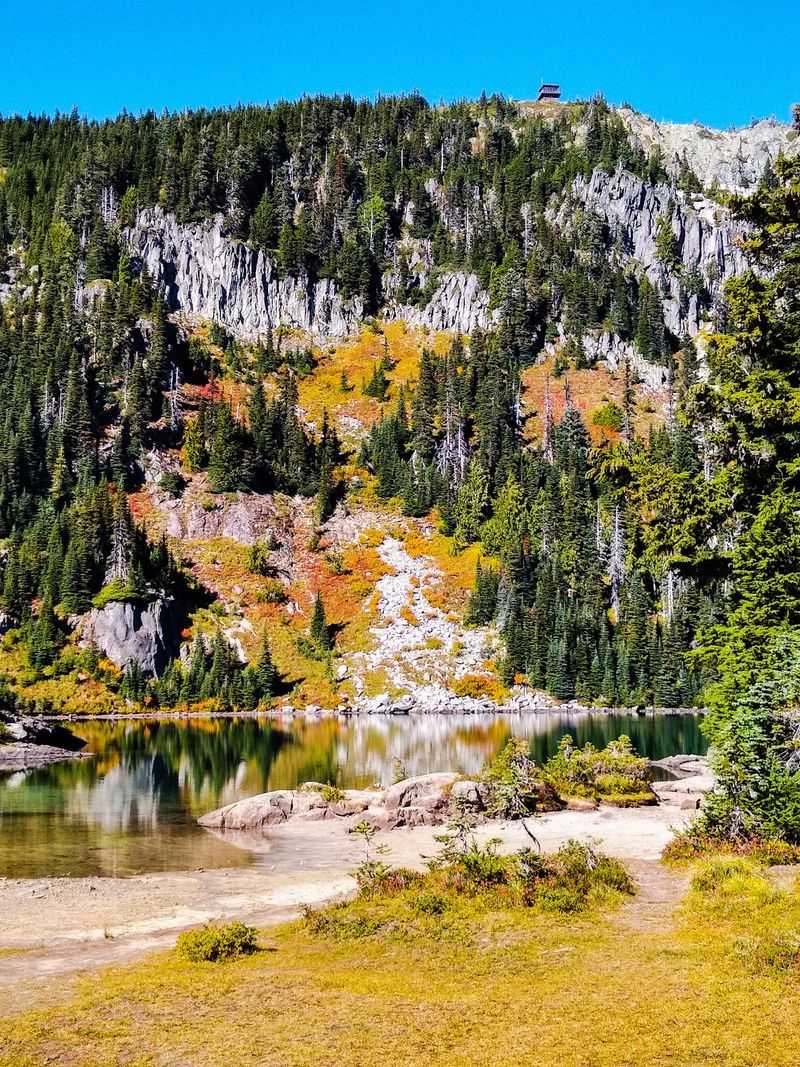
More than 275 miles of maintained trails crisscross this park. That’s a lot of ground, even for the most dedicated sock collector.
Beginners and serious hikers can both find something here. Popular picks include Skyline, Naches Peak Loop, Mount Fremont Lookout, and Spray Park.
Then there’s the Wonderland Trail, the overachiever of the group. It circles the entire mountain for 93 miles and makes a true multi-day backpacking adventure.
Wilderness camping and mountain climbing are also part of life here. Climbing Rainier is a serious undertaking that requires real preparation and skill.
For day hikers, simple planning goes a long way. Carry water, layers, a map, and food, even for shorter outings.
Weather can flip quickly at higher elevations. Sunshine at the trailhead doesn’t promise sunshine an hour later.
Choose a hike that matches your energy level. Mount Rainier National Park rewards short strolls almost as generously as huge treks.
Also check trail conditions before setting out. Snow, closures, and repairs can change plans fast.
Your legs might complain later. Your eyes absolutely won’t.
Smart Timing Will Make Your 2027 Trip Way Smoother
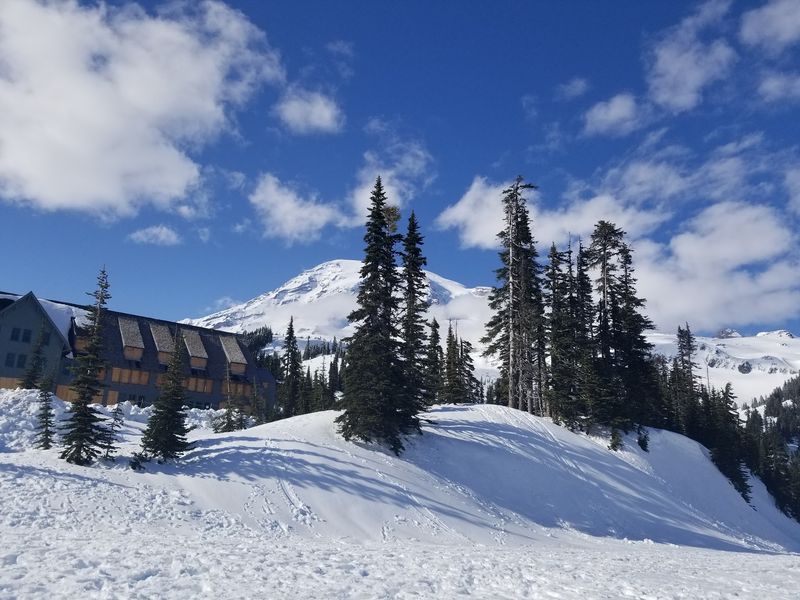
Late July through early September brings full trail access and peak wildflowers. It also brings the biggest crowds of the year.
Timed-entry reservations were not required in 2026, but visitors planning a 2027 trip should check the National Park Service website for any changes.
Arriving before 7 a.m. or after 4 p.m. can help you avoid the busiest summer periods and improve your chances of finding parking.
Midweek visits are another easy win. Weekends in Washington’s favorite mountain park can get busy fast.
Fall swaps crowds for crisp air and colorful leaves, especially in September. It’s a lovely choice for anyone who prefers calmer trails.
Winter turns the park into a snowy wonderland. From November 1 to May 1, every vehicle must carry tire chains, even with four-wheel drive.
Don’t skip the quieter corners either. The Ohanapecosh Visitor Center in the southeast highlights old-growth forests and waterfalls.
Stevens Canyon Road connects different parts of the park with beautiful scenery. The drive itself feels like part of the adventure.
Always check road and trail conditions before leaving home. A little planning now means more mountain and less waiting later.