Your phone may be useless here.
The giant telescope definitely is not.
High in the West Virginia mountains, an enormous white dish spends its time listening to radio signals from space. It is so sensitive that everyday electronics can interfere with the work.
So yes, the machine studying the universe has stricter screen-time rules than most people.
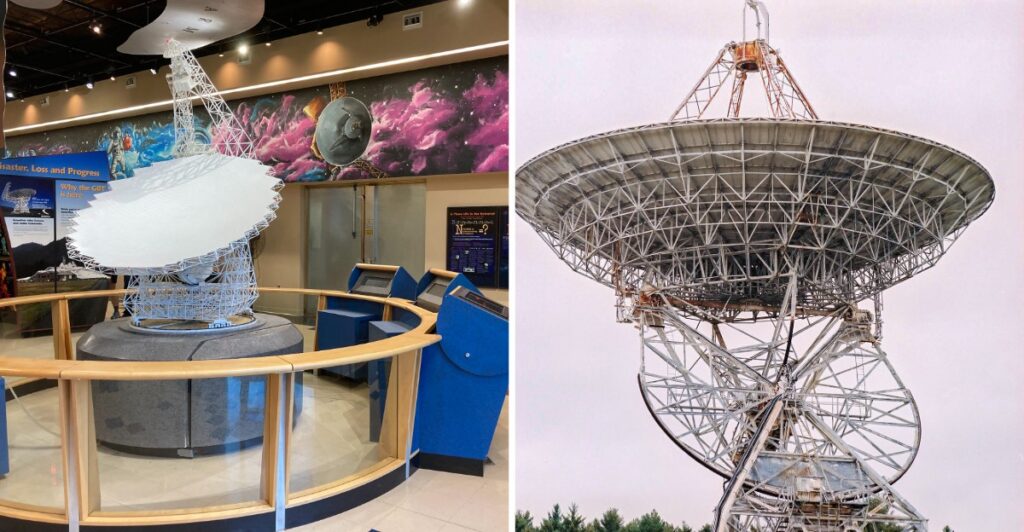
Tours bring you closer to the technology, while the science center helps explain what that huge dish is actually listening for.
I think the silence would get me first.
No constant buzzing. No checking notifications every two minutes. Just a telescope doing serious work while everyone else learns to unplug for a bit.
And really, if anything deserves your full attention, a machine listening to space probably qualifies.
A Giant Ear Pointed At The Sky
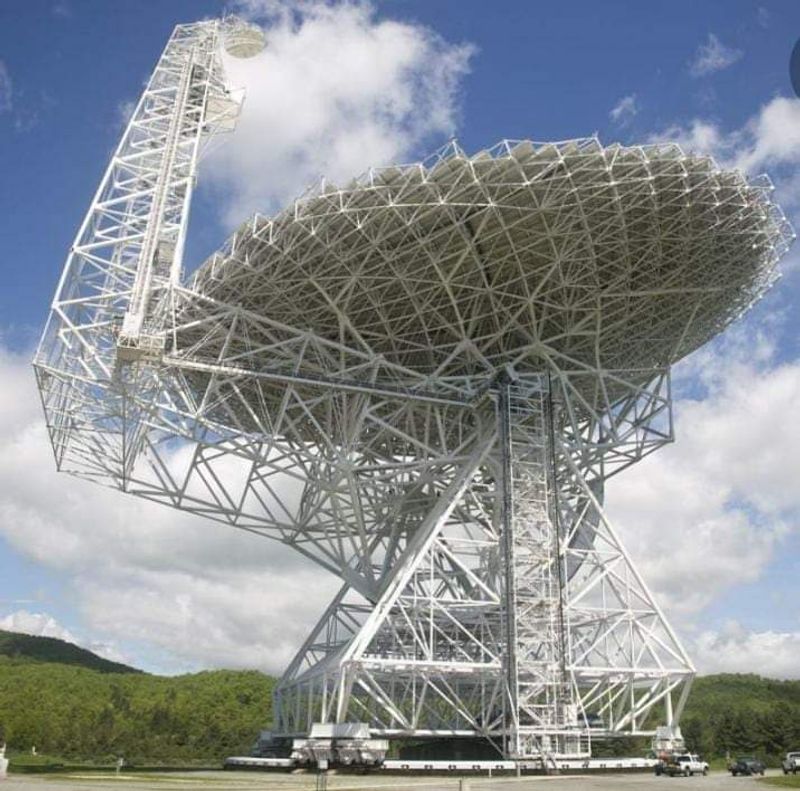
Imagine a telescope that doesn’t collect visible light. Instead, the Green Bank Telescope detects radio waves arriving from space, including signals associated with gas clouds, pulsars, galaxies, and other astronomical targets.
The giant dish gathers those faint waves and directs them toward sensitive receivers.
The telescope detects radio waves rather than sound, using sensitive receivers to study electromagnetic signals arriving from space. Radio waves are a form of electromagnetic radiation, and computers turn the measurements into information astronomers can study.
The telescope’s ability to move is especially important. It can rotate around its base and tilt upward or downward, allowing scientists to follow selected objects as Earth turns.
That means observations can continue while a target moves across the sky, rather than ending as soon as it leaves a fixed dish’s narrow field of view.
From the observatory grounds, look at the structure supporting the dish as well as the reflecting surface itself.
The frame, receivers, and moving base all have jobs to do. During a guided tour, you can learn how the collected signals become evidence about distant parts of the universe.
Measuring Up To A Dish The Size Of A Football Field
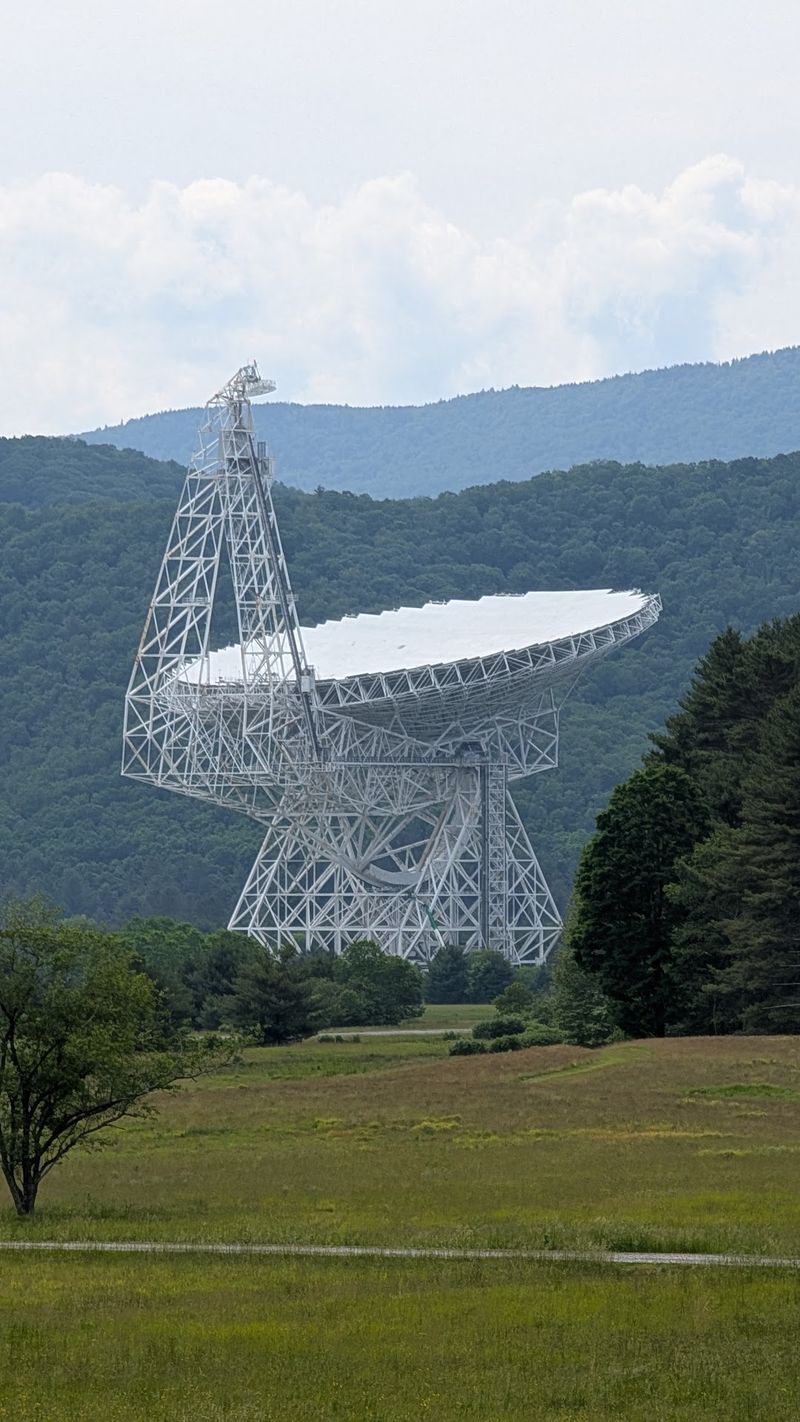
The reflecting surface is commonly described as about 100 meters across, or roughly 328 feet. Its dimensions are approximately 100 by 110 meters, so it isn’t a perfect circle.
For comparison, an American football field measures 300 feet between the goal lines and 360 feet when both end zones are included.
Thousands of precisely arranged panels form the dish. Incoming radio waves reflect from that surface toward equipment positioned above it, where the signals can be collected and measured.
The large collecting area helps astronomers detect signals that would be harder to identify with a smaller instrument.
Think of setting out a wide rain barrel instead of a narrow cup during a light shower. A larger opening collects more of what’s falling. The broad collecting surface helps capture faint signals that a smaller instrument might struggle to detect.
Look beyond the rim to the framework holding everything in place. What seems like a single white surface from a distance is actually an intricate assembly designed to maintain its shape while the telescope changes direction.
There’s no need to step into a restricted area for a closer look. The permitted tour and viewing routes provide ways to appreciate the scale without disturbing an operating scientific instrument.
Taller Than Most Skyscrapers In The State
The Green Bank Telescope rises approximately 485 feet at its highest point. That’s taller than the Statue of Liberty including its pedestal, an unusual comparison for a structure standing amid wooded mountains and open fields.
Much of the height comes from the steel framework that supports the reflecting surface and the receiving equipment suspended above it. The dish must be able to change its angle while the upper assembly remains properly aligned to gather incoming radio waves.
As you approach Green Bank, the roads curve through hills and stretches of forest. Keep your attention on the road if you’re driving, and resist stopping on a narrow shoulder for a photograph.
The observatory has designated visitor areas where you can get oriented more safely.
Once you’re there, look from the base toward the upper support arms. Even when the dish isn’t moving, its size helps explain why the structure needs such a substantial foundation.
Mountain weather also deserves attention. Conditions may be cooler or wetter than expected, especially if you’re spending time outdoors on a tour or walking route. Bring a light layer and shoes that can handle ordinary paths after rain.
Nearly 17 Million Pounds That Still Glide
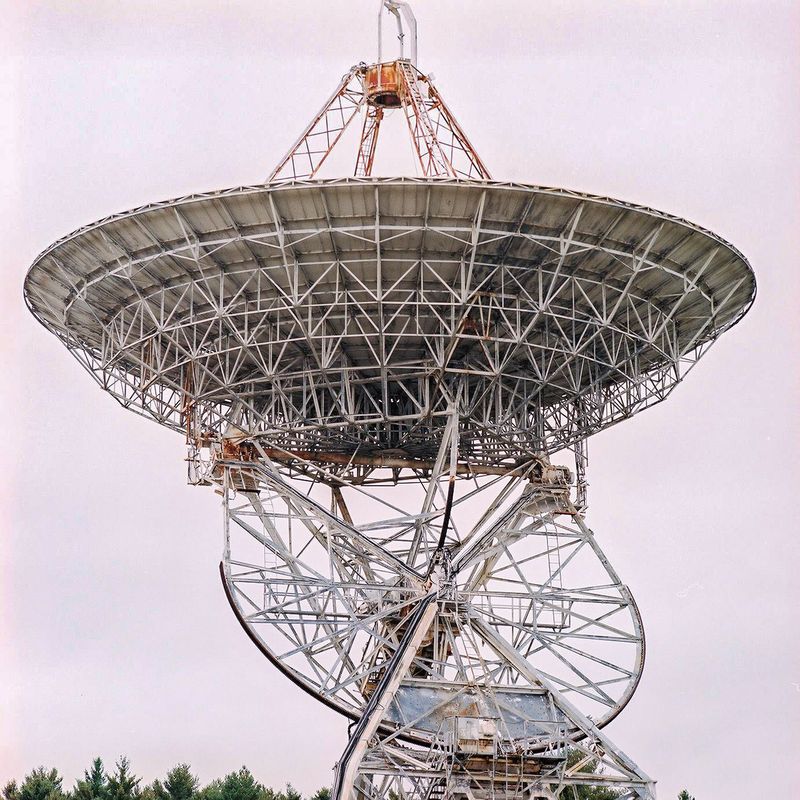
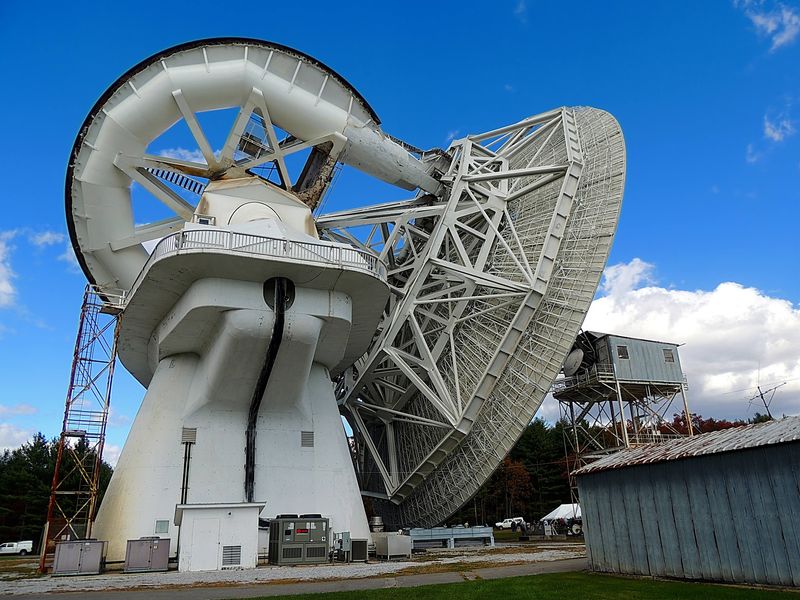
The telescope weighs nearly 17 million pounds, yet it can turn to follow astronomical targets with remarkable precision. Its enormous structure rests on a circular track, allowing the dish to rotate horizontally while other mechanisms adjust its tilt.
Motors drive the movement at controlled speeds. Engineers also account for wind, temperature changes, and the need to keep the reflecting surface accurately shaped. Small errors matter when the instrument is trying to capture faint signals from distant space.
The telescope doesn’t move simply to put on a show. Its direction depends on the observation schedule, so it may remain still throughout a visitor’s stop. If it does reposition during your visit, watch from an authorized area and keep the tour’s timing in mind.
The circular base offers a useful contrast with the broad dish overhead. One part supports the enormous weight, while the upper structure gives scientists the freedom to aim across much of the sky.
There is no need to get close to the moving equipment to appreciate the engineering. A guided explanation or a view from the designated route can reveal how carefully the parts must work together.
Life Without Cell Bars In The Quiet Zone
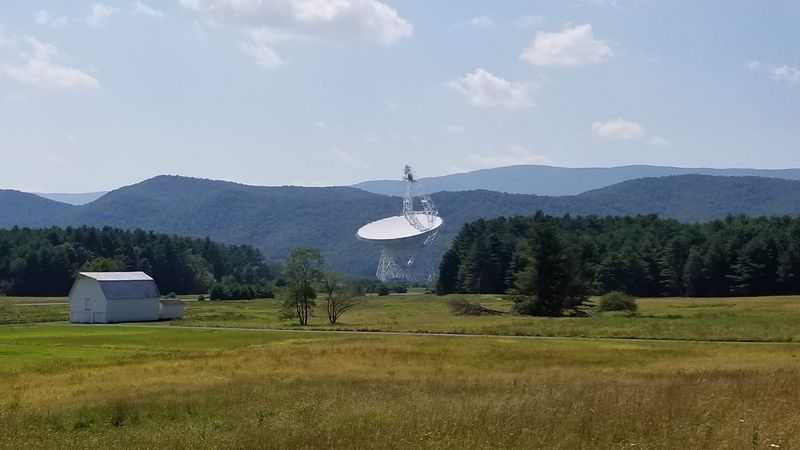
Cell service is unreliable or unavailable around Green Bank, and the observatory has an unusual reason for limiting electronic interference. It sits within the National Radio Quiet Zone, a large area established to help protect sensitive radio observations.
Weak signals from space can be overwhelmed by radio transmissions generated much closer to home. Phones, wireless connections, and other electronics may produce interference, so rules become more restrictive as you approach the working telescopes.
Download driving directions and any tickets or confirmations before reaching the area. If someone needs to contact you, tell them in advance that you may be unreachable during part of the trip. A printed map is a sensible backup in these mountains.
Near the Science Center and certain designated public areas, photography may be permitted when wireless functions are disabled as instructed.
Beyond restricted-area gates and on telescope-area trails, phones and digital cameras generally must be powered off or left behind. Film cameras may be allowed, subject to tour rules.
Medically necessary devices, including pacemakers, hearing aids, and insulin pumps, are exempt from shutdown requirements.
Never switch off essential medical equipment. Follow staff directions about other electronics, since the permitted arrangements depend on where you’re going.
Hands-On Fun Inside The Science Center
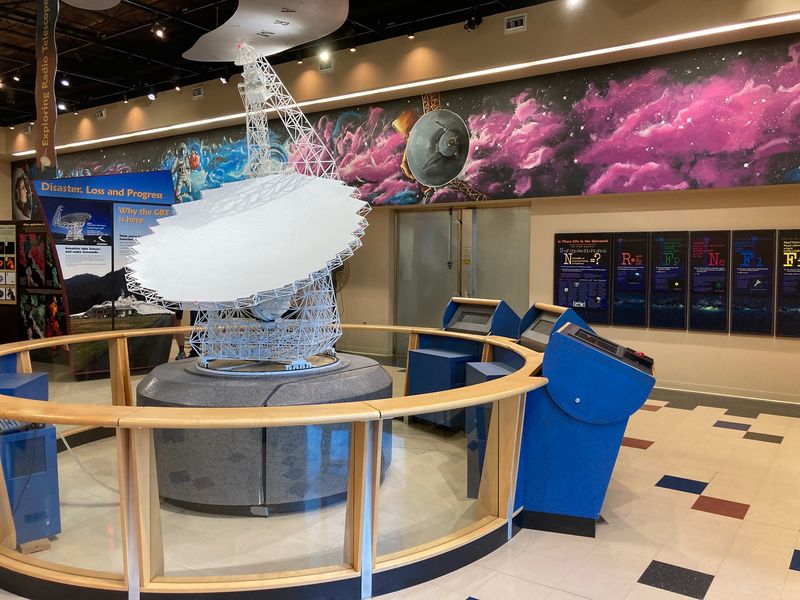
Start at the Green Bank Science Center for an introduction to radio astronomy before heading toward the larger instruments.
Exhibits explore how radio waves travel, why giant dishes are useful, and how researchers work in a region with restrictions on radio interference.
Interactive displays make it possible to explore ideas without needing an advanced science background. You can compare how different telescopes gather information and learn why radio astronomy reveals features of space that visible-light observations may miss.
The center also serves as the visitor hub, with a gift shop and Starlight Café. Food service and individual facilities may vary by season, so check the current schedule if you’re counting on lunch during your stop.
Opening days aren’t the same all year. During the school-year schedule, the center normally operates Thursday through Monday and closes Tuesday and Wednesday.
Summer arrangements differ.
Confirm opening days and guided-tour departures before making the mountain drive.
The Science Center is wheelchair accessible, and accessible tour transportation is available for certain programs.
If you need a specific accommodation, contact the observatory before visiting so you can choose a suitable option.
Leave enough time to explore the exhibits without rushing straight from your arrival to the tour departure.
Riding Out To Meet The Telescopes Up Close
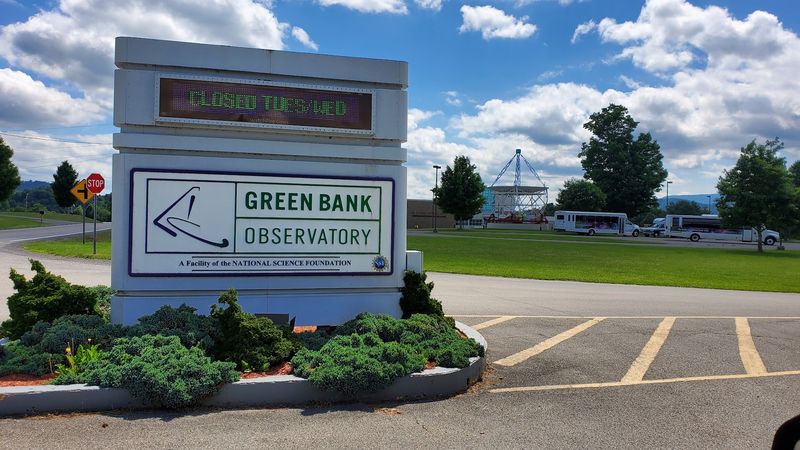
Guided bus tours travel across the observatory campus, introducing smaller instruments and explaining the work carried out at the Green Bank Telescope.
The regular experience generally lasts about an hour, including an introductory presentation, though routes and schedules can change.
As the bus approaches the large dish, the scale becomes easier to appreciate. The tour also explains why the telescope must be protected from stray radio transmissions, so listen carefully to the device instructions before entering restricted areas.
Phones and digital cameras cannot be used in the protected telescope area. If you’d like photographs, ask about the current rules for film cameras and use approved photography locations rather than improvising along the route.
Prefer exploring on foot? The observatory has a self-guided route featuring a scale model of the solar system. The full route traditionally extends about 1.5 miles toward the Green Bank Telescope, but refurbishment work may restrict the final section.
Check the current trail map and posted closures before setting out. Bring water and allow time for the return, especially in hot or wet weather.
Tour availability can change with operations and the season, so reserve ahead when appropriate. Green Bank Observatory is at 155 Observatory Road, Green Bank, WV 24944.
Begin at the visitor area, review the day’s options, and choose how much of this unusual mountain campus you’d like to explore.