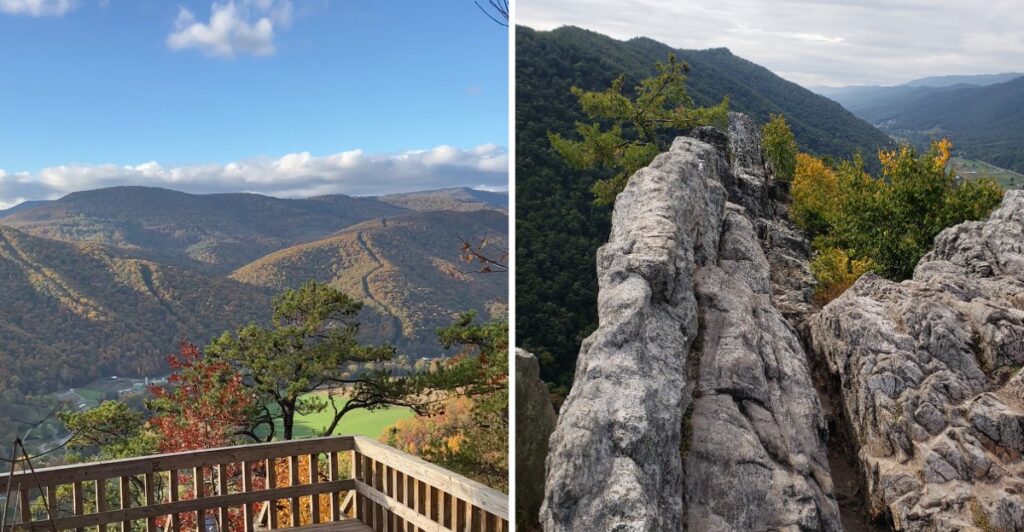
One peak on this rock fin can’t be reached without technical climbing gear. It’s the only summit like that on the entire East Coast.
The white quartzite blade shoots nearly 900 feet above a quiet river. During World War II, Army troops practiced climbing here before heading to the mountains of Italy. Some of their old metal pitons still sit in the rock today.
I like how this West Virginia landmark welcomes everyone, not just daredevils with ropes.
A trail with switchbacks leads hikers to a viewing platform near the top. Families, older visitors, and leashed dogs can enjoy the route, though the steep climb requires reasonable fitness and sturdy footwear.
I can’t imagine a better way to feel tiny and thrilled at the same time. So what does it take to stand up there and look down on the whole valley?
A Stone Blade So Sharp It Looks Borrowed From The Wild West
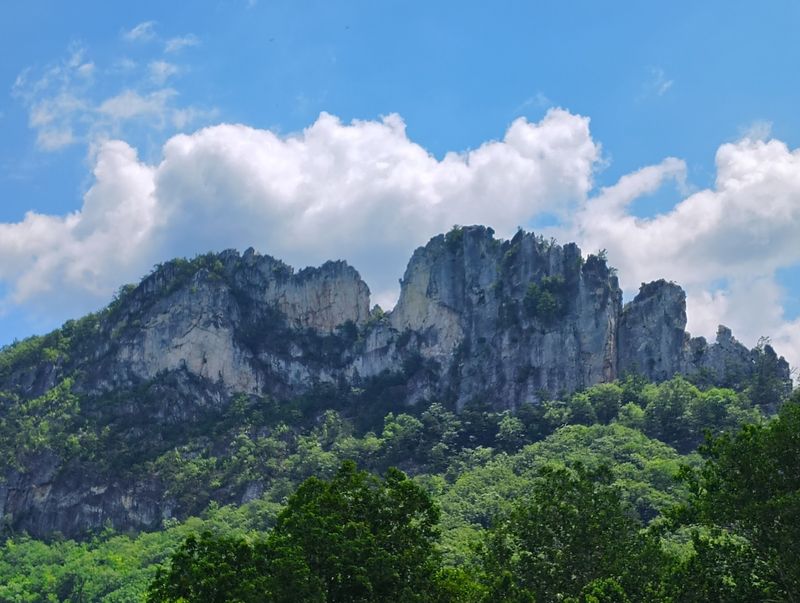
Most mountains are round and friendly looking. Seneca Rocks is a thin, jagged fin of white Tuscarora quartzite that juts straight up like a dragon’s backbone.
The formation rises nearly 900 feet above the North Fork River. Geologists call it a razorback ridge, which sounds like a wrestler’s nickname but fits perfectly.
Its shape is the real showstopper. The rock is surprisingly narrow, so the peaks look almost paper-thin from certain angles.
That skinny profile makes for great photos from the valley floor. You can grab a dramatic shot without hiking a single step.
The South Peak holds a special title on the East Coast. It’s the only peak there that can’t be reached without technical rock climbing.
Hikers can get close, but that final summit belongs to roped climbers. It’s a little like a velvet rope at a fancy party, only made of sky.
The landmark sits in the Spruce Knob-Seneca Rocks National Recreation Area. That area is part of the huge Monongahela National Forest in West Virginia.
Bring a camera with a good zoom. Climbers on the face look like tiny specks, and spotting them becomes a fun game.
Your Legs Will Complain, But The Observation Platform Pays Them Back
Here’s a trail that does a lot in a short distance. The Seneca Rocks Hiking Trail is 1.3 miles each way, so the round trip comes to 2.6 miles.
The catch is the climb. You’ll gain more than 700 feet of elevation on the way up.
Steps and switchbacks keep the slope manageable. The trail is considered suitable for most ages, so families can tackle it together.
Take breaks at the turns and nobody will judge. Catching your breath counts as enjoying the scenery, right?
The path is a self-guided interpretive trail. Signs along the way share bits about the area as you walk.
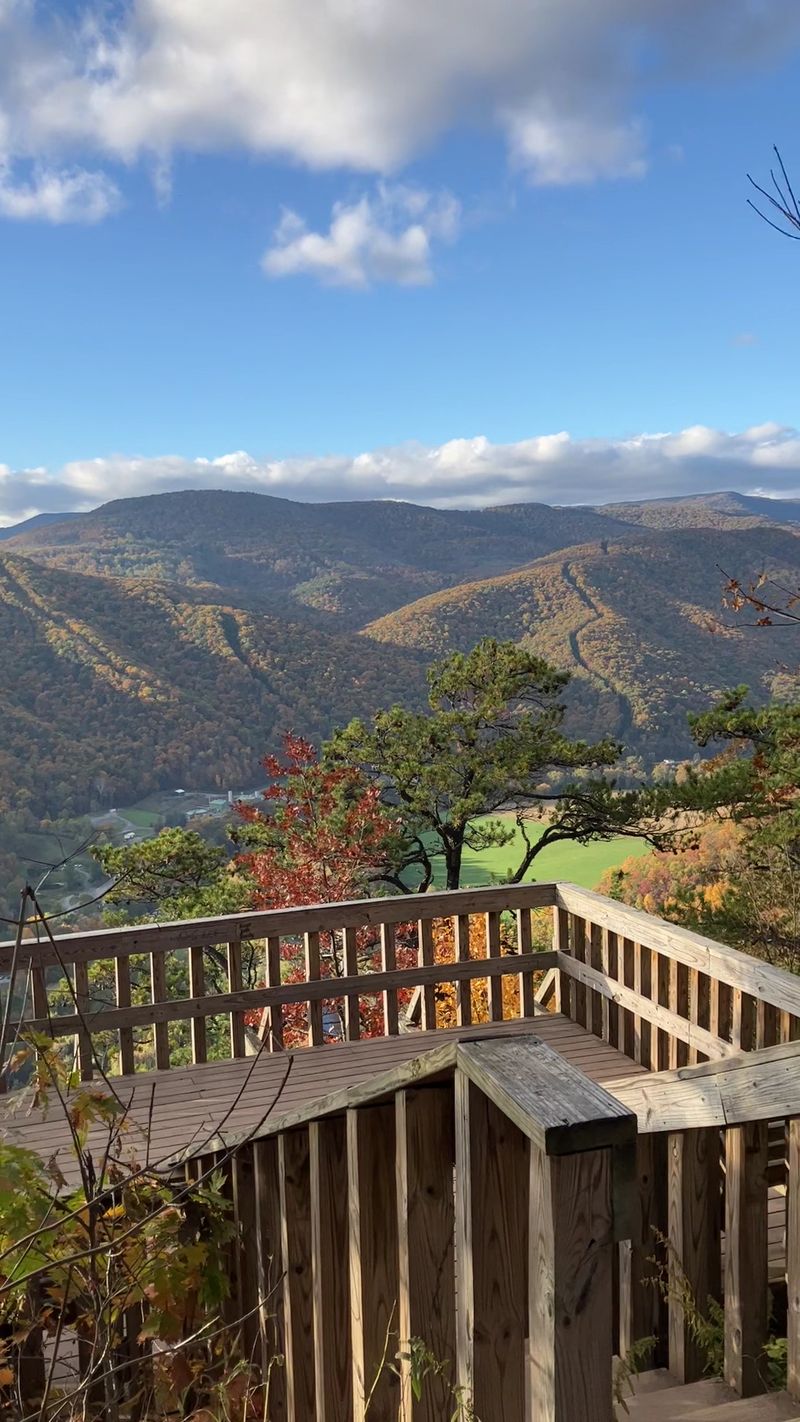
At the end waits an observation platform near the top of the rocks. The panoramic views stretch across the valley and the ridges beyond.
Leashed dogs are welcome too. Your pup will probably reach the top faster than you, and that’s fine.
Pack water, wear real hiking shoes, and start early on warm days. Signs warn about steep drops past the platform, so stay smart near the edges.
The view at the top is the whole reason for the sweat. It’s earned, and it shows.
Climbers Treat These Cliffs Like A Giant Vertical Playground
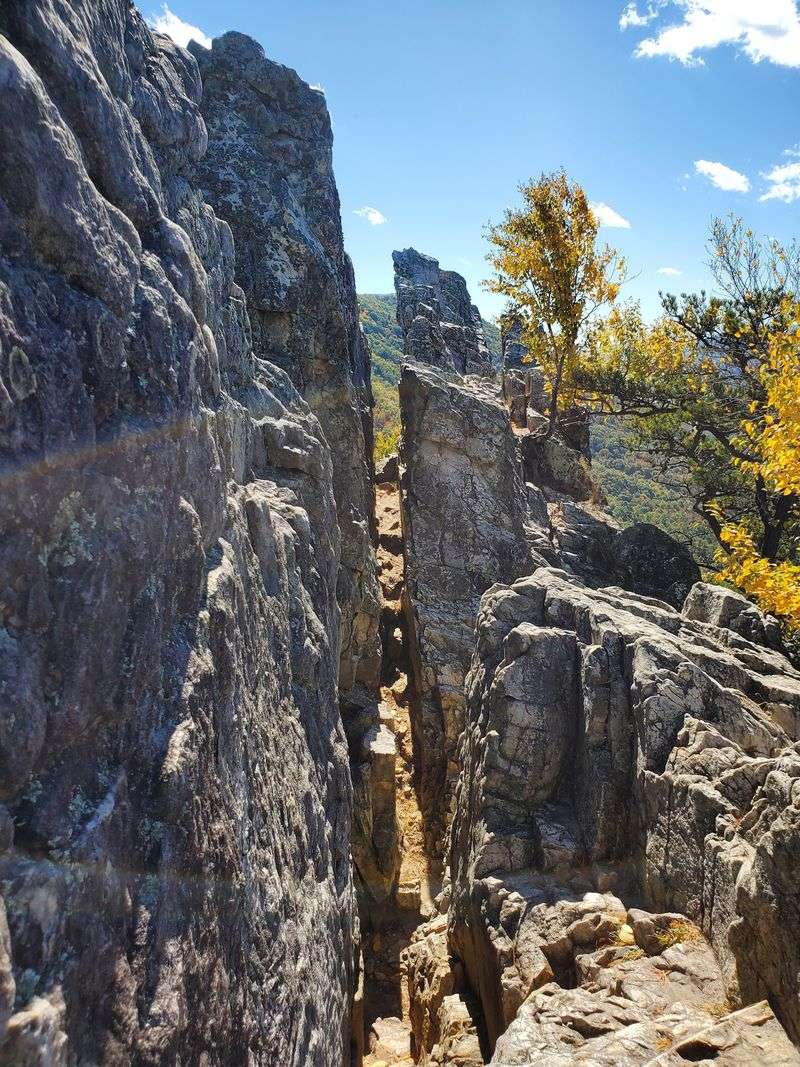
Ask an East Coast climber about Seneca Rocks and watch their eyes light up. This spot ranks among the most popular climbing areas in the region.
It’s famous for multi-pitch traditional climbing, often called trad. Climbers place their own gear in the rock as they go up.
The numbers are impressive. More than 500 climbing routes cover the formation, giving climbers plenty of challenges to choose from.
Grades run from an easy 5.0 all the way to an expert 5.14. Many classic routes fall in the 5.7 to 5.10 range, which is a sweet spot for lots of climbers.
Experienced climbers with their own equipment don’t need a permit. That makes planning a trip pretty simple.
New to climbing? Local guide services offer lessons, so you don’t have to figure out ropes alone.
The main season usually runs from March through November. Winter climbing is possible, though only for the brave and well-bundled.
Even if you never clip into a rope, the action is fun to watch. Climbers inching up the white rock make the cliff feel alive.
Just remember to bring binoculars. Your neck will thank you for the break.
Soldiers Once Trained Here For Mountains Across The Ocean
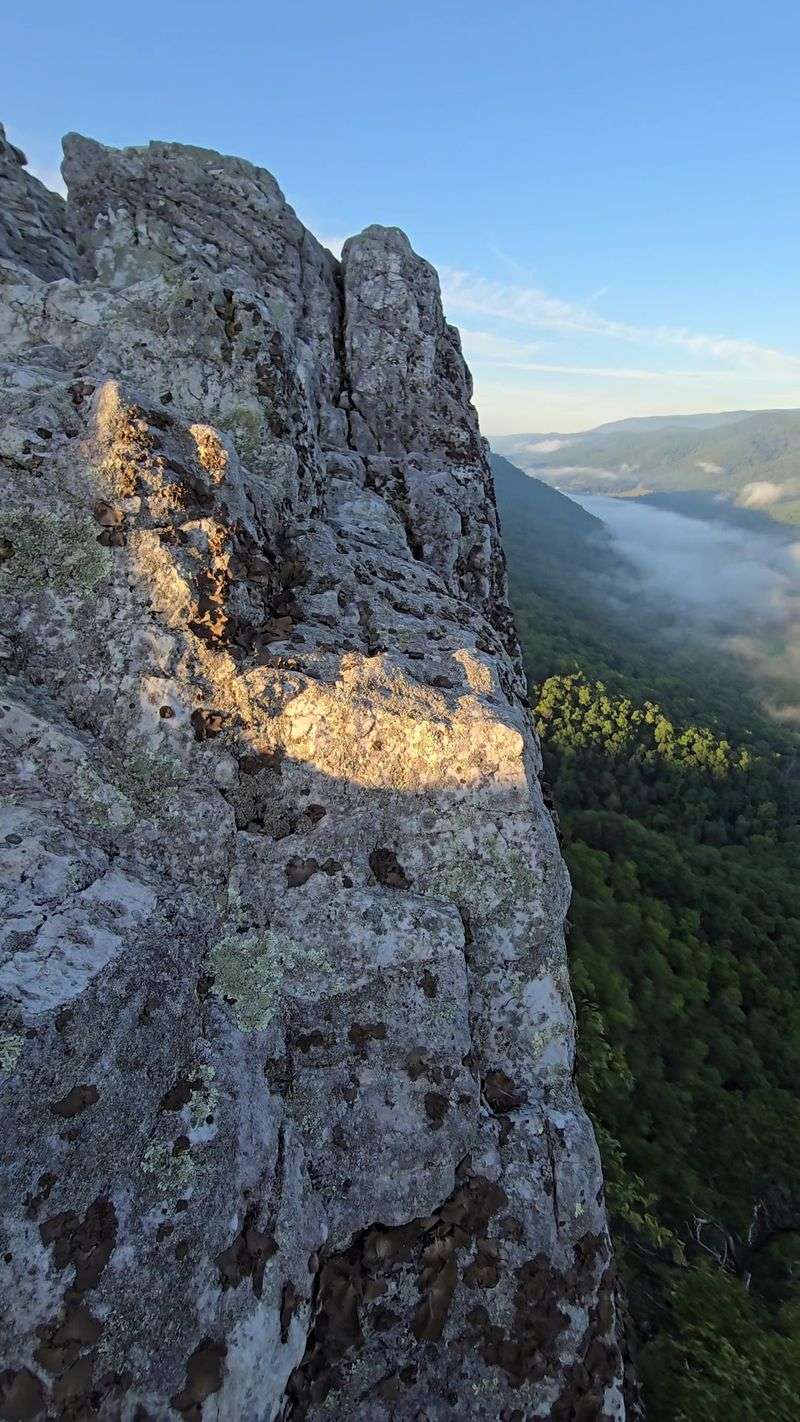
History hangs right on the cliff walls. From 1943 to 1944, the U.S. Army’s 10th Mountain Division trained at Seneca Rocks.
It was the Army’s only low-altitude assault climbing school. Troops learned skills they would later use in the mountains of Italy.
Thousands of pitons were hammered into the rock during that era. Many of those old metal spikes are still in place on climbing routes today.
Climbers sometimes pass right by them. It’s a quiet handshake with the past, eighty-plus feet off the ground.
The documented climbing story began in 1935, when Paul Bradt and Florence Perry made a roped descent of the North Peak.
Four years later, climbers completed the first recorded technical ascent of the South Peak and discovered an inscription dated 1908.
That means someone had reached the summit decades earlier. Yet those climbers found a surprise at the summit. Someone had carved an inscription dated 1908, so earlier visitors clearly made it up first.
Long before that, Indigenous peoples gathered here. The Seneca, Shawnee, Delaware, and Cherokee all knew this landmark well.
In the Seneca language, the rocks carry a name meaning Little people live there. That’s a fun thought to keep in mind as you look up at the crags.
Every crack in this stone seems to hold a story worth hearing.
Start Smart At The Discovery Center Before Hitting The Trail
Good trips begin with a little homework, and this place makes it painless.
The Seneca Rocks Discovery Center sits right at the base of the formation.
You’ll find it at 13 Roy Gap Road, Seneca Rocks, WV 26884. It’s near the meeting point of U.S. Route 33 and West Virginia Routes 28 and 55.
Inside, exhibits cover geology and climbing history. It’s a quick way to understand what you’re about to hike.
Kids get a bonus. A small indoor climbing wall lets them test their grip before staring up at the real thing.
There’s also a small gift shop. A souvenir might help you prove you actually made it up that trail.
The center runs seasonally, generally April through October. Hours are usually Thursday through Monday, 9:30 AM to 5:00 PM.
The building has its own comeback story. The original center opened in 1978, then suffered a flood in 1985 and a fire in 1992.
Today’s version was finished in fall 1998. It stands as proof that stubborn things do well around here.
An 1839 Farmhouse Adds Old-Fashioned Charm To The Visit
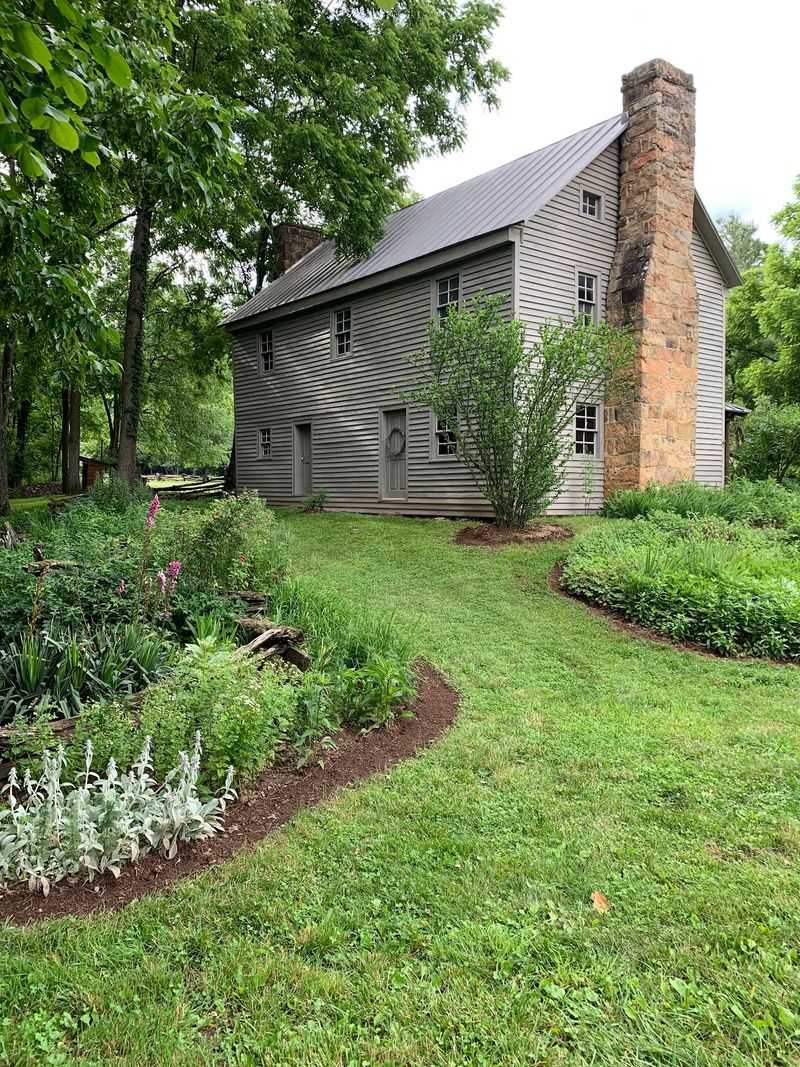
Jacob Sites picked one heck of a backyard view. He started his homestead near the rocks back in 1839.
The Sites Homestead stands close to the Discovery Center. That makes it an easy add-on before or after your hike.
About thirty years after the homestead began, the family expanded it. The result was a two-story farmhouse that’s still standing today.
The historic farmhouse welcomes visitors during select opening times, with exhibits offering a glimpse into how mountain families lived in the 19th century. Check current access and tour availability before your visit.
Think about daily life back then. Every chore happened under the shadow of that giant stone fin.
The contrast is fun for kids and adults alike. One moment you’re hearing about ancient seas, the next you’re looking at a family home.
History buffs will enjoy the slower pace here. It’s a calm stop that balances out the leg-burning trail.
Pair it with the Discovery Center exhibits for a fuller picture. Together, they tell the story of land, rock, and people.
A quick visit adds depth to your trip. Plus, it gives tired hikers a perfect excuse to stroll instead of climb.
Rocks This Old Make Dinosaurs Look Like Newcomers
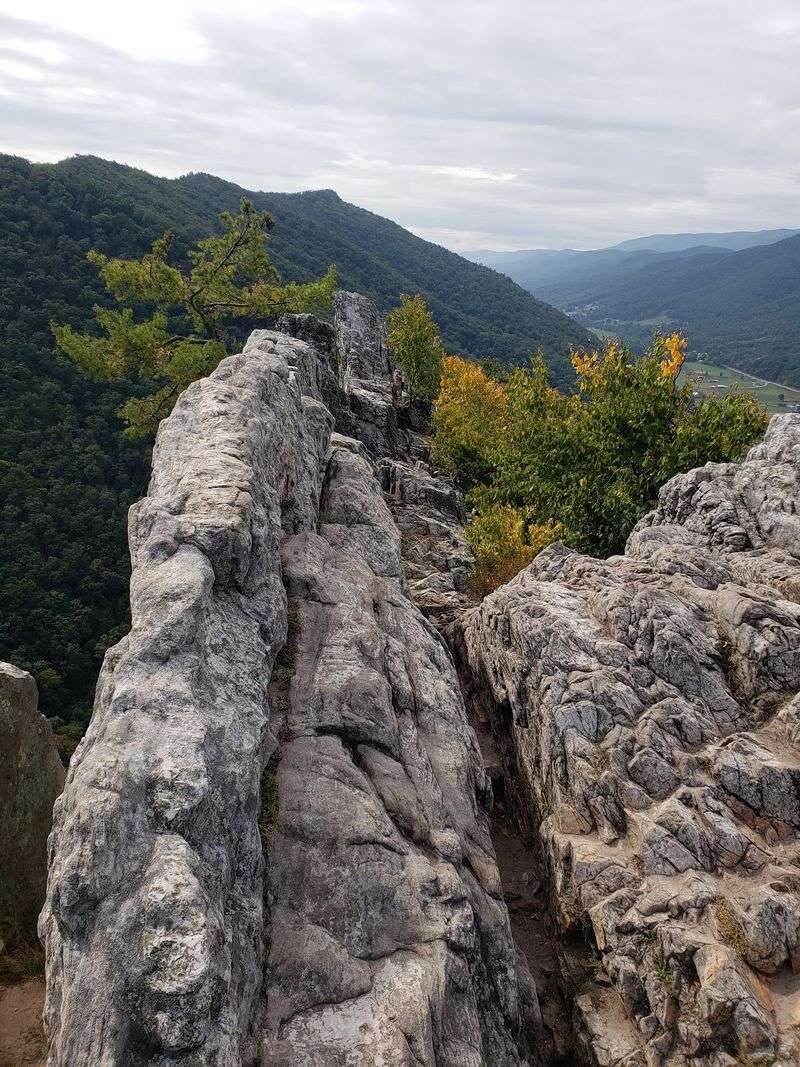
About 425 million years ago, this area sat under an ancient sea. Sand settled on the bottom during the Early Silurian Period.
That sand slowly hardened into Tuscarora Sandstone. Today it forms the bright white stone of Seneca Rocks.
Then the ground got restless. The rocks belong to the Wills Mountain Anticline, a ridge formed more than 200 million years ago.
Massive forces tilted the layers upward. Over time, softer rock wore away and left this tough fin standing tall.
Nature still edits its work here. A freestanding pinnacle called the Gendarme once stood in the notch between the North and South Peaks.
It fell on October 29, 1987. Older photos show it, which makes comparing them with today’s view pretty fascinating.
Look closely at the rock surface during your hike. The layers and texture hint at that old seabed story.
Kids especially love the idea of beach sand turning into a mountain. It’s a science lesson disguised as a field trip.
The Discovery Center explains the geology even more. Read up first, and the cliffs suddenly make a lot more sense.
Falcons, Horses, And Picnic Grills Round Out A Full Day
Keep an eye on the sky. Peregrine falcons nest around the rocks, part of a reintroduction effort that began in the 1980s.
Other residents are easier to spot. Chipmunks, white-tailed deer, and cottontail rabbits all call this area home.
Black snakes live here too. Give them space and they’ll happily ignore you.
Not into hiking on your own two feet? Yokum’s Stables offers seasonal horseback rides, usually from April to mid-November.
Those rides include a stop at the observation deck on Seneca Rocks. Letting a horse handle the climb sounds like a genius plan.
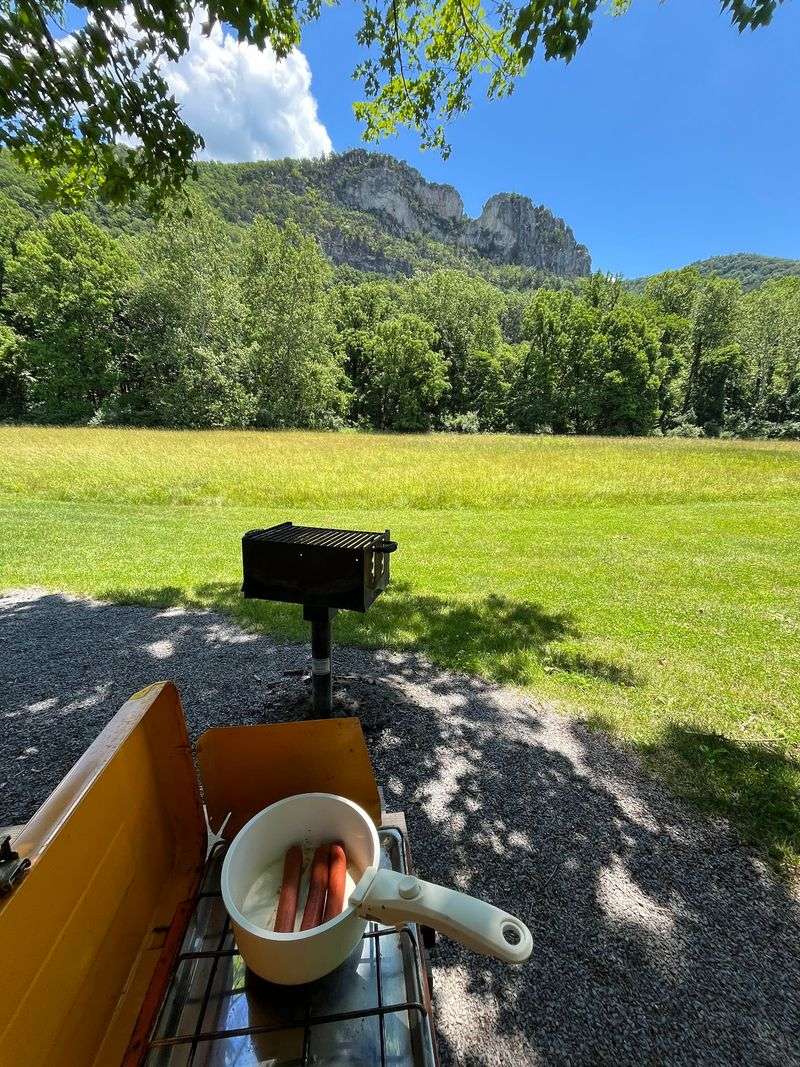
Hungry after all that fresh air? Picnic areas offer tables and charcoal grills for public use.
Bring your own food and plan a cookout with a cliff view. Few lunch spots in West Virginia can top that backdrop.
Pack a cooler, some charcoal, and a trash bag. Leaving the area clean keeps it great for everyone who follows.
Between wildlife, horses, and grilling, the day fills up fast. You might need more time than you planned.