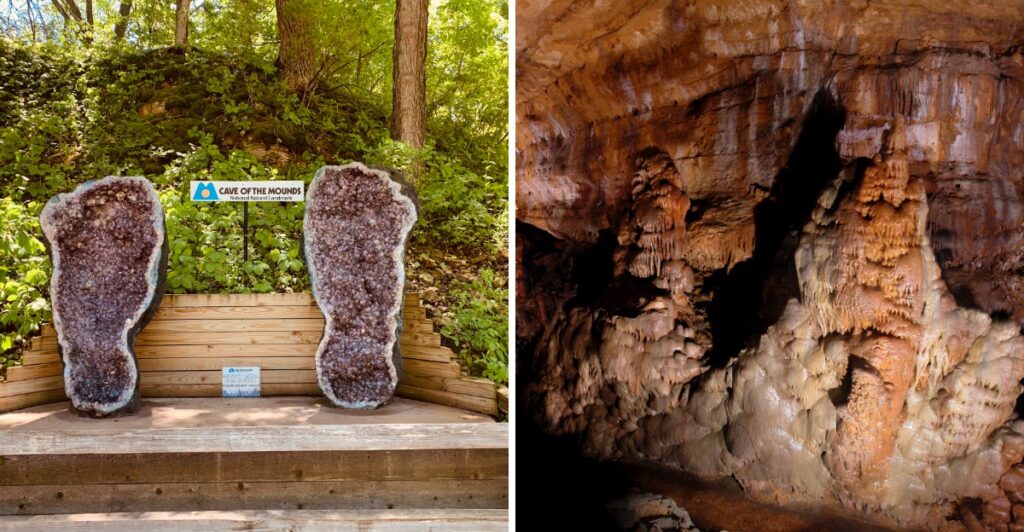
A quarry blast in 1939 cracked open a hillside and revealed a cave nobody knew was there. Workers were after limestone. They found a glittering underground room instead.
The formations inside come in colors that seem almost painted on. Some are tiny, hollow tubes called soda straws.
Others ripple like strips of bacon, which is honestly the most delicious name a rock has ever earned.
You follow paved, lighted paths through rooms that stay a cool 50 degrees all year. That makes it a summer escape and a winter one too.
I love that the weather down there never changes its mind.
This spot sits in southern Wisconsin. The federal government has recognized its exceptional geological significance by designating it a National Natural Landmark.
Consider it the one basement in Wisconsin you’ll actually want to hang out in.
A Lucky Blast Uncovered A Cave Nobody Expected
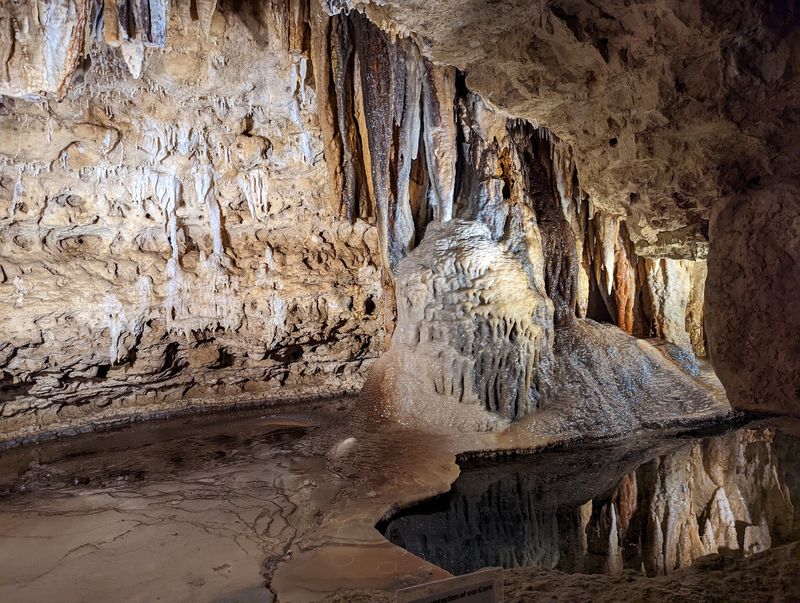
August 4, 1939, started like any other workday on the Brigham Farm. Quarry workers set off a blast, and the rock opened onto a hidden cavern.
That accident gave the world Cave of the Mounds. Nobody planned it, and nobody had a clue the hill held such a secret.
The story goes back even further. Ebenezer Brigham founded the Blue Mounds settlement in 1828 and owned the land long before the blast.
The cave opened to visitors in May 1940, over Memorial Day weekend. That means people have explored it for more than 80 years.
Geology works on a much bigger clock. The limestone formed roughly 488 million years ago during the Ordovician Period.
The cave itself began forming about 1 to 1.5 million years ago. Water slowly carved the rock, one drip at a time.
Here is a fun way to think about it. The rock is ancient, the cave is younger, and your visit is the newest chapter.
Signs around the property share the discovery story in more detail. Take a minute to read them before your tour starts.
Colors Down Here Look Like Someone Raided A Paint Box
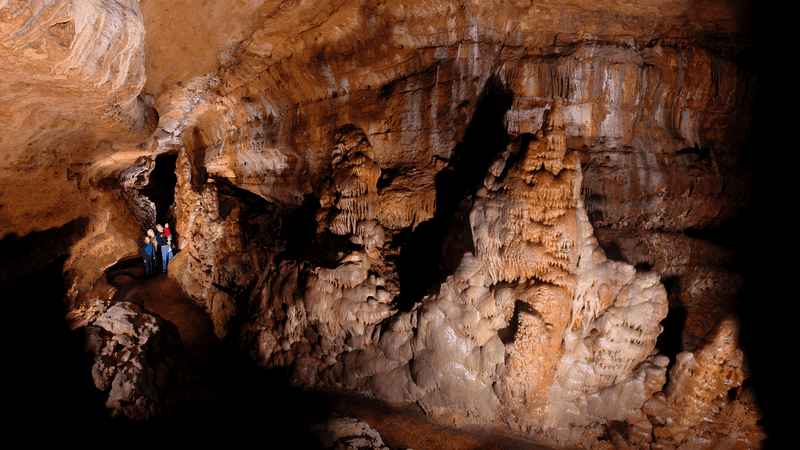
Nicknames matter, and this cave has a great one. Cave of the Mounds is often called the jewel box of America’s caves.
The title fits the formations, known as speleothems. You’ll spot stalactites hanging from above and stalagmites rising from the floor.
Columns form when those two finally meet in the middle. Helictites twist in odd directions, almost like they ignored the rules of gravity.
Curtains drape along the walls in thin, wavy sheets. Lily pads and oolites add even more variety to the lineup.
Guides share playful names for some shapes. Thin, hollow young stalactites are called soda straws, and rippled formations earn the name cave bacon.
Breakfast jokes aside, the colors steal the show. Different minerals tint the rock, so the walls shift in shades from room to room.
Remember one simple rule while you look. Touching the formations is not allowed, since skin oils can harm their growth.
Patience built every inch of this place. Admire it with your eyes and your camera, and let the formations keep growing for the next visitors.
Uncle Sam Officially Put This Cave On The VIP List
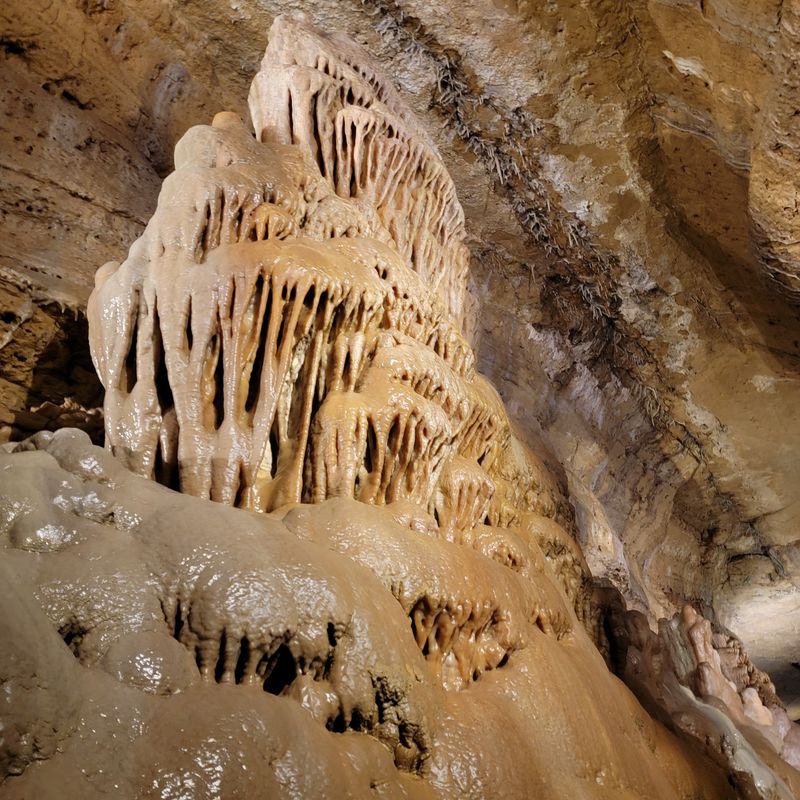
Plenty of caves are pretty. Only a select few earn National Natural Landmark status from the federal government.
Cave of the Mounds joined that club in 1988. The U.S. Department of the Interior and National Park Service gave it the designation.
Why the honor? The cave is known as the significant cave of the upper Midwest because of its exceptional beauty and formations.
The landmark program recognizes places that show off important natural features. This Wisconsin cave stands out in a region famous more for lakes than caverns.
Science keeps the story moving forward. A research partnership for the cave began in 2014, so experts continue to learn from it.
Ancient life left clues here too. Marine fossils show up in the rock, a reminder that a sea once covered this land.
That detail blows my mind a little. You can stand in southern Wisconsin and look at traces of ocean creatures.
Ask your guide about the fossils during the tour. Spotting them adds a treasure-hunt feeling to the walk.
Your Hoodie Will Earn Its Keep On This Tour
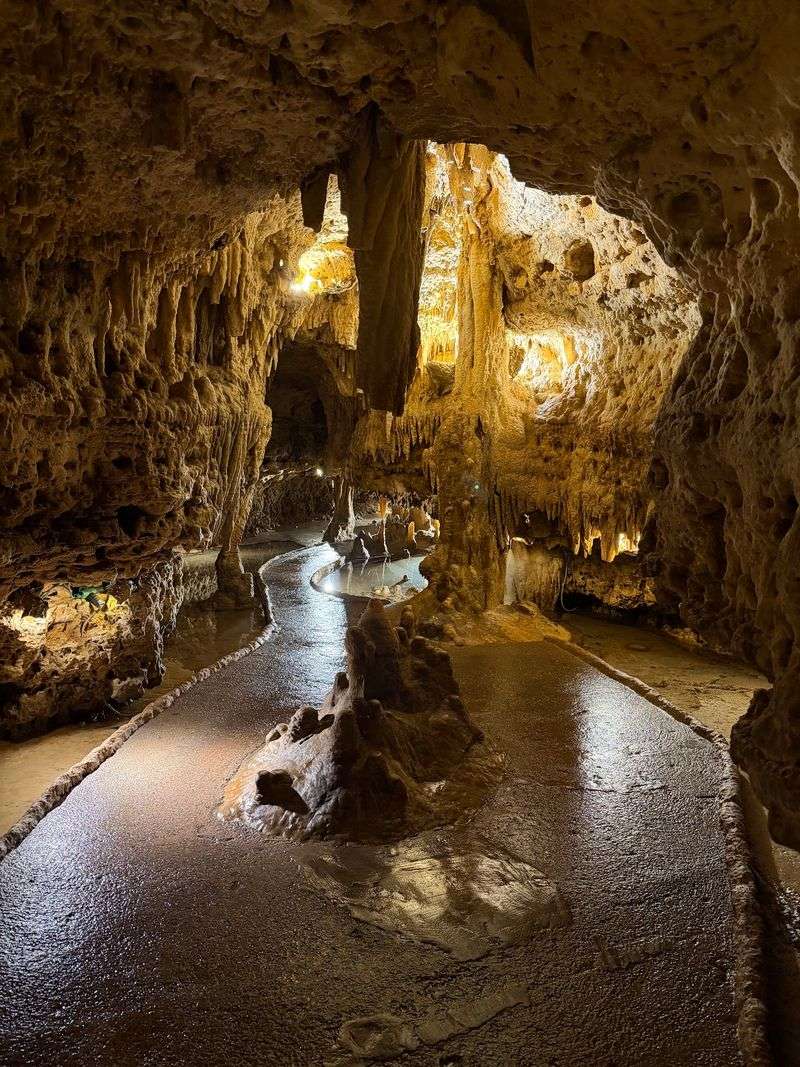
Fifty degrees. That’s the cave temperature every single day, whether it’s July or January.
Bring a sweatshirt in summer and enjoy the cozy break in winter. Shoes that handle damp surfaces are a smart call too, since the cave drips.
Tours usually last 45 minutes to an hour. You cover about 0.6 miles on paved, lighted walkways.
Guided tours run all year long. Museum-style tours happen during summer and on select weekends, letting you move at a slower pace.
Here’s a perk worth knowing. On museum-style tours, you can even go through the cave twice.
A few spots get tight, and taller folks may need to duck. An alternative route helps anyone who prefers to skip the snug sections.
Families should plan ahead. Strollers and back carriers aren’t a fit for the narrow passages.
Black lights are available to rent, and certain minerals glow under them. Kids tend to treat that like a superpower, and honestly, adults do too.
Sift, Crack, And Score Your Own Shiny Treasures
Gem hunting turns a cave visit into a full adventure. The Gemstone and Fossil Mine lets you buy a bag or bucket of mining rough.
Pour it into the sluice and watch the water wash the dirt away. Bright stones and fossils start to pop out of the mix.
Patience pays off at the screen. Every swirl reveals a little more, and the reveal never gets old.
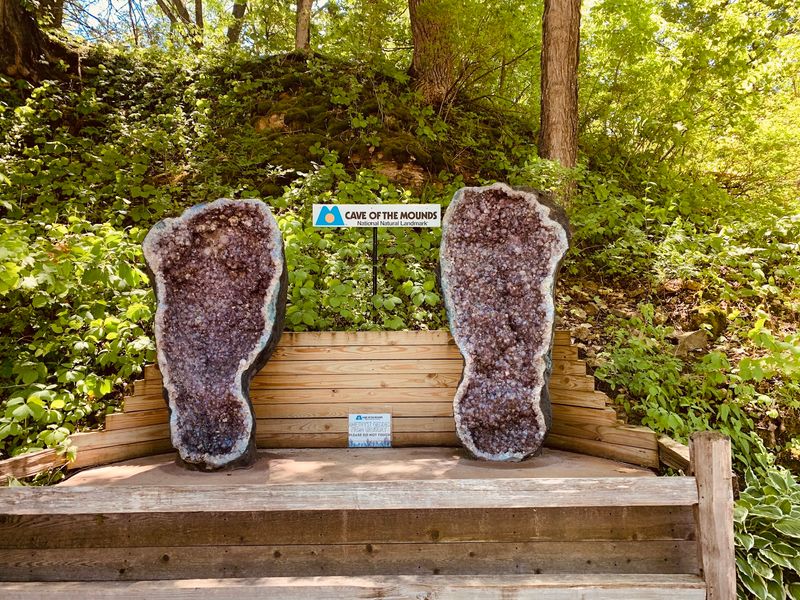
Geode cracking adds a second dose of surprise. A plain, lumpy rock splits open to show what’s waiting inside.
It’s a lot like opening a gift you can’t shake first. Some geodes sparkle, and every one is different.
The sluice is wheelchair accessible, which helps more people join in. That makes it a fun stop for mixed groups.
Plan some time for this part. Kids may want a second bag, so budget your afternoon accordingly.
Your finds also make better souvenirs than a keychain. You get a story and a stone, all from one sunny stop above ground.
Rock Lovers Should Block Out Extra Shop Time
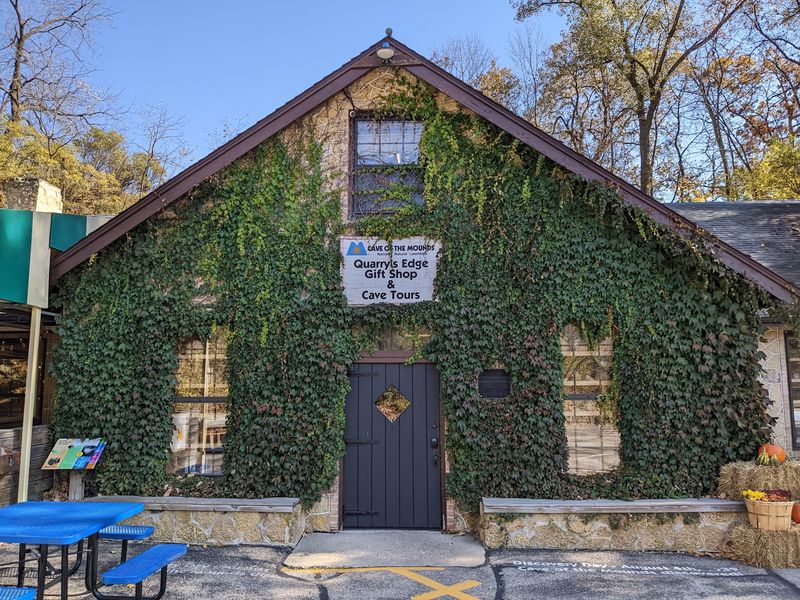
Built in 1941, the Rock and Fossil Gift Shop sits right above the cave entrance. Tours start there, so you’ll pass through either way.
Shelves hold specimens from around the world. Crystals, fossils, and polished stones fill the space with plenty to browse.
One detail is worth remembering. None of the items come from the cave itself, which keeps the formations protected.
The Visitor Center adds another stop. It first opened in 1979 and was renovated in June 2024.
Inside, you’ll find restrooms, a gift shop, and a seating area with scenic views. It’s a comfortable spot to wait for your tour.
Free Wi-Fi is available near the Visitor Center and gift shop. Handy if you want to share photos right away.
Parking is plentiful, with room for buses and motorcoaches. Group trips and school outings fit easily.
My advice? Treat the shop as part of the visit, not an afterthought. Rock fans can easily lose track of time in there.
Butterflies And Rock Gardens Make Waiting Way Too Easy

Late summer brings a bonus show. The Rain and Butterfly Garden gets especially vibrant as butterflies flutter through.
Wings flash bright against the blooms. It’s a cheerful contrast to the cool, quiet cave below.
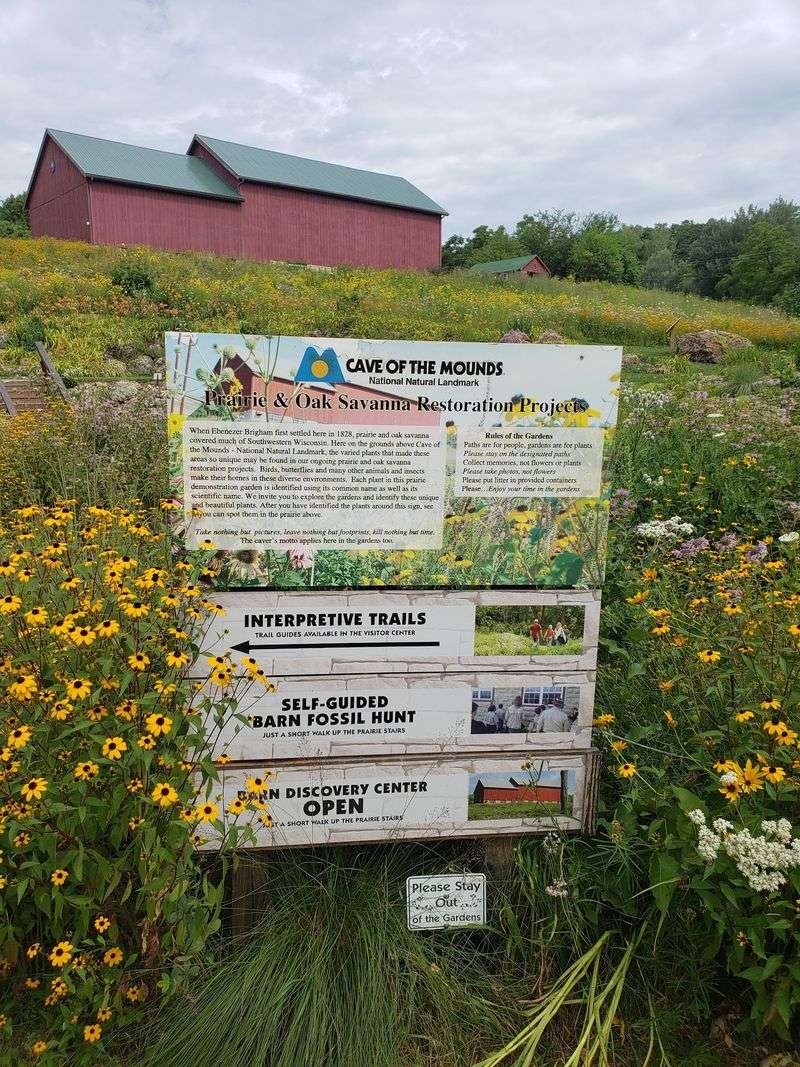
Rock gardens add texture to the grounds. Neatly kept lawns and prairie restoration areas fill in the rest.
Picnic areas sit throughout the property too. Pack a lunch and enjoy it outdoors before or after your tour.
That setup works great for families with busy kids. Little legs can stretch while grown-ups relax at a table.
The grounds are free to explore without cave admission, although some activities, such as gemstone mining, cost extra. That makes a longer stay feel like a real value.
Accessible trails connect to woodchip paths and grassy areas. Buildings are wheelchair accessible as well.
Think of the outdoor space as a second attraction. Many caves give you a tunnel and a parking lot, but this one hands you a garden party with butterflies on the guest list.
Plan Your Trip To Blue Mounds Any Season
Good news for planners. Cave of the Mounds stays open year-round, every day except Thanksgiving, Christmas Eve, and Christmas Day.
Hours generally run from 9 AM to 5 PM. The last tour usually departs at 4 PM, so don’t cut it close.
You’ll find it at 2975 Cave of the Mounds Rd, Blue Mounds, WI 53517. The drive leads through the rolling hills west of Madison.
Weekends and busy times can fill up fast. Buying tickets ahead helps, especially for larger groups.
Special events keep the calendar interesting. Past offerings include a Guided Fossil Tour and Cave of Lights.
Discovery Days in early August is another highlight. It’s often the chance to peek inside the Historic Brigham Barn.
Groups can book educational programs, too. Private event rentals are also available.
Whatever month you pick, the cave stays the same comfy 50 degrees. Wisconsin weather may change by the hour, but the formations below wait patiently for your visit.