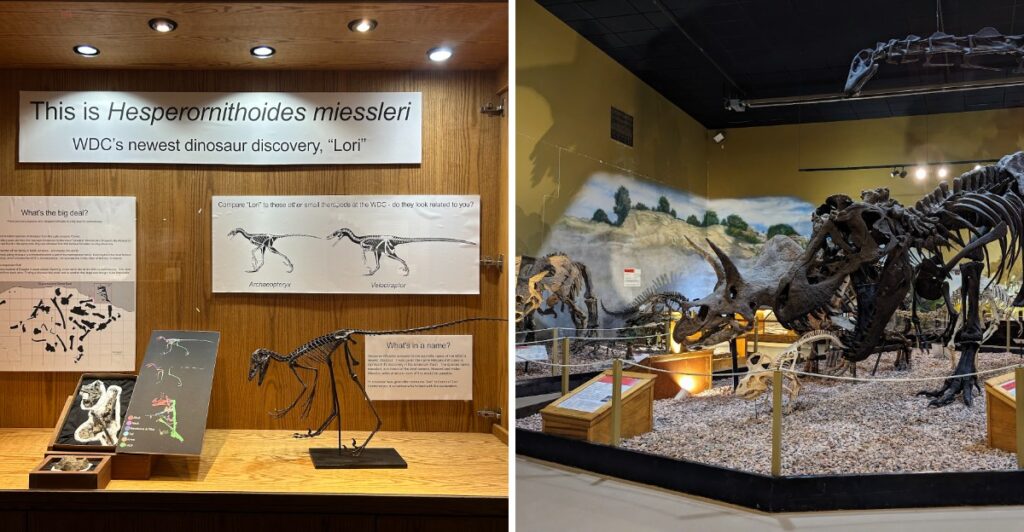
A real Archaeopteryx fossil lives in a small Wyoming town. Only one other authentic specimen is on display outside Europe, so this little town has serious prehistoric star power.
That feathered fossil links dinosaurs to birds. It also ranks among the most complete ever found.
Nearby, a 106-foot Supersaurus stretches across the museum floor. It clearly thinks it owns the place.
The real dig sites sit a short ride from the front door. Digging up actual bones before lunch beats any morning meeting.
Staff clean fresh fossils behind a window you can watch. Each summer, the search continues in the nearby hills.
One fossil put this town on the map, and the next big headline might still be waiting in the dirt just outside.
A Feathered Superstar Waits Behind The Glass
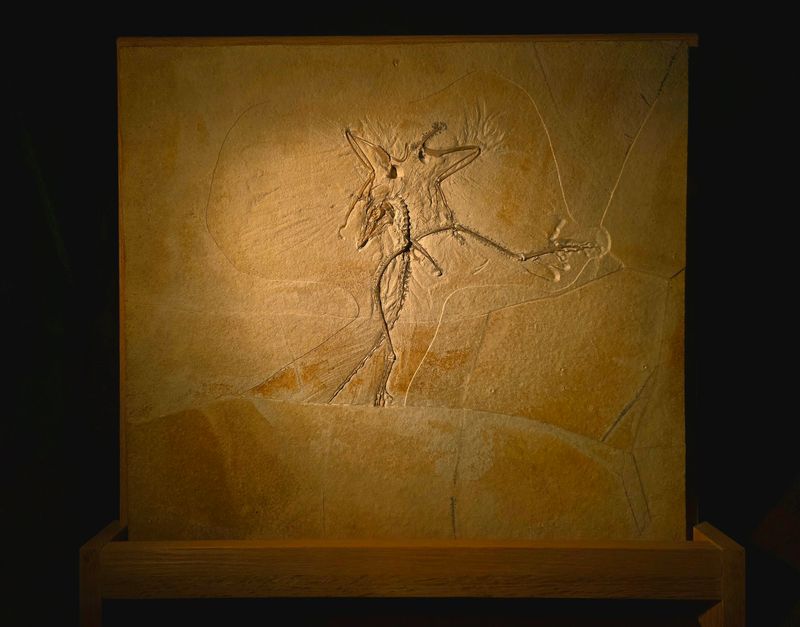
Birds have a very old family secret, and the Wyoming Dinosaur Center keeps one of the best clues. It’s called the Thermopolis Specimen, a real Archaeopteryx fossil.
The name means ancient wing, which feels fitting. This creature had feathers like a bird and teeth and claws like a dinosaur.
The specimen was found in Germany, where nearly all known Archaeopteryx fossils come from. It’s one of only two real ones on display outside of Europe.
Completeness is what makes it so special. Scientists rank it among the finest Archaeopteryx fossils ever unearthed anywhere on the planet.
Why does that matter for your visit? Most museums show a cast or a photo of this animal, and that’s it.
Here, you can stand in front of the actual stone. The fine details pressed into the rock tell a story about how flight may have begun.
Give yourself a few quiet minutes at this case. Kids who love birds might suddenly look at backyard sparrows a little differently.
Bring a curious question or two for staff if they’re around. It’s a small fossil with a very big reputation, and it earns every bit of it.
Life On Earth Gets A Speed Run Before The Big Bones Arrive
Dinosaurs don’t show up first here, and that’s on purpose. The museum’s Walk Thru Time exhibit starts way back with tiny single-celled life.
From there, the path moves forward in order. You’ll pass the rise of arthropods, early fish, and creatures that hint at life on land.
Watch for the Coelacanth along the way. It’s an ancient fish linked to the story of how vertebrates eventually crawled onto land.
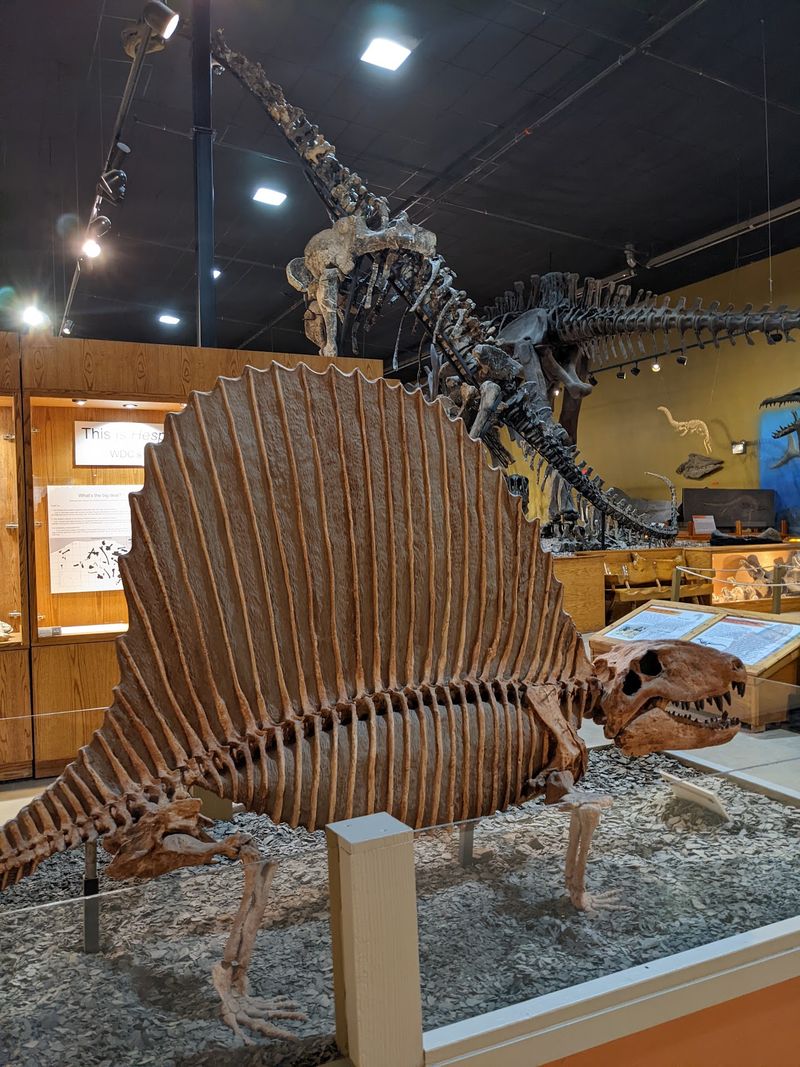
The Dimetrodon is another fun stop. It looks like a dinosaur with a big sail on its back, but it isn’t one.
That’s a great trivia win for kids. Ask them what it is before reading the sign, and watch them guess wrong.
All this happens across 12,000 square feet of exhibit space. The layout covers roughly the first three-quarters of life’s history before the dinosaur hall begins.
Don’t rush this part to reach the giants. The early chapters make the later skeletons feel like the payoff of a really long story.
Labels are clear and easy to follow. Even younger readers can track the timeline without feeling lost in big science words.
Jimbo Needs The Whole Room To Himself
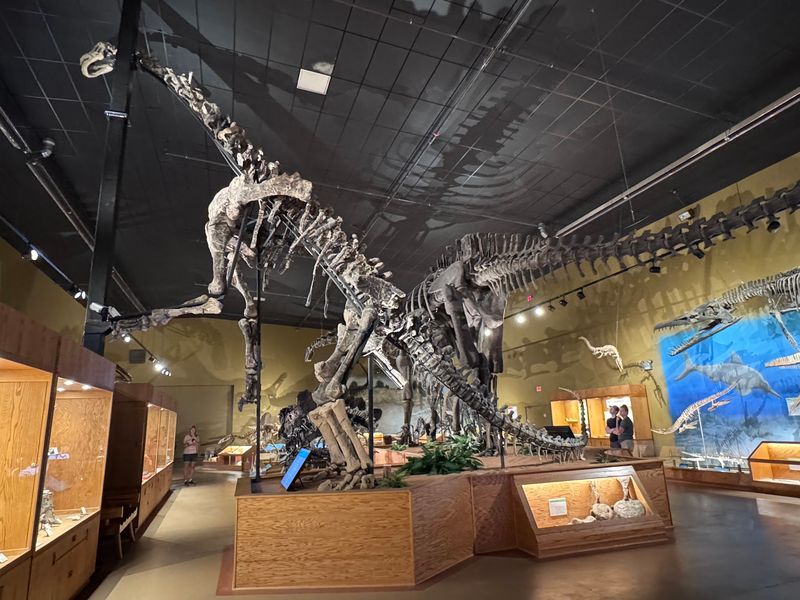
Measured from nose to tail, Jimbo runs about 106 feet. This Supersaurus stretches along the length of the Hall of Dinosaurs.
He was dug up near Douglas, Wyoming, which gives him serious home-state pride. He’s also one of the largest dinosaurs ever mounted for display.
Getting him into one photo is a fun challenge. Stand back as far as you can, and you still might clip the tail.
Jimbo isn’t alone in the hall. More than 70 mounted skeletons and hundreds of displays fill the space around him.
Plenty of these giants were long-necked plant eaters. Their sheer size can make grown adults stop talking for a second.
A smart trick is to walk the hall twice. Look up at the full skeletons first, then come back for the smaller details and signs.
Many mounts mix real bone with replica pieces. Labels show which parts are real, so you’re never guessing what you’re seeing.
Kids will likely want to measure themselves against a leg bone. Let them, because nothing explains scale quite like standing next to it.
Stan Brings The Drama, And Stegosaurus Brings The Skin
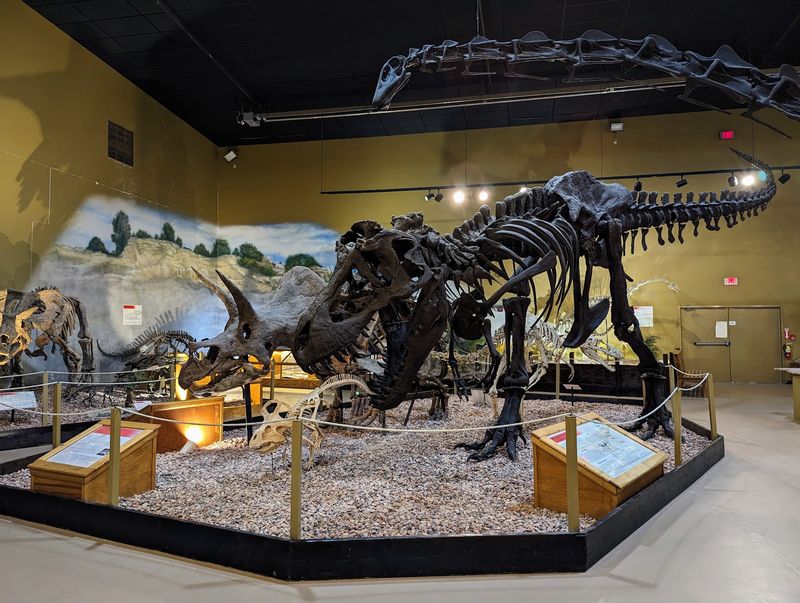
Every dinosaur hall needs a villain, and Stan fills the role nicely. This Tyrannosaurus rex measures about 35 feet long.
He’s shown in an action pose facing off against a Triceratops horridus. It’s the kind of scene that turns a quiet museum stop into a movie moment.
Look closely at the stance and the jaws. You can almost hear the sound effects your kids will add without being asked.
Nearby, a quieter treasure deserves just as much attention. The museum holds the largest Stegosaurus skin impression ever found.
Bones show shape, but skin shows texture. Seeing that pattern pressed into rock makes these animals feel less like cartoons and more like real creatures.
There’s also a nearly complete Allosaurus on display. That’s a big deal, since full skeletons of predators like this are tough to find.
Plan to bounce between these displays a few times. Each one shows a different side of dinosaur life, from hunting to simple survival.
Bring a phone with room for photos. Stan, in particular, seems to know exactly where the camera is.
Trade Your Sneakers For A Paleontologist Badge For A Day
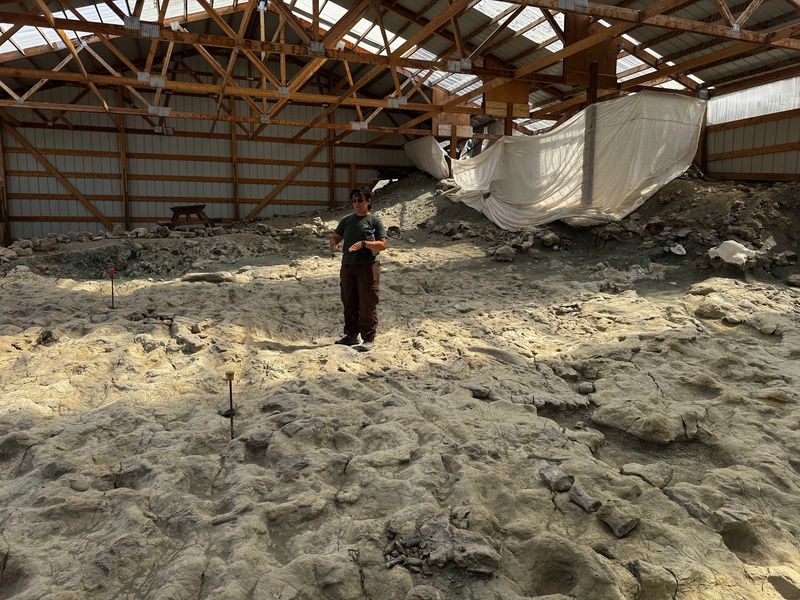
Most museum trips end at the gift shop. At the Wyoming Dinosaur Center, one program sends you straight into the dirt.
It’s called Dig for a Day, and the name is honest. You spend a full day at an active dig site working alongside experienced staff.
The day begins with a safety talk and a quick lesson on local geology. Then a tour vehicle carries you about ten minutes out to the excavation site.
Tools are provided, so leave the shovel in the garage. A sack lunch comes included too, which helps when your arms start feeling the work.
Finding a bone isn’t guaranteed, and that’s part of the thrill. Still, these sites have produced more than 14,000 bones over the years.
Most come from long-necked sauropods like Camarasaurus, Diplodocus, and Apatosaurus. Imagining one of those under your trowel is pretty motivating.
Fair warning, digging is real work in the Wyoming sun. Dress in layers, wear a hat, and pack sunscreen for the whole family.
Book ahead if this is the main reason for your trip. Programs like this are a big draw, and you don’t want to miss out.
Patience Pays Off Inside The Fossil Prep Lab
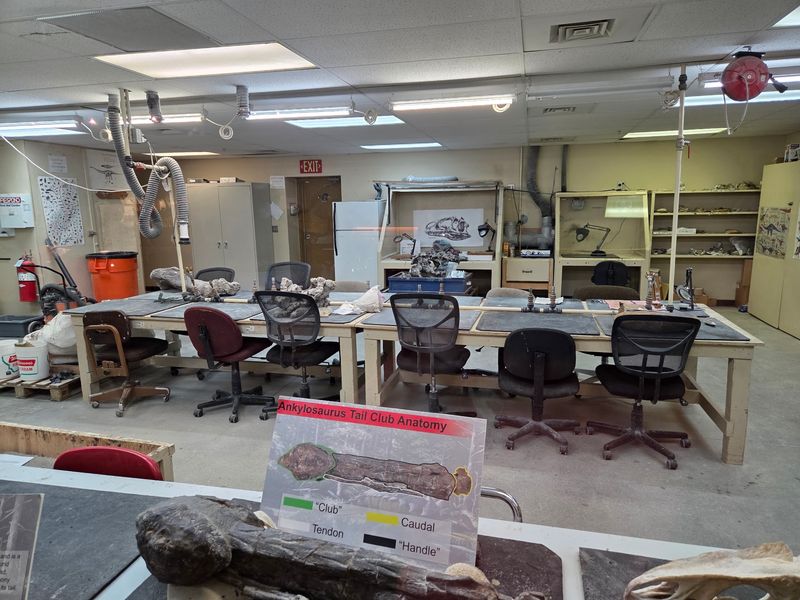
Digging up a bone is only step one. The slow, careful cleaning comes next, and the museum lets you see it happen.
Staff use micro jackhammers, air chisels, and tiny drills in the prep lab. Some tools remove rock almost one grain of sand at a time.
A viewing window lets regular visitors watch the work. It’s oddly relaxing, like a cooking show where the recipe takes months.
Want more than watching? The Paleo Prep program puts you inside the modern lab with expert guidance.
You’ll get your own fossil, often from a sauropod. Your job is to remove the matrix, which is the hard rock wrapped around the bone.
The lab fits up to 13 people at a time. That keeps the group small enough for real coaching instead of crowded elbows.
Here’s the coolest part. The bone you clean may be something no living person has ever seen before.
All ages can join, though anyone under 18 needs a parent or legal guardian. Closed-toe shoes are required, so skip the sandals that day.
Short On Time? The Quarry Still Has Room For You
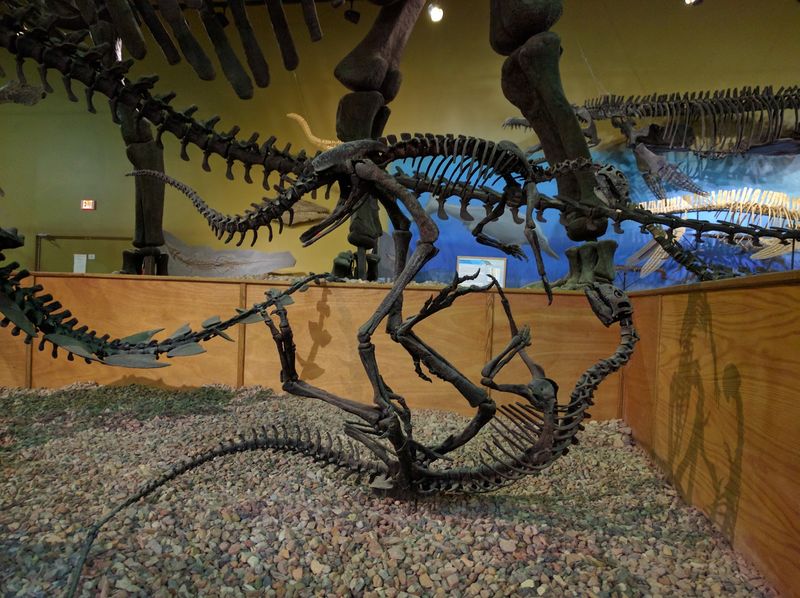
Not every schedule has room for a full day of digging. The Dino De-Tour fixes that problem in about an hour.
This guided trip heads to the Something Interesting quarry, usually called the SI quarry. It’s a scientifically important site just a short ride from the museum.
Guides explain the local geology and the history of discoveries made there. Sometimes you’ll even see staff and guests digging during your visit.
The tour is mostly shaded and not hard on the legs. That makes it a solid choice for grandparents and little ones alike.
Families with kids ages 6 to 13 have another option worth a look. The two-day Kids’ Dig covers prospecting, digging, prepping, molding, and casting fossils.
Every child heads home with a dinosaur cast. That beats a plastic toy for bragging rights at school in the fall.
The center also runs programs like Dinosaur Academy and Dino Expedition: Generations. Each one fits different ages and levels of interest.
Check the schedule early when planning a 2027 trip. Matching the right program to your crew makes the whole day click.
Plan Your Visit Around Easy Hours And A Snack Break
Good news for planners.
The museum opens from 10 a.m. to 5 p.m. from September 16 through May 15, then switches to 8 a.m. to 6 p.m. for the summer season.
The museum also closes on major holidays, including Thanksgiving, Christmas Eve, Christmas Day, New Year’s Day, and Easter Sunday.
You’ll find it at 110 Carter Ranch Rd, Thermopolis, WY 82443. It sits on the southern edge of the Big Horn Basin in Wyoming.
Founded in 1995, the center was built to house fossil finds from the surrounding hills. Its mission focuses on education, outreach, and research.
The gift shop sells fossils, gems, jewelry, books, toys, and learning materials. If you need a snack break, plan to grab something to eat nearby before continuing your dinosaur adventure.
That snack stop matters more than it sounds. Little paleontologists run out of energy fast after staring at giants.
A military discount on tickets is available too. It’s a nice perk for service members and their families.
Thermopolis is roughly an hour and a half from Cody. That makes the museum an easy add-on for a bigger Wyoming road trip.
Arrive near opening if you want a calm start. You can then save the afternoon for a dig tour or a soak nearby.