The famous parks may dominate postcards, but the strangest stories begin where the tour buses stop turning. Beyond the familiar overlooks, Utah reveals fossil beds split from ancient shale, abandoned settlements holding their breath, and desert artwork that seems to argue with the horizon.
These twelve stops are not filler between bigger attractions. They are the reason curious travelers come home with better stories.
One day might put a prehistoric creature in your hands, while the next leads through a pioneer museum where history feels less protected and more alive. Bring a cooler, charge your phone, and leave room in the schedule for roads that do not look important at first.
The lesser-known side of Utah rewards attention, especially when the landscape appears empty. Look closer, stay longer, and let each unexpected stop replace the version of the state you thought you already knew with something far more vivid entirely.
1. Explore Nancy Holt’s Sun Tunnels
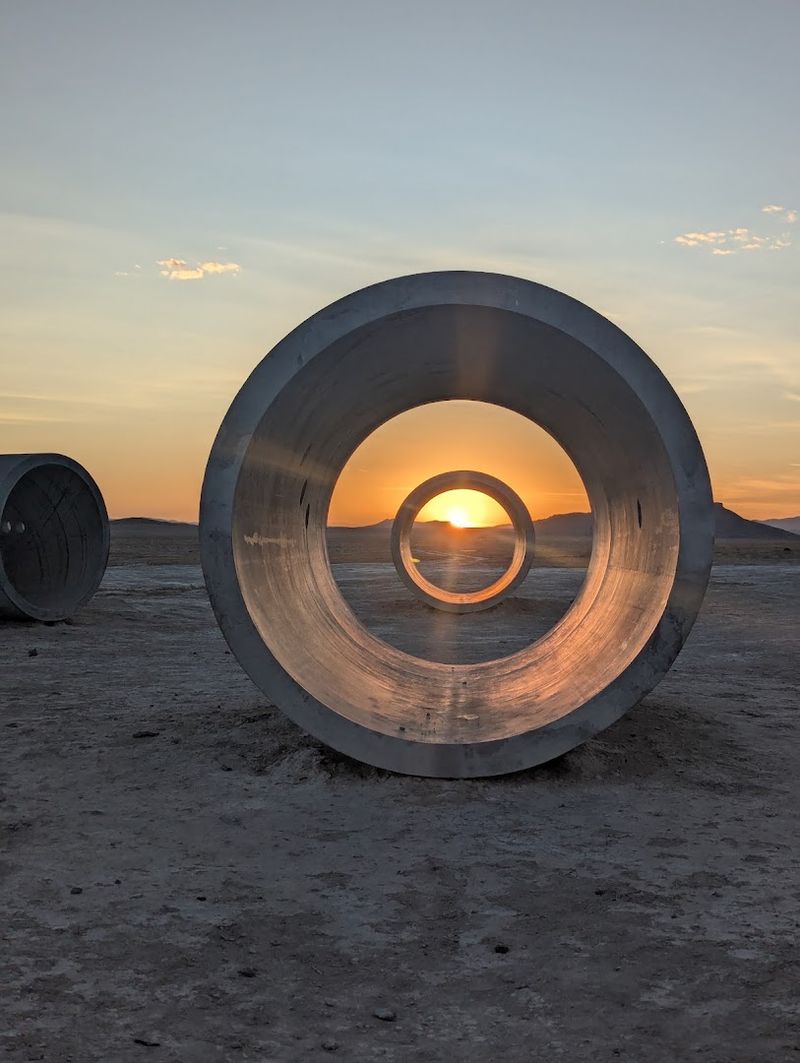
Standing in the middle of the Great Basin Desert feeling genuinely small is something most people never plan for, but Nancy Holt’s Sun Tunnels will do exactly that to you. Four enormous concrete cylinders, each about nine feet in diameter, are arranged in an X formation across a dry lakebed near Lucin, Utah.
They are precisely aligned to frame the rising and setting sun during the summer and winter solstices, turning the desert floor into a living calendar.
Getting here takes serious commitment. Follow UT-30, then cut south through Lucin using Grouse Creek Road and Little Pigeon Road.
There is no address, no staff, no water, no restrooms, and no cell service worth mentioning, so plan accordingly and bring everything you need.
Created in 1976, the Sun Tunnels are considered one of the most important works of land art in the American West. The holes drilled into each cylinder align with specific star constellations, so the experience changes depending on when you visit.
Arrive at sunrise if you want the full theatrical effect. Honestly, this is one of those places that makes you rethink what art is even supposed to do.
2. Dig For Trilobites At U-Dig Fossils
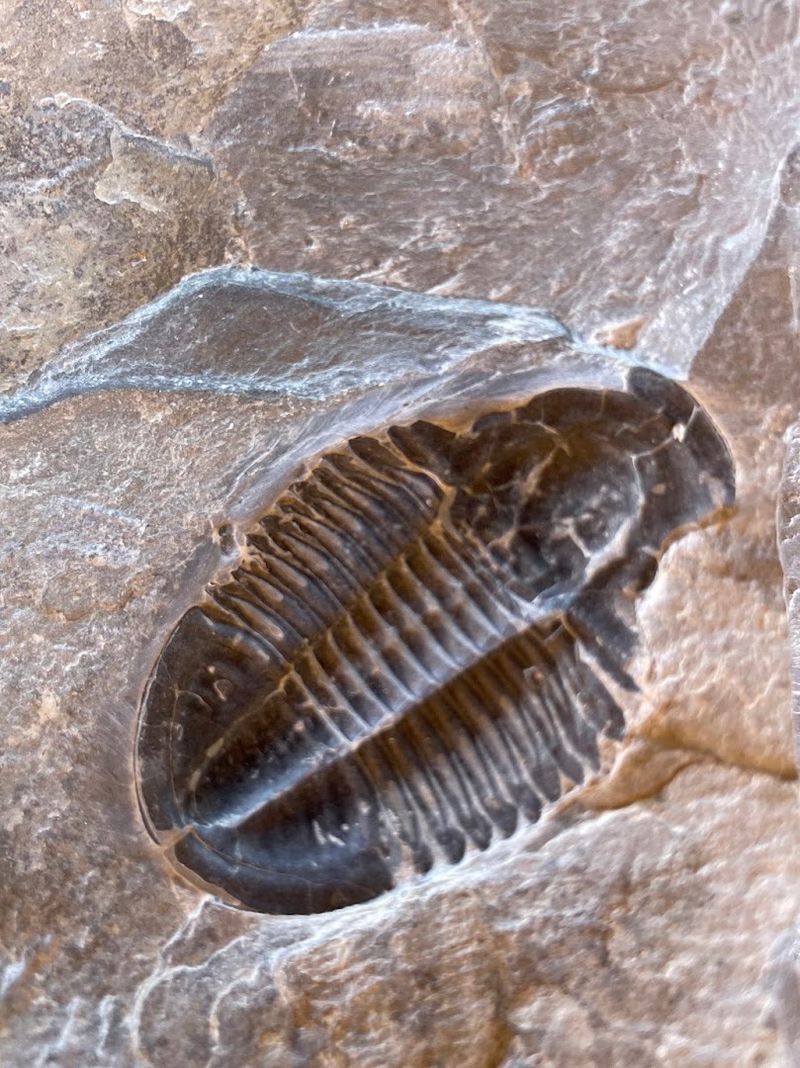
There is something deeply satisfying about cracking open a piece of shale and finding a creature that lived 500 million years ago staring back at you. U-Dig Fossils, located 52 miles west of Delta, Utah, sits inside the Wheeler Formation, one of the richest trilobite deposits on the planet.
Visitors receive tools, basic instruction, and permission to keep every fossil they find.
The quarry runs its 2026 season from March 30 through October 24, Monday through Saturday, with additional autumn dates on the schedule. The official coordinates are 39.354833, -113.278722, which you will want saved before you lose signal on Death Canyon Road.
Wear sturdy shoes, bring sunscreen, and pack more water than you think you need because the desert does not negotiate.
Kids absolutely lose their minds here in the best possible way, but adults tend to get just as hooked once that first fossil splits clean. The trilobites range from tiny fragments to surprisingly detailed complete specimens, and no two pieces of shale reveal the same thing.
It is one of those rare activities where the process is just as rewarding as the result. Budget a minimum of two hours if you want to do it properly.
3. Visit The Topaz Museum And Historic Camp Site
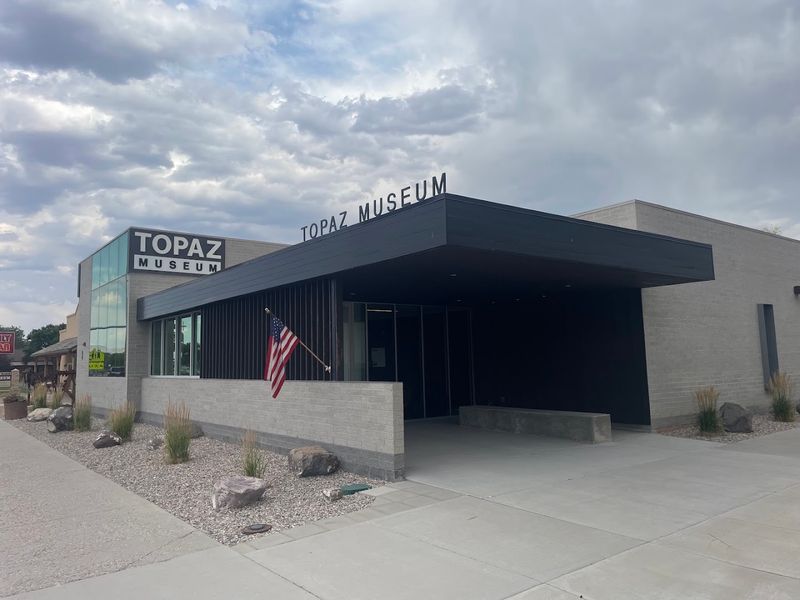
Few places in Utah carry this kind of emotional weight. The Topaz Museum at 55 W Main Street in Delta tells the story of more than 11,000 Japanese Americans who were forcibly relocated here during World War II, housed in a remote desert camp called Topaz.
The museum uses artifacts, personal photographs, reconstructed living quarters, and firsthand accounts to make sure that story is never forgotten.
The building itself is thoughtfully designed without being heavy-handed, and the curators have done exceptional work balancing historical documentation with human dignity. Spend at least an hour inside before making the 16-mile drive west to the preserved National Historic Landmark site where the actual camp once stood.
Walking that flat, windy ground adds a layer of understanding that no exhibit can fully replicate.
Delta is not a town most Utah road-trippers think to stop in, which makes this visit feel like discovering something genuinely important that the world has not quite caught up to yet. The museum is quietly powerful, the kind of place you think about for days afterward.
If you are traveling with teenagers, this is exactly the kind of history lesson that actually sticks. Admission is modest and the staff is remarkably knowledgeable.
4. Walk Through Utah’s Original Territorial Statehouse
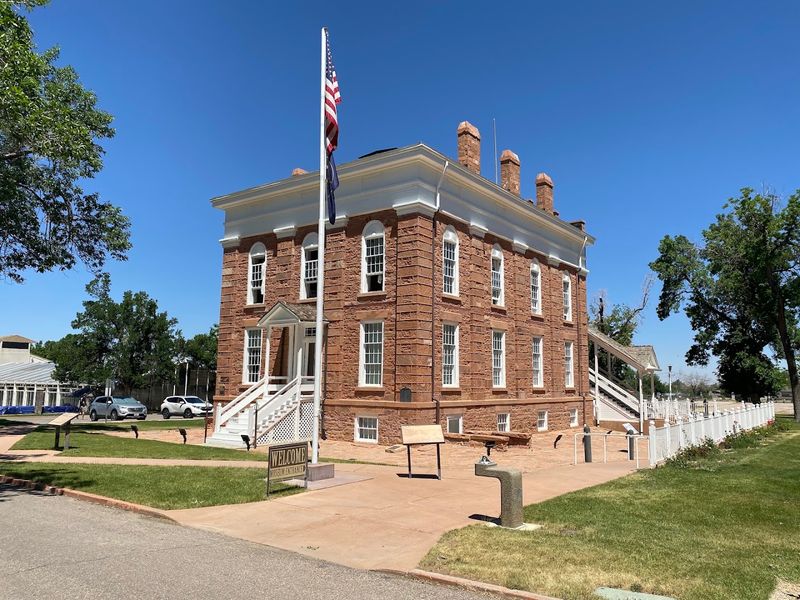
Built in 1855, the Utah Territorial Statehouse in Fillmore holds the title of the oldest surviving government building in the entire state. Located at 50 W Capitol Avenue, it was originally intended to be the centerpiece of Utah’s capital city before Salt Lake City claimed that role permanently.
What remains is a beautifully preserved sandstone structure that feels genuinely untouched by the modern tourism machine.
Inside, recreated offices and a historic printing room give you a real sense of how territorial government actually operated. There is also an early jail cell, pioneer artifacts, old schoolroom displays, and a collection of items that feel more like a neighbor’s attic than a formal museum, which is exactly what makes it charming.
The museum is open Monday through Saturday from 9 a.m. to 5 p.m.
Fillmore is a quick exit off I-15, making this an easy addition to any southern Utah road trip without adding more than an hour to your day. I have stopped here twice now and each time I find something I missed before.
The building itself deserves attention just as an architectural object, but the stories inside are what make the detour genuinely worthwhile. Do not skip the printing room.
5. Drive Through Nine Mile Canyon’s Open-Air Rock-Art Gallery
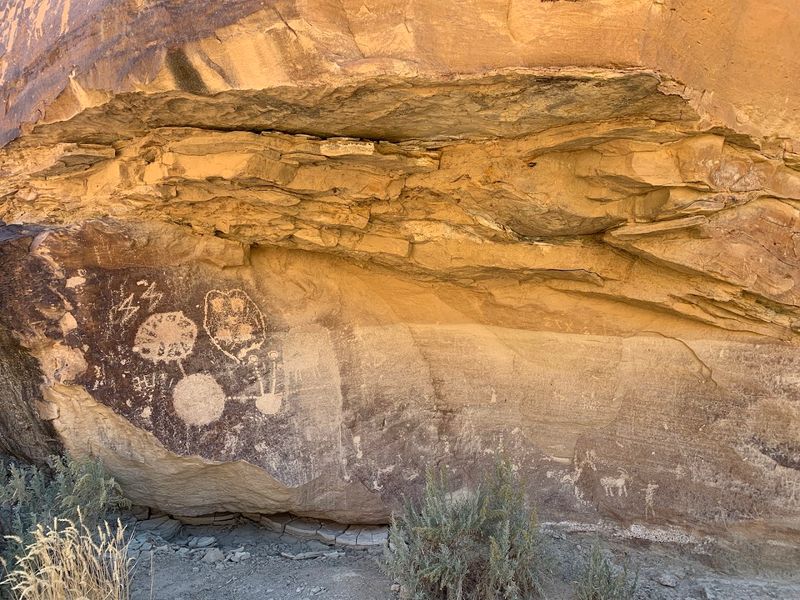
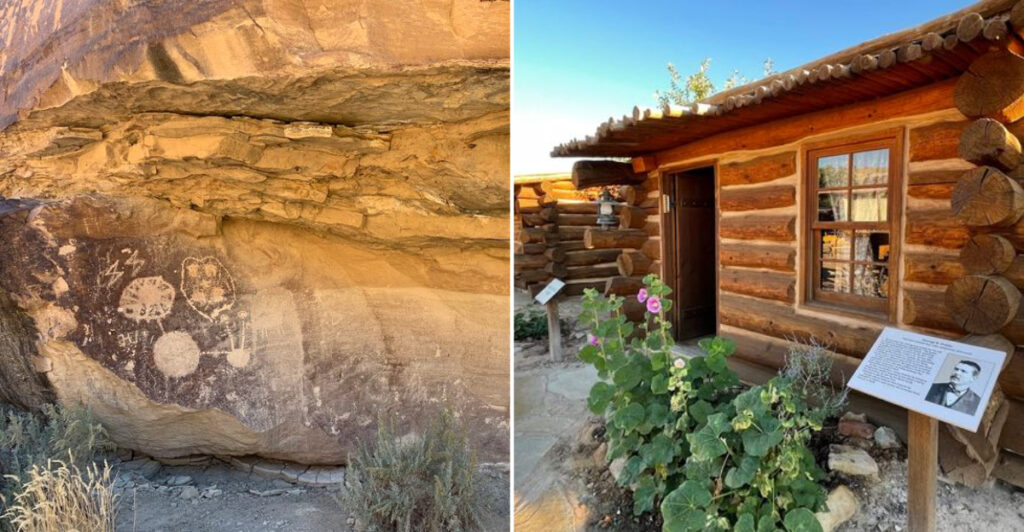
Calling Nine Mile Canyon an open-air gallery is not a stretch. Stretching 46 miles through a remote canyon accessed from Wellington, Utah, this BLM road passes more documented rock-art panels per mile than almost anywhere else in North America.
Fremont and Ute peoples left behind carvings and paintings that have survived centuries of wind and weather, and they are just sitting there along the roadside waiting to be noticed.
There is no single entrance fee or ticket booth, just a gravel road and a series of marked pullouts where you can step out and stand directly in front of imagery that is genuinely ancient. Former homesteads, historic inscriptions, and short hiking trails add texture to the drive.
Pick up the official BLM road map before you go, since some surrounding land is private and the signage can be inconsistent.
Plan for a full day if you want to do this properly, and bring a printed guide or downloaded offline map because cell service disappears quickly. Pack a picnic because there are no services along the route.
I found myself stopping far more often than I expected, pulled in by details I almost missed at driving speed. This canyon rewards slow travel in a way that few Utah roads can match.
6. Hike The McConkie Ranch Petroglyph Trails
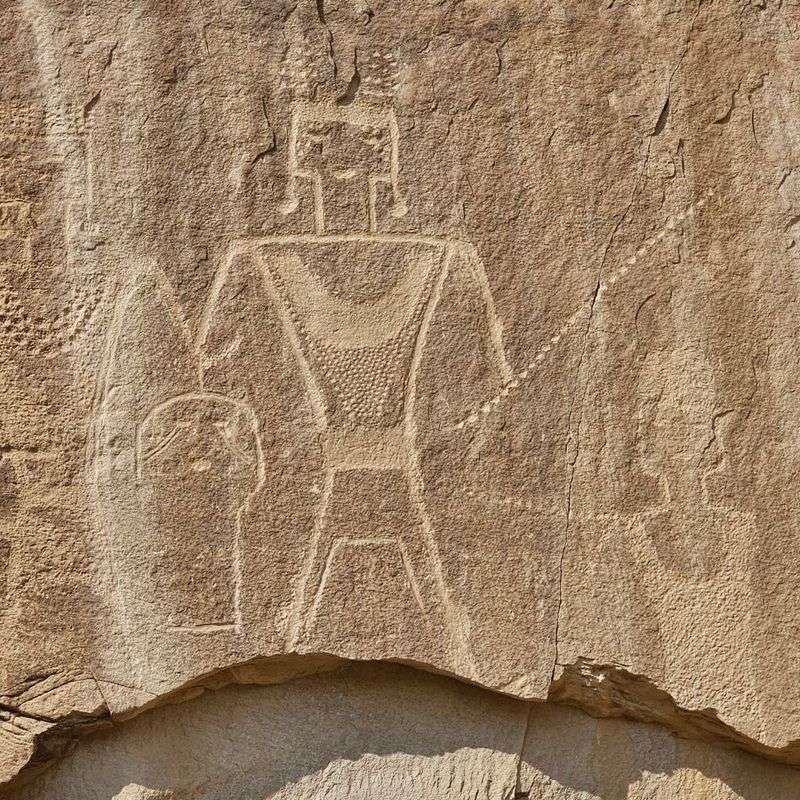
McConkie Ranch near Vernal, Utah, is one of those places that makes you lower your voice without anyone asking you to. Located at 6264 N McConkie Road, the property offers two hiking trails across private ranch land, both leading past some of the most detailed and well-preserved Fremont rock imagery anywhere in the state.
The large humanlike figures with elaborate headdresses are genuinely striking, and the Three Kings panel is one of the most photographed petroglyphs in all of Utah.
Public access is available from dawn to dusk between April 1 and November 30, with free designated parking at the trailhead. The trails are not technically difficult, but the terrain is uneven and the sun at elevation is relentless, so bring water and wear real shoes.
The shorter trail covers the most famous panels if your time is limited.
What separates McConkie from the more commercial petroglyph sites is the sheer density of imagery and the fact that you can get genuinely close to the rock faces. There are no crowds jostling for position, no velvet ropes, no gift shop.
Just sandstone cliffs, morning light, and art made by people who lived here long before anyone thought to put it on a map. Go early for the best lighting.
7. Follow Dinosaur Footprints At Red Fleet State Park
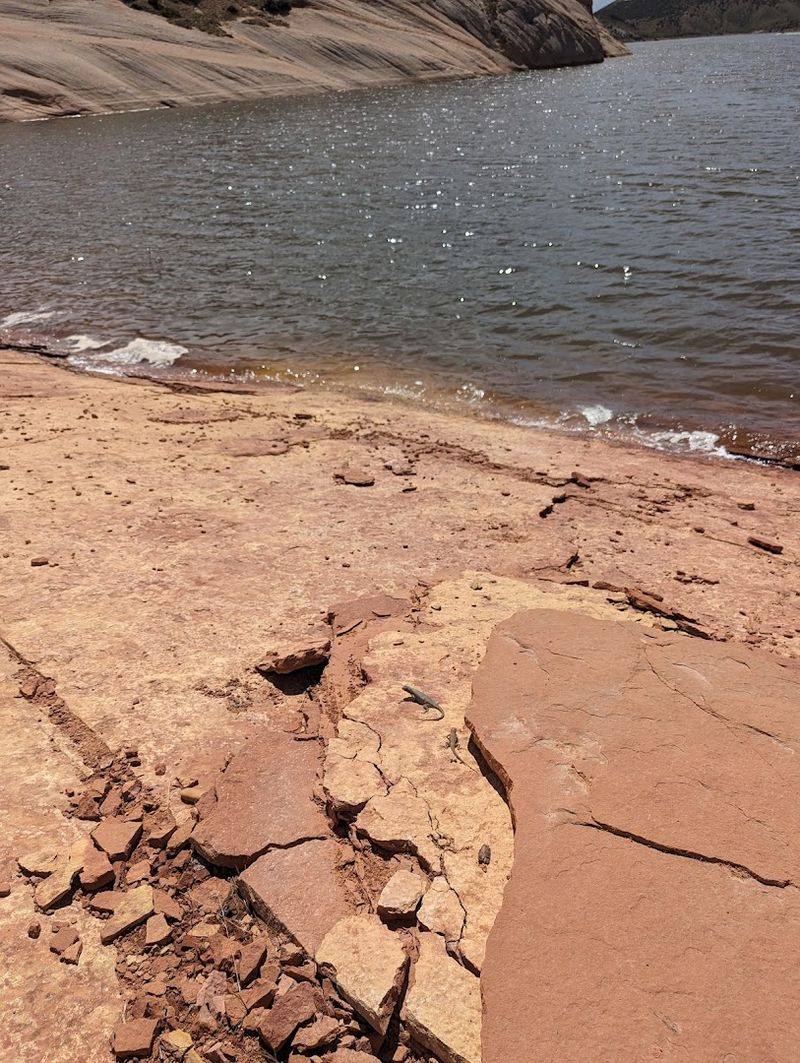
Red Fleet State Park sits about 10 miles north of Vernal at 4335 N Highway 191, and while the reservoir draws the boating crowd, most visitors have no idea there are approximately 200-million-year-old dinosaur tracks embedded in the sandstone near the water. A rugged trail crosses rocky terrain and sandy washes before delivering you to a trackway that is almost absurdly well preserved, the kind of thing you expect to see behind museum glass rather than open to the sky.
The park currently operates both its summer and winter seasons, though the boat ramp may run at reduced capacity when water levels are low. The hike to the tracks is not long, but it is uneven enough that good footwear matters.
Morning visits are cooler and the angled light makes the tracks easier to read against the stone surface.
Pair this with a stop at Dinosaur National Monument nearby and you have a full day built around prehistoric Utah that most visitors completely miss while rushing toward Arches or Zion. The tracks themselves belong to Dilophosaurus, the same genus made famous by Jurassic Park, which is either thrilling or unsettling depending on your perspective.
Either way, standing next to footprints that old does something interesting to your sense of time.
8. Find The Historic San Rafael Swinging Bridge
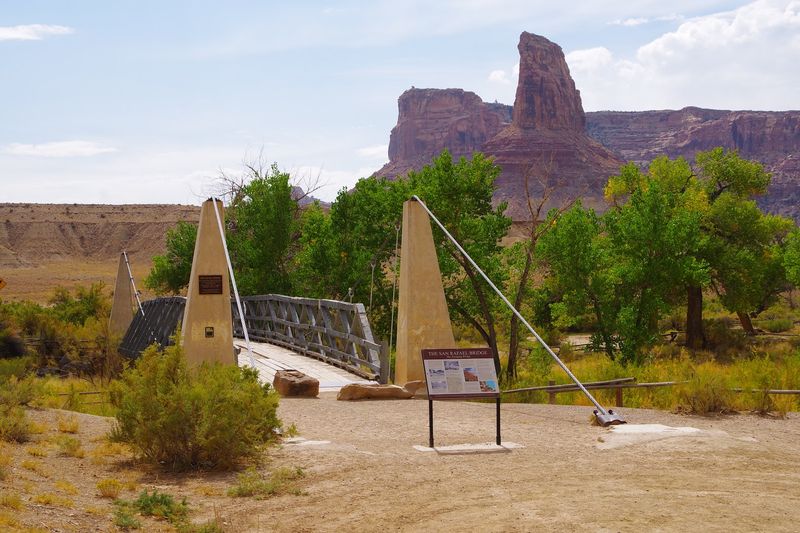
Utah’s oldest intact suspension bridge sits in a remote corner of the San Rafael Swell, and the fact that most Utahns have never heard of it feels like a genuine oversight. Accessible via Buckhorn Draw Road with coordinates 39.079192, -110.665856 as your most reliable navigation tool, the bridge spans the San Rafael River and dates back to a time when ranchers needed a dependable crossing through canyon country.
It still swings.
The surrounding BLM recreation area provides access to the San Rafael River, views of the Little Grand Canyon, hiking options, and primitive camping for those who want to extend the trip into an overnight. There is no numbered street address and cell service is essentially nonexistent, so download your maps before you leave pavement behind.
A high-clearance vehicle is a smart choice depending on recent road conditions.
Walking across the bridge itself is the kind of small thrill that does not require any special skill or gear, just a willingness to trust a century-old structure over a desert river. The canyon scenery surrounding it is legitimately spectacular, the kind of backdrop that makes average photographs look professionally composed.
Combine this with a drive through Wedge Overlook nearby and you have one of the most underrated half-days in the entire state.
9. Descend Into A Puebloan Great Kiva
Edge of the Cedars State Park Museum at 660 W 400 N in Blanding, Utah, holds the Four Corners region’s largest publicly displayed collection of Ancestral Puebloan pottery, and that alone would make it worth stopping for. But the real draw is behind the museum building, where an actual Puebloan village site sits partially excavated and open to exploration.
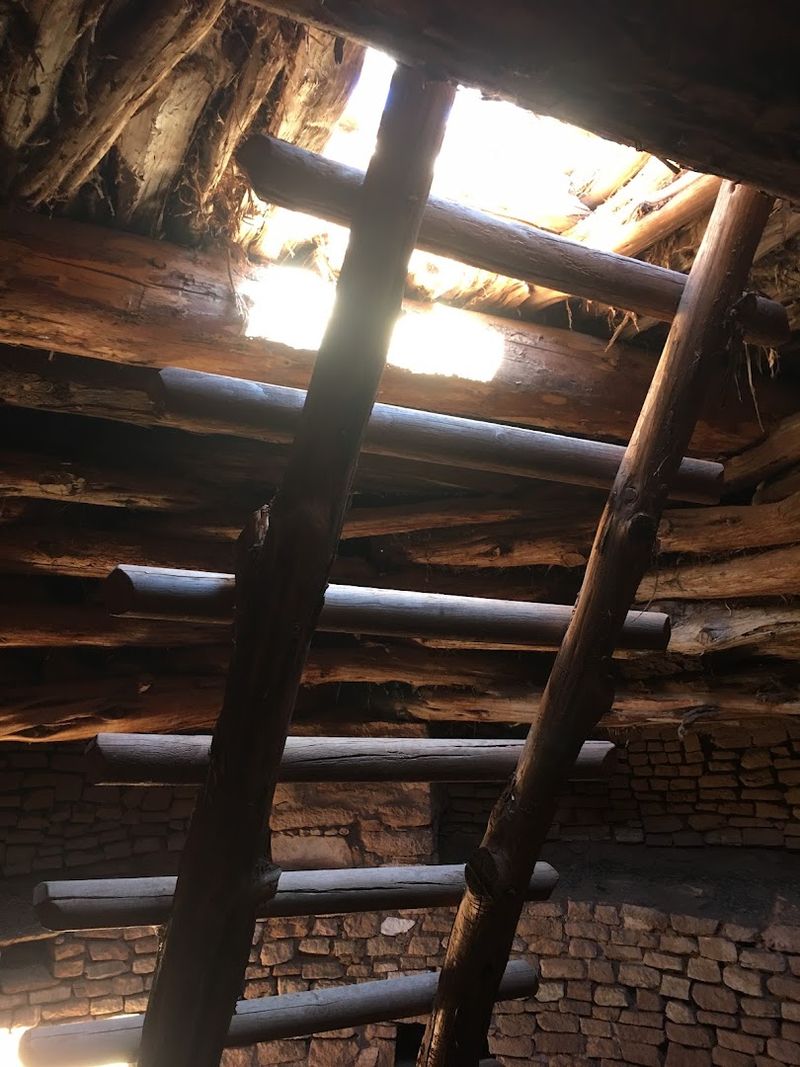
At the center of that site is a reconstructed ceremonial kiva that visitors can climb down into using a wooden ladder.
Descending into that circular underground chamber is one of the more genuinely transporting experiences available anywhere in Utah’s canyon country. The kiva is cool, dim, and quiet in a way that feels deliberate, built for ceremony and community rather than casual traffic.
The museum is open seven days a week, which makes scheduling easy on a flexible road trip itinerary.
Blanding is often treated as a fuel stop on the way to Bears Ears or Natural Bridges, and that is a real shame because this museum deserves several unhurried hours. The pottery collection is extraordinary in both scale and detail, and the interpretive materials are some of the best I have encountered at any state park in the Southwest.
Budget at least two hours and consider buying the site guide from the front desk.
10. Explore Bluff Fort’s Cabins And Historic Wagons
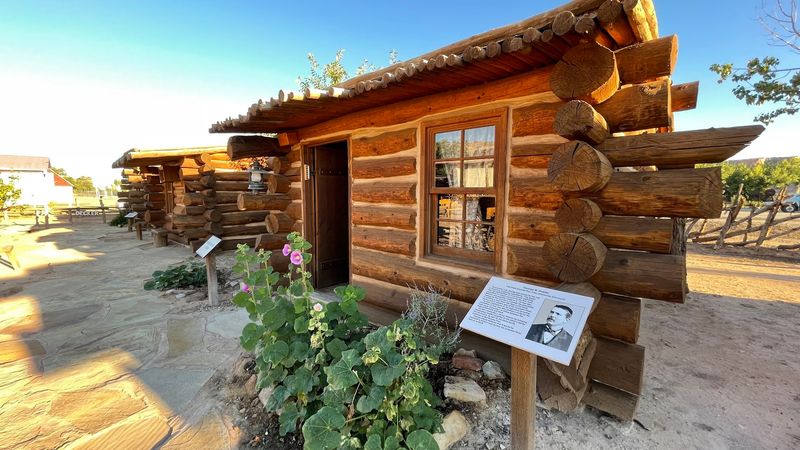
Bluff, Utah, is one of those towns that feels like it exists slightly outside of regular time, and Bluff Fort at 550 E Black Locust Avenue leans fully into that quality. The site is free to visit and contains reconstructed pioneer cabins, a meetinghouse, a visitor center housed inside a replica cooperative store, and one original cabin that has survived since the settlement’s founding.
The wagon on display was actually used during the legendary Hole-in-the-Rock expedition of 1879 and 1880.
That expedition, where a company of Mormon pioneers lowered wagons down a narrow crack in a canyon wall to cross the Colorado River, is one of the most audacious feats of frontier determination ever attempted in the American West. Seeing the actual wagon in person makes the story feel real in a way that reading about it simply cannot match.
The fort has published operating information and holiday closures for 2026, so check ahead for your specific travel dates.
Bluff itself is worth lingering in longer than most visitors allow. The town sits at the edge of Bears Ears National Monument and the surrounding landscape is staggering.
Pair Bluff Fort with a walk through the nearby Bluff Historic District and you have an afternoon that covers both pioneer and Ancestral Puebloan history without driving more than a mile.
11. Walk Through Utah’s Preserved Silver-Mining Town
Silver Reef is the kind of ghost town that geologists still argue about. When silver was discovered in sandstone here in the 1870s, it defied every established theory about where precious metals were supposed to form, and the mining community that exploded into existence became one of the most prosperous in the Utah Territory almost overnight.
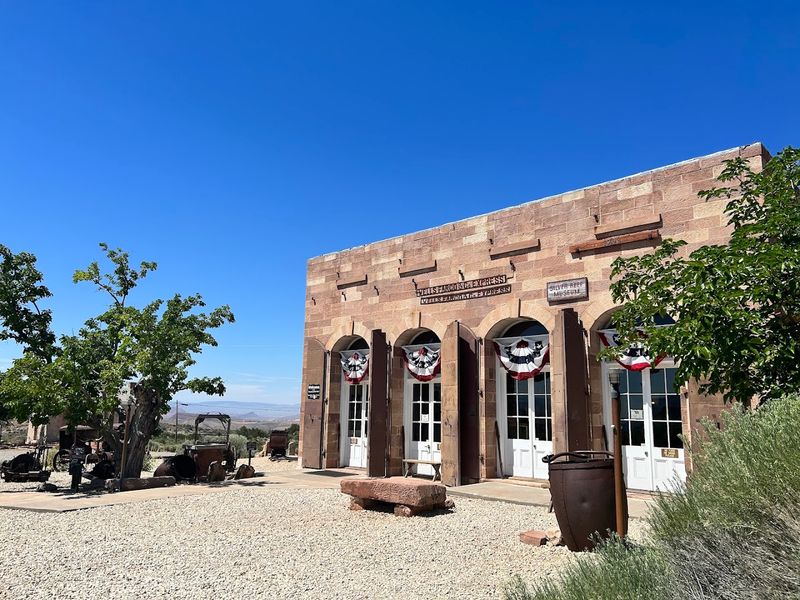
Today the Silver Reef Museum at 1903 Wells Fargo Road in Leeds occupies the original Wells Fargo building, which has been standing since that boom era.
Visitors can follow an interpretive trail through the remaining town structures and get a real sense of the settlement’s original layout. The mine exhibit runs on Saturdays, which is worth timing your visit around if you want the most complete experience.
The museum’s verified 2026 schedule includes Monday, Thursday, Friday, and Saturday service, so plan accordingly.
Leeds is just a few minutes off I-15 between St. George and Cedar City, making Silver Reef one of the easiest hidden gems on this entire list to actually visit. The red rock backdrop behind the old stone walls is photogenic in every direction, and the interpretive signage is well written and genuinely informative.
I have passed this exit a dozen times over the years before finally stopping, and I am annoyed it took me that long.
12. Operate Pioneer-Era Equipment At Frontier Homestead
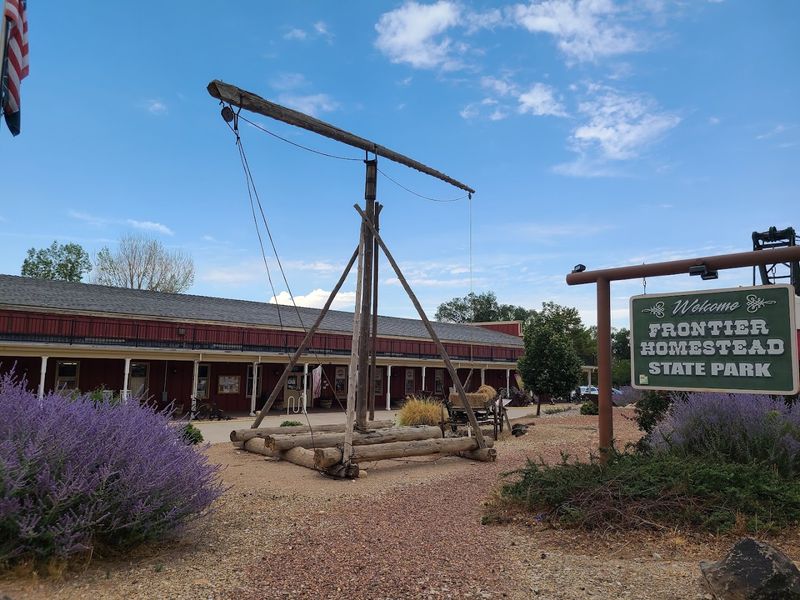
Cedar City is usually on the radar for the Utah Shakespeare Festival or as a base camp for Cedar Breaks, but Frontier Homestead State Park Museum at 635 N Main Street deserves its own reason to visit. The museum is genuinely hands-on in a way that most state museums are not, with demonstrations involving a working printing press, weaving equipment, and early farming machinery that visitors can actually operate rather than just observe from behind a rope.
The grounds include historic cabins, horse-drawn vehicles, a sawmill, and a replica iron furnace connected to the region’s early iron industry, which was one of the primary reasons Brigham Young sent settlers to this part of Utah in the first place. The museum is open daily during its April through September season, with reduced winter hours for those traveling off-peak.
What makes Frontier Homestead genuinely special is the staff enthusiasm. The people running the demonstrations actually know what they are talking about and seem to enjoy sharing it, which is not something you can say about every historic site.
Kids tend to gravitate toward the printing press and never want to leave, which is honestly the correct response. Budget at least 90 minutes and do not skip the vehicle collection in the back building.