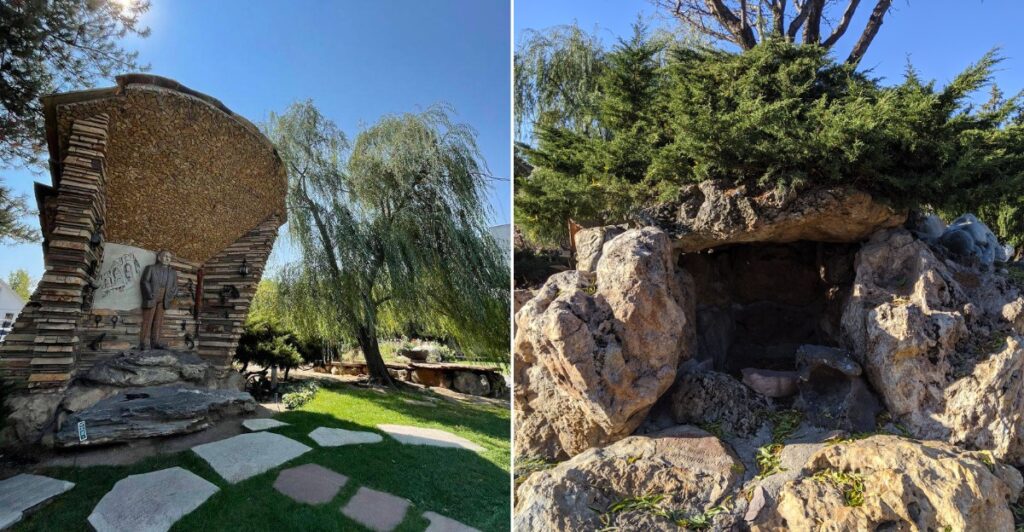
A stone sphinx sits in a quiet city backyard, and its face belongs to Joseph Smith. That one detail tells you this garden plays by its own wonderfully odd rules.
A local masonry contractor started building it in his own backyard back in 1945. He hauled boulders from mountainsides and streambeds across Utah, some weighing up to 62 tons.
I like how personal the whole place feels, from a shrine for his beloved wife to giant stone grasshoppers. One man packed his faith, his family, and his biggest questions into solid rock.
He even admitted you might think he was a nut, as long as he got your brain working. I believe he pulled it off, and somehow the gate still swings open free every single day of the week.
Say Hello To A Sphinx With A Very Familiar Face
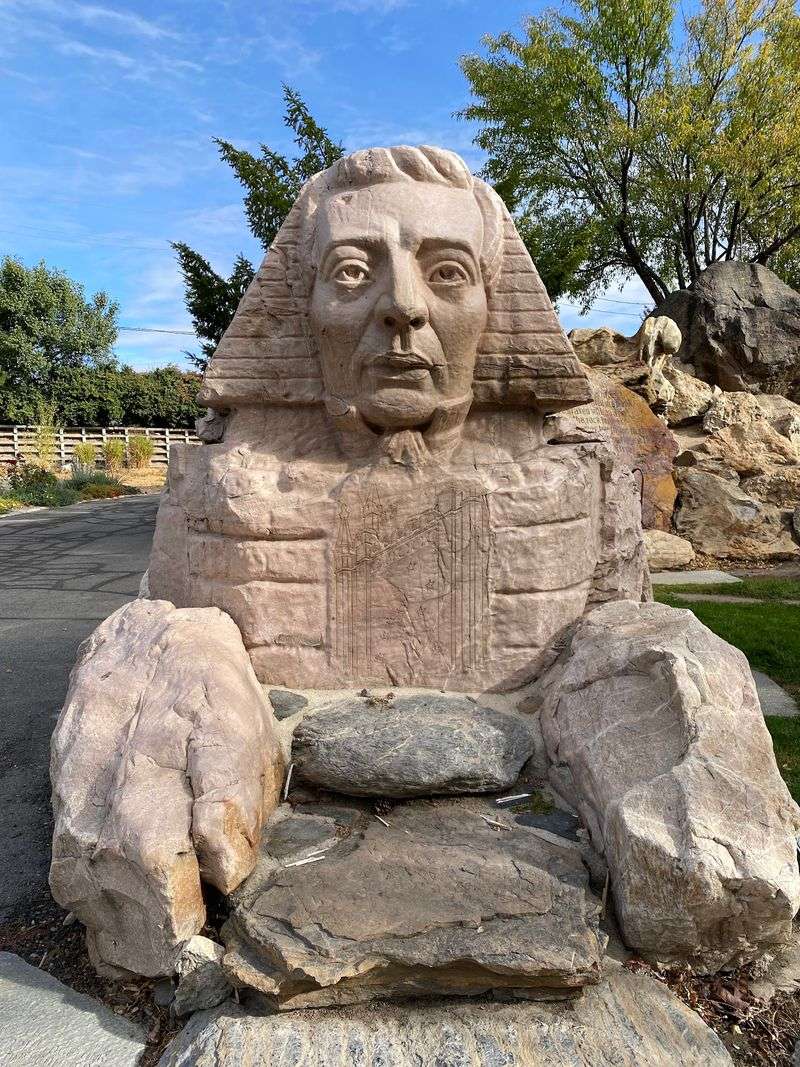
Joseph Smith’s face sits on the body of a sphinx, and it somehow works. Gilgal Sculpture Garden makes that pairing its star attraction, and honestly, it earns the spotlight.
The face is finely carved, which makes the whole thing feel more serious than silly. Creator Thomas Child had a clear reason behind the mashup.
He saw the ancient sphinx as a symbol of life’s riddles. Modern revelation, starting with the founder of the Latter-day Saint church, was his proposed answer key.
So the statue works like a puzzle with the solution stamped right on it. That’s a big idea to pour into one sculpture.
Give yourself a few minutes to circle it slowly. The craftsmanship looks different from each side, and photos rarely capture the full scale.
Your faith background doesn’t matter much for enjoying it, either. Plenty of the appeal comes from simple curiosity about how anyone pulled this off in a backyard.
Snap your picture first, then step back and take it in without a screen. A sphinx in a Salt Lake City neighborhood deserves a proper, unhurried stare.
The Man Behind The Boulders Had A Day Job And Big Questions
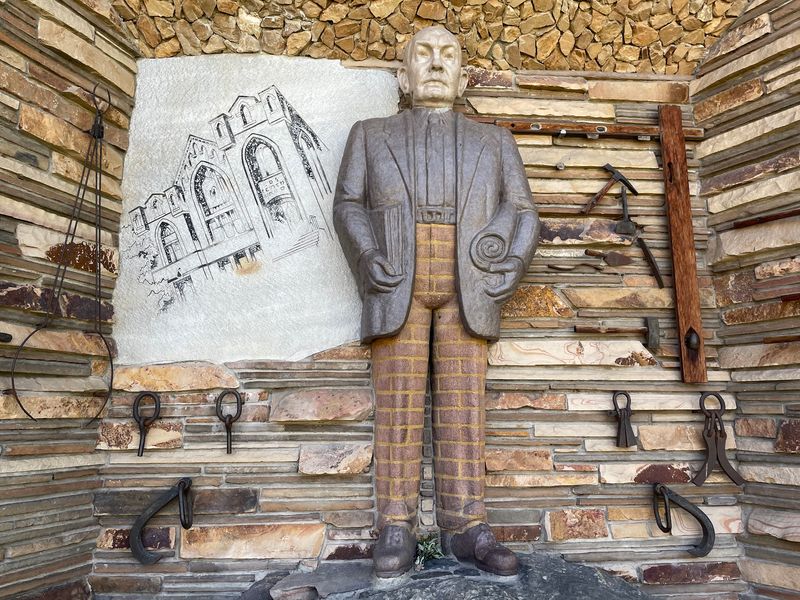
Thomas Battersby Child Jr. was a successful masonry contractor, a businessman, and a bishop in the 10th Salt Lake ward. Somehow he still found time to build a sculpture garden.
He started in his own backyard in 1945 and kept working until 1963. That’s nearly two decades of hauling, carving, and rearranging rock.
The name came straight from the Bible. At Gilgal, Joshua told the Israelites to set up twelve stones as a memorial.
Some translate the word as circle of standing stones, which fits nicely. Gilgal also shows up as a city and valley in the Book of Mormon.
Child wanted visitors to ponder what he called the unsolved mysteries of life. He was refreshingly honest about how his work might land.
You don’t have to agree with me, he once said, adding that you might think he was a nut. He simply hoped he had aroused your thinking and curiosity.
I love that attitude, because it makes the garden feel like a conversation instead of a lecture. Thousands of people visited during his lifetime, so his invitation clearly worked long before the city got involved.
Those Boulders Weigh More Than Your Car. Way More.
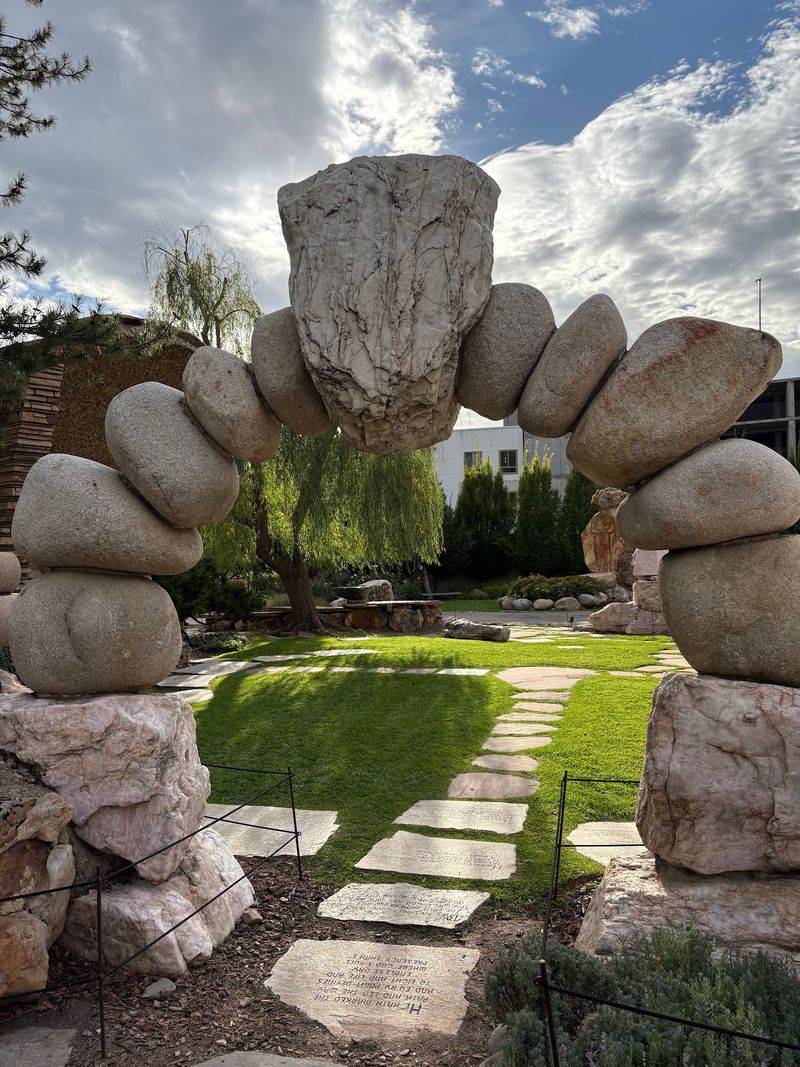
Some of the stones here weigh up to 62 tons. For comparison, that’s heavier than about thirty average family cars.
Child sourced these giants from mountainsides and streambeds all over Utah. Getting them into a city backyard took serious effort and plenty of determination.
Once the rocks arrived, the work stayed home. He kept a complete workshop in his yard, so all finish work happened right on site.
Then came the clever part. Child and his son-in-law, Bryant Higgs, developed an unusual way to sculpt stone using an oxyacetylene torch.
Yes, a torch, the kind usually used for cutting metal. Sculptor Maurice Brooks later mastered the method and handled the garden’s more detailed carvings.
Knowing this changes how you look at every surface. Those smooth curves and crisp lines came from heat and patience, not just a hammer and chisel.
Run your eyes along the edges of the bigger pieces and think about the weight. It’s hard not to feel a little impressed by the sheer muscle involved.
Moving a couch up two flights of stairs suddenly sounds easy. Child moved mountains, almost literally.
Bring Your Reading Glasses, Because The Rocks Have Plenty To Say
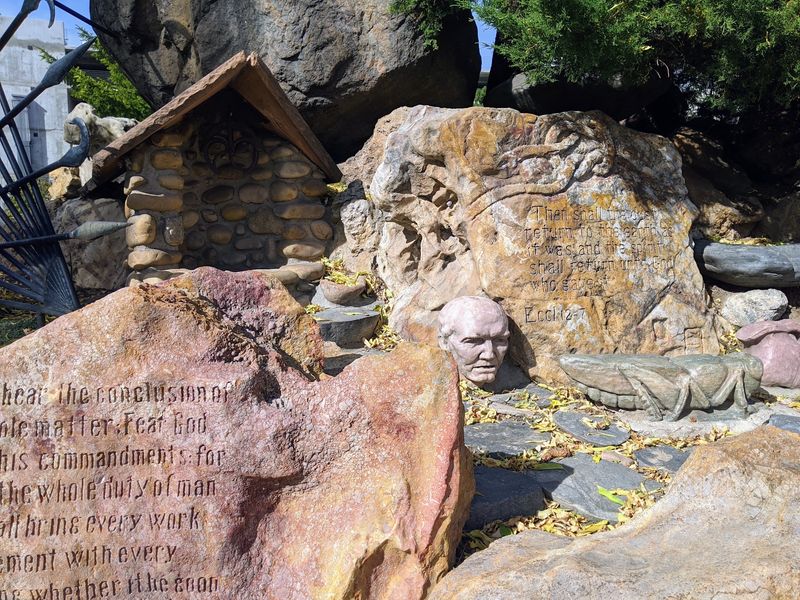
More than 70 stones here carry engraved words. Scriptures, poems, and philosophical texts cover the garden like pages from a very heavy library.
Many of the texts connect to Latter-day Saint history and beliefs. Child explored themes like the restoration of the priesthood and the pioneer migration west.
He also saw parallels between the ancient Israelites and his own ancestors. Walking the paths, you can follow that thread from stone to stone.
My honest tip is simple: slow down. A quick lap shows you the sculptures, but the engravings reward anyone willing to linger.
Walking tour brochures are available on site, and they help connect the words to the art. Grab one at the start so the symbols make sense as you go.
Reading every inscription turns the visit into something closer to a treasure hunt. Each stone adds another piece to Child’s personal story.
Kids who like puzzles may enjoy hunting for familiar verses. Adults might find a line or two that sticks with them long after leaving Utah’s capital city.
Bring a little patience along with your curiosity. The reading adds up faster than you’d expect.
Grasshoppers, Floating Heads, And A Guy Wearing Brick Pants
Not every sculpture here aims for solemn and serious. A few lean delightfully weird, and that’s a big part of the fun.
Look for the grasshoppers first. Child also included disembodied heads, which are exactly as surprising as they sound.
A garden mound holds scattered stone limbs, including feet, a torso, and a man’s head. The scene comes from King Nebuchadnezzar’s dream in the Bible.
In that story, the king dreams of a giant statue that gets broken apart. Child turned the idea into a landscape you can walk right past.
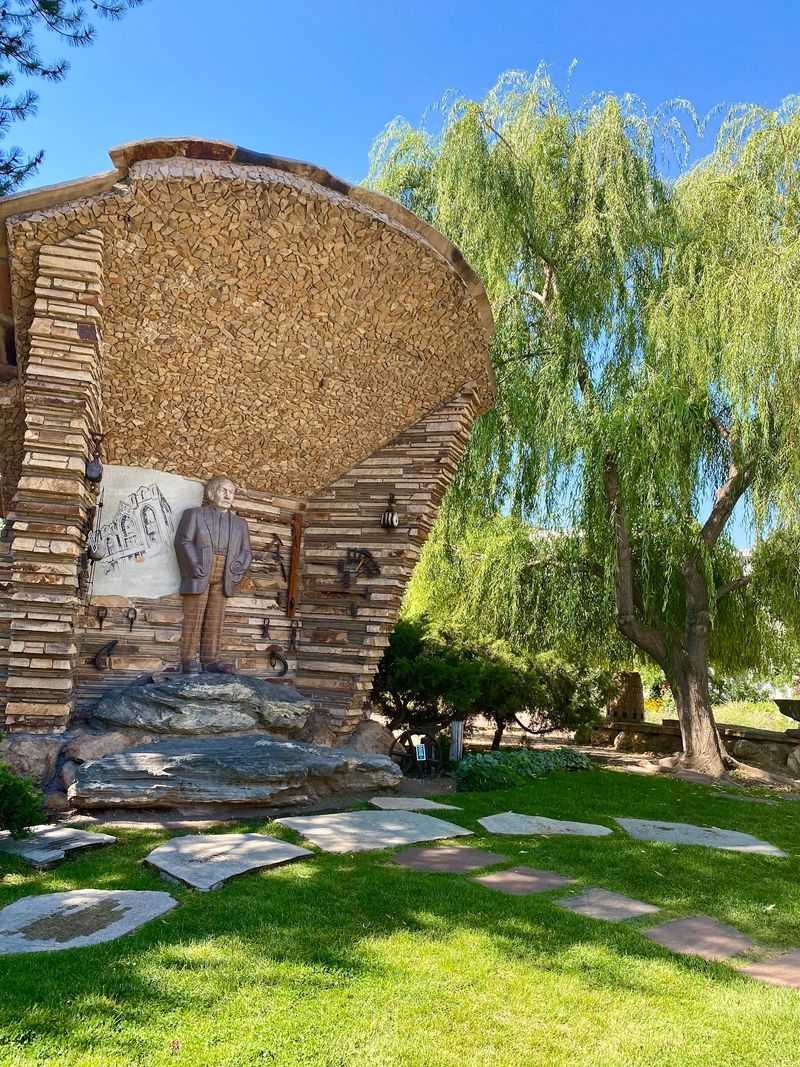
Then there’s the self-portrait. Child depicted himself wearing brick pants, holding a Bible in one hand and blueprints in the other.
Brick pants might be the most honest outfit a mason ever chose. The Bible and blueprints sum up his life pretty neatly, too.
Faith and building clearly mattered equally to him. Every odd detail in the garden seems to come back to those two passions.
Keep your camera handy for this stretch of the garden. The brick-pants portrait alone might become your favorite photo of the whole trip.
Look Closer, Because The Sweetest Details Hide In Plain Sight
Love shows up in stone at Gilgal Sculpture Garden, if you know where to look. Child built a shrine dedicated to his wife, Bertha.
That tribute gives the garden a tender side. Grand themes are everywhere, but this piece feels personal and quietly sweet.
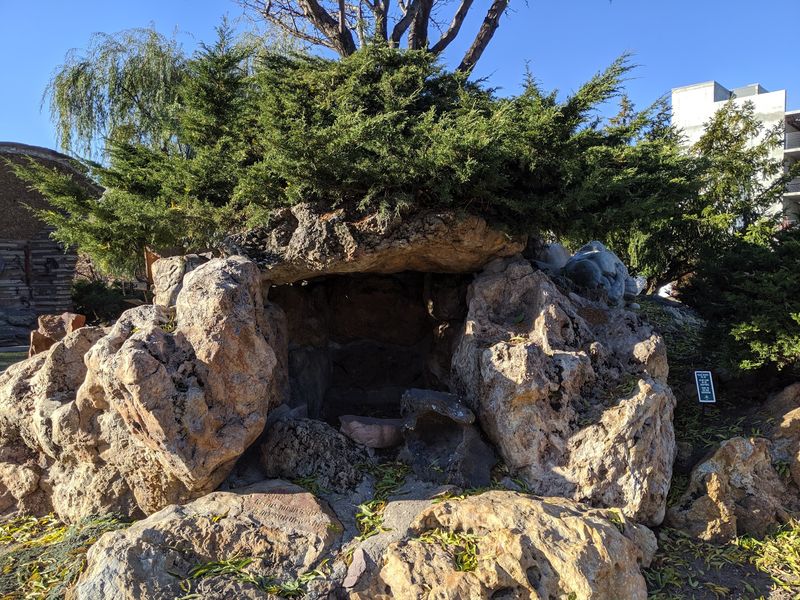
Nearby, a cave-like cutout reveals sculptures set inside. Disembodied hands circle two human hearts there.
The scene draws on a verse from the Book of Malachi about eternal families. It’s a striking way to show a bond that lasts.
Patriotism gets its moment here as well, right out in the open. Sculpted eagles line a wall, reflecting Child’s strong pride in America.
Then there’s a large unpolished rock with a low-relief carving of a headless figure holding a mighty sword. It represents the captain behind the Israelites’ victory at Jericho.
Each of these pieces rewards a second look. The cave carving especially is easy to miss if you’re rushing.
Twelve original sculptural arrangements fill the grounds, so you won’t run out of discoveries. Take your time and peek into the corners.
Friends Stepped Up Just When This Garden Needed Them Most
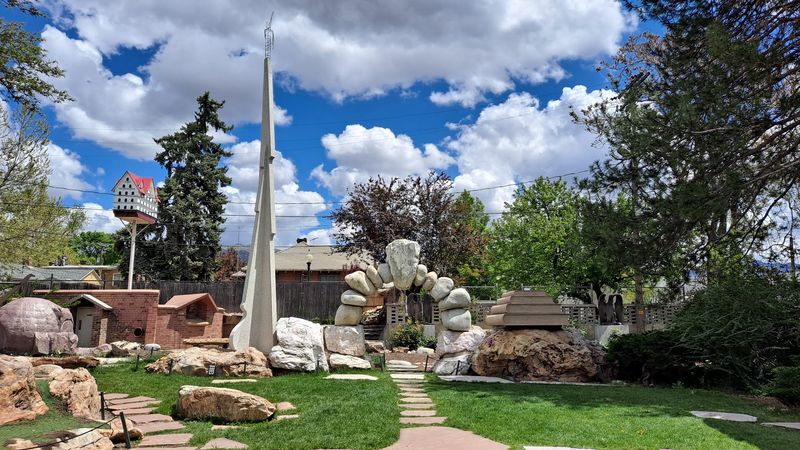
After 1963, the garden’s future got shaky. It passed through several private owners over the following decades.
Commercial development started to threaten the site. Losing all that handmade stonework would have been a real blow to local history.
In 1997, a group formed called the Friends of Gilgal Garden. They teamed up with the Trust for Public Land and Salt Lake City Corporation.
Together they bought the property and saved it. In October 2000, the garden reopened as an official city park.
Recognition has followed ever since. In 2020, the National Trust for Historic Preservation named it the first Utah site in its Distinctive Destinations program.
The Smithsonian Institution also documents it in its Art Inventories Catalog. It’s known as the only identified visionary art environment in Utah.
That term describes deeply personal art spaces built by self-driven creators. Child fits the description perfectly, since sculpting was never his paid profession.
Every visit now carries a bit of that rescue story with it. Strolling these paths feels even better knowing so many people worked to protect them.
Free Entry, Long Summer Hours, And Parking Right Out Front
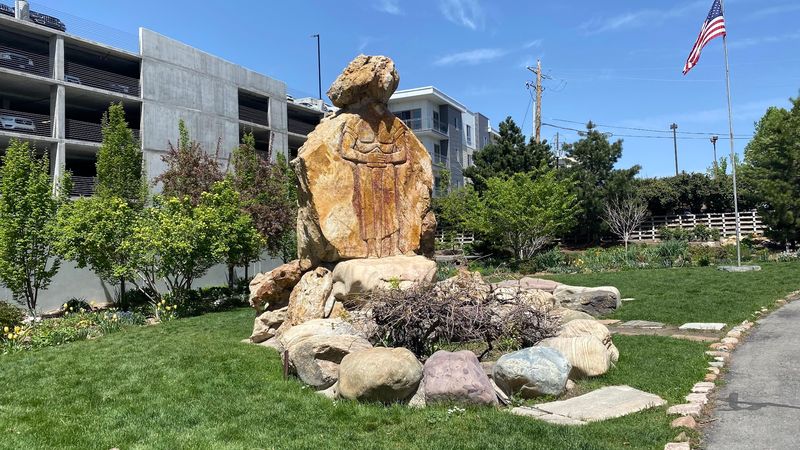
Your wallet gets the day off here. Admission is free, and the garden welcomes visitors seven days a week.
You’ll find it at 749 East 500 South, Salt Lake City, UT 84102. It sits in the middle of a city block, behind houses and businesses.
That placement makes arriving feel like a small discovery. Watch carefully for the entrance so you don’t cruise right past it.
Parking is available on 500 South between 700 and 800 East. That puts you directly in front of the garden entrance.
From April through September, hours run from 8 a.m. to 8 p.m. From October through March, the garden opens at 9 a.m. and closes at 5 p.m.
Plan around the holidays, though. The gates stay closed on New Year’s Day, Thanksgiving, and Christmas.
The garden is fully wheelchair accessible, which is great news for every member of your crew. Everyone can explore the same sculptures together.
Winter visits need a little timing strategy. Arrive early in the afternoon so you aren’t racing the 5 p.m. close.
Pack A Sandwich, Find Some Shade, And Plan Ahead For The Basics
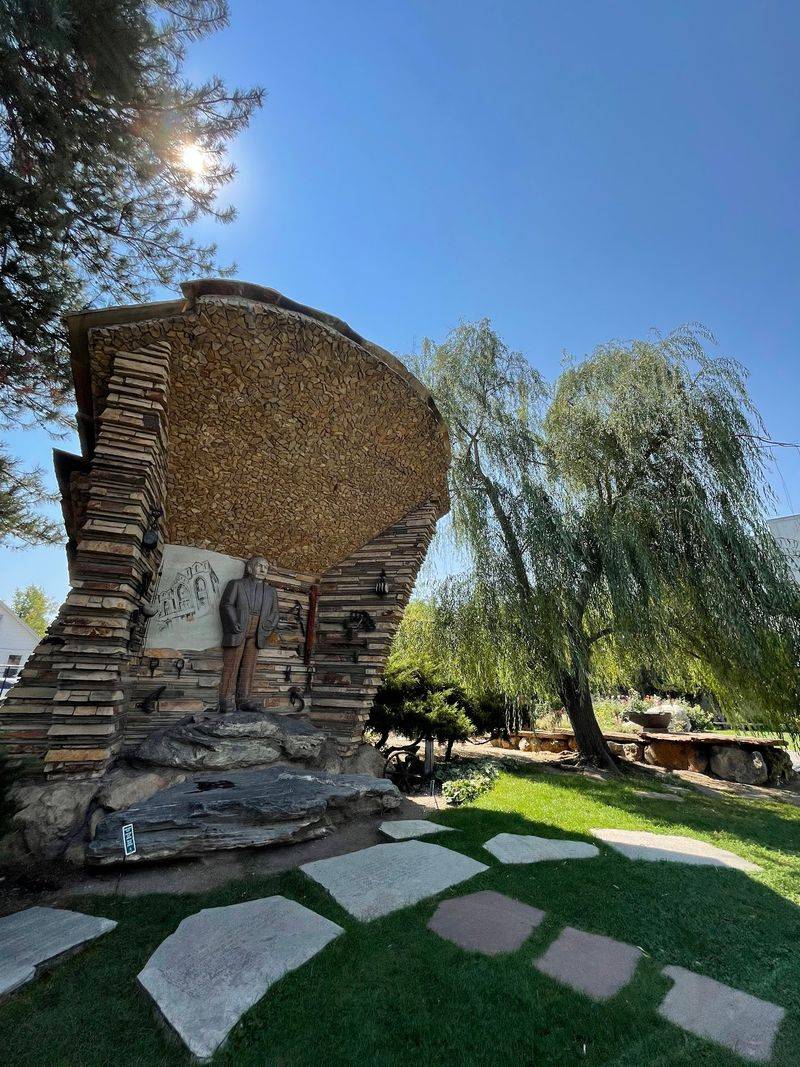
Big shade trees and native plants soften all that stone. Together they make the garden a pleasant spot for a quiet picnic.
A simple lunch fits the mood nicely. Few city parks let you pair a sandwich with a view of a sphinx.
Now for the practical part. There are no public restrooms or water facilities at the garden.
Plan accordingly, especially with kids. Fill water bottles before you leave and make a quick stop beforehand.
Summer afternoons in Utah can run hot, so extra water is smart. The shade helps, but it can’t refill your bottle.
Pack out everything you bring, too. Keeping the grounds tidy helps protect a space that so many people worked to save.
Donations are accepted to help with upkeep. If the visit sparks your curiosity, chipping in is an easy way to say thanks.
Seasonal timing matters for comfort as well. Longer spring and summer hours give you more room to linger over lunch.
Thomas Child hoped his garden would get people thinking. A peaceful lunch among his stones seems like a fine way to let it do just that.