Eight snowy egrets in a homemade cage started it all. Around 1895, Ned McIlhenny raised those birds on Avery Island when plume hunters had nearly wiped them out, and the colony they founded still nests there every spring.
The gardens he planted around it now hold thousands of camellias, old live oaks, alligator-filled lagoons, and a centuries-old Buddha. Here is what to know before you drive out to Jungle Gardens.
A Garden On Top Of A Salt Dome
Avery Island is not really an island at all. It is the top of a huge salt dome pushing up through the marsh south of New Iberia, and that slight rise in elevation supports woods and gardens you would not expect in flat coastal Iberia Parish.
Jungle Gardens sits on this high ground, spread across roughly 170 acres of semi-tropical landscape. The address runs along Louisiana 329 and Main Road, and the gardens share the island with the Tabasco factory, which the McIlhenny family also owns.
In fact, the whole island belongs to the family, who have held it for more than 180 years.
That shared ownership shapes the visit. Many people arrive for the pepper sauce tour and add the gardens as a second stop, then find themselves spending more time among the oaks than around the bottling line.
Visitors often describe being surprised by the size of the island and by how much life fits onto it.
The mix of marsh, open lawns, bayous, and old-growth trees gives the place its character. It feels less like a manicured botanical garden and more like a working estate that was slowly shaped by one man with very particular interests in birds and plants.
Ned McIlhenny, Naturalist And Pepper Sauce Heir
Born on Avery Island in 1872, Edward Avery McIlhenny grew up studying the plants and animals around his family home. Everyone called him Ned.
His father, Edmund McIlhenny, created Tabasco sauce, and Ned would eventually lead the company as president starting in 1898.
Business was only one part of his life, though. He was also an Arctic explorer, a naturalist, and a committed conservationist, which was not a common combination for a company president of his era.
His curiosity ran from egrets to bamboo to camellias, and he treated the island as a place to experiment.
Avery Island later adopted the motto Man and Environment in Balance, and it fits the way Ned approached things. Even when energy production arrived on the island in 1942, he held to the idea that industry and nature could share the same ground if handled carefully.
As a hunter himself, he still banned deer hunting on the island when the species declined, giving the population room to recover. That practical, hands-on style of stewardship runs through the whole property.
Almost every major feature in Jungle Gardens, from the bird colony to the Buddha shrine, traces back to his choices.
How Eight Egrets Became Bird City
Picture the 1890s, when fashionable hats called for delicate white plumes and hunters were shooting snowy egrets to near extinction. McIlhenny saw the numbers falling and decided to act on his own land.
Around 1895 he gathered eight young egrets and raised them in a large flying cage built on the property. When the birds were grown, he let them go so they could migrate south for the winter.
The following spring they came back, and they brought more egrets with them.
Year after year, the pattern repeated. The colony grew into the rookery known as Bird City, one of the earliest private bird sanctuaries in the country.
Theodore Roosevelt called it the most noteworthy reserve in the country, which is strong praise from a president known for his own conservation work.
It is a simple story, and that is part of its appeal. There was no government program or grand plan at first, just a man, a cage, and a hunch that birds would return to a safe place.
Every egret nesting on the island today belongs to that long chain of returns, and the whole garden grew up around it.
Nesting Season Among The Bamboo Platforms
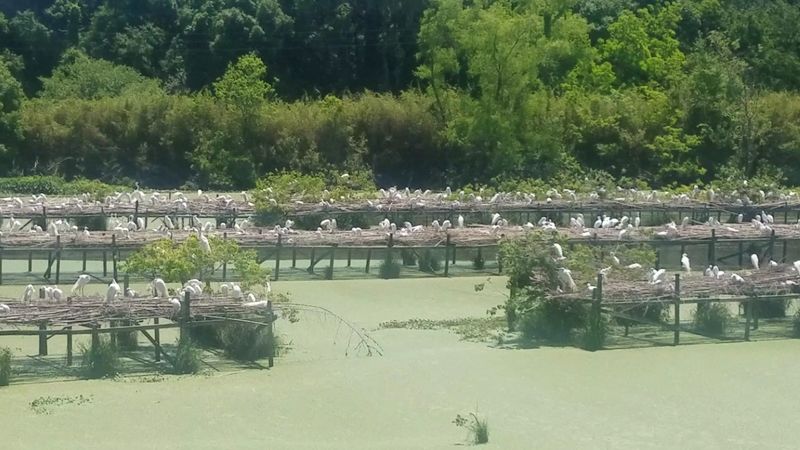
Timing matters if the birds are your main reason for going. Egrets start showing up as early as late January to claim nesting spots, and the colony stays busy from early spring through late summer.
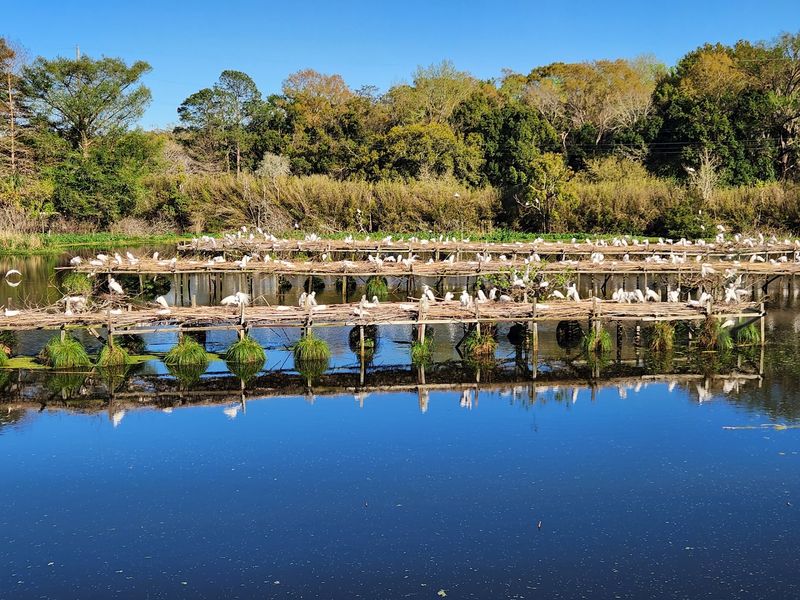
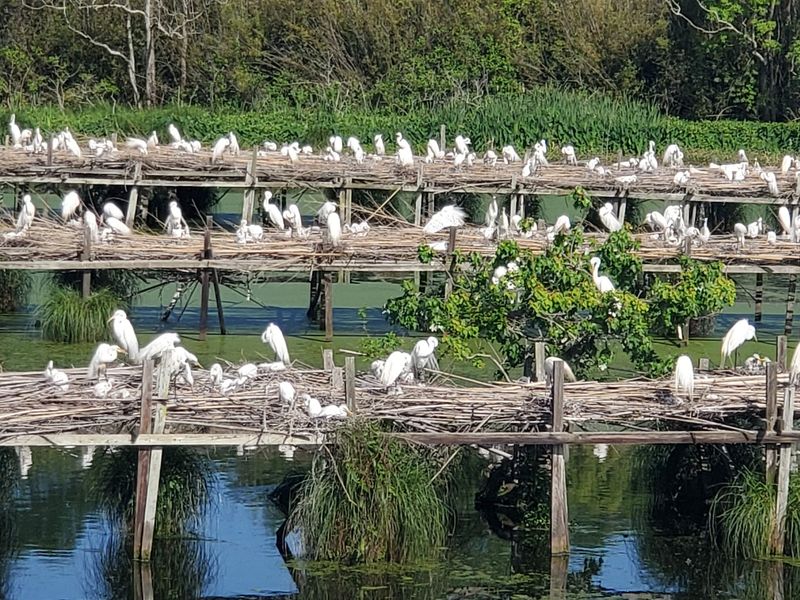
Staff give the birds a head start. Each January, the elevated platforms over the pond are refreshed with fresh bamboo stems, creating ready-made nesting material.
Because of that preparation, nesting here tends to begin earlier than in natural rookeries nearby, and young birds are usually fledging by late June.
Great egrets, snowy egrets, and cattle egrets nest side by side, which makes for a crowded, noisy, very white scene during peak weeks. Birders travel long distances for it, and it is easy to understand why once you see how close the platforms sit to the viewing area.
The action is not limited to egrets. Across the seasons, visitors may spot little blue herons, night herons, least bitterns, anhingas, white ibises, roseate spoonbills, and great blue herons.
By fall, ducks such as blue-winged teals, pintails, and gadwalls arrive from the north. With Cote Blanche Bay close by, brown and white pelicans, terns, and laughing gulls often pass overhead too.
Thousands Of Camellias From Fall Into Spring
While much of the country goes gray in winter, the camellias on Avery Island are just getting started. Thousands of shrubs bloom here, with the main show running from December through March.
The collection includes 251 documented varieties. The fall-blooming Camellia sasanqua opens the season, and the familiar Camellia japonica carries the heavier winter and spring display.
With the right mix of cultivars, blooms can stretch from October into May, giving visitors a long window to catch some color.
McIlhenny was more than a collector. He hybridized his own cultivars and ran a wholesale nursery on the island, and traces of that old nursery are still visible today.
A few varieties carry the island in their names, including Avery Island Variegated and Nina Avery.
Expect everything from tight formal blossoms to loose, ruffled ones in shades of white, pink, red, and striped combinations. The shrubs are scattered through the grounds rather than confined to one bed, so driving the loop in January means passing color at nearly every bend.
Visitors who come in March often mention azaleas and camellias blooming together, which may be the most colorful time of all on the property.
The Lost Grove Hidden Behind Bamboo
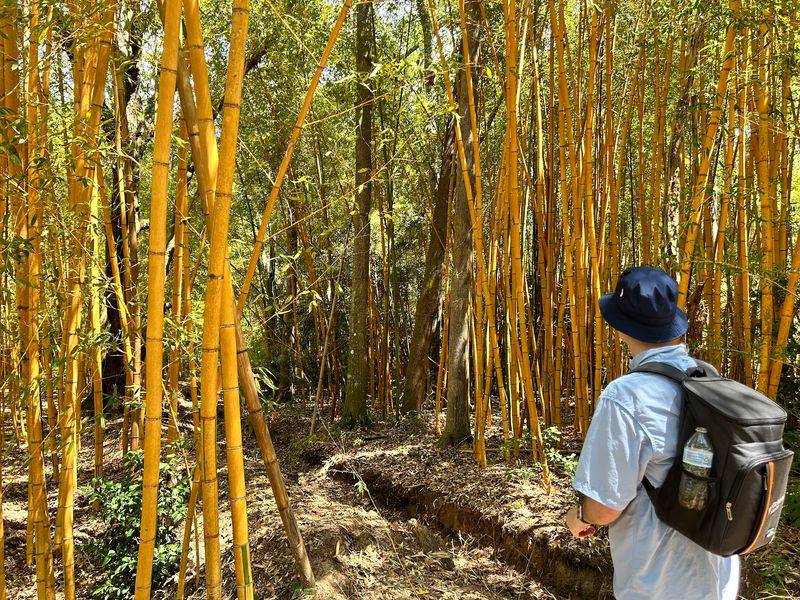
Some garden stories take decades to finish. Around late 2019 or early 2020, staff at Jungle Gardens uncovered a camellia grove that had been swallowed by thick bamboo for more than seventy years.
These are not small shrubs. Some of the plants stand over 25 feet tall, and they are likely original plantings from the garden’s early days under McIlhenny.
Because he bred and sold his own cultivars, there is a real possibility that the grove holds rare varieties long believed to be lost.
For camellia enthusiasts, that makes the find exciting. Old cultivars disappear quietly when nurseries close and records fade, so a stand of mature trees with a known history can help fill gaps in what growers understand about early American camellias.
The irony is hard to miss. Bamboo was another of McIlhenny’s great passions, and his own plantings eventually hid his camellias from view.
It says something about how thoroughly he packed the island with experiments. Even now, a century later, the gardens still have surprises tucked inside their thickets, and research into what exactly grows in that grove adds another layer to a place many people assumed they already knew well.
Live Oaks, Timber Bamboo And A Sunken Garden
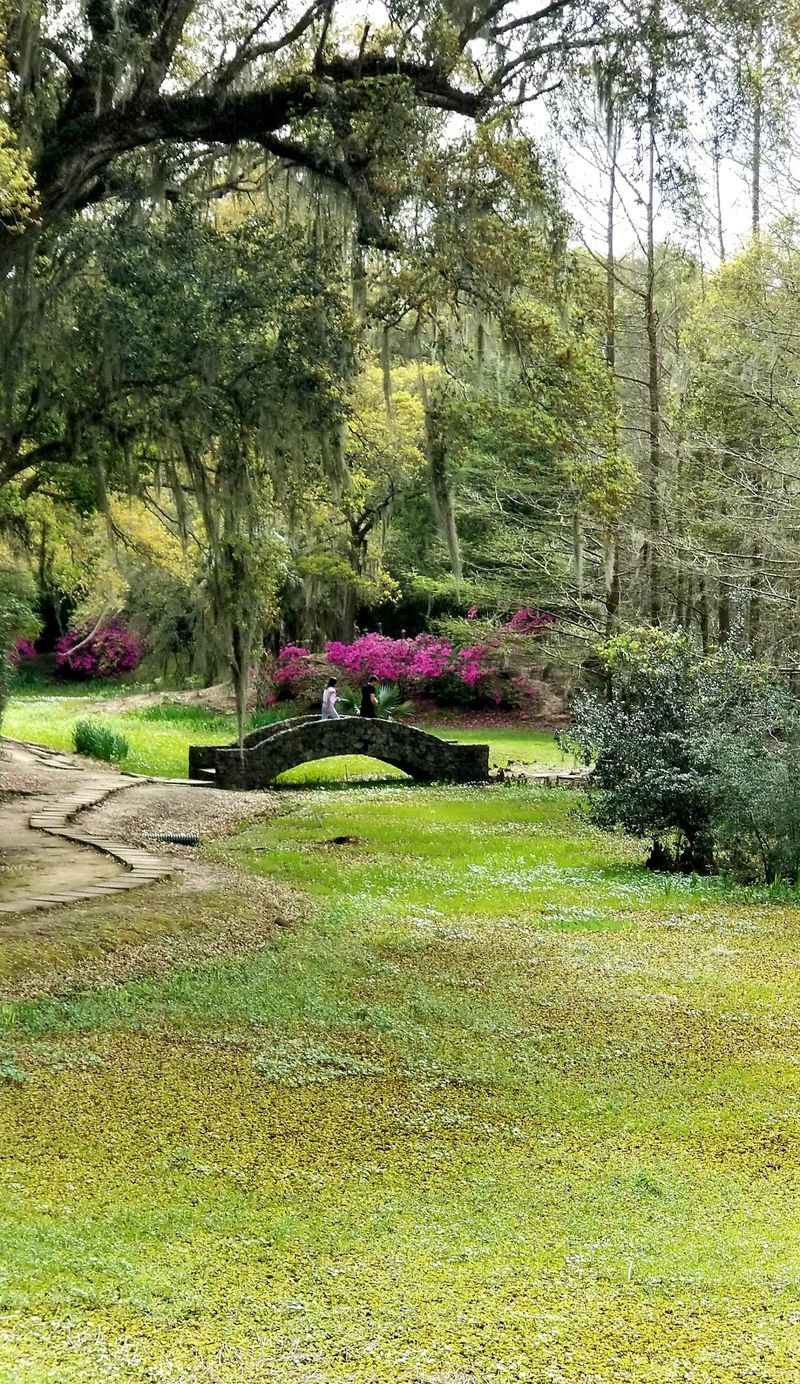
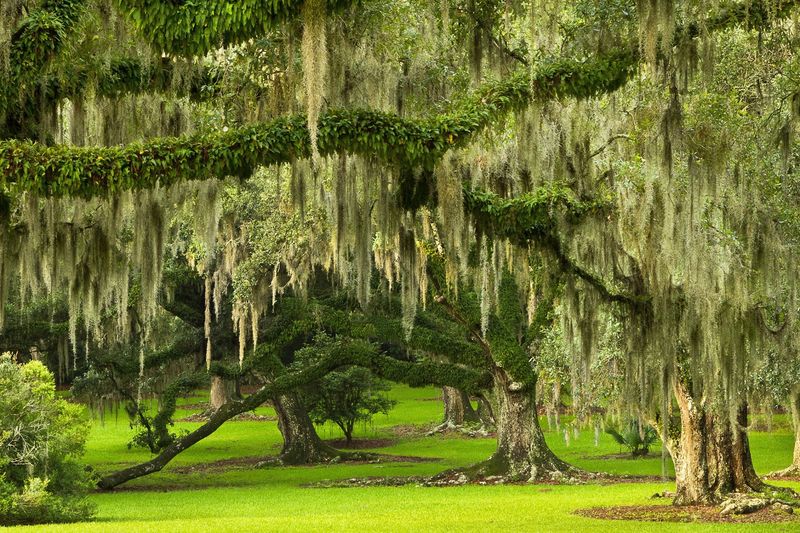
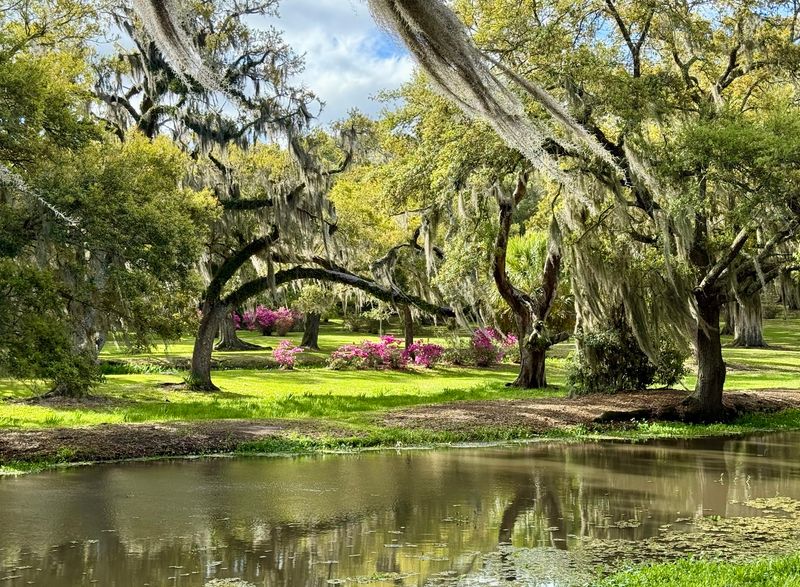
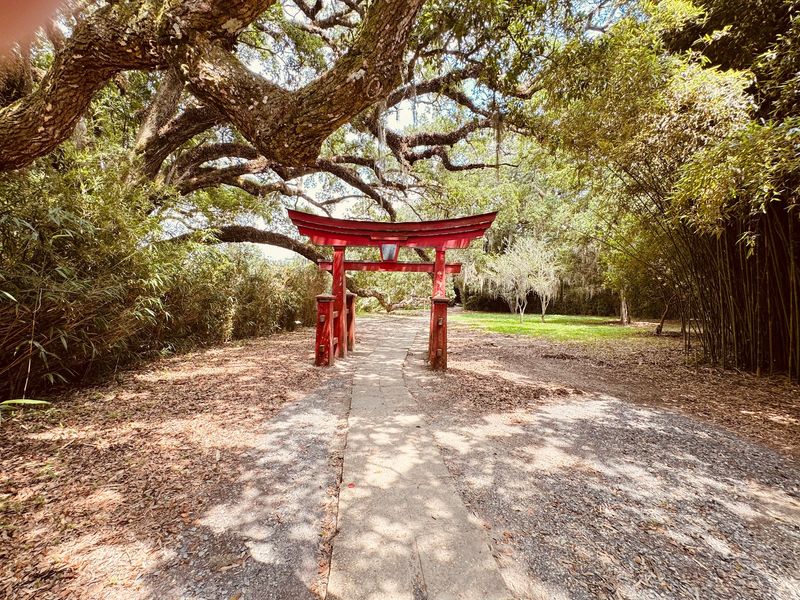
Moss-hung live oaks form the backbone of the drive, with some trees well over a century old arching across the gravel roads. Visitors mention the oaks almost as often as the birds, and the huge limbs frame nearly every photograph taken on the loop.
Bamboo is the other big story. The gardens grow 64 varieties, and the timber bamboo grove ranks among the oldest in North America.
McIlhenny became known as the country’s most successful experimental bamboo grower, and modern permaculture fans still study his notes on how the plant could be used.
Around those anchors, the planting keeps shifting with the seasons. Azaleas, hydrangeas, Louisiana irises, palms, papyrus sedges, and wisteria each have their moment.
One visitor observed that the collection reflects the ornamentals popular in the early American and Victorian periods, so many plants will look familiar rather than rare.
McIlhenny also reshaped the ground itself. He turned a dry gully into a sunken garden and converted an old sand-mining pit into a palm garden.
Visitors also point to the Venetian gardens area as a highlight. Those reworked spaces show how he used leftover industrial sites as raw material for planting rather than leaving them bare.
A Centuries-Old Buddha On A Hill
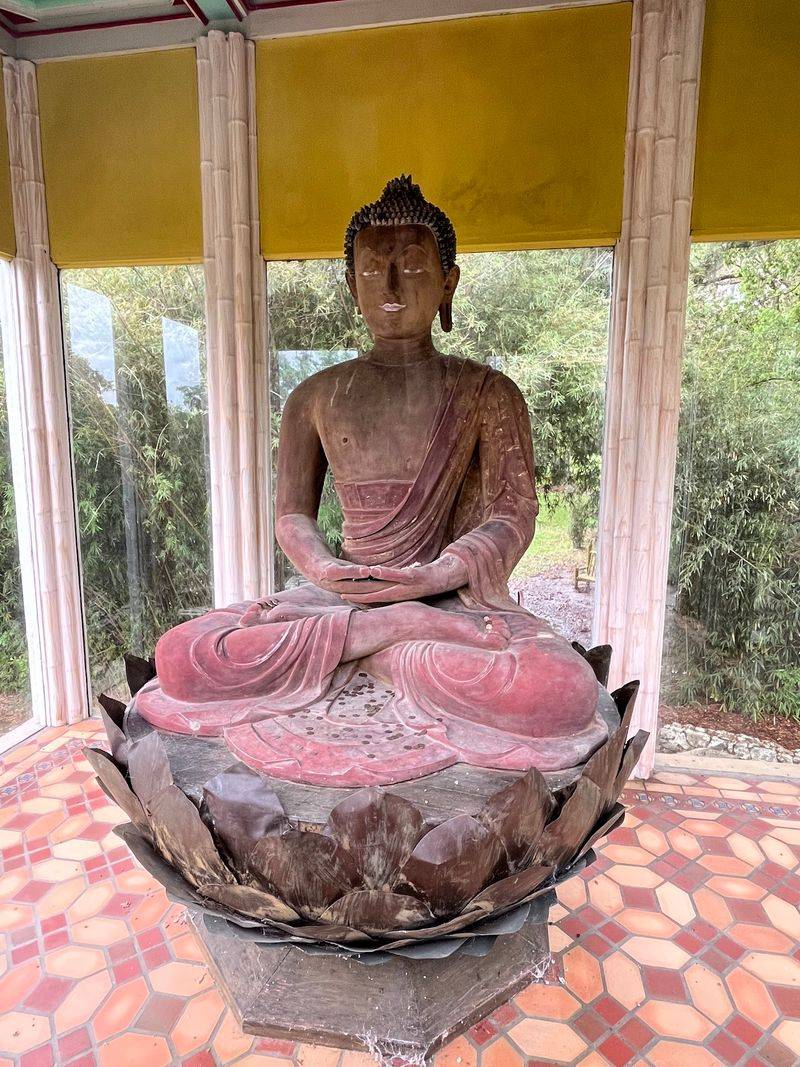
Nobody drives into a Louisiana marsh expecting to find a Chinese Buddha, which is exactly why this stop stays with people. The statue dates to roughly 1100 AD and sits inside a glass temple in an Asian-inspired garden.
Its route to Avery Island was unusual. A Chinese warlord shipped it to New York in the 1920s, and it sat unclaimed in a warehouse for years.
In 1936, two of McIlhenny’s friends bought it and sent it south to him.
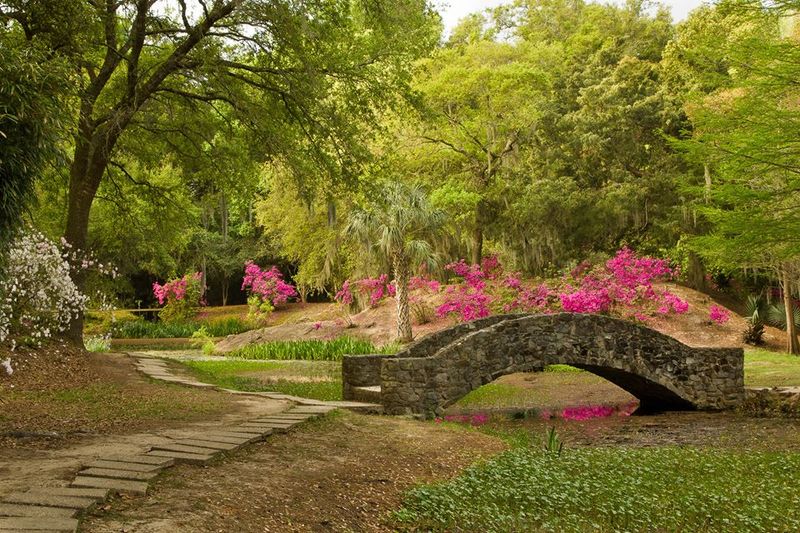
McIlhenny built a shrine for it and designed the surrounding garden with a pond, an arched bridge, Chinese irises, and azaleas. He placed it on one of the island’s Hills of Knowledge, giving it a raised, quiet setting above the rest of the grounds.
In recent years, local Buddhists have used the site as an active place of worship, holding ceremonies there through the year, including on Buddha’s birthday. Visitors should treat it accordingly.
The open lawn below the shrine, with camellias, azaleas, and a leaning old tree with exposed roots, has become a favorite backdrop for photos, and at least one visitor received a surprise marriage proposal there.
Alligators, Deer And Other Locals
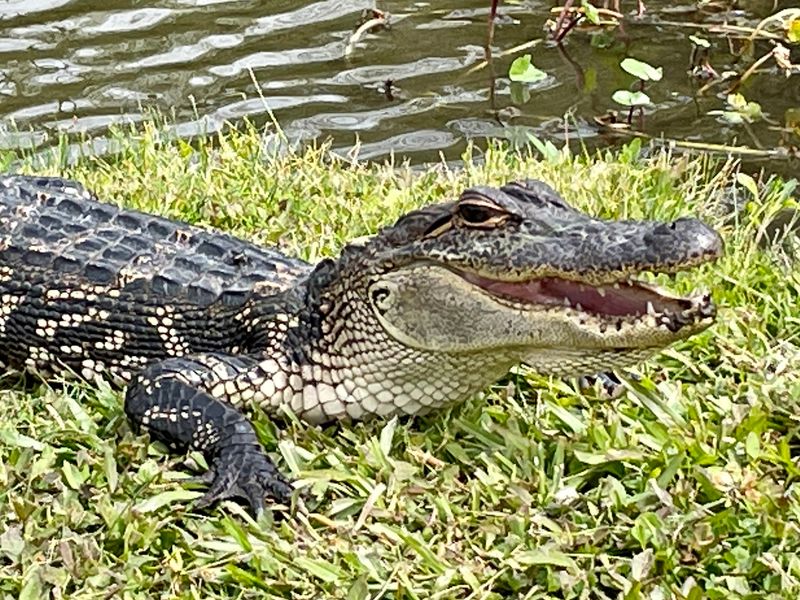
Ask what visitors talk about most after leaving, and the answer is alligators. They come up far more than any other topic, often sunning on the banks of the bayous and lagoons that wind through the property.
Sightings are common enough that first-time guests often see their first wild gators here, sometimes with babies nearby. Turtles, rabbits, squirrels, and spiders round out many visits.
White-tailed deer move through the undergrowth, and sharp-eyed guests may catch raccoons, nutria, river otters, or muskrats.
Historically, the island and nearby marsh have also supported Louisiana black bears, bobcats, coyotes, and armadillos, though some of those animals are now rare or stay in protected parts of the island. The deer are doing well partly because McIlhenny banned hunting them when their numbers dropped.
A few rules keep everyone safe. Signs throughout the grounds warn against feeding the alligators, and some visitors have described seeing others break that rule, which puts both people and animals at risk.
Keep a respectful distance, stay on roads and paths, and let the gators do what they do best, which is mostly lying still. One walker summed up the mood nicely, describing a pleasant sense of danger among the mossy trees.
Driving The Loop Versus Walking It
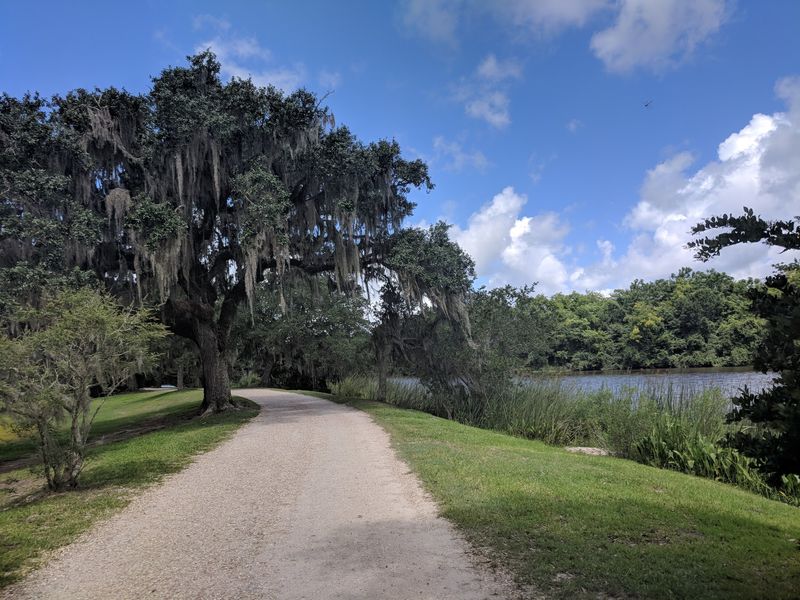
Most people see Jungle Gardens from behind a windshield. The self-guided route follows a roughly three-mile loop over gravel roads, with numbered markers and plenty of pull-offs where you can park and stroll a trail.
A cell phone audio tour explains the landscape and the stops as you go, and visitors who used it say it adds a lot. Plan on about two to three hours if you stop often.
Bicycles and walking are allowed too, and those who went on foot, including one parent with a six-year-old, report covering all the main points in about two hours.
Road conditions deserve a heads-up. Some visitors mention potholes, narrow stretches, and steep drop-offs along the edges, and one picked up a nail in a tire.
Low-slung sedans should take it slow. Buses and RVs follow a designated route with a height limit of 12 feet 8 inches.
Restrooms are at the entrance area, so plan around that. Summer heat can be intense, and bringing water is a smart move whatever the season.
Leashed pets are welcome, which makes the gardens an easy stop for travelers moving through Acadiana with a dog in the back seat.
Quiet Mornings, Family Outings And Photo Sessions
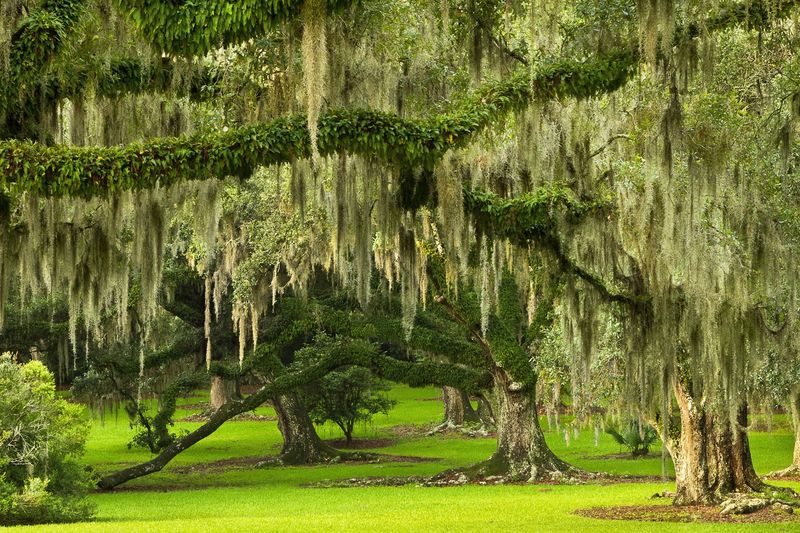
Crowds are rarely the problem here. Several visitors describe having the grounds nearly to themselves, including a couple who arrived early on a Friday in March and saw almost no one, and a solo walker who met about six people all day.
That calm draws a wide mix of guests. Nature lovers and birders come for the obvious reasons, but history buffs and anyone curious about geology find plenty to think about too.
One visitor who expected a tourist trap left after three hours of trails and stops, pleasantly corrected.
Families do well here because kids can turn gator spotting and bird counting into a game, then run loose on the big grassy lawns. Larger groups have made a day of it with family photos under the oaks.
Photographers have noticed as well. Graduation portraits and proposals have both happened on these grounds, and the moss, water, and blooms offer backdrops that change with every season.
If you prefer peace over spectacle, time your visit for a weekday morning or a cool winter afternoon during camellia season, when the light is softer and the heat is far less punishing than in July.
Hours, Tickets And The Road To Avery Island
Getting there is straightforward. Avery Island sits south of New Iberia, off Louisiana 329, and there is free parking at the ticket area plus free passage onto the island itself.
Check in at the Tabasco Visitor Center ticketing booth, where staff hand out maps and answer questions.
Current listings show the gardens open daily from 9 AM to 5 PM, though some sources list a 4 PM close and the gift shop shuts on major holidays, so call 337-369-6243 before you go. Combined admission with the Tabasco factory tour has been listed at $15.50 for adults 12 to 54, $13.95 for seniors 55 and older plus military and veterans, and $12.50 for ages 5 to 11.
Younger children get in free. Standalone garden tickets are also available.
Guided tours with an ornithologist or botanist, covering history, plants, or birds, can be booked ahead, with listed pricing around $35 for ages five and up. Details are on junglegardens.org.
When you finally leave, look back at the camellias crowding the roadside. They bloom in the cold months for a reason: somebody planted them here a century ago, next to a pond full of returning egrets.